ignition AUDI S6 2014 Repair Manual
[x] Cancel search | Manufacturer: AUDI, Model Year: 2014, Model line: S6, Model: AUDI S6 2014Pages: 304, PDF Size: 76.32 MB
Page 202 of 304
200 Intelligent technology
critical if the engine is not running and electri
cal components are turned on. In this in
stance energy is being consumed but none is
being generated.
It is in precisely these situations that you wi ll
notice energy management actively regulat
ing the distribut ion of energy .
Vehicle stands for an extended period
If you do not drive your vehicle over a pe riod
of severa l days or weeks, electrical compo
nents are gradually cut back or switched off.
This reduces energy consumption and main
tains starting capab ility over a longer period.
Some of the conven ience functions may not
operate, such as the inter ior lights or the
power seat adjustment. The conven ience
functions will be available again when you
switch on the ignition and start the engine.
With the engine turned off
If you listen to the radio, for example, with
the eng ine turned off or use other MMI func
tions, the battery is being discharged .
If starting capability is jeopardized due to en
ergy consumption, the following warning ap
pears in the MMI display:
Please start the engine soon or the system
will be turned off.
The warning indicates that the system will be
turned off automatically after 3 minutes. If
you wish to continue using the functions, you
have to start the engine.
With the engine running
Although elect rical energy is generated when
the vehicle is being driven, the battery can be
come discharged. This happens most ly when
little energy is being generated and a great
dea l consumed and the battery 's state of
charge is not optimal.
To bring the energy balance back into equili
brium, consumers which require especia lly
large amounts of energy are temporarily cut
back or switched off. Heating systems in par
ticular requ ire a great deal of energy. If you notice,
for example, that the heated seats* or
the heated rear window are not heating, they
have been temporarily cut back or switched
off. These systems will be available again as
soon as the energy balance has been restored.
You will also notice that engine id le speed has
been increased slightly. Th is is normal and not
a cause for concern. By increasing engine idle
speed the additional energy required is gener
ated and the battery is charged.
Page 204 of 304
202 Driving and en vir onm ent
Catalytic converter
Appl ies to vehicles: with gasoline e ngin e
It is very important that your emission con
trol system (catalytic converter) is function
ing properly to ensure that your vehicle is run
ning in an environmentally sound manner .
.. Always use lead-free gasoline¢ page 215,
Fuel supply .
.. Never run the tank down all the way to emp-
ty .
.. Never put too much motor oil in your engine
¢ page 229, Adding engine oil
The catalytic converter is an eff ic ient "clean
up" device built into the exhaust system of
the vehicle. The catalyti c converter burns
many of the pollutants in the exhaust gas be
fore they are released into the atmosphere.
The exclus ive use of unleaded fuel is cr itically
important for the l ife of the cata lytic convert
e r and proper functioning of the engine.
A WARNING
T he temperature of the exhaust system is
high, both when driving and after stopping
the engine .
- Never touch the exhaust tail pipes once
they have become hot. This could result
in burns.
- Do not park or operate the vehicle in
areas where the hot exhaust system may
come in contact with dry grass, brush,
fuel spill or other material which can
cause a fire.
- Do not apply additional undercoating or
rustproofing on or near the exhaust
man ifold, exhaust p ipes, catalytic con
verter or heat shields . During driving, the
substance used for undercoating cou ld
overheat and cause a fire.
@) Note
- Be aware that just one tank f illing with
leaded fuel will al ready seriously de
grade the perfo rmance of the cata lytic
conve rter. -
Do not exceed the correct engine oil level
¢page 229.
-Do not drive until the fue l tank becomes
completely empty . The engine co uld m is
fire . Unburned fuel could also get into
the exhaust system and this cou ld cause
the catalytic converter to overheat.
- Do not switch off the ignition while the
vehicle is mov ing .
- Do not continue to ope rate your vehicle
under these conditions, as otherwise fuel
can reach the catalyt ic converter. Th is
cou ld result in overheating of the con
verter, requir ing its replacement .
- To assure efficient operation of the Emis
sion Control System:
- Have you r vehicle maintained p roperly
and in accordance w ith the service rec
ommendations in your Warranty & Maintenance book let.
- Lack of prope r maintenance as we ll as
improper use of the vehicle wi ll impair
the function of the em ission contro l
system and could lead to damage.
@) For the sa ke of the en vironment
Even when the Emission Control System is
ope rat ing properly, the exhaust gas can
have a sulfur-like exhaust gas smell under
some operat ing states. This depends on
the sulfur content of the fuel being used .
Usi ng a different brand of fuel may help,
or f illing the tank with lead-free super
grade gasoline.
Diesel particulate filter
Applies to vehicles: with diese l eng ine
The diesel part icu late filter filters nearly all of
the soot pa rticles out of the exhaust . T he fil
te r cleans itself automat ica lly unde r no rma l
dr iv ing cond itions . If the filte r cannot clean it
self (for example, because you are on ly driving
short distances), the filter becomes clogged
with soot and the
II symbol for the diesel
particulate filter ill uminates ¢
page 22. ..,.
Page 207 of 304
You must drive your vehicle about 3,000 miles (5,000 kilometers) before you can properly
assess oil consumption.
This also applies to fuel consumption and en
gine output.
(D Note
- Have your vehicle maintained properly
and in accordance with the service rec
ommendations in your Warranty
& Main
tenance booklet. Lack of proper mainte
nance as well as improper use of the ve
hicle will impair the function of the
emission control system and could lead
to damage .
- Do not alter or remove any component of
the Emission Control System unless ap
proved by the manufacturer.
- Do not alter or remove any device, such
as heat shields, switches, ignition wires,
valves, which are designed to protect
your vehicle's Emission Control System
and other important vehicle compo
nents.
Fewer short trips
Fuel consumption will always be relatively
high on short trips .
.,. Try to avoid driving short distances with a
cold engine .
The engine and catalytic converter have to reach their optimal
operating temperature to
reduce fuel consumption and noxious emis
sions effectively.
Just after starting, a cold engine in a mid-size
car only achieves a fuel economy of 6 -8 miles
per gallon (30-40 l/100 km). After about a
half a mile, fuel economy climbs to 12 mpg
(20 l/100 km). After about
2.5 miles (4 km),
the engine is at its proper operating tempera
ture and fuel economy has reached a normal
level. So you can see that you should avoid
short trips whenever possible.
Driving and environment 205
The outside temperature is also critical in this
regard. Your car consumes more fuel in the
winter than in the summer.
•
•
Page 213 of 304
Vehicl e ca re a nd cl eanin g 211
A WARNING
-Only wash the vehicle when the ignition
is off and follow the instructions from
the car wash operator to reduce the risk of accidents .
- To reduce the r isk of cuts, protect your
self from sharp metal components when
wash ing the underbody or the inside of
the wheel housings.
- After washing the vehicle, the braking ef
fec t may be delayed due to mo isture on
the brake rotors or ice in the winter. The
brakes must be dried first with a few
careful brake applications.
Q) Note
- If you wash t he vehicle in an automatic
car wash, yo u must fold the exterior m ir
rors in to reduce the r is k of damage to
the mirrors. Power folding exterior mir
rors* must only be folded in and out us
ing the power folding function.
- To prevent paint damage, do not wash
the vehicle in direct sunlight . -
To reduce the risk of damage to the sur
face, do not use insect removing spong
es, kitchen sponges or similar items.
- Matte finish painted vehicle compo
nents:
- To reduce the risk of damage to the surface, do not use polishing agents or hard wax.
- Never use car wash cycles that apply protective wax.
It can destroy the
matte fi nish effect.
- Do not place any stickers or magnet ic
signs on vehicle parts painted w ith
matte fi nish paint. The paint cou ld be
damaged when the stickers o r magnets
are removed.
@ For the sake of the environment
Only wash the vehi cle in facilities spec ial ly
designed for that purpose . This will red uce
the risk of dirty water contam inated with
oil from entering the sewer system.
Cleaning and care information
When cleaning and caring for individua l vehi
cle components, refer to the fo llow ing tab le.
The information contained there is s imp ly rec
ommendations. For quest ions or for compo- nents
that are not listed, refer to an author
ized Audi dea ler or a qualified workshop . Also
fo llow the information found inc>,& .
Cle aning e xterior
Component Situation Solution
Wiper b lades
Dirty i=> page 49, Cleaning windshield wiper blades
Headligh ts / Dirty Soft
sponge with a m ild soap solutional
tail light s
S ensor s/
Dirty Sensors: soft cloth with a solvent-free cleaning product
camera l enses Camera lenses: soft cloth with an alcohol-free cleaning
solution
Snow/ice Hand brush/solvent-free de-icing spray
Wheels Road sa lt Water
Brake dust Acid-free special cleaning solution
Exhau st t ail Road sa lt Water, cleaning solut ion suitable for sta inless steel, if
pi pes necessary
•
•
Page 222 of 304
220 Fuel supply and filling your fuel tank
Fuel filler flap emergency release
You can open the fuel filler flap by hand if the
power locking system should fail .
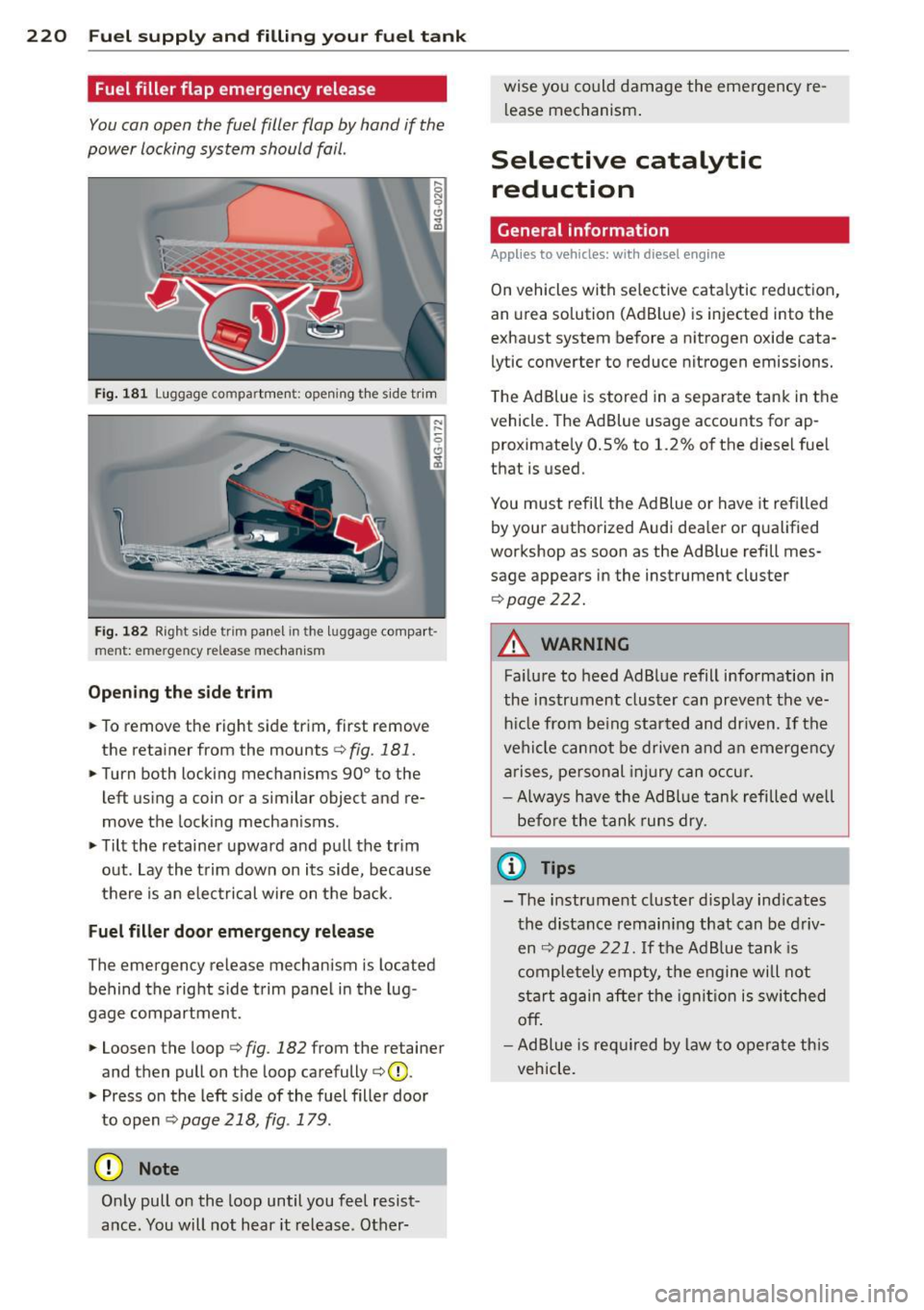
Fig. 181 Luggage co m partmen t: open ing the side tr im
Fig. 182 Right side trim panel in the lu ggage compar t
ment: e mergency release mechanism
Opening the side trim
• To remove the right side trim, first remove
the retainer from the mounts
¢ fig. 181.
• Turn both locking mechanisms 90° to the
left using a coin or a similar object and re
move the locking mechanisms.
• Tilt the retainer upward and pull the trim
out . Lay the trim down on its side, because
there is an electrical wire on the back.
Fuel filler door emergency release
The emergency release mechanism is located
behind the right side trim panel in the lug
gage compartment.
• Loosen the loop i:>
fig. 182 from the retainer
and then pull on the loop carefully i:>Q).
• Press on the left side of the fuel filler door
to open
i=> page 218, fig. 179.
(D Note
Only pull on the loop until you feel resist
ance. You will not hear it release . Other- wise you could
damage the emergency re
l ease mechanism .
Selective catalytic
reduction
General information
Applies to vehicles: with diesel engine
On vehicles with selective cata lytic reduction,
an urea solution (Ad B lue) is injected into the
exhaust system before a nitrogen oxide cata
lytic converter to reduce nitrogen emissions.
The Ad Blue is stored in a separate tank in the
vehicle. The Ad Blue usage accounts for ap
proximately 0.5% to 1.2% of the diesel fuel
that is used.
You must refill the Ad Blue or have it refilled
by you r authorized Audi dea ler or qualified
workshop as soon as the Ad Blue refill mes
sage appears in the instrument cluster
¢page 222.
A WARNING
-Failure to heed AdBlue refill information in
the instrument cluster can prevent the ve
hicle from be ing started and driven . If the
vehicle cannot be driven and an emergency
arises, personal injury can occur.
- Always have the AdBlue tank refilled well
before the tank runs dry.
(D Tips
-The instrument cluster display ind icates
the distance remaining that can be driv
en
c> page 221. If the Ad Blue tank is
completely empty, the engine will not
start again after the ignition is switched
off.
-Ad Blue is required by law to operate this
vehicle.
Page 224 of 304
222 Fuel supply and filling your fuel tank
Filling AdBlue
Applies to vehicles: with diesel engine
A special refill bottle must be used to fill the
AdBlue .
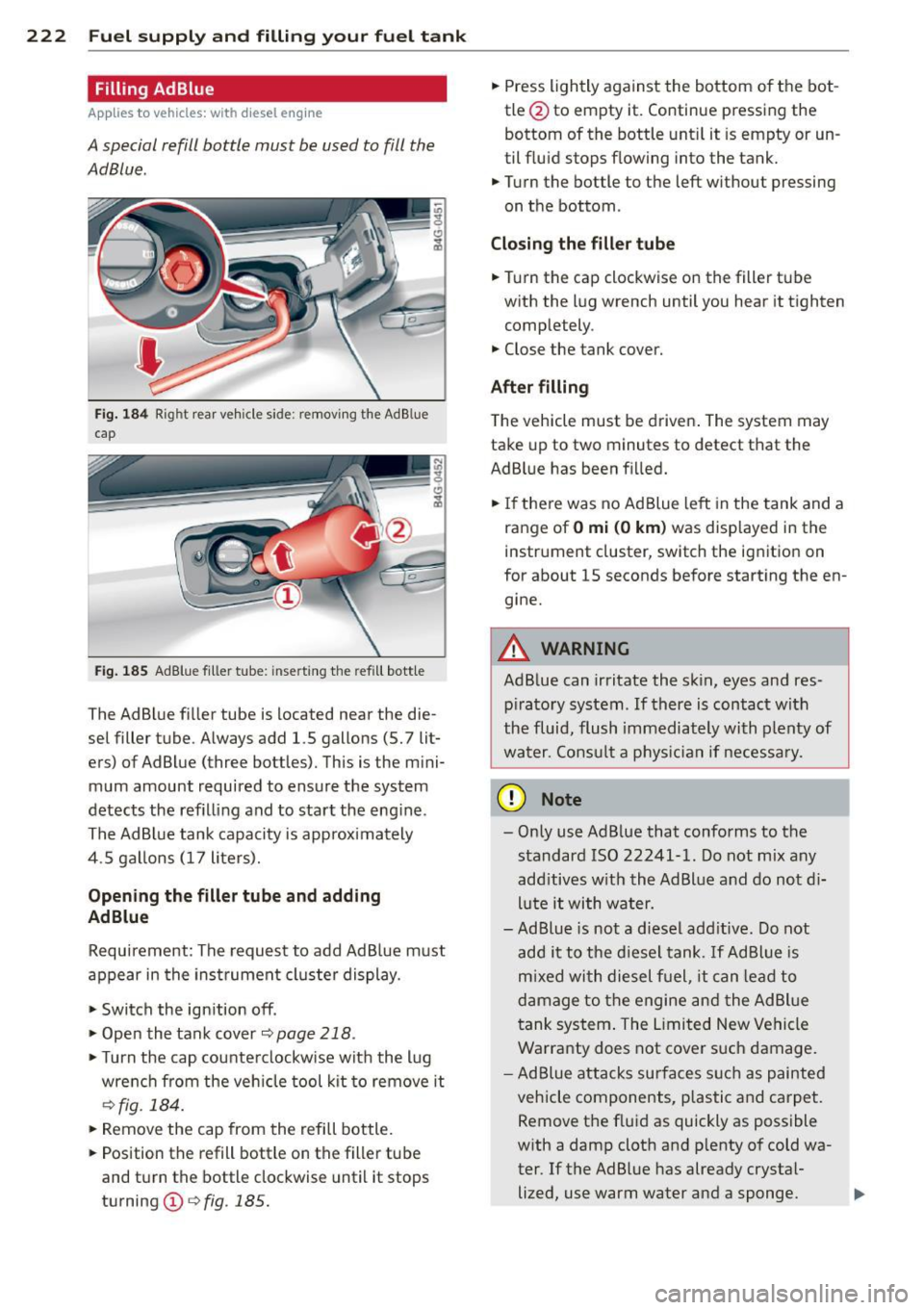
Fig. 184 Rig ht rear vehicle side: remov ing the Ad B lue
cap
Fig . 185 Ad Blue filler tube: inse rting the refill bottle
The AdBlue fi ller tube is located near the die
sel filler tube . Always add 1.5 gallons (5. 7 lit
ers) of AdBlue (three bottles). This is the mini
mum amount required to ensure the system
detects the refilling and to start the eng ine.
The AdBlue tank capacity is approximately
4 .5 gal lons (17 liters).
Opening the filler tube and adding
AdBlue
Requirement : The request to add Ad Blue must
appear in the instrument cluster display.
• Switch the ignition off .
• Open the tank cover
¢page 218.
• Turn the cap counterclockw ise with the lug
wrench from the vehicle tool kit to remove it
¢fig. 184.
• Remove the cap from the refill bottle.
• Position the refill bottle on the filler tube
and turn the bottle clockwise until it stops
turning
(D ¢ fig . 185.
• Press lightly against the bottom of the bot
tle @to empty it. Continue pressing the
bottom of the bottle until it is empty or un
til fluid stops flowing into the tank.
• Turn the bottle to the left without pressing
on the bottom .
Closing the filler tube
• Turn the cap clockwise on the filler tube
with the lug wrench until you hear it tighten
completely .
• Close the tank cover.
After filling
The vehicle must be driven. The system may
take up to two minutes to detect that the
AdBlue has been f illed.
• If there was no Ad Blue left in the tank and a
range of
O mi (0 km) was displayed in the
instrument cluster, switch the ignition on
for about 15 seconds before starting the en gine.
A WARNING
= Ad Blue can irritate the sk in, eyes and res-
piratory system. If there is contact with
the fluid, flush immediately with plenty of
water. Consult a physician if necessary.
(D Note
- Only use Ad Blue that conforms to the
standard ISO 22241-1. Do not mix any
additives with the AdBlue and do not d i
lute it with water.
-A d Blue is not a diesel add itive . Do not
add it to the diesel tank. If Ad Blue is
m ixed with diesel fuel, it can lead to
damage to the engine and the AdBlue
tank system . The Limited New Vehicle
Warranty does not cover such damage.
- Ad Blue attacks surfaces such as painted
vehicle components, plastic and carpet.
Remove the fluid as quickly as possible
w ith a damp cloth and p lenty of cold wa
ter. If the AdBlue has already crystal-
lized, use warm water and a sponge. .,..
Page 226 of 304
224 Checking and filling
Checking and filling Engine hood
Releasing the engine hood
The engine hood is released from inside the
vehicle .
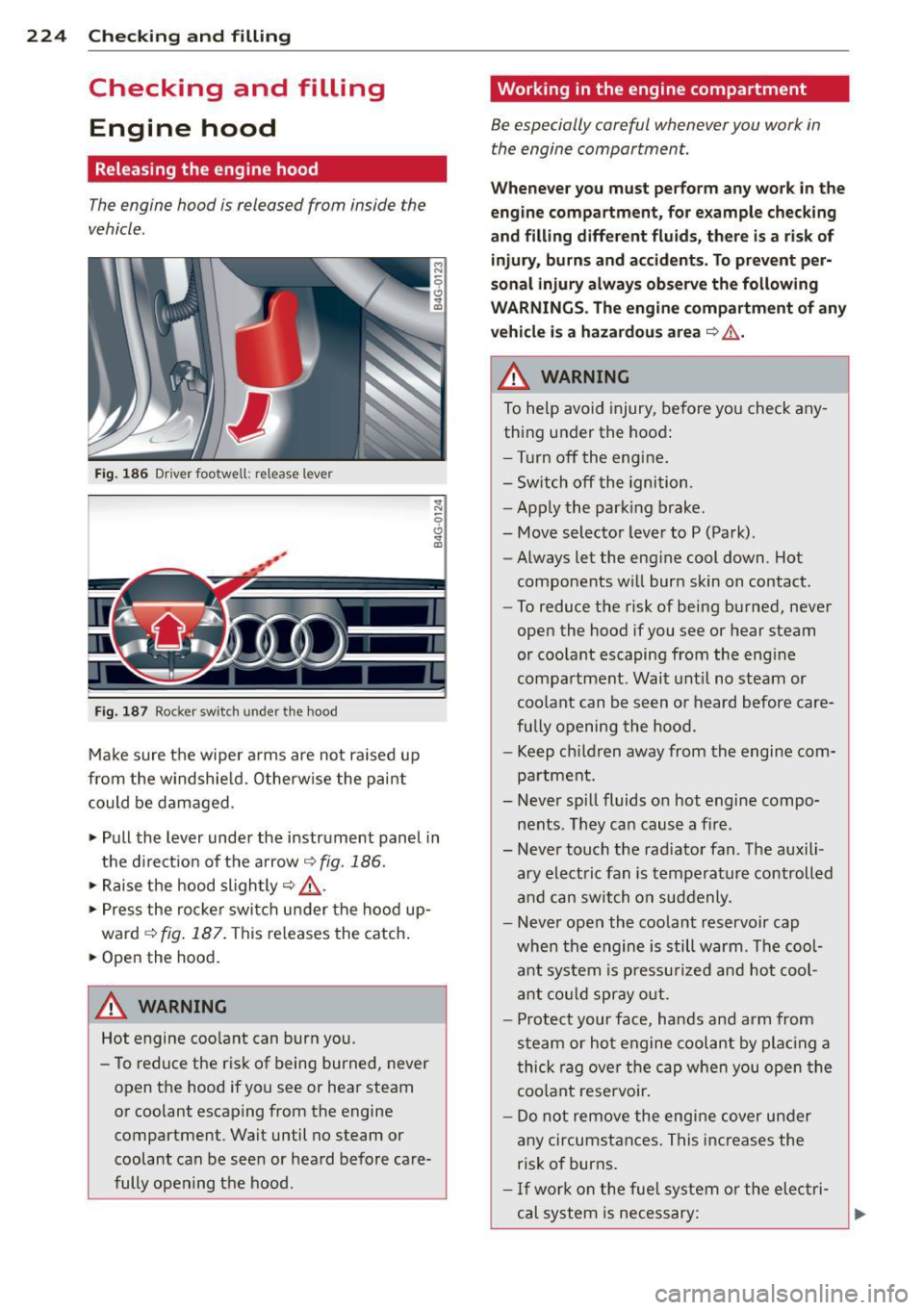
Fig. 186 Driver foo twell: release lever
Fig. 187 Rocker switch un der the hood
Make sure the wiper arms are not raised up
from the windshield. Otherwise the paint
could be damaged .
.,. Pull the lever under the instrument panel in
the direction of the arrow
¢ fig. 186.
.,. Raise the hood slightly¢,&. .
... Press the rocker switch under the hood up
ward
~ fig. 187. This releases the catch.
• Open the hood.
&_ WARNING
Hot engine coolant can burn you.
- To reduce the risk of being burned,
never
open the hood if you see or hear steam
or coolant escaping from the engine compartment . Wait until no steam or
coolant can be seen or heard before care
fully opening the hood .
'Working in the engine compartment
Be especially careful whenever you work in
the engine compartment.
Whenever you must perform any work in the
engine compartment, for example checking
and filling different fluids, there is a risk of injury, burns and accidents. To prevent per
sonal injury always observe the following
WARNINGS. The engine compartment of any
vehicle is a hazardous area
¢ ,&. .
A WARNING
To help avoid injury, before you check any
thing under the hood:
- Turn off the engine.
- Switch off the ignition .
- Apply the parking brake.
- Move selector lever to P (Park).
- Always let the engine cool down. Hot
components will burn skin on contact.
- To reduce the risk of being burned, never
open the hood if you see or hear steam
or coolant escaping from the engine
compartment. Wait until no steam or
coolant can be seen or heard before care
fully opening the hood.
- Keep children away from the engine com
partment.
- Never spill fluids on hot engine compo
nents . They can cause a fire .
- Never touch the radiator fan. The auxili
ary electric fan is temperature controlled
and can switch on suddenly .
- Never open the coolant reservoir cap
when the engine is still warm . The cool
ant system is pressurized and hot cool
ant could spray out.
- Protect your face, hands and arm from
steam or hot engine coolant by placing a
thick rag over the cap when you open the
coolant reservoir.
- Do not
remove the engine cover under
any circumstances. This increases the
risk of burns.
- If work on the fuel system or the electri
cal system is necessary:
Page 227 of 304
-Always disconnect the battery.
- Never smoke or work near heaters or open flames. Fluids in the engine com
partment could start a fire.
- Keep an approved fire extinguisher im
mediately available.
- To avoid electrical shock and personal in
jury while the engine is running or being
started, never touch :
- Ignition cables
- Other components of the high voltage
electronic ignition system.
- If you must perform a check or repair
with the engine running:
- First, fully apply the parking brake,
move selector lever to P (Park).
- Always use extreme caution to prevent
clothing, jewelry, or long hair from get
ting caught in the radiator fan, V-belts
or other moving parts, or from contact ing hot parts. Tie back hair before
starting, and do not wear clothing that
will hang or droop into the engine.
- Minimize exposure to emission and
chemical ha zards c:::> & .
A WARNING
California Proposition 65 Warning:
- Engine exhaust, some of its constituents,
and certain vehicle components contain
or emit chemicals known to the State of
California to cause cancer and birth de
fects and reproductive harm. In addition ,
certain fluids contained in vehicles and
certain products of component wear con
tain or emit chemicals known to the
State of California to cause cancer and
birth defects or other reproductive harm .
Checking and filling 225
-Battery posts, terminals and related ac
cessories contain lead and lead com
pounds, chemicals known to the State of
California to cause cancer and reproduc
tive harms. Wash hands after handling.
(D Note
When adding fluids, always make sure that
they are poured into the proper container
or filler opening, otherwise serious dam
age to vehicle systems will occur.
(® For the sake of the environment
To detect leaks in time, inspect the vehicle
floor pan from underneath regularly . If
you see spots from oil or other vehicle flu ids, have your vehicle inspected by an au
thorized Audi dealer.
Closing the engine hood
.,. Pull the hood down until the pressure from
the struts is reduced.
"'Let the hood
drop down and latch in place.
Do not try to push it shut; it may fail to en
gage
c:::> ,A .
A WARNING
-
A hood that is not completely latched
could fly up and block your view while driv
ing .
- When you close the engine hood, check it
to make sure the safety catch has proper ly engaged. The hood should be flush
with the surrounding vehicle body parts.
- If you notice while driving that the hood
is not secured properly , stop at once and
close it. •
•
Page 231 of 304
(D Note
Driving with an insufficient oil level is like
ly to cause severe damage to the engine.
@ Tips
- The oil pre ssure w arning di spl ay . is
n ot an indi cato r of the oil le vel. D o not
rely on it. Inste ad , c heck th e oil le vel in
y ou r engine at regula r inter vals, pref
er ably each t ime you refu el, and al way s
befor e going on a long tr ip .
- If you have the impression your engine
consumes excessive amounts of oil, we
recommend that you consult your Audi
dealer to have the cause of yo ur conce rn
properly diagnosed. Keep in mind that
the accurate measurement of oil con
sump tion requires great care and may
take some time. Your Audi dealer has in
str uctions about how to measure oil con
sumption accurately.
Checking the engine oil level
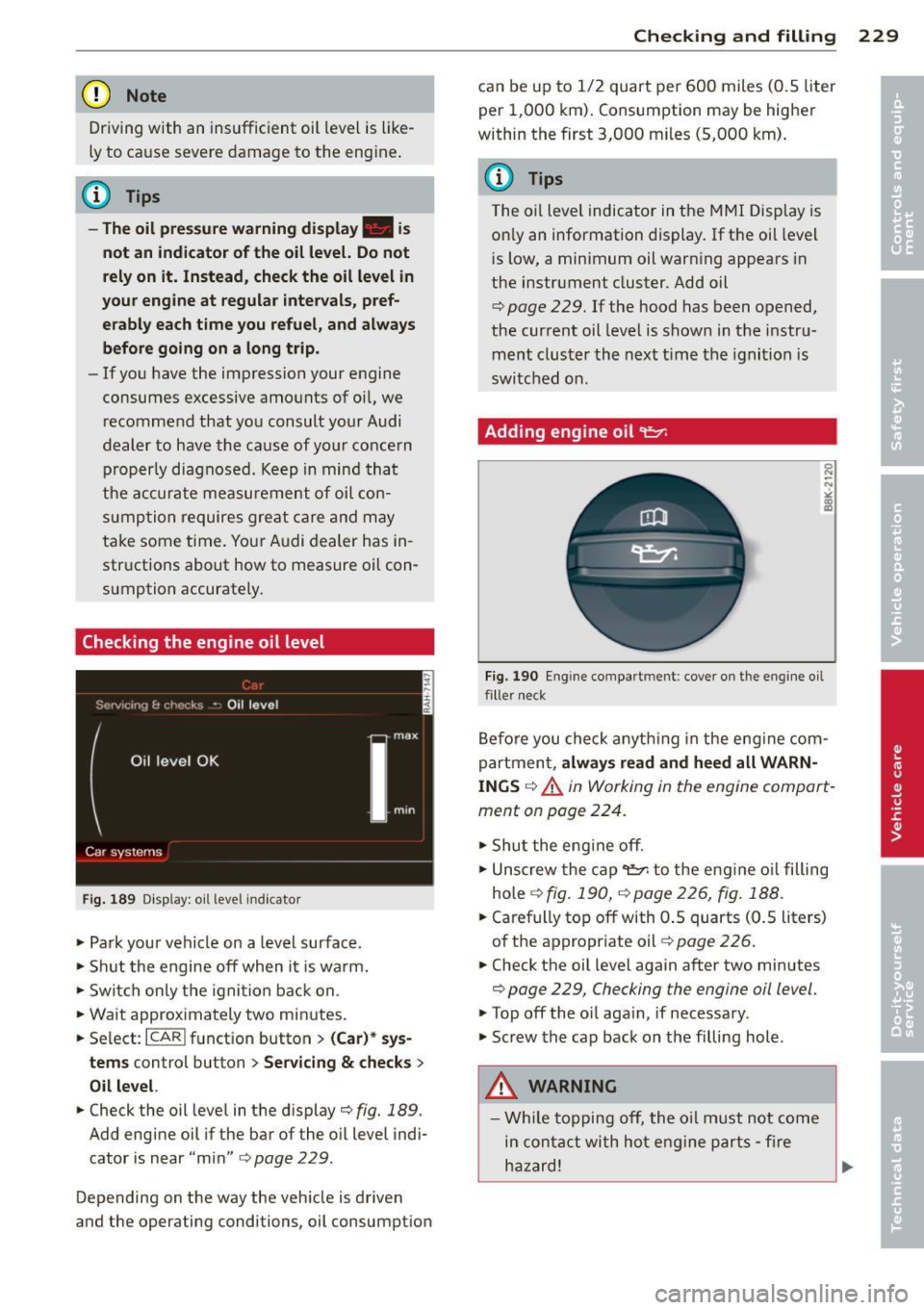
Fig. 18 9 Display: oil leve l indicato r
"'Park your vehicle on a level surface .
"' Shu t the engine off when it is warm.
"' Switch only the ignition back on.
"' Wait approximately two minutes.
"' Se lect :
I CARI funct ion button > ( Car )* sys -
tems
control button > Se rvicing & che ck s >
O il lev el.
"'Check the oil level in the display ¢fig. 189.
Add engine oil if the bar of the oil level indi
cator is near "min"
c::;,page 229 .
Depending on the way the veh icle is driven
and the operating conditions, oil consumption
Checkin g and fillin g 229
can be up to 1/2 quart pe r 600 miles (0.5 liter
per 1,000 km). Consumption may be higher
within the first 3,000 miles (5,000 km) .
(D Tips
The oil level indicator in the MMI Display is
on ly an information display. If the oil level
is low, a minimum oil warning appears in
the instrument cluster. Add oil
c::;, page 229. If the hood has been opened,
the current oil level is shown in the instru
ment cluster the next t ime the ignition is
switched on.
Adding engine oil~
Fig. 190 Eng in e compa rtm ent : cove r on the engine oi l
filler neck
Before you check anyth ing in the eng ine com
partment,
alw ays rea d and he ed all WARN
ING S
c::;, &. in Working in the engine compart
ment on page 224.
"' Shut the eng ine off .
"' Unscrew the cap
't".:::?: to the engine o il filling
hole
c::;, fig. 190, c::;, page 226, fig . 188.
"' Carefully top off with 0.5 quarts (0.5 liters)
of the appropriate oil
c::;, page 226.
"' Check the oil level again after two minutes
c::;, page 229, Checking the engine oil level.
"'Top off the oil again, if necessary.
"' Screw the cap back on the filling hole.
A WARNING
--Wh ile topping off, the o il must not come
in conta ct with hot engine parts -fi re
ha zard!
Page 235 of 304
~ Place a thick rag over the coolant expansion
tank ¢
page 232, fig . 191 and ca refull y
twist the cap counter-clockwise ¢ ,A.
~ Add coolant mixed in the correct ratio
¢page 231, Coolant.
~ Twist the cap on again tightly .
Replacement engine coolant must conform to
exact specifications ¢
page 231, Coolant .
We recommend using on ly coolant addi-
tive
Gl2++, Gl3 or in an emergency G l2+ . Do
not use a different add itive. In an emergency
use plain water unti l you can get the correct
addit ive and ca n restore the correct ratio. This
should be done as soon as possible .
If you have lost a considerable amount of
coolant, then you should add co ld a ntifree ze
and cold water only when the eng ine is co ld.
A lways use
new engine coolant when ref illing.
D o no t fill coolan t above the "M AX " mar k. Ex
cess coolan t will be forced ou t th rough the
p ress ure re li ef va lve i n the cap when the en
gin e becomes hot .
&_ WARNING
- The coo ling system is under press ure and
can get very hot. Reduce the risk of
sca ld ing from hot coolant by f ollowing
these steps .
-Tu rn off the engine and allow i tto cool
down.
- P rote ct your f ace, han ds an d ar ms from
escaping f lu id and ste am by cover ing
the cap with a large, thick rag.
- Tu rn the ca p slowly and very ca re fully
in a counte r-clockwise direct ion wh ile
ap plying light, downwa rd p ress ure on
the top of the cap.
- To avo id being burned, do not sp ill an
tifreeze or coolant on the exhaust sys
tem or hot engine parts . Under certa in
conditions, the ethylene glyco l in en
g ine coolant can catc h fire.
- Antifreeze is poisonous. Always store an
t ifreeze in its or iginal conta iner and well
o ut of the reac h of c hildren .
Checkin g and fillin g 233
-If you dra in the coo lant, it m ust be
caught and safely stored in a pr oper con
tainer clearly marked "poison".
([) Note
-Coo lant poll utes the environment a nd
co uld cause an engine fi re . Excess cool -
ant will be forced out th ro ugh the pres
sure relief valve in the cap when the en
gine becomes hot .
- If, in an eme rgency, on ly wate r can be
added, the co rrect ratio between water
and antifreeze ¢
page 231 must be re
s tored as soon as poss ible.
@) For the sake of the environment
Drained coola nt sho uld not be reused. A l
ways d ispose of used coolant while observ
i ng all env iro nmental regula tions .
Radiator fan
The radiator fan switches on automatically by
itself .
An auxiliary electric radiator fan switches on
and off depending on coolant temperature
and othe r vehicle ope rat ing cond it io ns.
After you switch the engine off, the aux iliary
fan can continue running for up to 10 m inutes
- even w ith the ignition off . It can even switch
o n aga in later by itself¢.& , if
- the temperature of the engine coo lant r ises
due to the heat build- up from the engine in
the engi ne compa rtment, or
- the engine compa rtment heats up because
the vehicle is parked in intense sunlig ht.
&_ WARNING
- To reduce the risk of perso nal in jury nev
er touch the rad iator fan .
- The a uxiliary electric fan is temperat ure
controlled a nd can switch on suddenly
e ven when the engine is not ru nning.
- The a uxiliary radiator fa n sw itches on a u
tomatically wh en the engine coo lant
reaches a certa in tem pera tu re and w ill ..,
•
•