fuel AUDI S6 2015 User Guide
[x] Cancel search | Manufacturer: AUDI, Model Year: 2015, Model line: S6, Model: AUDI S6 2015Pages: 314, PDF Size: 77.57 MB
Page 32 of 314
30 Instruments and warning /indicator lights
has been assigned a code. In case of a ma l
function, the component will be identified
and the fault stored as a code in the contro l
module memory.
The MIL light may a lso illuminate if there is a
leak in the on-board fue l vapor recovery sys
tem .
If the light illuminates after a refue lling,
stop the vehicle and make sure the fuel filler
cap is properly closed ¢
page 216.
In order to make an accurate diagnosis, the
stored data can only be displayed using spe
cial diagnostic equipment (generic scan tool
for OBD) .
In order to connect the special diagnostic
equipment, push the plug into the Data L ink
Connector (DLC). The DLC is located to the
right of the hood release¢
fig. 16.
Your authorized Audi dealer or a qualified
service station can interpret the code and per
form the necessary repair .
A WARNING
Do not use the diagnostic connector for
personal use . Incorrect usage can cause
malfunctions, which can increase the risk
of a coll ision!
Electronic speed limiter
-
Your veh icle may be factory equipped with
tires that are rated for a maximum speed of
130 mph (210 km/h). This is less than the
maximum speed of you r vehicle. To reduce the
risk of sudden tire failure and loss of control if
the vehicle is operated at excessive speeds,
your veh icle also has an electronic speed limit
er. The electronic speed limiter prevents your
vehicle from go ing faster than the tire speed
rating. For more informat ion ¢
page 257 .
If the engine control unit receives faulty vehi
cle road speed s ignals, the Malfunction Indi
cator Lamp (MIU
¢'4 will illuminate. If this
occurs, contact the nearest authorized Aud i
dealer for assistance. S models
Your
vehicle's top speed is elect ron icall y limit
ed to 155 mph (250 km/h).
If the engine control unit receives faulty veh i
cle roadspeed signals, the Malfunction Indica
tor Lam p (MIL)
¢'4 will illuminate . If this oc
curs, contact the nearest authorized Audi
dealer for assistance.
_& WARNING
-= -
Always observe the posted speed limits
and adjust your speed to suit prevailing
road, traffic and weather cond itions. Never
drive your vehicle faster than the maxi
mum speed rating of the tires installed .
Page 64 of 314
62 Seat s a nd s tor ag e
If luggage or cargo is to be carried on the
roof, you must observe the follow ing:
- Only use roof racks approved for yo ur vehi
cle. These approved roof racks are the basis
for a complete roof rack system . Additional
attachments or carrier systems are needed
to transport luggage and sports equipment.
We recommend using roof racks from the
Audi original accessories program.
- When installing the roof rack, make sure it is only moun ted on the designated locations
on the
roof <=> fig. 64.
- We recommend that you keep the installa
tion instructions for your roof rack system
together with your Owner 's literature in the
vehicle .
When sh ould the roo f ra ck be remo ved ?
-Before going through an automatic car wash
(it is best to ask the car wash operator for
advice).
- When not in use, to reduce fuel consump tion, wind no ise and to guard against theft .
A WARNING
-Use of an unapproved roof rack or incor
rect mount ing of an approved roof rack
can cause the roof rack or the items at
tached to it to fa ll off the roof onto the
road .
- Objects fall ing from the roof of a vehicle
can cause a crash and persona l injury.
- Only mount the roof rack on the desig
nated locations o n the roof <=>
fig. 64.
-The roof rack system must be installed
exactly according to the instructions pro
vided.
- When driving w ith a roof rack system,
changes to the center of g ravity and wind
resistance ca n change the veh icle han
dling and lead to a collision . A lways
adapt yo ur driving and you r speed to the
c u rrent conditions.
@ Note
- Your vehi cle warranty does not cover any
damages to the veh icle caused by using roof
racks or mounting structures not
approved by Audi for your vehicle . The
same app lies to damage resulting from
incorrect roof rack installation.
- Always check the roof rack mountings
and hardware before each trip and dur
ing a trip to make sure everyth ing is se
curely tightened . If necessary, ret ighten
the mountings and check the entire sys
tem from time to time .
- After mount ing a roof rack system, or
when you t ransport objects on the roof
of your vehicle, the heig ht of the veh icle
is natu rally increased. Be careful when
dr iving under low bridges or in par king
garages for example . This cou ld cause
damage to the load and eve n the vehicle
itself .
- Make sure the open rear lid and the sun
roof* do not come into contact with the
roof rack.
Loading the roof rack
Always distribute loads evenly. Make sure
anything on the roof rack is secur ely tied
down.
.. Always distribute the loads on the roof rack
even ly .
.. Always attach items to the roof rack s ecurely
before you drive off.
The maximum permissible roof weight is
2 20 lb (100 kg ). The roof weight is the total
of the weight of the roof rack, the attach
ments and the cargo you are carrying. You
must also not exceed the max imum load
weight for the roof rack you a re using.
When using a roof rack system which has a
lower load carrying capacity, you must not use
up the total maximum permissible load carry
ing capacity specified above . Instead, you
shou ld load the roof rack system only to the
maximum capacity specified by the manufac-
tu rer of the roof rack system. ..,.
Page 65 of 314
M N
0 I.J "". rl I.O
"' rl
"' rl
_& WARNING
Weak, damaged or improper straps used
to secure items to the roof rack can fail
during hard braking or in a collision and
cause serious personal injury .
- Make sure the roof rack is installed exact
ly as specified above
c::;, page 61 .
-Always use suitable mounting straps for
securing items to the roof rack to help
prevent items from shift ing or fly ing for
ward.
- Items on the roof rack must always be
securely mounted .
- The use of a roof rack can negatively af
fect the way a vehicle handles . Cargo
that is large, heavy, bulky, long o r flat
will have a greater negative inf luence on
the vehicle 's aerodynamics, center of
gravity and overall handling . Always
drive slowly, avoid sudden braking and
maneuvers when transporting cargo on
the roof of your vehicle.
- Never exceed the maximum permissible
load carrying capacity of the roof of your
vehicle, the perm issible axle weights and
the permiss ible total weight of your vehi
cle
c::;, page 289, Weights .
@ For the sake of the environment
As a result of the increased wind resist
ance created by a roof rack, your veh icle is
using fuel unnecessarily. So remove the
roof rack after using it.
S ea ts a nd s to rage 63
Luggage compartment
Loading luggage compartment
Luggage i tems must be stowed securely.
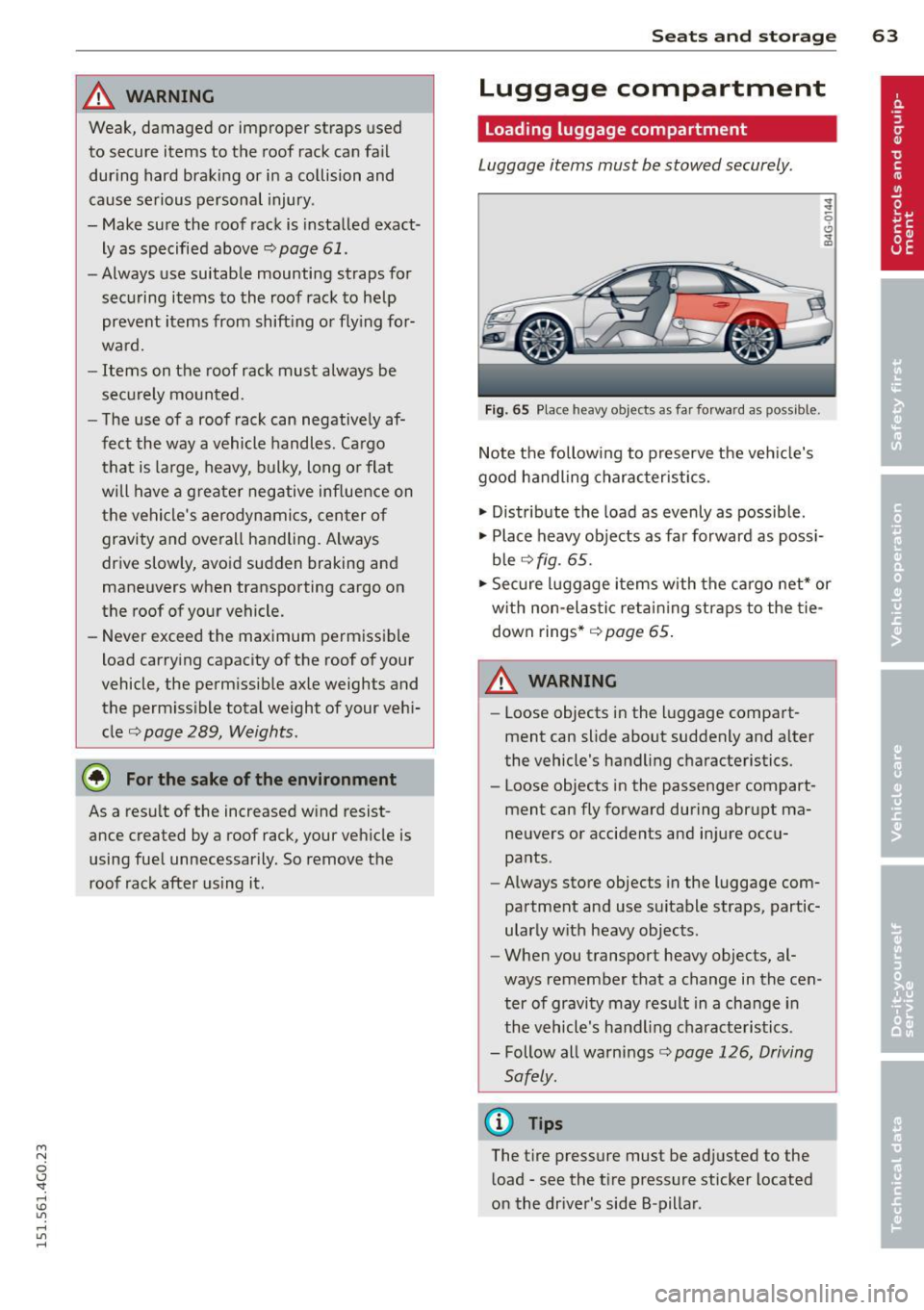
Fig. 65 P la ce h eavy o bject s as far forward a s possible .
Note the following to preserve the vehicle's
good handling charac teristics.
.., Distribute the load as evenly a s possible.
.., Place heavy objects as far forward as poss i
ble
c::;, f ig . 65.
.., Secure luggage items with the cargo net* or
w ith non-elastic retain ing straps to the tie
down rings*
c::;, page 65.
A WARNING
- Loose objects in the l uggage compart
ment can slide about suddenly and a lter
the vehicle's handling characteristics.
- Loose objects in the passenger compart
ment can fly forward during abr upt ma
neuvers or accidents and injure occu
pants .
- Always store objects in the luggage com
partment and use suitable straps, partic
ularly with heavy objects .
-
-When you transport heavy objects, al
ways remember that a change in the cen
ter of gravity may result in a change in
the vehicle's handling characteristics.
- Follow all warnings
c::;, page 126, Driving
Safely .
(D Tips
The tire pressure must be ad justed to the
load -see the t ire pressure sticker located
on the dr iver's side B -pillar .
Page 81 of 314
soon as the switch(®) is released, or the accel
erator pedal is depressed, emergency braking
stops.
.&_ WARNING
Emergency braking should only be used in
an emergency, when the normal foot brake
has failed or the brake pedal is obstructed .
Using the parking brake to perform emer
gency braking will slow your vehicle down
as if you had made a full brake applicat ion.
The laws of physics cannot be suspended
even with ESC and its associated compo
nents (ABS, ASR, EDL). In corners and
when road or weather conditions are bad
'
a full brake application can cause the vehi-
cle to skid or the rear end to break away -
r isking an accident.
Start-Stop-System
Description
Appl ies to vehicles : wit h Start-Stop-System
The Start-Stop-System can help increase fuel
economy and reduce CO
2 emissions.
I n the Start-Stop-mode, the engine shuts off
automatically when the vehicle is stopped,
such as at a traffic light. The ignit io n remains
sw itched on dur ing th is stop phase. The en
gine will be automatically restarted when
needed.
The last Start-Stop-System setting (on/off us
ing the button
l
l --1 but
ton turns on when the Start-Stop-System is
switched off manually.
Basic requirements for the Start-Stop
mode
- The driver's door is closed .
- The driver' seat belt is latched.
- The hood is closed.
- T he veh icle must have been driven faster
~ than 2.5 mph (4 km/h) since the last stop.
~ -A tra iler is not hitched to the veh icle.
rl I.O
"' rl
"' rl
On the road 79
.&_ WARNING
-Never let the vehicle roll with the engine
sw itched off . You could lose control over
the vehicle. This can lead to a collision
and serious injuries.
- The brake booster and the steering sup
port do not work while the engine is
sw itched off. More force is required to
stop and to steer the vehicle.
- To reduce the risk of injuries, make sure
that the Start-Stop-System is turned off
when working in the eng ine compart
ment ¢
page 81.
(D Note
Always switch off the Sta rt-Stop-System
when driving through water¢
page 81.
Starting/stopping the engine
Applies to vehicles: w ith Start -Stop-System
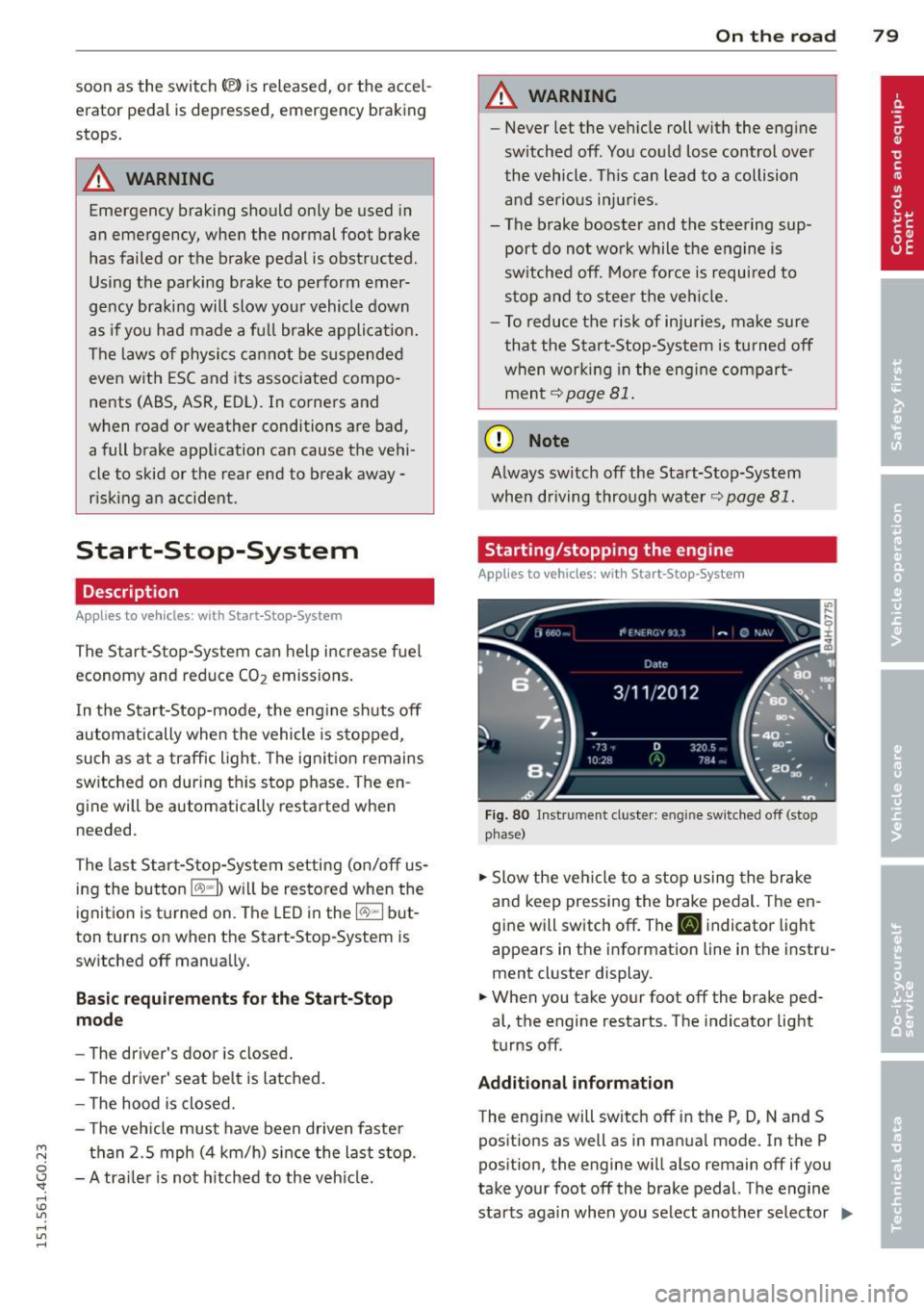
Fig. 80 Instrument cluste r: engine sw itched off (stop
p hase)
.,. Slow the vehicl e to a stop using the brake
and keep pressing the brake pedal. The en
gine will switch off. The
tlJ indicator light
appears in the information line in the instru
ment cluster display.
.. When you take your foot off the brake ped
al, the engine restarts. The indicator light
turns off.
Additional information
The eng ine will switch off in the P, D, N and S
positions as well as in manual mode. In the P
position, the engine will also remain off if you
take your foot off the brake pedal. The engine
starts aga in when you select another selector ..,_
Page 109 of 314
M N
0 I.J "". rl I.O
"' rl
"' rl
Automatic Transmission
multitronic, S tronic,
tiptronic
Introduction
The automatic transmission is controlled elec
tronically . The transmission upsh ifts or down
shifts automatically depending on which drive
program is se lected .
When a
moderate driving style is used, the
transmission selects the most economical
driving mode . It will then change up early and
delay the downshifts to give better fuel econ
omy.
The transmission switches to a sporty mode
after a kick-down or when the driver uses a
sporty driving style characterized by quick ac
celerator pedal movements, heavy accelera
tion, frequent changes in speed and traveling
at the maximum speed.
If desired, the driver can als o se lect the gears
manually (tiptronic mode) q page 111.
Various automatic transmissions may be in
stalled , depending on the model:
multitronic transmission
The multitron ic transmission is a continuously
variable transmission. Power is transferred us
ing a multidisk clutch . In contrast to conven
tional automat ic transm iss ions using shift ing
ope rat ions, the transmiss ion ratio in the con
tinuously variab le transmission is changed
continuously. This optimizes the comfort level
and conserves fuel.
S tronic transmission
The S tronic is a dual-clutch transmission .
Power is transferred using two clutches that
work independently from one another. They
replace the torque converter used in conven
tional automatic transm issions and allow the
vehicle to accelerate without a noticeable in
terruption in traction.
Automatic Transmission 107
tiptronic transmission
In the tiptronic transmission, power is trans
ferred by a torque converter.
Selector lever positions
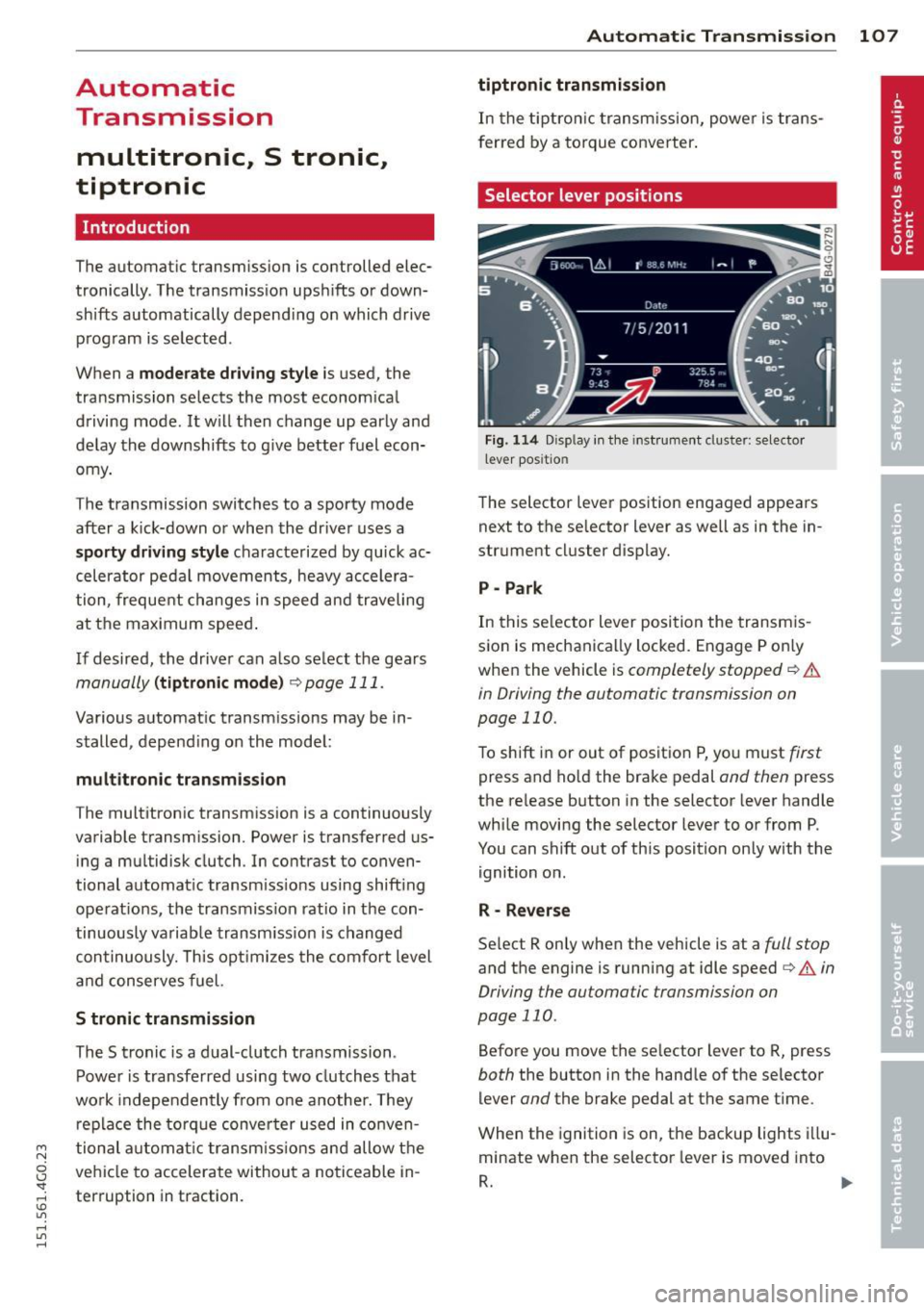
Fig. 114 Disp lay in the instrument cluster: selector
l ever positio n
The selector lever position engaged appears
next to the se lector lever as we ll as in the in
strument cluster display.
P- Park
In this selector lever position the transmis
sion is mechanically locked. Engage P on ly
when the vehicle is
completely stopped q .&.
in Driving the automatic transmission on
page 110.
To shift in or out of positio n P, you must first
press and hold the brake pedal and then press
the re lease button in the selector lever handle
while moving the selector lever to or from P.
You can shift out of this position only with the
ignition on.
R - Reverse
Select R only when the vehicle is at a full stop
and the engine is running at idle speed i:> & in
Driving the automatic transmission on
page 110 .
Before you move the se lector lever to R, press
both the button in the handle of the selector
lever
and the brake pedal at the same time .
When the ignition is on, the backup lights illu
minate when the selector lever is moved into
R. ..,.
Page 202 of 314
200 Driving and environment
Driving and
environment
The first 1,000 miles
(1,500 km) and
afterwards
New engine
The engine needs to be run-in during the first
1,000 miles (1,500 km).
For the fir st 600 miles (1,000
kilometers ):
.,. Do not use full throttle.
... Do not d rive at engine speeds that are more
than 2/3 of the max imum permitted RPM.
... Avoid high engine speeds.
From 600 to 1,000 mile s (1 ,000 to
1,500 kilometers):
... Speeds can gradually be increased to the
max imum pe rm iss ible road or eng ine speed .
During and after break-in period
.,. Do not rev the eng ine up to high speeds
when it is cold. Th is app lies whether the
transm ission is in N (Neutra l) or in gear.
After the break-in period
... Do not exceed maximum engine speed un
der any circumstances.
.,. Upshift into the next hig her gear
before
reaching the red area at the end of the tach
ometer scale
c:> page 11.
During the first few hours of driving, the en
g ine's interna l friction is higher than later
when all the moving parts have been broken
in . How well this break- in process is do ne de
pends to a conside rable extent on th e way the
ve hicl e is driven during the first 1,0 00 miles
(1, 500 k ilome ters).
0 Note
E xtremely high engi ne speeds are auto
mat ica lly reduced. However, these rpm
lim its are progr amme d for an engine well
r u n- in, not a new engine .
{® For the sake of the environment
Do not drive with unnecessarily high en
g ine speeds - upshifting ear ly saves fuel,
reduces no ise and protects the environ
ment.
, New tires
If your vehicle is runni ng on new tires, drive
part icularly caref ul for the first 350 miles
(500 kilomete rs) afte r fitt ing.
A WARNING
N ew tires tend to be sl ippery and mus t al
so be "b roken -in" . Be s ure to remember
this dur ing the fi rst 350 mi les ( 500 kilo
meters) . Brake gently . Avoid fo llow ing
closely behind other vehicles or other sit
uations that m ight require sudden, hard
braking .
New brake pads
Remember that new brake pads do not have a
full bra king effect dur ing the fi rst 250 m iles
(400 kilomete rs) afte r they a re insta lled.
New brake pads have to be "burnished in" be
fo re t hey have optima l grab
c:> A .
During the break- in period, you should avoid
putting severe loads on the brakes. Severe
l oads include, for example, sudden hard brak
i ng, in particular at very high speeds or, for
example, on mounta in passes .
A WARNING
New b rake pa ds don't have t he bes t stop
pi ng power and mus t be "broke n-in " dur
i ng the in iti al 1 00 to 150 mi les (150 to
20 0 k ilometers) of no rma l city driving . You
can compensate for this by pressing the
br ake peda l mo re f irm ly . This also applies
l ater when new pads are installed.
Page 203 of 314
M N
0 <.J 'SI: ,...., \!) ..,.,
,...., ..,., ,....,
Avoid damaging the
vehicle
When you are driving on poor roads, or over
curbs, steep ramps, etc., make certain that
low-lying parts such as spoilers and exhaust
system parts do not bottom out and get dam
aged.
This is especially true for vehicles with low
slung chassis (sports chassis) * and fully load
ed veh icles.
Driving through water
on roads
Note the following to avoid vehicle damage
when driving through water, for example on
flooded roads:
- T he water must not be any h igher than the
bottom of the veh icle body.
- Do not d rive faster than wa lking speed.
..&, WARNING
After driving through wate r, m ud, slush,
etc., the brakes may be slow to take effect
because o f wet brake rotors and pads . Dry
the brakes first by braking carefully to re
store the full braking effect.
(D Note
- Vehicle components such as the eng ine,
transmission, suspension or e lectrical
system can be severely damaged by driv
ing thro ugh water.
- Always switch
off the Start-Stop-System
when driving through water¢
page 79 .
@ Tips
-Check the depth o f the wate r before driv
ing through it.
- Do not s top the veh icle, dr ive i n reverse
or switc h the engine off when driving
through water.
- Keep in mind that oncom ing vehicles
may create waves that raise the water
l eve l and make it too deep for you r vehi
cle to drive through safely .
-
Dri vin g and en vironm ent 201
- Avo id driving through salt wate r because
it can cause corrosion .
Catalytic converter
Applies to vehicles: w ith gasoline engine
It is very important that your emission con
trol system (catalytic converter) is function
ing properly to ensure that your vehicle is run
ning in an environmentally sound manner.
... Always use lead-free gasoline ¢ page 214,
Fuel supply.
... Never run the tank down all the way to emp
ty.
.,. Never put too much motor o il in your engine
¢ page 226, Adding engine oil~-
... Never try to push- or tow-sta rt your vehicle.
The catalytic converter is an efficient "clean
up" dev ice bui lt into the exhaust system of
the ve hicle. The cata lytic conve rter bu rns
many of the pollutants in the exha ust gas be
fore they are re leased into the atmosphere .
The exclusive use of unleaded fuel is c ritically
important for the life of the ca talyt ic convert
er and proper f unct ion ing of the engine.
A WARNING
The temperature of the exhaust system is
high, both when driving and after s topping
the engine.
- Never touch the exhaust tail pipes once
they have become hot . This cou ld result
in burns .
- Do not park or operate the vehicle in
areas where the hot exha ust system may
come in contact with dry grass, brush,
fue l spill or other material which can
cause a fire.
- Do not apply additional undercoating or
rustproof ing on or near the exhaust
manifold, exhaust pipes, catalytic con
verter or heat shields . Dur ing driv ing, the
substance used fo r undercoating could
overheat and cause a fire.
~
•
•
Page 204 of 314
202 Driving and en vir onm ent
- Be aware that just one tank fi lling with
le a ded fuel will already seriously de
grade the performance of the catalytic
converter.
- Do not exceed the correct engine oil leve l
¢page 226.
-Do not drive until the fuel tank becomes
completely empty. The eng ine could mis
fire. Unburned fuel could also get into
the exhaust system and this could cause
t h e catalyt ic converter to overheat.
- Do not switch off the ign ition wh ile the
vehicle is moving.
- Do not continue to operate your vehicle
under these conditions, as otherw ise fuel
can reach the catalytic converter. This
could result in overheat ing of the co n
ve rter, req uiring its repla ceme nt.
- To assure efficient operation of the Emis
s ion Control System:
- Have your vehicle maintained properly
and in accordance with the service rec
ommendations in your Warranty
&
Ma intenance booklet.
- Lack of proper maintenance as well as
improper use of the vehicle will impa ir
the funct ion of the emission control
system and cou ld lead to damage.
@) For the sake of the environment
Even when the Emission Contro l System is
operating properly, the exhaust gas can
have a sulfur-like exhaust gas smell under
some operating states. This depends on
t he s ulfur content of the fue l being used .
Using a differe nt brand of fuel may help,
or filling the tank w it h lead-free super
grade gaso line .
Diesel particulate filter
Appl ies to vehicles: with diesel e ngin e
The diesel particula te filter fi lters nearly a ll of
the soot part icles o ut o f the exhaus t. T he fi l
ter cleans itse lf automatically under normal
driving conditions . If the fi lter cannot clean it- se
lf (for example, because you are on ly driving
short distances), the f ilter becomes clogged
with soot and the
II symbol for the diese l
part icu late filter illuminates
¢page 21.
A WARNING
-Do not park your veh icle over flammable
materials such as grass or leaves because
the high temperature of the diesel par
ticulate fi lt e r could start a fire.
- Do not app ly an underbody protectant in
the ex haust system area o r a f ire could
start.
Shutting down vehicle
If you would like your vehicle to remain inop
erative for a longe r per iod of t ime, contact an
A udi o r othe r spec ia liz ed dealer. They can ad
v ise you on necessa ry precautions e.g. corro
s io n preven tion, mainten ance and s torage.
Pay a ttent ion to addi tional in format ion con
cerning the battery. Refer to¢
page 232 .
Operate your vehicle
economically and
minimize pollution
General
Your personal style of driving will determine
the economy of your vehicle, as well as ex
haust and noise levels.
F uel economy, envi ronmenta l impact, and
wear on your engine, b rakes and tires largely
depend on three factors:
- your pe rsonal d riving s tyle
- operati ng conditions
- technical limitat ions
If you ant ic ipate what you need to do next and
drive economically, you can easily cut your
fuel consumpt io n by 10-15 percent . This sec
t ion w ill give you some tips on how you can
help t he env ironme nt and your pocketbook. ..,.
Page 205 of 314
M N
0 <.J 'SI: ,...., \!) 1.1'1 ,...., 1.1'1 ,....,
@ Tips
The consumption estimates as published by ENVIRONMENTAL PROTECTION AGENCY (EPA) and Transport Canada may not corre
spond to your actual consumption on the
road, wh ich will vary depend ing upon vehi
cle load and speed, road and weather con
ditions, tr ip length, etc.
Drive smoothly and keep a lookout
ahead
Vehicles use the most fuel when they are ac
celerating.
~ Avoid unnecessary accelerating and braking.
Vehicles use the most fuel when they are ac
celerating . If you anticipate what is go ing to
h appen next, you will need to brake less and,
thus , accelerate less . Let the vehicle coast
wheneve r poss ible -fo r example when you see
that the nex t traffic light is red.
Avoid full throttle
Driving at moderate speeds saves fuel and
improves your mileage.
~ T ry and keep well below your car's max imum
speed.
Accelerating gent ly reduces fuel consump
tion, engine wear, and does not disturb the
environment .
Fuel consumption, exhaust emissions and en
g ine no ise increase d ispropo rtionately at high
speeds . If you dr ive at approximately three
quarters of top speed, fue l consumption will
be red uced by one ha lf. Never dr ive faste r
than the posted speed limit and wea ther con
d itions permit.
Reducing unnecessary idling
E ven when your car is just idling it burns up
fuel .
~ Shut the engine off when you are not dr iv ing
the vehi cle.
Dri vin g and en vironm ent 203
~ Do not warm up the vehicle by lett ing the
engine run at id le .
T he id ling phase is au toma tic ally red uced for
vehicles with the Start -Stop -System . It is eff i
cient to switch off the engine in vehicles with
out the Start-Stop-System when stopp ed at
railroad crossings and long red lights. Turning
the engine off for jus t 30-40 seconds saves
more fuel than is burned by start ing the en-
. . gme again .
It takes a long t ime for the engine to warm up
fully when it is run ning at id le. However, wear
and noxious emissions are especia lly high
when the engine is warm ing up . So you should
dr ive away as soon as you start the engine and
avo id running at high rpms whi le the engine is
sti ll warming up.
(L} Note
Do not leave eng ine idling unattended af
ter start ing .
If wa rni ng lights sho uld come
on to indicate improper ope ration, t hey
wo uld go unheeded . Extended idlin g also
produces heat, wh ich could res ult in ove r
heating or other damage to the veh icle or
other p roperty .
Regular maintenance
A badly tuned engine unnecessarily wastes a
lot of fuel.
~ Have your ve hicle servi ced at reg ular i nter-
vals .
By havi ng your ve hicle regu la rly se rviced by an
Audi dealer he lps to ensu re tha t it ru ns prop
erly and economically . The condition of your
vehicle not on ly affects its safety and ability to
ho ld its va lue, it a lso affects
fuel consump
tion .
Check your oil e ach time you fill your tank.
T he amou nt of oi l used is re lated to engine
load and speed.
It is normal for the oil consumption of a new
engine to reac h its lowest value after a certa in
mileage has been d riven . .,..
•
•
Page 206 of 314
204 Driving and en vir onm ent
You must drive your vehicle about 3,000 miles
(5,000 kilometers) before you can properly
assess o il consumption.
This a lso applies to fuel consumption and en
gine output.
0 Note
- Have yo ur vehicle maintained properly
and in accordance with the service rec
ommendations in your Warranty
& Main
tenance booklet. Lack of proper mainte
nance as well as improper use of the ve
hicle will impair the funct ion of the
emission control system and could lead
to damage .
- Do not alter or remove any component of
the Emi ssion Control System unless ap
proved by the manufacturer .
- Do not alter or remove any dev ice, such
as heat shields, switches, ignition wires,
valves, wh ich are designed to protect
your vehicle's Emiss ion Control System
and othe r important veh icle compo
nen ts.
Fewer short trips
Fuel consumption will always be relatively
high on short trips .
.. Try to avo id driving short d istances with a
co ld eng ine .
The engine and ca talytic conver ter have to
reach their optimal
op erating temp eratur e to
reduce fuel consumption and noxious emis
sions effect ively.
Jus t after s tarting, a cold engine in a mid-size
car only achieves a fuel economy of 6 -8 miles
per gallon (30-40 l/100 km) . After about a
ha lf a m ile, fue l economy climbs to 12 mpg
(20 l/100 km). Afte r abo ut
2 .5 m iles (4 km),
the eng ine is at its proper ope rat ing tempera
ture and fue l economy has reached a norma l
l eve l. So you can see that you should avoid
short trips whenever possib le . T
he
ou tsid e tempe rature is also critical in this
regard . Your car consumes more fue l in the
winter than in the summer.