weight AUDI S6 2015 User Guide
[x] Cancel search | Manufacturer: AUDI, Model Year: 2015, Model line: S6, Model: AUDI S6 2015Pages: 314, PDF Size: 77.57 MB
Page 154 of 314
152 Airbag sys te m
of a typ ica l 1 year -old, but less than the
weight of a sma ll adult, the front airbag on
the passenger side may deploy (the
PASSEN
GER AIR BAG OFF
li ght does not come on).
For exa mple , the air bag m ay depl oy if:
- a small child that is heavier than a typical 1
year-o ld child is on the front p assenger seat
(regardless of whe ther the child is in one of
the chi ld seats listed
c':> page 173),
-a ch ild who has o utgrown child rest raints is
on the front passenger seat.
If the front passenger airbag is turned off, the
PA SSENGER AIR BAG OFF light in the cente r
of the instrument panel w ill come on and stay
on.
If the front passenger airbag deploys, the Federal Standard requires the a irbag to meet
the "low risk" deployment criteria to help re
duce the risk of injury through interaction
with the airbag. " Low risk" deployment occurs
in those crashes that take place at lower de
celerations as defined in the e lectronic control
un it
c':>page 157.
Alway s remember: Even tho ugh your vehicle
is equipped with Advanced Airbags, the safest
p lace for children is properly restrained on the
back seat. Please be sure to read the impor
tant information i n the sect ions that follow
and be sure to heed a ll of the WARNINGS .
A WARNING
To reduce the risk of injury when an airbag
inf lates, a lways wear safety belts prope rly.
- If you are unrestrained, lean ing forward,
sitting sideways or out of position in any
way, your risk of injury is much higher.
- You w ill also receive serious in juries and
cou ld even be killed if you are up against
the a irbag or too close to it when it in
fla tes -even with an Advanced Airbag
c':> page 145.
A WARNING
A child in a rearward -facing child seat in
stalled on the front passenger seat will be seriously injured and can be killed if the
front airbag inflates - even w
ith an Ad
vanced Airbag System.
- Altho ugh the Advanced Airbag System in
your veh icle is designed to turn off the
front airbag when a rearward-facing
child restraint has been installed on the
front passenge r seat, nobody can abso
lutely guarantee that dep loyment is im
possible in all con ceivable s ituations that
may h appen dur ing the usefu l life of y our
veh icle .
- T he inflating airbag will h it the ch ild seat
or infant carrier wi th grea t force and will
smash the child seat an d child against
the backrest, center armrest, doo r, or
roof.
- Always install rearward-facing chi ld re
straints on the rear seat.
- If you must install a rearward fac ing
child seat on the front passenger seat
because of exceptional circumstances
and the
PASSENGER AIR BAG OFF light
does not come on and stay on, immed i
ately insta ll the rear-facing child seat in a
rea r seat ing pos ition and have the airbag
system inspected by you r Audi dealer.
A WARNING
If, in except iona l circumstances, you must
i nsta ll a forward-facing child restraint on
the front passenge r's sea t:
- Always make sure the forward-facing
seat has been designed and ce rtified by
its manufacture r fo r u se on a fron t seat
with a passenger fron t and s ide a irbag .
- Never p ut the fo rward-facing child re
straint up agains t or ve ry near the instru
ment panel.
- Always move the p assenge r seat into its
rearmost pos ition in the seat's fore and
aft ad justment range, as fa r away from
the airbag as possible, before installing
the forward-facing ch ild restra int. The
backrest must be ad justed to an upright
position.
Page 161 of 314
M N
0 <.J 'SI: ,...., \!) 1.1'1 ,...., 1.1'1 ,....,
-and if the e lectr ica l capacitance registered
on the front passenger seat is equal to or l ess than the combined capacitance of a typ
ical 1 year-old infant and one of the rear
ward-facing or forward-facing child re
stra ints listed in Federal Motor Veh icle Safe
ty Standard 208 w ith which the Advanced
Airbag System in your vehicle was certified.
If the front passenger seat is not occupied,
the front airbag will not deploy, and the
PA S
SENGER AIR B AG OFF
light w ill stay on . Nev
er insta ll a rearward-fac ing ch ild restra int on
the front passenger seat, the safest place for
a child in any kind of child restraint is at one
of the seating positions on the rear seat
¢ page 147, Child restraints on the front seat
- some important things to know
and
¢ page 171, Child Safety.
If the PASSENGER AIR BAG light com es
on ...
If the PASSENGER AIR BAG OFF light comes
on when one of the conditions listed above is met, be sure to check the light regularly to
make certa in that the
PA SSENGER AIR BAG
OFF
light stays on cont inuously whenever the
i gnit io n is on . If the
PASSENGER AIR B AG
OFF
light does not appear on and does not
stay on all the time, stop as soon as it is safe
to do so and
- react ivate the system by turning the ignition
off for more than 4 seconds and then turn
i ng it on again;
- remove and reinstall the child restraint .
Make su re that the child rest raint is prope rly
installed and that the safety be lt fo r the
fron t passenger seat has been corre ct ly
ro uted through the child restraint as descri
bed in the chi ld restraint man ufacturer's in
structions;
- make sure that the convertible locking re
tractor on the safety belt for the front pas
senger seat has been act ivated and that the
safety belt has been pulled tight.
- make sure that no electrica l device (such as
a laptop, CD player, electronic games device,
power inver ter or seat heater for child seats)
is p laced or used on the front passenger
A irbag system 159
seat if the device is connected to the 1 2-volt
socket or the cigarette lighter socket;
- make sure that no seat heater has been ret
rofitted o r otherwise added to the front pas
senger seat;
- make s ure that nothing can interfere with
the safety belt buck les and that they are not
obstructed ;
- make sure that there are no wet objects
(s uch as a wet towe l) and no water or other
liquids on the front passenger seat cushion .
If the PASSENGER AIR BAG light still
doe s not c ome on ...
If the PASSENGER AIR BAG OFF light still
does not come on and does not stay on con
tinuously (when the ignition is switched on),
- take the child rest raint off the front passen -
ger seat and install it proper ly at o ne of the
rear seat positions. Have the airbag system
inspected by your Audi dealer immed iate ly.
- move the child to a rear seat position and
make sure that the child is properly restra in
ed in a ch ild restra int that is appropriate for
its size and age.
Th e PASSENGER AIR BAG light should
NOT come on ...
The PASSENGER AIR BAG OFF light should
NOT come on when the ignit io n is on and an
adult is s itting in a proper seating position on
the front passenge r seat . If the
PASSENGER
AIR BAG OFF
light comes on and stays on o r
flashes fo r about S seconds wh ile d riving, un
der these circumstances, make sure that:
- the adult on the front passenger seat is
prope rly seated on the cente r of the seat
cushion with his o r her back up aga inst the
backrest and the backrest is no t recli ned,
- the adult i s not tak ing weight off the seat by
holding on to the passenger assist handle
above the fron t passenger door or s upport
ing their weight on the armrest,
- the sa fe ty belt is bei ng properly wo rn and
tha t the re is not a lot o f slack in the safety
be lt webbing,
- there are no aftermar ket seat covers or
cushions or other things (s uch as blankets)
IJI>
•
•
Page 171 of 314
M N
0 I.J "". rl I.O
"' rl
"' rl
How side curtain airbags work
Side curtain airbags can work together with
side airbags to help reduce the risk of head
and upper torso injuries for occupants who
are properly restrained.
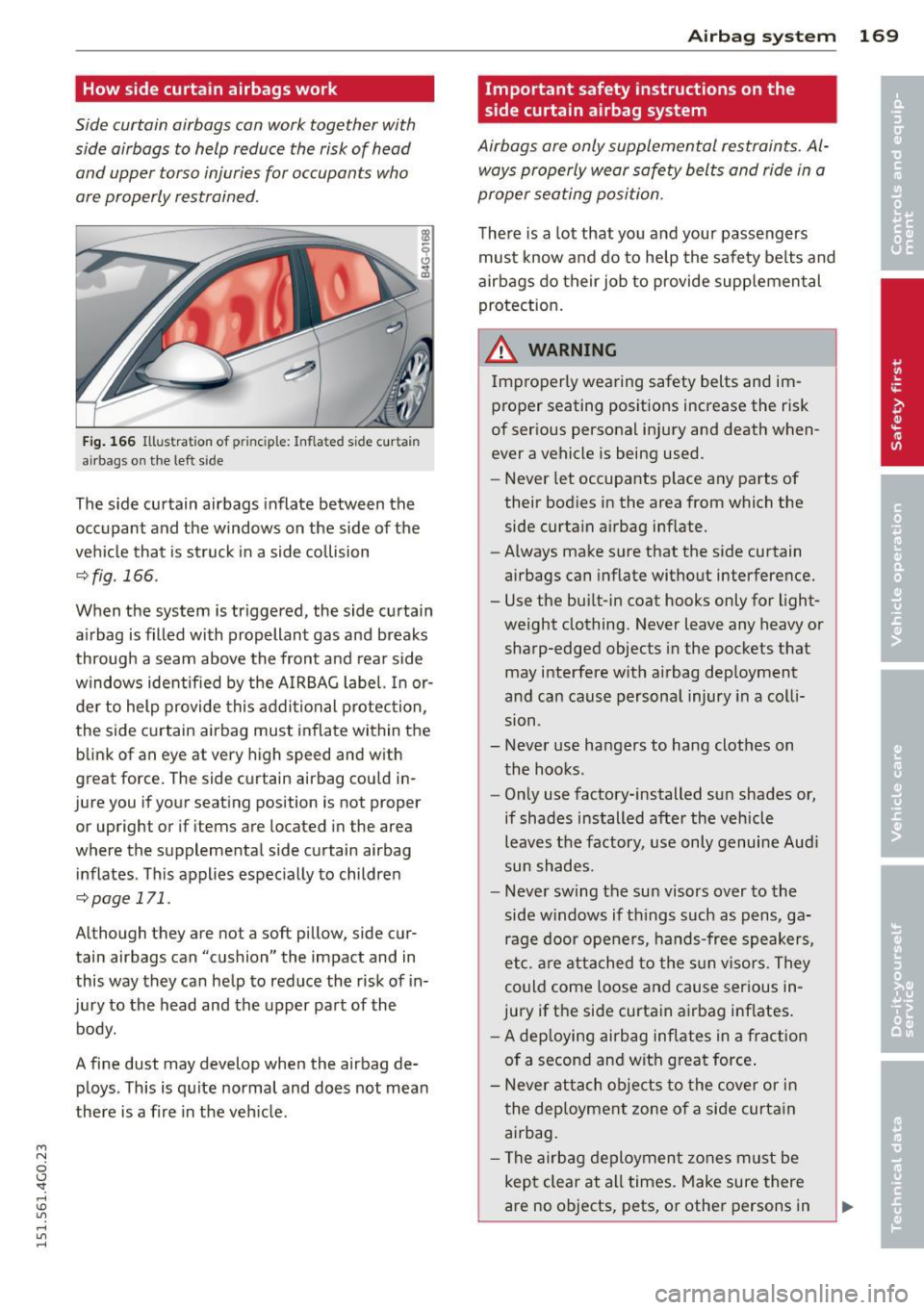
Fig. 166 Illustrat ion of p rinc iple: Infla ted side cur ta in
airbags on the left side
The side curtain airbags inflate between the
occupant and the windows on the side of the
vehicle that is struck in a side collision
¢fig. 166.
When the system is triggered, the side curtain
airbag is filled with propellant gas and breaks
through a seam above the front and rear side windows identified by the AIRBAG label. In or
der to help provide this additional protection,
the side curtain airbag must inflate within the
blink of an eye at very high speed and with
great force. The side curtain airbag could in
jure you if your seating position is not proper
or upright or if items are located in the area
where the supplementa l side curtain airbag
inf lates . This applies especially to children
¢page 171.
Although they are not a soft pillow, side cur
tain airbags can ''cushion" the impact and in
this way they can help to reduce the risk of in
jury to the head and the upper part of the
body.
A fine dust may develop when the airbag de
ploys. This is quite normal and does not mean
there is a fire in the vehicle .
Airbag system 169
Important safety instructions on the
side curtain airbag system
Airbags are only supplemental restraints. Al
ways properly wear safety belts and ride in a
proper seating position.
There is a lot that you and your passengers
must know and do to help the safety belts and
airbags do their job to provide supplemental
protection.
A WARNING
Improperly wearing safety belts and im
proper seating positions increase the risk
of serious personal injury and death when
ever a vehicle is being used.
- Never let occupants place any parts of
their bodies in the area from which the side curtain airbag inflate.
- Always make sure that the side curtain
airbags can inflate without interfere nce.
- Use the built-in coat hooks only for light
weight clothing. Never leave any heavy or sharp-edged objects in the pockets that
may interfere with airbag deployment
and can cause personal injury in a colli
sion.
- Never use hangers to hang clothes on the hooks .
- Only use factory-installed sun shades or,
if shades installed after the vehicle
leaves the factory, use only genuine Audi
sun shades .
- Never swing the sun visors over to the
side windows if things such as pens, ga rage door openers, hands-free speakers,
etc. are attached to the sun visors. They
could come loose and cause serious in
jury if the side curtain airbag inflates.
-A deploying airbag inflates in a fraction
of a second and with great force.
- Never attach objects to the cover or in
the deployment zone of a side curtain airbag.
- The airbag deployment zones must be
kept clear at all times. Make sure there
are no objects, pets, or other persons in
-
Page 173 of 314
M N
0 <.J 'SI: ,...., \!) 1.1"1 ,...., 1.1"1 ,....,
Child Safety
Important things to know
Introduction
The rear seat is generally the safest place in a
collision.
The physical principles of what happens when
your ve hicle is in a crash app ly also to chi ldren
~ page 13 7, What happens to occupants not
wearing safety belts?.
But unlike adu lts and
teenagers, the ir muscles and bones are not
fu lly developed . In many respects children are
at greater risk of serious injury in crashes than
ad ults.
Because children's bod ies a re not f ully deve l
oped, they require restraint systems especial l y designed for their size, weight, and body
structure. Many co untries and all states of the
United States and provinces of Canada have
laws requ iring the use of approved ch ild re
straint systems for infants and small chi ldren .
In a fronta l crash at a speed of 20 -35 mph
(30-56 km/h) the forces acting on a 13-po und
(6 kg) infa nt w ill be more than 20 t imes the
weight of the child . T his means the weight of
the child would suddenly be more than
260 pounds ( 120 kg). Under these conditions,
on ly an appropr ia t e chi ld restraint properly
used can reduce the risk of ser ious injury.
Ch ild restra ints, like adult safety belts, must
be used properly to be effective. Used improp
erly, they can increase the risk of ser ious in
jury in an accident.
Consult the ch ild safety seat manufacture r's
instr uctions in order to be sure the seat is
right fo r you r ch ild's size ~
page 175, Impor
tant safety instructions for using child safety
seats.
Please be sure to read and heed all of
the impo rtant informat ion and WARNINGS
about ch ild safety, Advanced A irbags, and the
i nstallation of child rest raints in this chapter .
There is a lot you need to know about the Ad
vanced A irbags in your vehicle and how t hey
wo rk when infants and children in child re-
Child Sa fet y 1 71
stra ints are on the front passenge r seat . Be
ca use of the large amount of impo rtant infor
mation, we cannot repeat it a ll here . We urge
you to read the detailed information in t his
owner 's man ua l about a irbags and the Ad
vanced Airbag System in your vehicle and the
very important information about transport
ing children on the front passenge r seat .
Please be sure to heed the WARN INGS -they
are ex tremely importa nt for yo ur safety and
the safety o f you r passengers, especially in
f ants and small chi ldren .
.A, WARNING
-Accident statistics have shown that c hil
dren a re generally safer in the rear seat
area than in the front seating position.
Always restrain any child age 12 and un der in the rea r.
- All vehicle occupants and especially chil
dren must be restrai ned p roperly when
eve r riding in a vehicle . An unr est rained
or improperly restrained chi ld could be
in ju red by str iking the interio r or by be
ing ejected from the vehicle during a
sudden maneuve r or impac t. An un re
straine d or improper ly restrai ned ch ild is
also at greater risk of injury o r death
through contact with an inflating airbag.
- A suitable ch ild restraint properly insta l
led and used at one of the rear seat ing
positions p rov ides the highest degree of
protection for infants and small children
in most accident situations.
A WARNING
Ch ildren on the front seat of any car even
with Advanced Airbags ca n be ser iously in
ju red or even kil led when an a irbag in
fla tes. A child in a rearwar d-fac ing ch ild
safety seat installed on t he front passen
ge r seat will be ser iously injure d and ca n
be killed i f the front airbag inflates .
- T he infla ting air bag will h it the ch ild
safety sea t or i nfan t carrie r wi th great
force an d will smash the child safe ty seat
an d child against the bac krest , center
armrest, or door .
•
•
Page 176 of 314
174 Child Saf ety
WARNINGS. Make certain that the ch ild and
child restraint are correct ly recognized by the
capacitive passenger detect ion system in the
front passenger seat, that the front passenger
a irbag is turned off, and that the airbag status
is always correct ly signa led by the
PAS SEN
GER AIR BA G OFF
light .
Many types and models of child restra ints
have been ava ilable over the years, new mod
els are introduced regular ly incorporating new
and improved designs a nd older models are
taken out of production . Child rest raints are
not standardi zed. Ch ild restra ints of the same
type typi cally have differen t weights and s izes
and d ifferent "footprints", the size and shape
of the bottom of the child restraint that sits
on the seat, when they are installed on a vehi
cle seat. These differences make it virtually imposs ible to certify compliance w ith the re
qu irements for advanced a irbags w ith each
and every child restraint that has ever been
sold in the past or will be sold over the course
of the useful life of you r vehicle .
For this reason, the United States National
Highway Traffic Safety Admin istration has
published a list of specific type, makes a nd
models of child rest raints that must be used
to certify compliance of the Advanced Airbag
System in yo ur vehicle with the suppress ion
requirements of Federal Motor Vehicle Safety
Standard 208 . These child restraints are:
Subpart A -Car bed child restraints
Model Manufactured on or
after
Ange l Guard Ange l September 2S, 200 7
Ride AA2403 FOF
Subpart B -Rear -facing child re straint s
Model Manufactured on or
after
Century SmartFit December 1, 1999
4543
Cosco Arriva September 2S, 2007
22-0 13PAW and base
22-999WHO
Model Manufactured on or
after
Evenflo Discovery Ad- December 1, 1999
just Right 212
E venflo First Choice December 1, 1999
204
Graco Infant 8457 December 1, 1999
Graco Snugride September 25 , 2007
Peg Perego Pr imo Vi- September 25, 2007
aggio SIP IMUNOOUS
Subpart C - Forw ard-facing and
convertible child restraint s
Model Manufactured on or
after
Britax Roundabout September 25, 2007
E9L02xx
Cosco Touriva 02S19 December 1, 1999
Cosco Summit De luxe September 2S, 2007
High Back Booster
22-262
Cosco H igh Back September 2S , 2007
Booste r 22-209
Evenflo Tribute V September 25, 2007
379xxxx
Evenflo Meda llion December 1, 1999
254
E venflo Generations September 25 , 2007
352xxxx
Graco ComfortSport September 25, 2007
Graco Todd ler Safety September 25, 2007
Seat Step 2
Graco Platinum Cargo September 25, 2007
A WARNING
To reduce the risk of serious inju ry, ma ke
sure that the
PASSENGER AIR BAG OFF
l ight comes on and stays on whenever a
chi ld restraint is installed on the front pas
senger seat and the ignition is switched
on.
- Take the chi ld restraint off the front pas
senger seat and install it properly at one
of the rear seat positions if the
PA SSEN -
GER AIR BAG OFF
light does not stay on. ...
Page 179 of 314
M N
0 I.J ""'. rl I.O
"' rl
"' rl
Secure unused safety belts on the rear
seat
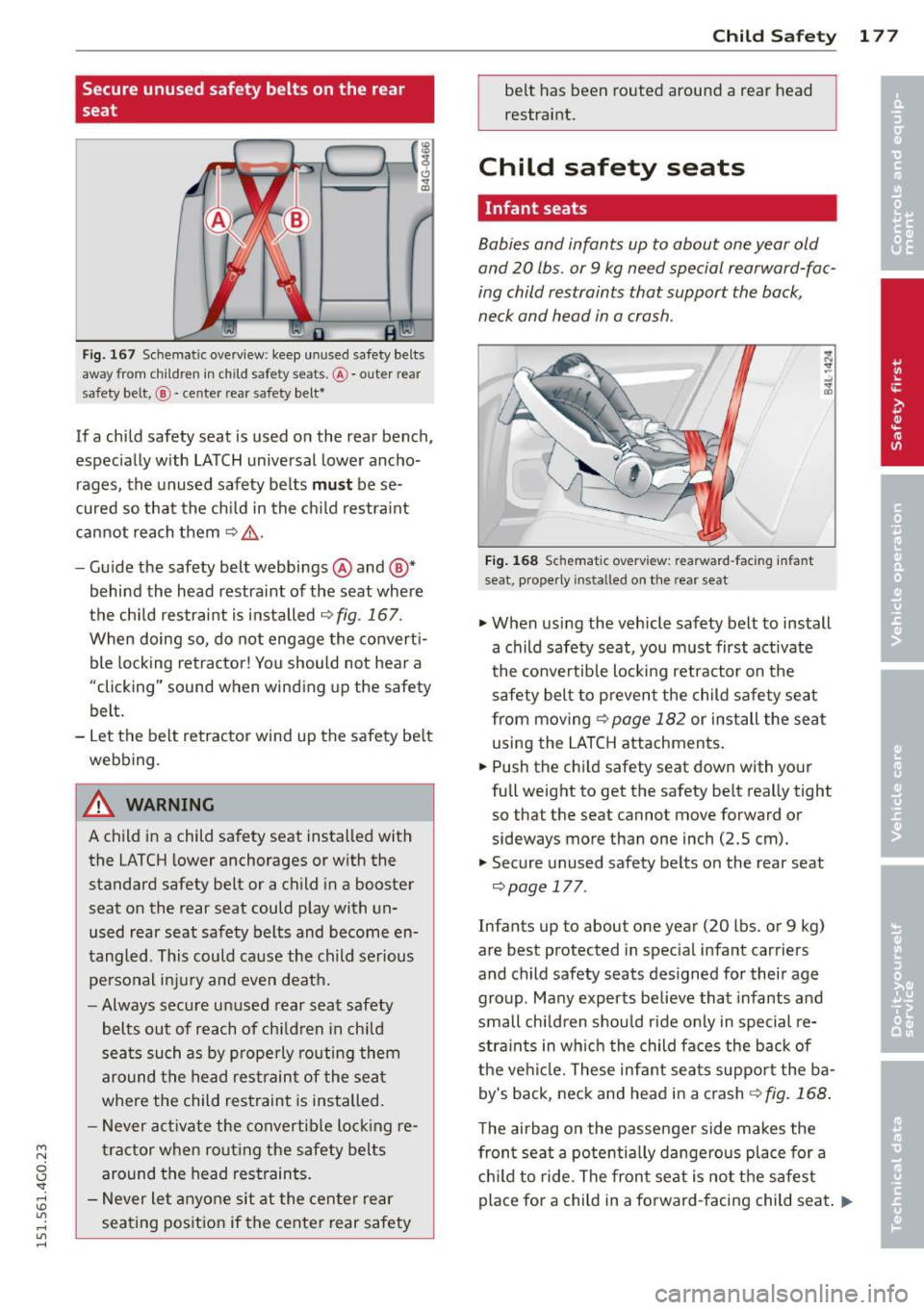
Fig . 167 Schematic overview: keep unused safety belts
away from chi ldren in child safety seats. @-outer rear
safety belt,
@-center rear safety belt*
If a child safety seat is used on the rear bench,
especially with LATCH universal lower ancho rages, the unused safety belts
must be se
cured so that the child in the child restraint
cannot reach them
Q ,&. .
- Guide the safety belt webbings@and @*
behind the head restraint of the seat where
the child restraint is installed
Q fig . 167.
When doing so, do not engage the converti ble lock ing retractor! You should not hear a
"clicking" sound when winding up the safety
belt.
- Let the belt retractor wind up the safety belt
webbing.
A WARNING
A child in a child safety seat installed with
the LATCH lower anchorages or with the
standard safety belt or a child in a booster
seat on the rear seat could play with un
used rear seat safety belts and become en
tangled. This could cause the child serious
personal injury and even death.
-Always secure unused rear seat safety
belts out of reach of children in child
seats such as by properly routing them
around the head restraint of the seat
where the child restraint is installed.
- Never activate the convertible locking re
tractor when routing the safety belts
around the head restraints.
- Never let anyone sit at the center rear
seating position if the center rear safety
Child Safety 177
belt has been routed around a rear head
restraint.
Child safety seats
Infant seats
Babies and infants up to about one year old
and 20 lbs. or
9 kg need special rearward-fac
ing child restraints that support the back,
neck and head in a crash .
Fig. 168 Schematic overview: rearward -facing infant
seat, properly installed on the rear seat
~ When using the vehicle safety belt to install
a child safety seat, you must first activate
the convertible locking retractor on the
safety belt to prevent the child safety seat
from moving
Qpage 182 or install the seat
using the LATCH attachments.
~ Push the child safety seat down with your
full weight to get the safety belt really tight
so that the seat cannot move forward or
sideways more than one inch (2.5 cm).
~ Secure unused safety belts on the rear seat
Qpage 177.
Infants up to about one year (20 lbs. or 9 kg)
are best protected in special infant car riers
and child safety seats designed for their age
group. Many experts believe that infants and
small children should ride only in special re
straints in which the child faces the back of
the vehicle. These infant seats support the ba by's back, neck and head in a crash ¢
fig. 168.
The airbag on the passenger side makes the
front seat a potentially dangerous place for a
child to ride. The front seat is not the safest
place for a child in a forward-facing child seat . ..,_
Page 181 of 314
M N
0 <.J 'SI: ,...., \!) ..,.,
,...., ..,., ,....,
~ When using the vehicle safety belt to insta ll
a chi ld safety s eat, you must first activate
the convertible locking retractor on the
safety belt to prevent the ch ild safety seat
from moving
c:::, page 182 or install the seat
us ing the LA TCH attachments.
~ Push the child safety seat dow n with your
full weight to get the safety belt rea lly t ight
so that the seat cannot move forwa rd or
s ideways more than one inch ( 2.5 cm)
c:::, page 182 .
~ If the child safety seat is equ ipped with a
tether strap, attach it to the tether anchors
c:::, page 188.
~ Secure unused safety belts on the rear seat
c:::, page 177.
A toddler or child is usually too large for an in
fant restraint if it is more than one year o ld
and weighs more than 20 lbs. (9 kg) .
Todd lers and c hildren who are older than one
year up to abo ut 4 years o ld and weigh more
than 20 lbs (9 kg) up to 40 lbs. (18 kg) must always be properly restra ined in a ch ild safety
seat certified for the ir s ize and weight
c:::, fig . 169 and c:::, fig . 170 .
The airbag on the passenger side makes the
fro nt seat a poten tially dangerous place for a
chi ld to r ide . The front seat is not the safest
p lace for a ch ild in a forwa rd-fac ing ch ild safe
ty seat .
It is a very dange ro us p lace for an in
fant or a la rger chi ld in a rearwa rd-fa cing seat.
A WARNING
Not using a ch ild safety se at, using the
w rong chi ld safety seat or improper ly in
stalling a child res traint increases the risk
of se rious personal injury and death in a
co llision or other emergency s ituation.
- Children on the front seat of any car,
even with Advanced Ai rbags, can be seri
o usly injured or even killed when an a ir
bag inf lates. A child in a rearward-facing
child safety seat installed on the front
passenge r seat w ill be seriously injured
and can be kil led if the front ai rbag in-
-
Child Sa fet y 1 79
flates -even with an Advanced Airbag
System .
- The inflating airbag will hit the ch ild
safety seat or infant carrier with great
force and will smash the child safety seat
and child against the backrest , center
arm rest, door or roof.
- Always install rear-fac ing ch ild safety
seats on the rear seat .
- If you must install a rearward fac ing
child safety seat on the front passenger
seat because of exceptional c ircumstan
ces and the
PASSENGER AIR BAG OFF
light does not come on and stay on, im
mediately ins ta ll t he rear-fac ing ch ild
s afety se at in a rear se ating position and
have the airbag system inspected by your
Au di dea le r.
- Th e rear side o f the child sa fety seat
should be pos itione d as close as possi ble
to the backrest on the vehicle seat.
- For a djustab le head restra ints: adjust or
remove the rear seat hea d restra int if it
is difficult to install the child seat w ith
the head restraint in place
c:::, page 56. I n
stall the head restraint again immed iate
ly once the child seat is removed. Dr iv ing
without head restraints o r with head re
straints that are not properly adjusted
increases the risk of serio us or fatal ne ck
in ju ry drama tic ally.
- Always rea d and heed all WAR NINGS
wheneve r us ing a child restrained in ave
hicle i s being used
c:::, page 13 6, Safety
bel ts,
c:::, page 1 45, Airbag system and
c:::, page 171, Important things to know .
A WARNING
If exceptional circ ums tan ces require the
use of a forward -facing child restraint on
the front passenger 's seat, the child's safe
ty and we ll-being req uire that the fo llow
ing spec ial precautions be taken:
- Make sure the forward-facing seat has been designed and cert ified by its man u
facturer fo r use on a fro nt seat with a
passenger front and side airbag .
•
•
-
Page 183 of 314
M N
0 <.J 'SI: ,...., \!) 1.1'1 ,...., 1.1'1 ,....,
~ Secure unused safety belts on the rear seat
¢ page 177 .
Children up to at leas t 8 years old (over 40 lbs
or 18 kg) are best protected in chi ld safety
seats designed for their age and weight . Ex
perts say that the ske letal structure, particu
larly the pelvis, of these chi ldren is not fu lly
developed, and they must not use the vehicle
safety belts without a su itable child restraint.
It is usually best to put these children in ap
propriate booster seats. Be sure the booster
seat meets all applicable safety standards .
Booster seats raise the seating position of the
chi ld and reposition both the lap and shou lder
parts of the safety belt so that they pass
across the child 's body in the right places. The
routing of the belt over the child's body is very
important for the ch ild's protection, whether
or not a booste r seat is used . Children age 12
and under must always ride in the rear seat.
C hi ldren who are at least 4
ft. 9 in. (57 in
ches/1.45 meters) tall can generally use the
vehicle's three po int lap and shoulder belts .
Never use the lap belt portion of the veh icle's
safety be lt a lone to restrain any child, regard
l ess of how b ig the child is. Always remembe r
that children do not have the pronounced pe l
vic structure required for the proper function
of lap belt portion of the ve hicle's three point
l ap and shoulder be lts. The child's safety ab
solutely requ ires that a lap be lt portion of the
safety belt be fastened snugly and as low as
possible around the pelvis. Never let the lap
be lt portion of the safety belt pass over the
child's stomach or abdomen.
In a cras h, airbags must i nflate within a blink
of an eye and with cons iderable force. In orde r
to do i ts job, the airbag needs room to inflate
so that it will be there to p rotect the o ccupant
as the occupant moves forward into the air
bag.
A vehicle occupant who is out of pos ition and
too close to the airbag gets i n the way of an
inflat ing a irbag. When an occupant is too
close, he or she w ill be str uck violen tly and
Child Sa fet y 181
will receive se rious or possib ly even fatal in
jury .
In orde r fo r the airbag to offer pro te ction, i t is
important tha t all veh icle occupants, espec ial
ly any children, who m ust be in the front seat
because of exceptiona l circumstances, be
properly restrained and as far away from the
airbag as possible . By keeping room between
the child's body and the front of the passen
ger compartment, the a irbag can inflate com
pletely and provide supplemental protection
in certain frontal collisions .
_&. WARNING
Not using a booste r seat, using the boos
ter se at imp roperly, incorrectly installing a
boos ter sea t or using the vehicle safety
belt imp roperly increases the risk of seri
ous persona l injury and death in a collision
or other emergency situat ion. To he lp re
duce the risk of serious personal injury
and/or death:
- The shou lder belt must lie as close to the
center of the ch ild's collar bone as possi
ble and must lie f lat and snug on the up
per body . It must never lie across the
throat or neck . The lap belt must lie
across the pelvis and neve r across the
s tom ach o r abd omen. Make sure t hat the
be lt lies flat and sn ug. Pull on the bel t to
tighten if necessary.
- Failure to p roperly ro ute safety belts
over a child's body will ca use seve re inj u
ries in an accident or othe r emergency
situation ¢
page 136.
-The rear side o f the child sa fety seat
should be pos itioned as close as possib le
to the backrest on the vehicle seat.
- For adj ustab le head restraints: adjust or
remove the rea r seat head restraint if it
is difficult to install the child seat w ith
the head restraint in place¢
page 56. In
stall the head restraint again immed iate
ly once the child seat is removed. Dr iv ing
without head restraints o r with head re-
.
straints that are not properly adjusted ~
•
•
Page 186 of 314
184 Child Safety
-Always be especially careful if you must
install a rearward facing child safety seat
on the front passenger seat in exception
al circumstances.
- Make sure that the
PASSENGER AIR BAG
OFF
light comes on and stays on all the
time whenever the ignition is switched
on.
- If the
PASSENGER AIR BAG OFF light
does not come on and stay on, immedi
ately install the rear-facing child safety
seat in a rear seating position and have
the airbag system inspected by your Audi dealer.
Activating the convertible locking retractor
Use the convertible locking retractor to se
cure a child restraint.
Always heed the child safety seat manufactur
er's instructions when installing a child re
straint in your vehicle. To activate the conver
tible locking retractor:
"" Place the child restraint on a seat, prefera
bly on the rear seat.
""Slowly pull the belt
all the way out.
""Route it around or through the child re
straint belt path¢,&. .
"" Push the child safety se at down with you r
full weight to get the safety belt really tight.
"" Insert the belt tongue into the buckle for
that seating position.
""Guide the safety belt back into the retractor
until the belt lies flat and snug on the child
safety seat.
""You should hear a "clicking" noise as the
belt winds back into the inertia reel. Test the
convertible locking retractor by pulling on
the belt. You should no longer be able to
pull the belt out of the retracto r. The con
vertible locking retractor is now activated.
"" Make sure that the red release button is fac
ing away from the child restraint so that it
can be unbuckled quickly .
""Pull on the belt to make sure the safety belt
is properly tight and fastened so that the seat cannot move forward or sideways more
than one inch (2.5 cm).
A WARNING .,__
Using the wrong child restraint or an im
properly installed child restraint can cause
serious personal injury or death in a crash.
- Always make sure that the safety belt re-
tractor is locked when installing a child
safety seat. An unlocked safety belt re
tractor cannot hold the child safety seat
in place during normal driving or in a
crash.
- Always buckle the child safety seat firmly
in place even if a child is not sitting in it.
A loose child safety seat can fly around
during a sudden stop or in a crash.
- Always make sure the seat backrest to
which the child restraint is installed is in
an upright position and securely latched
into place and cannot fold forward. Oth
erwise, the seatback with the child safety
seat attached to it could fly forward in
the event of an accident or other emer
gency situation.
- Always read and heed all WARNINGS
whenever using a child restrained in ave
hicle is being used
¢ page 171. Special
precautions apply when installing a child
safety seat on the front passenger seat
¢ page 147, Child restraints on the front
seat -some important things to know.
Deactivating the convertible locking
retractor
-
The convertible locking retractor for child re
straints will be deactivated automatically when the belt is wound all the way back into
the retractor.
"" Press the red button on the safety belt buck
le. The belt tongue will pop out of the buck
le.
""Guide the safety belt all the way back into
its stowed position .
Always let the safety belt retract completely
into its stowed position. The safety belt can
IJll-
Page 207 of 314
M N
0 <.J 'SI: ,...., \!) ..,.,
,...., ..,., ,....,
Trailer towing Driving with a trailer
General information
Your Audi was designed primarily for passen
ger transportation .
If you plan to tow a tra iler, p lease remember
that the addit ional load will affect durab ility,
economy and performance .
Trailer towing not on ly places more stress on
the vehicle, it also calls for more concentra
tion from the driver.
F or this reason, a lways fo llow the operating
and driving instructions provided and use
common sense.
(D Note
If you are going to tow a trai le r, you must
ac tivate the trailer operation mode
c::> page 205, Operating instructions.
Technical requirements
Trailer hitch
Use a weig ht-carrying hitch conforming to the
gross trailer we ight. The hitch must be suita
b le for your veh icle and trailer and must be
mounted secure ly on t he ve hicle's chassis at a
technically sound location . Use only a trail er
hi tch w ith a removab le ball moun t. A lways
check wi th t he tra ile r hi tch man ufactur er to
make sure that you are using the cor rect
h itch.
Do not us e a bumper hitch.
The hitc h m ust be installed in such a way that
i t does not interfe re with the impac t-absorb
i ng bumper syst em. No mod ificat ions should
b e made to the vehi cle e xhaus t and br ake sys
tems . From t ime to time, check th at a ll hitc h
mo unt ing bo lts rem ain securely fas tened.
When you are not towing a trail er, remove the
tra ile r hi tch ball moun t. T h is prevents the
hi tch from causing damage sho uld your ve hi
cle be str uck from behind~ .& .
Trailer towin g 205
Trailer brakes
If your trailer is equippe d wi th a bra king sys
tem, check to be s ure that i t conforms to all
regulations .
T he trailer hyd ra u lic bra ke sys tem mus t not be
d irec tly connec ted to the vehicle's hydraulic
brake system .
Safety chains
Always use safety chains be tween your ve hicle
and t he tra ile r.
Trailer lights
Trai ler lights must meet all reg ulations. Be
su re to c heck with your Audi dea ler for correct
wir ing, switches and relays .
Mirrors
If you a re unable to see the traffic behind you
u sing the regula r outside mirrors, then you
must insta ll extended mir rors. It is important
t h at you
always have clea r vis io n to the rear.
_&. WARNING
-
Afte r removi ng the t railer hitch , do no t
stor e it in yo ur v ehicl e. In case of sudden
b raki ng, the hi tch co ul d fly forwar d and in
j ur e you o r yo ur pass enge rs.
Operating instructions
Maximum trailer weight
A tra ile r fo r you r vehi cle is l imited to a typi cal
cla ss 1 o r class 2 tr ailer.
Trailer load distribution
Be sure the load in the tra ile r is held secure ly
in place to p revent it from shift ing fo rward,
ba ckward or sideways.
Never allow a passenger to ride in a trailer
c::> .& in Driving instructions on page 207 .
Eng ine cooling sy stem
Towing a t railer ma kes the engine wor k hard
er . It is impo rtant that the cooling system's
performance is up to the additional load.
•
•