check engine AUDI S6 2016 User Guide
[x] Cancel search | Manufacturer: AUDI, Model Year: 2016, Model line: S6, Model: AUDI S6 2016Pages: 294, PDF Size: 73.88 MB
Page 111 of 294
-Before driving down a steep slope, reduce
your speed and shift into a lower gear with
"tiptronic" .
- Do not ride the brakes or press the brake
pedal too often or too long when driving
down a hill. Constant braking causes the
brakes to overheat and substantially re
duces braking performance, increases brak
ing distance or causes complete failure of
the brake system .
- To prevent the vehicle from rolling back
when stopping on inclines, always hold it in
place with the brake pedal or parking brake.
- Never hold the vehicle on an incline with a
slipping clutch. The clutch opens automati
cally when it becomes too hot from the
overload. An indicator lamp
l!] illuminates
and a driver message appears
¢ page 111
when the clutch is overloaded.
- If the engine must remain running, never
have any driving position engaged when
checking under the hood. Make sure these
lector lever has securely engaged and is
locked in P with the parking brake set
¢ page 216 . Otherwise, any increase in en
gine speed may set the vehicle in motion,
even with the parking brake applied .
(D Note
-When stopping on an incline, do not try to
hold the vehicle in place by pressing the ac
celerator pedal while a driving gear is se
lected . This can cause the transmission to
overheat and can damage it. Activate the
parking brake or press the brake pedal to
prevent the vehicle from rolling.
- Allowing the vehicle to roll when the engine
is stopped and the selector lever is in
N will
damage the transmission because it is not
lubricated under those circumstances.
(D} Tips
For safety reasons, the parking brake is re
leased automatically only when the driver's
safety belt is engaged in the buckle.
Automatic transmission
Hill descent control
Hill des cent control assists the driver when driv
ing down hills .
Hill descent control is activated when the sele c
tor lever is in the D or S posi tion and you press
the brake pedal. The transmission automatically selects a gear that is suitable for the incline. Hill
descent control tries to maintain the speed ach
ieved at the time of braking, within physical and
technical limitations . If may still be necessary to
adjust the speed with the brake pedal.
Hill descent control switches off once the hill lev
els out or you press the accelerator pedal.
On vehicles with a cruise control system*
¢ page 82, hill descent control is also activated
when the speed is set.
,&. WARNING
Hill descent control cannot overcome physical
limitations, so it may not be able
to maintain
a constant speed under all conditions. Always
be ready to apply the brakes.
109
Page 191 of 294
Intelligent Technology
ESC levels Sport mode on Sport mode off
Behavio r
The ESC and ASR stabilization functions The fu ll stabilization function of the ESC
are limited ¢ .&. . and ASR is avai lable again.
Operation Press the I .a OFF I button.
Press the I.a OFFI button again .
Indicator II turns on. II turns off.
lights
Driver mes- Stabilization control (ESC): sport. Warn- Stabilization control (ESC): on
sages ing! Restricted stability
A WARNING
Only switch sport mode on when your driving
abilities and the traffic s ituation permit, be
cause there is a r isk of slid ing .
- The stabilization function is limited when
sport mode is sw itched on. The driving
wheels could spin and the vehicle cou ld
swerve, espec ially on slick or slippery road
surfaces .
(D Tips
Sport mode cannot be sw itched on if the
cru ise control system* or adaptive cruise con
trol* is switched on.
Braking
What affects braking efficiency?
New brake pads
During the first 250 miles (400 km), new brake
pads do not possess the ir full braking effect, they
have to be "broken in" first¢.&. . You can com
pensate for this slightly reduced braking power
by push ing harder on the brake pedal. Avoid
h eavy braking loads during the break-in period .
Operating conditions and driving habits
The brakes on today's automobiles are still sub
ject to wear , depend ing largely on operating con
d itions and dr iving habits ¢.&. . On veh icles that
are e ither dr iven most ly in stop-and-go city traf
fic or are driven hard, the brake pads should be
checked by your authorized Audi deale r more of
ten than specified in the
Warranty & Mainte
nance booklet.
F ailure to have your brake pads inspected can result
in reduced brake perform
ance.
On steep slopes, you should use the braking ef
fect of the engine. This way, you prevent un nec
essa ry wea r on the brake system. If you must use
you r brakes, do not hold the brakes down contin
u ous ly. Pump the brakes at intervals.
Operating noise
Noises may occur when braking depending on the
speed, bra king fo rce and outside conditions such
as temperature and humidity.
Effect of water and road salt
In certain situations, for example after driving
through water, in heavy rain, after overn ight con
densation or afte r wash ing your car, the brak ing
effect can be reduced by moisture or ic e on the
brake rotors and brake pads. The brakes must be
dried f irst with a few careful brake applications .
At h igher speeds and w ith the windshield wipers
turned on, the brake pads press against the brak e
rotors for a short amount of time. This occurs at
regular intervals without the driver noticing and
provides for better brake response t ime under
wet conditions.
T he effectiveness of the brakes can be reduced
when the vehicle is driven on a sa lt-covered road
and the brakes are not used . Likewise, yo u clean
off accum ulated salt coating from brake discs
and pads with a few cautious applications of the
brake¢ .&..
Corrosion
There may be a tendency fo r dirt to build up on
the brake pads and corrosion to form on the discs .,..
189
Page 192 of 294
Intelligent Technology
if the car is not driven regularly or only for short
trips with little use of the brakes.
If the brakes are not used frequently , or if corro
sion has formed on the discs, it is advisable to
clean off the pads and discs by braking firmly a
few times from a moderately high speed¢& .
Faults in the brake system
If you should notice a sudden increase in brake
pedal travel, then one of the two brake circuits
may have failed ¢
&..
Low brake fluid level
Malfunctions can occur in the brake system if the
brake fluid level is too low. The brake fluid level
is monitored e lectronically .
Brake booster
The brake booster works with vacuum pressure
which is created only when the engine is running
c:;> &, .
Brake lining wear status
Brake lining wear may be checked by visual in
spection of the condition of the brake pads
through the openings in the wheel. If necessary,
the wheel may be removed for this inspection
c;> page 253, Replacing wheels .
A WARNING
-New brake pads don't have the best stop
ping power and must be "broken- in" dur ing
the initial 250 miles (400 km) . You can
compensate for this by pressing the brake
pedal more firmly. This also applies later
when new pads are installed.
- You should perform braking maneuvers for
the purpose of cleaning the brake system
only if road conditions permit. Other road
users must not be put at risk -you may
cause an accident!
-
- Before descending a steep grade, reduce
speed and shift transmission into a lower
gear or lower driving range. Do not ride the
brakes or hold the pedal down too long or
too often . This could cause the brakes to get
hot and diminish brak ing efficiency.
190
- Do not "ride the brakes" by resting your foot
on the pedal when you do not intend to brake. This may cause the brakes to over
heat, premature wear and increased stop
ping distance.
- Under certain climatic and operating condi
tions such as passing through water, driving in heavy rain or after washing the vehicle,
the effectiveness of the brakes can be re
duced. In winter, ice can accumulate on the
brake pads, linings, discs and drums. Care
fully apply brakes for a test. Brakes will dry
and ice coatings will be cleaned off after a
few careful brake applications .
- Driving for an extended period of time on
salt-covered roads without using your
brakes can also affect braking efficiency .
Clean off accumulated salt coating from brake discs and pads with a few careful
brake applications.
- If you damage the front spoiler, or if you in
stall a different spoiler, be sure the air flow
to the front brakes is not obstructed. Other
wise the brake system could overheat reduc
ing the effectiveness of the entire brake sys
tem.
- Fa ilure of one brake circuit will impair the
braking capability resulting in an increased
stopping distance. Avoid driving the vehicle
and have it towed to the nearest Audi dealer
or qualified workshop.
- Never let the vehicle roll to a stop with the
engine shut off.
- If the brake booster is not working, the
brake pedal must be pressed considerably
harder to make up for the lack of booster
assistance.
Electromechanical
steering, dynamic
steering
The electromechanical steering supports the
driver's steering movements.
Power steering adapts electronically based on
the vehicle speed.
Page 199 of 294
Reducing unnecessary idling
Even when your car is just idling it burns up fuel.
~ Shut the engine off when you are not driving
the vehicle.
~ Do not warm up the vehicle by letting the en-
gine run at idle .
The idling phase is automat ically reduced for
veh icles w ith the Start-Stop-System. It is effi
cient to switch off the engine in vehicles without
the Start-Stop-System when stopped at ra ilroad
crossings and long red lights . Turning the engine
off for just 30-40 seconds saves more fuel than is
b ur ned by sta rting the engine ag ain.
It takes a long t ime for the engine to warm up
fu lly when it is runni ng at idle . Howeve r, wear
and noxio us emiss ions a re espe cially high when
the eng ine is wa rm ing up. So you sho uld d rive
away as soon as you sta rt the engi ne and avoid
r u nning at high rpms whi le the engine is still
warming up .
(D Note
Do not leave engine id ling unatten ded a fter
starting . If warning lights should come on to
indicate im proper operation, they wou ld go
unheeded. Extended id ling a lso produces
heat, wh ich could result in overheat ing or
other damage to the vehicle or other proper
ty.
Regular maintenance
A badly tuned engine unnecessarily wastes a lot of fuel.
~ Have your veh icle serviced at regu lar intervals.
By having your veh icle reg ularly serviced by an
Audi dea ler helps to ensure that it runs proper ly
and econom ica lly. The condition of your veh icle
not on ly affects its safety and ability to ho ld its
va lue, it a lso affects
fuel consumption .
Check you r oil each time you fill your tank.
The amount of oil use d i s re lated to e ngine lo ad
a nd speed.
Driving and the envir onment
It is normal for the oil consumption of a new e n
gine to reach its lowest value after a certain mi le
age has been dr iven.
Yo u m ust dr ive your ve hicl e abou t 3,0 00 m iles
(S, 000 kilometers) befo re yo u can properly as
sess oil consumption .
T h is also ap plies to f ue l cons umption and eng ine
o utput .
CD Note
-Have your ve hicle maintained pro perly and
in acc ordance w ith the se rvice rec ommend a
ti ons i n your W arra nty
& M ain ten ance book
let . Lack of proper maintenan ce as we ll as
improper use of the ve hicl e w ill impair the
function of the em ission cont rol system and
co uld lead to damage.
- Do not alte r or remove any component of
the Emission Contro l System unless ap
proved by the man ufacturer.
- Do not alte r or remove any device, such as
heat shields, switches, ign it ion w ires,
valves, which are designed to protect your
vehicle's Emission Contro l System a nd othe r
im por tan t ve hicle components .
Fewer short trips
Fuel consumption will always be relatively high
on short trips.
~ Try to avo id driv ing short distances with a cold
eng ine .
T he engine and cata lytic conve rter have to reach
their opt imal
operating temperature to reduce
fuel consumpt io n and noxious emiss ions effec
tively.
Just afte r starting, a cold engine in a mid-size car
only achieves a fuel economy of 6-8 m iles per
gallo n (30-40 l/ 100 km) . After about a half a
mile, fuel economy climbs to 12 mpg (20 l/100
km) . Afte r about
2 .5 m iles (4 km), the eng ine is
at its p roper operat ing temperature and fue l
eco nomy has reached a no rma l level. So yo u can
see th at yo u should avoid short trips w heneve r
poss ible. .,.
197
Page 201 of 294
Trailer mode Driving with a trailer
General information
Your Audi was designed primarily for passenger
transportation .
If you plan to tow a trailer, please remember that
the additional load will affect durability, econo
my and performance.
T railer tow ing not only p laces more stress on the
vehicle, it a lso calls for more concentration from
the dr iver.
F or this reason, always follow the operating and
driving instructions provided and use common
sense.
(D Note
If you are going to tow a trailer, you must ac
tivate the trai ler operation mode
¢ page 199, Operating instructions.
Technical requirements
Tr ailer hitch
Use a weight -carrying hitch conforming to the
gross tra iler weight. The h itch must be suitab le
for your vehicle and tra ile r and must be mo unted
securely on the vehicle's chassis at a
technically
sound
location . Use on ly a trailer hitch with a re
movable ba ll mou nt. Always che ck wit h the t rail
e r hitch manufac turer to make s ure that you a re
usi ng the co rrect hitch .
Do not use a bumper hitch .
The hitch must be installed in such a way that it
does not interfere with the impact -absorbing
bumper system . No mod ifica tions should be
made to the vehicle exhaust and brake systems .
Fr om time to time, chec k that all hitch mo un ting
bo lts rem ain securely fastened.
W hen you are not tow ing a trailer,
remove the
tra iler hitch ba ll mount . This prevents the hitch
from ca u sing damage s hou ld your veh icle be
struck from behind
¢ .&, .
Trailer mode
Trailer brakes
If your traile r i s equ ipped with a b raking sys tem,
c h ec k t o be sure that it con forms to a ll regu la
tions.
T he tra ile r h ydr aulic bra ke sy stem must not be
directly con nected to the vehicle's hydr aulic
brake sy stem.
Safety chains
Always use safety chains between your vehicle
and the tra iler .
Trailer lights
Trailer lights must meet all regulations. Be sure
to check w it h your Aud i dealer for correct wir ing,
swi tches and relays .
Mirrors
If you are unab le to see the traffic behind you us
ing the regular outside mirrors, then you
must in
stall extended mirrors . It is important that you
always have clear vision to the rear .
A WARNING
--
After remov ing the tra ile r hi tch, do not sto re
i t in yo ur vehicle. In case of sudde n brak ing,
t he hitch could fly fo rwa rd and injure you or
your passengers.
Operating instructions
Maximum trailer weight
A traile r for yo ur vehicle is lim ited to a typical
cla ss 1 or class 2 trailer.
Trailer load distribut ion
Be sure the load in the tra iler is held secure ly in
place to p reve nt it from shifting forward, back
ward o r sideways.
Ne ver allow a passenger to ride in a trailer¢.&.
in Driving instructions on page 201 .
Engine cooling system
Towing a tra ile r makes the engine wor k harder. It
is important that the cooling system's perform
ance is up to the additional load. Make sure that
the cool ing system has enoug h fluid . .,..
199
Page 202 of 294
Trailer mod e
Tire pr essure
When tow ing a tra iler, inflate the tires of you r
veh icle to the cold tire pressure listed under "Fu ll
load" on the label located on the driver's side B
pillar (visib le when the door is open) . Inflate
trai ler tires to trailer and tire manufacturers'
specifications.
Light s
Check to make sure both vehicle and trailer lights
are working proper ly.
Safet y chains
Be sure t railer safety chains are properly connect
ed from the trailer to the h itch on the veh icle.
L eave enough slack in the chains to permit turn
ing corners . When yo u install safety chains, make
sure they wi ll not drag on the road when you are
driving.
The chains shou ld cross under the trailer tongue
to prevent it from dropping in case of separation
from the hitch .
Adjusting the Audi d rive select
Make sure the vehicle is on a level surface bef ore
hitching up the t railer and bef ore adjust ing the
tongue we ight . The vehicle must be in
auto or
comf ort driving mode and not raised
r::!> page 100, r::!> 0 .
Make sure that the vehicle is lowered. In Info
tainment, select:
ICARI function button > Lower
control button .
I f you m ust dr ive under poor road condit ions, you
can ra ise the vehicle
afte r coup ling the t rai ler or
after adjusting the tongue weight r:!> page 102.
(D Note
-Changes in tempe rature or load can affect
the he ight of the vehicle.
- Always se lect
auto or comfort mode. Othe r
wise, the tongue load spec ified for yo ur ve
hicle w ill no longer be applicable .
200
· Driving instructions
Driving with a trailer always requires extra care
and consideration .
To obtain the best possible hand ling of veh icle
and trailer, please note the following:
.,. Do not tow a loaded trailer when your car itself
is not loaded .
.,. Be especially careful when passing other
vehicles .
.,. Observe speed limits .
.,. Do not dr ive at the maximum permissible
speed.
.,. Always app ly brakes ea rly.
.,. Monitor the temperat ure gauge.
Weight distribution
Towing a loaded trai ler with an empty car results
i n a h ighly unstab le distribution of weight . If this
cannot be avoided, drive at very low speeds only
to avoid the risk of losing steer ing contro l.
A "balanced" rig is easier to operate and control.
This means that the tow vehicle shou ld be loaded
to the extent possible and permissib le, wh ile
k eeping the trailer as l ight as poss ible under the
c ircu mstances . Wheneve r possib le, transfer
some ca rgo to the luggage compartment of the
tow vehicle while observing tongue load require
ments and vehicle loading considerations.
Speed
The higher the speed, the mo re diff icu lt i t be
comes fo r the driver to con trol the r ig . Do not
drive at the maximum permissible speed. Reduce
your speed even more if load, weather or wind
cond itions are unfavorab le -particularly when
go ing downh ill.
Reduce vehicle speed
i mmed iatel y if the trailer
shows the slightest sign of swaying.
Do not tr y
to stop the swaying by accelerating.
Observe speed limits . In some areas, speeds for
vehicles towing trailers are lower than for regular
vehicles .
Always apply bra kes early. Whe n driving down -
hill, shift into a lower gear to use the engine .,..
Page 211 of 294
fill up at busy gas st ations where the season al
adjustment is more likely to be made in time .
(D Note
-Me thanol f uels which do not mee t these re
quirements may ca use corros ion and dam
age to plastic and rubber components in the
fuel system .
- Do not use fuels that fai l to meet the speci
fied criter ia in this chapter.
- If you are unable to determine whether or not a particular fuel blend meets the speci
ficat ions, ask your service station or its fuel
supplier.
- Do not use fuel for which the contents can
not be identif ied.
- Fuel system damage and performance prob
lems resulting from the use of fue ls differ
ent from those specified are not the respon
s ibility of Audi and are not covered under
the New Veh icle or the Emiss ion Control
System Wa rrant ies.
- If you experience a loss of fue l economy or
driveability and performance prob lems due
to the use of one of these fuel b lends, we
recommend that you switch to unblended
fuel.
Gasoline additives
A ma jo r concern among many au to manufactur
e rs is carbon deposit build-up caused by the type
of gasoline you use.
A lthough gasoline gr ades d iffer from one manu
facturer to ano ther, they have cer tain things in
common . All gasoline grades contain substances
that can cause deposits to collect on v ita l eng ine
parts, such as f uel injectors and intake valves. Al
though most gasoline brands include additives to
keep engine and fuel systems clean, they are not
equally effective.
Aud i recommends using TOP TIER Detergent Gas
oline. For more informat ion on TOP TIER Deter
gent Gasoline, please go to the official website (www .toptiergas .com) .
Fuel and R efueling
After an extended period o f using inadeq uate
fuels, carbon deposit bui ld-ups can rob your en
gine o f peak performance.
(D Note
Damage or ma lf u nction due to poor fuel qual
ity is not covered by the A udi New Vehicle
Limited Warranty .
Diesel fuel
Applies to vehicles: with diesel engine
Always use ULSD (Ultra Low Sulfur Diesel) No. 2 .
The ULSD No . 2 meets the ASTM 0975.
Diesel f uel w it h concen tratio ns of b iod iesel h igh
er than 5 % such as Bl 1, B20 or BlOO are strict ly
prohibited .
Se rvice station fuel p umps are labe led with the
correct f uel i nfo rmat ion for e asy recog nition by
the user.
If the d iesel f ue l pump is no t labeled
ask the station operator what fuel is being dis
pensed before fil ling up your vehicle .
UL SD No . 2 m ay not be available ou tside the USA
and Canada . Be su re to check befo re t raveling to
other countries .
UL SD No . 2 c an become thic ke r i n ve ry cold tem
peratures, and this can imp air the engine's s tart
ing and running. Depend ing on the sea son, gas
stations provide ULSD No . 2 that flows better in
cold temperatures so that you can continue oper
at ing your vehicle as usual.
@ Note
- Your vehicle's diese l engine was designed
soley for use w ith ULSD No . 2 . Therefo re,
neve r use gasoline, heating oil, other fuels
or flow improvers. These contain substances
that will severely damage the fuel system
and the engine . Such damage will not be
cove red by your New Vehicle Limited War
r a nty.
- If you put a ny amo unt of incorrect fuel in
the fuel tank, do not sta rt the eng ine under
any circumstances. Imme diately contact the
ne arest a uthor ized A udi dealer or author
ized Aud i Serv ice Facility fo r ass istance .
209
Page 212 of 294
Fuel and Refueling
These fuels contain substances that can se
verely damage the fue l system and the en
gine if the engine is started .
Refueling
Fuel filler neck
The fuel fill er neck is located on the right rear
side panel beh ind the fuel fil ler flap.
If the power locking system should fail , you can
still open the flap manually - for detailed instruc
tions see ¢
page 212.
You can find the fuel tank capacity of your vehicle
i n
¢ page 271 .
The label on the inside of the fuel filler flap tells
you the correc t fuel for you r vehicle . For more in
formation about fuel specifications , see
¢ page 208 .
Your vehicle fuel t ank has an onboard refuelling
vapor recovery system . This fea tu re helps to pre
vent fuel vapors from escaping from the tank and
polluting the environment while you refuel your
vehicle. In order to fill the tank properly while
protecting the environment, please fo llow this
refueling procedure carefully.
8_ WARNING
Under normal operating conditions, never car
ry additiona l fuel containers in your car. Gas
canisters and other containers used to trans
port fuel can be dangerous . Such containers,
full or empty , may leak and could cause a fire
in a collision . If you must transport fuel to
use for your lawn mower, snow blower, etc.,
be
very careful and always observe local and
state laws regard ing the use, transportation
and storage of such fuel containers. Make cer
tain the container meets industry standards
(ANSI/ASTM F852 -86).
(D Note
Never drive your vehicle until the fuel tank is
completely empty. T he irregular supply of
fue l can cause m isfiring. Gasoline could enter
the exhaust system and damage the catalytic
converter.
210
Refuelling
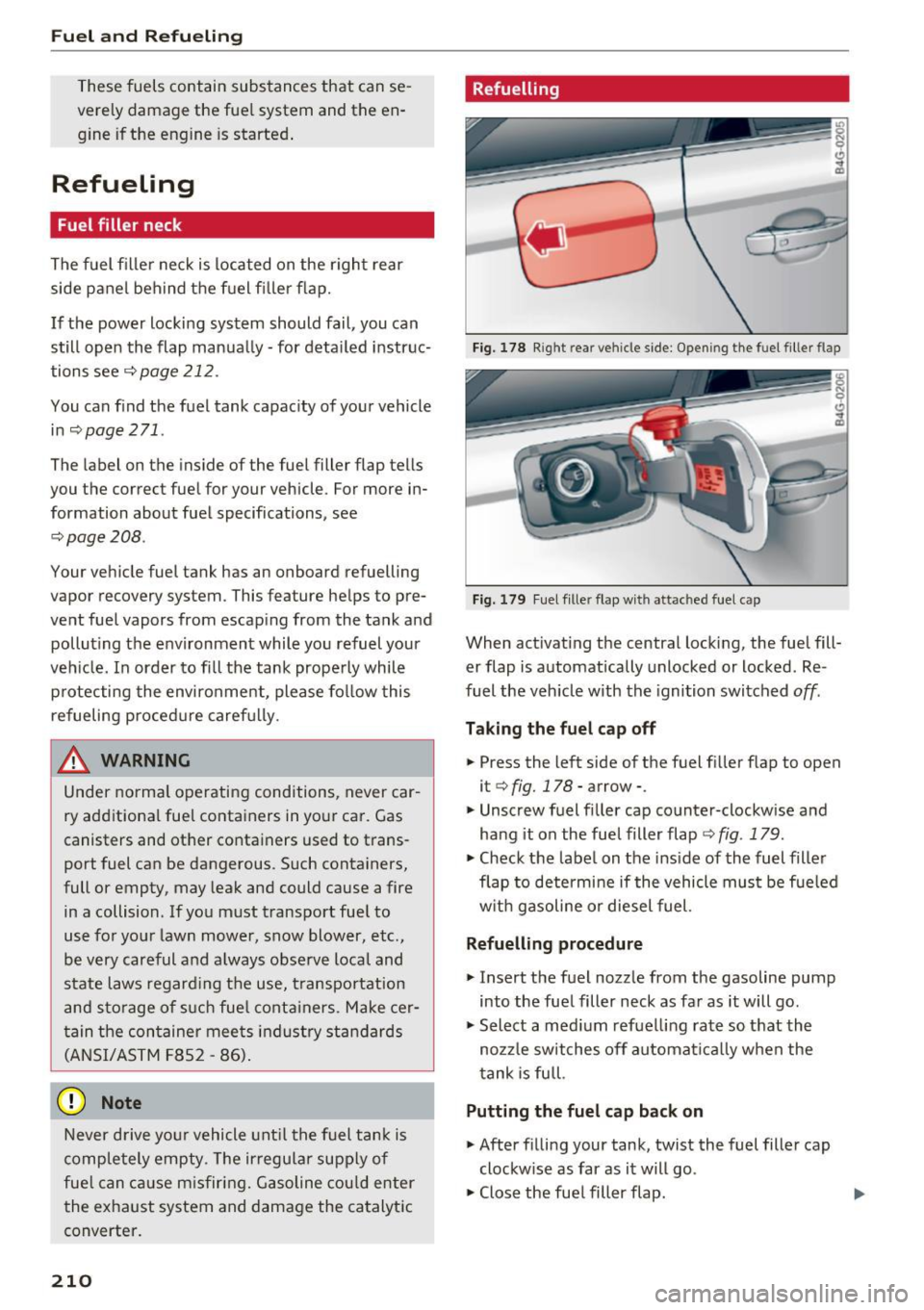
Fig. 178 Righ t re ar v ehicl e side : O penin g the fuel fill er flap
Fig. 179 Fuel fille r flap w it h att ach ed fuel c ap
When act iv a ting the central locking, the fuel fill
er flap is automatically unlocked or locked. Re
fuel the veh icle with the ignition switched
off.
Taking the fuel cap off
.. Press the left s ide of the fuel filler flap to open
i t ¢
fig. 178 -arrow-.
.. Unscrew fuel filler cap counter-clockwise and
hang it on the fuel filler flap~
fig. 179.
.. Check the label on the inside of the fuel filler
flap to determine if the vehicle must be fueled
w ith gasoline or diesel fuel.
Refuelling procedure
.. Insert the fuel nozzle from the gasoline pump
into the fuel filler neck as far as it will go .
.. Select a med ium refuelling rate so that the
nozz le switches off automatica lly when the
tank is full.
Putting the fuel cap back on
.. After filling your tank, twist the fuel filler cap
clockw ise as far as it will go .
.. Close the fuel filler flap.
Page 215 of 294
... N
0 CJ '
Messages in the instrument cluster display
Applies to vehicles: with selective catalytic reduction
The display indicates if the Ad Blue level is low or
if there is a system malfunction .
AdBlue le vel low
You will be informed if the Ad Blue in the tank
drops below a certa in level.
Plea se refill Ad Blue. Range 1500 mi (2400 km )
This message appears whe n there is only eno ugh
Ad B lue lef t to d rive the distance indicated in the
d river i nformation system. Fill the AdBl ue.
AdBlue ,0 Refill AdBlue! No re start in 600 mi
( 1000 km )! See owner 's manual
This message appea rs when there is only eno ugh
Ad Blue left to drive the distance indicated in the
driver info rmation system . Fill the Ad Blue . Ot her
wise the eng ine will not sta rt aga in if you s top it
once the d ist anc e in dicate d ha s been d riven. Yo u
can also check t he remai ning dis tan ce in the on
board com puter* .
Refill Ad Blue! No restart! See own-
er's manual
This message appears whe n the AdBlue ta nk is
empty. F ill the AdB lue. Otherwise you will not be
ab le to s tart the engine aga in once yo u stop it.
The AdBlue must be refilled when t he amount in
the tank has reached the minimum level
q page 213, Filling Ad Blue.
Incorrect filling /system malfunction
A message appears if the AdBlue tank was filled
with a fluid other than AdBlue and the system
has detected that the tan k was fi lled incor rect ly,
or if there is a system malfunction .
Ad Blue -I' Ad Blue: System fault! No restart in
600 mi (1000 km ). See owner's manual.
This message appears when it is only poss ible to
drive the d istance indicated in the dr iver informa
tion system. Drive to the nearest authorized Audi
dealer or authorized Audi Serv ice Facility to have
the ma lfunction co rrected. Otherwise the engine
w ill not start agai n if you stop it once the d is
tance ind icated has been driven .
Fuel and Refueling
AdBlue: System fault No re start!
See owner's manual
T his mess age app ea rs if the sy stem ha s detec ted
t h at the t ank was fi lled incor rec tly or tha t there
is a ma lf u nction . Drive immediate ly to the near
est authorized A udi dealer or authorized A udi
Se rvice Facility to have the ma lf u nction co rrect
ed. Ot herwise you wi ll not be able to start the en
gine again once you stop it .
Filling AdBlue
Applies to vehicles: with selective catalytic reduction
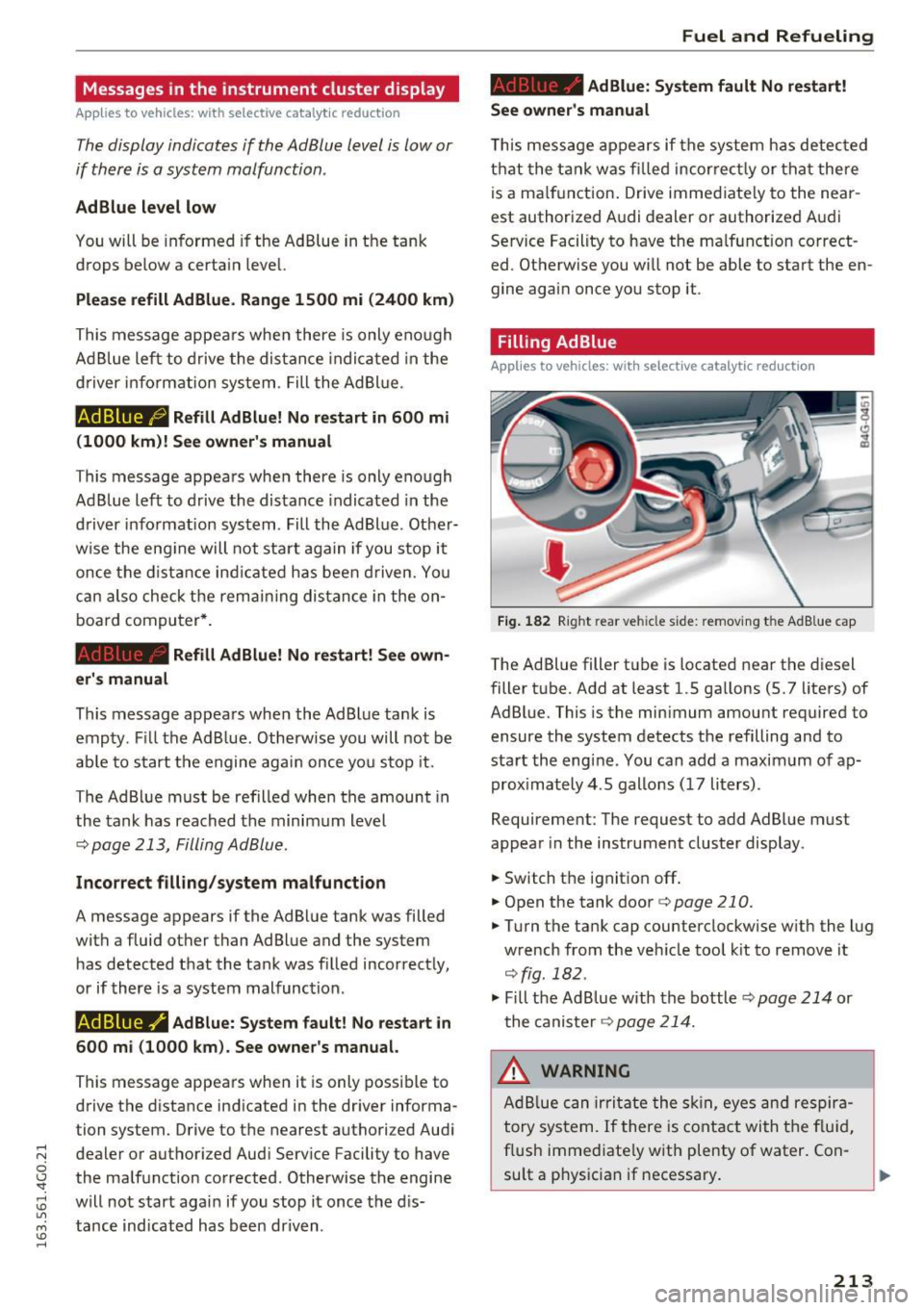
Fig. 182 Right rear vehicle side: removing the Ad Bl ue cap
The Ad Blue filler t ube is located near the d iesel
filler t ube. Add at least 1.5 gallons (5.7 lite rs) of
AdBl ue. This is the min imum amount required to
ensure the system detects the refilling and to
sta rt the eng ine . You can add a maxim um of ap
prox imately 4 . 5 gallons ( 17 li ters) .
Requirement: The request to add Ad Blue must
appear in the instrument cluster display.
.. Switch th e ignition off .
.. Open the tank door
q page 210.
.. Tu rn the ta nk cap counterclockw ise w it h the l ug
w rench from the veh icle tool k it to remove it
qfig. 182.
.,. Fill the Ad Blue with the bottle ~ page 214 or
t he ca nister ~
page 21 4.
.&_ WARNING
Ad Bl ue can ir rit a te the s kin, eyes an d respir a
tory sy stem.
If there is co nta ct wi th t he f lu id ,
f lus h imme diate ly w ith plenty of water . Con-
su lt a p hys ician if necessary .
IJII>
213
Page 218 of 294
Checking and Filling
Checking and Filling
Hood
Releasing the engine hood
The engine hood is released from inside the vehi
cle .
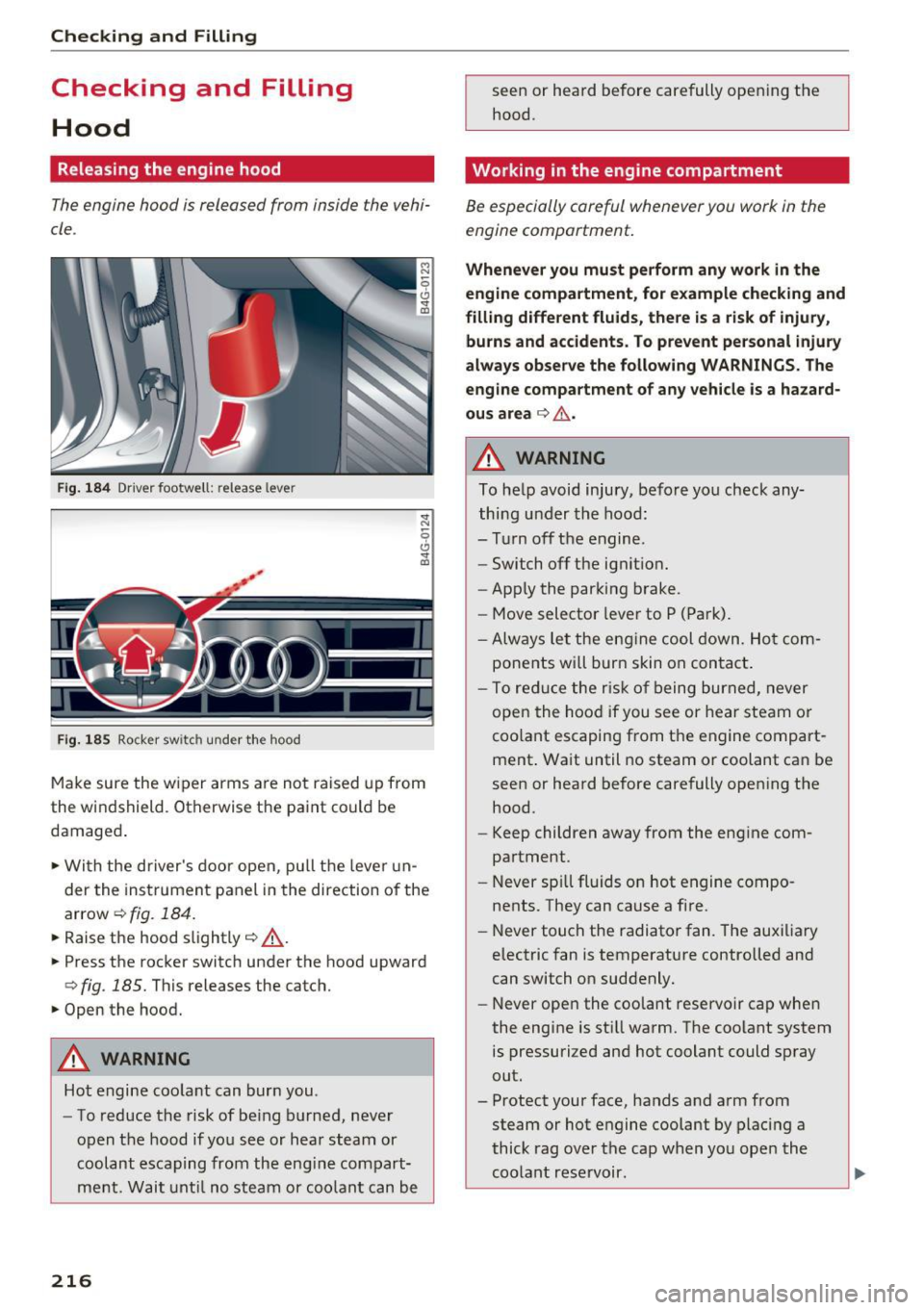
Fig. 184 Driver footwell: release leve r
Fig . 185 Rocker switch under the hood
Make sure the wiper arms are not raised up from
the windshield . Otherwise the paint could be
damaged .
.. With the driver's door open, pu ll the lever un
der the instrument panel in the direction of the
arrow ¢
fig. 184.
.. Raise the hood slightly Q _A .
.. Press the rocker switch under the hood upward
Q fig. 185. This releases the catch.
.. Open the hood.
A WARNING
Hot engine coo lant can burn you .
- To reduce the risk of be ing burned, never
open the hood if you see or hear steam or
coolant escaping from the eng ine compart
ment. Wait unt il no steam or coolant can be
216
seen or heard before carefully open ing the
hood.
Working in the engine compartment
Be especially careful whenever you work in the
engine comportment.
Whenev er yo u mu st perform an y work in the
engin e compartment , for example ch ecking and
filli ng d iffe rent fl uids , the re is a risk of injury ,
bu rn s and a ccid ents . To pre ve nt p erso nal injur y
a lway s obse rve the foll owing WARNING S. The
e ng ine compartment o f an y v ehicl e is a haz ard
ou s a rea
Q _6 .
A WARNING
To he lp avoid injury, before you check any
thing under the hood:
- Turn off the engine .
- Switch off the ignit ion.
- Apply the parking brake.
- Move selector lever to P (Park).
- Always let the eng ine cool down. Hot com-
ponents will burn skin on contact .
-
-To redu ce the risk of being burned, never
open the hood if you see or hear steam or
coo lant escaping from the engine compart
ment . Wait until no steam or coolant can be
seen or heard before carefully open ing the
hood.
- Keep children away from the engine com
partment .
- Never sp ill fluids on hot engine compo
nents. They can cause a fire.
- Never touch the radiator fan. The auxiliary
electric fan is temperature controlled and
can switch on suddenly.
- Never open the coolant reservoir cap when
the engine is sti ll warm. The coolant system
is pressurized and hot coolant could spray
out.
- Protect your face, hands and arm from
steam or hot engine coolant by placing a
thick rag over the cap when you open the
coolant reservoir .