battery AUDI S7 2012 User Guide
[x] Cancel search | Manufacturer: AUDI, Model Year: 2012, Model line: S7, Model: AUDI S7 2012Pages: 294, PDF Size: 73.33 MB
Page 96 of 294
94 Audi side assist
right of your travel lane, depending on wheth
er you drive in the center of your lane or closer
to the edge.
If you drive in narrow lanes, s ide ass ist's de
tection area may a lso include other lanes -es
pecia lly if you tend to drive on the edge of
your lane¢
fig. 99. Under these condit ions,
vehicles can also be detected that are two lanes away, and side assist then could switch
between the informat ional and warning stage
signals .
When driving in very w ide lanes, vehicles in
the adjacent lane may not be detected be
cause they are not inside the detection area .
Notes
Messages in instrument cluster display
Applies to vehicles: with side assis t
If side assist turns off automatically, the indi
cator light on the button wi ll go out and you
will see a message in the instrument cluster
d isplay:
Audi side assist: not available. sensors
blocked
The side assist sensors are built into the rear
bumper on the left and right (not visible on
the outside)
¢ page 88, fig. 91 . To ensure that
you do not adversely affect the way side assist
functions, foreign objects (such as stickers or
b icycle racks) should not be attached to the
a rea on the rear bumper where the sensors
are located. If side assist functions are ad
versely affected, you will see this message in
the instrument cluster display. Remove any
thing that may be blocking the sensors .
If no vehicle is detected for a longer period of
time while driving, side assist will also switc h
off a utomatica lly.
Audi side assist currently not available
If there is a temporary problem (such as the
ve hicle's battery charge being low), s ide ass ist
cannot be activated tempo rari ly.
Audi side assist: system fault
Have the system checked by an authorized Au
di dealer or qualified workshop.
Audi side assist: not available when
towing
T he radar senso r's view is limited when tow
ing a trai le r. For vehicles with a fa ctory instal
led towing hitch or a trailer hitch that was in
stalled later according to factory specifica
tions, side assist is automatically deactivated
as soon as the electrical connection to the
trailer's electrical socket is made, and this sta
tus message appears in the instrument clus
ter display . Deactivation cannot be guaran
teed when using a retrofitted towing hitch
that was
not installed according to factory
specifications.
Safety tips
Appl ies to vehicles : wi th side assist
The side assist detection may be limited when
driving aro und narrow street corners, on hilly
streets, and under poor weather cond itions.
It is possible that the radar sensors may also
detect other objects, such as high or stag
gered guardrails .
Side assist does not measure actual lane
width. The system assumes a fixed lane width.
Detection in the left and right lanes is based
o n this ass umed lane width . When driving on
narrow roads or when driving to the left or
right of the center of a trave l lane, it is poss i
ble that vehicles will be detected that are
not
in the lane next to the lane you are using.
A WARNING
- Improper reliance on the side assist sys
tem can cause collis ion s and serious per
sonal injury:
- Never rely only on side assist when
changing lanes .
- Always check rear view mirrors to make
sure that it is safe to change lanes.
- Side assist cannot detect all vehicles un-
der all conditions- danger of accident! ..,.
Page 109 of 294
Do not continue driving. Select the P se lector
lever position and see your authorized Audi
dealer or qualified repair facility for assis
tance.
(D Note
If the transmission switches to emergency
mode, you shou ld take the vehicle to an
author ized Audi dealership as soon as pos
sible to have the cond ition corrected.
Emergency release of the selector lever
App lies to vehicles: with tiptron ic
If the vehicle's power supply foils, the selec
tor lever con be released in on emergency.
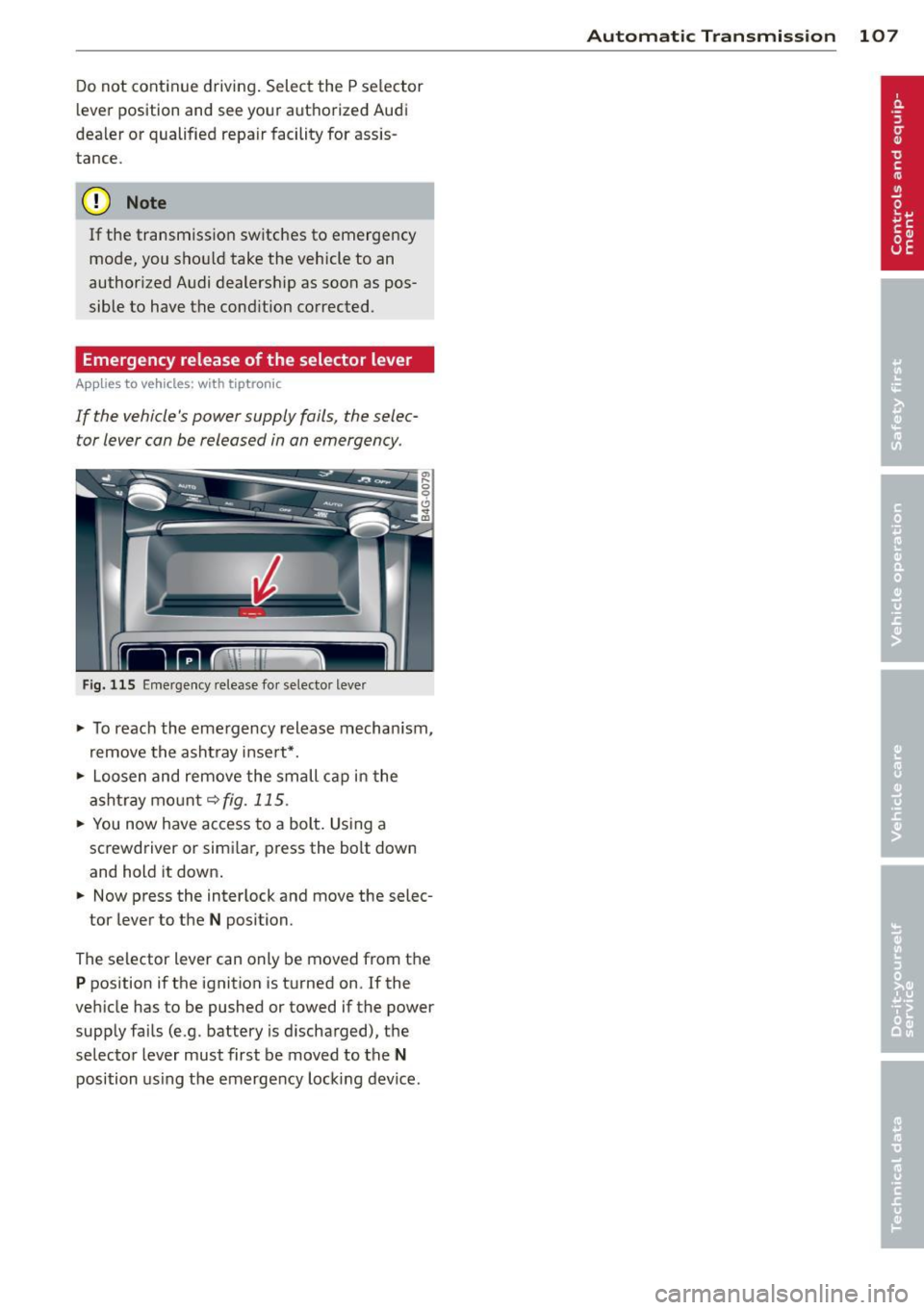
Fig. 115 Emergency release for selecto r lever
• To reach the eme rgency release mechan ism,
remove the asht ray insert*.
• Loosen and remove the small cap in the
ashtray mount<=:>
fig. 115.
• You now have access to a bolt. Using a
screwdriver or simi lar, press the bolt down
and hold it down.
• Now press the inter lock and move the selec-
tor lever to the
N position.
The selector lever can only be moved from the
P position if the ignition is turned on. If the
veh icle has to be pushed or towed if the power
supply fails (e.g. battery is discharged), the
selector lever must first be moved to the
N
position using the emergency locking device.
Automatic Transmission 107
Page 155 of 294
adult is properly seated and restrained at
one of the rear seating positions.
- Have the airbag system inspected by
yo ur Audi dealer before transporting
anyone on the front passenger seat.
(D Tips
If the capacitive passenger detection sys
tem determines that the front passenger
seat is empty, the frontal airbag on the
passenger side will be turned off, and the
P ASS ENGER AIR B AG OFF light will stay
on.
Repair, care and disposal of the airbags
Parts of the a irbag system are installed at
many different places on your Audi. Installing,
removing, servic ing or repairing a part in an
area of the vehicle can damage a part o f an
airbag system and prevent that system from
working properly in a co llision.
There are some important things you have to know to make sure that the effect iveness of
the system will not be impaired and tha t dis
carded components do not cause injury or po l
l ute the env ironment.
A WARNING
Improper care, servicing and repair proce
dures can increase the risk of personal in
jury and death by preventing an airbag
from deploy ing when needed o r deploying
an airbag unexpected ly:
- Never cover, obstruct, o r change the
steering wheel ho rn pad or airbag cover
o r th e instrument pane l or modify them
in any way.
- Never attach any objects such as cup
holders or telephone mountings to the
surfaces covering the airbag units.
- For cleaning the ho rn pad or instrumen t
pane l, use only a soft, d ry cloth or one
mois tened w ith plain wate r. Solven ts or
cleaners co uld damage the airbag cover
or change the stiffness o r strength of the
A irbag sys tem 153
material so that the airbag cannot de
ploy and protect properly.
- Never repair, adjust, or change any parts
of the a irbag system.
- All work on the steering wheel, instru
ment panel, front seats or e lectr ica l sys
tem (including the installation of audio
equ ipment, cellu lar telephones and CB
radios, etc.) must be performed by a
qualified technic ian who has the training
and specia l equipment necessary.
- For any work on the airbag system, we strongly recommend that yo u see your
author ized Audi dealer or qualif ied work
shop.
- Never modify the front bumper or pa rts
of the vehicle body.
- Always make sure that the s ide a irbag
can inflate without inte rfe rence:
- Never in.stall seat covers or rep lace
ment upholstery over the front seat
backs that have not been specifically
approved by Audi.
- Never use additional seat c ushions that
cover the areas where the side a irbags
i nflate.
- Damage to the orig inal seat cove rs or
to the seam in the area of the side a ir
bag module must a lways be repaired
i mmediately by an author ized Audi
dealer.
- The airbag system can deploy on ly once.
After an a irbag has been deployed, it
m ust be replaced with new replacement
pa rts des igned and app roved espec ially
for your Aud i mo del ve rsion. Replace
men t of comple te airbag systems or air
bag components must be performed by
qualified workshops only . Make sure that
any airbag service action is entered in
your Audi Warranty
& Maintenance book
let under
AIRBAG REPLACEMENT RE
CORD.
- For safety reasons in severe accidents,
the alternator and starter are separated from the veh icle battery with a pyrotech-
nic circuit inte rrupte r. .,.. •
•
Page 192 of 294

190 Intelligent technology
increase in en gine spee d as with a fro nt
whee l d rive vehicle. A lways drive at
speeds wh ic h are suited to the road con
ditions -risk of crash.
Energy management
Starting ability is optimized
Energy management controls the distribution
of electrical energy and thus optimi zes the
availability of electrical energy for starting
the engine.
I f a vehicle w ith a conventional e nergy system
is not driven for a long pe riod of time, the bat
tery is d isch arged by idling c urrent cons umers
(e .g. immobilizer) . In ce rtain circumstances it
can result in there being i nsu fficient ene rgy
avai lab le to start the engine .
I n tell igent energy m anagement i n your veh i
cle hand les the d istribu tion of elec trical ener
gy . Starting abi lity is marked ly imp roved and
the life of the battery is extended.
B asically , energy m anagement consists o f
battery diagnosis , idling current manage
ment
and dynamic energy management.
Battery diagnosis
B att ery d iagnosis con tinuously dete rm ines
the st ate of t he battery. Senso rs determ ine
battery vo ltage, batte ry cur rent and battery
tempera ture. This dete rmines the current
state of charge and the powe r of the battery .
Idling current management
Idling current ma nagemen t red uces energy
consum ption wh ile the veh icle is stand ing.
W ith the igni tion swi tched off, i t con tro ls the
energy s upply to the va rious e lectrica l compo
nents. Data from battery diagnosis is consid
ered.
D epending on the battery's s ta te of charge,
individua l consumers are gra dually t urned off
to p revent excessive discha rge of the battery
and thus ma inta in start ing capability.
Dynamic energy management
W hile t he vehi cle is being driven, dynamic e n
ergy ma nagement dis tributes the energy gen
erated according to the needs of the indiv idu
al components.
It r egulates consumption, so
that more electrical energy is not being used
t h an is being generated and ensures an opti
mal state of c ha rge fo r the battery.
(!) Tips
- But even ene rgy management cann ot
negate the limits of physics. Consider
that the powe r and life of a battery are
limited.
- If start ing ability is threatened, the indi
cator light
(•i appears c> page 16.
What you should know
The highest priority is given to maintaining
starting capability.
The battery is severe ly taxed in short -d istance
driv ing, in city traff ic and during the cold time
o f year. Abundant electrical energy is re
quired , but on ly a little is ge nerated . It is also
c ritical if the engi ne is not r unning and electri
ca l components are tu rned on. In this in
sta nce ene rgy is be ing consumed bu t none is
b eing gene ra ted .
It is in precisely these s ituations t hat yo u will
notice ene rgy management active ly regu lat
i ng t he d istribu tion of ene rgy.
Vehicle stands for an extended period
If y ou do not drive your vehicle over a period
of several days o r weeks, e lectr ica l compo
nen ts a re g radually cut back or sw itched off .
T h is reduces energy consumption and ma in
ta in s start ing ca pabili ty over a longer pe riod .
Some of the convenience func tion s may not
opera te, such as t he interior ligh ts or the
power seat adjustment. The convenience
funct ions wi ll be available again when yo u
switch on the ignition and start the eng ine . .,.
Page 193 of 294
With the engine turned off
If you listen to the radio, for example, with
the engine turned off or use other MMI func
tions, the battery is being discharged .
If starting capability is jeopardized due to en
ergy consumption, the following warning ap
pears in the MMI display :
Please start the engine soon or the system
will be turned off.
The warning indicates that the system will be
turned off automatically after 3 minutes . If
you wish to continue using the functions , you
have to start the engine.
With the engine running
Although electrical energy is generated when
the vehicle is being driven , the battery can be
come discharged . This happens mostly when
little energy is being generated and a great
deal consumed and the battery's state of
charge is not optimal.
To bring the energy balance back into equili brium, consumers which require especially
large amounts of energy are temporarily cut
back or switched off . Heating systems in par
ticular require a great deal of energy. If you
notice , for example , that the heated seats* or
the heated rear window are not heating, they
have been temporarily cut back or switched
off. These systems will be available again as
soon as the energy balance has been restored.
You will also notice that engine idle speed has
been increased slightly. This is normal and not
a cause for concern . By increasing engine idle
speed the additional energy required is gener
ated and the battery is charged.
Intelligent technology 191
•
•
Page 218 of 294
216 Checking and filling
Checking and filling Engine hood
Releasing the engine hood
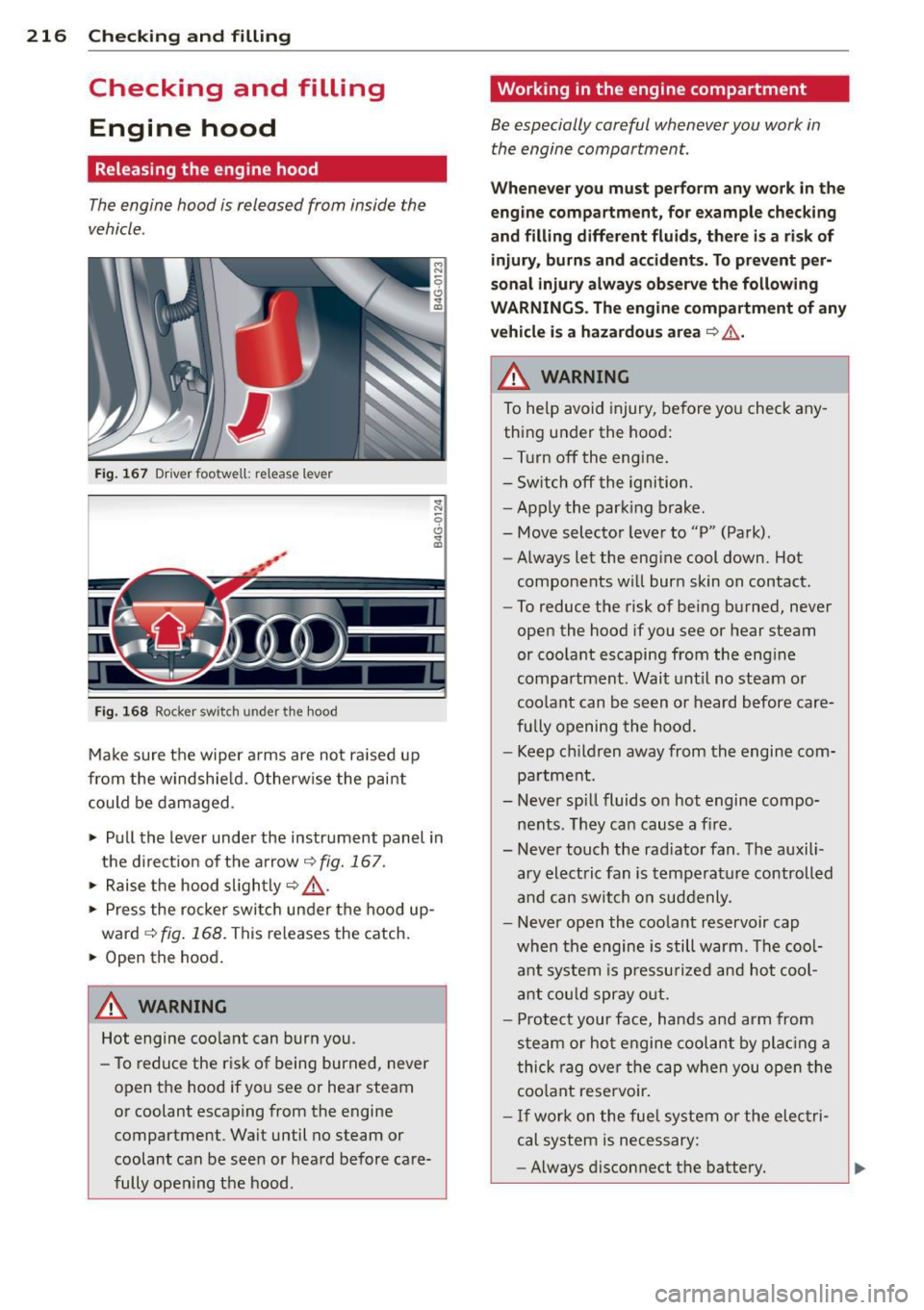
The engine hood is released from inside the
vehicle .
Fig. 167 Driver foo twell: release lever
Fig. 168 Rocker switch un der the hood
Make sure the wiper arms are not raised up
from the windshield. Otherwise the paint
could be damaged.
.,. Pull the lever under the instrument panel in
the direction of the arrow
~ fig. 167.
.,. Raise the hood slightly~.&_ .
... Press the rocker switch under the hood up
ward
~ fig. 168. This releases the catch.
... Open the hood.
&_ WARNING
Hot engine coolant can burn you.
- To reduce the risk of being burned, never
open the hood if you see or hear steam
or coolant escaping from the engine compartment . Wait until no steam or
coolant can be seen or heard before care
fully opening the hood .
' Working in the engine compartment
Be especially careful whenever you work in
the engine compartment.
Whenever you must perform any work in the
engine compartment, for example checking
and filling different fluids, there is a risk of injury, burns and accidents. To prevent per
sonal injury always observe the following
WARNINGS. The engine compartment of any
vehicle is a hazardous area
~ ,&. .
/n.. WARNING
To help avoid injury, before you check any
thing under the hood:
- Turn off the engine.
- Switch off the ignition .
- Apply the parking brake.
- Move selector lever to "P" (Park) .
- Always let the engine cool down. Hot
components will burn skin on contact.
- To reduce the risk of being burned, never
open the hood if you see or hear steam
or coolant escaping from the engine
compartment. Wait until no steam or
coolant can be seen or heard before care
fully opening the hood.
- Keep children away from the engine com
partment.
- Never spill fluids on hot engine compo
nents . They can cause a fire .
- Never touch the radiator fan. The auxili
ary electric fan is temperature controlled
and can switch on suddenly .
- Never open the coolant reservoir cap
when the engine is still warm . The cool
ant system is pressurized and hot cool
ant could spray out.
- Protect your face, hands and arm from
steam or hot engine coolant by placing a
thick rag over the cap when you open the
coolant reservoir.
- If work on the fuel system or the electri
cal system is necessary:
- Always disconnect the battery.
Page 219 of 294
-Never smoke or work near heate rs or
open flames. Fluids in the engine com
partment could start a fire.
- Keep an approved fire extinguisher im
mediately ava ilable.
- To avoid electrical shock and persona l in
jury while the engine is running or be ing
started, never touch:
- I gnition cables
- Other components of the high voltage
electronic ignition system.
- If you must pe rform a check or repa ir
with the engine running:
- F irst, fully apply the parking brake,
move selector lever to "P" (Park) .
- Always use extreme caution to prevent
clothing, jewelry, or long hai r from get
ting caught in the radiator fan, V-belts
or other moving parts, or from contact ing hot parts. T ie back hair before
starting, and do not wear cloth ing that
will hang or droop into the eng ine.
- Min imize exposure to emission and
chemical hazards
c:> &,.
A WARNING
California Propos ition 65 Warning:
- Engine exhaust, some of its constituents,
and certai n veh icle components co nta in
or em it chemicals known to the State of
Californ ia to cause cancer a nd b irth d e
fects a nd rep roduct ive ha rm. In addi tion,
c e rta in fluids cont ained in vehicle s and
certain p rod ucts of component wear con
tain or emit chemicals known to the
State of Ca lifo rnia to cause cancer and
birth defects or other reproductive harm.
- Battery posts, terminals and re lated ac
cessories contain lead and lead com-
Checkin g and fillin g 217
pounds, c hemicals known to the State of
California to cause cancer and reproduc
tive harms. Wash hands after handling.
([) Note
When adding fluids, always make su re that
they are poured into the p roper conta iner
or fi ller opening, otherwise serious dam
age to vehicle systems w ill occur .
@ For the sake of the environment
To detect lea ks in time, inspect the vehicle
floor pan from underneath regular ly. If
you see spots from oil or other veh icle flu
i ds, have you r vehicle inspected by an au
thorized Audi dea ler.
Closing the engine hood
.. Pull the hood down until the pressure from
t he st ruts is reduced.
.. Let the hoo d
drop down and latc h in p lace.
Do not try to push it shut; it may fail to en
gage 9 A_ .
A WARNING
-
A hood that is not completely latched
could fly up and b lock your view while dr iv
ing.
- When you close the engine hood, check it to make sure t he safety catch has prope r
ly engaged. The hood shou ld be flush
with the surround ing vehicle body parts .
- If you notice while driv ing that the hood
is not secured prope rly, stop at once and
close it. •
•
Page 228 of 294
226 Check ing and filling
Before you check anything in the engine com
partment,
always r ea d and heed all W ARN
INGS
¢ A in Working in the engine compart
ment on page 216.
• Read the brake fluid leve l from the brake
fluid reservoir
¢ fig. 173. The brake fluid
l evel must be between the
"MIN" and
"MAX" markings .
The location of the brake fluid reservoir can be
seen in the engine compartment illustration
co page 218.
The fl uid level may drop slightly after some
time due to the automatic adjustment of the brake pads . This is not cause for alarm .
I f the b rake fluid level falls
considerably be
l ow the "MIN" mark, the brake wa rning/indi
cator light- (U.S.
models) ;II (Canadian
models) will come on
¢ page 14. Do not con
tinue to operate the vehicle. The comp lete
brake system shou ld be thoroughly checked
by an authorized Audi dealer or other quali
fied fac il ity and the cause corrected. If the
brake fluid level is too low, the brake warn ing/
i ndicator light w ill illuminate. Contact an au
thor ized Audi dealer
imm ediatel y.
Changing brake fluid
Have the brake fluid changed by an experi
enced technician .
Brake fluid absorbs moistu re from the a ir . If
the water content in the brake fluid is too
h igh, corrosion in the brake system may result
after a per iod of t ime . The bo iling po int of the
b rake fluid w ill also decrease considerably and
dec rease braking per formance.
Therefore, the brake flu id must be changed
ev ery tw o y ear s. Always use new b rake fluid
which confo rms to Fede ral Motor Vehicle
Standard "FMVSS 1 16 DO T 4".
The brake flu id rese rvoi r can be difficult to
r each, therefo re , we re commend that yo u
have the brake fl uid changed by yo ur a utho r
ized
Audi dealer. Your dea ler has the correct tools, the
right brake flu id and t he know -how
to do this for you.
A WARNING
-- Brake flu id is poisonous. It must be stor-
ed only in the closed or igina l container
out of the reach of children!
- Brake failure can resu lt from o ld or inap
propriate brake f lu id. Observe these pre
cautions:
- Use only brake f luid that meets SA E
spe cifi cation
J 17 03 and conforms to
Federa l Motor Vehicle Standard 1 16 .
Always chec k with your authorized A udi
dealer to make sure yo u are using the
correct brake fluid. The cor rect type of
brake flu id is also ind icated on the
brake f lu id reservoir.
- The brake fluid must be new. Heavy use
of the brakes can cause a vapor lock if
the brake fluid is left i n the system too
long . This can se riously affect the effi
c iency of the brakes as well as your
safety . T h is i:ou ld result in an ai;i;ident.
(D Note
Brake fluid will damage the pai nt of you r
vehicle .
@ For the sake of the environment
Because of the prob lem of proper disposal
of brake fluid as well as the spec ial too ls
r equired and the necessary expertise, we
r ecommend that yo u have the brake flu id
changed by yo ur autho rized Aud i dea le r.
Battery
General information
Under normal operat ing cond itions, the bat
te ry in your Audi does not need any ma inte
nance. With
high outside temperatures or
long da ily drives we recommend that you have
the e lectrolyte leve l che cked by a se rv ice fa
c il ity. The electroly te leve l should also be
chec ked each time the battery is cha rged
¢ page 22 9.
Page 229 of 294
Have the battery checked when you take your
vehicle in for service. Yo u are well advised to
replace a battery that is older than 5 years.
W ith certa in types o f airbag deployment, the
battery is disconnec ted from the vehicle elec
trica l system for safety reasons
c::> &. in Re
pair, care and disposal of the airbags on
page 153.
Di sconn ecting the battery t erminal s
Some vehicle functions (power w indow regu
l ators, for example) are lost if the battery ter
minals are disconnected . These functions have
to be re learned after the battery terminals are
connec ted again. To prevent this, the battery
should only be disconnected from the vehicle
e lectrical system when absolutely necessary
for repairs .
Vehicl es not driven for long p eriod s
If you do not drive your vehicle over a period
of several days or weeks, electrical compo
nents are gradually cu t back or switched off .
This reduces energy consumption and main
tains starting capability over a longer per iod
c::> page 190. Some of the convenience func
tions may not operate, s uch as the inte rior
lights o r power seat adjus tme nt. The conven
ience functions will be ava ilable again when
you switch on the ignition and start the en gine.
Winter operation
During the winter months, ba ttery capaci ty
t ends to decrease as tempe rat ures d rop . This
is because more powe r is also consumed while
starting , and the headlights, rear window de
fogger, etc., are used more often.
Avoid unnecessary power cons umption, par
ticularly in c ity t ra ff ic or when t raveling on ly
short distances. Let your a uthorized Audi
dealer check the capac ity of the vehicle bat
tery before winter sets in
c> page 229. A well
charged battery w ill not only prevent starting
problems whe n the weather is cold, but will
also last longer .
Checkin g and fillin g 22 7
(D Tips
If your vehicle is left standing for seve ral
weeks at extremely low temperatures, the
vehicle battery shou ld be removed and
stored where it w ill not freeze. This will
prevent it from be ing damaged and having
to be replaced .
Working on the battery
Be especially careful when working on or near
the battery.
The battery is located in the l uggage compart
ment under the floor. Before you check any
th ing in the luggage compartment,
read and
h eed all WARNINGS
c> &_ .
Always heed the safety warnings , when work
ing on the vehicle battery or the vehicle e lec
trical system to prevent injury.
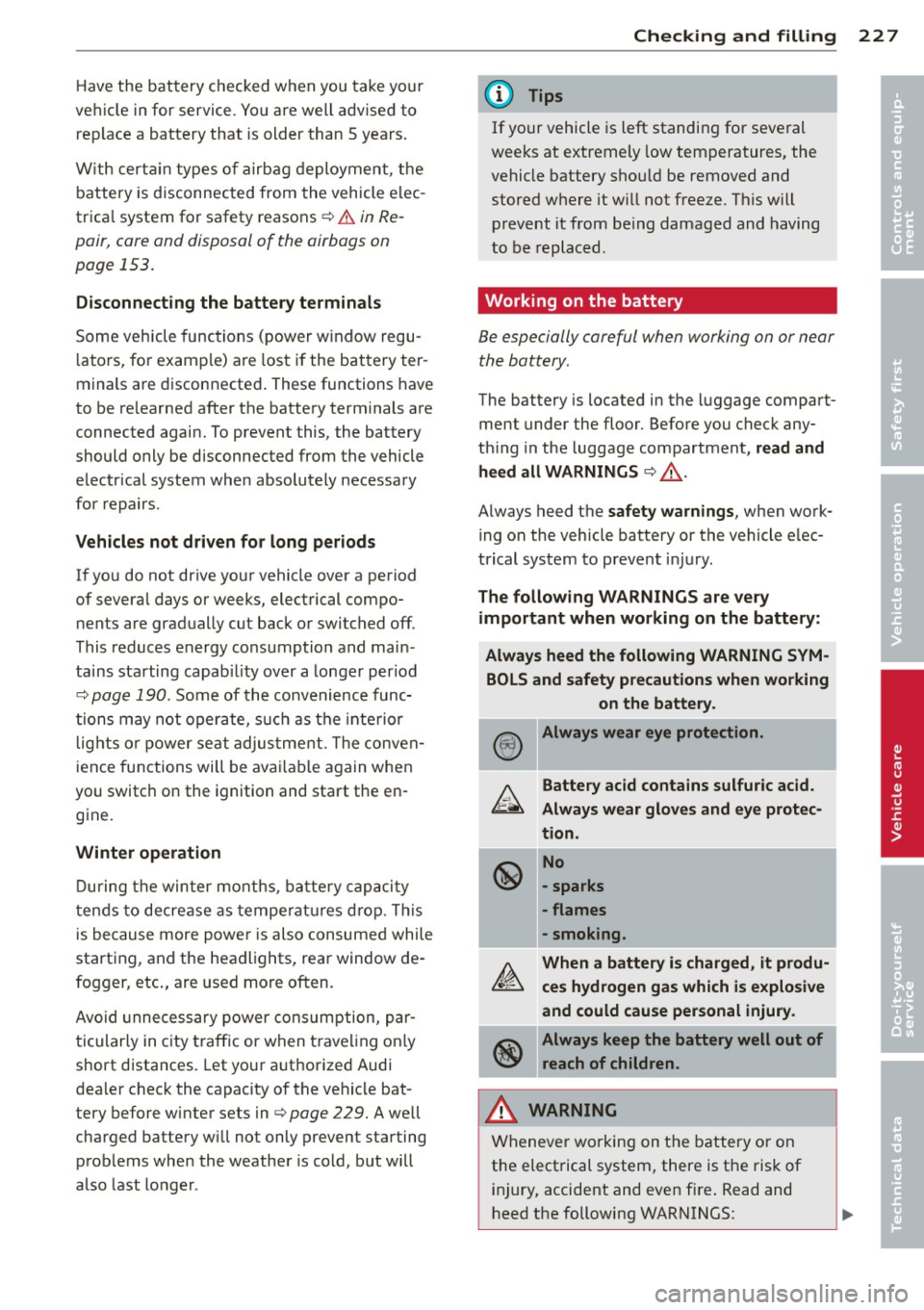
The following WARNINGS are very
important when working on the battery:
Al way s heed the follo wing WARNING SYM
BOLS and safety precautions when working on the battery.
@
®
Always wear eye protection.
Battery acid contains sulfuric acid.
Always w ear glove s and eye prot ec
tion .
No
- sparks
-flames
- smoking .
When a battery i s charged, it produ
ce s hydrogen gas wh ich i s ex plosive
and could cause per sonal injury .
Always keep the battery well out of ]
reach of children .
_& WARNING ~
Whenever working on the battery o r on
the electrical system, there is the risk of injury, accident and even fire . Read and
heed the following WARNINGS:
•
•
Page 230 of 294
228 Check ing and filling
- Always wear eye protection. Do not let
battery acid or any lead particles get on
your sk in or cloth ing . Sh ield your eyes .
Explosive gases can cause blindness or
other injury .
- Battery acid contains sulfur ic acid . Sulfu
ric acid can cause blindness and severe
burns .
- Always wear gloves and eye protection.
Do not t ilt the battery because acid
could leak out of the venti lation open
ings.
- If you get battery acid in yo ur eyes or
on your skin, immediately rinse with
cold water for severa l m inutes and get
medical attention .
- If you should ingest any battery acid,
seek medical attention immediately.
- Do not expose the battery to an open
flame, electric sparks or an open light.
- Do not smoke.
- Do not interchange the posi tive and neg -
ative cab les.
= When wo rking on the battery , be sure
not to short -circuit the termina ls with
tools or other metal objects . This would
cause the battery to heat up very quickly,
which could lead to damage or explosion
and personal injury.
- When a battery is charged, it produces hydrogen gas which is explosive and
cou ld cause personal injury .
- Always keep the battery well out of the
reach of chi ldren .
- Before work is done on the e lectrica l sys
tem, disconnect the negative ground ca ble .
- Before perform ing any work on the elec
trical system, sw itch
off the engine and
ignition as well as any electrical equip
ment . The negative cable on the batte ry
must be disconnected . If you are just go
ing to rep lace a light bu lb, then it is
enough to sw itch
off the ligh ts.
- Before disconnect ing the battery, switc h
off the anti-theft alarm sys tem! Othe r
wise you will set off the alarm. -
When disconnecting the battery, first
disconnect the negat ive cab le and then
the posit ive cab le.
- Before reconnecting the battery, make
sure all e lectr ical consumers are sw itch
ed off. Reconnect the pos it ive cable first
and then the negative cable . Never inter
cha nge the cables - this could start a fi re!
- Never charge a frozen or a thawed-out
battery .
It could explode! If a battery has
frozen , then it must be replaced . A dis
charged batte ry can free ze over at 32 °F
(0 °C) .
-Make sure the vent hose is a lways attach
ed to the opening on the s ide of the ba t
tery .
- Never use batteries which a re damaged.
There is the danger of an explosion! Al
ways rep lace a damaged b attery.
A WARNING
Ca lifornia Proposi tion 6S Warning:
- Battery posts, te rminals and related ac
cesso ries cont ain lead and lead com
pounds, chemica ls known to the Sta te of
California to cause cancer and reproduc
tive problems. Wash hands after han
dling.
(D Note
- Do not disconnect the vehicle battery
when the ignit ion is on or when the en
gine is run ning, otherwise , you will dam
age electronic components in the electr i
cal system.
- If your vehicle is going to stand for a
long period of time without be ing driven,
protect the battery from "freezing", oth
erw ise it will be damaged and will then
have to be replaced .
- When open ing the doors, the windows
lower approximately 10 mm automati
cally. This function is not ava ilable when
the battery is disconnected, which
means there is a risk that the door sea l
o r the window could be damaged.