oil temperature AUDI S8 2014 User Guide
[x] Cancel search | Manufacturer: AUDI, Model Year: 2014, Model line: S8, Model: AUDI S8 2014Pages: 314, PDF Size: 78.47 MB
Page 244 of 314
242 Checking and filling
-The auxiliary e lectric fan is temperature
controlled and can switch on suddenly
even when the engine is not runn ing.
- The auxiliary radiator fan switches on au
tomatically when the engine coolant
reaches a certain temperature and will
continue to run until the coolant temper
ature drops .
Brake fluid
Checking brake fluid level
The brake fluid level can be checked with a
quick glance.
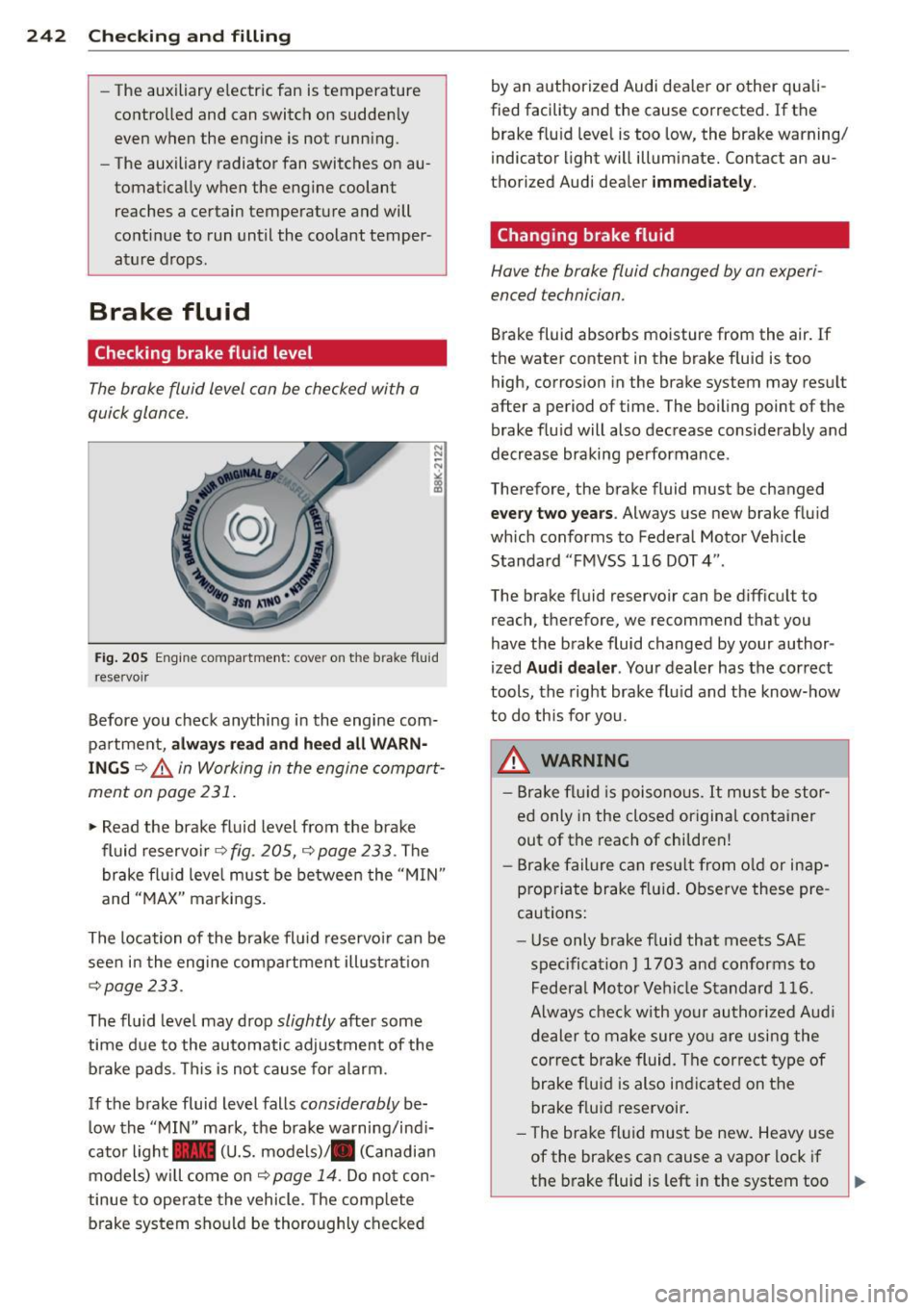
Fig . 205 E ng ine co mpartment: cove r on the brake fluid
r eservo ir
Before you check anything in the engine com
partment,
always read and heed all WARN
INGS 9 &_ in Working in the engine compart
m ent on page 231.
.. Read the brake fluid level from the brake
fluid reservoir
9 fig . 205, q page 233. The
brake fluid leve l must be between the "MIN"
and "MAX" markings.
The location of the brake fl uid reservoir can be
seen in the engine compartment illustrat ion
9 page233.
The fluid level may drop slightly after some
time due to the automatic adjustment of the
brake pads. This is not cause for alarm.
If the brake fluid level falls
considerably be
low the "MIN" mark, the brake warning/ind i
cator light
1111 (U.S. models)/ . (Canadian
models) will come on
q page 14. Do not con
tinue to operate the vehicle . T he complete
brake system should be thoroughly checked by an authorized Audi dealer or other quali
fied fac ility and the cause corrected.
If th e
brake flu id level is too low, the brake wa rning/
indicator light will illuminate. Contact an au
thorized Audi dealer
immediately.
Changing brake fluid
Have the brake fluid changed by on experi
enced technician.
Brake fluid absorbs moisture from the air. If
the water content in the brake fluid is too
high, corrosion in the brake system may result
a fter a period of time. The boiling point of the
brake fluid will also decrease considerably and
decrease braking performance .
Therefore, the brake fluid must be changed
every two years. Always use new brake flu id
which conforms to Federal Motor Veh icle
Standard "FMVSS 116 DOT 4" .
The brake fluid reservoir can be difficu lt to
reach, therefore, we recommend that you
have the brake fluid changed by your author
ized
Audi dealer . Your dealer has the correct
tools, the right brake fluid and the know-how
to do this for you .
.&, WARNING
-Brake fluid is poisonous. It must be stor
ed only in the closed origina l container
out of the reach of children!
- Brake failure can result from old or inap
propriate brake fluid. Observe these pre
cautions:
- Use only brake fluid that meets SAE
spec ification
J 1703 and conforms to
Federa l Motor Vehicle Standard 116.
Always check with your authorized Aud i
dealer to make sure you are using the
correct brake fluid. The correct type of
brake fluid is also indicated on the
brake fluid reservoir .
- The brake fluid must be new. Heavy use
of the brakes can cause a vapor lock if
the brake fluid is Left in the system too
lllJ.
Page 261 of 314
Incorrect wheel alignment
Incorrect wheel alignment can cause exces
sive tire wear, impairing the safety of the vehi
cle. If tires show excessive wear, have the
wheel alignment checked by an authorized
Audi dealer or qualified workshop .
All Wheel Drive
Vehicles with quattro must always have tires
of the same size, construction and tread type. For details see ~page 204.
_& WARNING
Sudden tire failure can lead to loss of con
trol, a crash and serious personal injury!
- Never drive a vehicle when the tread on
any tire is worn down to the wear indica
tors.
- Worn tires are a safety hazard, they do
not grip well on wet roads and increase
your risk of "hydroplaning" and loss of
control.
- Always keep chemicals that can cause
tire damage, such as grease, oil, gasoline
and brake fluid away from tires.
- Tires age even if they are not being used
and can fail suddenly, especially at high
speeds . Tires that are more than 6 years
old can only be used in an emergency
and then with special care and at lower
speeds .
- Never mount used tires on your vehicle if
you are not sure of their "previous histo
ry." Old used tires may have been dam
aged even though the damage cannot be
seen that can lead to sudden tire failure
and toss of vehicle control. Tires and wheels 259
New tires and replacing tires and wheels
New tires and wheels have to be broken in
.
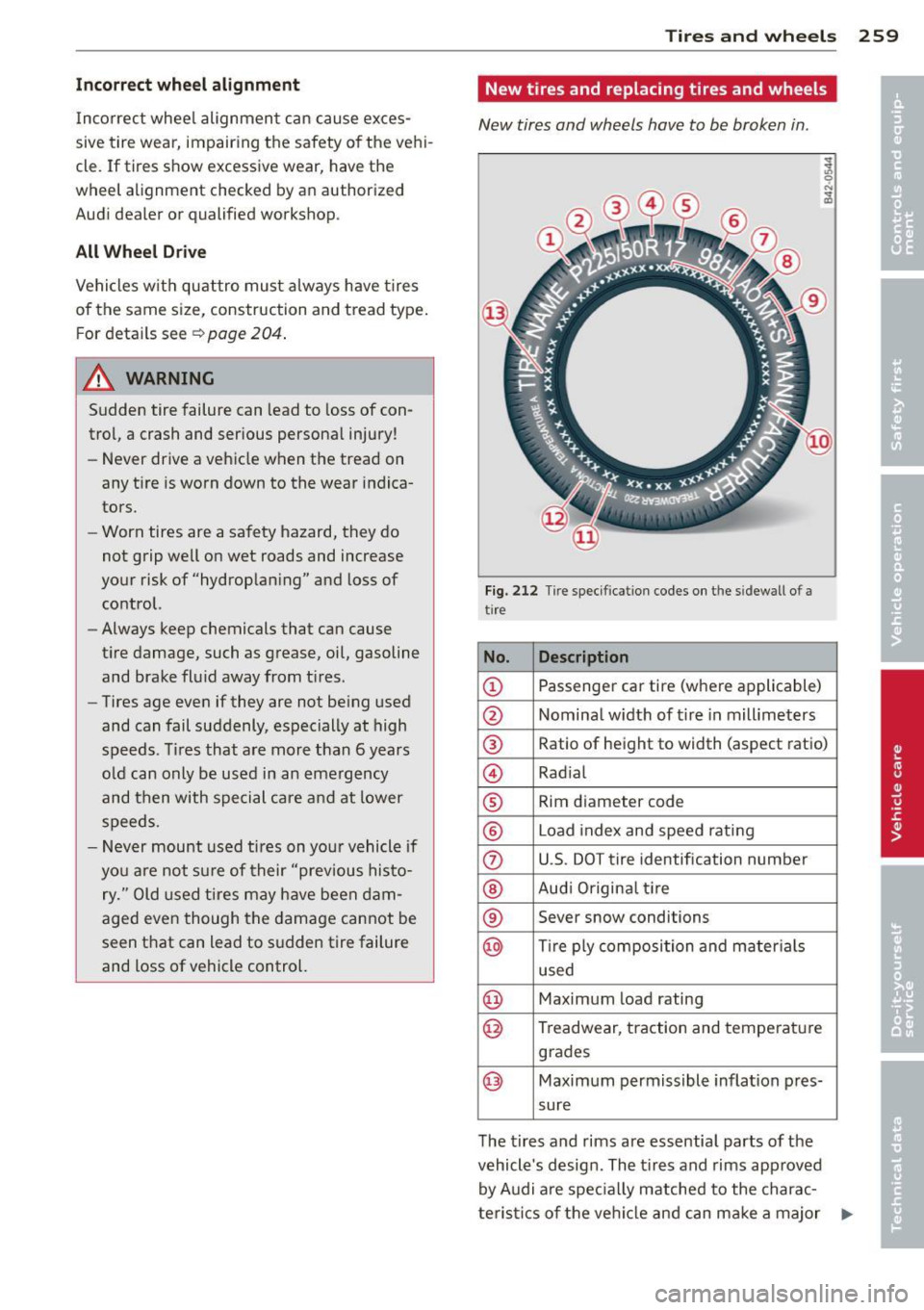
Fig. 212 Tire specificat ion codes on t he s idewall o f a
tire
No. Description
@ Passenger car tire (where applicable)
@ Nominal width of tire in millimeters
@ Ratio of height to width (aspect ratio)
© Radial
® Rim diameter code
® Load index and speed rating
0 U.S. DOT tire identification number
® Audi Original tire
® Sever snow conditions
@ Tire ply composition and materials
used
@ Maximum load rating
@ Treadwear, traction and temperature
grades
@ Maximum permissible inflation pres-
sure
The tires and rims are essential parts of the
vehicle's design . The tires and rims approved
by Audi are specialty matched to the charac
teristics of the vehicle and can make a major .,.
Page 294 of 314
292 Consumer Information
Consumer Information
Warranty coverages
You r Audi is covered by the following war
ranties:
- New Vehicle Limited Warranty
- Limited Warranty Against Corrosion Perfo-
ration
- Emissions Control System Warranty
- Emissions Performance Warranty
- California Emissions Control Warranty (USA
vehicles only)
- California Emissions Performance Warranty
(USA vehicles only)
Detailed information regarding your warran
ties can be found in your
Warranty & Mainte
nance booklet .
Operating your vehicle
outside the U.S.A. or
Canada
Government regu lations in the United States
and Canada require that automobiles meet
specific emission regulations and safety
standards. Therefore, veh icles built for the
U.S.A . and Canada differ from vehicles sold in
other countries .
If you p lan to take your vehicle outside the
continental limits of the United States or Can
ada, there is the possibility that:
- unleaded fuels for vehicles with cata lytic
converter may not be available;
- fuel may have a considerably lowe r octane
rating. Improper fuel may cause engine
damage ;
- service may be inadequate due to lack of
proper service facilities, tools or testing
equipment ;
- replacement pa rts may not be readily availa
ble.
- Navigation systems for vehicles built for the
U.S.A. and Canada will not necessar ily work
in Europe, and may not work in other coun
tries outside North America .
(D Note
Audi cannot be responsible for mechanical
damage that could result from inadequate
fuel, service or parts availability.
Audi Service Repair Manuals and Literature
Audi Official Factory Service Manuals and Lit
erature are published as soon as possible after
model introduction. Service manuals and lit
erature are available to order from the Audi
T echnical Literature Ordering Center at:
www.audi.techliterature.com
Maintenance
General
Your vehicle has been designed to help keep
maintenance requirements to a minimum.
However, a certain amount of regular mainte
nance is still necessary to assure your vehicle's
s afety, economy and rel iability. For detailed
vehicle maintenance consult your Warranty &
Maintenance booklet.
Under difficult operating conditions, for ex
ample at extremely low outside temperatures,
i n very dusty regions , when towing a trailer
very frequently, etc., some service work
should be performed between the intervals
specified. This applies particularly to:
- oil changes, and
- cleaning or replacing the air filter .
(® For the sake of the environment
By regularly maintaining your vehicle, you
help make sure that emission standards
are maintained, thus minimizing adverse
effects on the environment.
Important considerations for you and
your vehicle
The increasing use of electronics, sophisticat
ed fuel injection and emission contro l sys-
tems, and the genera lly increasing technical
liJJ,
Page 303 of 314
Engine compartment .... ... .. .. .. .. . 233
C losing the hood . ..... ... .. .. .. .. . 232
Opening the hood ....... ... .. .. .. . 231
Safety instructions ........ .. .. .. .. . 231
Working in the engine compartment . . 231
E ng ine coolant ... .. .... ... .. .. .. ... 239
Adding coolant . ... .... ... .. .. .. ... 240
Chec king the eng ine coolant leve l .. .. . 240
Expansion tank ........... .... .. ... 240
Malfunct ion symbo l ....... .. .. .. .. .. 16
Radiator fan ................ .... .. 241
Temperature ga uge ....... .. .. .. .. .. 1 0
Engine oil ... .. .... .... ... .. .. .. ... 234
Adding .. .. ............. .... .. .. . 237
Addit ives . .. .. ........... .. .. .. ... 237
Changing ................ ... ... .. 238
Checking oil level ............. ... .. 237
Checking the eng ine o il level .. .. . ... . 236
Consumpt ion ............ .... .. .. . 237
I ndications and cond it io ns requ iring ex-
tra checking ............. .. .. .. .. . 236
I ndica tor light . . . . . . . . . . . . . . . . . . . . . 1 7
Oi l cons umption .. ..... ... .. .. .. ... 236
O il grades .. .. ........... .. .. .. ... 234
Pressure malfunction ...... .. .. .. .. .. 17
Recommended oil check intervals .. .. . 236
Sensor defective . . . . . . . . . . . . . . . . . . . . 21
Specification and viscos ity ... ... ... .. 234
Engine sound . ... .. .... ... .. .. .... . 110
E ng ine speed limitat io n ..... .. .. .. .. .. 2 1
Eng ine start-stop mode
refer to Sta rt-Stop-System ..... . ... .. 90
Entry assistance . . . . . . . . . . . . . . . . . . . . . 64
E nv iro nment
Brea k-in period ........... .. .. .. ... 20 7
Cata lytic conver ter ..... ... .. .. .. .. . 208
Diese l partic ulate fi lter . ... .. .. .. .. . 208
Disposing of yo ur vehicle batte ry . .... 246
Driving at h igh speeds ..... .. .. .. .. . 210
Driving to m inimi ze pollution and no ise 209
Fue l ..... .. .. ............. .. .. ... 225
Fuel economy ............. ... ... .. 209
L eaks under your veh icle .... ... ... .. 23 1
L ett ing the ve hicle stand and wa rm up . 210
P rope r disposal of dra ined brake flu id . 24 2
Inde x 301
Proper disposal of d rained eng ine cool -
ant . ... .. .. .. .... . ... ...... ... .. 240
Proper disposal of drained eng ine
o il . . . . . . . . . . . . . . . . . . . . . . . . . 237,238
Recycling used engine oil ............ 23 7
U nleaded fuel .. ... ................ 222
What should I do with an o ld battery? . 246
EPC
refer to Electron ic power control (EPC) . 20
ESC
refer to E le ct ron ic Stabilization Control
(ESC) ... .. .. .... .. . .. .. ..... ... .. 199
E vent Data Recorde r (ED R) ........ .. .. 199
Exhaust tail pipes Cleaning .. .. .. .. ............... .. 218
Expansion tank . ..... . .. .. ..... ... .. 240
Exterior lighting .... ................. 46
Exterior mirrors Adjusting . . . . . . . . . . . . . . . . . . . . . . . . . S5
Dimming .. .. .. .... ... ....... ...... 56
Heating ..... .. .... ... ....... ...... 55
Exterior temperat ure display ... ... .. .. . 24
F
Fastening
Booster seats ...... . .. .. ..... ... .. 185
Convertib le child sa fety seats . ... .. .. 184
Infant seats . . . . . . . . . . . . . . . . . . . . . . 183
Floor mats . . . . . . . . . . . . . . . . . . . . . . . . . 141
Fo ld ing table ...... .. ................ 69
Foot peda ls . . . . . . . . . . . . . . . . . . . . . . . . 140
Fo r th e sake of the envi ronment
Gasoline fumes and the env ironme nt .. 2 25
Red ucing engine noise by early upshift -
ing .. ... .. .. .... .. . .. .. ..... ... .. . 10
Ref uelling ... .... .. . .. .. ..... ... .. 225
Saving f uel by early upsh ifting ..... .. . 10
Fo ur zone a utoma tic cl im ate cont rol .. .. . 80
Front airbags Desc ription ...... .. ............... 157
How they work ... .. ... ....... .... . 162
Frontal coll is ions and the laws of physics 146
Fron t passenger seat a djustment . . . . . . . 64
Front seats . . . . . . . . . . . . . . . . . . . . . . . . . 58
Adjust ing . .. .. .... .......... ..... 137
Child rest raints in the front seat .. .. .. 155
•
•