weight AUDI TT 2012 Owner's Manual
[x] Cancel search | Manufacturer: AUDI, Model Year: 2012, Model line: TT, Model: AUDI TT 2012Pages: 132, PDF Size: 89.43 MB
Page 72 of 132
Downloaded from www.Manualslib.com manuals search engine 1
AWARNING
Notusing aboosterseat,usingtheboos
terseatimproperly, incorrectlyinstallinga
boosterseatorusingthevehiclesafety
.
beltimproperly increasestheriskofsert-
l'lnJ'uryanddeathinacolliSionouspersonaorotheremergencysituation.Tohelp re
duce
theriskofseriouspersonalinjury
and/ordeath:
vehicle'sthreepointlap andshoulderbelts.
Never use
thelapbeltportionofthevehicle's
safetybeltalonetorestrain anychild, regard
less
ofhow bigthechildis.Alwaysremember
thatchildren donothavethepronounced pel
vicstructurerequiredfortheproperfunction
oflapbeltportionofthevehicle'sthreepoint
lap and
shoulderbelts.The child'ssafetyab
solutely requires
thatalapbeltportionofthe
safetybeltbefastenedsnugly andaslowas
possible aroundthepelvis.Neverletthelap
beltportionofthesafetybeltpassoverthe
child'sstomachorabdomen.
Inacrash,airbagsmustinflate withinablink
ofan eye and withconsiderableforce. Inorder
todoitsjob,theairbagneedsroomtoInflate
50thatitwill betheretoprotecttheoccupant
astheoccupantmoves forward intotheair
bag.
A vehicle
occupantwhoisoutofposition and
tooclosetotheairbaggetsinthewayofan
inflating airbag.
Whenanoccupantistoo
close,heorshewillbestruck violentlyand
willreceiveseriousorpossibly evenfatalIn
jury.
In
orderfortheairbagtooffer protection, itis
importantthatallvehicleoccupants,especlal
lyany children,whomustbeinthefrontseat
becauseofexceptionalcircumstances, be
properly
restrainedandasfarawayfromthe
airbagaspossible.Bykeeping roombetween
thechild'sbodyandthefrontofthepassen
gercompartment,theairbagcaninflate com
pletely
andprovidesupplementalprotection
incertainfrontalcollisions.
Booster
seatsraisethesechildren
upsothat
thesafetybeltwill pass properly overthe
strongerpartsoftheirbodiesandthesafety
beltcanhelpprotecttheminacrash.
•Donotusetheconvertible lockingretractor
whenusingthevehicle'ssafetybelttore
strain achild ona
boosterseat.
•Always positiontheshoulderportionofthe
safetybeltmidway overthechild'sshoulder.
•Always makesurethattheshoulderportion
of
thesafetybeltneverrestsagainstor
across
thechild's neck.
•Always makesurethatthechildcanproper
lywearthelapportionofthebeltlow across
thethighsorpelvisandneveroverthe
stomachorabdomen.
Itisusuallybesttoputthesechildreninap
propriate
boosterseats.Besurethebooster
seatmeetsall applicablesafetystandards.
Boosterseatsraisetheseatingpositionofthe
childandreposition boththelapandshoulder
partsofthesafetybelt50thattheypass
across
thechild's bodyintherightplaces. The
routing
ofthebeltoverthechild's bodyisvery
importantforthechild'sprotection,whether
ornotaboosterseatisused.Childrenage12
andundermustalways rideintherearseat.
Children whoareatleast4ft. 9in. (57 in
ches/1.45meters)tallcan generally usethe
Boosterseatsandsafety belts
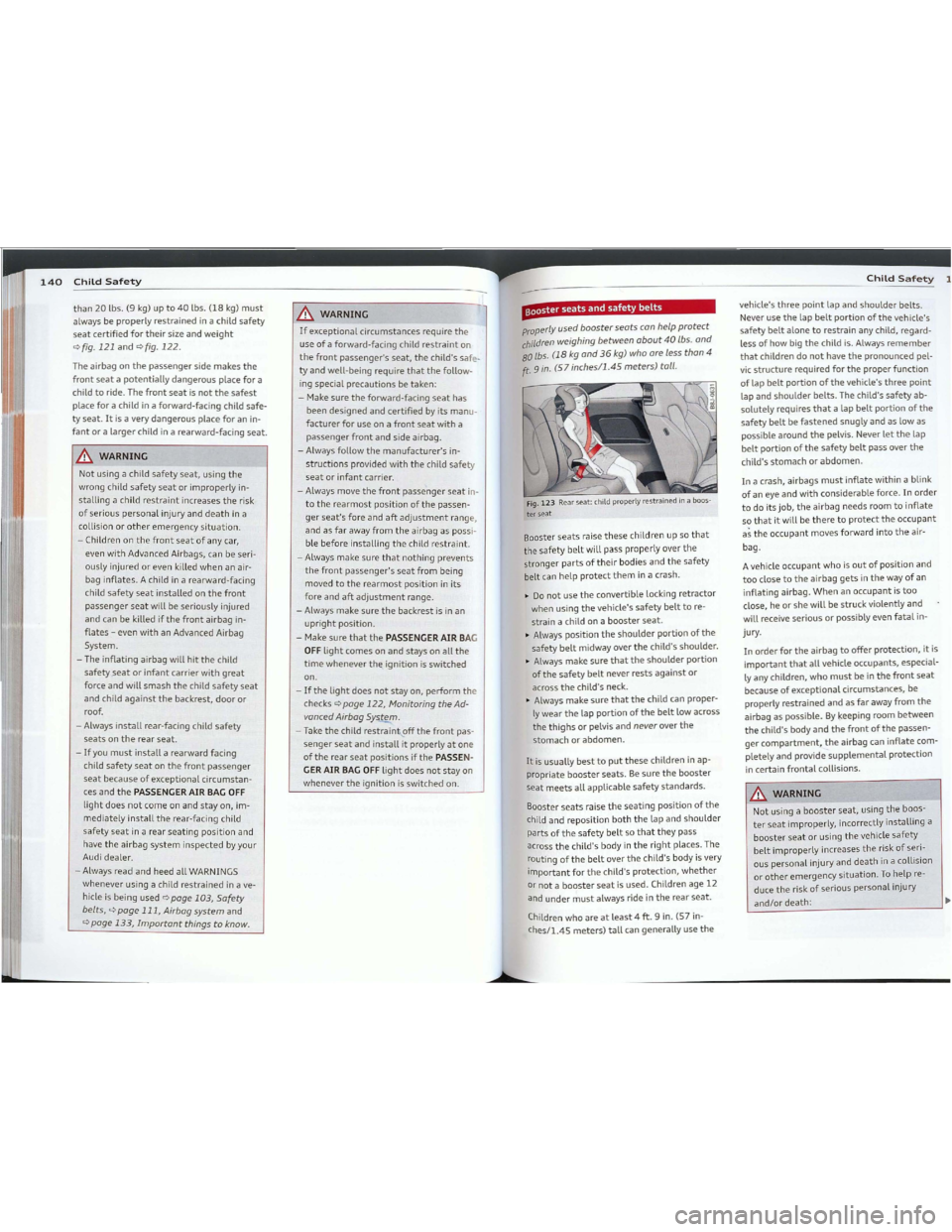
Fig.123Rearseat: child properly restrainedinaboos
ter
seat
lyUsedboosterseatscon help protect
proper
children weighing
betweenabout40lbs.and
80 lbs.
(lBkgand36kg) who arelessthan 4
ft.9in.(57inches/1.45 meters)tall.
--AWARNING
Ifexceptionalcircumstancesrequirethe
useofaforward-facing childrestrainton
thefrontpassenger'sseat,thechild'ssafe
ty and well-being require
thatthefollow
ing special
precautionsbetaken:
- Make
suretheforward-facingseathas
been
designedand certifiedbyitsmanu
facturerforuse onafrontseatwith a
passengerfrontandsideairbag.
- Always follow
themanufacturer'sin
structionsprovided withthechildsafety
seatorinfantcarrier.
-Alwaysmovethefrontpassengerseatin
totherearmostpositionofthepassen
gerseat'sforeandaftadjustmentrange,
and as
faraway fromtheairbagaspossi
ble before installing
thechildrestraint.
-Always makesurethatnothingprevents
thefrontpassenger'sseatfrombeing
moved
totherearmostpositioninits
fore
andaftadjustmentrange.
- Always make
surethebackrestisinan
uprightposition.
- Make
surethatthePASSENCERAIRBAG
OFFlightcomesonandstayson allthe
timewhenevertheignitionisswitched
on.
-Ifthelightdoesnotstayon,performthe
checks~page122,MonitoringtheAd
vanced Airbag
Sys~m.
-Takethechildrestrain offthefrontpas
sengerseatandinstallitproperlyatone
oftherearseatpositions ifthePASSEN
GERAIRBACOFFlightdoesnotstayon
whenevertheignitionisswitchedon.
-AWARNING
Notusing achildsafetyseat,usingthe
wrong childsafetyseatorimproperly in
stalling achild
restraintincreasestherisk
ofseriouspersonalinjury anddeathina
collision or
otheremergencysituation.
-Children onthefrontseatofanycar,
even withAdvanced Airbags,canbeseri
ously injured
orevenkilled when anair
bag inflates. Achild
inarearward-facing
child
safetyseatinstalled onthefront
passengerseatwillbeseriously injured
and canbekilled if
thefrontairbag in
flates-even withanAdvanced Airbag
System.
-The inflating airbagwillhitthechild
safety.seatorinfantcarrier withgreat
forceandwillsmashthechildsafetyseat
andchildagainstthebackrest,dooror
roof.
- Always installrear-facing child
safety
seatsontherearseat.
-Ifyoumustinstallarearward facing
child
safetyseatonthefrontpassenger
seatbecauseofexceptional circumstan
ces
andthePASSENCERAIRBACOFF
lightdoesnotcomeonandstayon, im
mediatelyinstalltherear-facing child
safetyseatinarearseatingposition and
have
theairbagsysteminspectedbyyour
Audi dealer.
- Always readandheed all
WARNINGS
whenever usingachildrestrainedinave
hicle
isbeing used~page103,Safety
belts,~page111,Airbagsystemand
~page133,Importantthingstaknow.
ChildSafety
than20lbs.(9kg)upto40lbs.(18kg)must
always beproperly restrainedinachildsafety
seatcertifiedfortheirsize andweight
~fig.121and~fig.122.
Theairbag onthepassengersidemakesthe
frontseatapotentiallydangerousplace fora
child
toride. Thefrontseatisnotthesafest
place for achildinaforward-facing childsafe
tyseat.Ttisaverydangerousplace foranin
fantoralargerchildinarearward-facingseat.
Page 74 of 132

Downloaded from www.Manualslib.com manuals search engine -
precautionsapplywhen installing achild
safetyseatonthefrontpassengerseat
qpage113,Child restraints anthe front
seat-someimportant thingstaknow.
AWARNING
Alwaystakespecialprecautionsifyou
mustinstall aforwardorrearward-facing
child
restraintonthefrontpassenger's
seatinexceptionalsituations:
-Whenevera forwardorrearward-facing
child
restraintisinstalled onthefront
passengerseat,thePASSENGERAIR
BAGOFFlightmustcomeonandstayon
whenever
theignitionisswitched on.
-
IfthePASSENGERAIRBAGOFFlight
doesnotcomeonandstayon,perform
thechecks describedqpage122,Moni
toring theAdvanced AirbagSystem.
-Takethechildrestraintoffthefrontpas
sengerseatandinstall itproperlyatone
oftherearseatpositions ifthePASSEN
GERAIRBAGOFFlightdoesnotstayon
whenevertheignitionisswitchedon.
-Improperinstallationofchildrestraints
canreducetheireffectiveness oreven
prevent
themfromproviding anyprotec
tion.
-
Animproperly installedchildrestraint
caninterferewiththeairbagasitde
ploysandseriously injureoreven killthe
child.
- Always carefully follow
themanufactur
er'sinstructions providedwiththechild
safetyseatorcarrier.
-Neverplaceadditionalitemsontheseat
thatcanincreasethetotalweightregis
teredbytheweight-sensingmatandcan
causeinjuryinacrash.
AWARNING-Forward-facing childrestraints:
-Always makesuretheforward-facing
seathasbeendesigned andcertifiedby
itsmanufacturerforuse onafrontseat
with apassengerfrontandsideairbag. -
Never
puttheforward-facing childre-
straintup,againstorverynearthein-
strumentpanel.
- Always move
thepassengerseatintoits
rearmostpositionintheseat'sfore and
aftadjustmentrange,asfaraway from
theairbagaspossible beforeinstalling
theforward-facing childrestraint. The
backrestmustbeadjustedtoanupright
position.
- Make
surethatthePASSENGERAIRBAG
OFFlightcomeson andstaysonallthe
timewhenevertheignitionisswitched
on.
AWARNING
Rearward-facing childrestraints:
- A child
inarearward-facing childsafety
seatinstalledonthefrontpassenger
seatwillbeseriously injuredandcanbe
killed if
thefrontairbag inflates -even
with anAdvanced AirbagSystem.
- The inflating airbagwillhit
thechild
safetyseatorinfantcarrier withgreat
forceandwillsmashthechildsafetyseat
andchildagainstthebackrest,dooror
roof.
- Always beespecially carefulifyou
must
installarearward facingchildsafetyseat
onthefrontpassengerseatinexception-
al circumstances.
- A
tighttetherstrapor'ïarearward-facing
childrestraintattachedtofhefrontpas-
sengerseatcanputtoomuchpressure
ontheweight-matintheseatand regis-
teraheavierweightintheAdvancedAir-
bagSystem. Theheavierweightregis-
teredcanmakethesystemworkas
thoughanadultwereontheseatandde-
ploy
theAdvanced Airbagwhenitmust
besuppressedcausing seriousoreven
fatalinjurytothechild.
- Make
surethatthePASSENGERAIRBAG
OFFlightcomeson andstaysonallthe
timewhenevertheignitionisswitched
on.
_IfthePASSENGERAIRBAGOFFlight
doesnotcomeonandstayon,immedi
ately instaLltherear-facing childsafety
seatinarearseatingpositionandhave
theairbagsysteminspectedbyyourAudi
dealer.
Activatingtheconvertible locking
retractor
Usethe convertible lockingretractor tose
cureachild restraint.
Always heedthechildsafetyseatmanufactur
er'sinstructions wheninstalling achild re
straintinyourvehicle.Toactivatetheconver
tible locking retractor:
~Placethechildrestraintonaseat,prefera
blyontherearseat.
~Slowly pullthebeltaUthewayout.
~Routeitaroundorthroughthechildre
straintbeltpathq&,.
~Pushthechildsafetyseatdown withyour
full
weighttogetthesafetybeltreallytight.
~Insertthebelttongueintothebuckle for
thatseatingposition.
~Guidethesafetybeltbackintotheretractor
untilthebeltliesflatandsnugonthechild
safetyseat.
~Youshouldheara"clicking" noiseasthe
beltwindsbackintotheinertia reel.Testthe
convertible lockingretractorbypuLlingon
thebelt.Youshouldnolongerbeableto
pullthebeltoutoftheretractor. Thecon
vertible locking
retractorisnowactivated.
~Makesurethattheredreleasebuttonisfac
ingawayfromthechildrestraint50thatit
can beunbuckled quickly.
~Pullonthebelttomakesurethesafetybelt
isproperlytightandfastened50thatthe
seatcannotmove forward orsideways more
thanoneinch(2.Scm).
AWARNING
Usingthewrong childrestraintoran im
properly instaLled child
restraintcancause
seriouspersonalinjuryordeathinacrash.
-Always makesurethatthesafetybeltre
tractorislockedwheninstaLling achild
safetyseat.Anunlockedsafetybeltre
tractorcannotholdthechildsafetyseat
inplace duringnormaldriving orina
crash.
- Always buckle
thechildsafetyseatfirmly
inplaceevenifachildisnotsittinginit.
A loose child
safetyseatcanflyaround
during asud
denstoporina crash.
- Always make
suretheseatbackrestto
whichthechildrestraintisinstaLledisin
anuprightpositionandsecurely latched
into place and
cannotfoldforward. Oth
erwise,
theseatbackwiththechildsafety
seatattachedtoit could flyforwardin
theeventofanaccidentorotheremer
gency
situation.
- Always readandheedallWARNINGS
whenever usingachild restrainedinave
hicle
isbeing usedqpage133.Special
precautionsapplywheninstaLling achild
safetyseatonthefrontpassengerseat
qpage113,Childrestraintsonthe front
seat-someimportant thingstoknow.
Deactivating
theconvertiblelo~king
retractor
Theconvertible lackingretractar forchild re
straints willbedeactivated automatically
when the
beltiswound ailthe way back into
the retractor.
~Presstheredbuttononthesafetybelt
buckle. Thebelttonguewillpopoutofthe
buckle.~Guidethesafetybeltalltheway back into
its
stowedposition.
Always
letthesafetybeltretractcompletely
into itsstowedposition. Thesafetybeltcan
now beused
asan ordinarysafetybeltwith
outtheconvertible lockingretractorforchild
restraints.
Iftheconvertible lockingretractorshouldbe
activated inadvertently,
thesafetybeltmust
beunfastenedandguidedcompletely backin-
toitsstowedpositiontodeactivatethis..
Page 77 of 132
Downloaded from www.Manualslib.com manuals search engine 150ChildSafety
Thetetheranchorsfortherearseatingposi
tionsarelocatedonthebacksideoftherear
seatbacksqfig.130.
AtetherisastraightorV-shapedstrapthat
attachesthetoppartofachildrestraintto
specialanchoragepointsinthevehicle.
The
purposeofthetetheristoreducethefor
ward
movementofthechildrestraintina
crash,
inordertohelp reducetheriskofhead
injurythatcouldbecausedbystrikingtheve
hicle interior.
Forward facingchild
restraintsmanufactured
afterSeptemberl,1999,arerequiredbyUS
federalregulationstocomply withnewchild
head
movementperformancerequirements.
These newperformancerequirementsmakea
tethernecessaryonmostnewchildsafety
seats.
AWARNING
Improperinstallationofchildrestraints
willincreasetheriskofinjuryanddeathin
acrash.
-Always followtheinstructionsprovided
bythemanufacturerofthechildre
straintyouintendtoinstallinyourAudi.
-Improperuseofchildrestraintanchors
(includingtetheranchors) canleadtoin
jury
ina collision. Theanchorsarede
signedtowithstandonlythoseloadsim
posedbycorrectlyfittedchildrestraints.
-Nevermounttwochildrestraintsystems
ononeLATCHloweranchorpoint.
-Neverattachtwochildrestraintsystems
toonetetherstraportetheranchorage.
-Neverattachatetherstraptoatie-down
hookintheluggagecompartment.
-Neverusechildrestrainttetherancho
rages
tosecuresafetybeltsorother
kindsofoccupantrestraints.
- Neversecureorattachanyluggageor
otheritemstotheLATCHlowerancho
rages ortothetetheranchors.
-Ifatetherorotherstrapisusedtoat
tachachildrestrainttothefrontpassen
gerseat,makesurethatit isnotso
tight,thatitcausestheweight-sensing
mattomeasuremoreweightthanis ac
tuallyontheseat.
-The heavierweightregisteredcanmake
theAdvanced AirbagSystemworkas
thoughanadultwereontheseatandde
ploy
theAdvanced Airbagwhenitmust
besuppressedcausingseriousoreven
fatalinjurytothechild.
-
Ifyoumustinstalla rearward facing
chi ld
safetyseatonthefrontpassenger
seatbecauseofexceptionalcircumstan
cesandthePASSENGER AIRBAGOFF
lightdoesnotcomeonandstay.on,im
mediatelyinstalltherear-facing child
safetyseatinarearseatingposition and
have
theairbagsysteminspectedbyyour
Audi dealer.
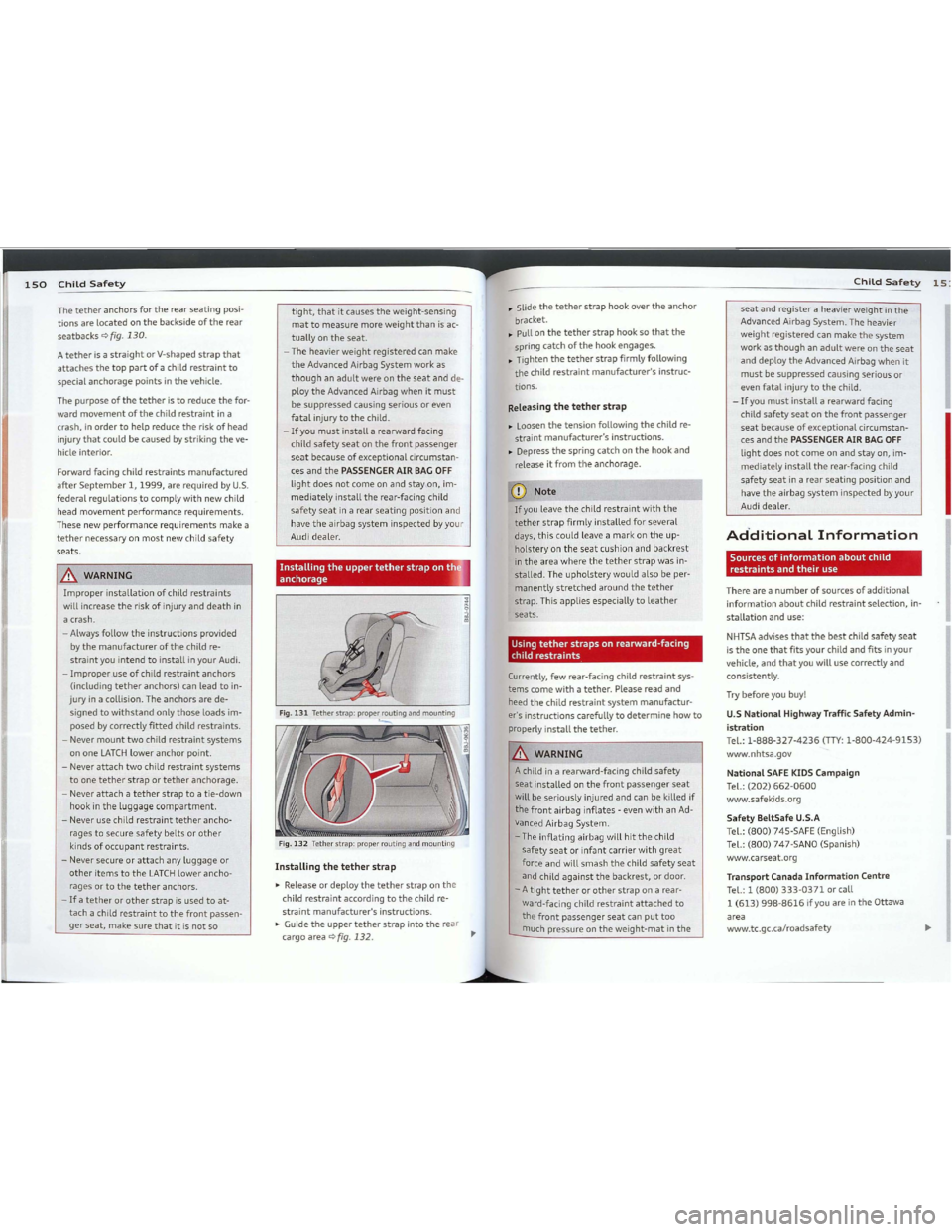
Installingtheuppertetherstraponthë1anchorage•
Fig.131Tether strap:properroutingandmounting'--
Fig.132Tether strap:proper routing andmounting
Installingthetetherstrap
~Release ordeploythetetherstraponthe
childrestraintaccordingtothechild re
straintmanufacturer'sinstructions.
~Guidetheuppertetherstrapintotherear
cargoareaqfig.132.~
~slidethetetherstraphookovertheanchor
bracket.
~Pullonthetetherstraphooksothatthe
springcatchofthehookengages.
~Tightenthetetherstrapfirmly following
thechildrestraintmanufacturer'sinstruc
tions.
Releasingthetetherstrap
~Loosenthetensionfollowingthechild re
straintmanufacturer'sinstructions.
~Depressthespring catchonthehookand
release itframtheanchorage.
CDNote
Ifyouleavethechildrestraintwiththe
tetherstrapfirmlyinstalledforseveral
days,thiscouldleaveamark ontheup
holstery on
theseatcushionandbackrest
intheareawherethetetherstrapwasin
stalled.Theupholsterywouldalsobe per
manentlystretchedaroundthetether
strap.Thisappliesespeciallytoleather
seats.
Usingtetherstrapsonrearward-facingchildrestraints
Currently,fewrear-facing childrestraintsys
temscomewithatether.Pleasereadand
heedthechildrestraintsystemmanufactur
er'sinstructionscarefullytodeterminehowto
properlyinstallthetether.
AWARNING
Achildinarearward-facing childsafety
seatinstalledonthefrontpassengerseat
willbeseriously injuredandcanbekilledif
thefrontairbaginflates-evenwithanAd
vanced AirbagSystem.
-Theinflating airbagwillhitthechild
safetyseatorinfantcarrier withgreat
forceandwillsmashthechildsafetyseat
andchildagainstthebackrest,ordoor.
-Atighttetherorotherstraponarear
ward-facing child
restraintattachedto
thefrontpassengerseatcanputtoo
muchpressureontheweight-matinthe
ChildSafetylS:
seatandregisteraheavierweightinthe
Advanced AirbagSystem.Theheavier
weightregisteredcanmakethesystem
workasthoughanadultwereontheseat
anddeploytheAdvanced Airbagwhenit
mustbesuppressedcausingseriousor
even
fatalinjurytothechild.
-
Ifyoumustinstalla rearward facing
child
safetyseatonthefrontpassenger
seatbecauseofexceptionalcircumstan
cesandthePASSENGER AIRBAGOFF
lightdoesnotcomeonandstayon,im
mediatelyinstalltherear-facing child
Silfetyseatinarearseatingpositionand
havetheairbagsysteminspectedbyyour
Audidealer.
AdditionalInformation
Sourcesofinformationaboutchildrestraintsandtheiruse
Thereareanumberofsourcesofadditional
informationaboutchildrestraintselection, in
stallationanduse:
NHTSAadvisesthatthebestchildsafetyseat
istheonethatfitsyourchildandfitsinyour
vehicle,
andthatyou willusecorrectlyand
consistently.
Trybeforeyou buy!
U.S
NationalHighway TrafficSafetyAdmin
istration
Tel.:1-888-327-4236(TTY:1-800-424-9153)
www.nhtsa.gov
NationalSAFEKIDSCampaign
Tel.:(202)662-0600
www.safekids.org
SafetyBeltSafeU.5.A
Tel.:
(BOO)74S-SAFE (English)
Tel.:
(800)747-SANO (Spanish)
www.carseat.org
TransportCanadaInformationCentre
Tel.:1(800)333-0371orcall
1
(613)998-8616ifyouareintheOttawa
area
www.tc.gc.ca/roadsafety~
Page 101 of 132
Downloaded from www.Manualslib.com manuals search engine Tiresand\NheeLs
Tiresandwheels
Tires
Generalnotes
Tiresmaybethe[eastappreciated andmost
abusedpartsofamotorvehicle.
Tiresmaybetheleastappreciatedandmost
abusedpartsofamotorvehicle. Tiresare,
however,
oneofthemostimportantpartsofa
vehicle, particularly considering
thecompara
tivelysmallpatchofrubberoneach tirethat
assuresthatall-importantcontactbetween
you,your vehicleandtheroad.
Maintaining
thecorrecttirepressure,ma king
surethatyour vehicleanditstiresdonothave
tocarrymoreweightthantheycansafely han
dle, avoiding
damagefromroadhazardsand
regularly
inspectingtiresfordamageinclud
ing cuts,
slashesirregularwearandoverall
condition
arethemostimportantthingsthat
you candotahelpavoidsuddentirefailure in
cluding
treadseparationandblowouts.
Avoidingdamage
Ifyouhavetadrive overacurb orsimilarob
stacle,drive veryslowlyandascloseaspossi
ble
atarightangletathecurb.
Always keep
chemicalsincludinggrease,ail,
gasolineandbrakefluidoffthetires.
Inspectthetiresregularlyfordamage(cuts,
cracks or
blisters,etc.).Remove anyforeign
bodies
embeddedinthetreads.
Storingtires
Marktireswhenyou removethemtaindicate
thedirectionofrotation.Thisensuresyouto
beabletomountthemcorrectlywhenyoure
install
them.
Whenremoved,thewheelsortiresshouldbe
storedina cool, dryandpreferablydarkplace.
Storetiresinavertical positioniftheyarenot
mountedonrims,inahorizontalposition if
theyaremountedonrims.
Newtires
NewtireshavetobebrokeninqlA.
Thetreaddepthofnewtiresmay vary, accord
ing
tathetypeand makeoftireandthetread
pattern.
Hiddendamage
Damagetatiresandrimsisoftennotreadily
visible.
Ifyounoticeunusualvibration orthe
vehiclepullstaoneside,thismayindicate
thatoneofthetires hasbeendamaged.The
tiresmustbecheckedimmediatelybyanau
thorizedAudidealerorqualified workshop.
Unidirectionaltires
Aunidirectional tirecanbeidentifiedbyar
rows onthesidewall,thatpointinthedirec
tion
thetireisdesignedtorotate.Youmust
followthespecified directionofrotation.This
isnecessarysothatthesetirescandevelop
theiroptimumcharacteristicsregarding grip,
road noise,
wearandhydroplaning resistance.
For
moreinformationqpage 229.
AWARNING
Newtiresortiresthatareold,worn or
damagedcannatprovidemaximumcon
trolandbraking ability.
- New
tirestendtabe slipperyandmust
bebroken in.Toreducetheriskoflosing
control,acollisiona~seriouspersonal
injuries, drivewith
speci~careforthe
first350miles(s60km).
-Driving withwornordamagedtirescan
lead
talossofcontrol,suddentire fail
ure, including a
blowoutandsuddende
flation,crashesandseriouspersonalin
juries.Havewornordamagedtiresre
placed immediately.
- Tires
ageEveniftheyarenotbeing used
andcanfailsuddenly, especiallyathigh
speeds.Tiresthataremorethan6years
old can only
beused inanemergency
andthenwithspecialcareandatlow
speed.
_Nevermountusedtiresonyourvehicle if
you are
notsureoftheir"previous histo
ry." Old
usedtiresmay havebeendam
agedeventhoughthedamagecannotbe
seenthatcanleadtosuddentirefailure
andlossofvehiclecontrol.
Glossaryoftireandloadingterminology
Accessoryweight
meansthecombinedweight(inexcessof
thosestandarditemswhich maybereplaced)
of
automatictransmission,powersteering,
power brakes,powerwindows,powerseats,
radio,andheater,tatheextentthatthese
itemsareavailableasfactory-installedequip
ment(whetherinstalledornot).
Aspectratio
meanstheratiooftheheighttothewidthof
thetireinpercent.Numbersof55orlowerin
dicate alowsidewallforimprovedsteeringre
sponse
andbetteroverallhandlingon dry
pavement.
Bead means
thepartofthetirethatismadeof
steel wires,wrappedorreinforcedbyplycards
andthatisshapedtafittherim.
Bead
separation
means abreakdownofthebondbetween
componentsinthebead.
Cord
means
thestrandsformingthepliesinthetire.
Cold
tireinflationpressure
meansthetirepressurerecommendedbythe
vehiclemanufacturerfor atireofadesignated
sizethathasnotbeendrivenformorethana
COupleofmiles (kilometers)atlowspeedsin
thethreehourperiodbeforethetirepressure
ismeasuredoradjusted.
Tiresand\NheeLs
-Ifyounoticeunusualvibration orifthe
vehiclepullstaonesidewhendriving, al
ways
stopas soonasitissafetadosa
andcheckthewheelsandtiresfordam
age.
Curbweight
meanstheweightofamotorvehicle with
standardequipmentincludingthemaximum
capacityoffuel,oil,andcoolant,aircondi
tioning
andadditionalweightofoptional
equipment.
Extraloadtire
mea~sa tiredesignedtaoperateathigher
loadsandathigher inflationpressuresthan
thecorrespondingstandardtire.Extra load
tiresmaybeidentified as"XL","xl","EXTRA
LOAD",or"RF"onthesidewall.
GrossAxleWeightRating(uGAWRU
)
meanstheload-carrying capacityofasingle
axlesystem,measuredatthetire-groundin
terfaces.
GrossVehicleWeightRating(uGVWR")
meansthemaximumtotalloadedweightof
thevehicle.
Groove
meansthespacebetweentwoadjacenttread
ribs.
Loadrating(code)
meansthemaximumloadthatatireisrated
tacarryfora given inflation pressure.You
maynotfindthisinformationonall tires be
causeitisnotrequiredbylaw.
Maximumloadrating
meanstheloadrating foratireatthemaxi
mumpermissibleinflationpressureforthat
tire.
Page 102 of 132

Downloaded from www.Manualslib.com manuals search engine Occupantdistributioninanor
mallyloadedvehicle
2
infront
Tiresandwheels2(
meansthatload onanindividual tirethatis
determinedbydistributingtoeachaxleits
shareofthemaximumloaded vehicleweight
anddividingbytwo.
meansthatthetirewasproducedinthe22nd
weekof2011.Theothernumbersaremarket
ingcodesthatmayormaynotbeusedbythe
tiremanufacturer.Thisinformationisusedto
contactconsumersifatiredefectrequiresa
recall.
Vehiclenormalloadonthetire
meansthatload onanïndividualtirethatis
determinedbydistributingtoeach axleits
shareofthecurbweight,accessoryweight,
andnormaloccupantweight(distributedin
accordancewithtablebelowc:>page201)
anddividingbytwo.
Vehiclemaximumloadonthetire
tiremeetsallfederalstandards.Thenexttwo
numbersorlettersindicatetheplantwhereit
wasmanufactured,andthelastfournumbers
representtheweekandyearofmanufacture.
Forexample,
DOT...2211...
Vehiclecapacityweight
meanstheratedcargoandluggageload plus
ISO lbs.
(68kilograms)timesthevehicle'sto
talseatingcapacityaslisted onthelabel10
catedonthedriver's sideB-pillar.
Vehicle
normalload,number
ofoccupants
2
Designatedseatingcapacity,
numberofoccupants
4
Thisisthetire's"serialnumber"Itb~gins
withtheletters"DOl"andindicatesthatthe
Occupantloadinganddistributionforvehiclenormalloadforvariousdesignatedseating
capacities
UniformTireQualityGrading
isa tireinformationsystemdevelopedbythe
UnitedStatesNational HighwayTrafficSafety
Administration(NHTSA)thatisdesignedto
helpbuyers makerelativecomparisonsamong
tires.TheUTQGisnotasafetyratingandnota
guaranteethatatirewilllastfora prescribed
numberofmiles orperforminacertainway.
ltsimplygives tirebuyersadditionalinforma
tion
tocombinewithotherconsiderations,
suchaspriee, brand loyaltyanddealerrecom
mendations.UnderUTQG,tiresaregradedby
thetiremanufacturersinthreeareas:tread
wear,tractionandtemperatureresistance.
TheUTQGinformationonthetires,moldedin
tathesidewalls.
U.S.
DOTTireIdentificationNumber(TIN)
Treadwearindicators(TWO
rneanstheprojections withintheprincipal
grooves
designedtogive avisual indicationof
thedegreesofwearofthetread.See
Qpage207,TreadWearIndicator(TWI)for
moreinformationonmeasuringtirewear.
Tread
separation
rneans
pulling awayofthetreadfromthetire
carcass.
Tread
rneans
thatportionofa tirethatcomesinto
contactwiththeroad.
Sidewall
meansnominaldistancebetweenrim flanges.
meansthatportionofatirebetweenthe
treadandbead.
Rimwidth
Recommendedinflationpressure
seec:>page199,Coldtireinflationpressure.
Rimsizedesignation
meansrimdiameterandwidth.
Rim
Rim
diameter
Reinforcedtire
meansa tiredesignedtaoperateathigher
loadsandathigherinflationpressuresthan
thecorrespondingstandardtire. Reinforced
tiresmaybeidentifiedas"XL","xl","EXTRA
LOAD",or "RF" onthesidewall.
meansametalsupportforatire oratire and
tubeassemblyuponwhichthetirebeadsare
seated.
meansnominaldiameterofthebeadseat.If
youchangeyourwheelsize, youwill haveto
purchasenew tirestomatchthenew rimdi
ameter.
Speedrating(lettercode)'---meansthespeedatwhicha'tireisdesignedta
bedriven forextendedperiodsoftime.The
ratingsrangefrom93mph(ISOkm/hlto
186mph(298km/hlc:>page210.Youmay
notfindthisinformationonalltires because
it
isnotrequiredbylaw.
The
speedratinglettercode,whereapplica
ble, is
moldedonthetiresidewallandindi
catesthemaximumpermissibleroadspeeds
c:>ID.inWintertires onpage213.
Tirepressuremonitoringsystem
meansasystemthatdetectswhenoneor
moreofavehicle'stiresareunderinflatedand
illuminatesa low tirepressurewarning tell
tale.
Maximumloadedvehicleweight
meansthesumof:
-------------------------------------------
Normaloccupantweight
meansISOlbs.(68kilograms)timesthe
numberofoccupantsseatedinthevehicle up
tathetotalseatingcapacityofyourvehicle.
Overallwidth
Maximum(permissible)inflationpressure
meansthemaximumcoldinflationpressure
tawhich atire maybeinflated.Also called
"maximuminflationpressure."
meansthelineardistancebetweentheexteri
orsofthesidewallsofaninflatedtire,includ
ing
elevationsduetalabeling,decorations,or
protectivebandsorribs.
meansa layerofrubber-coatedparallelcards.
meansdistributionofoccupantsinavehicle.
Productionoptionsweight
meansthecombinedweightofthoseinstalled
regularproductionoptionsweighing over5
lbs. (2.3
kg)inexcessofthosestandarditems
whichtheyreplace,notpreviouslyconsidered
incurbweightoraccessory weight,including
heavy
dutY brakes, ridelevelers, roofrack,
heavy
dutYbattery,andspecialtrim.
meanstheoveralldiameterofaninflatednew
tire.
(a)Curbweight
(b)Accessoryweight
(c)Vehiclecapa cityweight,and
(d) Productionoptionsweight
Outerdiameter
Occupantdistribution
Radialplytire
Ply
meansapneumatietireinwhichtheplycords
thatextendtothebeadsare laidatsubstan
tially90degreestothecenterlineofthe
tread.
Page 103 of 132
Downloaded from www.Manualslib.com manuals search engine Remember,yoursafetyandthatofyourpas
sengersalsodependsonmakingsurethat
load limitsarenotexceeded.Vehicle loadin
cludeseverybodyandeverythinginandonthe
vehicle.Theseload limitsaretechnieally refer
red
toasthevehicle's GrossVehicleWeight
Rating ("GVWR"). TheGross AxleWeightRat
ing ("GAWR")
isthemaximumloadthatcan
beappliedateachofthevehicle'stwoaxles.
The Gross Vehicle
WeightRatingandthe
GrossAxleWeightRatingarelistedonthe
safetycompliancestickerlabellocatedonthe
driver's sideB-pillar. Thetirepressurelabel on
yourAudiliststhemaximumcombined~
TiresandwheeLs2C
change. Intheeventofdiscrepancies,thetire
coveredbyyourOwner's Literatureatthevehi-
pressurelabel(on driver'ssideB-pillar) always
cle'scapacityweightandthetiresizes instal-
takes
precedence.led ontherespectivemodelsasoriginal
The
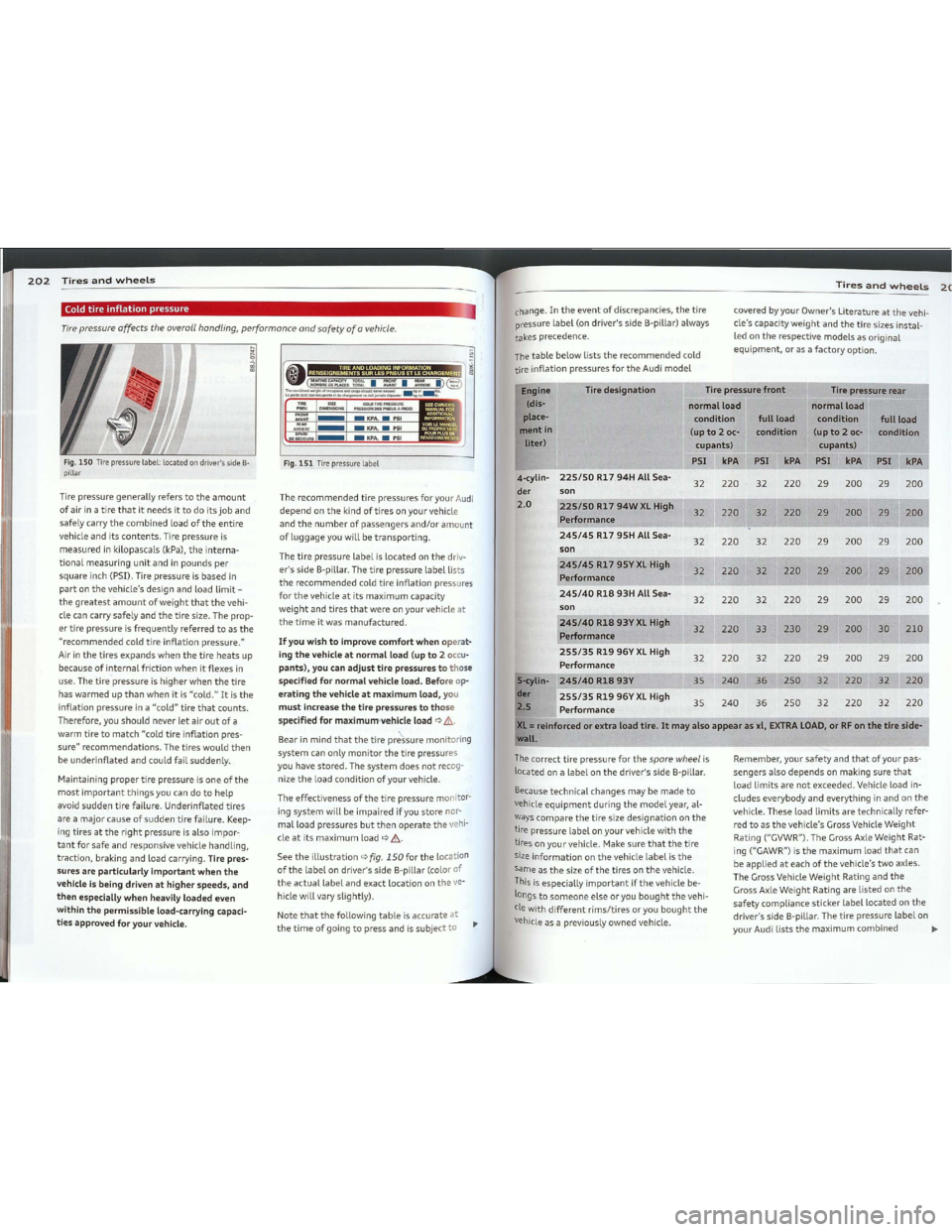
tablebelowliststherecommendedcoldequipment,orasafactoryoption.
tire inflation
pressuresfortheAudimodel
EngineTiredesignationTirepressurefrontTirepressurerear
(dis-normalloadplace-conditionfullloadfullloadmentin(upto2oc-condition
conditionliter)cupants)
PSIkPA PSIkPA
4-cylin-
225/50RI794HA115ea-32220322202920029200derson
2.0322203229
245/45RI795HA1l5ea-3222032220292002920050n
245/45RI795YXLHigh32220Performance
245/40RI893HA1l5ea-32220322202920029200son
245/40RI893YXLHigh32220332302920030210Performance
255/35RI996YXLHigh32220322202920029200Performance
5-cylin-245/40RI893Y35240362503222032220
der255/35RI996YXlHigh2.S35240362503222032220Performance
~L=reinforcedorextraloadtire.Itmayalsoappeara5 xl,EXTRALOAD,orRFonthetireside-
wall.
Thecorrecttirepressureforthespore wheelis
located onalabel onthedriver's sideB-pillar.
Because
technicalchangesmaybemadeta
vehicleequipmentduringthemodelyear, al
ways
comparethetire sizedesignationonthe
tirepressurelabel onyour vehicle withthe
tiresonyour vehicle. Makesurethatthetire
size
informationonthevehiclelabelisthe
sameasthesizeofthetiresonthevehicle.
Thisisespeciallyimportantifthevehicle be
longs
tosomeoneelseoryouboughtthevehi
ele with
differentrims/tiresoryouboughtthe
Vehicleasapreviouslyownedvehicle.
SIlECOl.OTlREPflESSUftEPNEU DlMENSK>NS l'ftESSIONDESPNEUSAFROID:~_ _KPA••PSI~E_ _KPA.•PSI
TherecommendedtirepressuresforyourAudi
dependonthekindoftiresonyour vehicle
andthenumberofpassengersand/oramount
ofluggageyouwill betransporting.
Thetirepressurelabelislocatedonthedriv
er'ssideB-pillar. Thetirepressurelabellists
therecommendedcoldtireinflation pressures
forthevehicleatitsmaximumcapacity
weightandtiresthatwereonyour vehicleat
thetimeitwasmanufactured.
Bear inmindthatthetirepressuremonitoring
systemcan onlymonitorthetirepressures
you havestored.Thesystemdoesnotrecog
nize
theload conditionofyourvehicle.
The
effectivenessofthetirepressuremonitor
ing
systemwill beimpairedifyoustorenor
malloadpressuresbutthenoperatethevehi
cle
atitsmaximumloadq,&.
Seetheillustrationqfig.150forthelocation
ofthelabel ondriver'ssideB-pillar (colorof
theactuallabelandexactlocation ontheve
hiclewillvary slightly).
Note
thatthefollowingtableisaccurateat
thetimeofgoingtopressandissubjectto
""'"DfSfCOURS_ _KPA,•PSI
Ifyouwishtoimprovecomfortwhenoperat
ing
thevehicleatnormalload(upto2 occu
pants),youcanadjusttirepressurestothose
specifiedfornormalvehicleload.Before op
eratingthevehicleatmaximumload,you
mustincreasethetirepressurestothose
specifiedformaximunrvehicleloadq,&.
Fig.151Tirepressure label
(oldtireinflationpressure
TiresandwheeLs
Tirepressureaffectstheoverallhandling, performanceandsafetyof0vehicLe.
Fig.150Tirepressure label:locatedondriver's sideBpillar
Tirepressuregenerallyreferstotheamount
ofairinatirethatitneedsittodo itsjoband
safely carrythecombinedloadoftheentire
vehicleanditscontents.Tirepressureis
measuredinkilopascals (kPa),theinterna
tionalmeasuringunitandinpoundsper
squareinch(PSI). Tirepressureisbasedin
partonthevehicle'sdesignandloadlimit
thegreatestamountofweightthatthevehi
cle can carry
safelyandthetiresize. Theprop
ertirepressureisfrequentlyreferredtoasthe
"recommendedcold tireinflationpressure."
Airinthetiresexpandswhenthetireheatsup
becauseofinternalfrictionwhenitflexesin
use. Thetirepressureishigherwhenthetire
haswarmedupthanwhenitis"cold."Itisthe
inflationpressureina"cold" tirethatcounts.
Therefore, youshouldneverletairoutofa
warmtiretomatch"coldtireinflation pres
sure"
recommendations.Thetireswouldthen
beunderinflatedandcould failsuddenly.
Maintainingpropertirepressureisoneofthe
mostimportantthingsyoucandotohelp
avoid
suddentire failure.Underinflatedtires
areamajorcauseofsuddentire failure. Keep
ing
tiresattherightpressureisalsoimpor
tantforsafeandresponsive vehiclehandling,
traction,brakingandloadcarrying. Tirepres
suresareparticularlyimportantwhenthe
vehicle isbeingdrivenathigherspeeds,and
thenespeciallywhenheavilyloadedeven
withinthepermissibleload-carryingcapaci
tiesapprovedforyourvehicle.
Page 104 of 132

Downloaded from www.Manualslib.com manuals search engine 204TiresandwheelsTiresandwheels20
weightofalloftheoccupantsandluggageor
othercargothatthevehiclecancarry. Forthe
locationofthetirepressurelabelqfig.150.
AWARNING
Overloading avehicle cancauselossofve-
hicle
control,a crash orotheraccident,se-
riouspersonalinjury,andevendeath.
- Carryingmoreweightthanyour vehicle
wasdesignedtocarry willpreventthe
vehiclefromhandlingproperlyandin-
creasetheriskofalossofvehicle con-
trol.
- The brakes onavehicle
thathasbeen
overloaded maynotbeabletostopthe
vehiclewithinasafedistance.
-Tires onavehiclethathasbeenoverload-
ed can
failsuddenlycausing lossofcon-
trolandacrash.
AWARNING
-Incorrecttirepressuresand/orunderin-
flation canlead
toaseriousorfatalacci-
dent.
-Incorrecttirepressuresand/orunderin-
flation
causeincreased tirewearandcan
affectthehandlingofthevehicle.
-
Incorrecttirepressuresand/orunderin-
flation can
alsoleadtosuddentirefail-
ure, including a
blowoutandsuddende-
flation,
causinglossofvehiclecontrol.
Checkingtirepressure
Thecorrect tirepressure forthe tires originol
Iyinstolled onyourvehicleislistedonthe tire
pressure
lobellocotedon driver's sideB-pil
lar.
Therecommendedtirepressuresareonthe
tirepressurelabelandinthetable
qpage 202,Coldtireinflation pressure.This
meansthatthepressuremustbechecked and
adjustedwhenthetirehasnotbeendriven for
morethanacoupleofmiles (kilometers)at
lowspeedsduringthepreviousthreehours.
Airinthetiresexpandswhenthetireheatsup
asaresultofinternalfrictionasitflexesin
use. Thetirepressureishigherwhenthetire
has
warmedupthanwhenitis"cold."
ltistheinflationpressureina "cold" tirethat
counts.Therefore, youshouldneverletairout
ofawarmtiretomatch"Cold tireinflation
pressure"recommendationsqpoge 202.The
tireswouldthenbeunderinflatedandcould
failsuddenly.
Thetirepressurelabel onyourAudiliststhe
recommendedcoldtireinflationpressuresfor
thenew, originalequipmenttiresthatwere
on
yourvehicleatthetimeitwasmanufac
tured.Forthelocationofthelabel
qpage 202,fig.150.
Mosttireslose air naturally overtime.They
can
alsolosesomeairifyou drive overapot
hole
orhit acurb while parking.ltisusually
notpossibletoseewhethertheradial tires
used
todayareunderinflatedjustbylooking
atthem.
Therefore,besuretocheck tirepressuresat
leastonceamonthandalwaysbeforegoing
on along trip.Make
suretotakethenumber
ofpeopleandtheamountofluggageintoac
countwhenadjustingtirepressureforatrip
evenonethatyou wouldnotconsidertobe
"long."Seeqpage 206,Tiresandvehicle
load limits
formoreimportantinformation.
Always use
anaccuratetirepressuregauge
whencheckingandadjustinginflation pres
sures.Checkallofthetiresandbesurenotto
forgetthesparetire.Ifthepressureinany tire
istoohighwhenthetireis"cold,"letairout
ofthetire slowly withtheedgeofthetire
gaugeandkeepcheckingthepressureuntil
you reach
thepressurethatiscorrect forthe
load(passengersandluggage)andkindof
driving youplan
todo.
Ifthepressureinanytire istoolow,notethe
differencebetweenthepressureinthecold
tire
andthepressureyou need and addtheair
thatyouneedtoreachthecorrectpressure for
thevehicleload(passengersandluggage) for
thetiresonyourvehicleaslistedontheon
your vehicle
andinthismanualandthekind
ofdriving youplantodo. Never
exceedthemaximuminflationpres
surelistedonthetiresidewallforanyrea
son.
Rememberthatthevehiclemanufacturer,not
thetiremanufacturer,determinesthecorrect
tirepressureforthetireson your vehicle.
Itisimportanttocheckthetirepressurewhen
thetiresarecold.
_Readtherequired tirepressurefromthetire
pressure
labellocatedon driver's sideB-pil
lar.
_ Turn
thevalvestemcapcounter-clockwise
toremove itfromthetire valve.
_ Place
theairpressuregaugeonthevalve.
- The tire
pressuresshouldonlybechecked
and
adjustedwhenthetiresarecold. The
slightly raised
pressuresofwarmtiresmust
notbereduced.
- Adjust
thetirepressuretotheload youare
carrying.
-Reinstallthevalvestemcap onthevalve.
Whenshould1checkthetirepressure?
Thecorrecttirepressureisespecially impor
tantathighspeeds.Thepressureshould
thereforebecheckedatleastonceamonth
and alwaysbeforestartingajourney.
Whenshould1adjustthetirepressures?
Adjustthetirepressuretotheload youare
carrying. Afterchangingawheelorreplacing
wheels youhave
toadjustthetirepressures
onallwheels.Inaddition, youmusttheniniti
alize
thenewtirepressuresinthetire pres
Sure
monitoringsystemqpage216.
lÀWARNING
Incorrecttirepressuresand/orunderinfla
tion canleadsuddentirefailure, lossof
control, collision,seriouspersonalinjury
or even
death.
-Whenthewarningsymbol[D]appearsin
theinstrumentcluster,stopandinspect
thetires.
-
Incorrecttirepressureand/orunderinfla
'-tion cancauseincreased tirewearand
canaffectthehandlingofthevehicleand
stoppingability.
-
Incorrecttirepressuresand/orunderin
flation can
alsoleadtosuddentirefail
ure, including a
blowoutandsuddende
flation,causing lossofvehiclecontrol.
- The driver
isresponsibleforthecorrect
tire
pressuresforalltiresonthevehicle.
The
applicablepressurevaluesarelocat
ed on asticker on
thedriver's sideB-pil
lar.
- Only
whenalltiresonthevehiclearefil
Ledtothecorrectpressure,thetire pres
suremonitoringsystemcanwork cor
rectly.
- The use
ofincorrecttirepressurevalues
c~nleadtoaccidentsorotherdamage.
Therefore itisessentialthatthedriver
observethespecifiedtirepressurevalues
forthetiresandthecorrectpressuresfor
thefunctionofthetirepressuremonitor
ingsystem.
-Always inflatetirestotherecommended
andcorrecttirepressurebeforedriving
off.
-Driving withunderinflatedtiresbend
more,lettingthemgettoohotresulting
intreadseparation,suddentirefailure
andlossofcontrol.
-Excessivespeedand/overloadingcan
causeheatbuild-up,suddentire failure
andlossofcontrol.
-Ifthetirepressureistoolowortoohigh,
thetireswillwearprematurelyandthe
vehicle willnothandlewell.
-
Ifthetireisnotflatandyoudonothave
tochangeawheelimmediately, driveat
reducedspeedtothenearestservicesta
tiontocheckthetirepressureand add
airasrequired.
rCDNote
Drivingwithoutvalvestemcapscancause
damagetothetire valves.Topreventthis,
always makesurethatfactory installed
valve
stemcapson allwheelsaresecurely
mountedonthevalve.
1
Page 105 of 132

Downloaded from www.Manualslib.com manuals search engine 206Tiresandwheels
@Forthesakeoftheenvironment
Underinflatedtireswillalsoincreasethe
fuelconsumption.
Tiresandvehicleloadlimits
Therearelimitstotheamountofloador
weightthatanyvehicleandany tirecan carry.
A vehicle
thatisoverloadedwillnothandle
wellandismoredifficulttostop.Overloading
can
notonlyleadtolossofvehiclecontrol,
butcanalsodamageimportantpartsofthe
vehicleandcan leadtosuddentirefailure, in
cluding a
blowoutandsuddendeflationthat
cancausethevehicletocrash.
Your
safetyandthatofyourpassengersalso
dependson makingsurethatload limitsare
notexceeded. Vehicleloadincludes everybody
andeverythinginandonthevehicle.These
loadlimitsaretechnically referredtoasthe
vehicle'sGrossVehicleWeightRating
("GVWR").
The "GVWR" includes
theweightofthebasic
vehicle, all
factoryinstalledaccessories, afull
tankoffuel,oil,coolantandotherfluids plus
maximumload.Themaximumloadincludes
thenumberofpassengersthatthevehicleis
intendedtocarry("seatingcapacity") withan
assumedweightof150lbs(68kg)foreach
passengeratadesignatedseatingposition
andthetotalweightofanyluggageintheve
hicle.
The Gross Axle
WeightRating("GAWR")is
themaximumloadthatcanbeappliedat"each
ofthevehicle'stwoaxles.
The Gross Vehicle
WeightRatingandthe
Gross AxleWeightRatingarelistedonthe
safetycompliancestickerlabellocatedonthe
driver's sideB-pillar. You,Audi has4seating
positions, 2inthefrontand2intherearfor
totalseatingcapacityof4.Eachseatingposi
tion hasa
safetybeltqpage 103,Safety
belts.
Thefactth.atthereisanupperlimittayour
vehicle's GrossVehicle
WeightRatingmeans
thatthetotalweightofwhateverisbeing car- ried
inthevehicleislimited.
Themorepassen
gersinthevehicleorpassengerswhoare
heavierthanthestandardweightsassumed
meanthatlessweightcanbecarriedaslug
gage.
The tirepressurelabelonyourAudialsolists
themaximumcombinedweightofallofthe
occupantsandluggageorothercargothat
thevehicle cancarry. Forthelocationofthe
labelqpage202,fig.150.
.6.WARNING
Overloading avehiclecancauselossofve
hiclecontrol,a crashorotheracddent,se
rious
personalinjury,andevendeath.
- Carryingmoreweightthanyour vehicle
wasdesignedtacarry willpreventthe
vehiclefromhandling properlyandin
creasetheriskofthelossofvehiclecon
trol.
-Thebrakes onavehiclethathasbeen
overloadedmaynotbeabletastopthe
vehicle withinasafedistance.
-Tires onavehiclethathasbeenoverload
edcan failsuddenly, includingablowout
andsuddendeflation,causinglossof
controlandacrash."
Determiningcorrectloadlimit•
Usetheexample-.Qelowtocal
culate
thetotalwei~htofthe
passengersand luggage oroth
erthingsthatyou plantotrans
port50thatyoucanmake sure
thatyourvehicle willnotbe
overloaded.
Steps forDetermining
Correct
LoadLimit
1.Locatethestatement"THE
COMBINEDWEIGHTOFOC
CUPANTSANDCARGO
SHOULDNEVEREXCEEDXXX
KGORXXXLBS"onyour vehi
cle's placard (tireinflation
pressure label)
0:;>page202,
fig.150.
2.Determinethecombined
weight
ofthedriver andpas
sengersthatwillberidingin
your vehicle.
3.Subtractthecombined
weight
ofthedriver andpas
sengersfram"XXX"kilo
gramsor"XXX"pounds
shown on
thesticker
0:;>page202,fig.150.
4.The resulting figureequals
theavailableamountofcar
go and luggage loadcapaci
ty.Forexample,ifthe"XXX"
amountequals1400lbs.
and
therewill befive150
lbs. passengersinyour vehi
de,theamountofavailable
cargo andluggage loadca
pacity
is650lbs.(1400-750
(5x150)=650lbs.)
S.Determinethecombined
weight ofluggage andcargo
being loaded on
thevehide.
That weight may
notsafely
exceed
theavailable cargo
and luggage loadcapacity
calculated
inStep4.
Tiresandwheels2(
6. Ifyour vehicle willbetowing
a trailer, loadfrom yourtrail
er will betransferred toyour
vehicle. Consultthismanual
todeterminehow thisre
ducestheavailable cargo
and luggage loadcapacity of
your vehicle.
~Checkthetiresidewall
(0:;>page209,fig.154)tode
terminethedesignated load
rÇltingforaspecifie tire.
Tireservicelife
Theservice lifeoftiresdepends onalotof
different thingsincluding properinstallation
andbalancing, correcttirepressure anddriv
ing style.
Fig.152Tire tread: tread-wear indicators(TWlr
fT;;,.c;;r;'\
~))
~~\./;~j
\'
Fig.153Rotatingtiresformoreevenwear
TreadWearIndicator(TWI)
Theoriginaltiresonyourvehicle have
1/16inch(1.6mm)high"wearindicators"
Page 107 of 132
Downloaded from www.Manualslib.com manuals search engine ~T~i~re~s-.:a~n~d~vv~h'.':e~e~l=s~______
Tirespecifications
Knowledgeoftirespecificationsmakesiteas
ier
tochoosethecorrecttires. Radialtires
havethetirespecificationsmarked onthe
sidewall,forexample:
P245145R1795H
This
containsthefollowinginformation:
PIndicatesthetire isforpassengercars
245Nominaltirewidthinmmofthetire
fromsidewalledgetosidewalledge.In
general,thelargerthenumber,thewider
thetire
45Height/widthratioinpercent(aspectra-
tio)
R Tire
construction:Radial
17Rimdiametercode (ininches)
95Load ratingcode
HSpeedratinglettercode
XL(or"xl","EXTRALOAD",or"RF") indicates
thatthetireisa"Reinforced" oran"Extra
Load" tire
M+5 (or
"MIS")Indicatesthatthetirehas
somemudandsnowcapability
The
tirescouldalsohavetheinformationof
directionofrotation9page198.
Tiremanufacturingdate
Themanufacturingdateisalsoindicated on
thetiresidewall(possiblyonlyontheinner
sideofthewheell:
"DOT...2209..."means,forexample,that
thetirewasproducedinthe22ndweekof
2009.
Speedrating(Iettercode)
Thespeedratinglettercode onthewheelsin
dicatesthemaximumpermissibleroadspeeds
9,&.inWintertires onpage 213.
Pupto93mph(150km/hl
Qupto99mph(158km/hl
Rupto106mph(170km/hl
1)For tireswithamaximum speedcapabiUty over149mph(240km/hl,tiremanufacturerssometimesusetheletters"ZR."
SUpto110mph(180km/hl
Tupto118mph(190km/hl
Uupto124mph(200km/hl
Hupto130mph(210km/hl
V upto149mph(240km/h)l)
Zover149mph(240km/h)ll
W upto168mph(270km/h)ll
V upto186mph(298km/h)ll
Vour vehicle isnormallyfactoryequippedwith
tires,whichpossessexcellentdriving charac
teristicsandgiveyour Audioptimumdriving
comfort.Anelectronicspeedlimiter
9page33willnormallypreventyour vehicle
fromgoingfasterthanthetirespeedrating
9,&..
U.5.DOTTireIdentificationNumber(TIN)andtiremanufacturedate
Thisisthetire's"serialnumber".Itbegins
withtheletters"DOT"andindicatesthatthe
tire
meetsallfederalstandards.The next two
numbersorlettersindicatetheplantwhereit
wasmanufactured,andthelastfournumbers
representtheweekandyearofmanufacture.
For
example,thenumbers2209meanthat
thetirewasproducedinthe22ndweekof
2009.Theothernumbersaremarketingco
desthatmay ormaynotbe usedbythetire
manufacturer.Thisinformationisusedtocon
tactconsumersifatiredefectrequires are
call.
AudiOriginaltire
Tires withtheidentification"AO"or"RO"have
beenspeciallymatchedwithyour Audi.We
recommendusing onlythesetiresbecause
theymeetthehigheststandardsregarding
safetyanddrivingcharacteristicswhen used
correctly. Vour
authorizedAudidealerwill
gladly provide youwith
moreinformation.
Tire
plycompositionandmaterialsused
Thenumberofpliesindicatesthenumberof
layers
ofrubber-coatedfabricinthetire.In~
--general,thegreaterthenumberofplies,the
oreweighta tire cansupport.Tiremanufac
rnrsalsomustindicatethematerialsintheture
. e which includesteel,nylon, polyester,andtir,
others.
MaximumLoadRating
Thisnumberindicatesthemaximumloadin
kilogramsandpoundsthatcanbecarriedby
thetire.
Tire
qualitygradingfortreadwear,traction,andtemperatureresistance
Tread wear,tractionandtemperaturegrades
Qpage212.
MaximumPermissibleInflationPressure
Thisnumberisthegreatestamountofair
pressure
thatshouldever beputinthetire
under
normaldriving conditions.
WARNING
-Usingincorrectorunmatchedtiresand/
or
wheelsorimpropertireandwheel
combinationscan leadtolossofcontrol,
collisionandseriouspersonalinjury.
- Always
usetires, rimsandwheelbolts
thatmeetthespecificationsoforiginal
factory-installed
tiresorothercombina
tionsthathavebeenspecifically ap
proved by
thevehiclemanufacturer.
-Tiresageeveniftheyarenotbeingused
and canfailsuddenly, especially
athigh
speeds.Tiresthataremorethan6years
oldcan onlybeusedinanemergency
andthenwith special careandatlower
speeds.
-Nevermountusedtiresonyourvehicle if
you
arenotsureoftheir"previous histo
ry."Oldusedtiresmayhavebeendam
agedeventhoughthedamagecannotbe
seenthatcanleadtosuddentirefailure
and loss
ofvehicle control.
-Allfourwheelsmustbefittedwithradial
tires
ofthesametype, size(rolling cir
cumference)
andthesametreadpattern.
Drivingwithdifferenttiresreducesvehi-
dehandlingandcan leadtoalossofcontrol.
-
Ifthesparetire isnotthesameasthe
tiresthataremountedonthevehide
forexamplewithwintertires-onlyuse
thesparetireforashortperiodoftime
anddrive withextracare.Refitthenor
malroadwheelassoonassafely possi
ble.
- Never drive
fasterthanthemaximum
speedforwhichthetiresonyour vehicle
areratedbecausetiresthataredriven
fasterthantheirratedspeedcanfail
5uddenly.
- Overloading
tirescauseheatbuild-up,
suddentire failure, including ablowout
andsuddendeflationandlossofcontrol.
-
Temperaturegradesapplytotiresthat
areproperlyinflatedandnotoverorun
derinflated.
- Fortechnicalreasonsitisnotalways
possible
tousewheelsfromothervehi
cles -
insomecasesnotevenwheels
fromthesamevehicle model.
-
Ifyouinstallwheeltrimdiscs ontheve
hicle
wheels,makesurethattheair flow
tothebrakes isnotblocked. Reducedair
flow
tothebrakescanthemtooverheat,
increasingstoppingdistancesandcaus
ing acollision.
- Run
flattiresmay only beused onvehi
cles
thatwereequippedwiththematthe
factory. Thevehiclemusthave achassis
designedforrunflattiresandafactory
installedtirepressuremonitoringsys
temthatindicatesa lossoftirepressure.
Incorrectuseofrunflattirescan leadto
vehicledamageoraccidents. Checkwith
anauthorizedAudidealerortire special
ist
toseeif your vehicle canbeequipped
withrunflattires.Ifrunflattiresare
used,theymustbeinstalledonallfour
wheels.Mixingtiretypesisnotpermit-
~.~
Page 121 of 132

Downloaded from www.Manualslib.com manuals search engine Emergencysituations
Removethetowingloopwhen youaredone
using itand place itbackinthevehicletool
kit. Always keepthetowing loopinthevehi
cle.
When installing
theairintake grille,insertthe
tabsonthegrilleinthemountsonthevehicle
first. Then press
thegrilleintosecure it.
AWARNING
Ifthetowingloapisnottighteneduntilit
stopswhen installing,thethreadsmaybe
pulled
outwhen towingthevehicleand
thatcouldcauseanaccident.
Reartowingloop
Donotinsto/l therear towing{oopunti{itis
needed.
Fig.183Right rearsection
Fig.
184Rear bumper: screwing inthe towing loop
Ontherightsideundertherearbumperthere
isathreadedholeforthetowing loop.The
threadedholeispratectedbyacoyer.
~Removethetowing loopfromthevehicle
toolkit
Qpage222.
~Presstherightsideofthecoyer inward
forcefully
toremove itframthebumper.
Qfig.183.
~Screwthetowinglooptightly intothe
threadedholeasfarasitwill go.
When it
isnolongerneeded,unscrewthe
towing loopandputitback intothevehicle
toolkit.
Besuretohavethetowing loopstored
inthevehicleatalltimes.
AWARNING
Ifthetowing loopisnotscrewedinasfar
asitwill go,thethreadcanpulloutwhen
thevehicleistowed-potentialriskofan
accident.
Loadingthevehicleanteaflatbedtruc~
Fig.185Vehicle onflatbedtruck
Fronthookup
~Alignthevehicle withthecenterlineofthe
carcarrier ramp.
~Attachthewinchhooktothefronttowline
eye previously installed.
"--Rearhookup
~Alignthevehiclewiththecenterlineofthe
carcarrier ramp.
~Attachthewinchhooktothereartowline
eye previously installed.
(DTips
Checkcarefullytomakesurethehook-up
issecure beforemovingthecaruptheflat
bed truck ramp.
LiftingvehicLe
Liftingwithworkshophoistandwith
floorjack
Thevehiclemayonlybeliftedatthelifting
points i/lustrated.
Fig.186Rearliftingpoint(rightside)
Fig.
187Frontliftingpoint(rightside)
~ReadandheedWARNINGQ&'
~Locate liftingpointsQfig.186Qfig.187.
~Adjust liftingarmsofworkshop hoistor
floorjacktomatchvehicle liftingpoints.
~Insertarubber padbetweenthefloorjack!
workshop hoistand
thelifting points.
Ifyoumustliftyourvehiclewithafloorjack
toworkunderneath,besurethevehicle is
safelysupportedonstandsintendedforthis
purpose.
Frontliftingpoint
Thelifting pointislocated onthefloorpanre
inforcementaboutatthesamelevel asthe
jackmounting pointQfig.187.Donotlift
thevehicleattheverticalsillreinforcement.
Rearliftingpoint
Thelifting pointislocated onthevertical rein
forcementofthelowersillfortheonboard
jack
Qfig.186.
Emergencysituations2::
Liftingwithvehiclejack
RefertoQpoge227.
AWARNING
-
Toreducetheriskofseriousinjury and
vehicle
damage.
- Always liftthevehicleonlyatthespe
cialworkshophoistand floor jacklift
points illustrated
Qfig.186and
Qfig·187.
-Failuretoliftthevehicleatthese
points couldcausethevehicletotiltor
fall from alift
ifthereisachangeinve
hicle
weightdistribution andbalance.
This
mighthappen,for example, when
heavy
componentssuch astheengine
block or
transmissionareremoved.
- When removing heavy
componentslike
these,anchorvehicletohoistoraddcor
respondingweightstomaintainthecen
terofgravity. Otherwise,thevehicle
mighttiltorslip offthehoist, causing
serious personal
injury.
CDNote
-Beawareofthefollowing pointsbefore
lifting
thevehicle:
- The vehicle
shouldneverbeliftedor
jackedupfromunderneaththeengine
oilpan,thetransmissionhousing,the
frontorrearaxleorthebodyside
members.This could leadtoserious
damage.
-Toavoiddamagetotheunderbodyor
chassisframe,arubberpadmustbe
insertedbetweenthefloorjackand
theliftpoints.
-Before driving overaworkshophoist,
checkthatthevehicleweightdoesnot
exceedthepermissiblelifting capacity
ofthehoist.
- Before driving overa
workshophoist,
ensurethatthereissufficientclear
ancebetweenthehoistandlowparts
ofthevehicle.