engine overheat AUDI TT COUPE 2014 User Guide
[x] Cancel search | Manufacturer: AUDI, Model Year: 2014, Model line: TT COUPE, Model: AUDI TT COUPE 2014Pages: 284, PDF Size: 34.42 MB
Page 222 of 284
Downloaded from www.Manualslib.com manuals search engine Checking
and topping up fluids
CD CAUTION
Remove any fuel spills from the paintwork im
mediately.
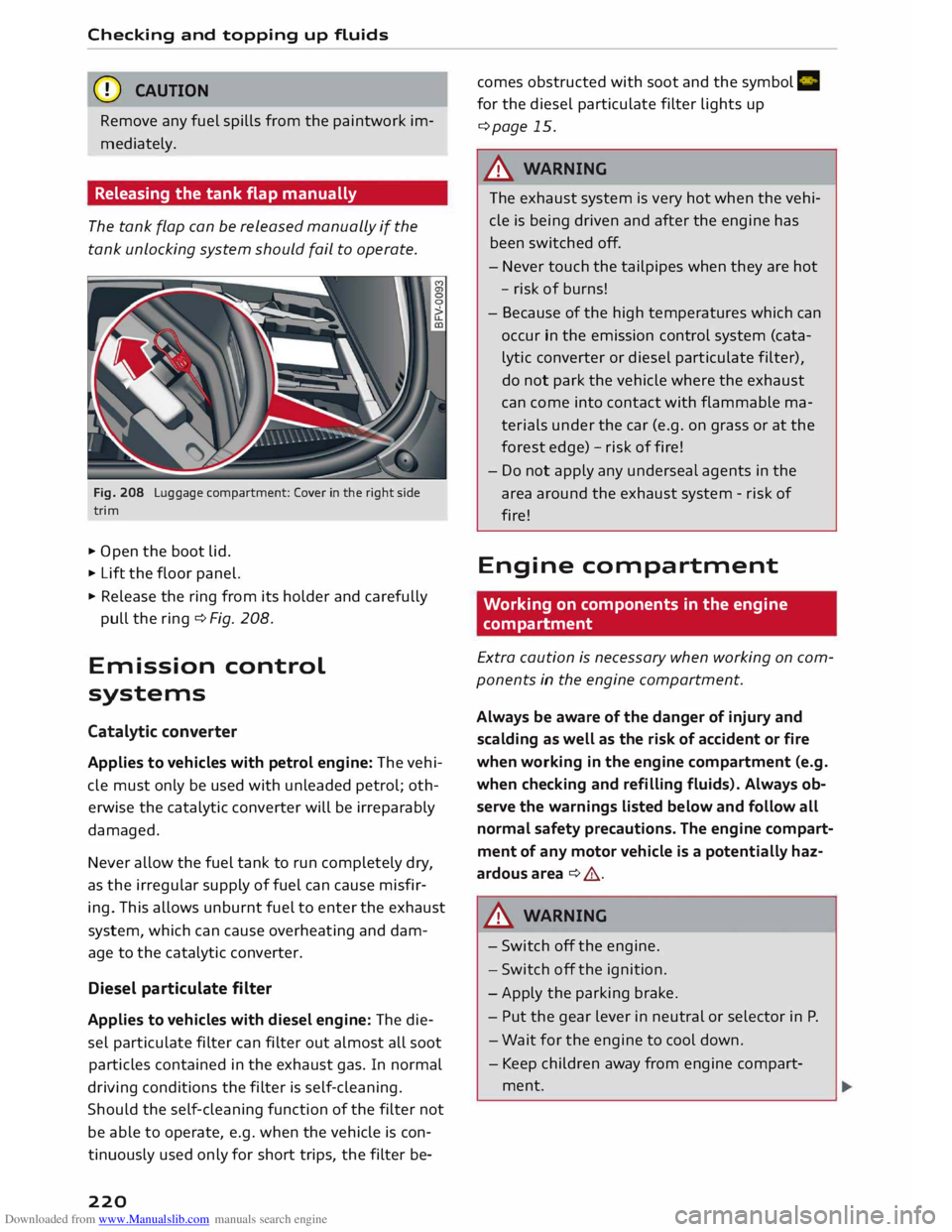
Releasing the tank flap manually
The tank flap can be released manually if the
tank unlocking system should fail to operate.
Fig. 208 Luggage compartment: Cover in the right side
trim
.. Open the boot lid.
.. Lift the floor panel.
.. Release the ring from its holder and carefully
pull the ring ¢ Fig. 208.
Em ission control
systems
Catalytic converter
Applies to vehicles with petrol engine: The vehi
cle must only be used with unleaded petrol; oth
erwise the catalytic converter will be irreparably
damaged.
Never allow the fuel tank to run completely dry,
as the irregular supply of fuel can cause misfir
ing. This allows unburnt fuel to enter the exhaust
system, which can cause overheating and dam
age to the catalytic converter.
Diesel particulate filter
Applies to vehicles with diesel engine: The die
sel particulate filter can filter out almost all soot
particles contained in the exhaust gas. In normal
driving conditions the filter is self-cleaning.
Should the self-cleaning function of the filter not
be able to operate, e.g. when the vehicle is con
tinuously used only for short trips, the filter be-
220 comes
obstructed with soot and the symbol Cl
for the diesel particulate filter lights up
¢page 15.
A WARNING
The exhaust system is very hot when the vehi
cle is being driven and after the engine has
been switched off.
- Never touch the tailpipes when they are hot
- risk of burns!
- Because of the high temperatures which can
occur in the emission control system (cata
lytic converter or diesel particulate filter),
do not park the vehicle where the exhaust
can come into contact with flammable ma
terials under the car (e.g. on grass or at the
forest edge) -risk of fire!
- Do not apply any undersea[ agents in the
area around the exhaust system -risk of
fire!
Engine compartment
Working on components in the engine
compartment
Extra caution is necessary when working on com
ponents in the engine compartment.
Always be aware of the danger of injury and
scalding as well as the risk of accident or fire
when working in the engine compartment (e.g.
when checking and refilling fluids). Always ob
serve the warnings listed below and follow all
normal safety precautions. The engine compart
ment of any motor vehicle is a potentially haz
ardous area ¢ .,&.
A WARNING
- Switch off the engine.
- Switch off the ignition.
- Apply the parking brake.
- Pu t the gear lever in neutral or selector in P.
- Wait for the engine to cool down.
- Keep children away from engine compart-
ment.
Page 227 of 284
Downloaded from www.Manualslib.com manuals search engine 0
N
co
....
\D Lfl
N
Lfl
.... Coolant
addi-Frost protec-
tive tion
Countries with min. 40 %,
min. -25 °C
warm climate max. 45 %
Countries with min.
50 %,
max. -40 °C
cold climate max.
60 %
CD CAUTION
- Have your qualified workshop check the
cooling system before the winter season to
make sure that the anti-freeze concentra
tion is adequate for the conditions to be ex
pected. This applies particularly if you drive
into a colder climate zone.
- To prevent damage to the engine, do not
use a different type of anti-freeze additive if
the approved type of additive is not availa
ble. In this case use only water and bring
the coolant concentration back up to the
correct level as soon as possible by putting
in the specified additive.
- Always top up with fresh, unused coolant.
- Radiator sealants must not be added to the
coolant.
Topping up coolant
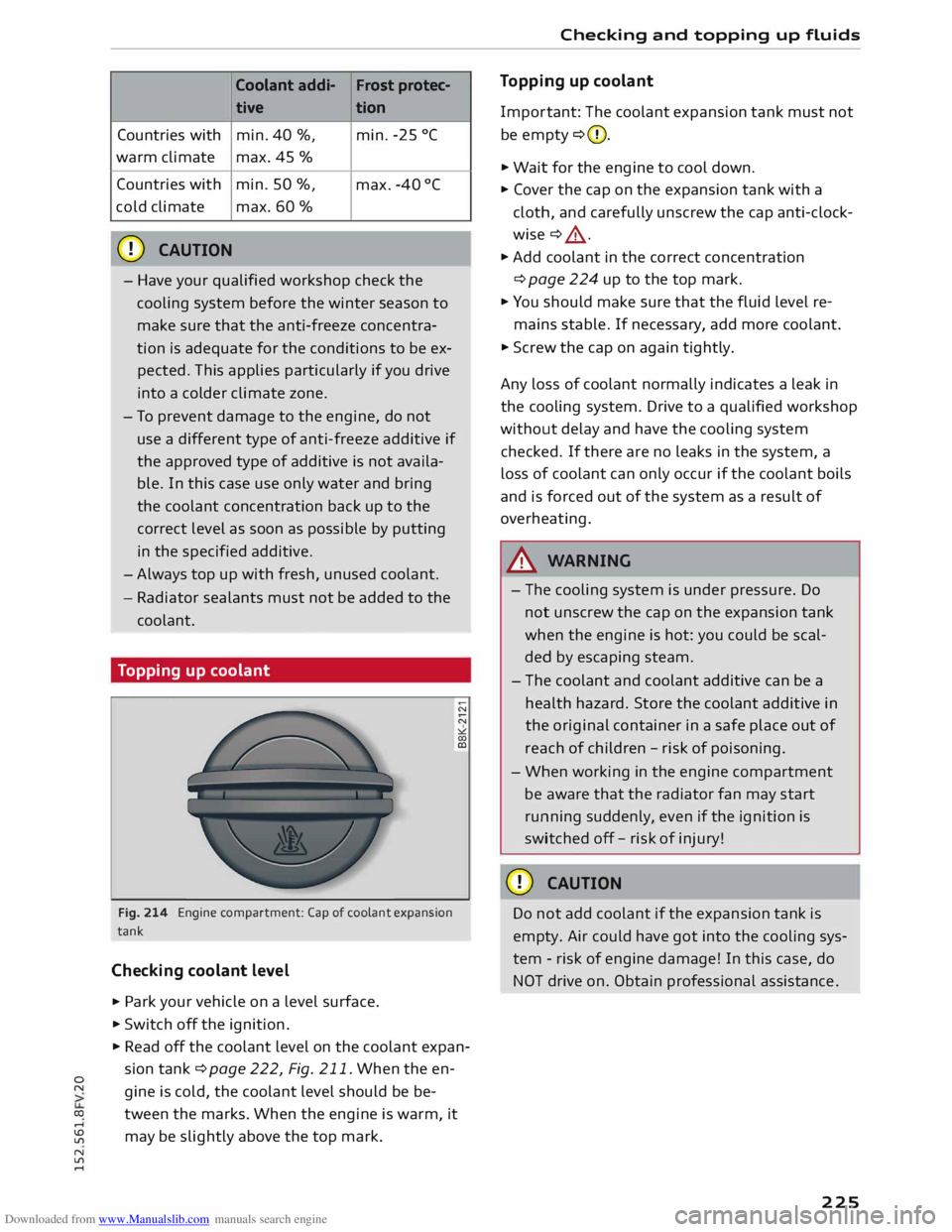
Fig. 214 Engine compartment: Cap of coolant expansion
tank
Checking coolant level
.. Park
your vehicle on a level surface .
.. Switch off the ignition .
.. Read off the coolant level on the coolant expan
sion tank ¢ page 222, Fig. 211. When the en
gine is cold, the coolant level should be be
tween the marks. When the engine is warm, it
may be slightly above the top mark. Checking
and topping up fluids
Topping up coolant
Impor tant: The coolant expansion tank must not
be empty ¢(D.
.. Wait for the engine to cool down.
.. Cover the cap on the expansion tank with a
cloth, and carefully unscrew the cap anti-clock
wise ¢ .&_ .
.. Add coolant in the correct concentration
¢ page 224 up to the top mark.
.. You should make sure that the fluid level re-
mains stable. If necessary, add more coolant.
.. Screw the cap on again tightly.
Any loss of coolant normally indicates a leak in
the cooling system. Drive to a qualified workshop
without delay and have the cooling system
checked. If there are no leaks in the system, a
loss of coolant can only occur if the coolant boils
and is forced out of the system as a result of
overheating.
A WARNING
- The cooling system is under pressure. Do
not unscrew the cap on the expansion tank
when the engine is hot: you could be scal
ded by escaping steam.
- The coolant and coolant additive can be a
health hazard. Store the coolant additive in
the original container in a safe place out of
reach of children -risk of poisoning.
- When working in the engine compartment
be aware that the radiator fan may start
running suddenly, even if the ignition is
switched off-risk of injury!
CD CAUTION
Do not add coolant if the expansion tank is
empty. Air could have got into the cooling sys
tem -risk of engine damage! In this case, do
NOT drive on. Obtain professional assistance .
225
Page 245 of 284
Downloaded from www.Manualslib.com manuals search engine 0
N
co
....
\D L/'l
N
L/'l
.... -
Please observe the relevant regulations.
Tyre repairs
Applies to vehicles: with tyre repair kit
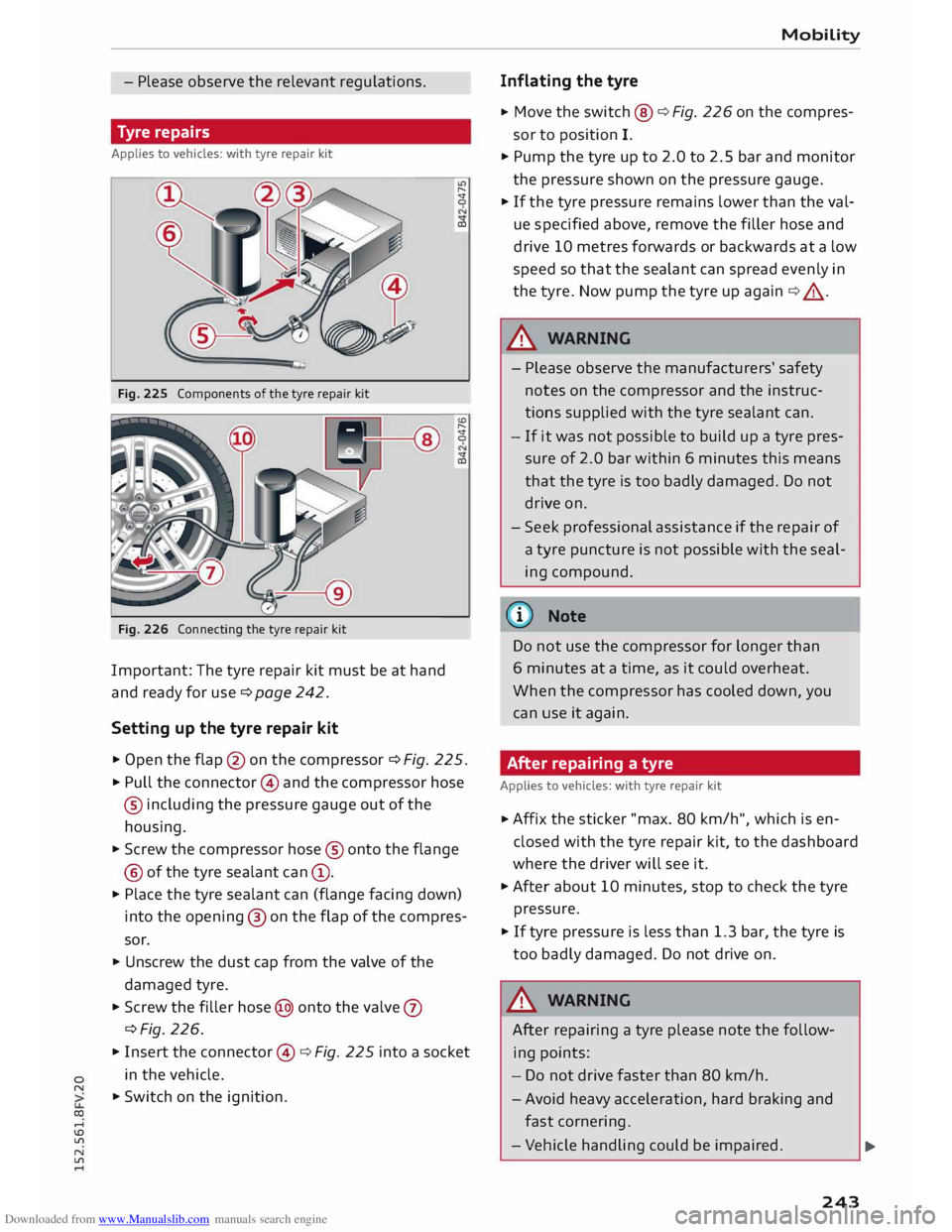
Fig. 225 Components of the tyre repair kit
Fig. 226 Connecting the tyre repair kit
Important: The tyre repair kit must be at hand
and ready for use¢ page 242.
Setting up the tyre repair kit LC'>
.....
'St
0
CD
'St
0
CD
.,. Open the flap @on the compressor ¢ Fig. 225.
.,. Pull the connector @ and the compressor hose
® including the pressure gauge out of the
housing.
.,. Screw the compressor hose® onto the flange
@ of the tyre sealant can (D.
.,. Place
the tyre sealant can (flange facing down)
into the opening ® on the flap of the compres
sor.
.,. Unscrew the dust cap from the valve of the
damaged tyre.
.,. Screw the filler hose@ onto the valve (J)
¢Fig. 226.
.,. Insert the connector @¢ Fig. 225 into a socket
in the vehicle.
.,. Switch on the ignition. Mobility
Inflating the tyre
.,. Move
the switch @¢ Fig. 226 on the compres
sor to position I.
.,. Pump the tyre up to 2.0 to 2.5 bar and monitor
the pressure shown on the pressure gauge.
.,. If the tyre pressure remains lower than the val
ue specified above, remove the filler hose and
drive 10 metres forwards or backwards at a low
speed so that the sealant can spread evenly in
the tyre. Now pump the tyre up again ¢_&..
A WARNING
- Please observe the manufacturers' safety
notes on the compressor and the instruc
tions supplied with the tyre sealant can.
- If it was not possible to build up a tyre pres
sure of 2.0 bar within 6 minutes this means
that the tyre is too badly damaged. Do not
drive on.
- Seek professional assistance if the repair of
a tyre puncture is not possible with the seal
ing compound.
(!)) Note
Do not use the compressor for longer than
6 minutes at a time, as it could overheat.
When the compressor has cooled down, you
can use it again.
After repairing a tyre
Applies to vehicles: with tyre repair kit
.,. Affix
the sticker "max. 80 km/h", which is en
closed with the tyre repair kit, to the dashboard
where the driver will see it.
.,. After about 10 minutes, stop to check the tyre
pressure.
.,. If tyre pressure is less than 1.3 bar, the tyre is
too badly damaged. Do not drive on .
A WARNING
After repairing a tyre please note the follow
ing points:
- Do not drive faster than 80 km/h.
- Avoid heavy acceleration, hard braking and
fast cornering .
- Vehicle handling could be impaired.
.,..
243