instrument panel AUDI TT ROADSTER 2015 User Guide
[x] Cancel search | Manufacturer: AUDI, Model Year: 2015, Model line: TT ROADSTER, Model: AUDI TT ROADSTER 2015Pages: 244, PDF Size: 60.74 MB
Page 111 of 244
angle of impact that will always trigger the
airbags, since the circumstances will vary con
siderably between one collision and another.
Important factors include, for example, the nature (hard or soft) of the object which the
car hits, the angle of impact, vehicle speed,
etc. The front airbags will also not inflate in
side or rear collisions, or in ro ll-overs .
A lwa ys
rem ember : Airbags will deploy only
once, and only in certa in kinds of collisions .
Your safety belts are always there to offer pro
tection in those s ituations in which airbags
are not supposed to deploy , or when they have
a lready deployed ; fo r example , when yo ur ve
h icle strikes or is struck by another after the
first collision .
This is just one of the reasons why an a irbag is
a supplementary restra int and is not a s ubst i
tute for a safety belt . The airbag system
works most effectively when used with the
safety belts. Therefore, always properly wear
your safety belts
¢ page 100.
A WARNING
Sitting too close to the steer ing wheel or
instrument panel will decrease the effec
tiveness of the airbags and will increase
the risk of pe rsonal injury in a co llision .
- Never sit closer than 10 inches (25 cm)
to the stee ring wheel or instrument pan
el.
- If you cannot sit more than 10 inches
(25 cm) from the steer ing whee l, investi
gate whether adaptive equipment may
be available to held you reach the pedals
and increase your seating dis tance from
the steering wheel.
- If you are unrestrained, lean ing fo rward,
sitting sideways or out of position in any
way, yo ur risk of inj ury is much highe r.
- You w il l also receive serio us inju ries and
cou ld even be killed if you are up against
the airbag or too close to it when it in
flates -even with an Advanced Airbag.
- To reduce the r isk o f injury when an air
bag inflates, a lways wear safety belts
proper ly ¢
page 103, Safety belts .
Airbag sys tem 109
-If ch ildren are not prope rly restrained,
they may be severely injured or killed
when an airbag inflates.
- Never let ch ildren ride unrestra ined or
improperly restrained in the vehicle. Ad
just the front seats properly.
- Always sit as far as possible from the steer ing whee l or the instrument panel
¢ page 92, Proper occupant seating po
sitions.
- Always sit upright with your back against
the backrest of your seat.
- Never p lace your feet on the instrument
panel or on t he seat. Always keep both
feet on the f loor in front of the seat to
help prevent serious in ju ries to the legs
a nd hips if the airbag inflates.
A WARNING
A irbags that have deployed in a crash must
be replaced.
- Use on ly orig inal equipment airbags ap
proved by Aud i and i nstalled by a trai ned
technician who has the ne cessary too ls
and d iagnost ic equipment to properly re
place any airbag in your vehicle and as
sure system effectiveness in a crash.
- Never perm it salvaged or recycled air
bags to be installed in you r vehicle .
Child restraints on the front seat - some
important things to know
.. Be s ure to read the important in forma tion
and head the WARNINGS for important de
tails about ch ildren and Advanced A irbags
¢ page 129.
The airbag on the passenger side makes the
front seat a pote ntially dange rous place for a
c hi ld to ride . The front seat is not the safest
pla ce for a child in a fo rward-facing child safe
ty seat.
It can be a very d angerous place for a n
infant or a chi ld in a rearwa rd -fa cing seat.
The Advanced A irbag System in you r vehicle
has been ce rtified to comply wit h the Require
ments of United States Fede ral Motor Vehicle
1111>
•
•
Page 114 of 244
112 Airbag system
Front airbags
Description of front airbags
The airbag system can provide supplemental
protection to properly restrained front seat occupants.
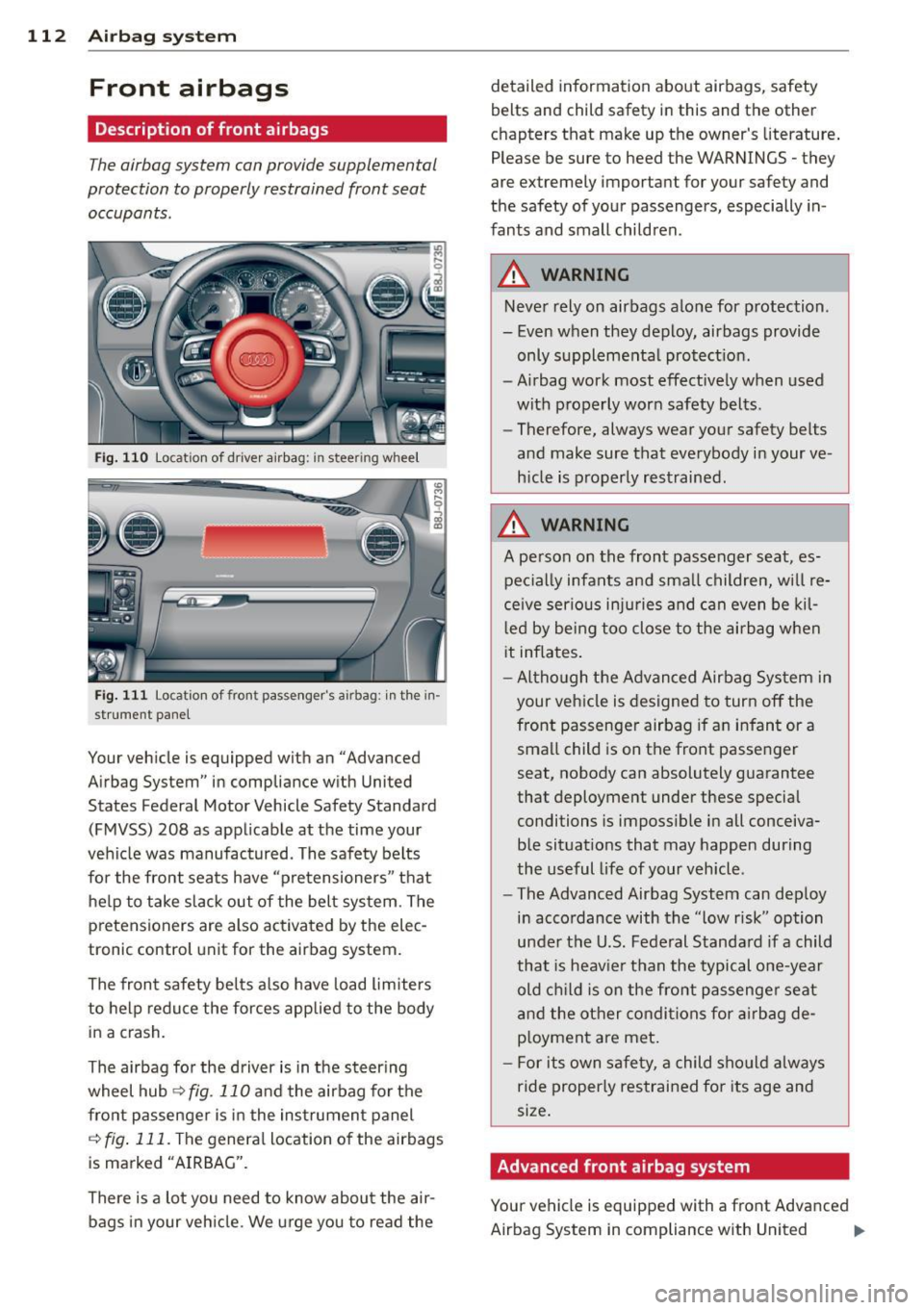
Fig . 110 Locat ion of driver airbag: in steering wheel
Fig. 111 Locatio n of front passenger 's ai rbag: in t he in·
strument panel
Your vehicle is equipped with an "Advanced
Airbag System" in compliance with United
States Federal Motor Vehicle Safety Standard
(FMVSS) 208 as applicable at the time your
vehicle was manufactured . The safety belts
for the front seats have "pretensioners" that
help to take slack out of the belt system. The
pretensioners are also activated by the elec·
tronic control unit for the airbag system.
The front safety belts also have load limiters
to help reduce the forces applied to the body in a crash.
The airbag for the driver is in the steer ing
wheel hub ¢
fig. 110 and the airbag for the
front passenger is in the instrument panel
¢
fig . 111. The general location of the airbags
is marked "AIRBAG".
There is a lot you need to know about the air
bags in your vehicle. We urge you to read the detailed information abo
ut airbags, safety
belts and child safety in this and the other
chapters that make up the owner's literature .
P lease be sure to heed the WARNINGS -they
are extremely important for your safety and
the safety of your passengers, especially in
fants and small children .
A WARNING
Never rely on airbags alone for protection .
- Even when they deploy, airbags provide only supplemental protect ion.
- Airbag work most effective ly when used
with properly worn safety belts.
- Therefore, always wear your safety belts
and make sure that eve rybody in your ve
h icle is p roperly restrained.
A WARNING
A person on the front passenger seat, es
pec ially infants and sma ll children, w ill re
ceive serious injuries and can even be kil
l ed by be ing too close to the airbag when
i t inflates .
- Al tho ugh the Advanced Airbag System in
your veh icle is designed to tur n
off the
front passenger airbag if an infant or a
small child is on the front passenger
seat, nobody can absolutely guarantee
that deployment under these special
conditions is impossible in all conceiva
b le situations that may happen during
the useful life of your vehicle .
- The Advanced Airbag System can dep loy
in accordance with the "low risk" option
under the U.S . Federal Standa rd if a child
that is heav ie r th an the typical one-year
old ch ild is on the front passenger seat
and the other condi tions for a irbag de
p loyment are met .
- F or its own safe ty, a child sho uld always
ride properly restrained for its age and
size .
Advanced front airbag system
-
Your vehicle is equipped with a front Advanced
Airbag System in compliance with United ..,_
Page 115 of 244
States Federal Motor Vehicle Safety Standard
208 as applicable at the time your vehicle was
manufactured.
The front Advanced A irbag System supp le
ments the safety belts to provide additiona l
protection for the driver's and front passeng
er's heads and upper bodies in fronta l crashes.
The airbags inflate only in frontal impacts
when the vehicle deceleration is high enough.
The front Advanced Airbag System for the
front seat occupants is not a substitute for
your safety belts. Rather, it is part of the over all occupant restraint system in your veh icle.
Always remember that the airbag system can
only help to protect you, if you are s itting up
right, wearing your safety belt and wea ring it
prope rly. This is why you and you r passenge rs
must always be properly restr ained , not just
because the law requires yo u to be.
The Advanced Airbag System in your veh icle
h as been certified to meet the "low ris k" re
qu irements for
3 and 6 year-o ld childre n on
the passenger side and very small adu lts on
the driver side. The low risk dep loyment crite
ria are intended to he lp reduce the risk of in
jury through interaction with the front airbag that can occur, for example, by be ing too
close to the steer ing wheel and instrument
panel when the airbag inflates.
In addition, the system has been certif ied to
comply w ith the "suppression" requ irements
of the Safety Standard, to turn
off the front
airbag for infants
12 months old and younger
who are restra ined o n the front passenger
seat in c hild restra ints that a re listed in the
Standa rd
¢page 131, Child restraints and
Advanced Airbags.
"Suppression" requires the front airbag on the passenger side to be turned
off i f:
- a ch ild up to about one year of age is re
stra ined on the front passenger seat in one
of the rear-facing or forward-fac ing infant
rest raints listed in Federa l Motor Veh icle
Safe ty S tanda rd 208 w it h which t he Ad
vanced Airbag System in your vehicle was certified . For a listing of the child rest raints
A irbag system 113
that were used to certify your vehicle's com
pliance with the US Safety Standard
¢ page 131,
-weight less than a thresho ld level stored in
the control unit is detected on the front pas
senger seat.
When a person is detected on the front pas
senger seat, weighing more than the total
weight of a chi ld that is about
1 year old re
stra ined in one of the rear-facing or forward
facing infant restraints (listed in Federal Mo
tor Vehicle Safety Standard 208 w ith which
the Advanced A irbag System in your vehicle
was certified), the front airbag on the passen ger side may or may not deploy.
The
PAS SENGER AIR BAG OFF lig ht comes on
when the electron ic contro l unit detects a to
ta l we ight on the front passenger seat that re
quires the front airbag to be tu rned
off. If the
PASSENGER AIR BAG OFF light does no t
come on, the fron t ai rbag on the passe nger
s ide has not been t urned
off by the contro l
u nit and can dep loy if the control unit senses
an impact that meets the cond itions stored in
its memory.
If the total weight on the front passenge r
seat is more than that of a typical
1 year-o ld,
but less than the we ight of a small ad ult, the
front a irbag on the passenger side may dep loy
(the
PASSENGER AIR BAG OFF light does not
come on) .
For example , the airb ag m ay deploy if:
- a small ch ild that is heav ier t han a typical 1
year -old chi ld is on the front passenger seat
(regard less of whether the child is in one of
the child safety seats listed
¢page 131),
-a child who has outgrown chi ld restraints is
on the front passenger seat .
If the fron t passenger airbag is turned
off, the
PASSENGER AIR BAG OFF light in the cen ter
of the instrument panel will come on and stay
on .
T he front airbag on the passenge r side may
not deploy (the PASSENGER AIR BAG OFF
light does not illuminate and stay lit) i f:
•
•
Page 117 of 244
components is detected . The function of the
airbag indicator light is described in greater
deta il below . Because the front passenger
seat contains important parts of the Ad
vanced Airbag System, you must take care to
prevent it from being damaged. Damage to
the seat may prevent the Advanced A irbag for
the front passenger seat from doing its job in
a crash.
The f ront Ad vanc ed Airb ag S ystem
consists of the following:
- Crash sensors in the front of the veh icle that
measu re ve hicle acceleration/deceleration
to provide information to the Advanced Air
bag System about the severity of the crash.
- An electronic control unit, with integrated
c rash sensors for front and side impacts.
T he contro l unit "decides" whether to fire
the front airbags based on the information
received from the crash sensors . The control
unit also "decides" whether the safety belt
pretensioners should be activated.
- An Advanced Airbag with gas generator for
the driver ins ide the steer ing wheel hub.
- An Advanced Airbag with gas generator in
side the instr ument panel for the front pas
senger.
- A weight-sensing mat under the upholstery
padding of the front passenger seat cushion
that measures the total weight on the seat.
The information registered is sent continu
ously to the electron ic control unit to regu
late dep loyment of the front Advanced Air
bag on the passenger side.
- An a irbag monitoring system and indicator
li ght in the instrument cluster
¢page 118.
-The PASSENGER AIR BAG OFF light comes
on and stays on in the center of the instru
ment pane l
¢page 119, fig. 113 and te lls
you when the front Adv anced Airbag on the
passenge r side has been turned off.
- A senso r below the safety belt latch for the
front seat passenger to me asure the tension
on the safety belt . The tens ion on the safety
belt and the weight registered by the
weight-sensing mat help the control unit
"dec ide" whether the front airbag for the
Airbag system 11 5
front passenger seat should be turned off or
not
¢ page 109, Child restraints on the
front seat -some important things to
know.
- A sensor in the safety belt latch for the driv
er and for the front seat passenger that
senses whether that safety belt is latched or
not and transmits this information to the
electronic control unit .
.&, WARNING
Damage to the front passenger seat can
prevent the front airbag from wor king
properly.
- Improper repai r or d isassembly of the
front passenge r and dr iver seat will pre
vent the Advanced Airbag System from
functioning properly.
- Repairs to the front passenge r seat must
be pe rformed by qualified and p roperly
trained workshop personne l.
- Never remove the front passenger o r
driver seat from the vehicle .
- Never remove the upholstery from the
front passenger seat.
- Neve r d isassemble o r remove parts from
the seat or disconnec t wires from it.
- Never carry sharp objects in you r pockets
or place t hem on the seat. If the weight
sens ing ma t in the passenge r seat is
punctured it cannot work properly .
- Neve r carry things on you r lap or carry
objects on the passenger seat. Such
items can increase the weight registered
by the weight-sensing mat and send the
wrong information to the airbag co ntrol
un it.
- Never store items under the front pas
senger seat. Parts o f the Advanced Air
bag System under the passenger seat
could be damaged, preventing them and
the airbag system from working proper ly.
- Never p lace seat covers or rep lacement
upholstery that have not been specifica l
ly approved by Audi on the front seats.
- Seat covers can prevent the Advanced
Airbag System from recognizing chi ld
Ill>
•
•
Page 120 of 244
118 Airbag sys te m
- The inflating airba g will hit the child
safety seat or infant carri er w it h great
force and w ill smash the ch ild safety seat
and child against the backrest, cente r
arm r est, door or ro of.
- Ne ver install a r earward facing child
sa fety seat on the fro nt passenger seat
unl ess the
PASSENGER AIR BAG OFF
ligh t co me s on and stays on. If the PA S
SENGER AIR BAG OFF
ligh t does no t
come on and stay on, the inflating airbag
will hit the child safety seat or infant car
rier with great force and will smash the
child safety seat and child against the
backrest, door or roof. Have the airbag
system inspected immediately by your
authorized Audi dealer .
A WARNING
Objects between you and the a irbag will
increase the risk of injury in a crash by in
terfering with the way the airbag unfolds
or by being pushed into you as the a irbag
inflates.
- Never hold th ings in your hands or on
yo ur lap when the vehicle is in use.
- Never transport items on or in the area
of the front passenge r seat. Objects
c ou ld move into the area of the front air
bags dur ing braking or other s udden ma
neuver and become dange rous projec
tiles that can cause serious personal in
jury if the airbags inflate.
- Never place o r attach accessories or oth
er objects (such as cup ho lders, tele
phone brackets, large, heavy or b ulky ob
jects) on the doors, over or near the area
marked "AIRBAG" on the steering wheel,
instrument panel, seat backrests or be
tween those a reas and yourself. These
objects co uld cause injury in a crash, es
pecially when the airbags inflate.
- Never recline the front passenger's seat
to transport objects. Items can also
move in to the area o f the side airb ag or
the front airbag dur ing braking or in a
sudden maneuver. Objects near the air -
-
bags can become projectiles and cause
inju ry, partic ularly when the seat is re
clined.
A WARNING
The fine dust created when airbags deploy
can cause breathing prob lems for people
with a history of asthma or other breath
i ng cond itions.
- To reduce the risk of breath ing problems,
those with asthma o r othe r respiratory
conditions shou ld get fresh air righ t
away by getting o ut of the ve hicle or
open ing win dows or doors.
- I f you are i n a collision in which airbags
deploy, wash your hands and fa ce with
mild soap and wate r before ea ting.
- Be ca reful not to get the dust into your
eyes, o r into any c uts or s cratches.
- If the res id ue should get into your eyes,
flush them w ith wate r.
Monitoring the
Advanced Airbag System
tii Airbag monitoring indicator light
Two separate indicators monitor the function
of the Advan ced Airbag Sy stem: the airbag
monitoring indicator light and the
PASSEN
GER AIR BAG OFF
light.
T he Advanced A irbag Sys tem ( incl uding the
ele ctron ic cont rol unit, sensor circ uits and sys
tem wir ing) is monitored continuously to
make sure that it is functioning properly
whenever the ignition is on. Eac h time you
turn on the ignition, the a irbag monitoring in
dicator light . will come on for a few sec
onds (self diagnostics).
The system must be inspected when the
i ndicator light•=
-does not come on when the ignition is
sw itched on,
- does not go out a few seconds after you
have switched on the ignit ion, or
Page 121 of 244
- comes on while driving.
I f an airbag system malfunct io n is dete cted ,
the ind icator light will firs t start flashing to
catch the driver 's attention and then stay on
continuously to serve as a constant reminder
to have the system inspected immed iately.
If a malfunction occurs tha t tur ns the fron t
ai rbag on the passenger side off, the
PA SSEN
GER AIR BAG OFF
li ght wi ll come on and stay
on wheneve r the ignition is on.
A WARNING
An airbag system that is not funct ioning
properly cannot provide supplemental pro
tection in a frontal crash.
- If the airbag indicator light comes on, it
means that the re may be somet hing
wrong with the Adva nced Airbag System .
It is possible that the airbag will inflate
w hen it is not s upposed to, or w ill not in
flate when it should.
- Have the airbag system inspected imme
diately by your Aud i dealer .
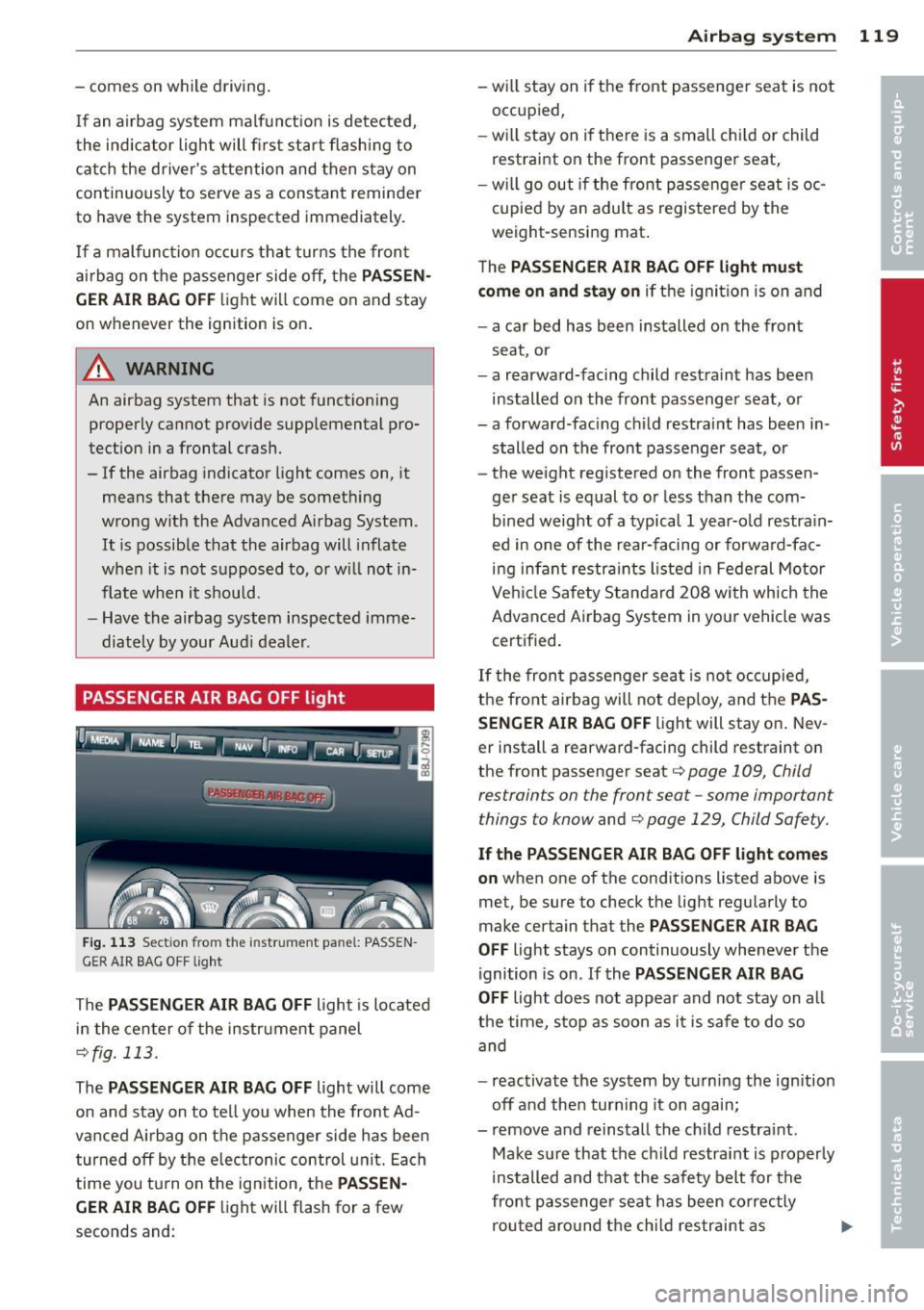
PASSENGER AIR BAG OFF light
Fig. 11 3 Section fr om the inst ru men t pa nel: PASS EN
G ER AIR BAG O FF light
The PASSENGER AIR BAG OFF light is located
i n the cen ter of the instrument panel
c:> fig. 113 .
The PASSENGER AIR BAG OFF light will come
on and stay on to tell you when the front Ad
vanced A irbag on the passenger side h as been
turned off by t he e lectronic control u nit. Each
time you tu rn on the ign ition, the
PASSEN
GER AIR BAG OF F
light will flash for a few
seconds and:
A irba g sy stem 119
- will stay on if the front passenger seat is not
occupied,
-w ill stay on i f there is a small ch ild or child
restraint on the front passenger seat,
- will go out if the fron t passenger seat is oc
cupied by an adult as registered by the
weight-sensing mat .
T he
PAS SENGER AIR BAG OFF light must
com e on and sta y on
if t he igni tion is on and
- a car bed has been installed on the front
seat , or
- a rearward-facing child restraint has been installed on the front passenger seat, or
- a forward -fac ing ch ild restra int has been in
stalled on the front passenger seat, or
- the weight reg istered on the front passen
ger seat is equal to or less than the com
bi ned weight of a typical 1 year-old restra in
ed in one of the rear-facing or forward-fac
ing infant restra ints listed in Federal Motor
Ve hicle Safety Standa rd 208 wi th which the
Advanced Airbag System in you r veh icle was
certified.
If t he fron t passenger seat is not occupied,
the fro nt airbag will not deploy, and the
PAS
SENGER AIR BAG O FF
light will stay on . Nev
er install a rearward-facing child restraint on
the front passenger seat
c:> page 109 , Child
res train ts on the front sea t-some important
things to know
and c:> page 129, Child Safe ty .
If the PASSENGER AIR BAG OFF light come s
o n
when one of the cond itions listed above is
met, be sure to check the light regularly to
make certain that the
PASSENGER AIR BAG
OFF
light stays on continuously wheneve r the
ignition is on .
If the PASSENGER A IR BAG
OFF
light does not appear and not stay on all
the time, stop as soon as it is safe to do so and
- reactivate the system by turn ing the ign ition
off and then turn ing it on again;
- remove and reinstall the ch ild restra int .
Make s ure that the ch ild restraint is proper ly
installed and that the safety belt for the
front passenge r seat has been correc tly
rou ted aro und t he chi ld restraint as
Page 125 of 244
_& WARNING
Items stored between the safety belt
buckle and the center console can cause
the sensors in the buckle to send the
wrong informat ion to the electronic con
trol modu le and prevent the Advanced A ir
bag System from working properly.
- Always make sure that noth ing ca n inte r
fere w ith the safety belt buck les and that
t hey are not obstructed.
Knee airbags
Description of knee airbags
The knee airbag system can provide supple
mental protection to properly restrained
front seat occupants.
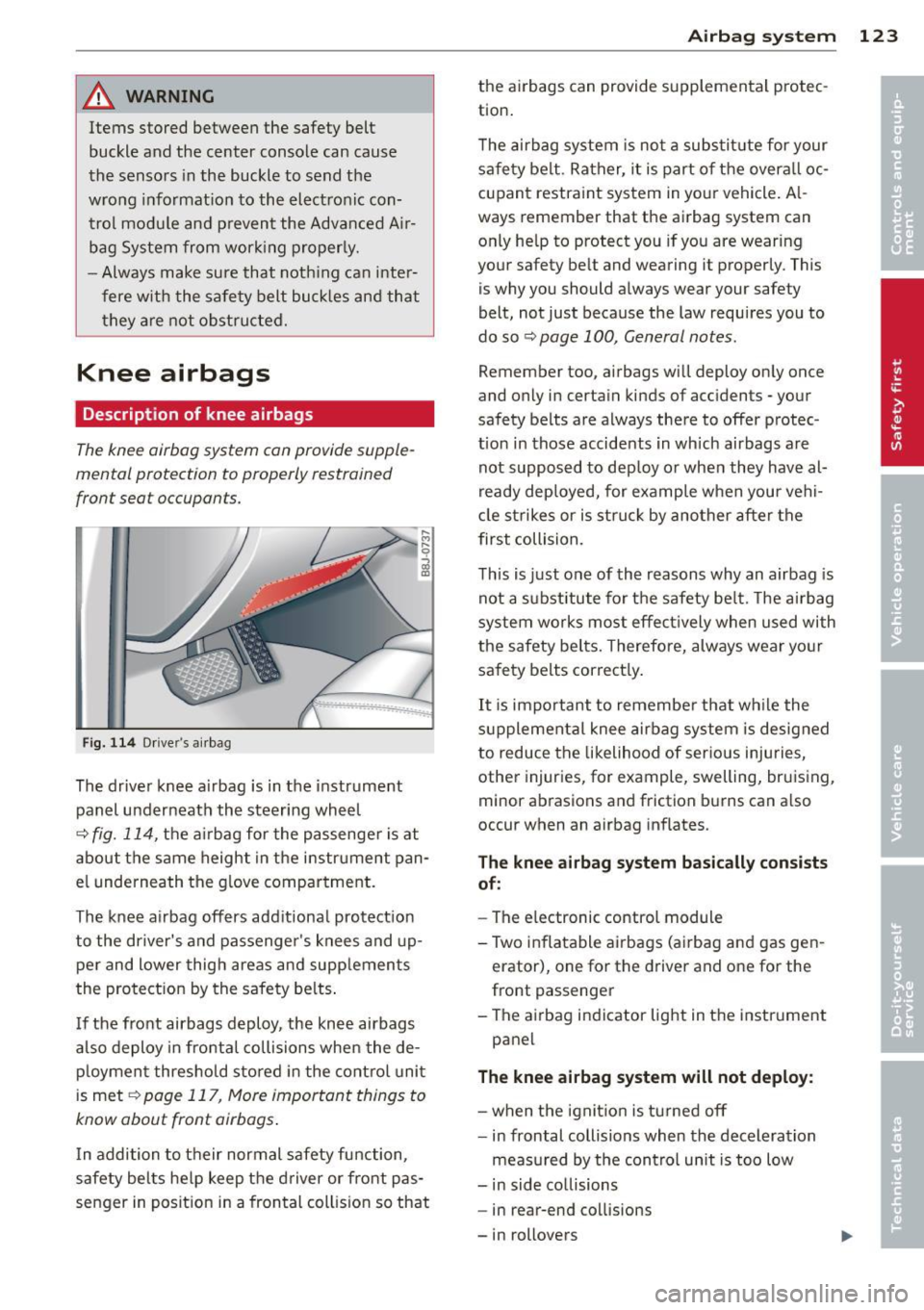
F ig . 11 4 Drive r's a irbag
The driver knee a irbag is in the instrument
panel underneath the steering whee l
~ fig. 114, the airbag for the passenger is at
about the same height in the i nstrument pan
e l underneath the g love compartment.
The knee airbag offers additiona l protection
to the driver's and passenger's knees and up
per and lower thigh areas and supp lements
the protect ion by the safety be lts .
I f the front airbags deploy, the knee airbags
a lso deploy i n frontal collisions when the de
p loyment threshold sto red in the cont ro l uni t
is met ~
page 117, More important things to
know about front airbags .
In addition to their normal safety function,
safety belts he lp keep the driver or front pas
senger in posit ion in a frontal coll is ion so that
A irba g sy stem 123
the ai rbags can provide supplemental protec
tion .
T he airbag system is no t a subs tit ute for your
sa fety be lt . Rather, it is part of the overall oc
cupant restraint system in your vehicle . A l
ways remember that the airbag system can
only he lp to protect you if you are wearing
your safety be lt and wearing it properly. This
is why you should always wear your safety
belt, not just because the law requires you to
do so
r::;, page 100, General notes .
Remember too, airbags will deploy on ly once
and only in certain kinds of accidents -your
safety belts are always there to offer protec
t ion in those accidents in wh ich airbags are
not supposed to dep loy o r when they have al
r eady deployed, for example when your vehi
cl e strikes or is struck by another after the
f irst collision.
This is just one of the reasons why an airbag is
not a s ubstitute fo r the safety be lt. The ai rbag
system works most effect ively when used with
the safety be lts. Therefore, always wear yo ur
sa fety belts correct ly .
It is impo rtant to remembe r that wh ile the
s u pplementa l knee airbag system is designed
to reduce the likelihood of ser ious inju ries,
other injur ies, for example, swelling, bru ising,
minor ab rasions and friction burns can a lso
occur when an airbag inflates.
The knee airbag system basically consists
of:
- The e lectronic control module
- Two in flatable ai rbags (a irbag and gas gen -
erator), one for the d river and one for the
front passenger
- The ai rbag indicator light in the instrument
panel
The knee airbag system will not deploy:
- when the ignit io n is t urned off
- in frontal collisions when the deceleration
meas ured by the control unit is too low
- in side co llisions
- in rear-end collisions
- in rollovers
Page 126 of 244
124 Airbag system
-in the event of a system malfunction (warn
ing/indicator light is on )
r=:> page 15.
.&_ WARNING
-Safety belts and the airbag system can
only provide protection when occupants
are in the proper seating position
¢page 117.
-If the airbag indicator light comes when
the vehicle is being used, have the sys
tem inspected immediately by your au
tho rized Aud i deale r.
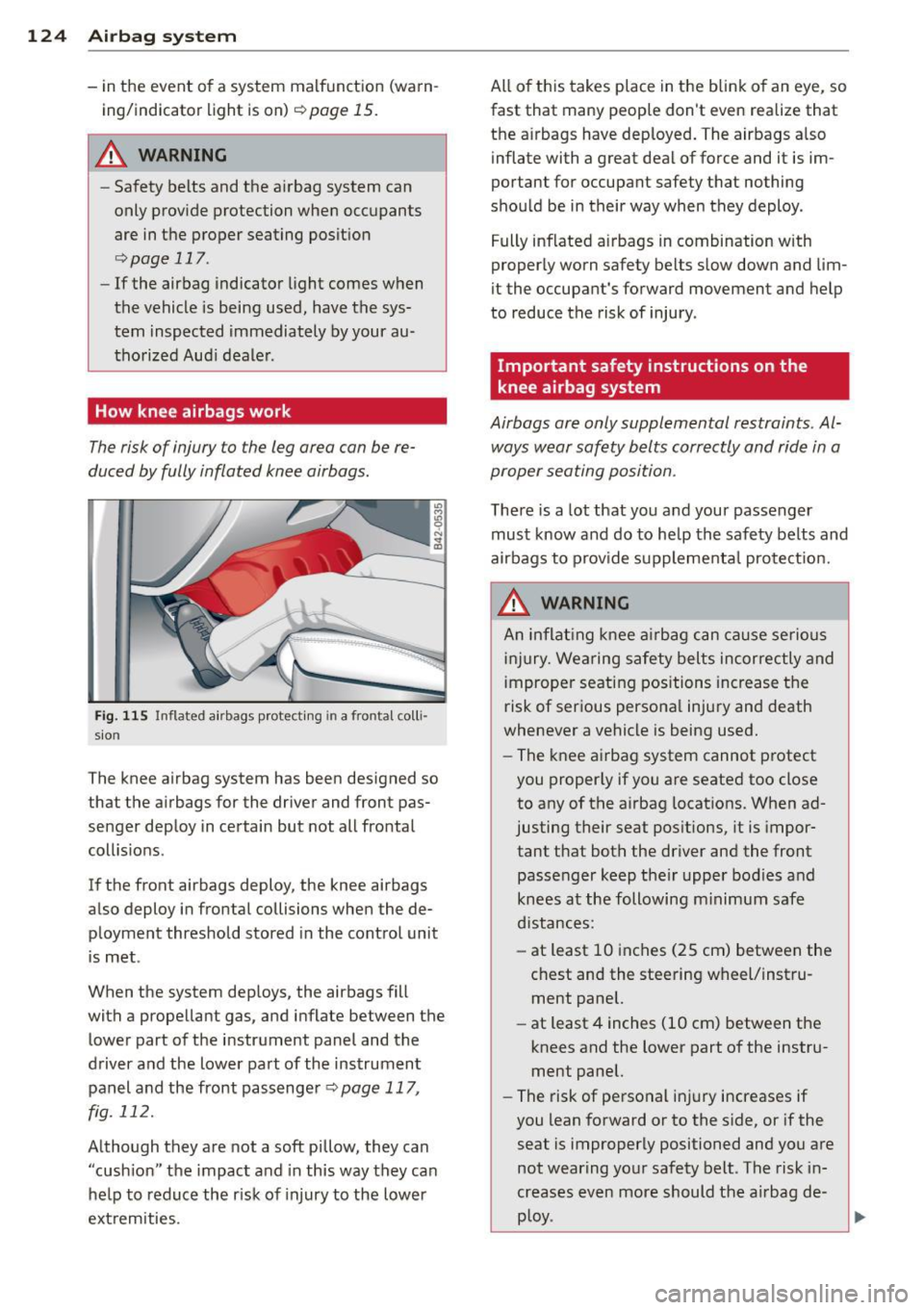
How knee airbags work
The risk of injury to the leg area can be re
duced by fully inflated knee airbags.
F ig . 115 Inflated a irbags p rotecti ng in a fro ntal coll i
s ion
The knee airbag system has been designed so
that the airbags for the driver and front pas
senger deploy in certain but not all frontal
coll is ions.
If the front airbags deploy, the knee airbags
also deploy in frontal collisions when the de p loyment threshold stored in the control unit
i s met.
When the system dep loys, the airbags fill
with a propellant gas, and inflate between the lower part of the instrument panel and the
d river and the lower part of the instrument
panel and the front passenge r<=>
page 117,
fig. 112.
Although they are not a soft pillow, they can
"cush ion" the impact and in this way they can
he lp to reduce the r isk of injury to the lowe r
extremities. All o
f th is takes place in the b link o f an eye, so
fast that many peop le don't even realize that
the a irbags have deployed. The airbags a lso
inflate with a great deal of force and it is im
portant for occupant safety that nothing
shou ld be in their way when they deploy.
Fully inflated a irbags in combination with
proper ly worn safety belts s low down and lim
it the occupant's forward movement and help
to reduce the risk of injury .
Important safety instructions on the
knee airbag system
Airbags are only supplemental restraints . Al
ways wear safety belts correctly and ride in a
proper seating position.
The re is a lot that you and you r passenger
must know and do to he lp the safety belts and
airbags to prov ide s upplemen ta l pro te ct io n .
.&_ WARNING
An inflat ing knee a irbag c an cause se rious
in ju ry. Wea ring safety belts incorrectly and
improper seat ing positions increase the
risk of ser ious persona l injury and death
whenever a vehicle is being used.
- The knee airbag system cannot protect
you properly if you a re seated too close
to any of the airbag locat ions. When ad
justing their seat pos itions, it is impor
tant that bot h the driver and the front
passenger keep the ir upper bod ies and
knees at the following minimum safe
d istances:
- at least 10 inches (25 cm) between the
chest and the steering wheel/inst ru
ment panel.
- at least 4 inches (10 cm) between the
knees and the lower part of the instru
ment panel.
- The risk of personal inj ury increases if
you lean forward or to the s ide, or if the
seat is improperly positioned and you are
not wearing yo ur safety belt . The risk in
creases even more should the a irbag de
p loy .
Page 127 of 244
-Always make sure that the knee airbag
can inflate without interference. Objects
between you and the airbag can increase
the risk of injury in an accident by inter
fering with the way the airbag deploys or by being pushed into you as the airbag
deploys.
- Never let anybody, especially children
or animals ride in the footwell in front
of the passenger seat.
If the airbag de
ploys, this can result in serious or fatal
injuries.
- Never carry objects of any kind in the
footwell area in front of the driver's or passenger's seat. Bulky objects (shop
ping bags, for example) can interfere
with or prevent proper deployment of
the airbag. Small objects can be
thrown through the vehicle if the air
bag deploys and injure you or your pas
sengers.
- Make sure there are no cracks, deep
scratches or other damage in the area of
the instrument panel where the knee air
bags are located.
- If children are incorrectly seated, their
risk of injury increases in a collision
Q page 129, Child Safety.
Side airbags
Description of side airbags
The airbag system can provide supplemental
protection to properly restrained front seat occupants.
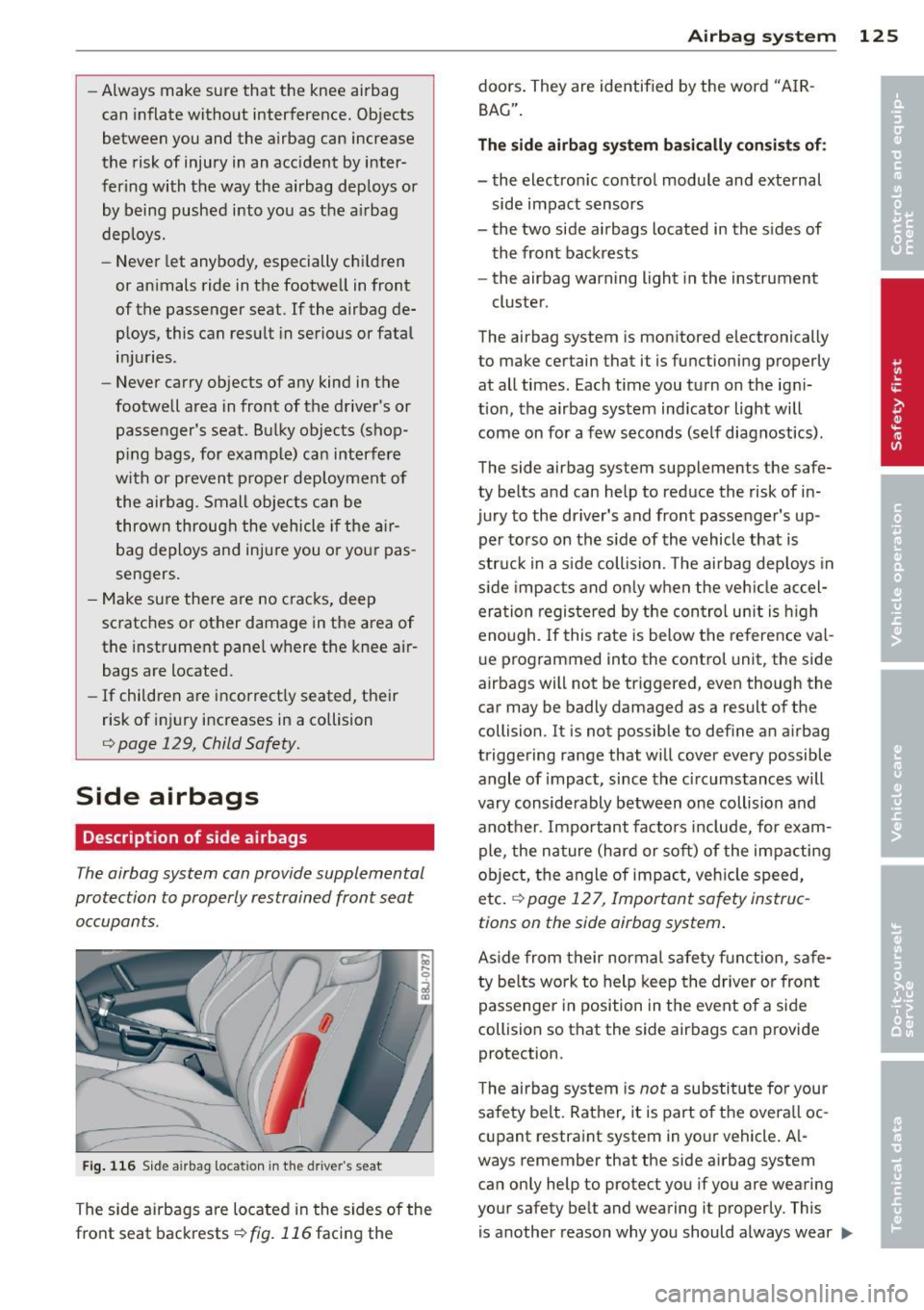
Fig . 116 Side airbag location in the driver 's seat
The s ide airbags are located in the sides of the
front seat backrests
¢ fig. 116facing the
Airbag system 125
doors. They are identified by the word "AIR
BAG".
The side airbag system basically consists of:
- the electron ic control module and external
side impact sensors
- the two side airbags located in the sides of the front backrests
- the airbag warning light in the instrument
cluster.
The airbag system is monitored electronically
to make certain that it is functioni ng properly
at all times. Each time you turn on the igni
tion, the airbag system indicator light will
come on for a few seconds (self diagnostics).
The side airbag system supplements the safe
ty belts and can help to reduce the risk of in
jury to the driver's and front passenger's up
per torso on the s ide of the vehicle that is
struck in a side collision. The airbag deploys in
side impacts and only when the vehicle accel
eration registered by the control unit is high
enough. If this rate is below the reference val
ue programmed into the control unit, the side
airbags will not be triggered, even though the
car may be badly damaged as a result of the
collision . It is not possible to define an airbag
triggering range that will cover every possible
angle of impact, since the circumstances will
vary considerably between one collision and
another. Important factors include, for exam
ple, the nature (hard or soft) of the impacting
object, the angle of impact, vehicle speed,
etc.
¢ page 127, Important safety instruc
tions on the side airbag system .
Aside from their normal safety function, safe
ty belts work to help keep the driver or front
passenger in position in the event of a side
collision so that the side airbags can provide
protection.
The airbag system is
not a substitute for your
safety belt. Rather, it is part of the overall oc
cupant restraint system in your vehicle. Al
ways remember that the side airbag system
can only help to protect you if you are wearing
your safety belt and wearing it properly. This is another reason why you should always wear
IIJJ,
Page 132 of 244
130 Child Safety
8_ WARNING
If, in exceptional circumstances, you must
install a forward-facing child restraint on
the front passenger's seat:
- Always make sure the forward-facing
seat has been designed and certified by
its manufacturer for use on a front seat
with a passenger front and side airbag.
-Always follow the manufacturer's in
structions provided with the child safety
seat or carrier.
-Always move the passenger seat into its
rearmost position in the seat's fore and
aft adjustment range, as far away from
the airbag as possible before installing
the child restraint. The backrest must be adjusted to an upright position.
- Always make sure that the
PASSENGER
AIR BAG OFF
light comes on and stays
on all the time whenever the ignition is
switched on.
(D Tips
Always replace child restraints that were
installed in a vehicle during a crash. Dam
age to a child restraint that is not visible
could cause it to fail in another collision
situation.
Advanced front airbag system and children
Your vehicle is equipped with an "Advanced
Airbag System" in compliance with United
States Federal Motor Vehicle Safety Standard
(FMVSS) 208 as applicable at the time your
vehicle was manufactured.
The Advanced Airbag system in your vehicle
has been certified to meet the "low-risk " re
quirements for 3- and 6-year old children on
the passenger side and small adults on the
driver side. The low risk deployment criteria
are intended to reduce the risk of injury
through interaction with the airbag that can
occur, for example, by being too close to the
steering wheel and instrument panel when
the airbag inflates. In addition , the system has been certified to comply with the "sup
pression" requirements of the Safety Stand
ard, to turn off the front airbag for infants up
to 12 months who are restrained on the front
passenger seat in child restraints that are list
ed in the Standard.
Even though your vehicle is equipped with an
Advanced Airbag system, a child should al
ways ride in the seat properly restrained for
its age and size. The airbag on the passenger
side makes the front seat a potentially dan
gerous place for a child to ride. The front seat
is not the safest place for a child in a forward
facing child safety seat. It can be a very dan
gerous place for an infant or a larger child in a
rearward-facing seat.
Advanced Airbags and the weight
sensing mat in the front seat
The Advanced Airbag System in your vehicle
detects the presence of an infant or child in a
child restraint on the front passenger seat us
ing the weight-sensing mat in the seat cush
ion and the sensor below the safety belt latch
on the front passenger seat that measures the
tension on the safety belt.
The weight-sensing mat measures total
weight of the child and the child safety seat
and a child blanket on the front passenger
seat. The weight on the front passenger seat
is related to the design of the child restraint
and its "footprint", the size and shape of the
bottom of the child restraint as it sits on the
seat. The weight of a child restraint and its
"footprint" vary for different kinds of child re
straints and for the different models of the
same kind of child restraint offered by child
restraint manufacturers.
The weight ranges for the individual types,
makes and models of child restraints that the
NHTSA has specified in the Safety Standard
together with the weight ranges of typical in
fants and typical 1 year-old child have been
stored in the control unit of the Advanced Air
bag System. When a child restraint is being
used on the front passenger seat with a .,..