PRESSURE BMW 328I CONVERTIBLE 2007 E93 User Guide
[x] Cancel search | Manufacturer: BMW, Model Year: 2007, Model line: 328I CONVERTIBLE, Model: BMW 328I CONVERTIBLE 2007 E93Pages: 272, PDF Size: 8.97 MB
Page 214 of 272
Wheels and tires
212
Wheels and tires
Tire inflation pressures
Information for your safety
It is not merely the tires' service life, but also
driving comfort and, to a great extent, driving
safety that depend on the condition of the tires
and the maintenance of the specified tire pres-
sure.
Check the tire inflation pressure regularly
and correct it, if necessary: at least twice a
month and before starting long trips. If you fail
to observe this precaution you may be driving
on tires with incorrect tire pressures, a condi-
tion that can not only compromise your vehi-
cle's driving stability, but also lead to tire dam-
age and the risk of an accident. Do not drive
with deflated, i.e. flat tires, except when using
Run-Flat Tires. A flat tire will seriously impair
your vehicle's handling and braking response.
Attempts to drive on a flat tire can lead to loss of
control over the vehicle.<
Checking pressure
Only check tire inflation pressure when the
tires are cold. This means after a maximum of
1.25 miles/2 km driving or when the vehicle has
been parked for at least 2 hours. When tires are
warm, the tire inflation pressure is higher.
After correcting tire inflation pressures,
always reinitialize the Flat Tire Monitor,
refer to page92.<
Inflation pressure specifications
The tables below provide all the correct inflation
pressures for the specified tire sizes at ambient
temperature.
The inflation pressures apply to the tire
sizes approved and tire brands recom-
mended by BMW; a list of these is available
from your BMW center.<
For correct identification of the right tire infla-
tion pressures, observe the following:
>Tire sizes for your vehicle>Load conditions
>Maximum allowable driving speed
Tire inflation pressures for driving up to
100 mph or 160 km/h
For normal driving up to 100 mph or 160 km/h
and to achieve optimum driving comfort, adjust
pressures to the respective tire inflation pres-
sures listed on the following pages in the col-
umns for traveling speeds up to a maximum of
100mph or 160km/h.
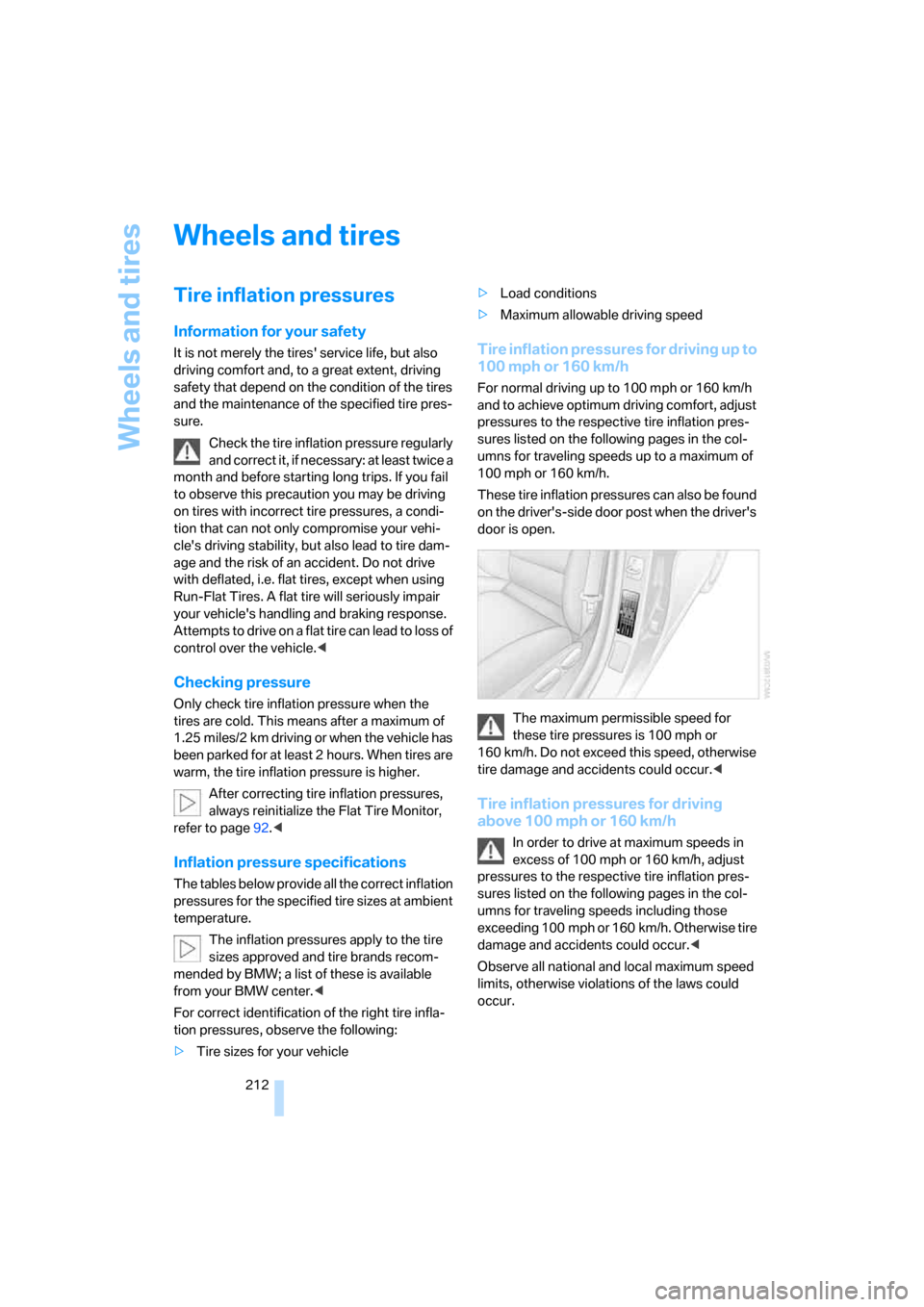
These tire inflation pressures can also be found
on the driver's-side door post when the driver's
door is open.
The maximum permissible speed for
these tire pressures is 100 mph or
160 km/h. Do not exceed this speed, otherwise
tire damage and accidents could occur.<
Tire inflation pressures for driving
above 100 mph or 160 km/h
In order to drive at maximum speeds in
excess of 100 mph or 160 km/h, adjust
pressures to the respective tire inflation pres-
sures listed on the following pages in the col-
umns for traveling speeds including those
exceeding 100 mph or 160 km/h. Otherwise tire
damage and accidents could occur.<
Observe all national and local maximum speed
limits, otherwise violations of the laws could
occur.
Page 215 of 272
Mobility
213Reference
At a glance
Controls
Driving tips
Communications
Navigation
Entertainment
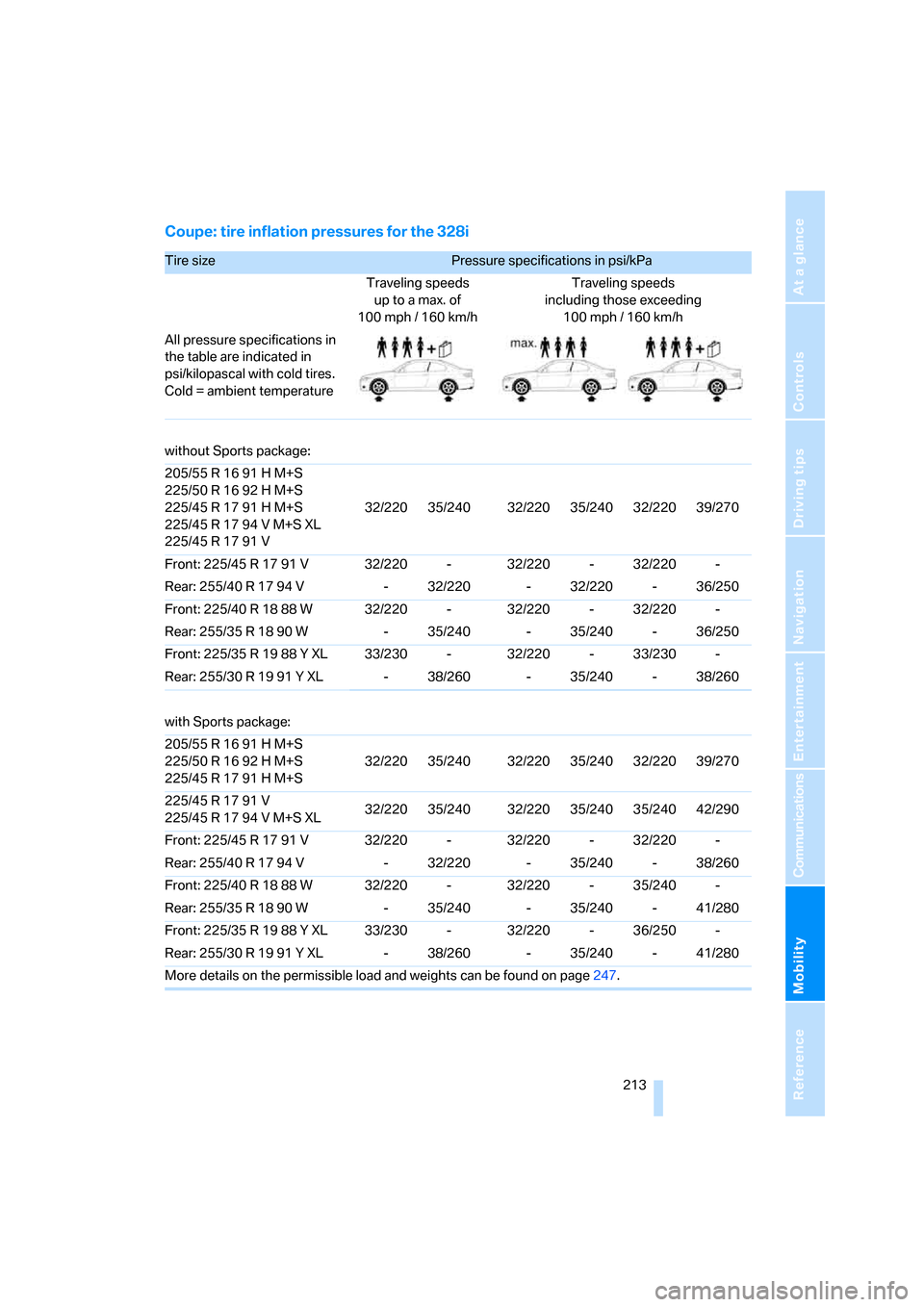
Coupe: tire inflation pressures for the 328i
Tire size Pressure specifications in psi/kPa
Traveling speeds
up to a max. of
100 mph / 160 km/hTraveling speeds
including those exceeding
100mph / 160km/h
All pressure specifications in
the table are indicated in
psi/kilopascal with cold tires.
Cold = ambient temperature
without Sports package:
205/55 R 16 91 H M+S
225/50 R 16 92 H M+S
225/45 R 17 91 H M+S
225/45 R 17 94 V M+S XL
225/45 R 17 91 V32/220 35/240 32/220 35/240 32/220 39/270
Front: 225/45 R 17 91 V 32/220 - 32/220 - 32/220 -
Rear: 255/40 R 17 94 V - 32/220 - 32/220 - 36/250
Front: 225/40 R 18 88 W 32/220 - 32/220 - 32/220 -
Rear: 255/35 R 18 90 W - 35/240 - 35/240 - 36/250
Front: 225/35 R 19 88 Y XL 33/230 - 32/220 - 33/230 -
Rear: 255/30 R 19 91 Y XL - 38/260 - 35/240 - 38/260
with Sports package:
205/55 R 16 91 H M+S
225/50 R 16 92 H M+S
225/45 R 17 91 H M+S32/220 35/240 32/220 35/240 32/220 39/270
225/45 R 17 91 V
225/45 R 17 94 V M+S XL32/220 35/240 32/220 35/240 35/240 42/290
Front: 225/45 R 17 91 V 32/220 - 32/220 - 32/220 -
Rear: 255/40 R 17 94 V - 32/220 - 35/240 - 38/260
Front: 225/40 R 18 88 W 32/220 - 32/220 - 35/240 -
Rear: 255/35 R 18 90 W - 35/240 - 35/240 - 41/280
Front: 225/35 R 19 88 Y XL 33/230 - 32/220 - 36/250 -
Rear: 255/30 R 19 91 Y XL - 38/260 - 35/240 - 41/280
More details on the permissible load and weights can be found on page247.
Page 216 of 272
Wheels and tires
214
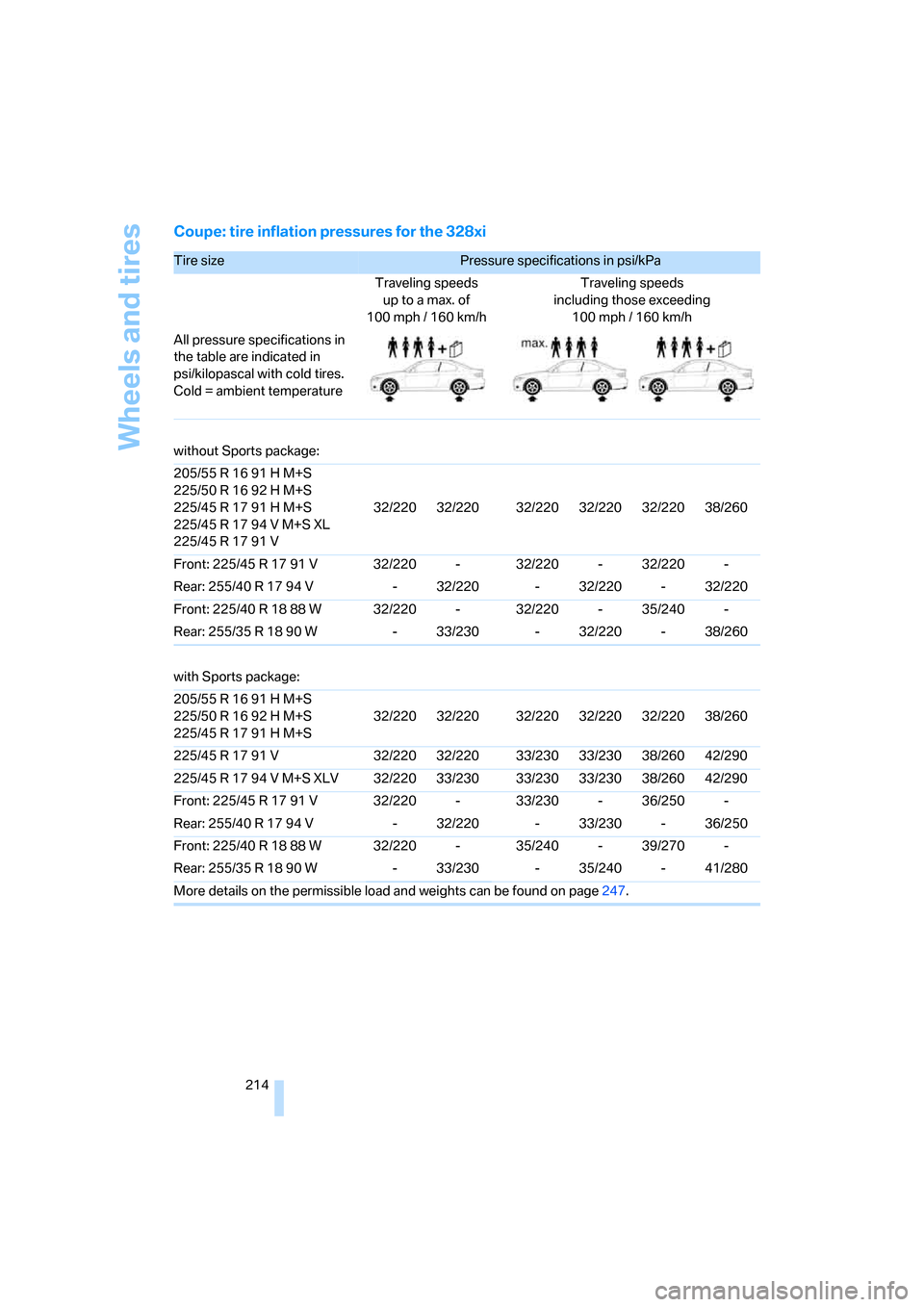
Coupe: tire inflation pressures for the 328xi
Tire size Pressure specifications in psi/kPa
Traveling speeds
up to a max. of
100mph / 160km/hTraveling speeds
including those exceeding
100 mph / 160 km/h
All pressure specifications in
the table are indicated in
psi/kilopascal with cold tires.
Cold = ambient temperature
without Sports package:
205/55 R 16 91 H M+S
225/50 R 16 92 H M+S
225/45 R 17 91 H M+S
225/45 R 17 94 V M+S XL
225/45 R 17 91 V32/220 32/220 32/220 32/220 32/220 38/260
Front: 225/45 R 17 91 V 32/220 - 32/220 - 32/220 -
Rear: 255/40 R 17 94 V - 32/220 - 32/220 - 32/220
Front: 225/40 R 18 88 W 32/220 - 32/220 - 35/240 -
Rear: 255/35 R 18 90 W - 33/230 - 32/220 - 38/260
with Sports package:
205/55 R 16 91 H M+S
225/50 R 16 92 H M+S
225/45 R 17 91 H M+S32/220 32/220 32/220 32/220 32/220 38/260
225/45 R 17 91 V 32/220 32/220 33/230 33/230 38/260 42/290
225/45 R 17 94 V M+S XLV 32/220 33/230 33/230 33/230 38/260 42/290
Front: 225/45 R 17 91 V 32/220 - 33/230 - 36/250 -
Rear: 255/40 R 17 94 V - 32/220 - 33/230 - 36/250
Front: 225/40 R 18 88 W 32/220 - 35/240 - 39/270 -
Rear: 255/35 R 18 90 W - 33/230 - 35/240 - 41/280
More details on the permissible load and weights can be found on page247.
Page 217 of 272
Mobility
215Reference
At a glance
Controls
Driving tips
Communications
Navigation
Entertainment
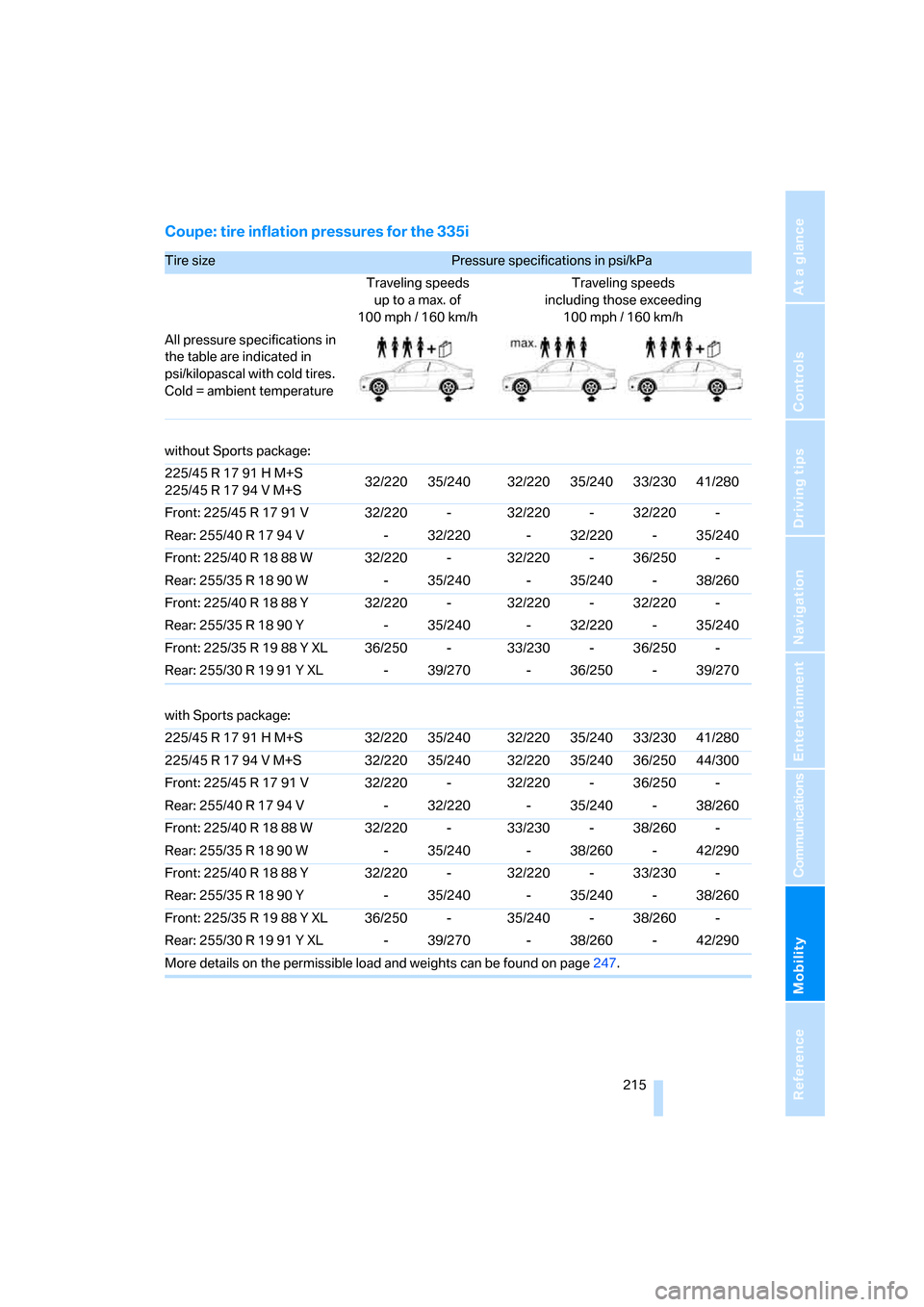
Coupe: tire inflation pressures for the 335i
Tire size Pressure specifications in psi/kPa
Traveling speeds
up to a max. of
100 mph / 160 km/hTraveling speeds
including those exceeding
100mph / 160km/h
All pressure specifications in
the table are indicated in
psi/kilopascal with cold tires.
Cold = ambient temperature
without Sports package:
225/45 R 17 91 H M+S
225/45 R 17 94 V M+S32/220 35/240 32/220 35/240 33/230 41/280
Front: 225/45 R 17 91 V 32/220 - 32/220 - 32/220 -
Rear: 255/40 R 17 94 V - 32/220 - 32/220 - 35/240
Front: 225/40 R 18 88 W 32/220 - 32/220 - 36/250 -
Rear: 255/35 R 18 90 W - 35/240 - 35/240 - 38/260
Front: 225/40 R 18 88 Y 32/220 - 32/220 - 32/220 -
Rear: 255/35 R 18 90 Y - 35/240 - 32/220 - 35/240
Front: 225/35 R 19 88 Y XL 36/250 - 33/230 - 36/250 -
Rear: 255/30 R 19 91 Y XL - 39/270 - 36/250 - 39/270
with Sports package:
225/45 R 17 91 H M+S 32/220 35/240 32/220 35/240 33/230 41/280
225/45 R 17 94 V M+S 32/220 35/240 32/220 35/240 36/250 44/300
Front: 225/45 R 17 91 V 32/220 - 32/220 - 36/250 -
Rear: 255/40 R 17 94 V - 32/220 - 35/240 - 38/260
Front: 225/40 R 18 88 W 32/220 - 33/230 - 38/260 -
Rear: 255/35 R 18 90 W - 35/240 - 38/260 - 42/290
Front: 225/40 R 18 88 Y 32/220 - 32/220 - 33/230 -
Rear: 255/35 R 18 90 Y - 35/240 - 35/240 - 38/260
Front: 225/35 R 19 88 Y XL 36/250 - 35/240 - 38/260 -
Rear: 255/30 R 19 91 Y XL - 39/270 - 38/260 - 42/290
More details on the permissible load and weights can be found on page247.
Page 218 of 272
Wheels and tires
216
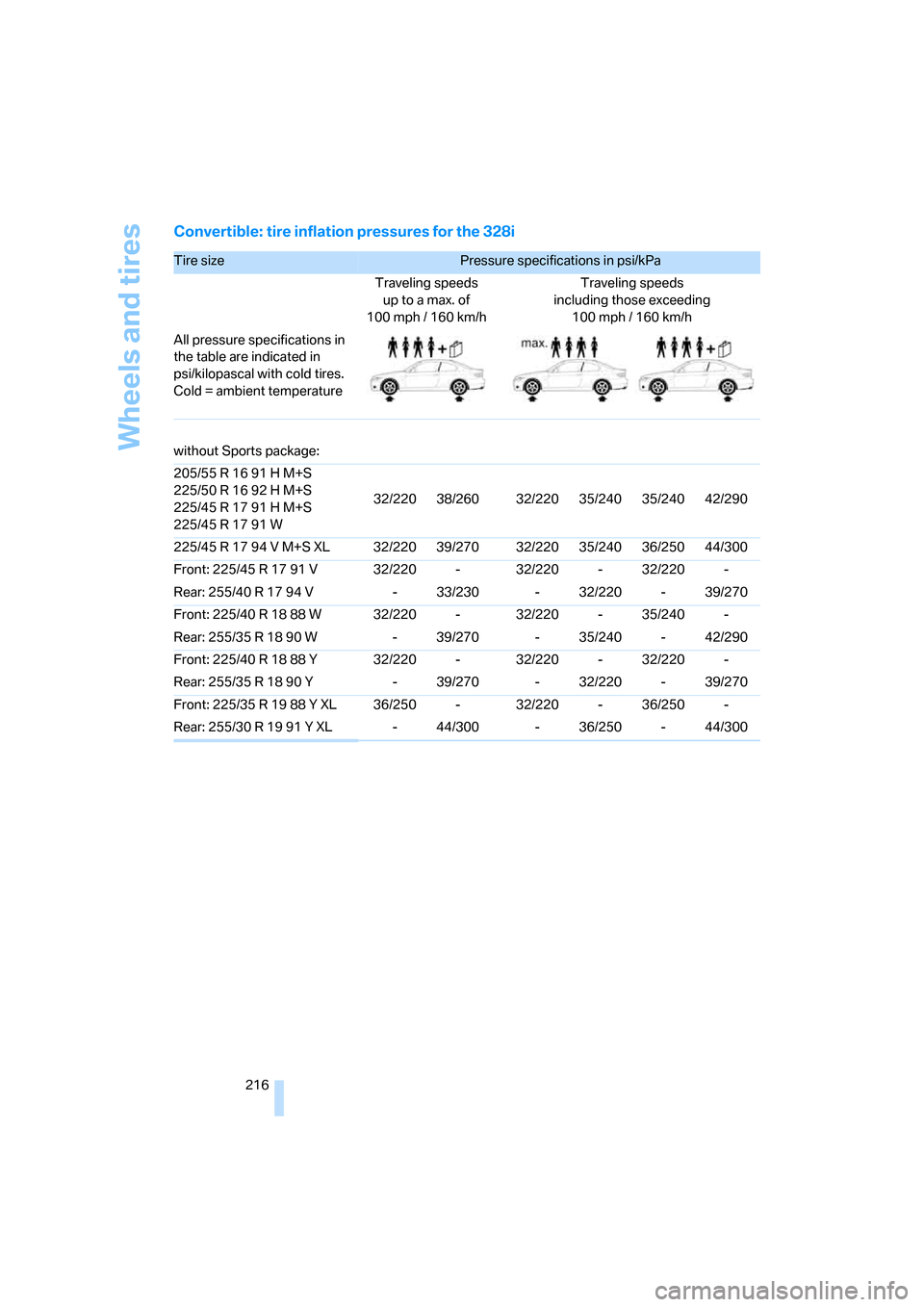
Convertible: tire inflation pressures for the 328i
Tire size Pressure specifications in psi/kPa
Traveling speeds
up to a max. of
100mph / 160km/hTraveling speeds
including those exceeding
100 mph / 160 km/h
All pressure specifications in
the table are indicated in
psi/kilopascal with cold tires.
Cold = ambient temperature
without Sports package:
205/55 R 16 91 H M+S
225/50 R 16 92 H M+S
225/45 R 17 91 H M+S
225/45 R 17 91 W32/220 38/260 32/220 35/240 35/240 42/290
225/45 R 17 94 V M+S XL 32/220 39/270 32/220 35/240 36/250 44/300
Front: 225/45 R 17 91 V 32/220 - 32/220 - 32/220 -
Rear: 255/40 R 17 94 V - 33/230 - 32/220 - 39/270
Front: 225/40 R 18 88 W 32/220 - 32/220 - 35/240 -
Rear: 255/35 R 18 90 W - 39/270 - 35/240 - 42/290
Front: 225/40 R 18 88 Y 32/220 - 32/220 - 32/220 -
Rear: 255/35 R 18 90 Y - 39/270 - 32/220 - 39/270
Front: 225/35 R 19 88 Y XL 36/250 - 32/220 - 36/250 -
Rear: 255/30 R 19 91 Y XL - 44/300 - 36/250 - 44/300
Page 219 of 272
Mobility
217Reference
At a glance
Controls
Driving tips
Communications
Navigation
Entertainment
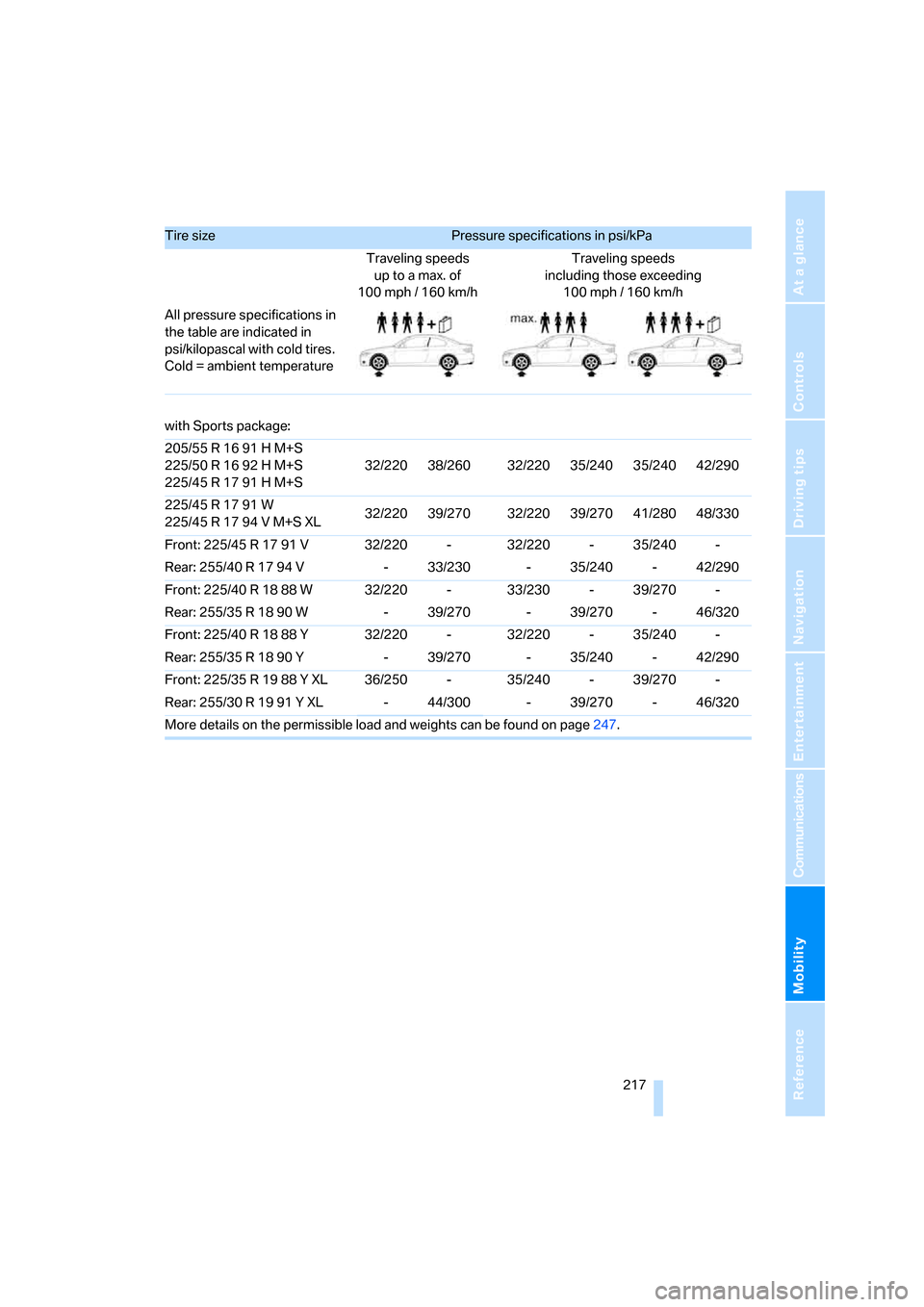
with Sports package:
205/55 R 16 91 H M+S
225/50 R 16 92 H M+S
225/45 R 17 91 H M+S32/220 38/260 32/220 35/240 35/240 42/290
225/45 R 17 91 W
225/45 R 17 94 V M+S XL32/220 39/270 32/220 39/270 41/280 48/330
Front: 225/45 R 17 91 V 32/220 - 32/220 - 35/240 -
Rear: 255/40 R 17 94 V - 33/230 - 35/240 - 42/290
Front: 225/40 R 18 88 W 32/220 - 33/230 - 39/270 -
Rear: 255/35 R 18 90 W - 39/270 - 39/270 - 46/320
Front: 225/40 R 18 88 Y 32/220 - 32/220 - 35/240 -
Rear: 255/35 R 18 90 Y - 39/270 - 35/240 - 42/290
Front: 225/35 R 19 88 Y XL 36/250 - 35/240 - 39/270 -
Rear: 255/30 R 19 91 Y XL - 44/300 - 39/270 - 46/320
More details on the permissible load and weights can be found on page247.
Tire size Pressure specifications in psi/kPa
Traveling speeds
up to a max. of
100 mph / 160 km/hTraveling speeds
including those exceeding
100mph / 160km/h
All pressure specifications in
the table are indicated in
psi/kilopascal with cold tires.
Cold = ambient temperature
Page 220 of 272
Wheels and tires
218
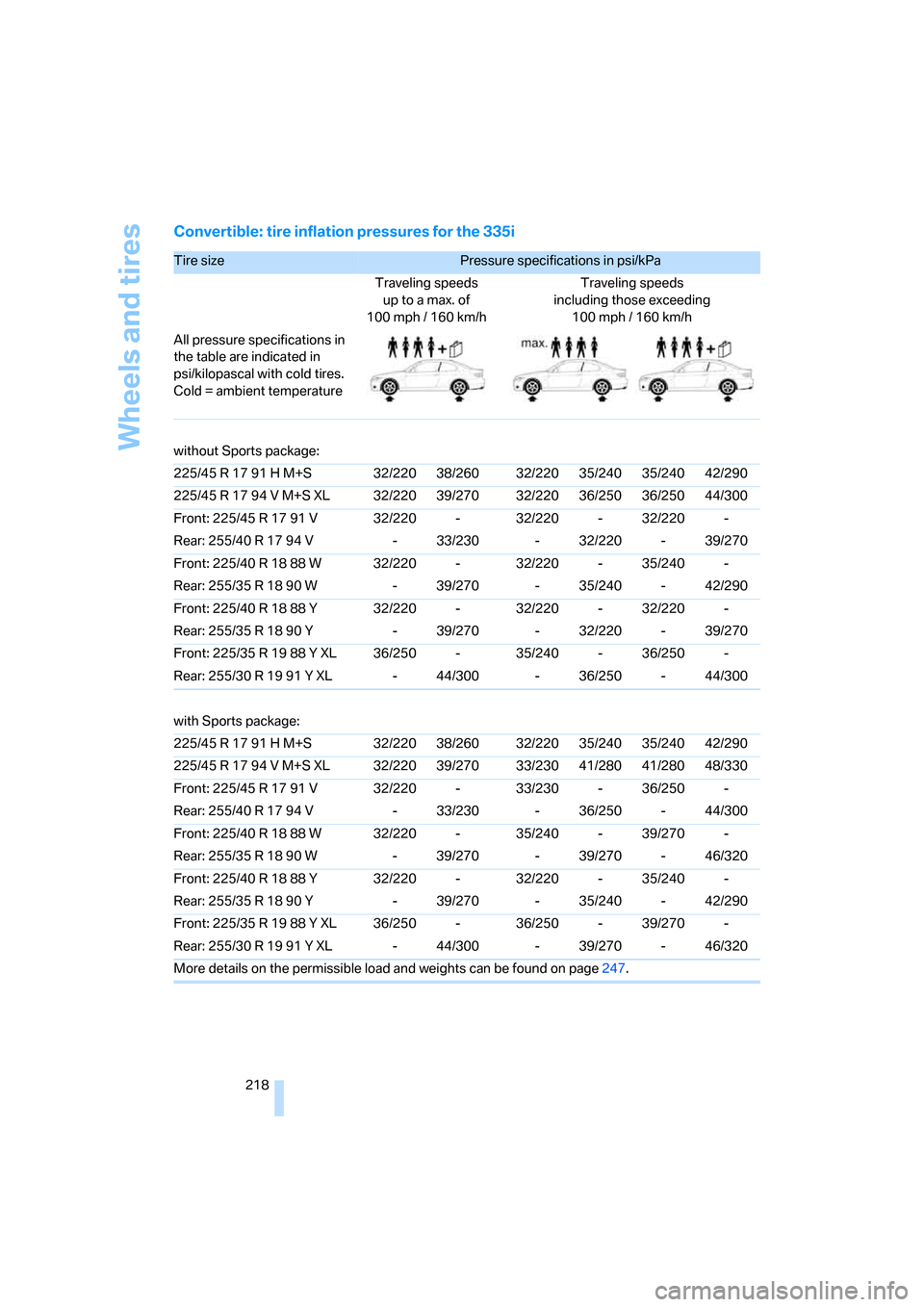
Convertible: tire inflation pressures for the 335i
Tire size Pressure specifications in psi/kPa
Traveling speeds
up to a max. of
100mph / 160km/hTraveling speeds
including those exceeding
100 mph / 160 km/h
All pressure specifications in
the table are indicated in
psi/kilopascal with cold tires.
Cold = ambient temperature
without Sports package:
225/45 R 17 91 H M+S 32/220 38/260 32/220 35/240 35/240 42/290
225/45 R 17 94 V M+S XL 32/220 39/270 32/220 36/250 36/250 44/300
Front: 225/45 R 17 91 V 32/220 - 32/220 - 32/220 -
Rear: 255/40 R 17 94 V - 33/230 - 32/220 - 39/270
Front: 225/40 R 18 88 W 32/220 - 32/220 - 35/240 -
Rear: 255/35 R 18 90 W - 39/270 - 35/240 - 42/290
Front: 225/40 R 18 88 Y 32/220 - 32/220 - 32/220 -
Rear: 255/35 R 18 90 Y - 39/270 - 32/220 - 39/270
Front: 225/35 R 19 88 Y XL 36/250 - 35/240 - 36/250 -
Rear: 255/30 R 19 91 Y XL - 44/300 - 36/250 - 44/300
with Sports package:
225/45 R 17 91 H M+S 32/220 38/260 32/220 35/240 35/240 42/290
225/45 R 17 94 V M+S XL 32/220 39/270 33/230 41/280 41/280 48/330
Front: 225/45 R 17 91 V 32/220 - 33/230 - 36/250 -
Rear: 255/40 R 17 94 V - 33/230 - 36/250 - 44/300
Front: 225/40 R 18 88 W 32/220 - 35/240 - 39/270 -
Rear: 255/35 R 18 90 W - 39/270 - 39/270 - 46/320
Front: 225/40 R 18 88 Y 32/220 - 32/220 - 35/240 -
Rear: 255/35 R 18 90 Y - 39/270 - 35/240 - 42/290
Front: 225/35 R 19 88 Y XL 36/250 - 36/250 - 39/270 -
Rear: 255/30 R 19 91 Y XL - 44/300 - 39/270 - 46/320
More details on the permissible load and weights can be found on page247.
Page 223 of 272
Mobility
221Reference
At a glance
Controls
Driving tips
Communications
Navigation
Entertainment
The manufacturing date of tires is contained in
the tire coding:
DOT ... 0705 means that the tire was manufac-
tured in week 07 of 2005.
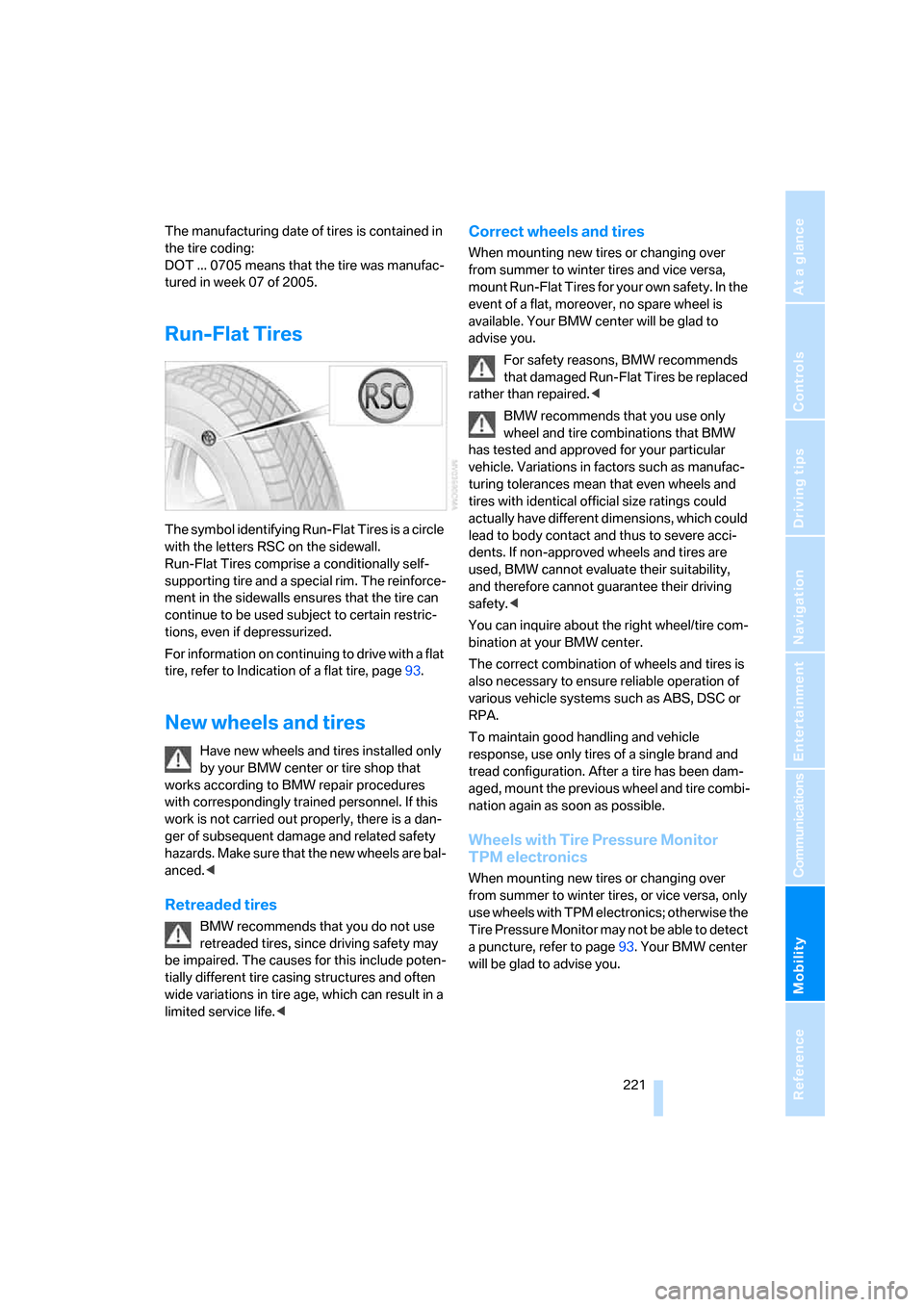
Run-Flat Tires
The symbol identifying Run-Flat Tires is a circle
with the letters RSC on the sidewall.
Run-Flat Tires comprise a conditionally self-
supporting tire and a special rim. The reinforce-
ment in the sidewalls ensures that the tire can
continue to be used subject to certain restric-
tions, even if depressurized.
For information on continuing to drive with a flat
tire, refer to Indication of a flat tire, page93.
New wheels and tires
Have new wheels and tires installed only
by your BMW center or tire shop that
works according to BMW repair procedures
with correspondingly trained personnel. If this
work is not carried out properly, there is a dan-
ger of subsequent damage and related safety
hazards. Make sure that the new wheels are bal-
anced.<
Retreaded tires
BMW recommends that you do not use
retreaded tires, since driving safety may
be impaired. The causes for this include poten-
tially different tire casing structures and often
wide variations in tire age, which can result in a
limited service life.<
Correct wheels and tires
When mounting new tires or changing over
from summer to winter tires and vice versa,
mount Run-Flat Tires for your own safety. In the
event of a flat, moreover, no spare wheel is
available. Your BMW center will be glad to
advise you.
For safety reasons, BMW recommends
that damaged Run-Flat Tires be replaced
rather than repaired.<
BMW recommends that you use only
wheel and tire combinations that BMW
has tested and approved for your particular
vehicle. Variations in factors such as manufac-
turing tolerances mean that even wheels and
tires with identical official size ratings could
actually have different dimensions, which could
lead to body contact and thus to severe acci-
dents. If non-approved wheels and tires are
used, BMW cannot evaluate their suitability,
and therefore cannot guarantee their driving
safety.<
You can inquire about the right wheel/tire com-
bination at your BMW center.
The correct combination of wheels and tires is
also necessary to ensure reliable operation of
various vehicle systems such as ABS, DSC or
RPA.
To maintain good handling and vehicle
response, use only tires of a single brand and
tread configuration. After a tire has been dam-
aged, mount the previous wheel and tire combi-
nation again as soon as possible.
Wheels with Tire Pressure Monitor
TPM electronics
When mounting new tires or changing over
from summer to winter tires, or vice versa, only
use wheels with TPM electronics; otherwise the
Tire Pressure Monitor may not be able to detect
a puncture, refer to page93. Your BMW center
will be glad to advise you.
Page 229 of 272
Mobility
227Reference
At a glance
Controls
Driving tips
Communications
Navigation
Entertainment
Checking coolant level
1.Let the engine cool.
2.Turn the cap of the expansion tank a little
counterclockwise to allow any accumulated
pressure to escape, then continue turning
to open.
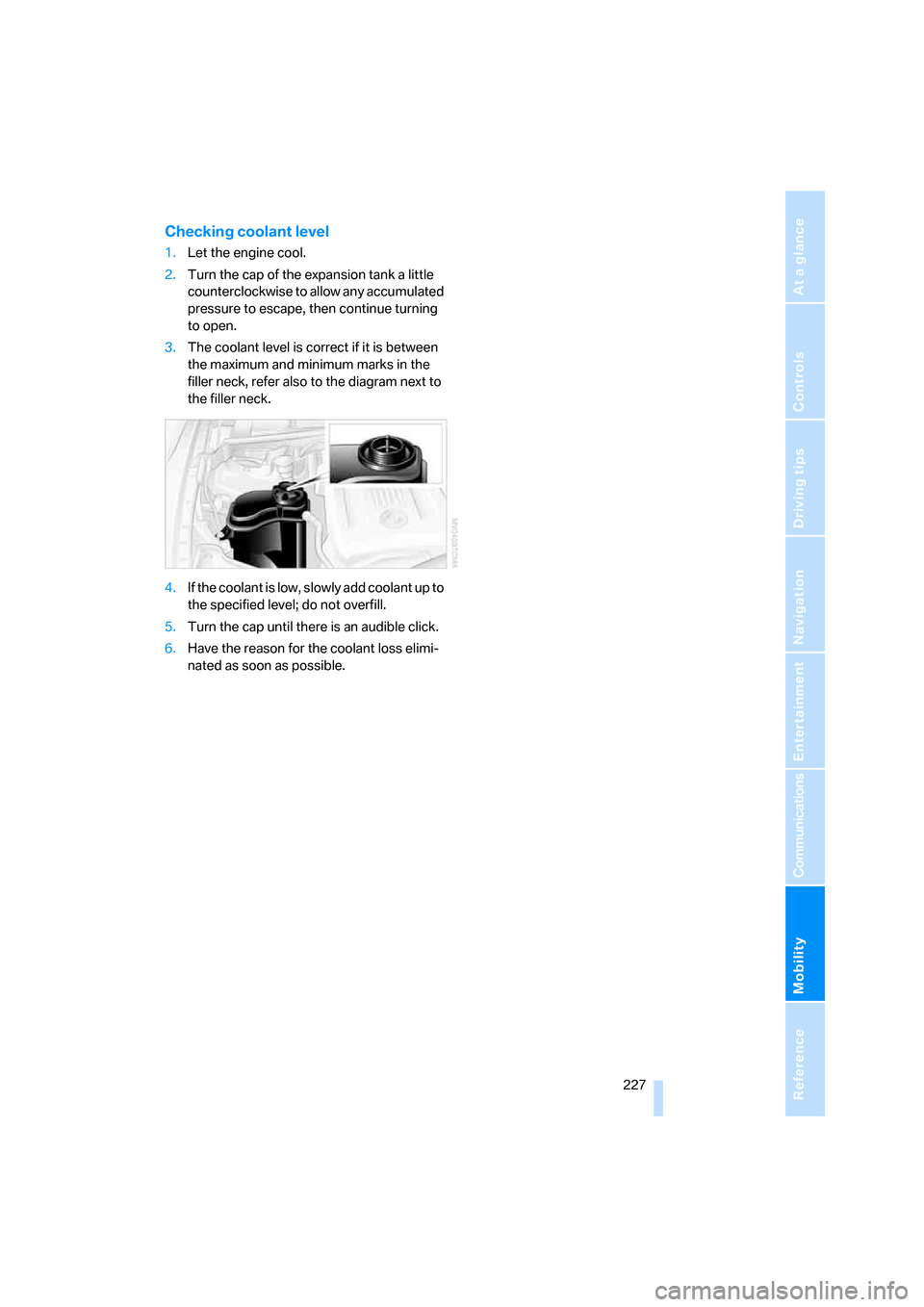
3.The coolant level is correct if it is between
the maximum and minimum marks in the
filler neck, refer also to the diagram next to
the filler neck.
4.If the coolant is low, slowly add coolant up to
the specified level; do not overfill.
5.Turn the cap until there is an audible click.
6.Have the reason for the coolant loss elimi-
nated as soon as possible.
Page 235 of 272
Mobility
233Reference
At a glance
Controls
Driving tips
Communications
Navigation
Entertainment
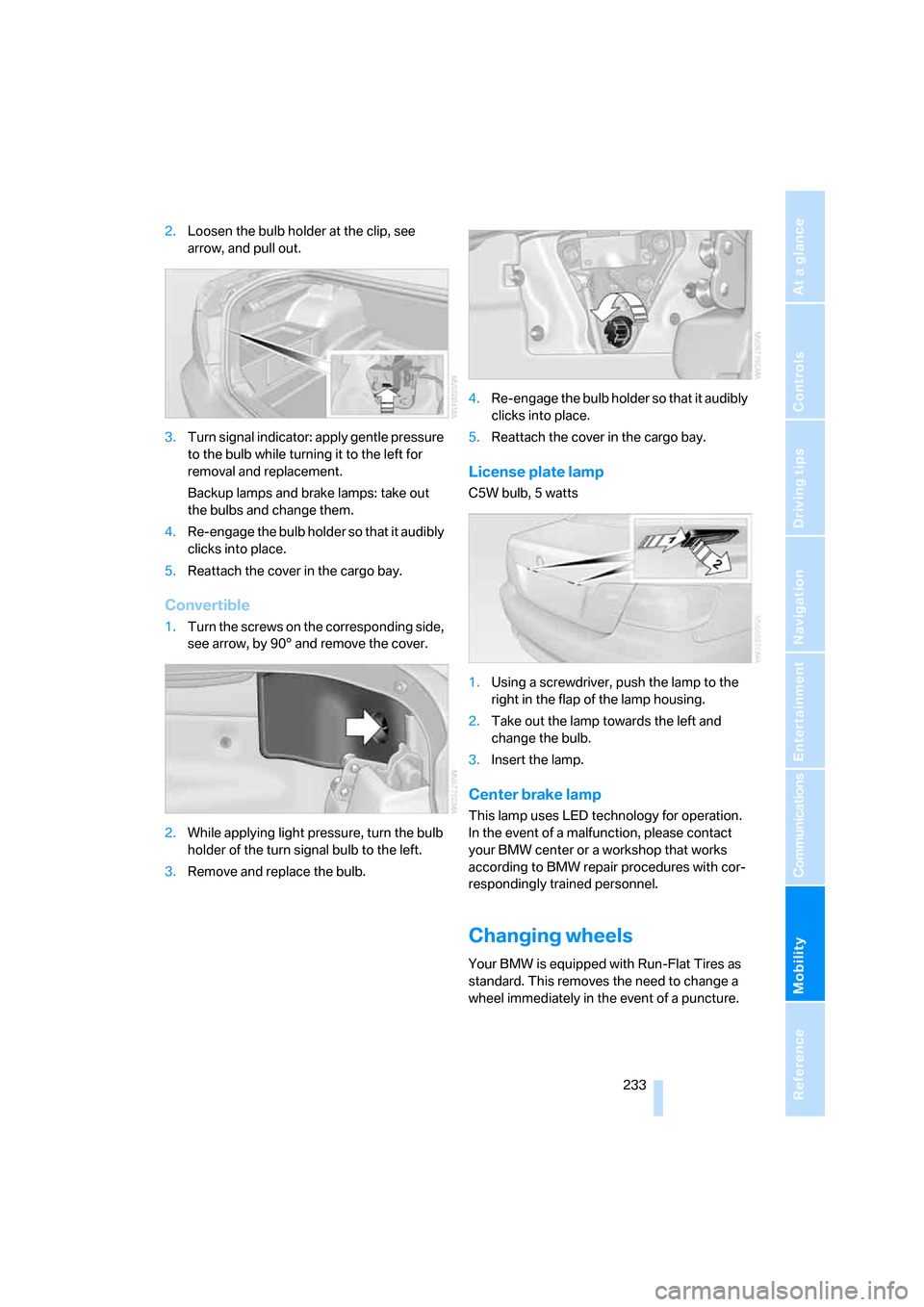
2.Loosen the bulb holder at the clip, see
arrow, and pull out.
3.Turn s igna l indicator: apply gentle pressure
to the bulb while turning it to the left for
removal and replacement.
Backup lamps and brake lamps: take out
the bulbs and change them.
4.Re-engage the bulb holder so that it audibly
clicks into place.
5.Reattach the cover in the cargo bay.
Convertible
1.Turn the screws on the corresponding side,
see arrow, by 90° and remove the cover.
2.While applying light pressure, turn the bulb
holder of the turn signal bulb to the left.
3.Remove and replace the bulb.4.Re-engage the bulb holder so that it audibly
clicks into place.
5.Reattach the cover in the cargo bay.
License plate lamp
C5W bulb, 5 watts
1.Using a screwdriver, push the lamp to the
right in the flap of the lamp housing.
2.Take out the lamp towards the left and
change the bulb.
3.Insert the lamp.
Center brake lamp
This lamp uses LED technology for operation.
In the event of a malfunction, please contact
your BMW center or a workshop that works
according to BMW repair procedures with cor-
respondingly trained personnel.
Changing wheels
Your BMW is equipped with Run-Flat Tires as
standard. This removes the need to change a
wheel immediately in the event of a puncture.