child restraint BUICK CENTURY 2003 Owner's Guide
[x] Cancel search | Manufacturer: BUICK, Model Year: 2003, Model line: CENTURY, Model: BUICK CENTURY 2003Pages: 344, PDF Size: 2.57 MB
Page 51 of 344
Securing a Child Restraint Designed
for the LATCH System
1. Find the anchors for the seating position you want
to use, where the bottom of the seatback meets the
back of the seat cushion.
2. Put the child restraint on the seat.
3. Attach the anchor points on the child restraint to the
anchors in the vehicle. The child restraint
instructions will show you how.
4. If the child restraint is forward-facing, attach the top
strap to the top strap anchor. See
Top Strap on
page 1-40. Tighten the top strap according to
the child restraint instructions.
5. Push and pull the child restraint in different
directions to be sure it is secure.
To remove the child restraint, simply unhook the top
strap from the top tether anchor and then disconnect the
anchor points.
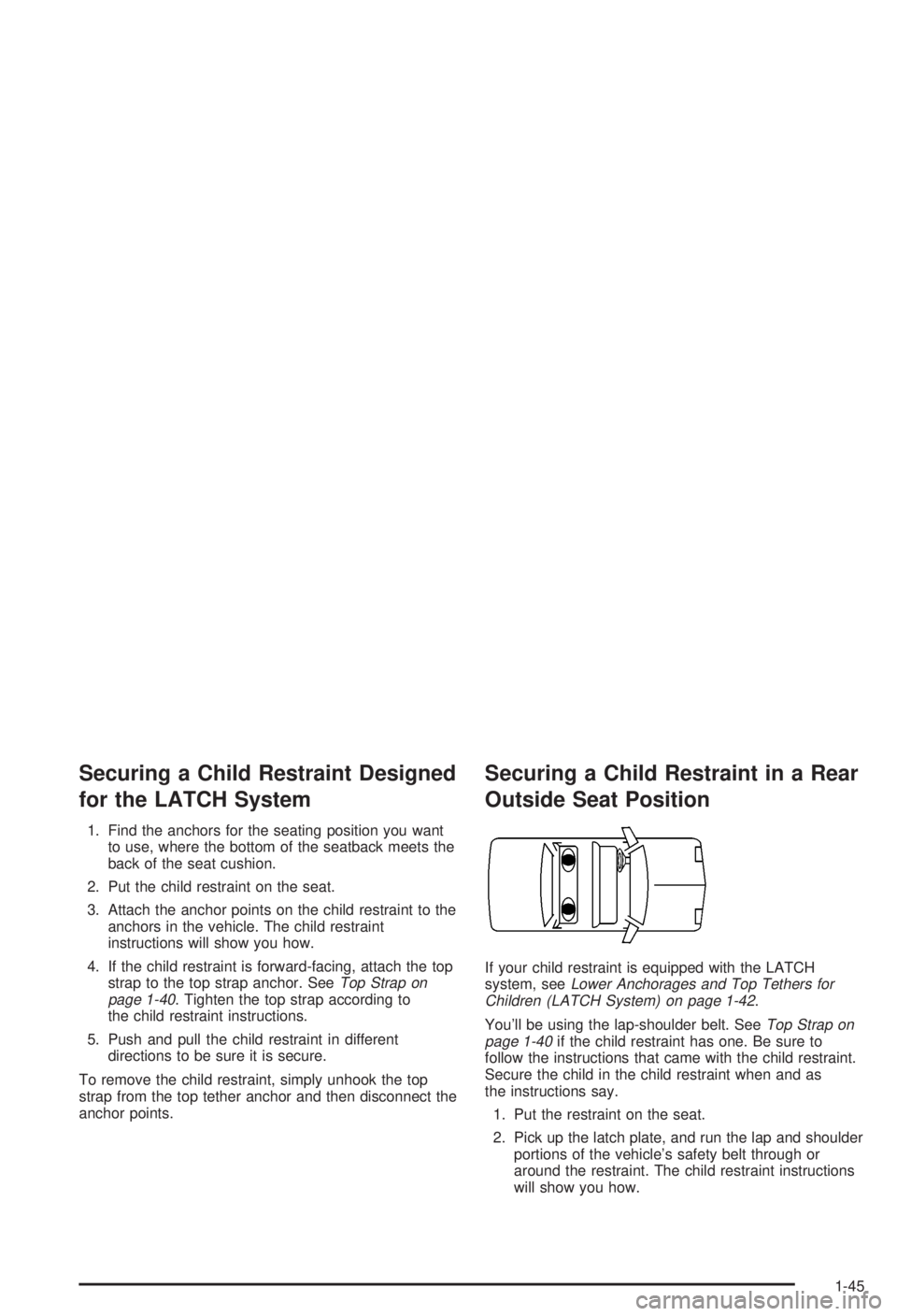
Securing a Child Restraint in a Rear
Outside Seat Position
If your child restraint is equipped with the LATCH
system, seeLower Anchorages and Top Tethers for
Children (LATCH System) on page 1-42.
You'll be using the lap-shoulder belt. See
Top Strap on
page 1-40if the child restraint has one. Be sure to
follow the instructions that came with the child restraint.
Secure the child in the child restraint when and as
the instructions say.
1. Put the restraint on the seat.
2. Pick up the latch plate, and run the lap and shoulder
portions of the vehicle's safety belt through or
around the restraint. The child restraint instructions
will show you how.
1-45
Page 53 of 344
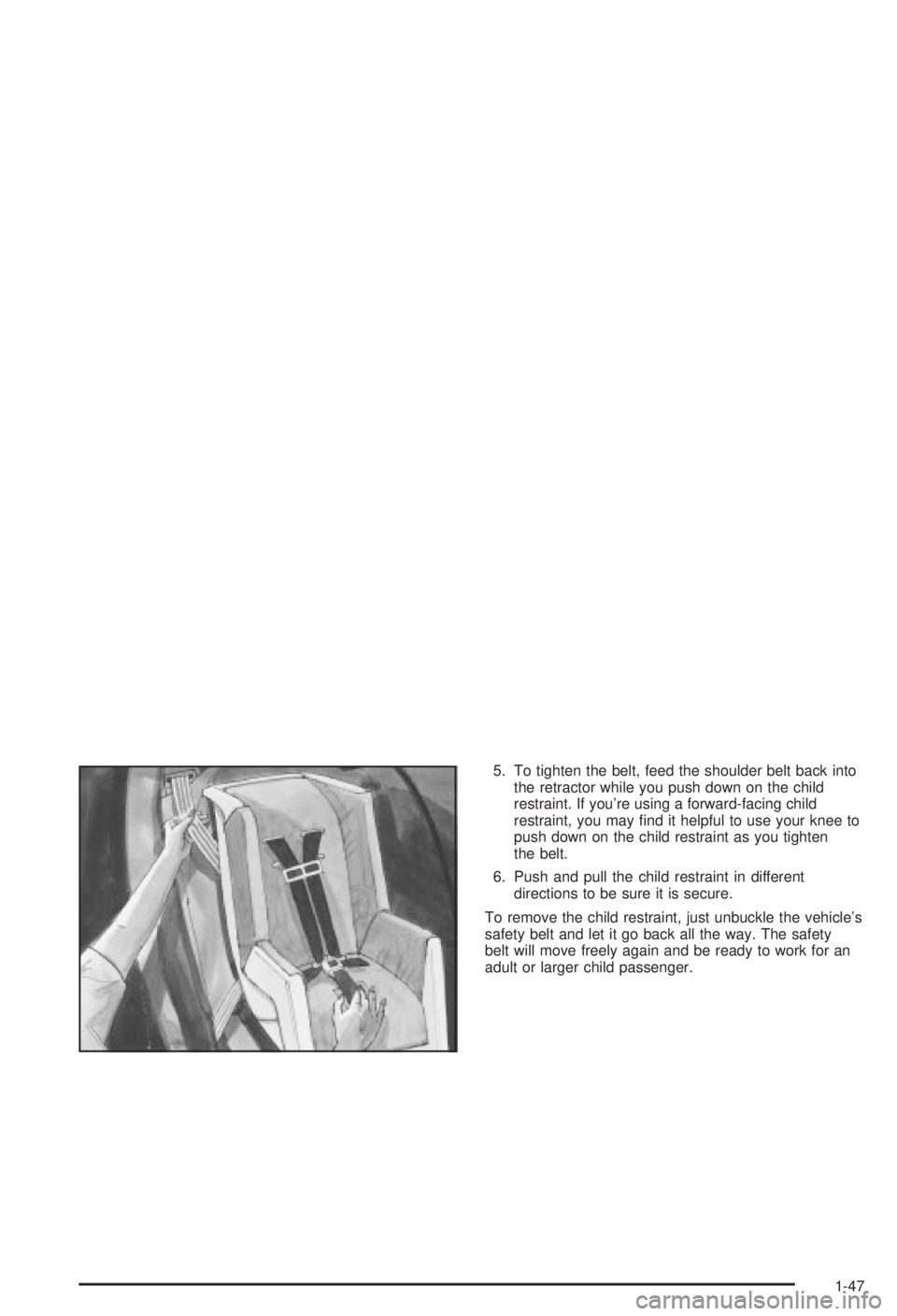
5. To tighten the belt, feed the shoulder belt back into
the retractor while you push down on the child
restraint. If you're using a forward-facing child
restraint, you may ®nd it helpful to use your knee to
push down on the child restraint as you tighten
the belt.
6. Push and pull the child restraint in different
directions to be sure it is secure.
To remove the child restraint, just unbuckle the vehicle's
safety belt and let it go back all the way. The safety
belt will move freely again and be ready to work for an
adult or larger child passenger.
1-47
Page 54 of 344
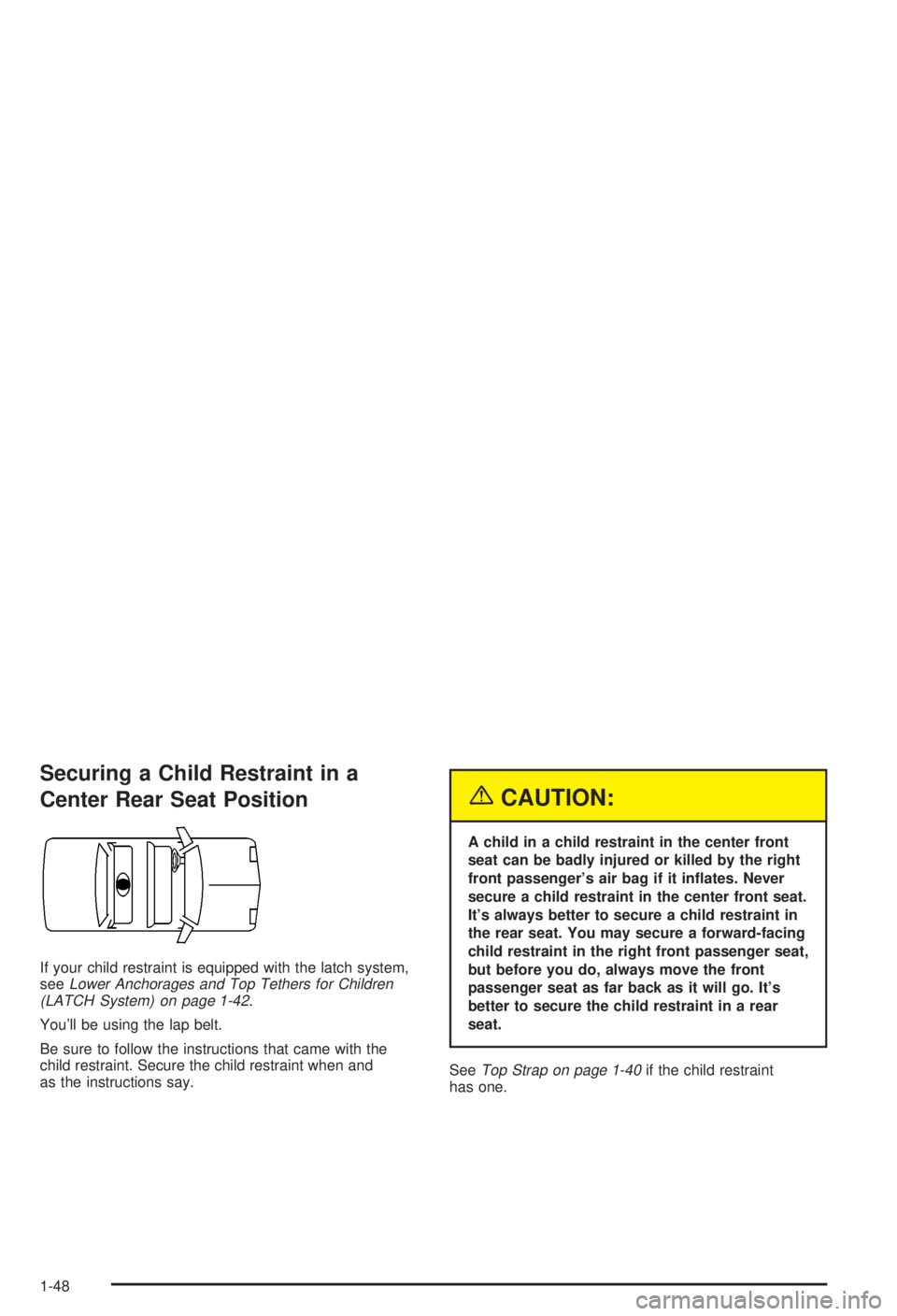
Securing a Child Restraint in a
Center Rear Seat Position
If your child restraint is equipped with the latch system,
seeLower Anchorages and Top Tethers for Children
(LATCH System) on page 1-42.
You'll be using the lap belt.
Be sure to follow the instructions that came with the
child restraint. Secure the child restraint when and
as the instructions say.
{CAUTION:
A child in a child restraint in the center front
seat can be badly injured or killed by the right
front passenger's air bag if it in¯ates. Never
secure a child restraint in the center front seat.
It's always better to secure a child restraint in
the rear seat. You may secure a forward-facing
child restraint in the right front passenger seat,
but before you do, always move the front
passenger seat as far back as it will go. It's
better to secure the child restraint in a rear
seat.
See
Top Strap on page 1-40if the child restraint
has one.
1-48
Page 55 of 344
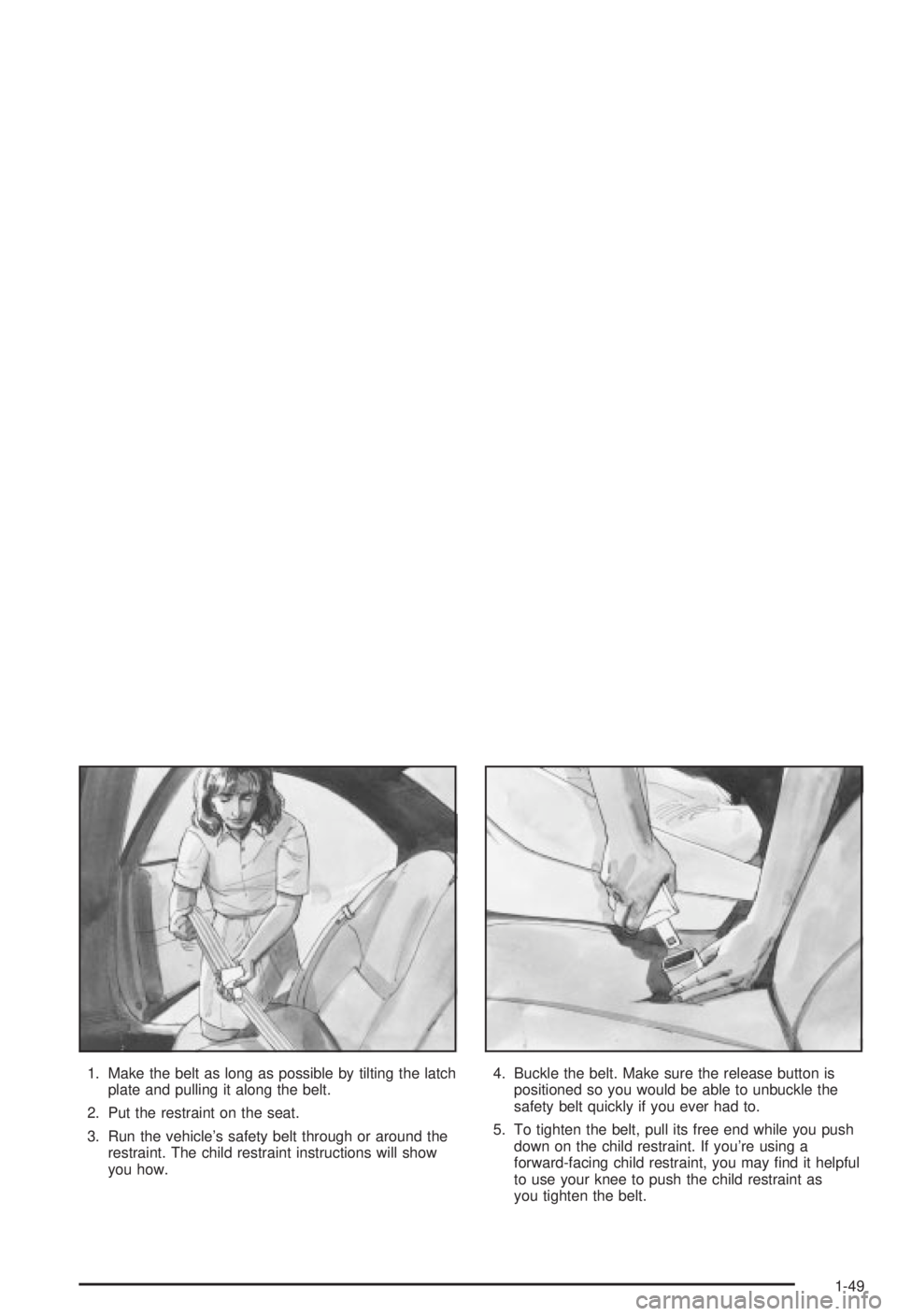
1. Make the belt as long as possible by tilting the latch
plate and pulling it along the belt.
2. Put the restraint on the seat.
3. Run the vehicle's safety belt through or around the
restraint. The child restraint instructions will show
you how.4. Buckle the belt. Make sure the release button is
positioned so you would be able to unbuckle the
safety belt quickly if you ever had to.
5. To tighten the belt, pull its free end while you push
down on the child restraint. If you're using a
forward-facing child restraint, you may ®nd it helpful
to use your knee to push the child restraint as
you tighten the belt.
1-49
Page 56 of 344
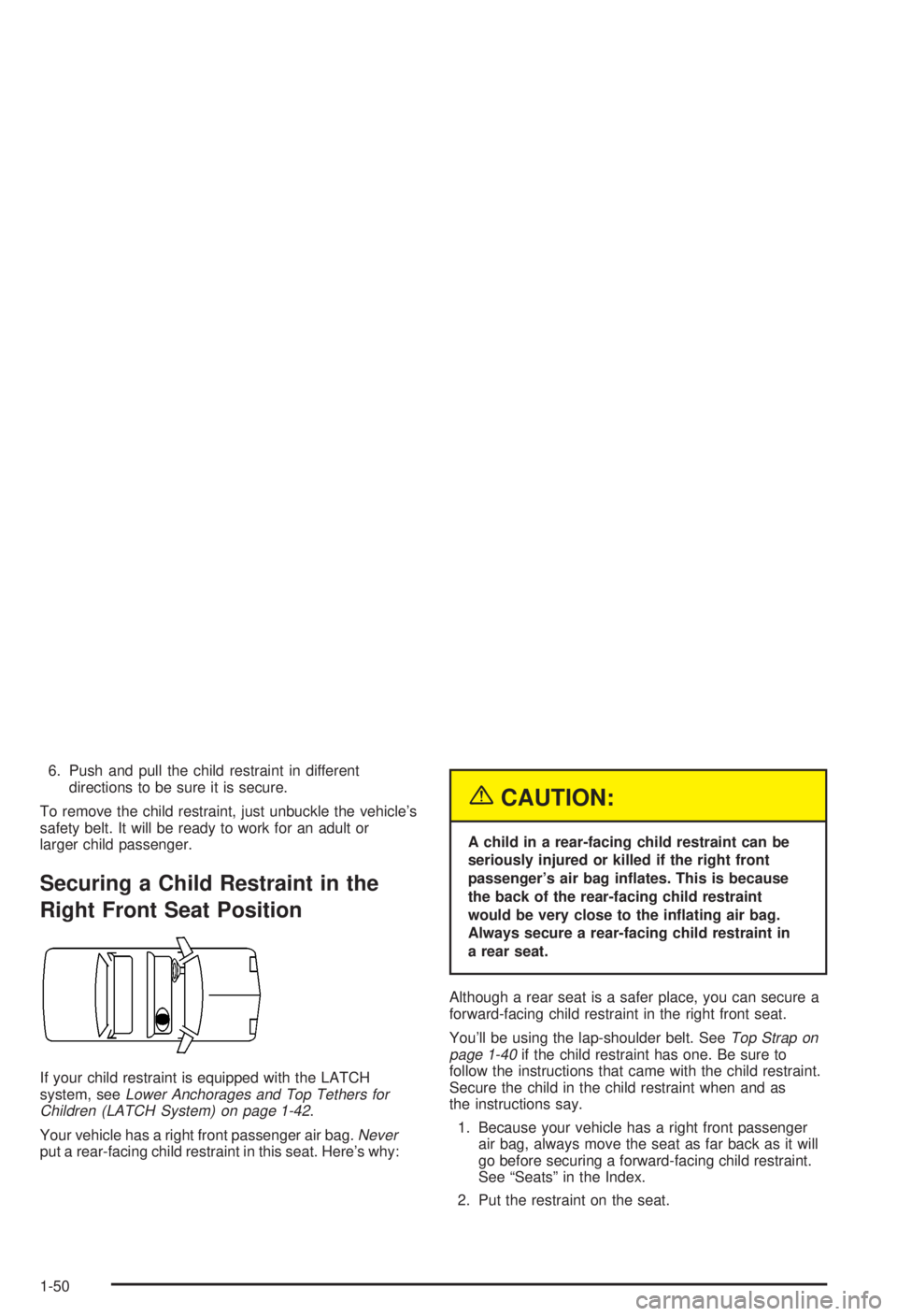
6. Push and pull the child restraint in different
directions to be sure it is secure.
To remove the child restraint, just unbuckle the vehicle's
safety belt. It will be ready to work for an adult or
larger child passenger.
Securing a Child Restraint in the
Right Front Seat Position
If your child restraint is equipped with the LATCH
system, seeLower Anchorages and Top Tethers for
Children (LATCH System) on page 1-42.
Your vehicle has a right front passenger air bag.
Neverput a rear-facing child restraint in this seat. Here's why:
{CAUTION:
A child in a rear-facing child restraint can be
seriously injured or killed if the right front
passenger's air bag in¯ates. This is because
the back of the rear-facing child restraint
would be very close to the in¯ating air bag.
Always secure a rear-facing child restraint in
a rear seat.
Although a rear seat is a safer place, you can secure a
forward-facing child restraint in the right front seat.
You'll be using the lap-shoulder belt. See
Top Strap on
page 1-40if the child restraint has one. Be sure to
follow the instructions that came with the child restraint.
Secure the child in the child restraint when and as
the instructions say.
1. Because your vehicle has a right front passenger
air bag, always move the seat as far back as it will
go before securing a forward-facing child restraint.
See ªSeatsº in the Index.
2. Put the restraint on the seat.
1-50
Page 57 of 344
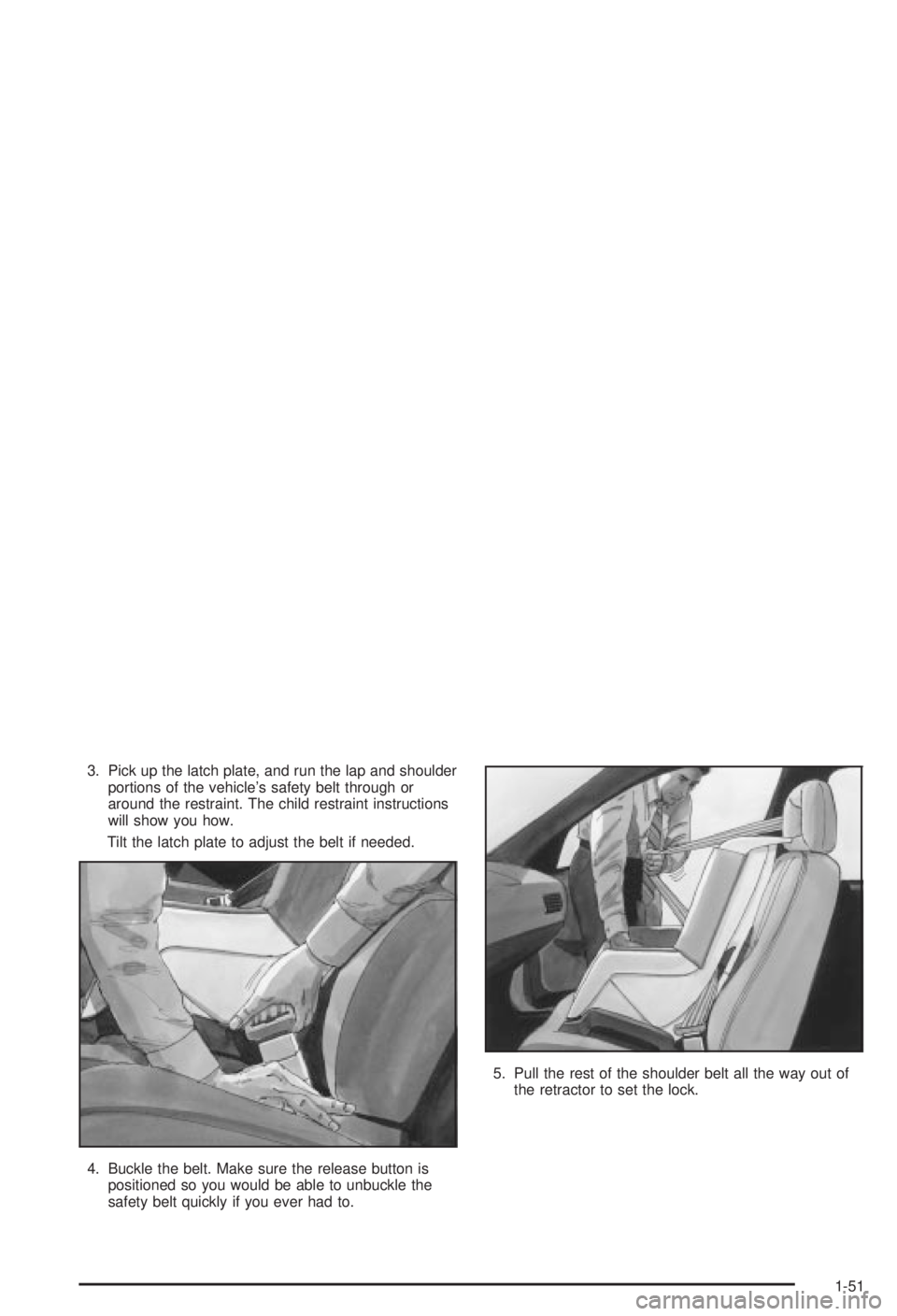
3. Pick up the latch plate, and run the lap and shoulder
portions of the vehicle's safety belt through or
around the restraint. The child restraint instructions
will show you how.
Tilt the latch plate to adjust the belt if needed.
4. Buckle the belt. Make sure the release button is
positioned so you would be able to unbuckle the
safety belt quickly if you ever had to.5. Pull the rest of the shoulder belt all the way out of
the retractor to set the lock.
1-51
Page 58 of 344
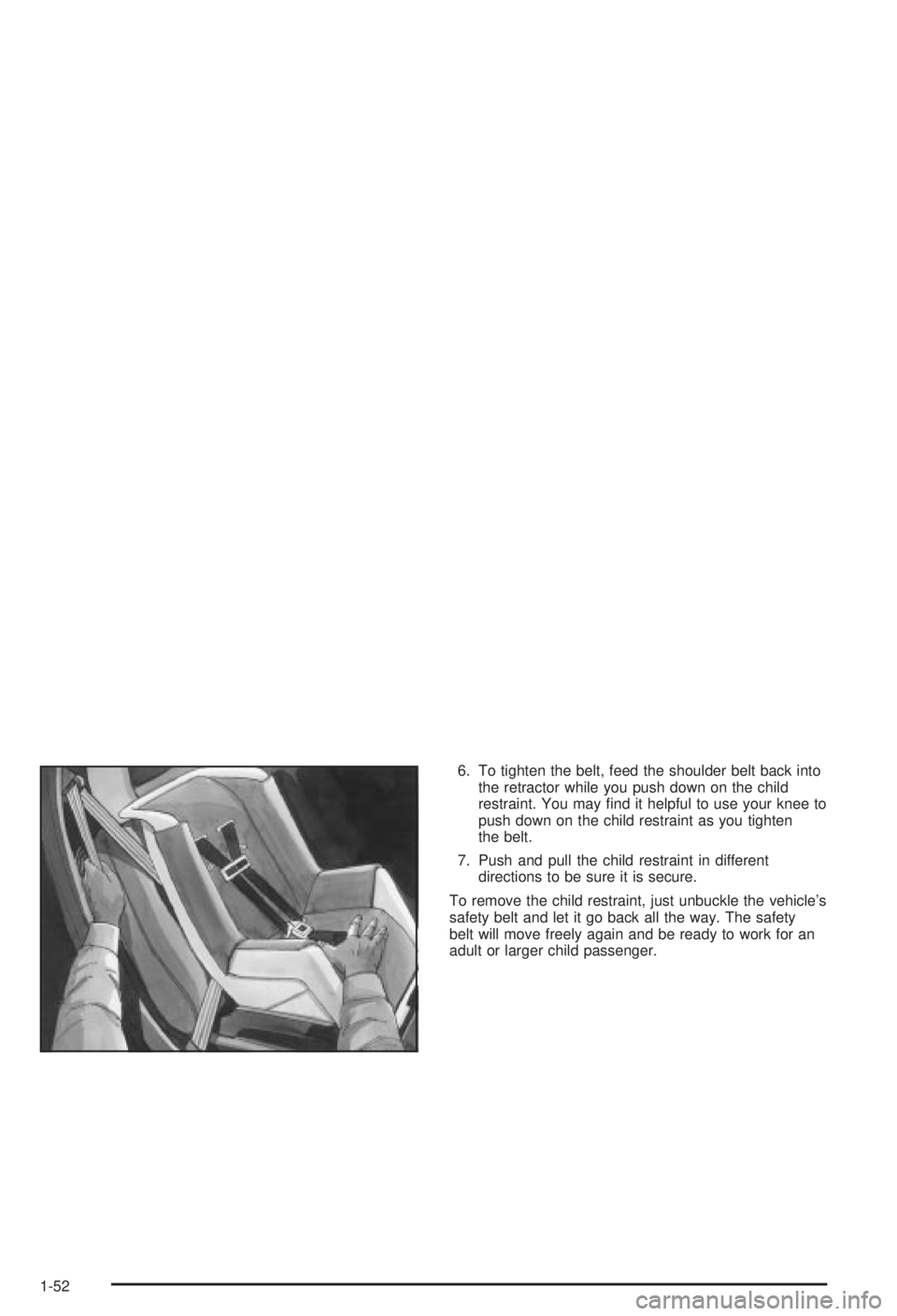
6. To tighten the belt, feed the shoulder belt back into
the retractor while you push down on the child
restraint. You may ®nd it helpful to use your knee to
push down on the child restraint as you tighten
the belt.
7. Push and pull the child restraint in different
directions to be sure it is secure.
To remove the child restraint, just unbuckle the vehicle's
safety belt and let it go back all the way. The safety
belt will move freely again and be ready to work for an
adult or larger child passenger.
1-52
Page 61 of 344
{CAUTION:
Anyone who is up against, or very close to,
any air bag when it in¯ates can be seriously
injured or killed. Air bags plus lap-shoulder
belts offer the best protection for adults, but
not for young children and infants. Neither the
vehicle's safety belt system nor its air bag
system is designed for them. Young children
and infants need the protection that a child
restraint system can provide. Always secure
children properly in your vehicle. To read how,
see the part of this manual called ªOlder
Childrenº or ªInfants and Young Children.ºThere is an air bag
readiness light on the
instrument panel, which
shows the air bag symbol.
The system checks the air bag electrical system for
malfunctions. The light tells you if there is an electrical
problem. See
Air Bag Readiness Light on page 3-25for more information.
1-55
Page 193 of 344
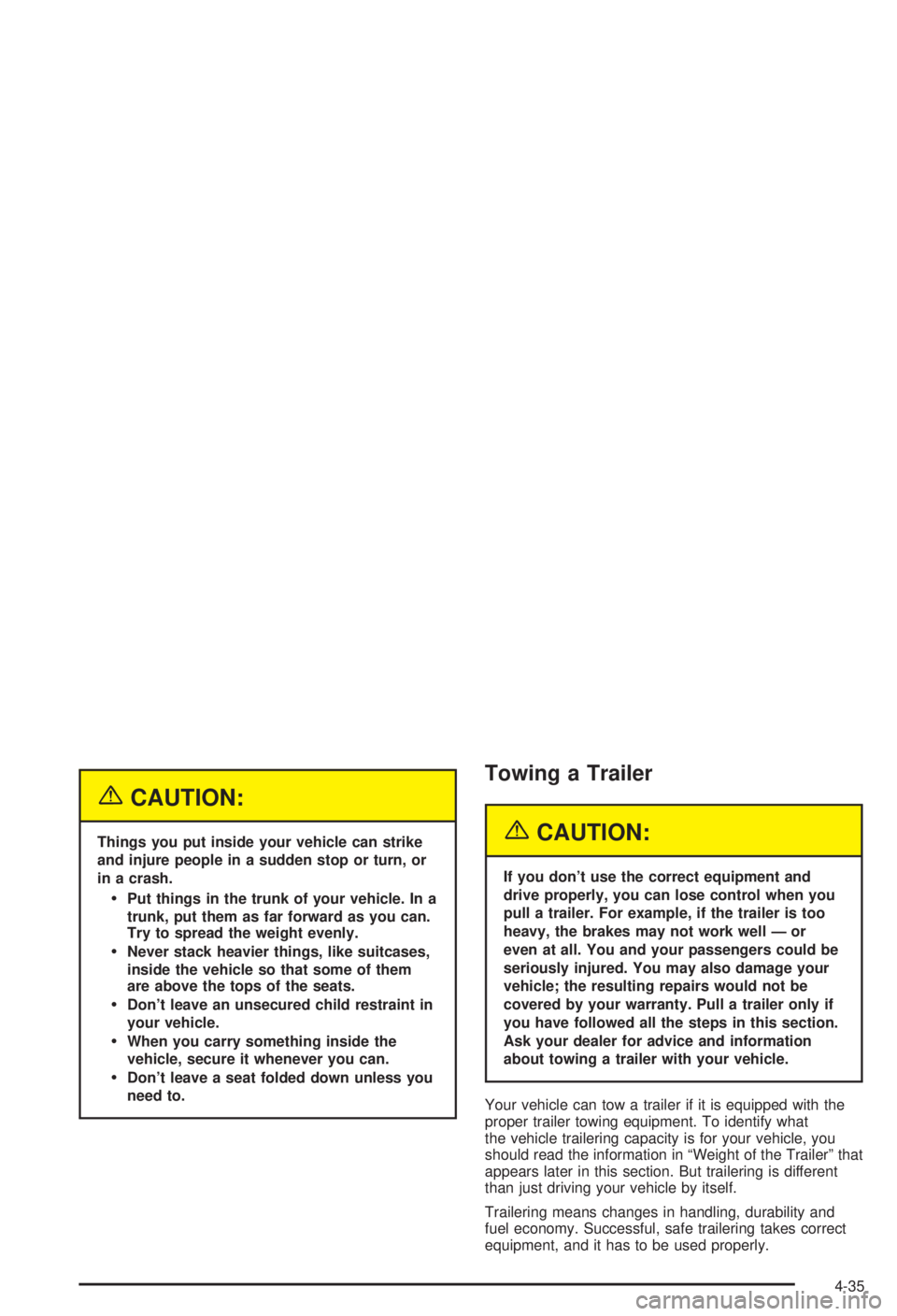
{CAUTION:
Things you put inside your vehicle can strike
and injure people in a sudden stop or turn, or
in a crash.
·Put things in the trunk of your vehicle. In a
trunk, put them as far forward as you can.
Try to spread the weight evenly.
·Never stack heavier things, like suitcases,
inside the vehicle so that some of them
are above the tops of the seats.
·Don't leave an unsecured child restraint in
your vehicle.
·When you carry something inside the
vehicle, secure it whenever you can.
·Don't leave a seat folded down unless you
need to.
Towing a Trailer
{CAUTION:
If you don't use the correct equipment and
drive properly, you can lose control when you
pull a trailer. For example, if the trailer is too
heavy, the brakes may not work well Ð or
even at all. You and your passengers could be
seriously injured. You may also damage your
vehicle; the resulting repairs would not be
covered by your warranty. Pull a trailer only if
you have followed all the steps in this section.
Ask your dealer for advice and information
about towing a trailer with your vehicle.
Your vehicle can tow a trailer if it is equipped with the
proper trailer towing equipment. To identify what
the vehicle trailering capacity is for your vehicle, you
should read the information in ªWeight of the Trailerº that
appears later in this section. But trailering is different
than just driving your vehicle by itself.
Trailering means changes in handling, durability and
fuel economy. Successful, safe trailering takes correct
equipment, and it has to be used properly.
4-35
Page 330 of 344
B
Backing Up....................................................4-39
Battery Replacement......................................... 2-8
Battery Rundown Protection.............................3-15
Battery..........................................................5-42
Before Leaving on a Long Trip.........................4-23
Body Lubrication Service..................................6-11
Brake Fluid....................................................5-39
Brake Wear...................................................5-41
Brake............................................................2-26
Parking......................................................2-26
System Inspection.......................................6-15
System Warning Light..................................3-27
Brakes..........................................................5-39
Braking in Emergencies..................................... 4-9
Braking........................................................... 4-6
Break-In, New Vehicle.....................................2-19
Bulb Replacement...........................................5-51
Back-Up Lamps...........................................5-55
Center High-Mounted Stoplamp (CHMSL)........5-53
Front Turn Signal and Parking Lamps.............5-52
Halogen Bulbs............................................5-51
Headlamp Aiming........................................5-49
Headlamps.................................................5-51
Replacement Bulbs......................................5-55
Taillamps, Turn Signal, and Stoplamps............5-54
Buying New Tires...........................................5-62
C
California Fuel.................................................. 5-6
Canada ± Customer Assistance.......................... 7-5
Canadian Owners................................................ ii
Canadian Roadside Assistance........................... 7-7
Capacities and Speci®cations............................5-94
Carbon Monoxide...................4-26, 4-35, 2-13, 2-30
Care of.........................................................5-82
Safety Belts................................................5-82
Your Cassette Tape Player............................3-51
Your CD Player...........................................3-52
Your CDs ...................................................3-52
Cassette Tape Messages.................................3-45
Cassette Tape Player Service...........................6-10
Center High-Mounted Stoplamp (CHMSL)...........5-53
Center Passenger Position, Safety Belts.............1-22
Chains, Tires..................................................5-66
Charging System Light....................................3-26
Checking Coolant............................................5-24
Checking Engine Oil........................................5-13
Checking Things Under the Hood......................5-10
Checking Your Restraint Systems......................1-63
Check...........................................................3-31
Engine Light...............................................3-31
Chemical Paint Spotting...................................5-85
Child Restraints..............................................1-36
Child Restraint Systems...............................1-36
2