SECTION 2 BUICK LUCERNE 2010 Owner's Guide
[x] Cancel search | Manufacturer: BUICK, Model Year: 2010, Model line: LUCERNE, Model: BUICK LUCERNE 2010Pages: 474
Page 293 of 474
Recreational Vehicle Towing
Recreational vehicle towing means towing the vehicle
behind another vehicle–such as behind a motorhome.
The two most common types of recreational vehicle
towing are known as dinghy towing and dolly towing.
Dinghy towing is towing the vehicle with all four wheels
on the ground. Dolly towing is towing the vehicle with
two wheels on the ground and two wheels up on a
device known as a dolly.
Here are some important things to consider before
recreational vehicle towing:
.What's the towing capacity of the towing vehicle?
Be sure to read the tow vehicle manufacturer's
recommendations.
.How far will the vehicle be towed? Some vehicles
have restrictions on how far and how long they
can tow.
.Does the vehicle have the proper towing
equipment? See your dealer or trailering
professional for additional advice and equipment
recommendations.
.Is the vehicle ready to be towed? Just as preparing
the vehicle for a long trip, make sure the vehicle is
prepared to be towed. See Before Leaving on a
Long Trip on page 5‑13.
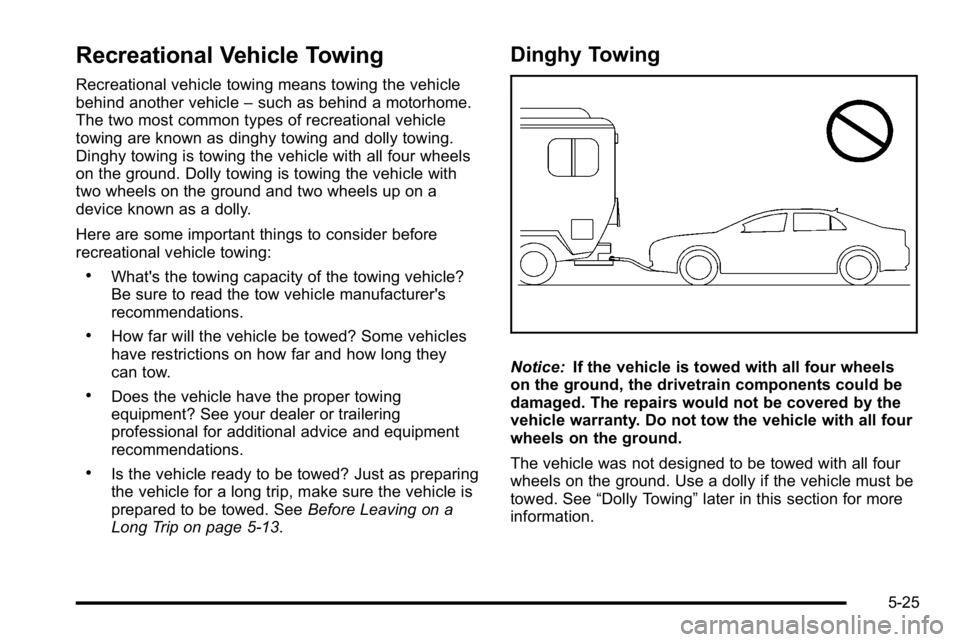
Dinghy Towing
Notice: If the vehicle is towed with all four wheels
on the ground, the drivetrain components could be
damaged. The repairs would not be covered by the
vehicle warranty. Do not tow the vehicle with all four
wheels on the ground.
The vehicle was not designed to be towed with all four
wheels on the ground. Use a dolly if the vehicle must be
towed. See “Dolly Towing” later in this section for more
information.
5-25
Page 295 of 474
Towing a Trailer
{WARNING:
The driver can lose control when pulling a trailer if
the correct equipment is not used or the vehicle is
not driven properly. For example, if the trailer is
too heavy, the brakes may not work well—or
even at all. The driver and passengers could be
seriously injured. The vehicle may also be
damaged; the resulting repairs would not be
covered by the vehicle warranty. Pull a trailer only
if all the steps in this section have been followed.
Ask your dealer for advice and information about
towing a trailer with the vehicle.
Notice: Pulling a trailer improperly can damage the
vehicle and result in costly repairs not covered by
the vehicle warranty. To pull a trailer correctly,
follow the advice in this section and see your dealer
for important information about towing a trailer with
the vehicle. The vehicle can tow a trailer if it is equipped with
the proper trailer towing equipment. To identify the
trailering capacity of the vehicle, read the information
in
“Weight of the Trailer” that appears later in this
section. Trailering is different than just driving the
vehicle by itself. Trailering means changes in handling,
acceleration, braking, durability and fuel economy.
Successful, safe trailering takes correct equipment, and
it has to be used properly.
The following information has many time-tested,
important trailering tips and safety rules. Many of these
are important for the safety of the driver and the
passengers. So please read this section carefully before
pulling a trailer.
Load-pulling components such as the engine,
transmission, axles, wheel assemblies and tires are
forced to work harder against the drag of the added
weight. The engine is required to operate at relatively
higher speeds and under greater loads, generating
extra heat. The trailer also adds considerably to wind
resistance, increasing the pulling requirements.
5-27
Page 296 of 474
Pulling A Trailer
Here are some important points:
.There are many different laws, including speed
limit restrictions, having to do with trailering. Make
sure the rig will be legal, not only where you live
but also where you will be driving. A good source
for this information can be state or provincial
police.
.Do not tow a trailer at all during the first
1,000 miles (1600 km) the new vehicle is driven.
The engine, transmission or other parts could be
damaged. The repairs would not be covered by the
vehicle's warranty.
.Then, during the first 500 miles (800 km) that a
trailer is towed, do not drive over 50 mph (80 km/h)
and do not make starts at full throttle. This helps
the engine and other parts of the vehicle wear in at
the heavier loads.
.Obey speed limit restrictions when towing a trailer.
Do not drive faster than the maximum posted
speed for trailers, or no more than 55 mph
(90 km/h), to save wear on the vehicle's parts.
.Do not tow a trailer when the outside temperature
is above 100°F (38°C).Three important considerations have to do with weight:
.the weight of the trailer,
.the weight of the trailer tongue
.and the total weight on the vehicle's tires.
Weight of the Trailer
How heavy can a trailer safely be?
It should never weigh more than 1,000 lbs (454 kg).
But even that can be too heavy.
It depends on how the rig is used. For example, speed,
altitude, road grades, outside temperature and how
much the vehicle is used to pull a trailer are all
important. It can depend on any special equipment on
the vehicle, and the amount of tongue weight the
vehicle can carry. See
“Weight of the Trailer Tongue”
later in this section for more information.
Maximum trailer weight is calculated assuming only the
driver is in the tow vehicle and it has all the required
trailering equipment. The weight of additional optional
equipment, passengers and cargo in the tow vehicle
must be subtracted from the maximum trailer weight.
Ask your dealer for trailering information or advice,
or write us at our Customer Assistance Offices. See
Customer Assistance Offices
on page 8‑6for more
information.
5-28
Page 303 of 474
Section 6 Service and Appearance Care
Service. . . . . . . . . . . . . . . . . . . . . . . . . . . . . . . . . . . . . . . . . . . . . 6-3
Accessories and Modifications . . . . . . . . . . . . . . . . . . 6-3
California Proposition 65 Warning . . . . . . . . . . . . . . . 6-4
California Perchlorate Materials Requirements . . . . . . . . . . . . . . . . . . . . . . . . . . . . . . . . . 6-4
Doing Your Own Service Work . . . . . . . . . . . . . . . . . . 6-4
Adding Equipment to the Outside of the Vehicle . . . . . . . . . . . . . . . . . . . . . . . . . . . . . . . . . . . . . . . . 6-5
Fuel . . . . . . . . . . . . . . . . . . . . . . . . . . . . . . . . . . . . . . . . . . . . . . . . . 6-5
Gasoline Octane . . . . . . . . . . . . . . . . . . . . . . . . . . . . . . . . 6-6
Gasoline Specifications . . . . . . . . . . . . . . . . . . . . . . . . . 6-6
California Fuel . . . . . . . . . . . . . . . . . . . . . . . . . . . . . . . . . . 6-6
Additives . . . . . . . . . . . . . . . . . . . . . . . . . . . . . . . . . . . . . . . . 6-7
Fuel E85 (85% Ethanol) . . . . . . . . . . . . . . . . . . . . . . . . . 6-8
Fuels in Foreign Countries . . . . . . . . . . . . . . . . . . . . . . 6-9
Filling the Tank . . . . . . . . . . . . . . . . . . . . . . . . . . . . . . . . 6-10
Filling a Portable Fuel Container . . . . . . . . . . . . . . . 6-12
Checking Things Under the Hood . . . . . . . . . . . . . . .6-12
Hood Release . . . . . . . . . . . . . . . . . . . . . . . . . . . . . . . . . 6-13
Engine Compartment Overview . . . . . . . . . . . . . . . . 6-14
Engine Oil . . . . . . . . . . . . . . . . . . . . . . . . . . . . . . . . . . . . . 6-17
Engine Oil Life System . . . . . . . . . . . . . . . . . . . . . . . . 6-20
Engine Air Cleaner/Filter . . . . . . . . . . . . . . . . . . . . . . . 6-21
Automatic Transmission Fluid . . . . . . . . . . . . . . . . . . 6-23
Cooling System . . . . . . . . . . . . . . . . . . . . . . . . . . . . . . . . 6-26
Engine Coolant (4.6L Engine) . . . . . . . . . . . . . . . . . . 6-27 Engine Coolant (3.9L Engine) . . . . . . . . . . . . . . . . . . 6-31
Engine Overheating . . . . . . . . . . . . . . . . . . . . . . . . . . . 6-35
Overheated Engine Protection
Operating Mode . . . . . . . . . . . . . . . . . . . . . . . . . . . . . 6-37
Power Steering Fluid . . . . . . . . . . . . . . . . . . . . . . . . . . 6-38
Windshield Washer Fluid . . . . . . . . . . . . . . . . . . . . . . 6-39
Brakes . . . . . . . . . . . . . . . . . . . . . . . . . . . . . . . . . . . . . . . . . 6-40
Battery . . . . . . . . . . . . . . . . . . . . . . . . . . . . . . . . . . . . . . . . . 6-42
Jump Starting . . . . . . . . . . . . . . . . . . . . . . . . . . . . . . . . . . 6-44
Headlamp Aiming . . . . . . . . . . . . . . . . . . . . . . . . . . . . . . . . 6-49
Bulb Replacement . . . . . . . . . . . . . . . . . . . . . . . . . . . . . . . . 6-52
Halogen Bulbs . . . . . . . . . . . . . . . . . . . . . . . . . . . . . . . . . 6-52
Taillamps, Turn Signal, Stoplamps and Sidemarker Lamps . . . . . . . . . . . . . . . . . . . . . . . . . . 6-52
Taillamps and Back-Up Lamps . . . . . . . . . . . . . . . . . 6-54
License Plate Lamp . . . . . . . . . . . . . . . . . . . . . . . . . . . . 6-55
Replacement Bulbs . . . . . . . . . . . . . . . . . . . . . . . . . . . . 6-55
Windshield Wiper Blade Replacement . . . . . . . . . . .6-55
Tires . . . . . . . . . . . . . . . . . . . . . . . . . . . . . . . . . . . . . . . . . . . . . . . 6-57
Tire Sidewall Labeling . . . . . . . . . . . . . . . . . . . . . . . . . 6-58
Tire Terminology and Definitions . . . . . . . . . . . . . . . 6-62
Inflation - Tire Pressure . . . . . . . . . . . . . . . . . . . . . . . . 6-65
Tire Pressure Monitor System . . . . . . . . . . . . . . . . . 6-66
Tire Pressure Monitor Operation . . . . . . . . . . . . . . . 6-67
Tire Inspection and Rotation . . . . . . . . . . . . . . . . . . . 6-71
6-1
Page 304 of 474
Section 6 Service and Appearance Care
When It Is Time for New Tires . . . . . . . . . . . . . . . . . 6-73
Buying New Tires . . . . . . . . . . . . . . . . . . . . . . . . . . . . . . 6-74
Different Size Tires and Wheels . . . . . . . . . . . . . . . 6-76
Uniform Tire Quality Grading . . . . . . . . . . . . . . . . . . . 6-76
Wheel Alignment and Tire Balance . . . . . . . . . . . . 6-78
Wheel Replacement . . . . . . . . . . . . . . . . . . . . . . . . . . . 6-78
Tire Chains . . . . . . . . . . . . . . . . . . . . . . . . . . . . . . . . . . . . 6-80
If a Tire Goes Flat . . . . . . . . . . . . . . . . . . . . . . . . . . . . . 6-81
Tire Sealant and Compressor Kit . . . . . . . . . . . . . . 6-82
Tire Sealant and Compressor Kit Storage . . . . . . 6-90
Changing a Flat Tire . . . . . . . . . . . . . . . . . . . . . . . . . . . 6-90
Removing the Spare Tire and Tools . . . . . . . . . . . . 6-92
Removing the Flat Tire and Installing theSpare Tire . . . . . . . . . . . . . . . . . . . . . . . . . . . . . . . . . . . 6-93
Storing a Flat or Spare Tire and Tools . . . . . . . . . 6-98
Compact Spare Tire . . . . . . . . . . . . . . . . . . . . . . . . . . 6-100
Appearance Care . . . . . . . . . . . . . . . . . . . . . . . . . . . . . . . . 6-101
Interior Cleaning . . . . . . . . . . . . . . . . . . . . . . . . . . . . . 6-101
Fabric/Carpet . . . . . . . . . . . . . . . . . . . . . . . . . . . . . . . . . 6-102
Leather . . . . . . . . . . . . . . . . . . . . . . . . . . . . . . . . . . . . . . . 6-103
Instrument Panel, Vinyl, and Other Plastic Surfaces . . . . . . . . . . . . . . . . . . . . . . . . . . . . . . . . . . . 6-103
Care of Safety Belts . . . . . . . . . . . . . . . . . . . . . . . . . . 6-104 Weatherstrips . . . . . . . . . . . . . . . . . . . . . . . . . . . . . . . . 6-104
Washing Your Vehicle . . . . . . . . . . . . . . . . . . . . . . . . 6-104
Cleaning Exterior Lamps/Lenses . . . . . . . . . . . . . 6-105
Finish Care . . . . . . . . . . . . . . . . . . . . . . . . . . . . . . . . . . . 6-105
Windshield and Wiper Blades . . . . . . . . . . . . . . . . 6-106
Aluminum or Chrome-Plated Wheels
and Trim . . . . . . . . . . . . . . . . . . . . . . . . . . . . . . . . . . . 6-106
Tires . . . . . . . . . . . . . . . . . . . . . . . . . . . . . . . . . . . . . . . . . . 6-107
Sheet Metal Damage . . . . . . . . . . . . . . . . . . . . . . . . . 6-107
Finish Damage . . . . . . . . . . . . . . . . . . . . . . . . . . . . . . . 6-108
Underbody Maintenance . . . . . . . . . . . . . . . . . . . . . 6-108
Chemical Paint Spotting . . . . . . . . . . . . . . . . . . . . . . 6-108
Vehicle Identification . . . . . . . . . . . . . . . . . . . . . . . . . . . . 6-109
Vehicle Identification Number (VIN) . . . . . . . . . . . 6-109
Service Parts Identification Label . . . . . . . . . . . . . 6-109
Electrical System . . . . . . . . . . . . . . . . . . . . . . . . . . . . . . . . 6-110
Add-On Electrical Equipment . . . . . . . . . . . . . . . . . 6-110
Power Windows and Other Power Options . . . 6-110
Fuses and Circuit Breakers . . . . . . . . . . . . . . . . . . . 6-110
Underhood Fuse Block . . . . . . . . . . . . . . . . . . . . . . . 6-110
Rear Underseat Fuse Block . . . . . . . . . . . . . . . . . . 6-113
Capacities and Specifications . . . . . . . . . . . . . . . . . .6-118
6-2
Page 320 of 474
When to Add Engine Oil
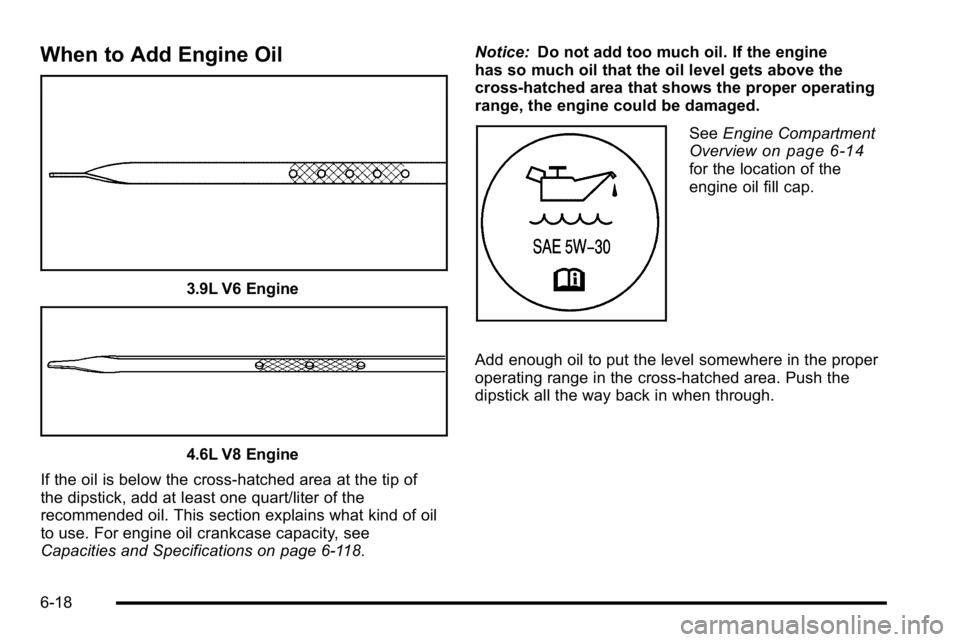
3.9L V6 Engine
4.6L V8 Engine
If the oil is below the cross-hatched area at the tip of
the dipstick, add at least one quart/liter of the
recommended oil. This section explains what kind of oil
to use. For engine oil crankcase capacity, see
Capacities and Specifications on page 6‑118. Notice:
Do not add too much oil. If the engine
has so much oil that the oil level gets above the
cross-hatched area that shows the proper operating
range, the engine could be damaged.
See Engine Compartment
Overviewon page 6‑14for the location of the
engine oil fill cap.
Add enough oil to put the level somewhere in the proper
operating range in the cross-hatched area. Push the
dipstick all the way back in when through.
6-18
Page 327 of 474
How to Add Automatic Transmission
Fluid
Refer to the Maintenance Schedule to determine what
kind of transmission fluid to use. SeeRecommended
Fluids and Lubricants on page 7‑9.
If the fluid level is low, add only enough of the proper
fluid to bring the level into the cross-hatched area on
the dipstick.
1. Pull out the dipstick.
2. Using a long-neck funnel, add enough fluid at the dipstick hole to bring it to the proper level.
It does not take much fluid, generally less than
one pint (0.5 L). Do not overfill. Notice:
Use of the incorrect automatic transmission
fluid may damage the vehicle, and the damages may
not be covered by the vehicle's warranty. Always
use the automatic transmission fluid listed in
Recommended Fluids and Lubricants on page 7‑9.
3. After adding fluid, recheck the fluid level as described under “How to Check Automatic
Transmission Fluid” earlier in this section.
4. When the correct fluid level is obtained, push the dipstick back in all the way.
How to Check Automatic Transmission
Fluid (4.6L Engine)
For the 4.6L V8 engine, it is not necessary to check the
transmission fluid level. A transmission fluid leak is the
only reason for fluid loss. If a leak occurs, take the
vehicle to your dealer service department and have it
repaired as soon as possible.
6-25
Page 339 of 474

If the temperature overheat gauge is no longer in the
overheat zone or an overheat warning no longer
displays, the vehicle can be driven. Continue to drive
the vehicle slow for about 10 minutes. Keep a safe
vehicle distance from the car in front of you. If the
warning does not come back on, continue to drive
normally.
If the warning continues, pull over, stop, and park the
vehicle right away.
If there is no sign of steam, idle the engine for
three minutes while parked. If the warning is still
displayed, turn off the engine until it cools down. Also,
see“Overheated Engine Protection Operating Mode”
next in this section.Overheated Engine Protection
Operating Mode
If an overheated engine condition exists and the
message ENGINE OVERHEATED STOP ENGINE
is displayed, an overheat protection mode which
alternates firing groups of cylinders helps prevent
engine damage. In this mode, you will notice a loss in
power and engine performance. This operating mode
allows the vehicle to be driven to a safe place in an
emergency. Driving extended miles (km) and/or towing
a trailer in the overheat protection mode should be
avoided.
Notice: After driving in the overheated engine
protection operating mode, to avoid engine damage,
allow the engine to cool before attempting any
repair. The engine oil will be severely degraded.
Repair the cause of coolant loss, change the oil
and reset the oil life system. See Engine Oil
on
page 6‑17.
6-37
Page 354 of 474
Bulb Replacement
For the proper type of replacement bulbs, see
Replacement Bulbs on page 6‑55.
For any bulb changing procedure not listed in this
section, contact your dealer.
Halogen Bulbs
{WARNING:
Halogen bulbs have pressurized gas inside and
can burst if you drop or scratch the bulb. You or
others could be injured. Be sure to read and
follow the instructions on the bulb package.
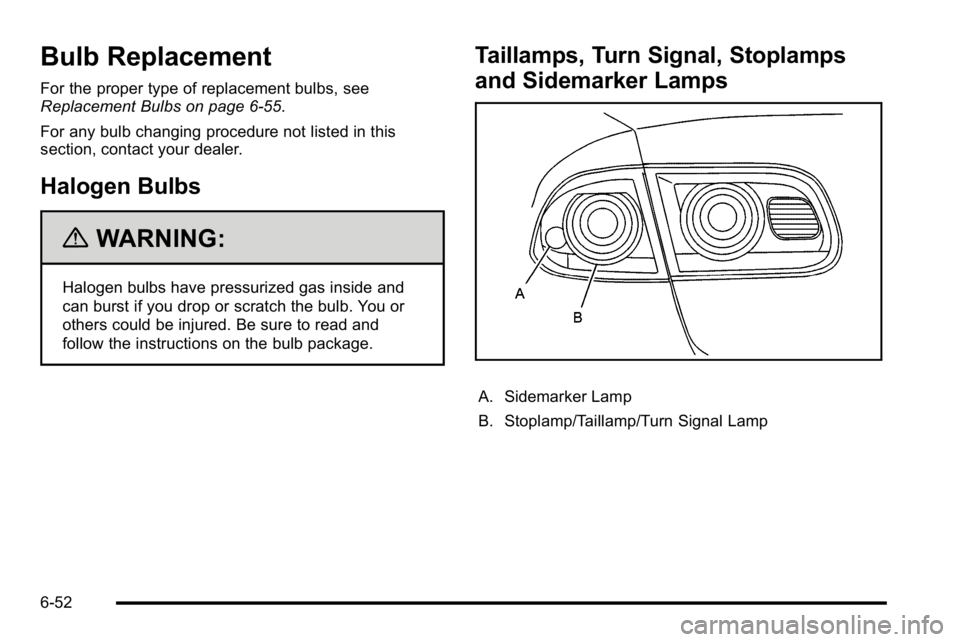
Taillamps, Turn Signal, Stoplamps
and Sidemarker Lamps
A. Sidemarker Lamp
B. Stoplamp/Taillamp/Turn Signal Lamp
6-52
Page 360 of 474
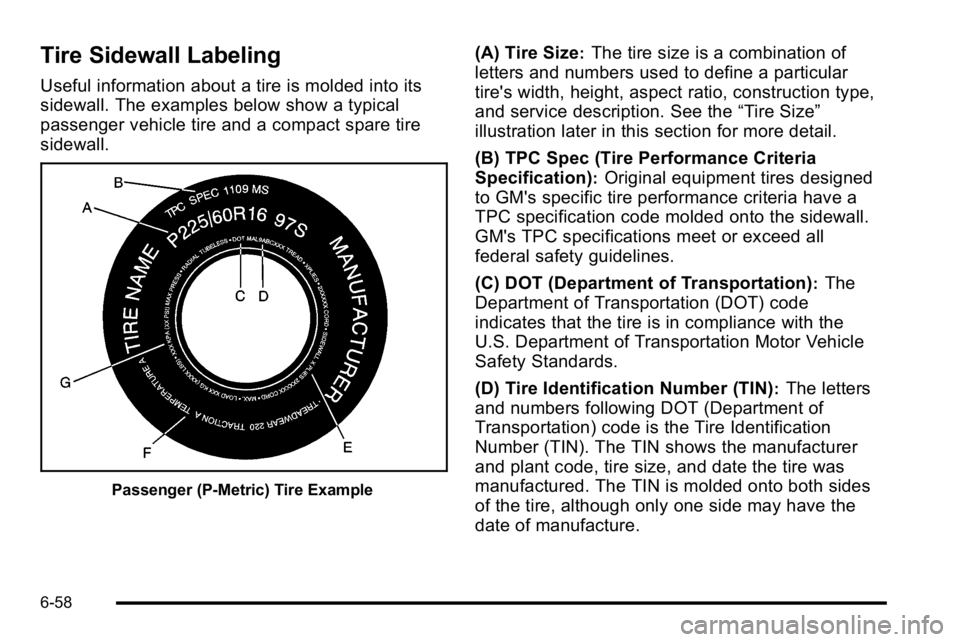
Tire Sidewall Labeling
Useful information about a tire is molded into its
sidewall. The examples below show a typical
passenger vehicle tire and a compact spare tire
sidewall.
Passenger (P‐Metric) Tire Example
(A) Tire Size:The tire size is a combination of
letters and numbers used to define a particular
tire's width, height, aspect ratio, construction type,
and service description. See the “Tire Size”
illustration later in this section for more detail.
(B) TPC Spec (Tire Performance Criteria
Specification)
:Original equipment tires designed
to GM's specific tire performance criteria have a
TPC specification code molded onto the sidewall.
GM's TPC specifications meet or exceed all
federal safety guidelines.
(C) DOT (Department of Transportation)
:The
Department of Transportation (DOT) code
indicates that the tire is in compliance with the
U.S. Department of Transportation Motor Vehicle
Safety Standards.
(D) Tire Identification Number (TIN)
:The letters
and numbers following DOT (Department of
Transportation) code is the Tire Identification
Number (TIN). The TIN shows the manufacturer
and plant code, tire size, and date the tire was
manufactured. The TIN is molded onto both sides
of the tire, although only one side may have the
date of manufacture.
6-58