radio BUICK RANDEZVOUS 2006 Repair Manual
[x] Cancel search | Manufacturer: BUICK, Model Year: 2006, Model line: RANDEZVOUS, Model: BUICK RANDEZVOUS 2006Pages: 478, PDF Size: 2.97 MB
Page 417 of 478

Appearance Care
Cleaning the Inside of Your Vehicle
Your vehicle’s interior will continue to look its best if
it is cleaned often. Although not always visible, dust
and dirt can accumulate on your upholstery. Dirt
can damage carpet, fabric, leather, and plastic surfaces.
Regular vacuuming is recommended to remove
particles from your upholstery. It is important to keep
your upholstery from becoming and remaining heavily
soiled. Soils should be removed as quickly as possible.
Your vehicle’s interior may experience extremes of
heat that could cause stains to set rapidly.
Lighter colored interiors may require more frequent
cleaning. Use care because newspapers and garments
that transfer color to your home furnishings may also
transfer color to your vehicle’s interior.
When cleaning your vehicle’s interior, only use cleaners
specically designed for the surfaces being cleaned.
Permanent damage may result from using cleaners on
surfaces for which they were not intended. Use glass
cleaner only on glass. Remove any accidental over-spray
from other surfaces immediately. To prevent over-spray,
apply cleaner directly to the cleaning cloth.Notice:If you use abrasive cleaners when cleaning
glass surfaces on your vehicle, you could scratch
the glass and/or cause damage to the integrated
radio antenna and the rear window defogger. When
cleaning the glass on your vehicle, use only a
soft cloth and glass cleaner.
Many cleaners contain solvents that may become
concentrated in your vehicle’s breathing space. Before
using cleaners, read and adhere to all safety
instructions on the label. While cleaning your vehicle’s
interior, maintain adequate ventilation by opening
your vehicle’s doors and windows.
Dust may be removed from small buttons and knobs
using a small brush with soft bristles.
Your GM dealer has a product for cleaning your
vehicle’s glass. Should it become necessary, you can
also obtain a product from your GM dealer to remove
odors from your vehicle’s upholstery.
5-91
Page 427 of 478
Fuses and Circuit Breakers
The wiring circuits in your vehicle are protected from
short circuits by a combination of fuses, circuit breakers,
and fusible thermal links.
Look at the silver-colored band inside the fuse. If the
band is broken or melted, replace the fuse. Be sure you
replace a bad fuse with a new one of the identical
size and rating.
If you ever have a problem on the road and do not have
a spare fuse, you can borrow one that has the same
amperage. Just pick a feature of your vehicle that
you can get along without – like the radio or cigarette
lighter - and use its fuse, if it is the right amperage.
Replace it as soon as you can.
There are two fuse blocks in your vehicle: the oor
console fuse block and the underhood fuse and
relay center.
Floor Console Fuse Block
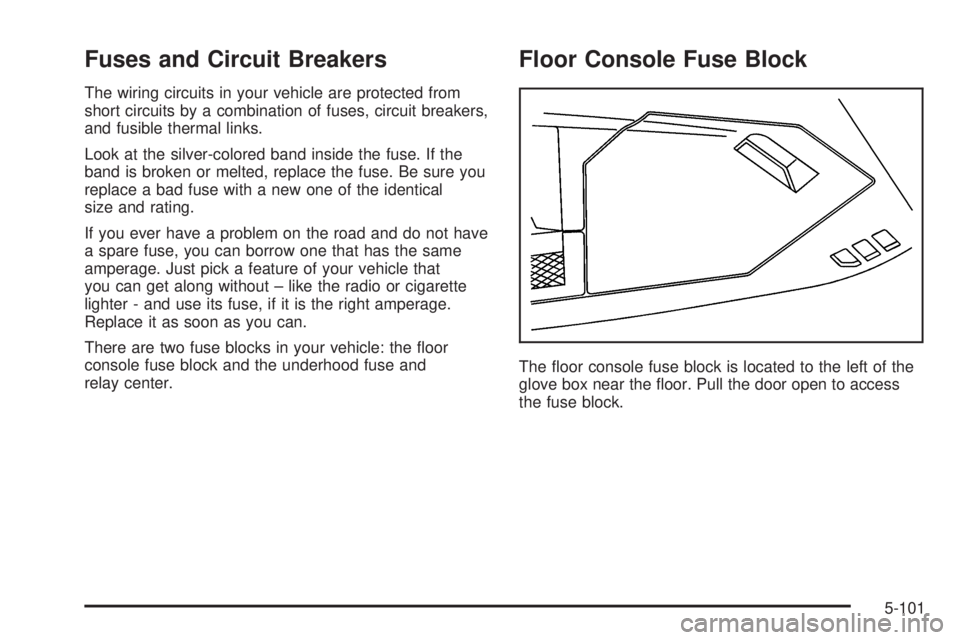
The oor console fuse block is located to the left of the
glove box near the oor. Pull the door open to access
the fuse block.
5-101
Page 428 of 478

Fuse Usage
1 Empty
2 Steering Wheel Radio Controls
3 Power Door Locks
4 Empty
5 Empty
6 Empty
7 Empty
8 Empty
9 Empty
10Turn Signal and Hazard Lamp
Flashers
Fuse Usage
11 Power Seats
12Electronic Level Control (ELC)
Compressor
13 Liftgate and Endgate
14 Rear Auxiliary Power Outlet
15Electronic Level Control (ELC)
Compressor Relay and Height
Sensor
16 Heated Mirrors
17 Power Mirrors
18 Ignition 1 Module
19 Turn Signal Switch
21 Rear Defogger
22 Air Bag Module
24 TCC Switch
25 HVAC Blower Motor
26HVAC Mode and Temperature
Motors and Head-Up Display
28 Not Used
29 Windshield Wipers and Washer
30Instrument Panel Cluster, Body
Control Module (BCM),
PASS-Key
®III
31 Park Lock Ignition Key Solenoid
32 Rear Window Wiper/Washer
5-102
Page 429 of 478

Fuse Usage
34 Power Sunroof
35 Power Windows
36Map Lamps, Courtesy Lamps
and Instrument Panel Lights
37 Radio
38 UQ3 Radio Amplier
39 Head-Up Display
40 Hazard Flashers
41Instrument Panel Cluster,
Climate Control, Security LED
and Remote Keyless Entry Mode
42 PASS-Key
®III
44 Body Control Module (BCM)
46Automatic Occupant Sensing
Module
Relay Usage
20 Rear Defogger Relay
23 Ignition Relay
27 Accessory Relay
33 Retained Accessory Power Relay
43 Accessory Diode
45 Back-Up Lamps
Underhood Fuse Block
This fuse block is located in the engine compartment,
on the passenger’s side of the vehicle. SeeEngine
Compartment Overview on page 5-10for more
information on location.
The back-up lamp relay (A) is located behind and to the
left of the underhood fuse block.
To remove the cover, press the two tabs in and lift up
the cover.
5-103
Page 431 of 478

Fuse Usage
35 Anti-lock Brake System (ABS) Motor
38 Engine Cooling Fan 2
39 Engine Cooling Fan 1
40Main Battery Fuse for Retained
Accessory Power Relay and
Accessory Relay
41Main Battery Fuse for Heated Seats,
Air Conditioning, Defogger
44Main Battery Fuse for Power Outlets,
Level Control, Power Seats, Mirrors,
and Body Computer
46Main Battery Fuse for Climate
Control Blower and Ignition 3 Relay
47Main Battery Fuse for Ignition Switch,
Radio, Heads-Up Display (HUD),
Remote Keyless Entry (RKE),
Instrument Cluster, Air Conditioning,
and Body Computer
70
§Diode for Air Conditioning
Compressor Clutch
§71Diode for Ignition
Relay Usage
49 Horn
50 Fuel Pump
51 Air Conditioning Clutch
52 Daytime Running Lamps (DRL)
53 Low-Beam Headlamps
54 Parking Lamps
55 High-Beam Headlamps
56 Fog Lamps
57 Starter Relay
58 Cooling Fan Series/Parallel
59 Powertrain
60 Cooling Fan 2
61 Cooling Fan 1
62 Ignition
5-105
Page 465 of 478

A
About Driving Your Vehicle.................................... ii
Accessories and Modications............................ 5-3
Accessory Inator...........................................5-68
Accessory Power Outlet(s)...............................3-26
Adding Equipment to Your Airbag-Equipped
Vehicle.......................................................1-86
Additives, Fuel................................................. 5-6
Add-On Electrical Equipment...........................5-100
Air Cleaner/Filter, Engine.................................5-18
Air Conditioning..............................3-28, 3-30, 3-33
Airbag
Passenger Status Indicator...........................3-42
Readiness Light..........................................3-41
Airbag Sensing and Diagnostic Module (SDM)...... 7-9
Airbag System................................................1-72
Adding Equipment to Your Airbag-Equipped
Vehicle...................................................1-86
How Does an Airbag Restrain?......................1-79
Passenger Sensing System...........................1-81
Servicing Your Airbag-Equipped Vehicle..........1-85
What Makes an Airbag Inate?......................1-79
What Will You See After an Airbag Inates?....1-80
When Should an Airbag Inate?....................1-77
Where Are the Airbags?...............................1-75
All-Wheel Drive...............................................5-43
All-Wheel Drive Disable Warning Message..........3-56
All-Wheel-Drive (AWD) System.........................4-12
Antenna, Fixed Mast......................................3-135Antenna, XM™ Satellite Radio Antenna
System.....................................................3-135
Anti-Lock Brake System (ABS)........................... 4-8
Anti-Lock Brake, System Warning Light..............3-45
Appearance Care
Aluminum or Chrome-Plated Wheels..............5-96
Care of Safety Belts....................................5-94
Chemical Paint Spotting...............................5-97
Cleaning Exterior Lamps/Lenses....................5-94
Cleaning the Inside of Your Vehicle................5-91
Fabric/Carpet..............................................5-92
Finish Care.................................................5-95
Finish Damage............................................5-97
Instrument Panel, Vinyl, and Other
Plastic Surfaces.......................................5-93
Leather......................................................5-93
Sheet Metal Damage...................................5-97
Tires..........................................................5-96
Underbody Maintenance...............................5-97
Vehicle Care/Appearance Materials................5-98
Washing Your Vehicle...................................5-94
Weatherstrips..............................................5-94
Windshield, Backglass, and Wiper Blades.......5-95
Ashtray(s)......................................................3-27
Audio System(s).............................................3-74
Audio Steering Wheel Controls....................3-132
Care of Your Cassette Tape Player...............3-134
Care of Your CD and DVD Player................3-135
Care of Your CDs and DVDs.......................3-135
Fixed Mast Antenna...................................3-135
1
Page 466 of 478

Audio System(s) (cont.)
Navigation/Radio System, see Navigation
Manual.................................................3-114
Radio with Cassette and CD.........................3-87
Radio with CD............................................3-76
Radio with Six-Disc CD..............................3-100
Rear Seat Audio (RSA)...............................3-129
Setting the Time..........................................3-75
Theft-Deterrent Feature...............................3-132
Understanding Radio Reception...................3-133
XM™ Satellite Radio Antenna System...........3-135
Automatic Headlamp System............................3-15
Automatic Transaxle
Fluid..........................................................5-19
Operation...................................................2-23
B
Battery..........................................................5-37
Run-Down Protection...................................3-20
Before Leaving on a Long Trip.........................4-23
Bench Seat, Split............................................. 1-8
Brake
Anti-Lock Brake System (ABS)........................ 4-8
Emergencies...............................................4-10
Low Fluid Warning Message.........................3-58
Parking......................................................2-26
System Warning Light..................................3-44
Brakes..........................................................5-34Braking........................................................... 4-7
Braking in Emergencies...................................4-10
Break-In, New Vehicle.....................................2-19
Bulb Replacement...........................................5-44
Halogen Bulbs............................................5-44
Headlamps, Front Turn Signal, Sidemarker,
and Parking Lamps..................................5-45
Replacement Bulbs......................................5-49
Taillamps and Back-Up Lamps.......................5-48
Taillamps, Turn Signal, and Stoplamps............5-47
Buying New Tires...........................................5-62
C
California Fuel.................................................. 5-5
California Proposition 65 Warning....................... 5-3
Canadian Owners................................................ ii
Capacities and Specications..........................5-106
Captain Chairs, Rear.......................................1-14
Carbon Monoxide...................2-11, 2-29, 4-26, 4-38
Care of
Safety Belts................................................5-94
Your Cassette Tape Player..........................3-134
Your CD and DVD Player...........................3-135
Your CDs and DVDs..................................3-135
Cargo Cover..................................................2-43
Cargo Lamp...................................................3-19
Cell Phone Storage Area.................................2-39
Center Rear Passenger Position, Safety Belts.....1-40
2
Page 473 of 478

Message (cont.)
Service Traction System Warning...................3-51
Service Vehicle Soon...................................3-58
Traction Active............................................3-52
Mirrors
Manual Rearview Mirror................................2-31
Outside Convex Mirror.................................2-32
Outside Curb View Assist Mirror....................2-31
Outside Heated Mirrors................................2-32
Outside Power Mirror...................................2-31
MyGMLink.com................................................ 7-3
N
Navigation/Radio System, see Navigation
Manual.....................................................3-114
New Vehicle Break-In......................................2-19
Normal Maintenance Replacement Parts............6-13
O
Odometer......................................................3-39
Odometer, Trip...............................................3-39
Off-Road Recovery..........................................4-14
Oil
Engine.......................................................5-13
Pressure Message.......................................3-54
Oil, Engine Oil Life System..............................5-16
Older Children, Restraints................................1-45Online Owner Center........................................ 7-3
OnStar
®System, see OnStar®Manual...............2-32
Other Warning Devices...................................... 3-6
Outlet Adjustment............................................3-36
Outside
Convex Mirror.............................................2-32
Curb View Assist Mirror................................2-31
Heated Mirrors............................................2-32
Power Mirror...............................................2-31
Overhead Console..........................................2-39
Overheated Engine Protection Operating Mode.....5-25
Owner Checks and Services.............................. 6-9
Owners, Canadian............................................... ii
P
Park Aid........................................................3-24
Park Lamp Warning Message...........................3-60
Park (P)
Shifting Into................................................2-27
Shifting Out of............................................2-28
Parking
Assist........................................................3-24
Brake........................................................2-26
Over Things That Burn.................................2-29
Passenger Airbag Status Indicator.....................3-42
Passenger Sensing System..............................1-81
Passing.........................................................4-15
PASS-Key
®III ................................................2-17
9
Page 474 of 478

PASS-Key®III Operation..................................2-18
PASS-Key®III Security Message.......................3-56
Perimeter Lighting...........................................3-19
Power
Accessory Outlet(s)......................................3-26
Door Locks.................................................. 2-9
Electrical System.......................................5-100
Reduced Engine Message............................3-53
Retained Accessory (RAP)............................2-20
Six-Way Seats.............................................. 1-4
Steering Fluid.............................................5-32
Windows....................................................2-14
Pretensioners, Safety Belt................................1-45
Program Mode Message..................................3-59
Programmable Automatic Door Locks.................2-10
Q
Questions and Answers About Safety Belts.........1-26
R
Radiator Pressure Cap....................................5-23
Radios..........................................................3-74
Care of Your Cassette Tape Player...............3-134
Care of Your CD and DVD Player................3-135
Care of Your CDs and DVDs.......................3-135
Navigation/Radio System, see Navigation
Manual.................................................3-114Radios (cont.)
Radio with Cassette and CD.........................3-87
Radio with CD............................................3-76
Radio with Six-Disc CD..............................3-100
Rear Seat Audio........................................3-129
Setting the Time..........................................3-75
Theft-Deterrent..........................................3-132
Understanding Reception............................3-133
Rear Door Security Locks................................2-10
Rear Hatch Ajar Warning Message....................3-55
Rear Outside Passenger Positions,
Safety Belts................................................1-36
Rear Reading Lamps......................................3-19
Rear Safety Belt Comfort Guides......................1-42
Rear Seat Audio (RSA)..................................3-129
Rear Seat Entertainment System.....................3-115
Rear Seat Operation......................................... 1-8
Rear Storage Area..........................................2-40
Rear Windshield Washer/Wiper.........................3-10
Rearview Mirrors.............................................2-31
Reclining Seatbacks.......................................... 1-6
Recommended Fluids and Lubricants.................6-12
Recreational Vehicle Towing.............................4-36
Reduced Engine Power Message......................3-53
Remote Keyless Entry System............................ 2-4
Remote Keyless Entry System, Operation............ 2-5
Remote Keyless Entry Transmitter
Battery Low Warning Message......................3-59
Removing the Flat Tire and Installing
the Spare Tire.............................................5-77
10
Page 476 of 478
Service........................................................... 5-3
Accessories and Modications......................... 5-3
Adding Equipment to the Outside of
Your Vehicle.............................................. 5-4
California Proposition 65 Warning.................... 5-3
Doing Your Own Work................................... 5-4
Engine Soon Light.......................................3-46
Publications Ordering Information...................7-14
Traction System Warning Message.................3-51
Vehicle Soon Message.................................3-58
Servicing Your Airbag-Equipped Vehicle..............1-85
Setting the Time.............................................3-75
Sheet Metal Damage.......................................5-97
Shifting Into Park (P).......................................2-27
Shifting Out of Park (P)...................................2-28
Shoulder Belt Height Adjuster...........................1-35
Signals, Turn and Lane-Change.......................... 3-7
Spare Tire
Accessory Inator........................................5-68
Compact....................................................5-90
Installing....................................................5-77
Removing...................................................5-71
Storing.......................................................5-84
Specications, Capacities...............................5-106
Speedometer..................................................3-39
Split Bench Seats............................................. 1-8
Starting Your Engine.......................................2-21
Steering........................................................4-12
Steering Wheel Controls, Audio.......................3-132Steering Wheel, Tilt Wheel................................. 3-6
Storage Areas
Cell Phone Storage Area..............................2-39
Convenience Net.........................................2-43
Cupholder(s)...............................................2-38
Floor Console Storage Area..........................2-39
Front Armrest Storage Area...........................2-39
Glove Box..................................................2-38
Overhead Console.......................................2-39
Rear Convenience Center.............................2-43
Rear Storage Area.......................................2-40
Roof Rack System.......................................2-40
Stowable Seat................................................1-18
Stuck in Sand, Mud, Ice or Snow......................4-30
Sun Visors.....................................................2-15
Sunroof.........................................................2-46
Surge Tank Pressure Cap, SGCM Coolant.........3-51
Switchbanks, Instrument Panel..........................3-20
T
Tachometer....................................................3-40
Taillamps
Back-Up Lamps...........................................5-48
Turn Signal, and Stoplamps..........................5-47
TCS Warning Light..........................................3-45
Theft-Deterrent, Radio....................................3-132
12