check engine light CHEVROLET ASTRO CARGO VAN 2004 2.G User Guide
[x] Cancel search | Manufacturer: CHEVROLET, Model Year: 2004, Model line: ASTRO CARGO VAN, Model: CHEVROLET ASTRO CARGO VAN 2004 2.GPages: 386, PDF Size: 2.55 MB
Page 175 of 386
Anti-lock Brake System
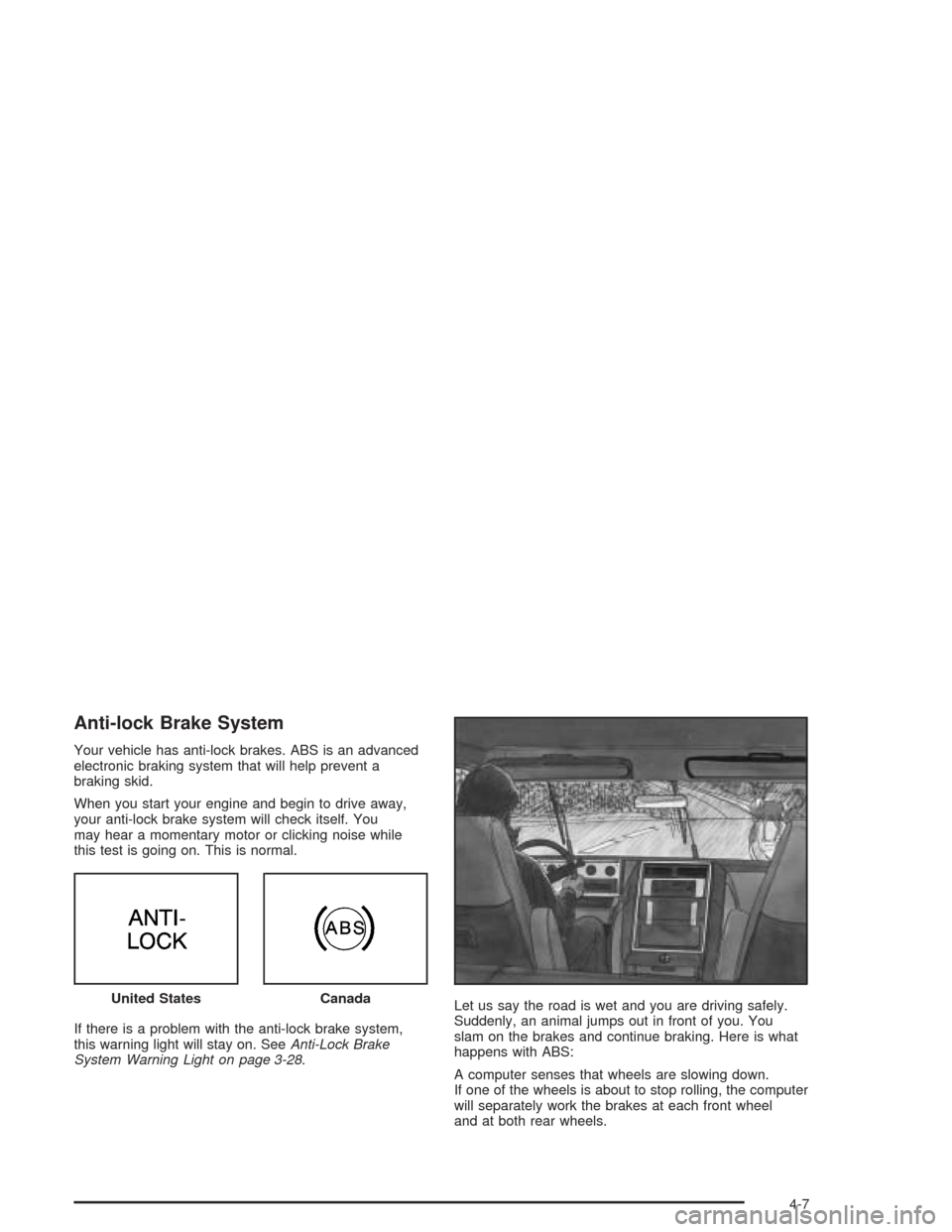
Your vehicle has anti-lock brakes. ABS is an advanced
electronic braking system that will help prevent a
braking skid.
When you start your engine and begin to drive away,
your anti-lock brake system will check itself. You
may hear a momentary motor or clicking noise while
this test is going on. This is normal.
If there is a problem with the anti-lock brake system,
this warning light will stay on. SeeAnti-Lock Brake
System Warning Light on page 3-28.Let us say the road is wet and you are driving safely.
Suddenly, an animal jumps out in front of you. You
slam on the brakes and continue braking. Here is what
happens with ABS:
A computer senses that wheels are slowing down.
If one of the wheels is about to stop rolling, the computer
will separately work the brakes at each front wheel
and at both rear wheels. United States
Canada
4-7
Page 188 of 386
Once you are moving on the freeway, make certain
you allow a reasonable following distance. Expect
to move slightly slower at night.
When you want to leave the freeway, move to the
proper lane well in advance. If you miss your exit,
do not, under any circumstances, stop and back up.
Drive on to the next exit.
The exit ramp can be curved, sometimes quite sharply.
The exit speed is usually posted.
Reduce your speed according to your speedometer,
not to your sense of motion. After driving for any
distance at higher speeds, you may tend to think you
are going slower than you actually are.
Before Leaving on a Long Trip
Make sure you are ready. Try to be well rested. If you
must start when you are not fresh — such as after
a day’s work — do not plan to make too many miles
that rst part of the journey. Wear comfortable clothing
and shoes you can easily drive in.Is your vehicle ready for a long trip? If you keep it
serviced and maintained, it is ready to go. If it needs
service, have it done before starting out. Of course, you
will nd experienced and able service experts in GM
dealerships all across North America. They will be ready
and willing to help if you need it.
Here are some things you can check before a trip:
Windshield Washer Fluid:Is the reservoir full?
Are all windows clean inside and outside?
Wiper Blades:Are they in good shape?
Fuel, Engine Oil, Other Fluids:Have you checked
all levels?
Lamps:Are they all working? Are the lenses clean?
Tires:They are vitally important to a safe,
trouble-free trip. Is the tread good enough for
long-distance driving? Are the tires all inated
to the recommended pressure?
Weather Forecasts:What is the weather outlook
along your route? Should you delay your trip a
short time to avoid a major storm system?
Maps:Do you have up-to-date maps?
4-20
Page 195 of 386
{CAUTION:
Snow can trap exhaust gases under your
vehicle. This can cause deadly CO (carbon
monoxide) gas to get inside. CO could
overcome you and kill you. You can not see
it or smell it, so you might not know it is in
your vehicle. Clear away snow from around
the base of your vehicle, especially any that is
blocking your exhaust pipe. And check around
again from time to time to be sure snow does
not collect there.
Open a window just a little on the side of the
vehicle that is away from the wind. This will
help keep CO out.Run your engine only as long as you must. This
saves fuel. When you run the engine, make it go a
little faster than just idle. That is, push the accelerator
slightly. This uses less fuel for the heat that you get
and it keeps the battery charged. You will need a
well-charged battery to restart the vehicle, and possibly
for signaling later on with your headlamps. Let the
heater run for a while.
Then, shut the engine off and close the window
almost all the way to preserve the heat. Start the
engine again and repeat this only when you feel
really uncomfortable from the cold. But do it as little
as possible. Preserve the fuel as long as you can.
To help keep warm, you can get out of the vehicle
and do some fairly vigorous exercises every half hour
or so until help comes.
4-27
Page 346 of 386
Part B: Owner Checks and Services
Listed in this part are owner checks and services
which should be performed at the intervals specied
to help ensure the safety, dependability and emission
control performance of your vehicle.
Be sure any necessary repairs are completed at once.
Whenever any uids or lubricants are added to your
vehicle, make sure they are the proper ones, as
shown in Part D.
At Each Fuel Fill
It is important for you or a service station attendant
to perform these underhood checks at each fuel ll.
Engine Oil Level Check
Check the engine oil level and add the proper oil
if necessary. SeeEngine Oil on page 5-13for
further details.
Engine Coolant Level Check
Check the engine coolant level and add DEX-COOL®
coolant mixture if necessary. SeeEngine Coolant
on page 5-26for further details.
Windshield Washer Fluid Level Check
Check the windshield washer uid level in the windshield
washer tank and add the proper uid if necessary. See
Windshield Washer Fluid on page 5-39for further details.
At Least Once a Month
Tire Ination Check
Visually inspect your tires and make sure tires are inated
to the correct pressures. Do not forget to check your
spare tire. SeeTires on page 5-60for further details.
At Least Twice a Year
Restraint System Check
Make sure the safety belt reminder light and all your belts,
buckles, latch plates, retractors and anchorages are
working properly. Look for any other loose or damaged
safety belt system parts. If you see anything that might
keep a safety belt system from doing its job, have it
repaired. Have any torn or frayed safety belts replaced.
Also look for any opened or broken air bag coverings,
and have them repaired or replaced. (The air bag
system does not need regular maintenance.)
6-22
Page 373 of 386
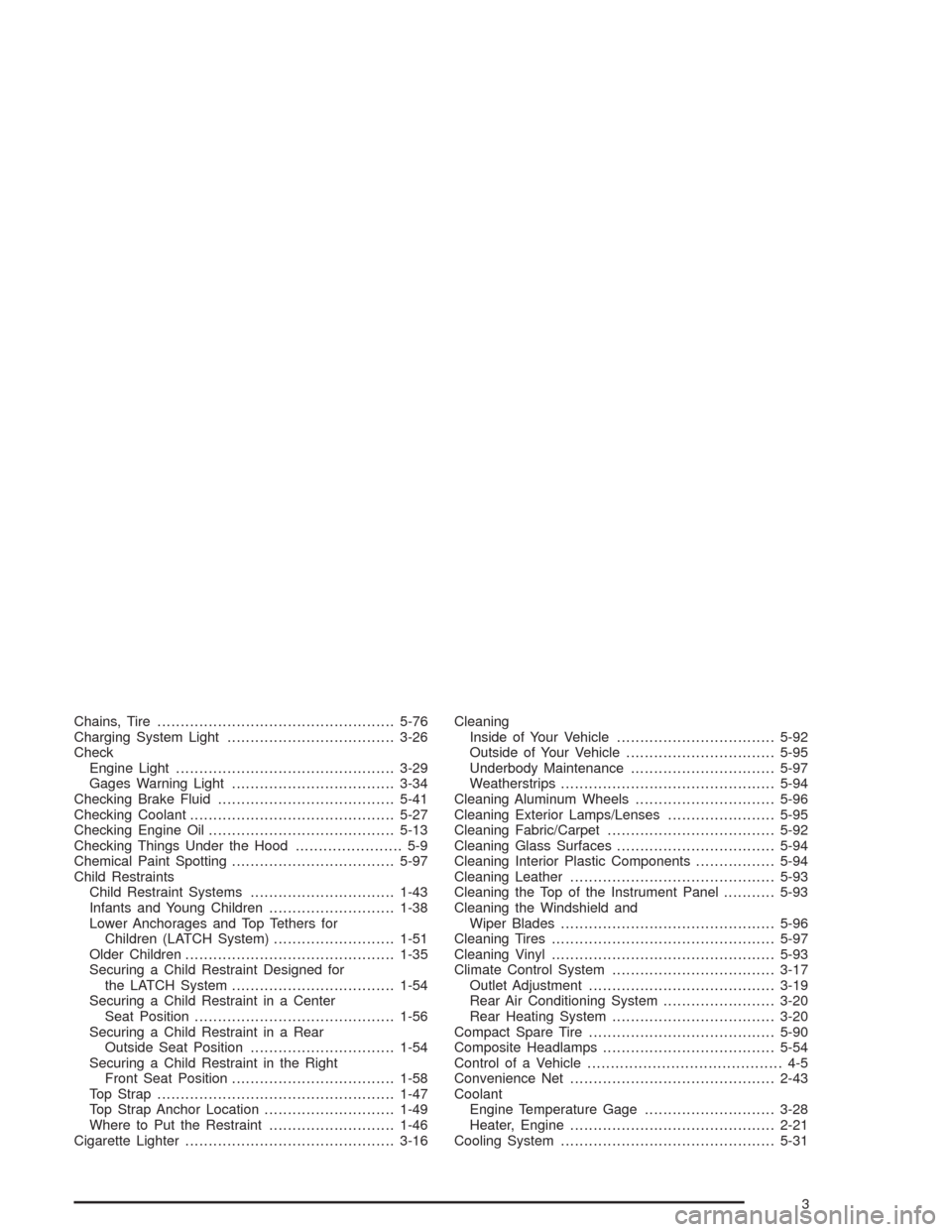
Chains, Tire...................................................5-76
Charging System Light....................................3-26
Check
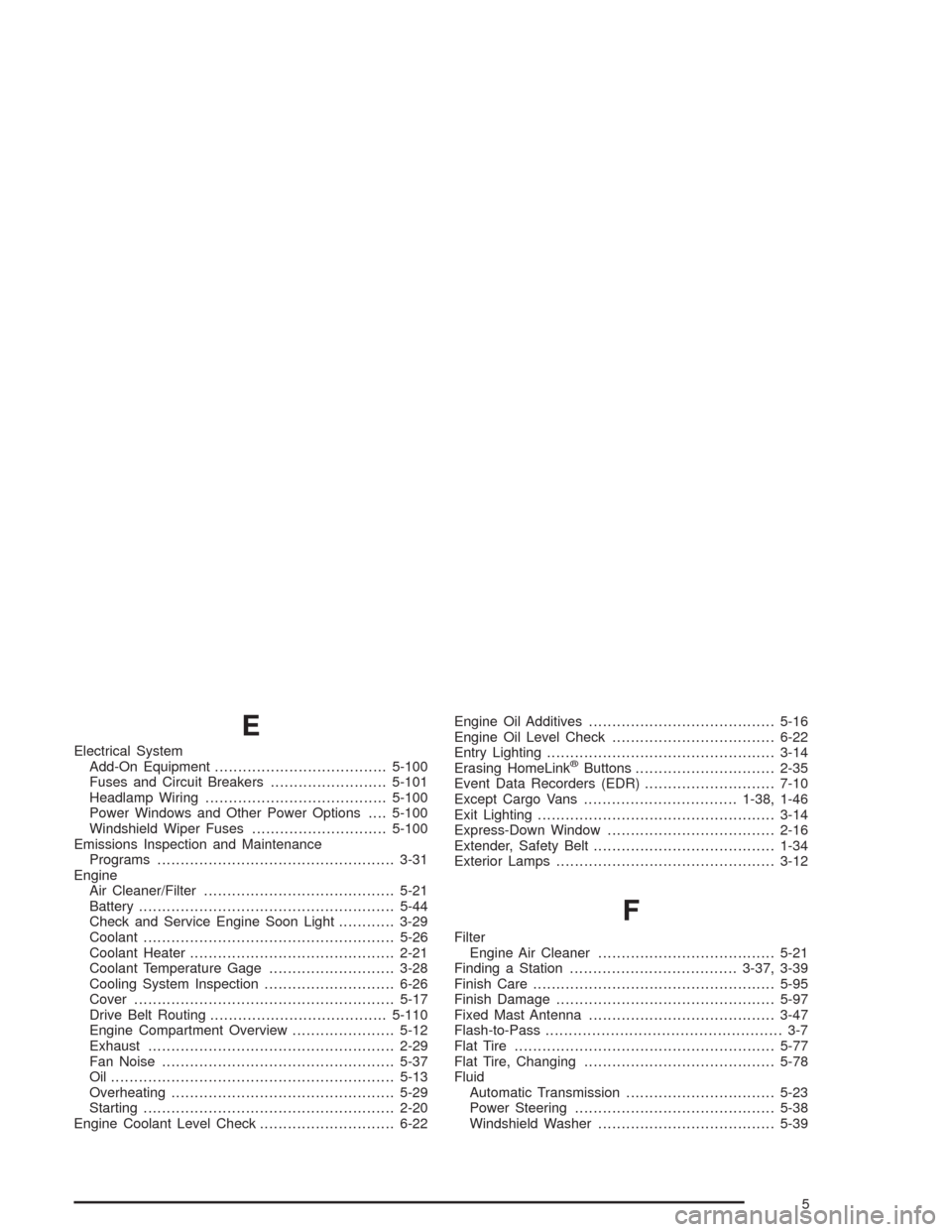
Engine Light...............................................3-29
Gages Warning Light...................................3-34
Checking Brake Fluid......................................5-41
Checking Coolant............................................5-27
Checking Engine Oil........................................5-13
Checking Things Under the Hood....................... 5-9
Chemical Paint Spotting...................................5-97
Child Restraints
Child Restraint Systems...............................1-43
Infants and Young Children...........................1-38
Lower Anchorages and Top Tethers for
Children (LATCH System)..........................1-51
Older Children.............................................1-35
Securing a Child Restraint Designed for
the LATCH System...................................1-54
Securing a Child Restraint in a Center
Seat Position...........................................1-56
Securing a Child Restraint in a Rear
Outside Seat Position...............................1-54
Securing a Child Restraint in the Right
Front Seat Position...................................1-58
Top Strap...................................................1-47
Top Strap Anchor Location............................1-49
Where to Put the Restraint...........................1-46
Cigarette Lighter.............................................3-16Cleaning
Inside of Your Vehicle..................................5-92
Outside of Your Vehicle................................5-95
Underbody Maintenance...............................5-97
Weatherstrips..............................................5-94
Cleaning Aluminum Wheels..............................5-96
Cleaning Exterior Lamps/Lenses.......................5-95
Cleaning Fabric/Carpet....................................5-92
Cleaning Glass Surfaces..................................5-94
Cleaning Interior Plastic Components.................5-94
Cleaning Leather............................................5-93
Cleaning the Top of the Instrument Panel...........5-93
Cleaning the Windshield and
Wiper Blades..............................................5-96
Cleaning Tires................................................5-97
Cleaning Vinyl................................................5-93
Climate Control System...................................3-17
Outlet Adjustment........................................3-19
Rear Air Conditioning System........................3-20
Rear Heating System...................................3-20
Compact Spare Tire........................................5-90
Composite Headlamps.....................................5-54
Control of a Vehicle.......................................... 4-5
Convenience Net............................................2-43
Coolant
Engine Temperature Gage............................3-28
Heater, Engine............................................2-21
Cooling System..............................................5-31
3
Page 375 of 386
E
Electrical System
Add-On Equipment.....................................5-100
Fuses and Circuit Breakers.........................5-101
Headlamp Wiring.......................................5-100
Power Windows and Other Power Options....5-100
Windshield Wiper Fuses.............................5-100
Emissions Inspection and Maintenance
Programs...................................................3-31
Engine
Air Cleaner/Filter.........................................5-21
Battery.......................................................5-44
Check and Service Engine Soon Light............3-29
Coolant......................................................5-26
Coolant Heater............................................2-21
Coolant Temperature Gage...........................3-28
Cooling System Inspection............................6-26
Cover........................................................5-17
Drive Belt Routing......................................5-110
Engine Compartment Overview......................5-12
Exhaust.....................................................2-29
Fan Noise..................................................5-37
Oil .............................................................5-13
Overheating................................................5-29
Starting......................................................2-20
Engine Coolant Level Check.............................6-22Engine Oil Additives........................................5-16
Engine Oil Level Check...................................6-22
Entry Lighting.................................................3-14
Erasing HomeLink®Buttons..............................2-35
Event Data Recorders (EDR)............................7-10
Except Cargo Vans.................................1-38, 1-46
Exit Lighting...................................................3-14
Express-Down Window....................................2-16
Extender, Safety Belt.......................................1-34
Exterior Lamps...............................................3-12
F
Filter
Engine Air Cleaner......................................5-21
Finding a Station....................................3-37, 3-39
Finish Care....................................................5-95
Finish Damage...............................................5-97
Fixed Mast Antenna........................................3-47
Flash-to-Pass................................................... 3-7
Flat Tire........................................................5-77
Flat Tire, Changing.........................................5-78
Fluid
Automatic Transmission................................5-23
Power Steering...........................................5-38
Windshield Washer......................................5-39
5
Page 376 of 386
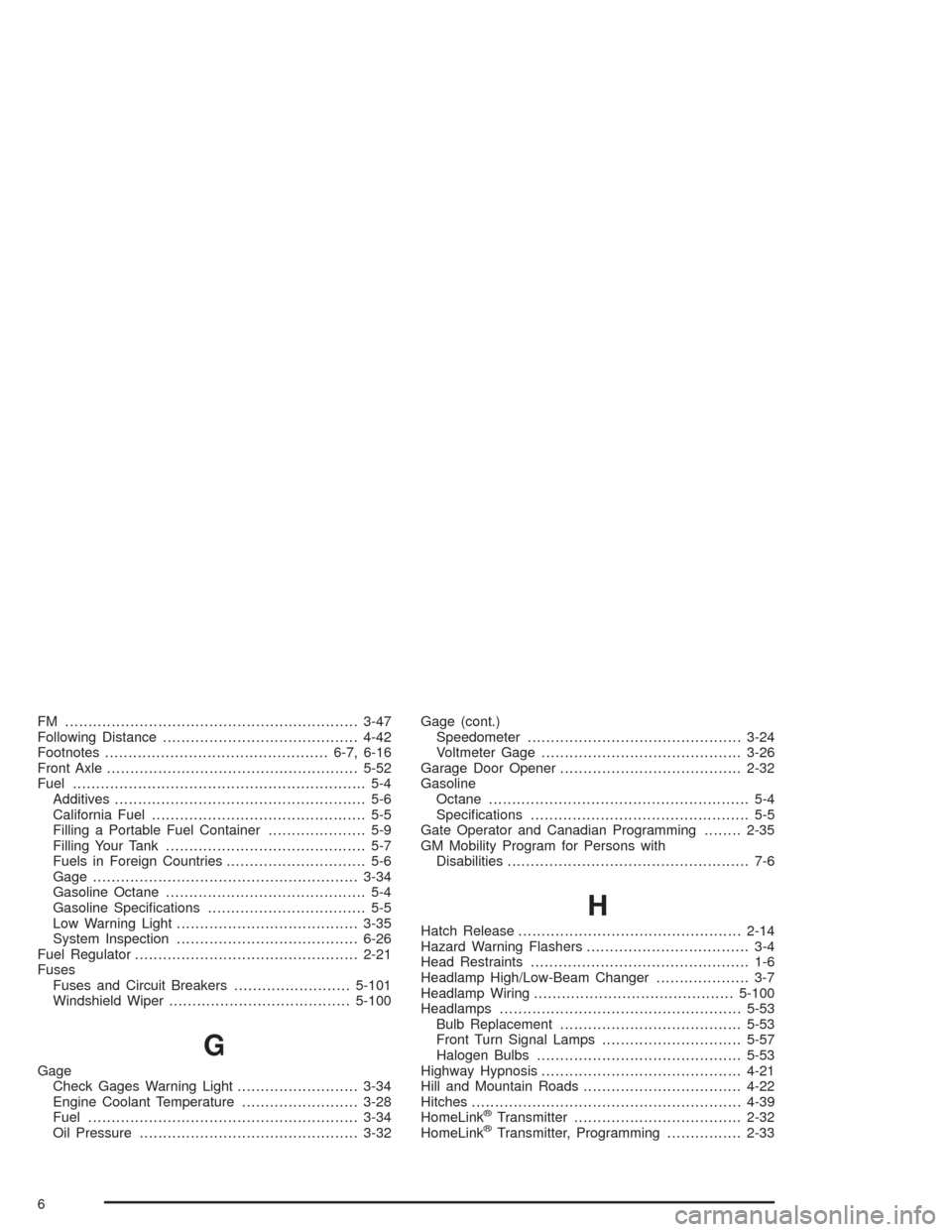
FM ...............................................................3-47
Following Distance..........................................4-42
Footnotes................................................6-7, 6-16
Front Axle......................................................5-52
Fuel............................................................... 5-4
Additives...................................................... 5-6
California Fuel.............................................. 5-5
Filling a Portable Fuel Container..................... 5-9
Filling Your Tank........................................... 5-7
Fuels in Foreign Countries.............................. 5-6
Gage.........................................................3-34
Gasoline Octane........................................... 5-4
Gasoline Specications.................................. 5-5
Low Warning Light.......................................3-35
System Inspection.......................................6-26
Fuel Regulator................................................2-21
Fuses
Fuses and Circuit Breakers.........................5-101
Windshield Wiper.......................................5-100
G
Gage
Check Gages Warning Light..........................3-34
Engine Coolant Temperature.........................3-28
Fuel..........................................................3-34
Oil Pressure...............................................3-32Gage (cont.)
Speedometer..............................................3-24
Voltmeter Gage...........................................3-26
Garage Door Opener.......................................2-32
Gasoline
Octane........................................................ 5-4
Specications............................................... 5-5
Gate Operator and Canadian Programming........2-35
GM Mobility Program for Persons with
Disabilities.................................................... 7-6
H
Hatch Release................................................2-14
Hazard Warning Flashers................................... 3-4
Head Restraints............................................... 1-6
Headlamp High/Low-Beam Changer.................... 3-7
Headlamp Wiring...........................................5-100
Headlamps....................................................5-53
Bulb Replacement.......................................5-53
Front Turn Signal Lamps..............................5-57
Halogen Bulbs............................................5-53
Highway Hypnosis...........................................4-21
Hill and Mountain Roads..................................4-22
Hitches..........................................................4-39
HomeLink
®Transmitter....................................2-32
HomeLink®Transmitter, Programming................2-33
6
Page 377 of 386
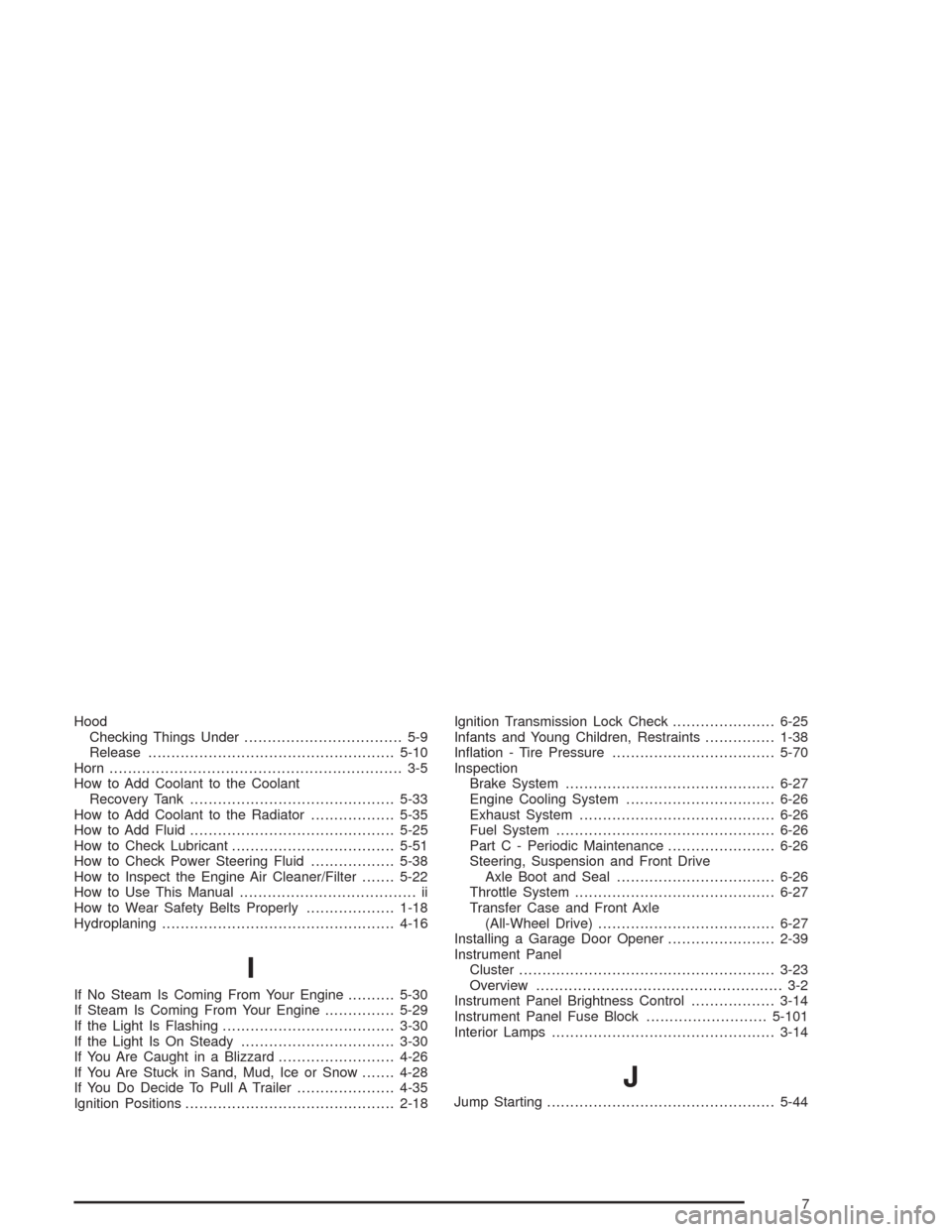
Hood
Checking Things Under.................................. 5-9
Release.....................................................5-10
Horn............................................................... 3-5
How to Add Coolant to the Coolant
Recovery Tank............................................5-33
How to Add Coolant to the Radiator..................5-35
How to Add Fluid............................................5-25
How to Check Lubricant...................................5-51
How to Check Power Steering Fluid..................5-38
How to Inspect the Engine Air Cleaner/Filter.......5-22
How to Use This Manual...................................... ii
How to Wear Safety Belts Properly...................1-18
Hydroplaning..................................................4-16
I
If No Steam Is Coming From Your Engine..........5-30
If Steam Is Coming From Your Engine...............5-29
If the Light Is Flashing.....................................3-30
If the Light Is On Steady.................................3-30
If You Are Caught in a Blizzard.........................4-26
If You Are Stuck in Sand, Mud, Ice or Snow.......4-28
If You Do Decide To Pull A Trailer.....................4-35
Ignition Positions.............................................2-18Ignition Transmission Lock Check......................6-25
Infants and Young Children, Restraints...............1-38
Ination - Tire Pressure...................................5-70
Inspection
Brake System.............................................6-27
Engine Cooling System................................6-26
Exhaust System..........................................6-26
Fuel System...............................................6-26
Part C - Periodic Maintenance.......................6-26
Steering, Suspension and Front Drive
Axle Boot and Seal..................................6-26
Throttle System...........................................6-27
Transfer Case and Front Axle
(All-Wheel Drive)......................................6-27
Installing a Garage Door Opener.......................2-39
Instrument Panel
Cluster.......................................................3-23
Overview..................................................... 3-2
Instrument Panel Brightness Control..................3-14
Instrument Panel Fuse Block..........................5-101
Interior Lamps................................................3-14
J
Jump Starting.................................................5-44
7
Page 378 of 386
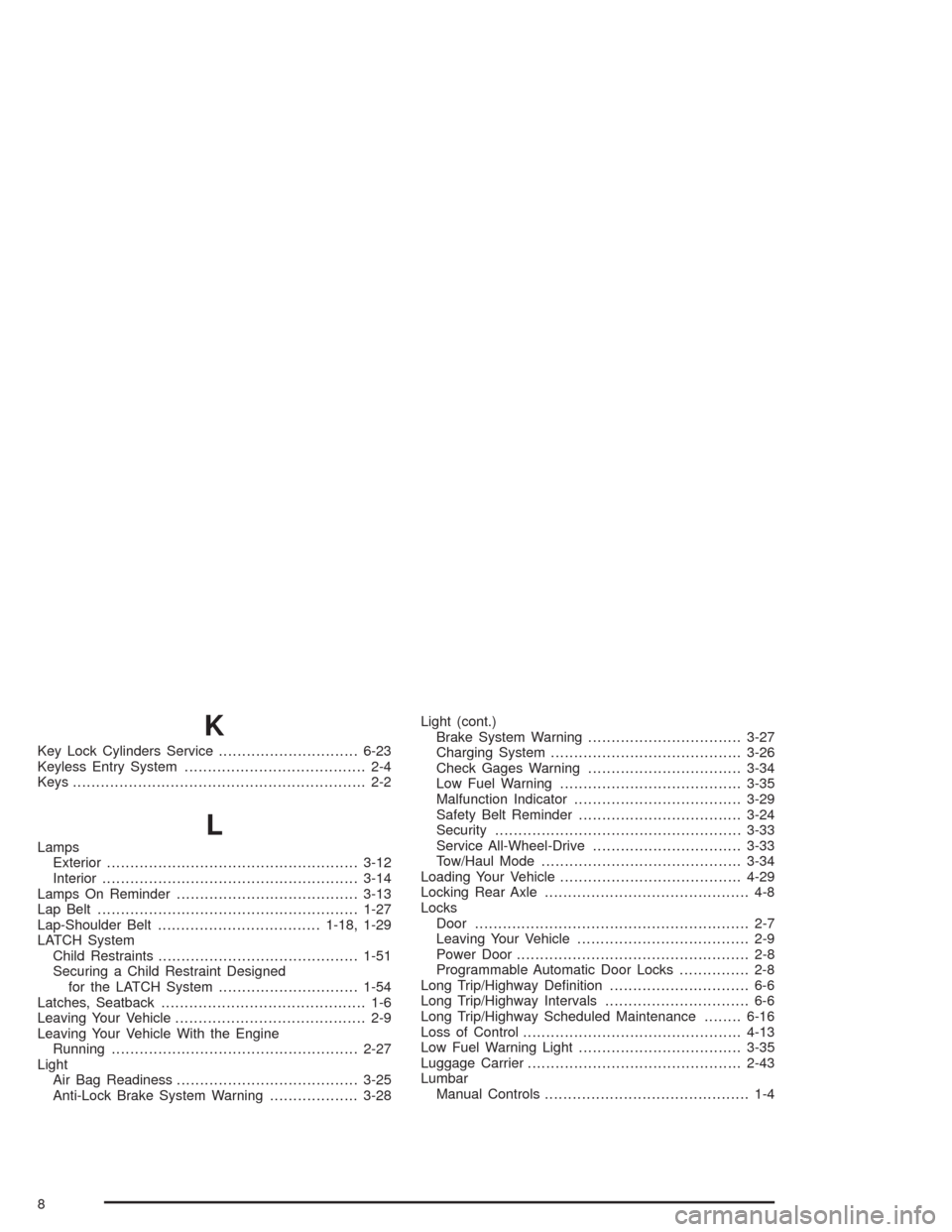
K
Key Lock Cylinders Service..............................6-23
Keyless Entry System....................................... 2-4
Keys............................................................... 2-2
L
Lamps
Exterior......................................................3-12
Interior.......................................................3-14
Lamps On Reminder.......................................3-13
Lap Belt........................................................1-27
Lap-Shoulder Belt...................................1-18, 1-29
LATCH System
Child Restraints...........................................1-51
Securing a Child Restraint Designed
for the LATCH System..............................1-54
Latches, Seatback............................................ 1-6
Leaving Your Vehicle......................................... 2-9
Leaving Your Vehicle With the Engine
Running.....................................................2-27
Light
Air Bag Readiness.......................................3-25
Anti-Lock Brake System Warning...................3-28Light (cont.)
Brake System Warning.................................3-27
Charging System.........................................3-26
Check Gages Warning.................................3-34
Low Fuel Warning.......................................3-35
Malfunction Indicator....................................3-29
Safety Belt Reminder...................................3-24
Security.....................................................3-33
Service All-Wheel-Drive................................3-33
Tow/Haul Mode...........................................3-34
Loading Your Vehicle.......................................4-29
Locking Rear Axle............................................ 4-8
Locks
Door........................................................... 2-7
Leaving Your Vehicle..................................... 2-9
Power Door.................................................. 2-8
Programmable Automatic Door Locks............... 2-8
Long Trip/Highway Denition.............................. 6-6
Long Trip/Highway Intervals............................... 6-6
Long Trip/Highway Scheduled Maintenance........6-16
Loss of Control...............................................4-13
Low Fuel Warning Light...................................3-35
Luggage Carrier..............................................2-43
Lumbar
Manual Controls............................................ 1-4
8
Page 379 of 386
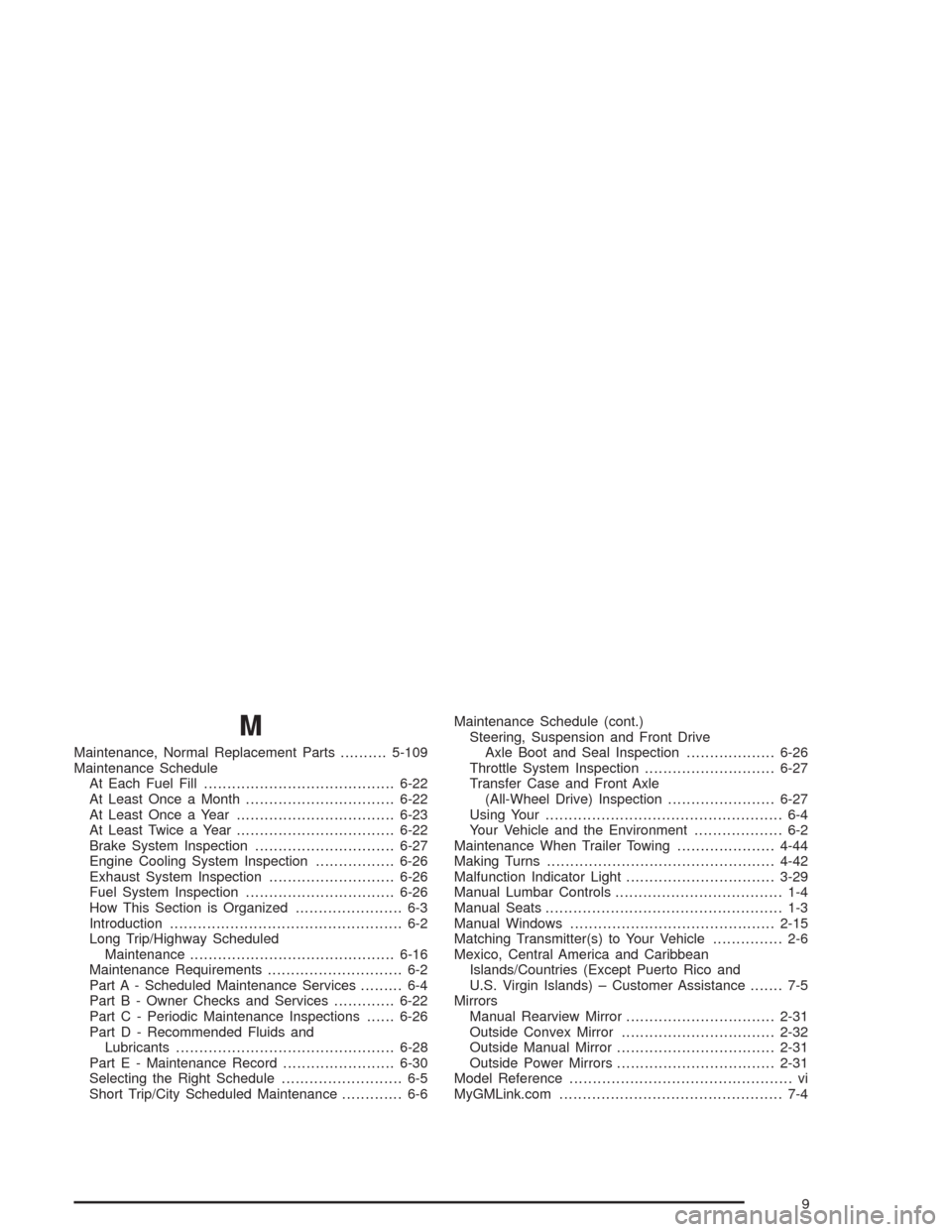
M
Maintenance, Normal Replacement Parts..........5-109
Maintenance Schedule
At Each Fuel Fill.........................................6-22
At Least Once a Month................................6-22
At Least Once a Year..................................6-23
At Least Twice a Year..................................6-22
Brake System Inspection..............................6-27
Engine Cooling System Inspection.................6-26
Exhaust System Inspection...........................6-26
Fuel System Inspection................................6-26
How This Section is Organized....................... 6-3
Introduction.................................................. 6-2
Long Trip/Highway Scheduled
Maintenance............................................6-16
Maintenance Requirements............................. 6-2
Part A - Scheduled Maintenance Services......... 6-4
Part B - Owner Checks and Services.............6-22
Part C - Periodic Maintenance Inspections......6-26
Part D - Recommended Fluids and
Lubricants...............................................6-28
Part E - Maintenance Record........................6-30
Selecting the Right Schedule.......................... 6-5
Short Trip/City Scheduled Maintenance............. 6-6Maintenance Schedule (cont.)
Steering, Suspension and Front Drive
Axle Boot and Seal Inspection...................6-26
Throttle System Inspection............................6-27
Transfer Case and Front Axle
(All-Wheel Drive) Inspection.......................6-27
Using Your................................................... 6-4
Your Vehicle and the Environment................... 6-2
Maintenance When Trailer Towing.....................4-44
Making Turns.................................................4-42
Malfunction Indicator Light................................3-29
Manual Lumbar Controls.................................... 1-4
Manual Seats................................................... 1-3
Manual Windows............................................2-15
Matching Transmitter(s) to Your Vehicle............... 2-6
Mexico, Central America and Caribbean
Islands/Countries (Except Puerto Rico and
U.S. Virgin Islands) – Customer Assistance....... 7-5
Mirrors
Manual Rearview Mirror................................2-31
Outside Convex Mirror.................................2-32
Outside Manual Mirror..................................2-31
Outside Power Mirrors..................................2-31
Model Reference................................................ vi
MyGMLink.com................................................ 7-4
9