ECO mode CHEVROLET AVALANCHE 2006 1.G Owner's Guide
[x] Cancel search | Manufacturer: CHEVROLET, Model Year: 2006, Model line: AVALANCHE, Model: CHEVROLET AVALANCHE 2006 1.GPages: 532, PDF Size: 3.3 MB
Page 277 of 532
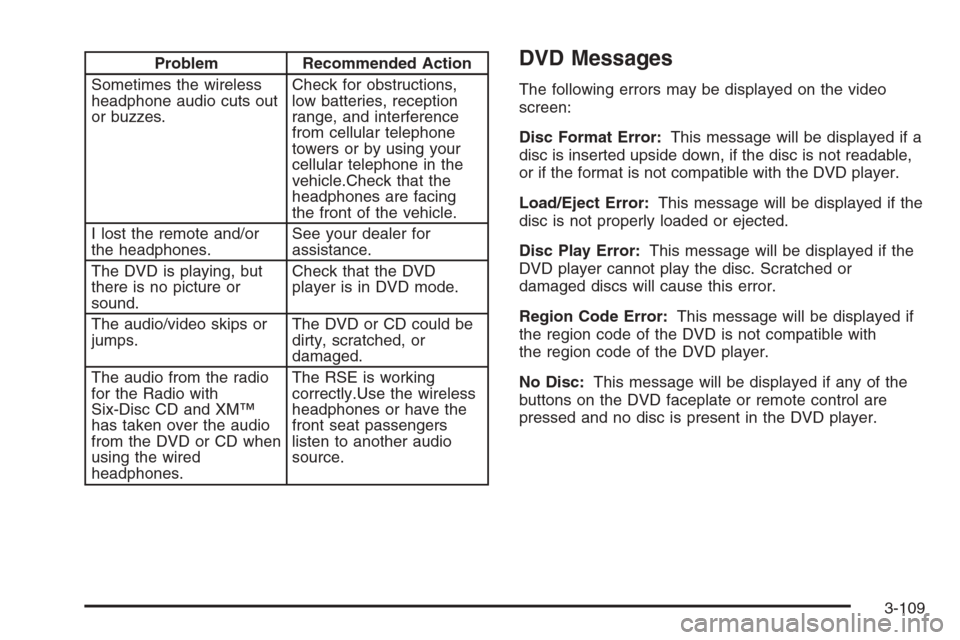
Problem Recommended Action
Sometimes the wireless
headphone audio cuts out
or buzzes.Check for obstructions,
low batteries, reception
range, and interference
from cellular telephone
towers or by using your
cellular telephone in the
vehicle.Check that the
headphones are facing
the front of the vehicle.
I lost the remote and/or
the headphones.See your dealer for
assistance.
The DVD is playing, but
there is no picture or
sound.Check that the DVD
player is in DVD mode.
The audio/video skips or
jumps.The DVD or CD could be
dirty, scratched, or
damaged.
The audio from the radio
for the Radio with
Six-Disc CD and XM™
has taken over the audio
from the DVD or CD when
using the wired
headphones.The RSE is working
correctly.Use the wireless
headphones or have the
front seat passengers
listen to another audio
source.DVD Messages
The following errors may be displayed on the video
screen:
Disc Format Error:This message will be displayed if a
disc is inserted upside down, if the disc is not readable,
or if the format is not compatible with the DVD player.
Load/Eject Error:This message will be displayed if the
disc is not properly loaded or ejected.
Disc Play Error:This message will be displayed if the
DVD player cannot play the disc. Scratched or
damaged discs will cause this error.
Region Code Error:This message will be displayed if
the region code of the DVD is not compatible with
the region code of the DVD player.
No Disc:This message will be displayed if any of the
buttons on the DVD faceplate or remote control are
pressed and no disc is present in the DVD player.
3-109
Page 348 of 532
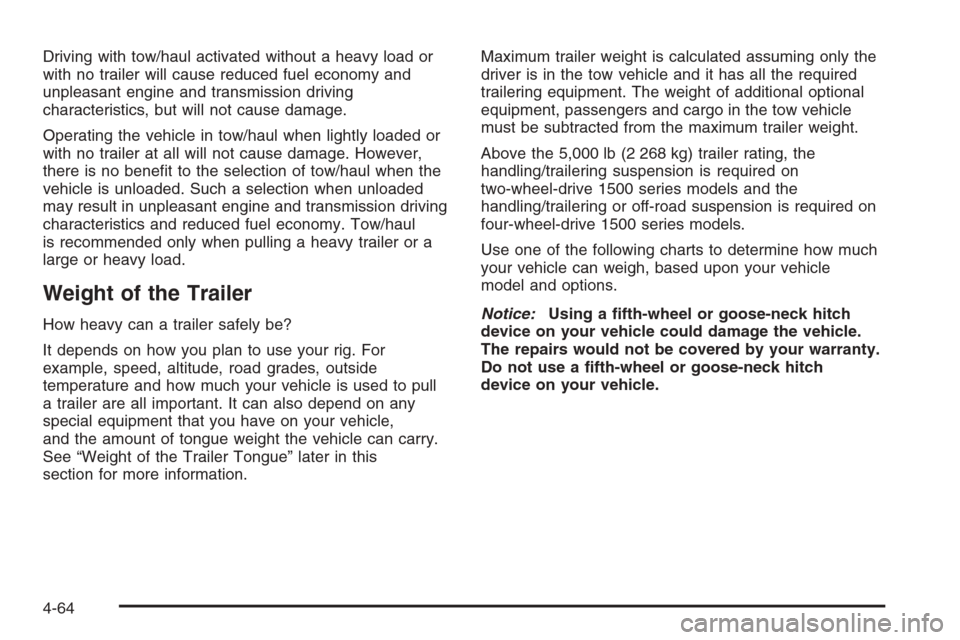
Driving with tow/haul activated without a heavy load or
with no trailer will cause reduced fuel economy and
unpleasant engine and transmission driving
characteristics, but will not cause damage.
Operating the vehicle in tow/haul when lightly loaded or
with no trailer at all will not cause damage. However,
there is no benet to the selection of tow/haul when the
vehicle is unloaded. Such a selection when unloaded
may result in unpleasant engine and transmission driving
characteristics and reduced fuel economy. Tow/haul
is recommended only when pulling a heavy trailer or a
large or heavy load.
Weight of the Trailer
How heavy can a trailer safely be?
It depends on how you plan to use your rig. For
example, speed, altitude, road grades, outside
temperature and how much your vehicle is used to pull
a trailer are all important. It can also depend on any
special equipment that you have on your vehicle,
and the amount of tongue weight the vehicle can carry.
See “Weight of the Trailer Tongue” later in this
section for more information.Maximum trailer weight is calculated assuming only the
driver is in the tow vehicle and it has all the required
trailering equipment. The weight of additional optional
equipment, passengers and cargo in the tow vehicle
must be subtracted from the maximum trailer weight.
Above the 5,000 lb (2 268 kg) trailer rating, the
handling/trailering suspension is required on
two-wheel-drive 1500 series models and the
handling/trailering or off-road suspension is required on
four-wheel-drive 1500 series models.
Use one of the following charts to determine how much
your vehicle can weigh, based upon your vehicle
model and options.
Notice:Using a fth-wheel or goose-neck hitch
device on your vehicle could damage the vehicle.
The repairs would not be covered by your warranty.
Do not use a fth-wheel or goose-neck hitch
device on your vehicle.
4-64
Page 511 of 532
Courtesy Transportation is available only at participating
dealers and all program options, such as shuttle
service, may not be available at every dealer. Please
contact your dealer for specic information about
availability. All Courtesy Transportation arrangements
will be administered by appropriate dealer personnel.
Canadian Vehicles:For warranty repairs during
the Complete Vehicle Coverage period of the General
Motors of Canada New Vehicle Limited Warranty,
alternative transportation may be available under the
Courtesy Transportation Program. Please consult
your dealer for details.
General Motors reserves the right to unilaterally modify,
change or discontinue Courtesy Transportation at
any time and to resolve all questions of claim eligibility
pursuant to the terms and conditions described
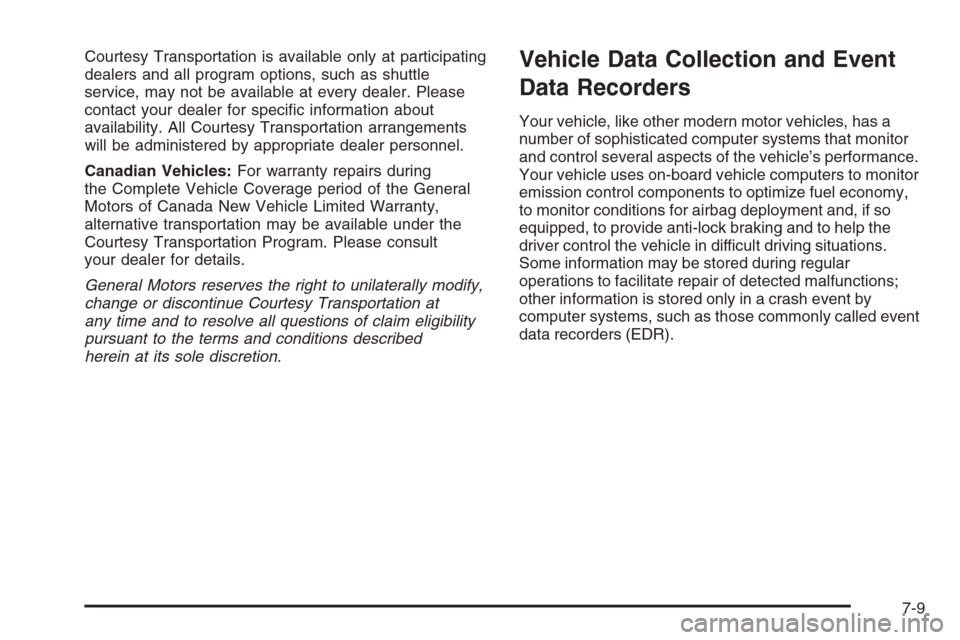
herein at its sole discretion.Vehicle Data Collection and Event
Data Recorders
Your vehicle, like other modern motor vehicles, has a
number of sophisticated computer systems that monitor
and control several aspects of the vehicle’s performance.
Your vehicle uses on-board vehicle computers to monitor
emission control components to optimize fuel economy,
to monitor conditions for airbag deployment and, if so
equipped, to provide anti-lock braking and to help the
driver control the vehicle in difficult driving situations.
Some information may be stored during regular
operations to facilitate repair of detected malfunctions;
other information is stored only in a crash event by
computer systems, such as those commonly called event
data recorders (EDR).
7-9
Page 523 of 532
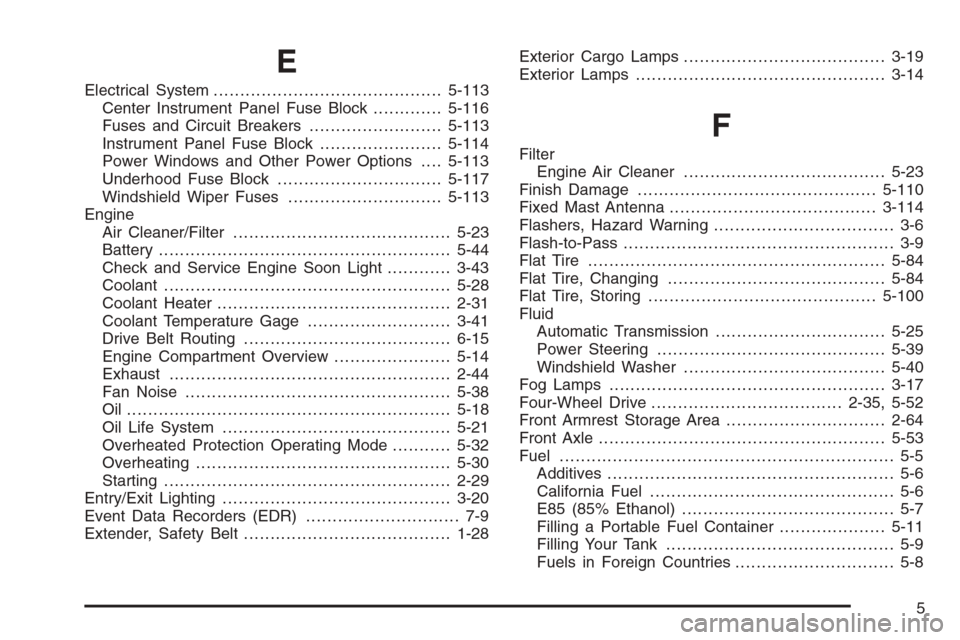
E
Electrical System...........................................5-113
Center Instrument Panel Fuse Block.............5-116
Fuses and Circuit Breakers.........................5-113
Instrument Panel Fuse Block.......................5-114
Power Windows and Other Power Options....5-113
Underhood Fuse Block...............................5-117
Windshield Wiper Fuses.............................5-113
Engine
Air Cleaner/Filter.........................................5-23
Battery.......................................................5-44
Check and Service Engine Soon Light............3-43
Coolant......................................................5-28
Coolant Heater............................................2-31
Coolant Temperature Gage...........................3-41
Drive Belt Routing.......................................6-15
Engine Compartment Overview......................5-14
Exhaust.....................................................2-44
Fan Noise..................................................5-38
Oil .............................................................5-18
Oil Life System...........................................5-21
Overheated Protection Operating Mode...........5-32
Overheating................................................5-30
Starting......................................................2-29
Entry/Exit Lighting...........................................3-20
Event Data Recorders (EDR)............................. 7-9
Extender, Safety Belt.......................................1-28Exterior Cargo Lamps......................................3-19
Exterior Lamps...............................................3-14
F
Filter
Engine Air Cleaner......................................5-23
Finish Damage.............................................5-110
Fixed Mast Antenna.......................................3-114
Flashers, Hazard Warning.................................. 3-6
Flash-to-Pass................................................... 3-9
Flat Tire........................................................5-84
Flat Tire, Changing.........................................5-84
Flat Tire, Storing...........................................5-100
Fluid
Automatic Transmission................................5-25
Power Steering...........................................5-39
Windshield Washer......................................5-40
Fog Lamps ....................................................3-17
Four-Wheel Drive....................................2-35, 5-52
Front Armrest Storage Area..............................2-64
Front Axle......................................................5-53
Fuel............................................................... 5-5
Additives...................................................... 5-6
California Fuel.............................................. 5-6
E85 (85% Ethanol)........................................ 5-7
Filling a Portable Fuel Container....................5-11
Filling Your Tank........................................... 5-9
Fuels in Foreign Countries.............................. 5-8
5
Page 527 of 532
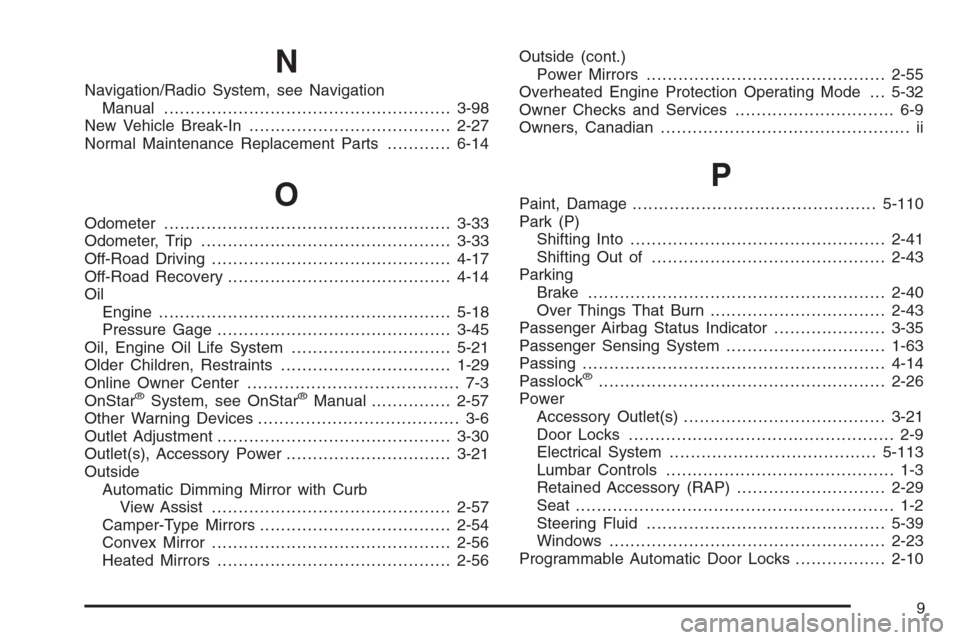
N
Navigation/Radio System, see Navigation
Manual......................................................3-98
New Vehicle Break-In......................................2-27
Normal Maintenance Replacement Parts............6-14
O
Odometer......................................................3-33
Odometer, Trip...............................................3-33
Off-Road Driving.............................................4-17
Off-Road Recovery..........................................4-14
Oil
Engine.......................................................5-18
Pressure Gage............................................3-45
Oil, Engine Oil Life System..............................5-21
Older Children, Restraints................................1-29
Online Owner Center........................................ 7-3
OnStar
®System, see OnStar®Manual...............2-57
Other Warning Devices...................................... 3-6
Outlet Adjustment............................................3-30
Outlet(s), Accessory Power...............................3-21
Outside
Automatic Dimming Mirror with Curb
View Assist.............................................2-57
Camper-Type Mirrors....................................2-54
Convex Mirror.............................................2-56
Heated Mirrors............................................2-56Outside (cont.)
Power Mirrors.............................................2-55
Overheated Engine Protection Operating Mode . . . 5-32
Owner Checks and Services.............................. 6-9
Owners, Canadian............................................... ii
P
Paint, Damage..............................................5-110
Park (P)
Shifting Into................................................2-41
Shifting Out of............................................2-43
Parking
Brake........................................................2-40
Over Things That Burn.................................2-43
Passenger Airbag Status Indicator.....................3-35
Passenger Sensing System..............................1-63
Passing.........................................................4-14
Passlock
®......................................................2-26
Power
Accessory Outlet(s)......................................3-21
Door Locks.................................................. 2-9
Electrical System.......................................5-113
Lumbar Controls........................................... 1-3
Retained Accessory (RAP)............................2-29
Seat............................................................ 1-2
Steering Fluid.............................................5-39
Windows....................................................2-23
Programmable Automatic Door Locks.................2-10
9
Page 531 of 532
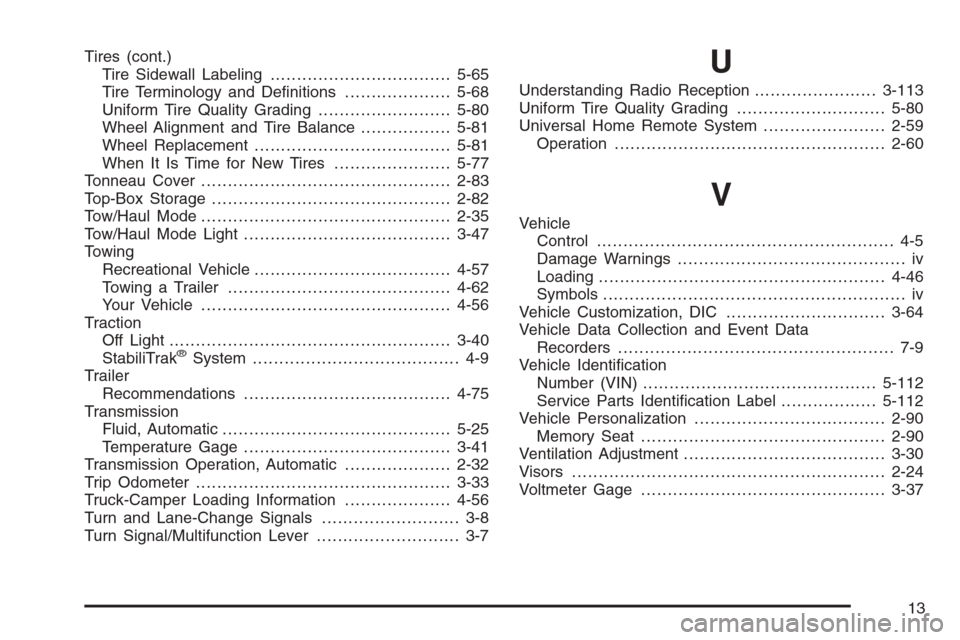
Tires (cont.)
Tire Sidewall Labeling..................................5-65
Tire Terminology and Denitions....................5-68
Uniform Tire Quality Grading.........................5-80
Wheel Alignment and Tire Balance.................5-81
Wheel Replacement.....................................5-81
When It Is Time for New Tires......................5-77
Tonneau Cover...............................................2-83
Top-Box Storage.............................................2-82
Tow/Haul Mode ...............................................2-35
Tow/Haul Mode Light.......................................3-47
Towing
Recreational Vehicle.....................................4-57
Towing a Trailer..........................................4-62
Your Vehicle...............................................4-56
Traction
Off Light.....................................................3-40
StabiliTrak
®System....................................... 4-9
Trailer
Recommendations.......................................4-75
Transmission
Fluid, Automatic...........................................5-25
Temperature Gage.......................................3-41
Transmission Operation, Automatic....................2-32
Trip Odometer................................................3-33
Truck-Camper Loading Information....................4-56
Turn and Lane-Change Signals.......................... 3-8
Turn Signal/Multifunction Lever........................... 3-7
U
Understanding Radio Reception.......................3-113
Uniform Tire Quality Grading............................5-80
Universal Home Remote System.......................2-59
Operation...................................................2-60
V
Vehicle
Control........................................................ 4-5
Damage Warnings........................................... iv
Loading......................................................4-46
Symbols......................................................... iv
Vehicle Customization, DIC..............................3-64
Vehicle Data Collection and Event Data
Recorders.................................................... 7-9
Vehicle Identication
Number (VIN)............................................5-112
Service Parts Identication Label..................5-112
Vehicle Personalization....................................2-90
Memory Seat..............................................2-90
Ventilation Adjustment......................................3-30
Visors...........................................................2-24
Voltmeter Gage..............................................3-37
13