check engine light CHEVROLET BLAZER 2005 2.G User Guide
[x] Cancel search | Manufacturer: CHEVROLET, Model Year: 2005, Model line: BLAZER, Model: CHEVROLET BLAZER 2005 2.GPages: 436, PDF Size: 2.55 MB
Page 210 of 436
Anti-Lock Brake System (ABS)
Your vehicle has anti-lock brakes. ABS is an advanced
electronic braking system that will help prevent a
braking skid.
When you start your engine and begin to drive away,
your anti-lock brake system will check itself. You
may hear a momentary motor or clicking noise while
this test is going on. This is normal.
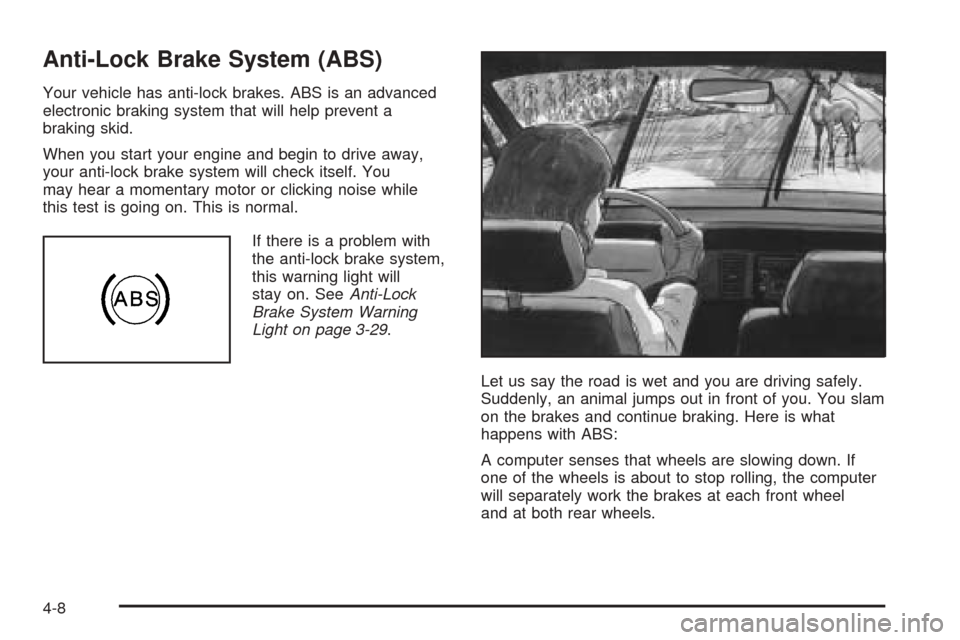
If there is a problem with
the anti-lock brake system,
this warning light will
stay on. SeeAnti-Lock
Brake System Warning
Light on page 3-29.
Let us say the road is wet and you are driving safely.
Suddenly, an animal jumps out in front of you. You slam
on the brakes and continue braking. Here is what
happens with ABS:
A computer senses that wheels are slowing down. If
one of the wheels is about to stop rolling, the computer
will separately work the brakes at each front wheel
and at both rear wheels.
4-8
Page 245 of 436
{CAUTION:
Snow can trap exhaust gases under your
vehicle. This can cause deadly CO (carbon
monoxide) gas to get inside. CO could
overcome you and kill you. You cannot see it
or smell it, so you might not know it is in your
vehicle. Clear away snow from around the
base of your vehicle, especially any that is
blocking your exhaust pipe. And check around
again from time to time to be sure snow does
not collect there.
Open a window just a little on the side of the
vehicle that is away from the wind. This will
help keep CO out.Run your engine only as long as you must. This saves
fuel. When you run the engine, make it go a little
faster than just idle. That is, push the accelerator
slightly. This uses less fuel for the heat that you get and
it keeps the battery charged. You will need a
well-charged battery to restart the vehicle, and possibly
for signaling later on with your headlamps. Let the
heater run for a while.
Then, shut the engine off and close the window almost
all the way to preserve the heat. Start the engine
again and repeat this only when you feel really
uncomfortable from the cold. But do it as little as
possible. Preserve the fuel as long as you can. To help
keep warm, you can get out of the vehicle and do
some fairly vigorous exercises every half hour or so until
help comes.
4-43
Page 272 of 436
Maintenance When Trailer Towing
Your vehicle will need service more often when you’re
pulling a trailer. See the Maintenance Schedule for more
on this. Things that are especially important in trailer
operation are automatic transmission uid (don’t overll),
engine oil, axle lubricant, belt, cooling system and
brake system. Each of these is covered in this manual,
and the Index will help you nd them quickly. If
you’re trailering, it’s a good idea to review these sections
before you start your trip.
Check periodically to see that all hitch nuts and bolts
are tight.
Trailer Wiring Harness
The light-duty trailer wiring is a six-wire harness
assembly. The optional heavy-duty trailer wiring is an
eight-wire harness assembly. The harnesses are stored
under the vehicle, along the passenger-side frame
crossmember on two-door vehicles or on the driver’s
side corner frame rear crossmember on four-door
vehicles. The heavy-duty trailer wiring is fused in the
engine compartment fuse block. SeeFuses and Circuit
Breakers on page 5-97. Both harnesses have no
connector and should be wired by a qualied electrical
technician. The technician can use the following
color code chart when connecting the wiring harness to
your trailer.
Dark Blue: Use for electric trailer brakes or auxiliary
wiring (eight-wire harness only).
Red: Use for battery charging; it connects to the
starter solenoid (eight-wire harness only).
Light Green: Back-up lamps.
Brown: Taillamps and parking lamps.
Yellow: Driver’s side stoplamp and turn signal.
Dark Green: Passenger’s side stoplamp and turn
signal.
White: Ground wire.
Light Blue: Auxiliary stoplamp.
Securely attach the harness to the trailer, then tape or
strap it to your vehicle’s frame rail. Be sure you
leave it loose enough so the wiring doesn’t bend or
break, but not so loose that it drags on the ground. Store
the harness in its original place. Wrap the harness
together and tie it neatly so it won’t be damaged.
4-70
Page 297 of 436
How to Check and Add Fluid
The proper uid should be added if the level does not
reach the bottom of the diaphragm when it is in place in
the reservoir. See the instructions on the reservoir cap.
Engine Coolant
The cooling system in your vehicle is lled with
DEX-COOL®engine coolant. This coolant is designed
to remain in your vehicle for ve years or 150,000 miles
(240 000 km), whichever occurs rst, if you add only
DEX-COOL
®extended life coolant.
The following explains your cooling system and how to
add coolant when it is low. If you have a problem
with engine overheating, seeEngine Overheating on
page 5-28.A 50/50 mixture of clean, drinkable water and
DEX-COOL
®coolant will:
Give freezing protection down to−34°F (−37°C).
Give boiling protection up to 265°F (129°C).
Protect against rust and corrosion.
Help keep the proper engine temperature.
Let the warning lights and gages work as they
should.
Notice:Using coolant other than DEX-COOL
®may
cause premature engine, heater core or radiator
corrosion. In addition, the engine coolant may
require changing sooner, at 30,000 miles (50 000 km)
or 24 months, whichever occurs rst. Any repairs
would not be covered by your warranty. Always use
DEX-COOL
®(silicate-free) coolant in your vehicle.
5-25
Page 315 of 436
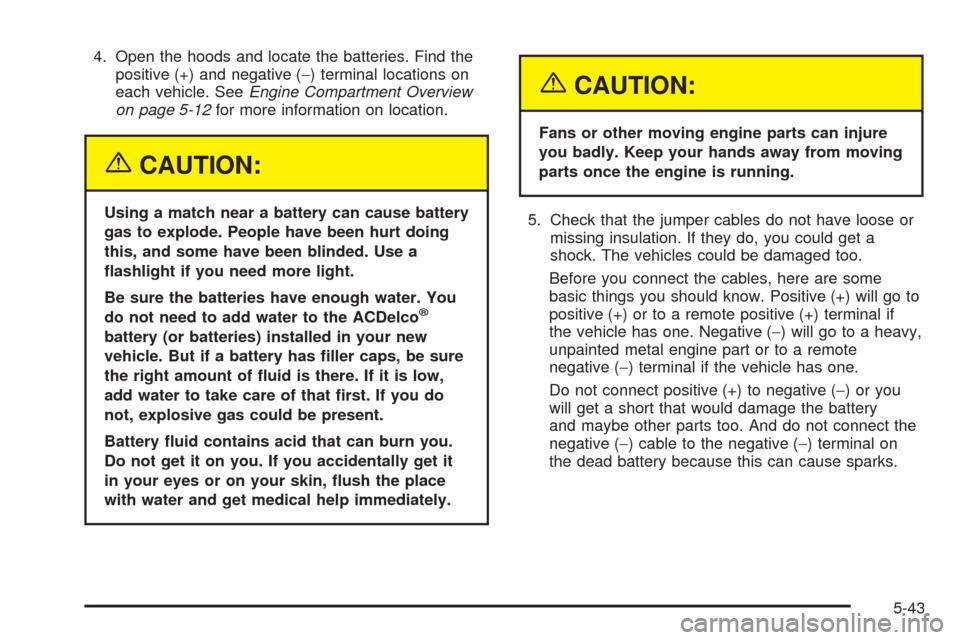
4. Open the hoods and locate the batteries. Find the
positive (+) and negative (−) terminal locations on
each vehicle. SeeEngine Compartment Overview
on page 5-12for more information on location.
{CAUTION:
Using a match near a battery can cause battery
gas to explode. People have been hurt doing
this, and some have been blinded. Use a
ashlight if you need more light.
Be sure the batteries have enough water. You
do not need to add water to the ACDelco
®
battery (or batteries) installed in your new
vehicle. But if a battery has ller caps, be sure
the right amount of uid is there. If it is low,
add water to take care of that rst. If you do
not, explosive gas could be present.
Battery uid contains acid that can burn you.
Do not get it on you. If you accidentally get it
in your eyes or on your skin, ush the place
with water and get medical help immediately.
{CAUTION:
Fans or other moving engine parts can injure
you badly. Keep your hands away from moving
parts once the engine is running.
5. Check that the jumper cables do not have loose or
missing insulation. If they do, you could get a
shock. The vehicles could be damaged too.
Before you connect the cables, here are some
basic things you should know. Positive (+) will go to
positive (+) or to a remote positive (+) terminal if
the vehicle has one. Negative (−) will go to a heavy,
unpainted metal engine part or to a remote
negative (−) terminal if the vehicle has one.
Do not connect positive (+) to negative (−)oryou
will get a short that would damage the battery
and maybe other parts too. And do not connect the
negative (−) cable to the negative (−) terminal on
the dead battery because this can cause sparks.
5-43
Page 424 of 436
Audio System(s) (cont.)
Setting the Time for Radios without Radio
Data Systems (RDS)................................3-40
Theft-Deterrent Feature................................3-74
Understanding Radio Reception.....................3-75
Automatic Headlamp System............................3-15
Automatic Transmission
Fluid..........................................................5-19
Operation...................................................2-24
B
Battery..........................................................5-41
Run-Down Protection...................................3-17
Before Leaving on a Long Trip.........................4-36
Brake
Anti-Lock Brake System (ABS)........................ 4-8
Emergencies................................................ 4-9
Parking......................................................2-36
System Inspection.......................................6-31
System Warning Light..................................3-28
Brakes..........................................................5-38
Braking........................................................... 4-7
Braking in Emergencies..................................... 4-9
Break-In, New Vehicle.....................................2-19
Bulb Replacement...........................................5-49
Halogen Bulbs............................................5-49
Headlamps.................................................5-49
One-Piece Front Turn Signal Lamps...............5-51Bulb Replacement (cont.)
Replacement Bulbs......................................5-53
Taillamps....................................................5-53
Two-Piece Front Turn Signal Lamps...............5-52
Buying New Tires...........................................5-66
C
California Fuel.................................................. 5-6
Canadian Owners................................................ ii
Capacities and Specications..........................5-102
Carbon Monoxide...................2-12, 2-40, 4-40, 4-59
Care of
Safety Belts................................................5-89
Your Cassette Tape Player............................3-75
Your CD Player...........................................3-76
Your CDs ...................................................3-76
Cargo Tie Downs............................................2-55
Center Front Passenger Position, Safety Belts....1-22
Center Rear Passenger Position, Safety Belts.....1-26
Center Seat Positions, Child Restraints..............1-49
Chains, Tire...................................................5-70
Charging System Light....................................3-26
Check
Engine Light...............................................3-30
Gages Warning Light...................................3-35
Checking Things Under the Hood......................5-10
Chemical Paint Spotting...................................5-93
2
Page 426 of 436
Customer Assistance Information (cont.)
Reporting Safety Defects to the United States
Government............................................7-10
Roadside Assistance Program......................... 7-6
Service Publications Ordering Information........7-11
D
Daytime Running Lamps..................................3-14
Defensive Driving............................................. 4-3
Doing Your Own Service Work........................... 5-4
Dome Lamps.................................................3-16
Door
Locks.......................................................... 2-8
Power Door Locks......................................... 2-9
Programmable Automatic Door Locks............... 2-9
Rear Door Security Locks.............................2-11
Driver
Position, Safety Belt.....................................1-14
Driver Behavior................................................ 4-2
Driver Information Center (DIC).........................3-37
Driving
At Night.....................................................4-30
City...........................................................4-34
Defensive..................................................... 4-3
Drunken....................................................... 4-4
Environment................................................. 4-2
Freeway.....................................................4-35
Hill and Mountain Roads..............................4-38
In Rain and on Wet Roads...........................4-32Driving (cont.)
Recovery Hooks..........................................4-45
Rocking Your Vehicle to Get it Out.................4-44
Winter........................................................4-40
E
Electrical System
Add-On Equipment......................................5-96
Engine Compartment Fuse Block...................5-99
Fuses and Circuit Breakers...........................5-97
Headlamps.................................................5-96
Instrument Panel Fuse Block.........................5-98
Power Windows and Other Power Options......5-97
Windshield Wiper Fuses...............................5-97
Engine
Air Cleaner/Filter.........................................5-18
Battery.......................................................5-41
Check and Service Engine Soon Light............3-30
Coolant......................................................5-25
Coolant Heater............................................2-23
Coolant Temperature Gage...........................3-29
Cooling System Inspection............................6-30
Engine Compartment Overview......................5-12
Exhaust.....................................................2-40
Fan Noise..................................................5-35
Oil .............................................................5-13
Overheating................................................5-28
Starting......................................................2-21
4
Page 427 of 436
Entry Lighting.................................................3-17
Event Data Recorders (EDR)............................. 7-9
Exit Lighting...................................................3-17
Extender, Safety Belt.......................................1-29
Exterior Lamps...............................................3-13
F
Filter
Engine Air Cleaner......................................5-18
Finish Damage...............................................5-93
Fixed Mast Antenna........................................3-76
Flash-to-Pass................................................... 3-8
Flat Tire........................................................5-71
Flat Tire, Changing.........................................5-72
Flat Tire, Storing.............................................5-81
Fluid
Automatic Transmission................................5-19
Manual Transmission....................................5-22
Power Steering...........................................5-36
Windshield Washer......................................5-37
Fog Lamps....................................................3-16
Four-Wheel Drive....................................2-29, 5-47
Front Axle......................................................5-48
Front Reading Lamps......................................3-17
Front Storage Area.........................................2-52Fuel............................................................... 5-5
Additives...................................................... 5-6
California Fuel.............................................. 5-6
Filling a Portable Fuel Container....................5-10
Filling Your Tank........................................... 5-8
Fuels in Foreign Countries.............................. 5-7
Gage.........................................................3-36
Gasoline Octane........................................... 5-5
Gasoline Specications.................................. 5-5
Low Warning Light.......................................3-36
System Inspection.......................................6-30
Fuses
Engine Compartment Fuse Block...................5-99
Fuses and Circuit Breakers...........................5-97
Instrument Panel Fuse Block.........................5-98
Windshield Wiper.........................................5-97
G
Gage
Check Gages Warning Light..........................3-35
Engine Coolant Temperature.........................3-29
Fuel..........................................................3-36
Oil Pressure...............................................3-32
Speedometer..............................................3-24
Tachometer.................................................3-24
Voltmeter Gage...........................................3-26
Garage Door Opener.......................................2-44
5
Page 428 of 436
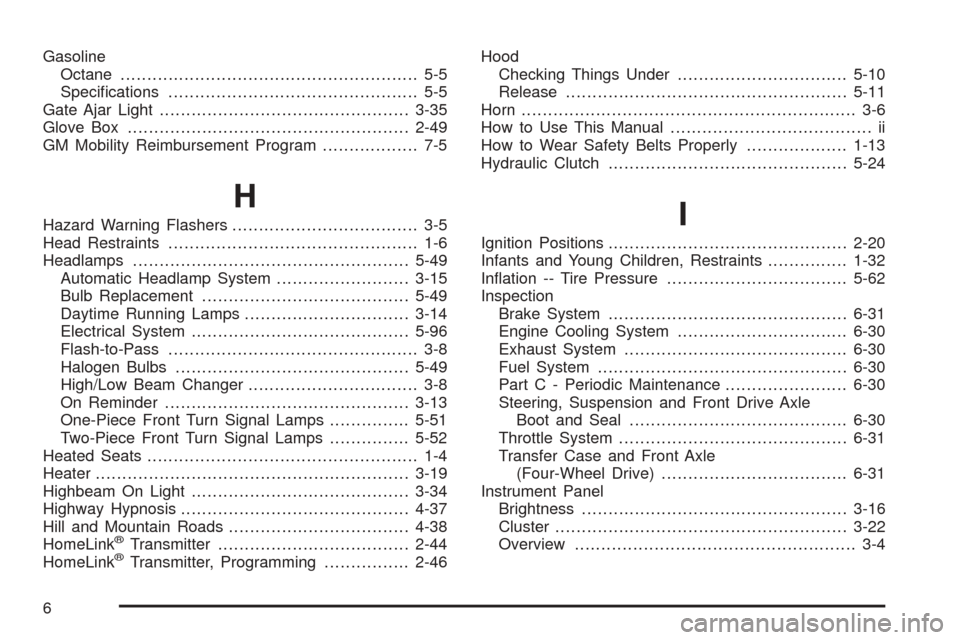
Gasoline
Octane........................................................ 5-5
Specications............................................... 5-5
Gate Ajar Light...............................................3-35
Glove Box.....................................................2-49
GM Mobility Reimbursement Program.................. 7-5
H
Hazard Warning Flashers................................... 3-5
Head Restraints............................................... 1-6
Headlamps....................................................5-49
Automatic Headlamp System.........................3-15
Bulb Replacement.......................................5-49
Daytime Running Lamps...............................3-14
Electrical System.........................................5-96
Flash-to-Pass............................................... 3-8
Halogen Bulbs............................................5-49
High/Low Beam Changer................................ 3-8
On Reminder..............................................3-13
One-Piece Front Turn Signal Lamps...............5-51
Two-Piece Front Turn Signal Lamps...............5-52
Heated Seats................................................... 1-4
Heater...........................................................3-19
Highbeam On Light.........................................3-34
Highway Hypnosis...........................................4-37
Hill and Mountain Roads..................................4-38
HomeLink
®Transmitter....................................2-44
HomeLink®Transmitter, Programming................2-46Hood
Checking Things Under................................5-10
Release.....................................................5-11
Horn............................................................... 3-6
How to Use This Manual...................................... ii
How to Wear Safety Belts Properly...................1-13
Hydraulic Clutch.............................................5-24
I
Ignition Positions.............................................2-20
Infants and Young Children, Restraints...............1-32
Ination -- Tire Pressure..................................5-62
Inspection
Brake System.............................................6-31
Engine Cooling System................................6-30
Exhaust System..........................................6-30
Fuel System...............................................6-30
Part C - Periodic Maintenance.......................6-30
Steering, Suspension and Front Drive Axle
Boot and Seal.........................................6-30
Throttle System...........................................6-31
Transfer Case and Front Axle
(Four-Wheel Drive)...................................6-31
Instrument Panel
Brightness..................................................3-16
Cluster.......................................................3-22
Overview..................................................... 3-4
6
Page 430 of 436
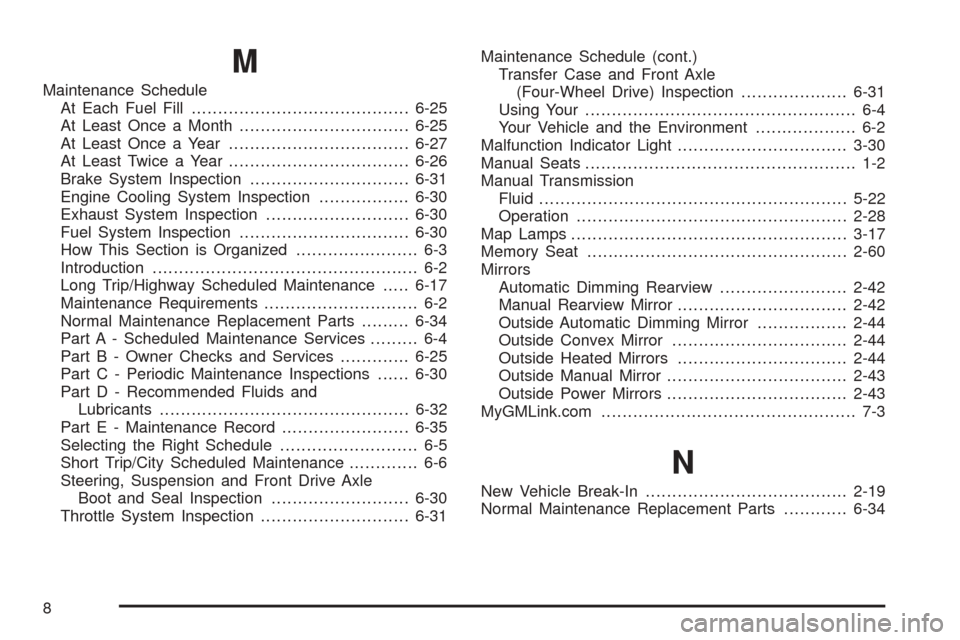
M
Maintenance Schedule
At Each Fuel Fill.........................................6-25
At Least Once a Month................................6-25
At Least Once a Year..................................6-27
At Least Twice a Year..................................6-26
Brake System Inspection..............................6-31
Engine Cooling System Inspection.................6-30
Exhaust System Inspection...........................6-30
Fuel System Inspection................................6-30
How This Section is Organized....................... 6-3
Introduction.................................................. 6-2
Long Trip/Highway Scheduled Maintenance.....6-17
Maintenance Requirements............................. 6-2
Normal Maintenance Replacement Parts.........6-34
Part A - Scheduled Maintenance Services......... 6-4
Part B - Owner Checks and Services.............6-25
Part C - Periodic Maintenance Inspections......6-30
Part D - Recommended Fluids and
Lubricants...............................................6-32
Part E - Maintenance Record........................6-35
Selecting the Right Schedule.......................... 6-5
Short Trip/City Scheduled Maintenance............. 6-6
Steering, Suspension and Front Drive Axle
Boot and Seal Inspection..........................6-30
Throttle System Inspection............................6-31Maintenance Schedule (cont.)
Transfer Case and Front Axle
(Four-Wheel Drive) Inspection....................6-31
Using Your................................................... 6-4
Your Vehicle and the Environment................... 6-2
Malfunction Indicator Light................................3-30
Manual Seats................................................... 1-2
Manual Transmission
Fluid..........................................................5-22
Operation...................................................2-28
Map Lamps....................................................3-17
Memory Seat.................................................2-60
Mirrors
Automatic Dimming Rearview........................2-42
Manual Rearview Mirror................................2-42
Outside Automatic Dimming Mirror.................2-44
Outside Convex Mirror.................................2-44
Outside Heated Mirrors................................2-44
Outside Manual Mirror..................................2-43
Outside Power Mirrors..................................2-43
MyGMLink.com................................................ 7-3
N
New Vehicle Break-In......................................2-19
Normal Maintenance Replacement Parts............6-34
8