oil CHEVROLET CAMARO 1982 Repair Guide
[x] Cancel search | Manufacturer: CHEVROLET, Model Year: 1982, Model line: CAMARO, Model: CHEVROLET CAMARO 1982Pages: 875, PDF Size: 88.64 MB
Page 294 of 875

GM – CAMARO 1982-1992 – Repair Guide (Checked by WxMax) 294
25. Connect the negative battery cable at the battery.
CLUTCH
UNDERSTANDING THE CLUTCH
The purpose of the clutch is to disconnect and connect engine power at the
transmission. A vehicle at rest requires a lot of engine torque to get all that
weight moving. An internal combustion engine does not develop a high starting
torque (unlike steam engines) so it must be allowed to operate without any load
until it builds up enough torque to move the vehicle. To a point, torque
increases with engine rpm. The clutch a llows the engine to build up torque by
physically disconnecting t he engine from the transmission, relieving the engine
of any load or resistance.
The transfer of engine power to the tr ansmission (the load) must be smooth and
gradual; if it weren't, driv e line components would wear out or break quickly.
This gradual power transfer is made possi ble by gradually releasing the clutch
pedal. The clutch disc and pressure plat e are the connecting link between the
engine and transmission. When the clutch pedal is released, the disc and plate
contact each other (the clutch is engag ed) physically joining the engine and
transmission. When the pedal is pushed in, the disc and plate separate (the
clutch is disengaged) disconnecting the engine from the transmission.
Most clutch assemblies consists of t he flywheel, the clutch disc, the clutch
pressure plate, the throw out bearing and fork, the actuating linkage and the
pedal. The flywheel and clutch pressure plate (driving members) are connected
to the engine crankshaft and rotate with it. The clutch disc is located between
the flywheel and pressure plate, and is splined to the transmission shaft. A
driving member is one that is attached to the engine and transfers engine power
to a driven member (clutch disc) on t he transmission shaft. A driving member
(pressure plate) rotates (drives) a driv en member (clutch disc) on contact and,
in so doing, turns the transmission shaft.
There is a circular di aphragm spring within th e pressure plate cover
(transmission side). In a relaxed state (w hen the clutch pedal is fully released)
this spring is convex; that is, it is dished outward toward the transmission.
Pushing in the clutch peda l actuates the attached linkage. Connected to the
other end of this is the throw out fork, which hold the throw out bearing. When
the clutch pedal is depre ssed, the clutch linkage pushes the fork and bearing
forward to contact the diaphragm spring of the pressure plate. The outer edges
of the spring are secured to the pressure plate and are pivoted on rings so that
when the center of the spring is compre ssed by the throw out bearing, the outer
edges bow outward and, by so doing, pu ll the pressure plate in the same
direction - away from the clutch disc. This action se parates the disc from the
plate, disengaging the clutch and allowing the transmission to be shifted into
another gear. A coil type clutch return sp ring attached to the clutch pedal arm
permits full release of the pedal. Releasing the pedal pulls the throw out bearing
away from the diaphragm spring resulting in a reversal of spring position. As
bearing pressure is gradually released from the spring center, the outer edges
Page 309 of 875
GM – CAMARO 1982-1992 – Repair Guide (Checked by WxMax) 309
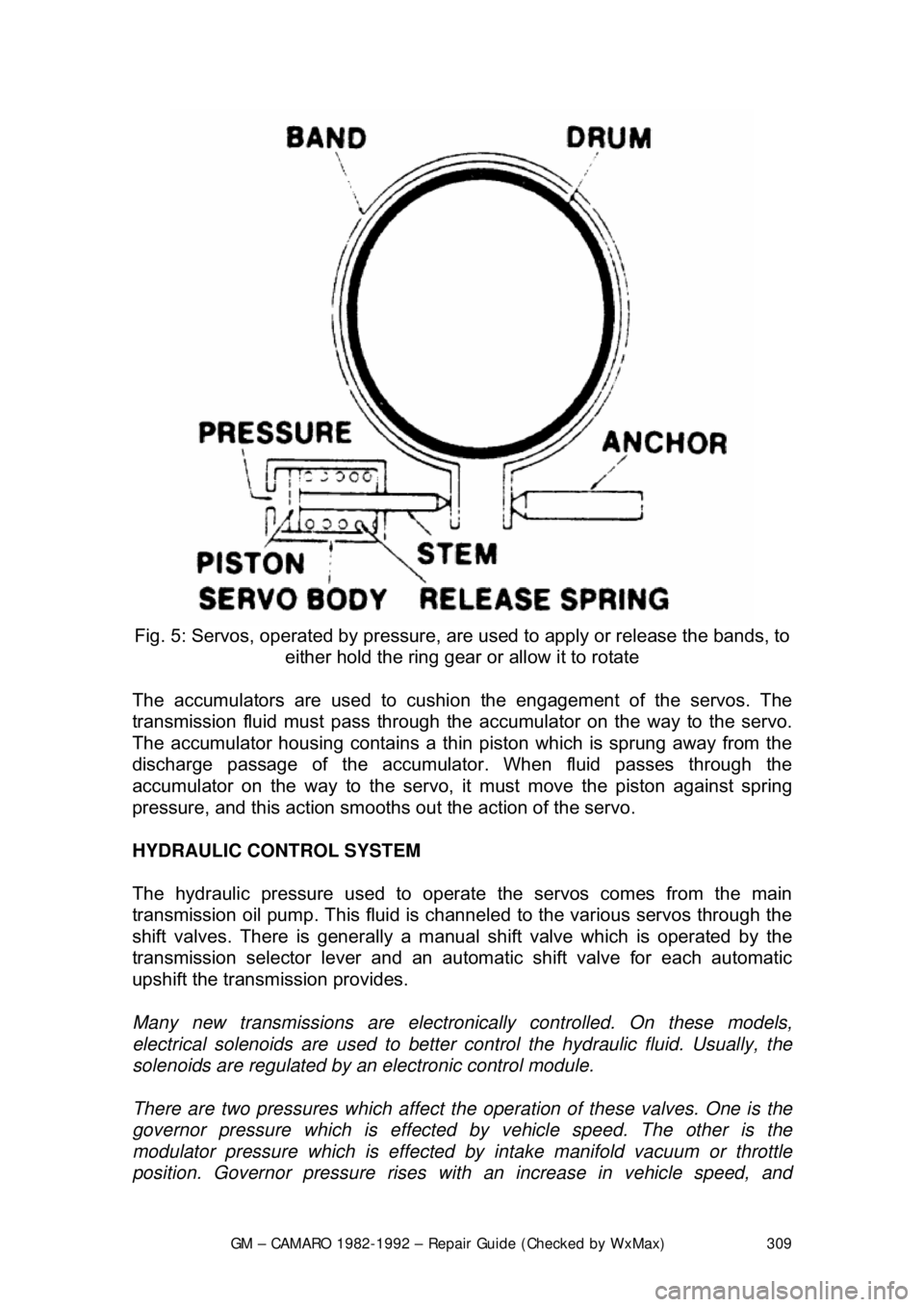
Fig. 5: Servos, operated by pressure, ar e used to apply or release the bands, to
either hold the ring gear or allow it to rotate
The accumulators are used to cushi on the engagement of the servos. The
transmission fluid must pass through the ac cumulator on the way to the servo.
The accumulator housing contains a thin piston which is sprung away from the
discharge passage of the accumulato r. When fluid passes through the
accumulator on the way to the servo, it must move the piston against spring
pressure, and this action smooths out the action of the servo.
HYDRAULIC CONTROL SYSTEM
The hydraulic pressure used to operat e the servos comes from the main
transmission oil pump. This fluid is channel ed to the various servos through the
shift valves. There is generally a manual shift valve which is operated by the
transmission selector lever and an automat ic shift valve for each automatic
upshift the transmission provides.
Many new transmissions are electroni cally controlled. On these models,
electrical solenoids are used to better control the hydraulic fluid. Usually, the
solenoids are regulated by an electronic control module.
There are two pressures which affect t he operation of these valves. One is the
governor pressure which is effected by vehicle speed. The other is the
modulator pressure which is effected by intake manifold vacuum or throttle
position. Governor pressure rises wit h an increase in vehicle speed, and
Page 317 of 875

GM – CAMARO 1982-1992 – Repair Guide (Checked by WxMax) 317
1. Place the shifter lever in the
P position. Remove the negative battery
cable.
2. Turn the key to RUN.
3. Remove the left side instrument panel sound insulator and kick panels.
4. Remove the floor console.
5. Remove the cable nut and clip. Remove the cable from the bracket, move the button to the UP position and unsnap the cable end from the
lever lock pin.
6. Lower the steering column. Remove the cable clips.
To install: 7. Place the shifter lever into the P position and the ignition key to the RUN
position.
8. After installing the cable ends, push the cable connector nose toward th\
e connector as far as possible and push down the lock button.
9. Complete the installation by reversing the removal procedure.
EXTENSION HOUSING SEAL (IN VEHICLE)
REMOVAL & INSTALLATION
This seal controls transmission oil leakage around the driveshaft. Continued
failure of this seal usually indicates a worn output shaft bushing. If so, there will
be signs of the same wear on the driveshaft where it contacts the seal and
bushing. The seal is available and is fairly simple to install, with the proper tool.
1. Raise and safely support rear of t he vehicle to minimize transmission oil
loss when the driveshaft is removed.
2. Unbolt the driveshaft fr om the differential and center support bearing, if
equipped. Wrap tape around the bearing cu ps to keep them in place on
the universal joint and slide the sh aft out of the transmission.
3. Use a small pry tool to carefully pr y out the old seal. Be careful not to
insert the tool too far into the hous ing or the bushing will be damaged.
4. Use an oil seal installation tool to evenly drive the new seal into the
housing. Make sure the tool only cont acts the outer metal portion of the
seal.
5. Install the driveshaft. Torque the uni versal bearing cup retainer bolts to
15 ft. lbs. (20 Nm). Recheck fluid level.
TRANSMISSION
REMOVAL & INSTALLATION 1. Disconnect the negative batte ry cable at the battery.
2. Remove the air cleaner assembly.
3. Disconnect the throttle valve (TV) control cable at the carburetor.
Page 318 of 875
GM – CAMARO 1982-1992 – Repair Guide (Checked by WxMax) 318
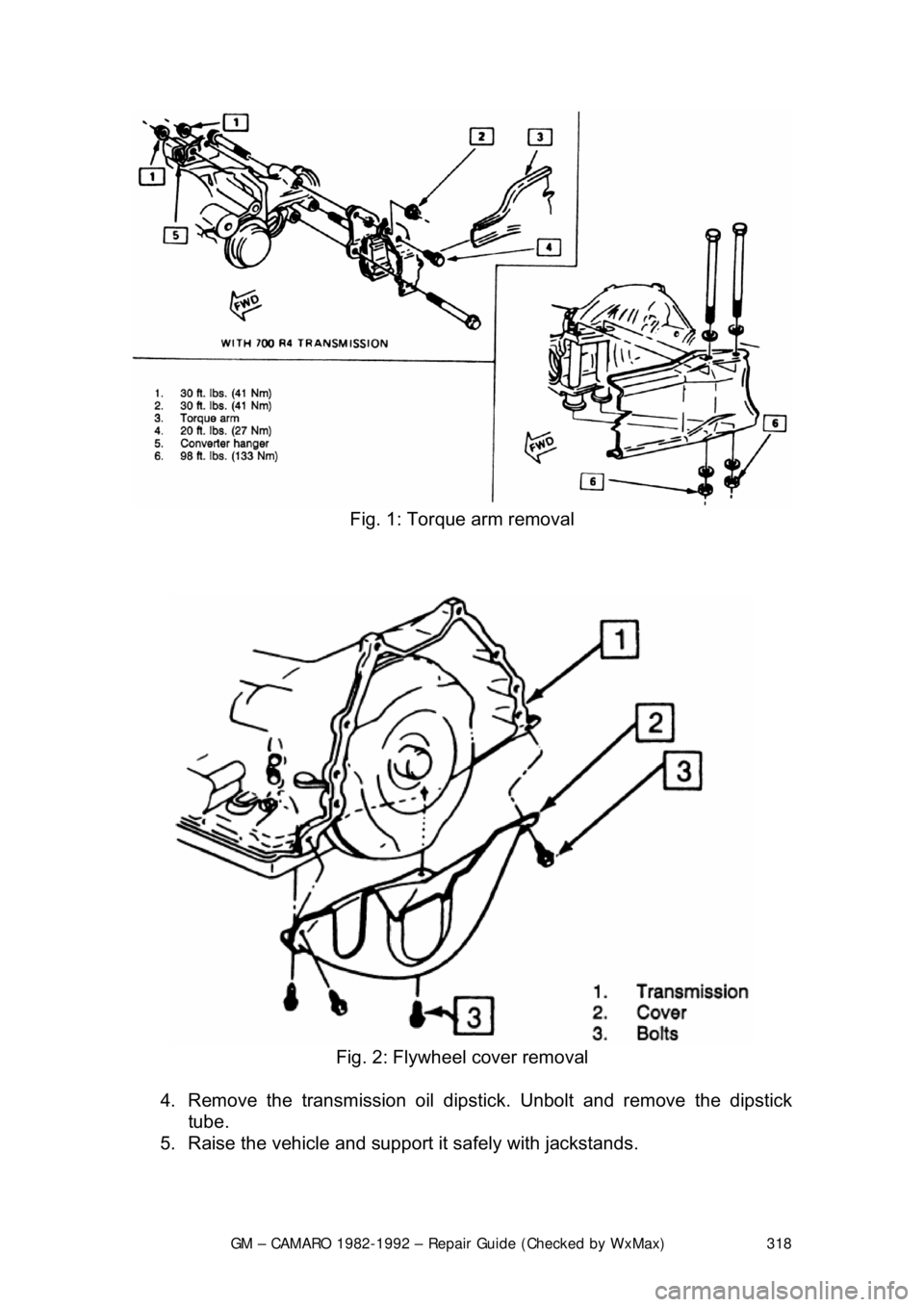
Fig. 1: Torque arm removal
Fig. 2: Flywheel cover removal
4. Remove the transmission oil dipsti ck. Unbolt and remove the dipstick
tube.
5. Raise the vehicle and support it safely with jackstands.
Page 321 of 875
GM – CAMARO 1982-1992 – Repair Guide (Checked by WxMax) 321
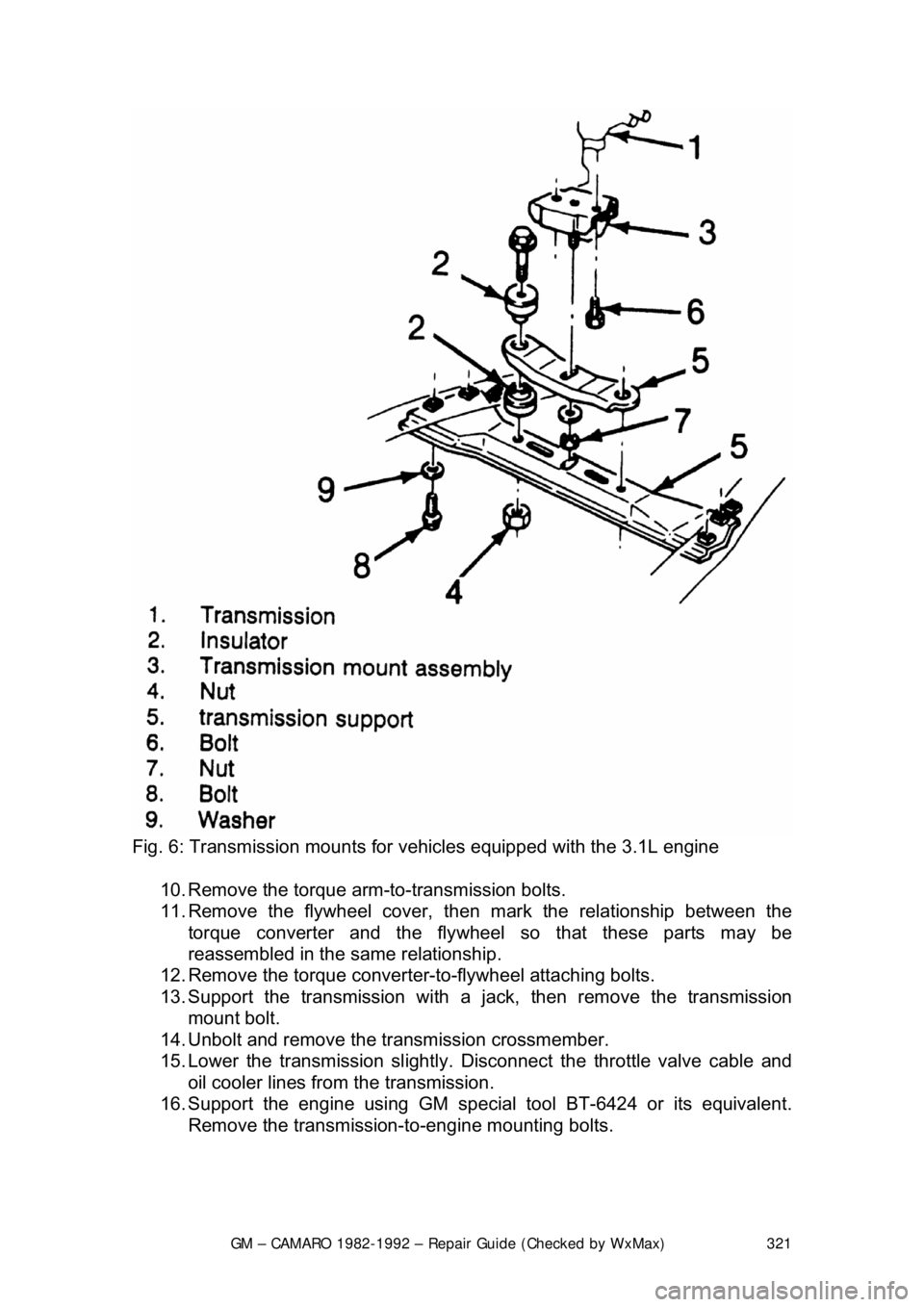
Fig. 6: Transmission mounts for vehi cles equipped with the 3.1L engine
10. Remove the torque arm-to-transmission bolts.
11. Remove the flywheel cover, t hen mark the relationship between the
torque converter and the flywheel so that these parts may be
reassembled in the same relationship.
12. Remove the torque converter-t o-flywheel attaching bolts.
13. Support the transmission with a ja ck, then remove the transmission
mount bolt.
14. Unbolt and remove the transmission crossmember.
15. Lower the transmission slightly. Disco nnect the throttle valve cable and
oil cooler lines from the transmission.
16. Support the engine using GM specia l tool BT-6424 or its equivalent.
Remove the transmission- to-engine mounting bolts.
Page 322 of 875

GM – CAMARO 1982-1992 – Repair Guide (Checked by WxMax) 322
CAUTION - The transmission must be secu red to the transmission jack
17. Remove the transmission from the vehicle. Be careful not to damage the oil cooler lines, throttle valve cable, or the shift control cable. Also, keep
the rear of the transmissi on lower than the front to avoid the possibility of
the torque converter disengagi ng from the transmission.
To install: 18. Position the transmission and converter into place.
19. Install the transmission -to-engine mounting bolts.
20. Connect the throttle valve cable and oil cooler lines to the transmissio\
n.
21. Install the transmission cro ssmember and secure with bolts.
22. Install the transmission mount bolt.
23. Matchmark the torque converter-to-f lywheel. Install the torque converter-
to-flywheel attaching bolts.
Before installing the converter-to-flywheel bolts, be sure that the weld nuts on
the converter are flush with the flywheel, and that the converter rotates freely by
hand in this position.
24. Install the flywheel cover.
25. Install the torque arm-to-transmission bolts.
26. Connect the speedometer cable, el ectrical connectors and the shift
control cable from the transmission.
27. Connect the catalytic converter s upport bracket at the transmission.
28. Align the matchmark m ade earlier, then install the driveshaft to the axle
pinion. Bolt the universal joint straps to the pinion flange.
29. Lower the vehicle.
30. Install the dipstick tube using a ne w dipstick tube O-ring and secure with
the bolt. Install the tran smission oil dipstick.
31. Connect the throttle valve (TV) c ontrol cable at the carburetor.
32. Install the air cleaner assembly.
33. Connect the negative battery cable at the battery.
DRIVELINE
DRIVESHAFT AND U-JOINTS
The U-joint is secured to the yoke in one of two ways. Dana and Cleveland
shafts use a conventional snapring to ho ld each bearing cup in the yoke. The
snapring fits into a groove located in eac h yoke end just on top of each bearing
cup. The Saginaw design shaft secures its U-joints in another way. Nylon
material is injected through a small hole in the yoke and flows along a circular
groove between the U-joint and the yoke , creating a synthetic snapring.
Disassembly of the Saginaw U-joint requi res the joint to be pressed from the
yoke. This results in damage to the be aring cups and destruction of the nylon
rings.
Page 323 of 875
GM – CAMARO 1982-1992 – Repair Guide (Checked by WxMax) 323
Replacement kits include new bearing
cups and conventional snaprings to
replace the original nylon rings. These replacement rings must go inboard of the
yoke in contrast to outboard mounting of the Dana and Cleveland designs.
Previous service to the Saginaw U-joints can be recognized by the presence of
snaprings inboard of the yoke.
Bad U-joints, requiring replacement, will produce a clunking sound when the car
is put into gear. This is due to worn needle bearings or a scored trunnion end
possibly caused by improper lubricati on during assembly. Camaro U-joints
require no periodic maintenance and theref ore have no lubrication fittings.
DRIVESHAFT
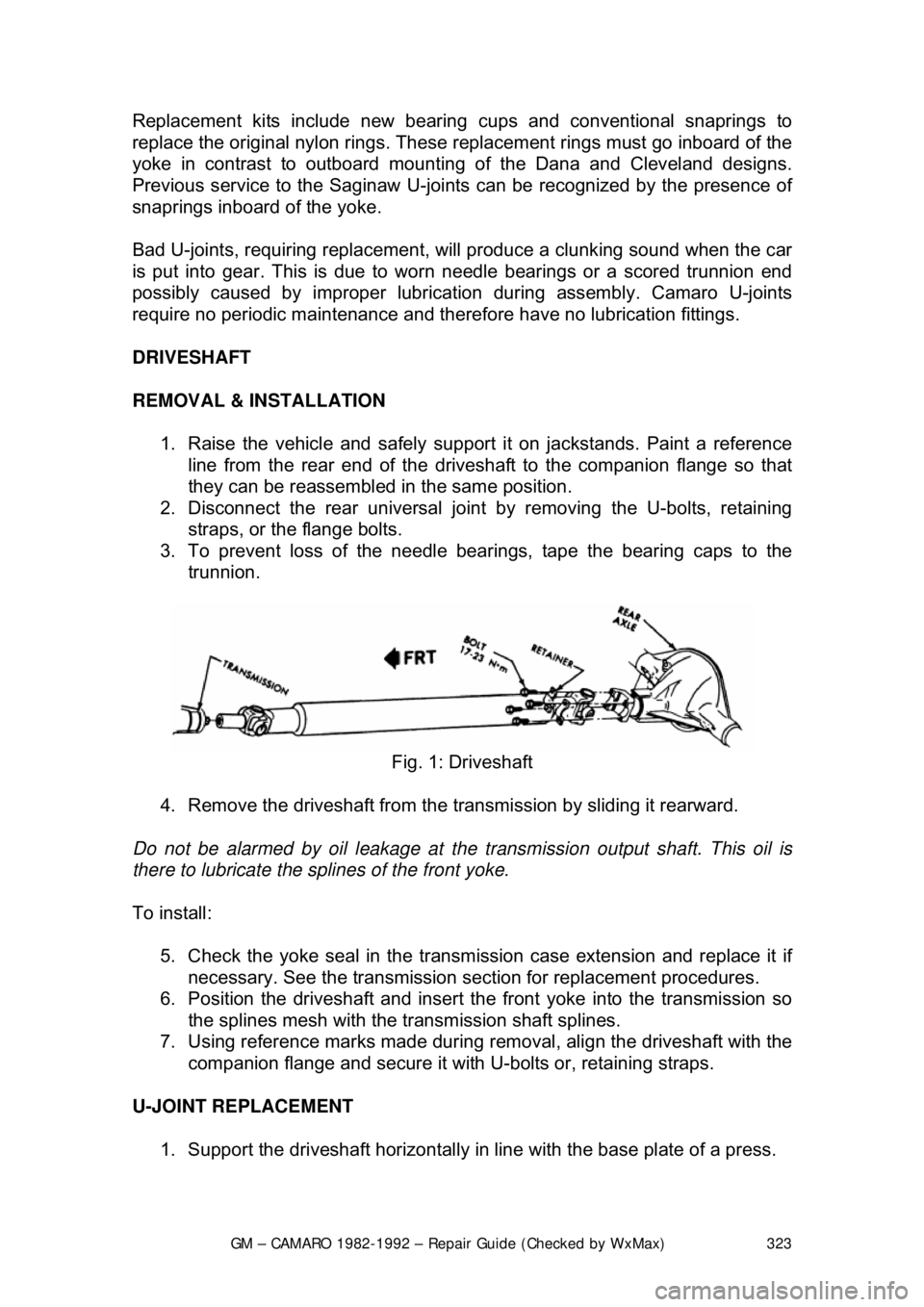
REMOVAL & INSTALLATION 1. Raise the vehicle and safely su pport it on jackstands. Paint a reference
line from the rear end of the drives haft to the companion flange so that
they can be reassembled in the same position.
2. Disconnect the rear universal join t by removing the U-bolts, retaining
straps, or the flange bolts.
3. To prevent loss of the needle bear ings, tape the bearing caps to the
trunnion.
Fig. 1: Driveshaft
4. Remove the driveshaft from the tr ansmission by sliding it rearward.
Do not be alarmed by oil l eakage at the transmission output shaft. This oil is
there to lubricate the sp lines of the front yoke.
To install: 5. Check the yoke seal in the transmi ssion case extension and replace it if
necessary. See the transmission sect ion for replacement procedures.
6. Position the driveshaft and insert t he front yoke into the transmission so
the splines mesh with the transmission shaft splines.
7. Using reference marks made during re moval, align the driveshaft with the
companion flange and secure it with U-bolts or, retaining straps.
U-JOINT REPLACEMENT 1. Support the driveshaft horizontally in line with the base plate of a press.
Page 328 of 875
GM – CAMARO 1982-1992 – Repair Guide (Checked by WxMax) 328
internal splines of each differential side
gear. As the side gears turn, so do the
axle shafts, and, since they are also connected, so do the wheels.
Each shaft passes through the side gear and is locked into place by either a C-
lock or flange plate bolted to the end of the axle housing with pressed on
bearings. As the name implies, the C-lock is a flat, C-shaped piece of metal that
fits into a groove at t he end of the shaft. A round pinion shaft is wedged in
between the end of the shafts. This pinion shaft prevents the shafts from sliding
inward and makes the C-locks functional by pushing them tightly against each
side gear. Removing this pini on shaft allows the shafts to slide inward making
the C-locks accessible for removal. Once the C-locks are removed, the axle
shafts can be pulled from the car.
The wheel end of each shaft is flanged and pressed into it are five wheel lug
bolts serving to hold on t he wheel. Each axle shaft is supported by an axle
bearing (wheel bearing) and oil seal located within the axle shaft housing just to
the outside of the br ake backing plate.
REMOVAL & INSTALLATION
EXCEPT BORG-WARNER REAR ASSEMBLY 1. Raise and support the vehicle safe ly. Remove the rear wheels and
drums or rotors.
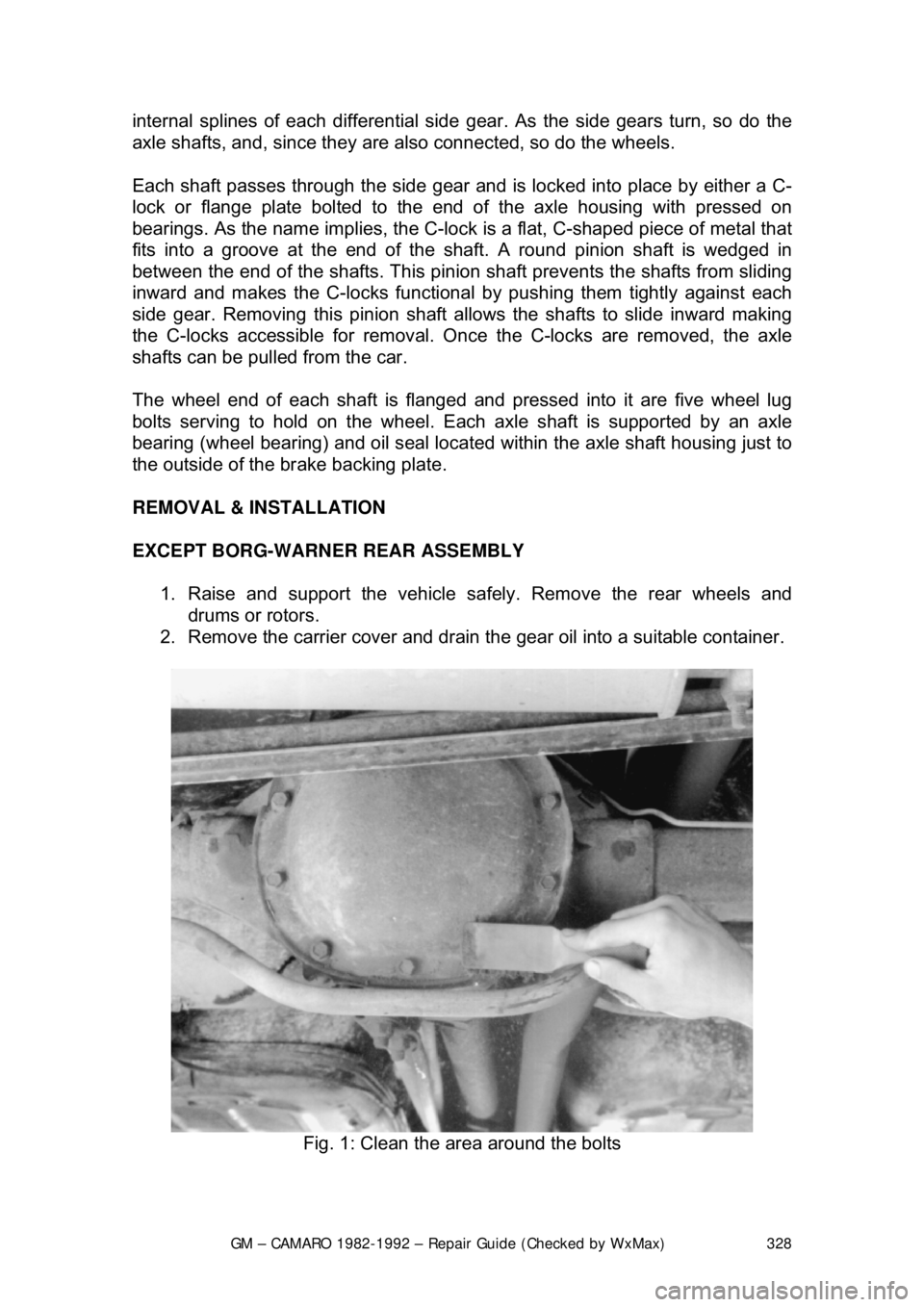
2. Remove the carrier cover and drain t he gear oil into a suitable container.
Fig. 1: Clean the area around the bolts
Page 340 of 875

GM – CAMARO 1982-1992 – Repair Guide (Checked by WxMax) 340
10. Install the brake line j
unction block bolt at the ax le housing. Connect any
brake lines that were disconnected.
11. Install and secure the driveshaft a ligning the match marks made earlier.
12. Connect the shock absorbers to the axle and install the wheel
assemblies.
13. Lower the vehicle and replace any lost rear axle fluid.
DIFFERENTIAL ASSEMBLY
REMOVAL & INSTALLATION 1. Raise and safely support the vehicle.
2. Place a suitable contai ner under the differential. Remove the carrier
cover and drain the gear oil.
3. Remove the drive axles.
4. Mark the differential bearing caps L and R to make sure they will be
reassembled in their original location.
5. Using a suitable tool, remove the di fferential carrier. Be careful not to
damage the gasket sealing surface wh en removing the unit. Place the
right and left bearing outer races of the side bearing assemblies and
shims in sets with the marked different ial bearings caps so they can be
reinstalled in their original positions.
To install: 6. Inspect the differential carrier housi ng for foreign material. Check the ring
and pinion for chipped teeth, exce ssive wear and scoring. Check the
carrier bearings visually and by feel . Clean the differential housing and
replace components, as necessary.
7. Install the differential carrier. C heck the carrier bearing preload along
with the ring and pinion backlash, then adjust, as necessary. Tighten the
differential bearing cap bolts to 55 ft. lbs. (75 Nm) except on Borg-
Warner rear axles which are ti ghtened to 40 ft. lbs. (54 Nm).
8. Install the axles.
9. Install the carrier cover using a new gasket. Tighten the carrier cover
bolts to 20 ft. lbs. (27 Nm). Add the proper type and quantity of gear oil to
axle assembly.
Page 346 of 875

GM – CAMARO 1982-1992 – Repair Guide (Checked by WxMax) 346
battery, electricity is forced into the battery
, and the battery is returned to its fully
charged state.
Alternators are used on the modern autom obiles for they are lighter, more
efficient, can rotate at higher speeds and have fewer brush problems. In an
alternator, the field rotates while al l the current produced passes only through
the stators windings. The brushes bear agains t continuous slip rings rather than
a commutator. This causes the current produced to periodically reverse the
direction of its flow. Diodes (electrica l one-way switches) block the flow of
current from traveling in t he wrong direction. A series of diodes is wired together
to permit the alternating flow of the st ator to be converted to a pulsating, but
unidirectional flow at the alternator out put. The alternator's field is wired in
series with the voltage regulator.
Please refer to Engine Performance & Tune-up for ignition system testing
procedures.
IGNITION COIL
REMOVAL & INSTALLATION
INTERNALLY MOUNTED COIL 1. Disconnect and label the wires from cap.
2. Remove the distributor cap from the distributor.
3. On the distributor cap, remove t he coil cover attaching screws and the
cover.
4. Remove the ignition coil attaching screws and lift the coil from the cap.
To install: 5. Position the coil and secure it with the attaching screws. Be sure to install
the carbon button and rubber disc first.
6. Install the coil cover and attaching screws.
7. Install the distributor cap.
8. Connect the wires to the cap.
EXTERNALLY MOUNTED COIL 1. Label and disconnect the wires from the coil.
2. Remove the ignition coil mounting bolts and the coil.
To install: 3. To install, position the coil into place and se cure it with the mounting
bolts.
4. Connect the wires to the coil.
IGNITION MODULE