brake light CHEVROLET CAVALIER 2003 3.G User Guide
[x] Cancel search | Manufacturer: CHEVROLET, Model Year: 2003, Model line: CAVALIER, Model: CHEVROLET CAVALIER 2003 3.GPages: 364, PDF Size: 2.44 MB
Page 190 of 364

Remember: Anti-lock doesn't change the time you need
to get your foot up to the brake pedal or always
decrease stopping distance. If you get too close to the
vehicle in front of you, you won't have time to apply
your brakes if that vehicle suddenly slows or stops.
Always leave enough room up ahead to stop, even
though you have anti-lock brakes.
Using Anti-Lock
Don't pump the brakes. Just hold the brake pedal down
®rmly and let anti-lock work for you. You may feel a
slight brake pedal pulsation or notice some noise, but
this is normal.
Braking in Emergencies
At some time, nearly every driver gets into a situation
that requires hard braking.
If you have anti-lock, you can steer and brake at the
same time. However, if you don't have anti-lock,
your ®rst reaction Ð to hit the brake pedal hard and
hold it down Ð may be the wrong thing to do. Your
wheels can stop rolling. Once they do, the vehicle can't
respond to your steering. Momentum will carry it in
whatever direction it was headed when the wheels
stopped rolling. That could be off the road, into the very
thing you were trying to avoid, or into traffic.If you don't have anti-lock, use a ªsqueezeº braking
technique. This will give you maximum braking while
maintaining steering control. You can do this by pushing
on the brake pedal with steadily increasing pressure.
In an emergency, you will probably want to squeeze the
brakes hard without locking the wheels. If you hear or
feel the wheels sliding, ease off the brake pedal.
This will help you retain steering control. If you
dohave
anti-lock, it's different. See ªAnti-Lock Brake Systemº
in this section.
In many emergencies, steering can help you more than
even the very best braking.
Enhanced Traction System (ETS)
If your vehicle has the optional four-speed automatic
transaxle and anti-lock brakes, it also has an Enhanced
Traction System (ETS) that limits wheel spin. This is
especially useful in slippery road conditions. The system
operates only when the transaxle shift lever is in the
REVERSE (R), THIRD (3) or AUTOMATIC
OVERDRIVE (D) position and the system senses that
one or both of the front wheels are spinning or beginning
to lose traction. When this happens, the system
reduces engine power and may also upshift the
transaxle to limit wheel spin.
4-8
Page 191 of 364

This light will come on when your Enhanced Traction
System is limiting wheel spin. SeeEnhanced Traction
System Active Light on page 3-29.
You may feel or hear the system working, but this is
normal.
When the transaxle shift lever is in any position other
than FIRST (1) or SECOND (2) and the parking brake is
fully released, this warning light will come on to let
you know if there's a problem with the system.See
Enhanced Traction System Warning Light on
page 3-28. When this warning light is on, the system will
not limit wheel spin. Adjust your driving accordingly.
The Enhanced Traction System can operate when the
transaxle shift lever is in any position other than
FIRST (1) or SECOND (2). To limit wheel spin,
especially in slippery road conditions, you should
use REVERSE (R), THIRD (3) or AUTOMATIC
OVERDRIVE (D). See
Automatic Transaxle Operation
on page 2-22. If your vehicle ever gets stuck in
sand, mud or snow and rocking the vehicle is required,
see
If You Are Stuck: In Sand, Mud, Ice or Snow on
page 4-29.
When you move the shift lever to FIRST (1) or
SECOND (2), the system will turn off. The Enhanced
Traction System warning light will come on and stay on.
If the Enhanced Traction System is limiting wheel
spin when you move the shift lever to another position,
the system won't turn off right away. It will wait until
there's no longer a current need to limit wheel spin.
You can turn the system back on at any time by moving
the shift lever to any position other than FIRST (1) or
SECOND (2). The Enhanced Traction System warning
light should go off. United States
Canada
United StatesCanada
4-9
Page 199 of 364
The heavier the rain, the harder it is to see. Even if your
windshield wiper blades are in good shape, a heavy
rain can make it harder to see road signs and
traffic signals, pavement markings, the edge of the road
and even people walking.
It's wise to keep your windshield wiping equipment in
good shape and keep your windshield washer tank ®lled
with washer ¯uid. Replace your windshield wiper
inserts when they show signs of streaking or missing
areas on the windshield, or when strips of rubber start to
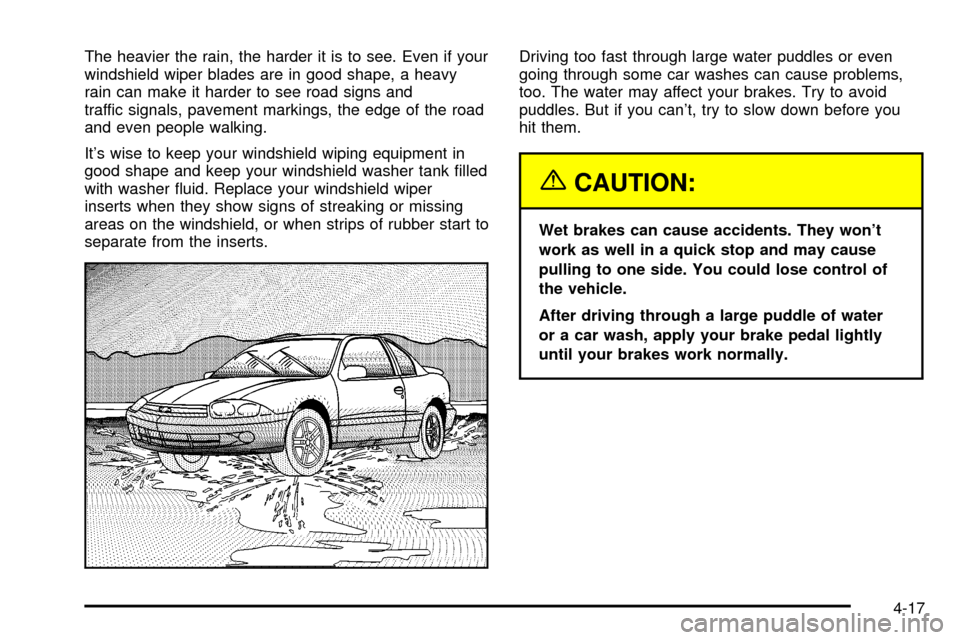
separate from the inserts.Driving too fast through large water puddles or even
going through some car washes can cause problems,
too. The water may affect your brakes. Try to avoid
puddles. But if you can't, try to slow down before you
hit them.
{CAUTION:
Wet brakes can cause accidents. They won't
work as well in a quick stop and may cause
pulling to one side. You could lose control of
the vehicle.
After driving through a large puddle of water
or a car wash, apply your brake pedal lightly
until your brakes work normally.
4-17
Page 257 of 364
Brakes
Brake Fluid
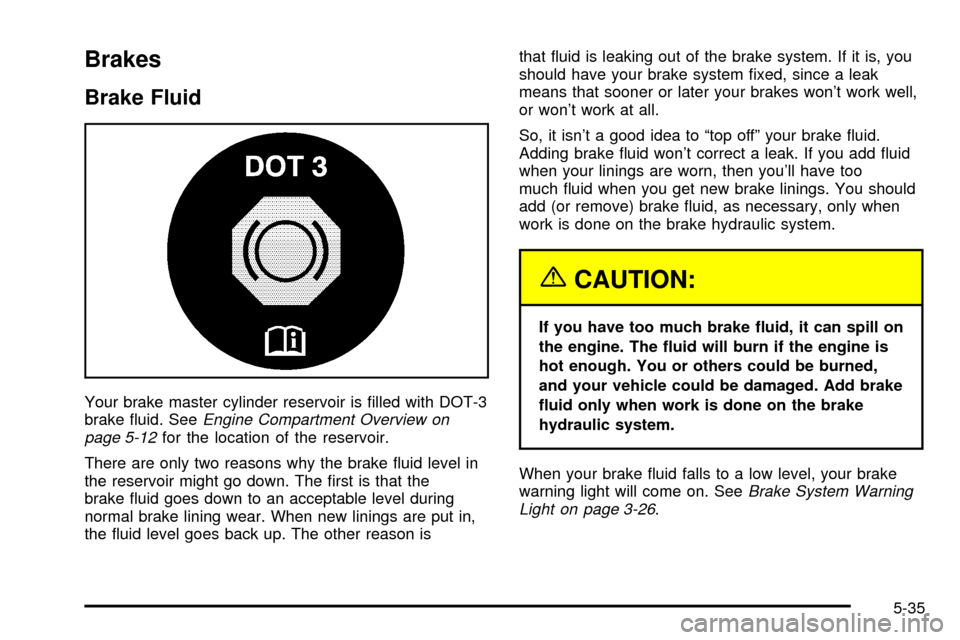
Your brake master cylinder reservoir is ®lled with DOT-3
brake ¯uid. SeeEngine Compartment Overview on
page 5-12for the location of the reservoir.
There are only two reasons why the brake ¯uid level in
the reservoir might go down. The ®rst is that the
brake ¯uid goes down to an acceptable level during
normal brake lining wear. When new linings are put in,
the ¯uid level goes back up. The other reason isthat ¯uid is leaking out of the brake system. If it is, you
should have your brake system ®xed, since a leak
means that sooner or later your brakes won't work well,
or won't work at all.
So, it isn't a good idea to ªtop offº your brake ¯uid.
Adding brake ¯uid won't correct a leak. If you add ¯uid
when your linings are worn, then you'll have too
much ¯uid when you get new brake linings. You should
add (or remove) brake ¯uid, as necessary, only when
work is done on the brake hydraulic system.
{CAUTION:
If you have too much brake ¯uid, it can spill on
the engine. The ¯uid will burn if the engine is
hot enough. You or others could be burned,
and your vehicle could be damaged. Add brake
¯uid only when work is done on the brake
hydraulic system.
When your brake ¯uid falls to a low level, your brake
warning light will come on. See
Brake System Warning
Light on page 3-26.
5-35
Page 259 of 364

Brake Wear
Your vehicle has front disc brakes and rear drum
brakes.
Disc brake pads have built-in wear indicators that make
a high-pitched warning sound when the brake pads
are worn and new pads are needed. The sound
may come and go or be heard all the time your vehicle
is moving (except when you are pushing on the
brake pedal ®rmly).
{CAUTION:
The brake wear warning sound means that
soon your brakes won't work well. That could
lead to an accident. When you hear the brake
wear warning sound, have your vehicle
serviced.
Notice:Continuing to drive with worn-out brake
pads could result in costly brake repair.Some driving conditions or climates may cause a brake
squeal when the brakes are ®rst applied or lightly
applied. This does not mean something is wrong with
your brakes.
See
Caliper/Knuckle MaintenanceInspection on
page 6-24.
Properly torqued wheel nuts are necessary to help
prevent brake pulsation. When tires are rotated, inspect
brake pads for wear and evenly tighten wheel nuts in
the proper sequence to GM torque speci®cations.
Your rear drum brakes don't have wear indicators, but if
you ever hear a rear brake rubbing noise, have the
rear brake linings inspected immediately. Also, the rear
brake drums should be removed and inspected each
time the tires are removed for rotation or changing.
When you have the front brake pads replaced, have the
rear brakes inspected, too.
Brake linings should always be replaced as complete
axle sets.
See
Brake System Inspection on page 6-24.
5-37
Page 262 of 364

Jump Starting
If your battery has run down, you may want to use
another vehicle and some jumper cables to start your
vehicle. Be sure to follow the steps below to do it safely.
{CAUTION:
Batteries can hurt you. They can be dangerous
because:
·They contain acid that can burn you.
·They contain gas that can explode or
ignite.
·They contain enough electricity to
burn you.
If you don't follow these steps exactly, some
or all of these things can hurt you.
Notice:Ignoring these steps could result in costly
damage to your vehicle that wouldn't be covered
by your warranty.
Trying to start your vehicle by pushing or pulling it
won't work, and it could damage your vehicle.1. Check the other vehicle. It must have a 12-volt
battery with a negative ground system.
Notice:If the other system isn't a 12-volt system
with a negative ground, both vehicles can be
damaged.
2. Get the vehicles close enough so the jumper cables
can reach, but be sure the vehicles aren't touching
each other. If they are, it could cause a ground
connection you don't want. You wouldn't be able to
start your vehicle, and the bad grounding could
damage the electrical systems.
To avoid the possibility of the vehicles rolling, set
the parking brake ®rmly on both vehicles involved in
the jump start procedure. Put an automatic
transaxle in PARK (P) or a manual transaxle in
NEUTRAL before setting the parking brake.
Notice:If you leave your radio on, it could be badly
damaged. The repairs wouldn't be covered by
your warranty.
3. Turn off the ignition on both vehicles. Unplug
unnecessary accessories plugged into the cigarette
lighter or in the accessory power outlet. Turn off
the radio and all lamps that aren't needed. This will
avoid sparks and help save both batteries. And it
could save your radio!
5-40
Page 305 of 364
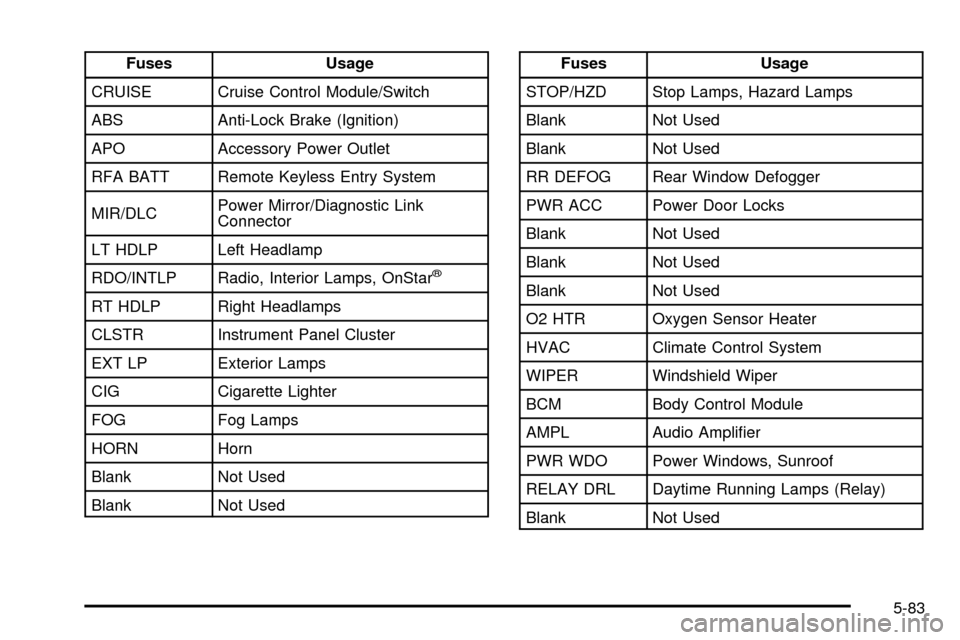
Fuses Usage
CRUISE Cruise Control Module/Switch
ABS Anti-Lock Brake (Ignition)
APO Accessory Power Outlet
RFA BATT Remote Keyless Entry System
MIR/DLCPower Mirror/Diagnostic Link
Connector
LT HDLP Left Headlamp
RDO/INTLP Radio, Interior Lamps, OnStar
ž
RT HDLP Right Headlamps
CLSTR Instrument Panel Cluster
EXT LP Exterior Lamps
CIG Cigarette Lighter
FOG Fog Lamps
HORN Horn
Blank Not Used
Blank Not Used
Fuses Usage
STOP/HZD Stop Lamps, Hazard Lamps
Blank Not Used
Blank Not Used
RR DEFOG Rear Window Defogger
PWR ACC Power Door Locks
Blank Not Used
Blank Not Used
Blank Not Used
O2 HTR Oxygen Sensor Heater
HVAC Climate Control System
WIPER Windshield Wiper
BCM Body Control Module
AMPL Audio Ampli®er
PWR WDO Power Windows, Sunroof
RELAY DRL Daytime Running Lamps (Relay)
Blank Not Used
5-83
Page 349 of 364

A
Accessory Power Outlets.................................3-16
Adding Washer Fluid.......................................5-34
Additional Program Information........................... 7-9
Additives, Fuel................................................. 5-5
Add-On Electrical Equipment............................5-80
Adjusting the Speakers
(Balance/Fade)....................3-38, 3-42, 3-52, 3-66
Air Bag Systems.............................................1-49
How Does an Air Bag Restrain?....................1-56
Servicing Your Air Bag-Equipped Vehicle.........1-58
What Makes an Air Bag In¯ate?....................1-55
What Will You See After an Air
Bag In¯ates?...........................................1-56
When Should an Air Bag In¯ate?...................1-55
Where Are the Air Bags?..............................1-52
Air Bag .........................................................3-24
Readiness Light..........................................3-24
Air Cleaner/Filter, Engine.................................5-18
AM-FM Radio.................................................3-37
AM ...............................................................3-76
Antenna, Fixed Mast.......................................3-78
Antenna, XMŸ Satellite Radio Antenna System . . 3-79
Anti-lock Brake System (ABS)............................ 4-6
Anti-Lock Brake, System Warning Light..............3-27
Appearance Care............................................5-71
Care of Safety Belts....................................5-74
Chemical Paint Spotting...............................5-77
Cleaning the Inside of Your Vehicle................5-71Appearance Care (cont.)
Cleaning the Outside of Your Vehicle..............5-74
Finish Damage............................................5-77
Sheet Metal Damage...................................5-77
Underbody Maintenance...............................5-77
Vehicle Care/Appearance Materials................5-78
Weatherstrips..............................................5-74
Arming the System.........................................2-15
Ashtrays........................................................3-16
Audio System(s).............................................3-36
AM-FM Radio.............................................3-37
Care of Your Cassette Tape Player................3-77
Care of Your CD Player...............................3-78
Care of Your CDs........................................3-78
Chime Level Adjustment...............................3-79
Fixed Mast Antenna.....................................3-78
Personal Choice Radio Controls....................3-75
Radio with Cassette and CD.........................3-63
Radio with CD....................................3-39, 3-49
Setting the Time for Radios with Radio
Data Systems (RDS)................................3-36
Setting the Time for Radios without
Radio Data Systems (RDS).......................3-36
Theft-Deterrent Feature................................3-76
Understanding Radio Reception.....................3-76
XMŸ Satellite Radio Antenna System............3-79
Automatic Transaxle Inspection.........................6-20
Automatic Transaxle Shift Lock Control
System Check.............................................6-21
1
Page 350 of 364

Automatic Transaxle........................................2-19
Fluid..........................................................5-20
Operation...................................................2-22
B
Backing Up....................................................4-38
Battery Replacement......................................... 2-6
Battery Run-Down Protection............................3-15
Battery..........................................................5-39
Before Leaving on a Long Trip.........................4-21
Body Lubrication Service..................................6-20
Brake Fluid....................................................5-35
Brake Wear...................................................5-37
Brake............................................................2-26
Parking......................................................2-26
System Inspection.......................................6-24
System Warning Light..................................3-26
Brakes..........................................................5-35
Braking in Emergencies..................................... 4-8
Braking........................................................... 4-6
Break-In, New Vehicle.....................................2-17
Bulb Replacement...........................................5-45
Back-Up Lamps...........................................5-49
Front Turn Signal and Parking Lamps.............5-47
Halogen Bulbs............................................5-45
Headlamps.................................................5-45Bulb Replacement (cont.)
Replacement Bulbs......................................5-49
Taillamps and Turn Signal Lamps..................5-48
Buying New Tires...........................................5-55C
California Fuel.................................................. 5-5
Caliper/Knuckle MaintenanceInspection.............6-24
Canada ± Customer Assistance.......................... 7-4
Canadian Owners................................................ ii
Canadian Roadside Assistance........................... 7-7
Canceling the Rear Door Security Lock............... 2-9
Capacities and Speci®cations............................5-85
Carbon Monoxide...........4-24, 4-34, 4-40, 2-10, 2-30
Care of.........................................................5-74
Safety Belts................................................5-74
Your Cassette Tape Player............................3-77
Your CD Player...........................................3-78
Your CDs ...................................................3-78
Cassette Tape Messages.................................3-72
Cassette Tape Player Service...........................6-19
CD Adapter Kits.............................................3-73
Center Console Storage Area...........................2-35
Chains, Tires..................................................5-59
Charging System Light....................................3-25
Check Engine Light.........................................3-30
2
Page 355 of 364

I
If No Steam Is Coming From Your Engine..........5-26
If Steam Is Coming From Your Engine...............5-25
If the Light Is Flashing.....................................3-31
If the Light Is on Steady..................................3-32
If You Are Stuck in Sand, Mud, Ice or Snow.......4-29
If You Do Decide To Pull A Trailer.....................4-35
If You're Caught in a Blizzard...........................4-27
Ignition Positions.............................................2-17
Ignition Transaxle Lock Check..........................6-22
Infants and Young Children, Restraints...............1-32
In¯ation -- Tire Pressure..................................5-52
Inspection......................................................6-24
Brake System.............................................6-24
Caliper/Knuckle Maintenance.........................6-24
Engine Cooling System................................6-23
Exhaust System..........................................6-23
Fuel System...............................................6-23
Part C - Periodic Maintenance.......................6-23
Steering, Suspension and Front Drive Axle
Boot and Seal.........................................6-23
Throttle System...........................................6-23
Instrument Panel Brightness.............................3-14
Instrument Panel Fuse Block............................5-82
Instrument Panel.............................................3-22
Cluster.......................................................3-22
Overview..................................................... 3-2
Interior Lamps................................................3-14
J
Jump Starting.................................................5-40
K
Key Lock Cylinders Service..............................6-20
Key Release Button (Manual Transaxle).............2-19
Keyless Entry System....................................... 2-3
Keys............................................................... 2-2
L
Lamps On Reminder.......................................3-12
Lamps...........................................................3-12
Exterior......................................................3-12
Interior.......................................................3-14
Lap-Shoulder Belt...................................1-15, 1-23
LATCH System...............................................1-41
Child Restraints...........................................1-41
Securing a Child Restraint Designed for the
LATCH System........................................1-43
Latches, Seatback............................................ 1-6
Leaving Your Vehicle With the Engine Running . . . 2-28
Leaving Your Vehicle.......................................2-10
7