brake light CHEVROLET CLASSIC 2005 User Guide
[x] Cancel search | Manufacturer: CHEVROLET, Model Year: 2005, Model line: CLASSIC, Model: CHEVROLET CLASSIC 2005Pages: 320, PDF Size: 4.86 MB
Page 148 of 320
Anti-Lock Brake System (ABS)
Your vehicle may have anti-lock brakes. ABS is an
advanced electronic braking system that will help
prevent a braking skid.
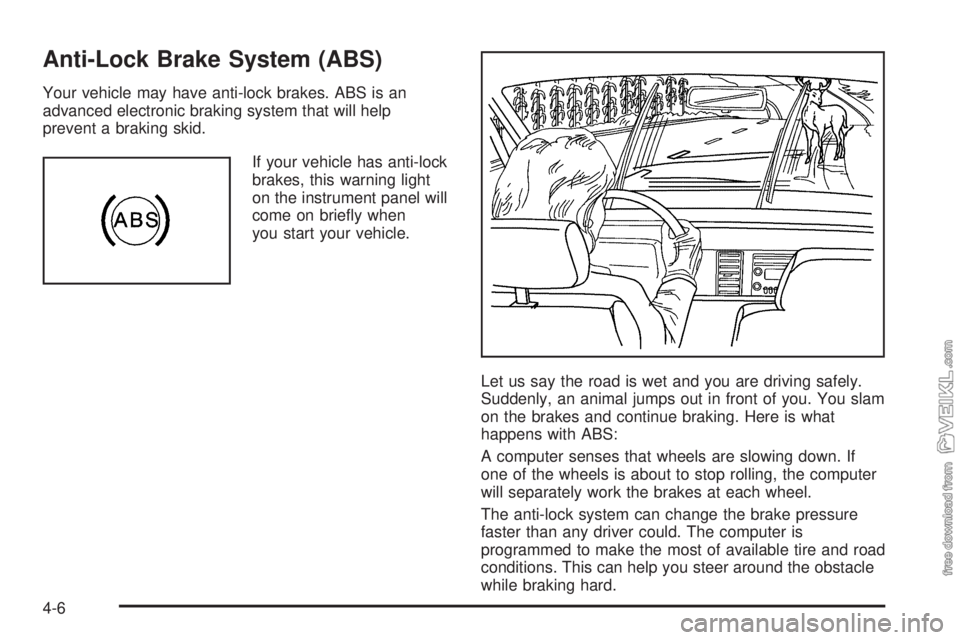
If your vehicle has anti-lock
brakes, this warning light
on the instrument panel will
come on briefly when
you start your vehicle.
Let us say the road is wet and you are driving safely.
Suddenly, an animal jumps out in front of you. You slam
on the brakes and continue braking. Here is what
happens with ABS:
A computer senses that wheels are slowing down. If
one of the wheels is about to stop rolling, the computer
will separately work the brakes at each wheel.
The anti-lock system can change the brake pressure
faster than any driver could. The computer is
programmed to make the most of available tire and road
conditions. This can help you steer around the obstacle
while braking hard.
4-6
Page 149 of 320
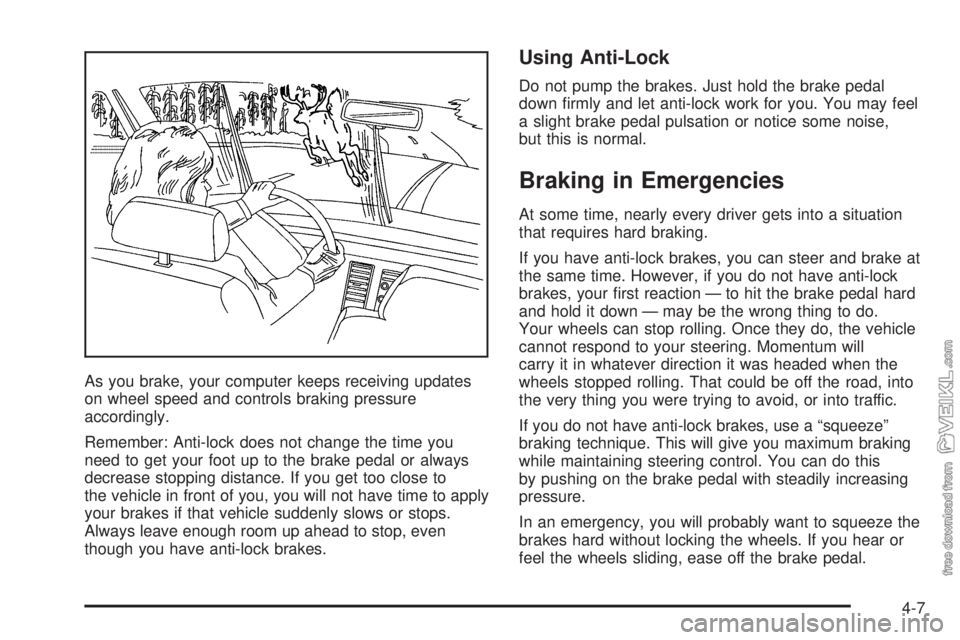
As you brake, your computer keeps receiving updates
on wheel speed and controls braking pressure
accordingly.
Remember: Anti-lock does not change the time you
need to get your foot up to the brake pedal or always
decrease stopping distance. If you get too close to
the vehicle in front of you, you will not have time to apply
your brakes if that vehicle suddenly slows or stops.
Always leave enough room up ahead to stop, even
though you have anti-lock brakes.
Using Anti-Lock
Do not pump the brakes. Just hold the brake pedal
down firmly and let anti-lock work for you. You may feel
a slight brake pedal pulsation or notice some noise,
but this is normal.
Braking in Emergencies
At some time, nearly every driver gets into a situation
that requires hard braking.
If you have anti-lock brakes, you can steer and brake at
the same time. However, if you do not have anti-lock
brakes, your first reaction — to hit the brake pedal hard
and hold it down — may be the wrong thing to do.
Your wheels can stop rolling. Once they do, the vehicle
cannot respond to your steering. Momentum will
carry it in whatever direction it was headed when the
wheels stopped rolling. That could be off the road, into
the very thing you were trying to avoid, or into traffic.
If you do not have anti-lock brakes, use a “squeeze”
braking technique. This will give you maximum braking
while maintaining steering control. You can do this
by pushing on the brake pedal with steadily increasing
pressure.
In an emergency, you will probably want to squeeze the
brakes hard without locking the wheels. If you hear or
feel the wheels sliding, ease off the brake pedal.
4-7
Page 157 of 320
The heavier the rain, the harder it is to see. Even if
your windshield wiper blades are in good shape, a heavy
rain can make it harder to see road signs and traffic
signals, pavement markings, the edge of the road, and
even people walking.
It is wise to keep your windshield wiping equipment in
good shape and keep your windshield washer tank
filled with washer fluid. Replace your windshield wiper
inserts when they show signs of streaking or missing
areas on the windshield, or when strips of rubber start
to separate from the inserts.
Driving too fast through large water puddles or even
going through some car washes can cause problems,
too. The water may affect your brakes. Try to avoid
puddles. But if you cannot, try to slow down before
you hit them.
{CAUTION:
Wet brakes can cause accidents. They will not
work as well in a quick stop and may cause
pulling to one side. You could lose control of
the vehicle.
After driving through a large puddle of water
or a car wash, apply your brake pedal lightly
until your brakes work normally.
Hydroplaning
Hydroplaning is dangerous. So much water can build
up under your tires that they can actually ride on
the water. This can happen if the road is wet enough
and you are going fast enough. When your vehicle
is hydroplaning, it has little or no contact with the road.
Hydroplaning does not happen often. But it can if
your tires do not have much tread or if the pressure in
one or more is low. It can happen if a lot of water is
standing on the road. If you can see reflections
from trees, telephone poles, or other vehicles, and
raindrops dimple the water’s surface, there could be
hydroplaning.
Hydroplaning usually happens at higher speeds. There
just is not a hard and fast rule about hydroplaning.
The best advice is to slow down when it is raining.
4-15
Page 215 of 320
Brakes
Brake Fluid
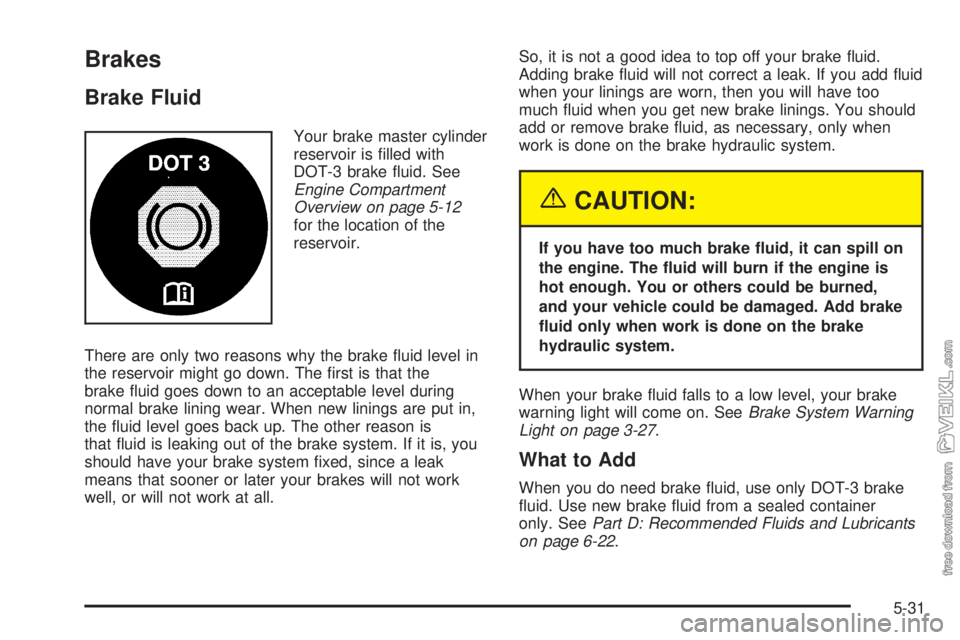
Your brake master cylinder
reservoir is filled with
DOT-3 brake fluid. See
Engine Compartment
Overview on page 5-12
for the location of the
reservoir.
There are only two reasons why the brake fluid level in
the reservoir might go down. The first is that the
brake fluid goes down to an acceptable level during
normal brake lining wear. When new linings are put in,
the fluid level goes back up. The other reason is
that fluid is leaking out of the brake system. If it is, you
should have your brake system fixed, since a leak
means that sooner or later your brakes will not work
well, or will not work at all.So, it is not a good idea to top off your brake fluid.
Adding brake fluid will not correct a leak. If you add fluid
when your linings are worn, then you will have too
much fluid when you get new brake linings. You should
add or remove brake fluid, as necessary, only when
work is done on the brake hydraulic system.
{CAUTION:
If you have too much brake uid, it can spill on
the engine. The uid will burn if the engine is
hot enough. You or others could be burned,
and your vehicle could be damaged. Add brake
uid only when work is done on the brake
hydraulic system.
When your brake fluid falls to a low level, your brake
warning light will come on. SeeBrake System Warning
Light on page 3-27.
What to Add
When you do need brake fluid, use only DOT-3 brake
fluid. Use new brake fluid from a sealed container
only. SeePart D: Recommended Fluids and Lubricants
on page 6-22.
5-31
Page 216 of 320
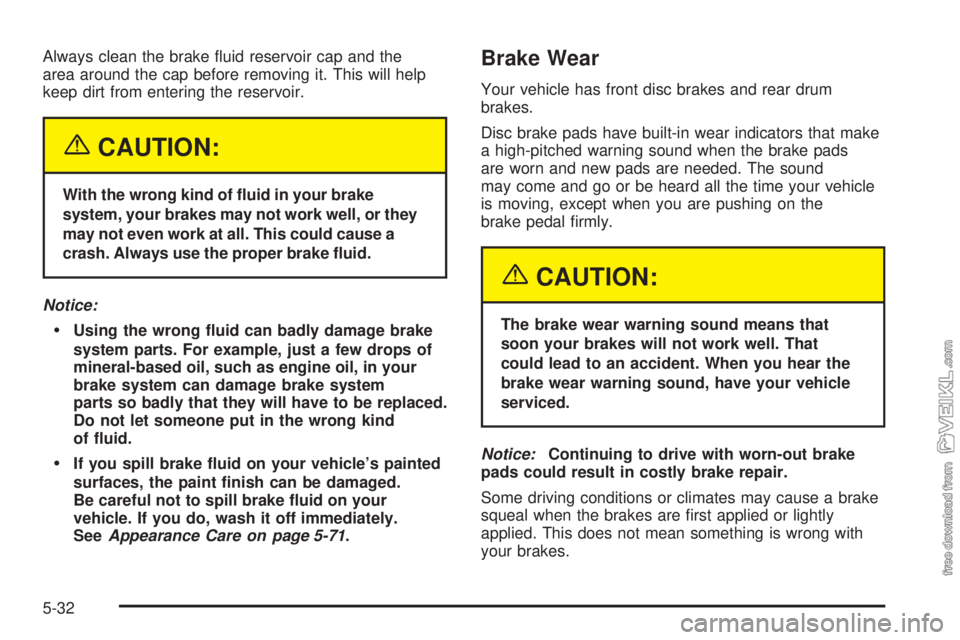
Always clean the brake fluid reservoir cap and the
area around the cap before removing it. This will help
keep dirt from entering the reservoir.
{CAUTION:
With the wrong kind of uid in your brake
system, your brakes may not work well, or they
may not even work at all. This could cause a
crash. Always use the proper brake uid.
Notice:
Using the wrong uid can badly damage brake
system parts. For example, just a few drops of
mineral-based oil, such as engine oil, in your
brake system can damage brake system
parts so badly that they will have to be replaced.
Do not let someone put in the wrong kind
of uid.
If you spill brake uid on your vehicle’s painted
surfaces, the paint nish can be damaged.
Be careful not to spill brake uid on your
vehicle. If you do, wash it off immediately.
SeeAppearance Care on page 5-71.
Brake Wear
Your vehicle has front disc brakes and rear drum
brakes.
Disc brake pads have built-in wear indicators that make
a high-pitched warning sound when the brake pads
are worn and new pads are needed. The sound
may come and go or be heard all the time your vehicle
is moving, except when you are pushing on the
brake pedal firmly.
{CAUTION:
The brake wear warning sound means that
soon your brakes will not work well. That
could lead to an accident. When you hear the
brake wear warning sound, have your vehicle
serviced.
Notice:Continuing to drive with worn-out brake
pads could result in costly brake repair.
Some driving conditions or climates may cause a brake
squeal when the brakes are first applied or lightly
applied. This does not mean something is wrong with
your brakes.
5-32
Page 268 of 320
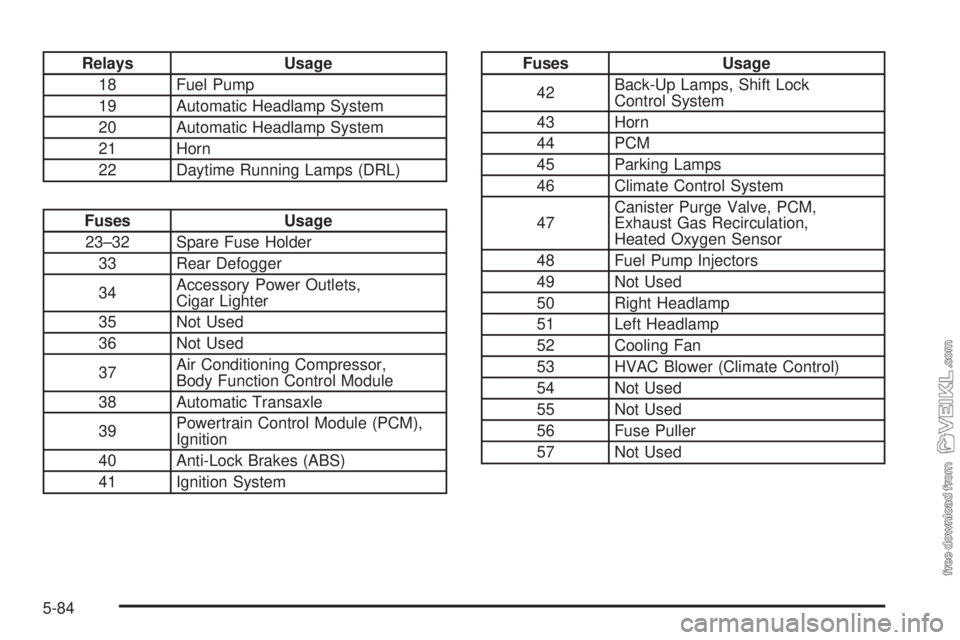
Relays Usage
18 Fuel Pump
19 Automatic Headlamp System
20 Automatic Headlamp System
21 Horn
22 Daytime Running Lamps (DRL)
Fuses Usage
23–32 Spare Fuse Holder
33 Rear Defogger
34Accessory Power Outlets,
Cigar Lighter
35 Not Used
36 Not Used
37Air Conditioning Compressor,
Body Function Control Module
38 Automatic Transaxle
39Powertrain Control Module (PCM),
Ignition
40 Anti-Lock Brakes (ABS)
41 Ignition System
Fuses Usage
42Back-Up Lamps, Shift Lock
Control System
43 Horn
44 PCM
45 Parking Lamps
46 Climate Control System
47Canister Purge Valve, PCM,
Exhaust Gas Recirculation,
Heated Oxygen Sensor
48 Fuel Pump Injectors
49 Not Used
50 Right Headlamp
51 Left Headlamp
52 Cooling Fan
53 HVAC Blower (Climate Control)
54 Not Used
55 Not Used
56 Fuse Puller
57 Not Used
5-84
Page 309 of 320
A
Accessory Power Outlets.................................3-17
Additives, Fuel................................................. 5-6
Add-On Electrical Equipment............................5-79
Air Cleaner/Filter, Engine.................................5-17
Air Conditioning..............................................3-18
Airbag
Readiness Light..........................................3-26
Airbag Sensing and Diagnostic Module (SDM)...... 7-8
Airbag System................................................1-46
How Does an Airbag Restrain?......................1-51
Servicing Your Airbag-Equipped Vehicle..........1-52
What Makes an Airbag Inflate?......................1-50
What Will You See After an Airbag Inflates?....1-51
When Should an Airbag Inflate?....................1-50
Where Are the Airbags?...............................1-48
Antenna, Fixed Mast.......................................3-53
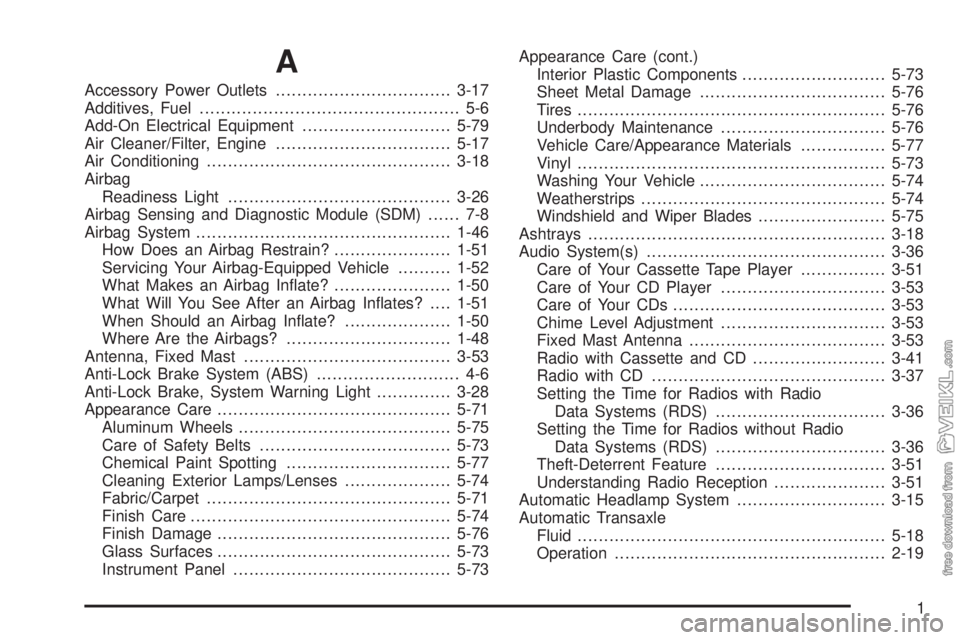
Anti-Lock Brake System (ABS)........................... 4-6
Anti-Lock Brake, System Warning Light..............3-28
Appearance Care............................................5-71
Aluminum Wheels........................................5-75
Care of Safety Belts....................................5-73
Chemical Paint Spotting...............................5-77
Cleaning Exterior Lamps/Lenses....................5-74
Fabric/Carpet..............................................5-71
Finish Care.................................................5-74
Finish Damage............................................5-76
Glass Surfaces............................................5-73
Instrument Panel.........................................5-73Appearance Care (cont.)
Interior Plastic Components...........................5-73
Sheet Metal Damage...................................5-76
Tires..........................................................5-76
Underbody Maintenance...............................5-76
Vehicle Care/Appearance Materials................5-77
Vinyl..........................................................5-73
Washing Your Vehicle...................................5-74
Weatherstrips..............................................5-74
Windshield and Wiper Blades........................5-75
Ashtrays........................................................3-18
Audio System(s).............................................3-36
Care of Your Cassette Tape Player................3-51
Care of Your CD Player...............................3-53
Care of Your CDs........................................3-53
Chime Level Adjustment...............................3-53
Fixed Mast Antenna.....................................3-53
Radio with Cassette and CD.........................3-41
Radio with CD............................................3-37
Setting the Time for Radios with Radio
Data Systems (RDS)................................3-36
Setting the Time for Radios without Radio
Data Systems (RDS)................................3-36
Theft-Deterrent Feature................................3-51
Understanding Radio Reception.....................3-51
Automatic Headlamp System............................3-15
Automatic Transaxle
Fluid..........................................................5-18
Operation...................................................2-19
1
Page 310 of 320
B
Battery..........................................................5-34
Run-Down Protection...................................3-16
Before Leaving on a Long Trip.........................4-19
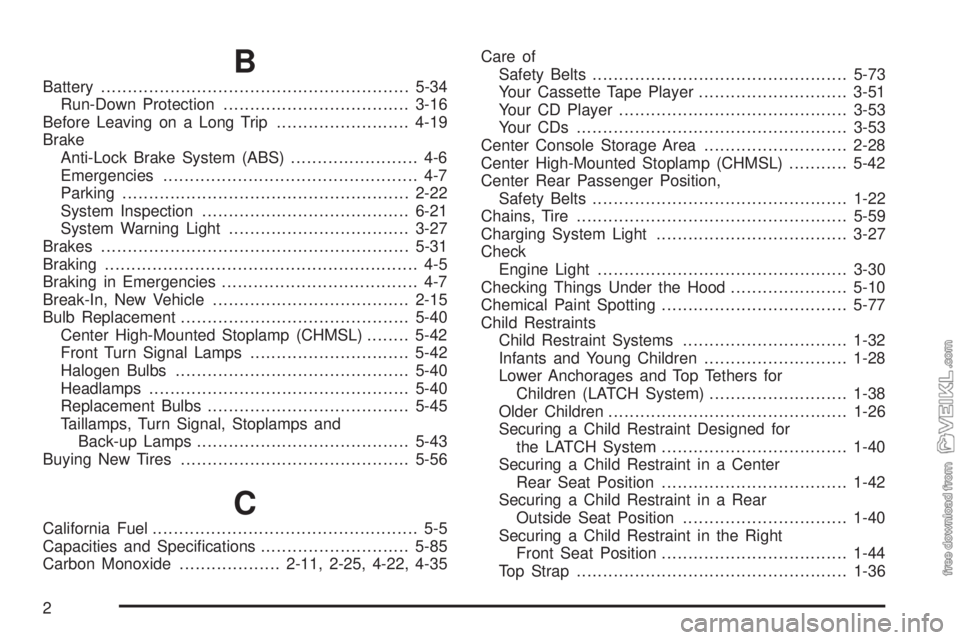
Brake
Anti-Lock Brake System (ABS)........................ 4-6
Emergencies................................................ 4-7
Parking......................................................2-22
System Inspection.......................................6-21
System Warning Light..................................3-27
Brakes..........................................................5-31
Braking........................................................... 4-5
Braking in Emergencies..................................... 4-7
Break-In, New Vehicle.....................................2-15
Bulb Replacement...........................................5-40
Center High-Mounted Stoplamp (CHMSL)........5-42
Front Turn Signal Lamps..............................5-42
Halogen Bulbs............................................5-40
Headlamps.................................................5-40
Replacement Bulbs......................................5-45
Taillamps, Turn Signal, Stoplamps and
Back-up Lamps........................................5-43
Buying New Tires...........................................5-56
C
California Fuel.................................................. 5-5
Capacities and Specifications............................5-85
Carbon Monoxide...................2-11, 2-25, 4-22, 4-35Care of
Safety Belts................................................5-73
Your Cassette Tape Player............................3-51
Your CD Player...........................................3-53
Your CDs ...................................................3-53
Center Console Storage Area...........................2-28
Center High-Mounted Stoplamp (CHMSL)...........5-42
Center Rear Passenger Position,
Safety Belts................................................1-22
Chains, Tire...................................................5-59
Charging System Light....................................3-27
Check
Engine Light...............................................3-30
Checking Things Under the Hood......................5-10
Chemical Paint Spotting...................................5-77
Child Restraints
Child Restraint Systems...............................1-32
Infants and Young Children...........................1-28
Lower Anchorages and Top Tethers for
Children (LATCH System)..........................1-38
Older Children.............................................1-26
Securing a Child Restraint Designed for
the LATCH System...................................1-40
Securing a Child Restraint in a Center
Rear Seat Position...................................1-42
Securing a Child Restraint in a Rear
Outside Seat Position...............................1-40
Securing a Child Restraint in the Right
Front Seat Position...................................1-44
Top Strap...................................................1-36
2
Page 314 of 320
Horn............................................................... 3-6
How to Use This Manual...................................... ii
How to Wear Safety Belts Properly...................1-11
I
Ignition Positions.............................................2-16
Infants and Young Children, Restraints...............1-28
Inflation -- Tire Pressure..................................5-53
Inspection
Brake System.............................................6-21
Engine Cooling System................................6-21
Exhaust System..........................................6-20
Fuel System...............................................6-20
Part C - Periodic Maintenance.......................6-20
Steering, Suspension and Front Drive
Axle Boot and Seal..................................6-20
Throttle System...........................................6-21
Instrument Panel
Overview..................................................... 3-4
Instrument Panel (I/P)
Brightness..................................................3-16
Cluster.......................................................3-23
J
Jump Starting.................................................5-34
K
Keyless Entry System....................................... 2-3
Keys............................................................... 2-2
L
Labelling, Tire Sidewall....................................5-48
Lamps
Battery Run-Down Protection.........................3-16
Dome........................................................3-16
Trunk.........................................................3-16
LATCH System
Child Restraints...........................................1-38
Securing a Child Restraint Designed for
the LATCH System...................................1-40
Light
Airbag Readiness........................................3-26
Anti-Lock Brake System Warning...................3-28
Brake System Warning.................................3-27
6
Page 315 of 320
Light (cont.)
Charging System.........................................3-27
Door Ajar...................................................3-34
Highbeam On.............................................3-34
Low Coolant Warning...................................3-29
Low Washer Fluid Warning...........................3-34
Malfunction Indicator....................................3-30
Oil Pressure...............................................3-32
Passlock
®Warning.......................................3-33
Safety Belt Reminder...................................3-25
Service Vehicle Soon...................................3-34
Lighting
Entry/Exit...................................................3-16
Loading Your Vehicle.......................................4-27
Lockout Protection..........................................2-11
Locks
Delayed Locking........................................... 2-8
Door........................................................... 2-7
Lockout Protection.......................................2-11
Power Door.................................................. 2-8
Programmable Automatic Door Locks............... 2-9
Rear Door Security Locks.............................2-10
Long Trip/Highway Scheduled Maintenance........6-12
Loss of Control...............................................4-11
Low Coolant Warning Light..............................3-29
Low Washer Fluid Warning Light.......................3-34
M
Maintenance, Normal Replacement Parts............5-86
Maintenance Schedule
At Each Fuel Fill.........................................6-16
At Least Once a Month................................6-16
At Least Once a Year..................................6-17
At Least Twice a Year..................................6-17
Brake System Inspection..............................6-21
Engine Cooling System Inspection.................6-21
Exhaust System Inspection...........................6-20
Fuel System Inspection................................6-20
How This Section is Organized....................... 6-3
Introduction.................................................. 6-2
Long Trip/Highway Scheduled Maintenance.....6-12
Maintenance Requirements............................. 6-2
Part A - Scheduled Maintenance Services......... 6-4
Part B - Owner Checks and Services..............6-16
Part C - Periodic Maintenance Inspections.......6-20
Part D - Recommended Fluids and
Lubricants...............................................6-22
Part E - Maintenance Record........................6-23
Selecting the Right Schedule.......................... 6-5
Short Trip/City Scheduled Maintenance............. 6-6
Steering, Suspension and Front Drive
Axle Boot and Seal Inspection...................6-20
Throttle System Inspection............................6-21
7