mirror CHEVROLET IMPALA 2004 8.G User Guide
[x] Cancel search | Manufacturer: CHEVROLET, Model Year: 2004, Model line: IMPALA, Model: CHEVROLET IMPALA 2004 8.GPages: 420, PDF Size: 2.73 MB
Page 234 of 420
Here are some tips on night driving.
Drive defensively.
Do not drink and drive.
Adjust your inside rearview mirror to reduce the
glare from headlamps behind you.
Since you can not see as well, you may need to
slow down and keep more space between you
and other vehicles.
Slow down, especially on higher speed roads. Your
headlamps can light up only so much road ahead.
In remote areas, watch for animals.
If you are tired, pull off the road in a safe place
and rest.
No one can see as well at night as in the daytime.
But as we get older these differences increase.
A 50-year-old driver may require at least twice as much
light to see the same thing at night as a 20-year-old.
What you do in the daytime can also affect your
night vision. For example, if you spend the day in bright
sunshine you are wise to wear sunglasses. Your
eyes will have less trouble adjusting to night. But if you
are driving, do not wear sunglasses at night. They
may cut down on glare from headlamps, but they also
make a lot of things invisible.You can be temporarily blinded by approaching
headlamps. It can take a second or two, or even several
seconds, for your eyes to readjust to the dark. When
you are faced with severe glare (as from a driver
who does not lower the high beams, or a vehicle with
misaimed headlamps), slow down a little. Avoid
staring directly into the approaching headlamps.
Keep your windshield and all the glass on your vehicle
clean — inside and out. Glare at night is made much
worse by dirt on the glass. Even the inside of the glass
can build up a lm caused by dust. Dirty glass makes
lights dazzle and ash more than clean glass would,
making the pupils of your eyes contract repeatedly.
Remember that your headlamps light up far less of a
roadway when you are in a turn or curve. Keep
your eyes moving; that way, it is easier to pick out dimly
lighted objects. Just as your headlamps should be
checked regularly for proper aim, so should your eyes
be examined regularly. Some drivers suffer from
night blindness — the inability to see in dim light — and
are not even aware of it.
4-16
Page 239 of 420
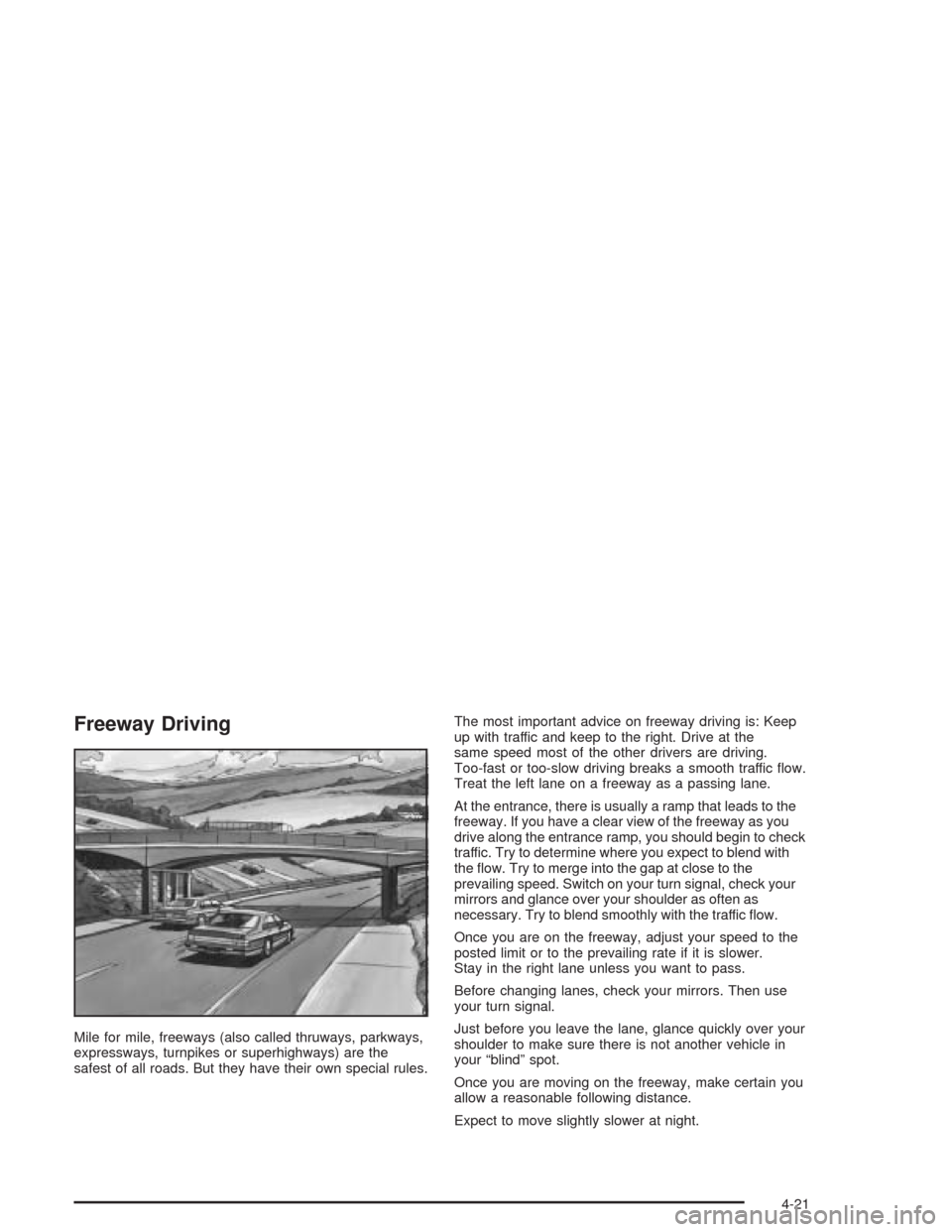
Freeway Driving
Mile for mile, freeways (also called thruways, parkways,
expressways, turnpikes or superhighways) are the
safest of all roads. But they have their own special rules.The most important advice on freeway driving is: Keep
up with traffic and keep to the right. Drive at the
same speed most of the other drivers are driving.
Too-fast or too-slow driving breaks a smooth traffic ow.
Treat the left lane on a freeway as a passing lane.
At the entrance, there is usually a ramp that leads to the
freeway. If you have a clear view of the freeway as you
drive along the entrance ramp, you should begin to check
traffic. Try to determine where you expect to blend with
the ow. Try to merge into the gap at close to the
prevailing speed. Switch on your turn signal, check your
mirrors and glance over your shoulder as often as
necessary. Try to blend smoothly with the traffic ow.
Once you are on the freeway, adjust your speed to the
posted limit or to the prevailing rate if it is slower.
Stay in the right lane unless you want to pass.
Before changing lanes, check your mirrors. Then use
your turn signal.
Just before you leave the lane, glance quickly over your
shoulder to make sure there is not another vehicle in
your “blind” spot.
Once you are moving on the freeway, make certain you
allow a reasonable following distance.
Expect to move slightly slower at night.
4-21
Page 241 of 420
Highway Hypnosis
Is there actually such a condition as “highway
hypnosis”? Or is it just plain falling asleep at the wheel?
Call it highway hypnosis, lack of awareness, or
whatever.
There is something about an easy stretch of road with
the same scenery, along with the hum of the tires on the
road, the drone of the engine, and the rush of the
wind against the vehicle that can make you sleepy.
Do not let it happen to you! If it does, your vehicle can
leave the road inless than a second,and you could
crash and be injured.
What can you do about highway hypnosis? First, be
aware that it can happen.
Then here are some tips:
Make sure your vehicle is well ventilated, with a
comfortably cool interior.
Keep your eyes moving. Scan the road ahead and
to the sides. Check your rearview mirrors and your
instruments frequently.
If you get sleepy, pull off the road into a rest,
service or parking area and take a nap, get some
exercise, or both. For safety, treat drowsiness
on the highway as an emergency.
Hill and Mountain Roads
Driving on steep hills or mountains is different from
driving in at or rolling terrain.
4-23
Page 259 of 420
Will the trailer brake parts take 3,000 psi
(20 650 kPa) of pressure? If not, the trailer brake
system must not be used with your vehicle.
If everything checks out this far, then make the brake
uid tap at the upper rear master cylinder port. But
don’t use copper tubing for this. If you do, it will bend
and break off. Use steel brake tubing.
Driving with a Trailer
Towing a trailer requires a certain amount of experience.
Before setting out for the open road, you’ll want to get
to know your rig. Acquaint yourself with the feel of
handling and braking with the added weight of the trailer.
And always keep in mind that the vehicle you are
driving is now a good deal longer and not nearly as
responsive as your vehicle is by itself.
Before you start, check the trailer hitch and platform
(and attachments), safety chains, electrical connector,
lamps, tires and mirror adjustment. If the trailer has
electric brakes, start your vehicle and trailer moving and
then apply the trailer brake controller by hand to be
sure the brakes are working. This lets you check your
electrical connection at the same time.
During your trip, check occasionally to be sure that the
load is secure, and that the lamps and any trailer
brakes are still working.
Following Distance
Stay at least twice as far behind the vehicle ahead as
you would when driving your vehicle without a trailer.
This can help you avoid situations that require
heavy braking and sudden turns.
Passing
You’ll need more passing distance up ahead when
you’re towing a trailer. And, because you’re a good deal
longer, you’ll need to go much farther beyond the
passed vehicle before you can return to your lane.
Backing Up
Hold the bottom of the steering wheel with one hand.
Then, to move the trailer to the left, just move that hand
to the left. To move the trailer to the right, move your
hand to the right. Always back up slowly and, if possible,
have someone guide you.
4-41
Page 367 of 420
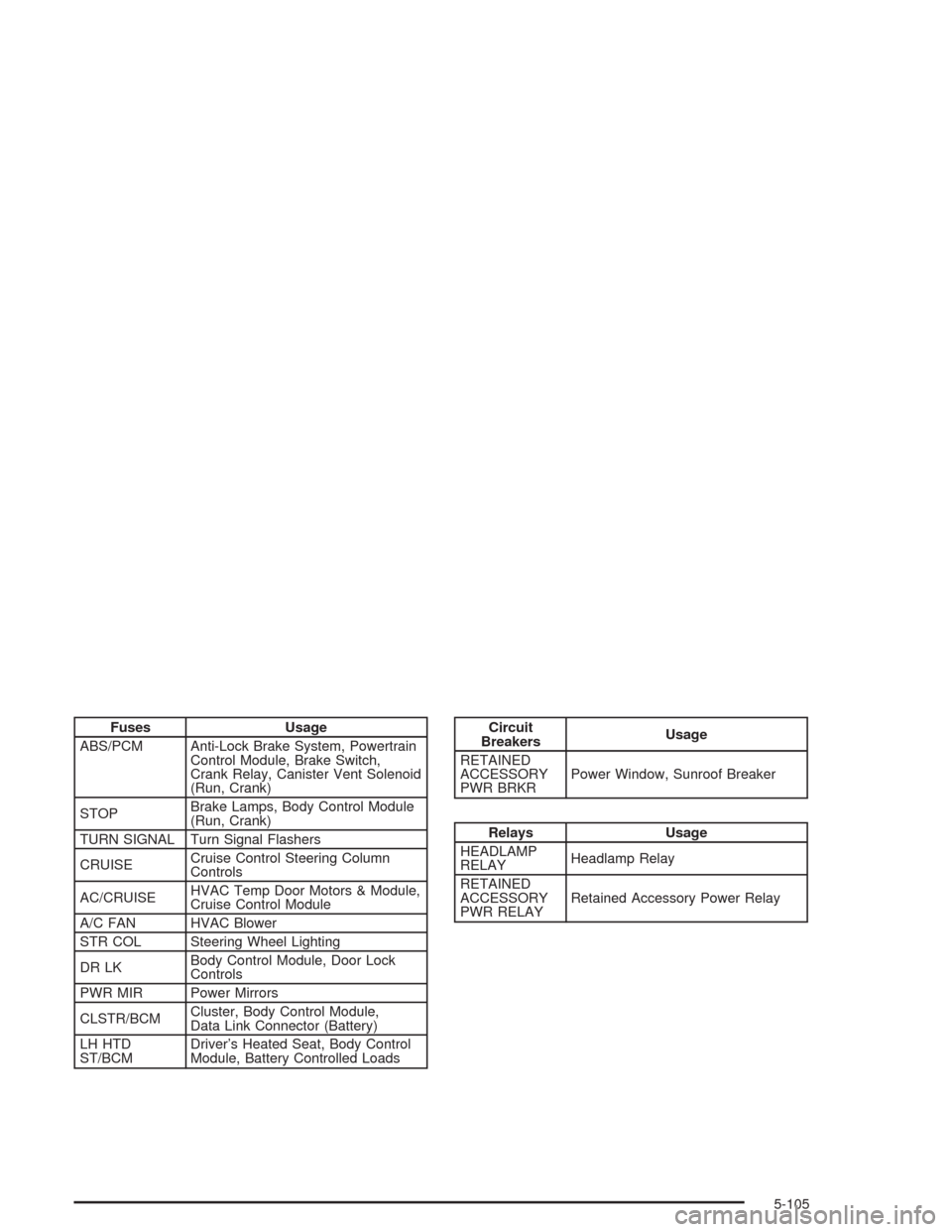
Fuses Usage
ABS/PCM Anti-Lock Brake System, Powertrain
Control Module, Brake Switch,
Crank Relay, Canister Vent Solenoid
(Run, Crank)
STOPBrake Lamps, Body Control Module
(Run, Crank)
TURN SIGNAL Turn Signal Flashers
CRUISECruise Control Steering Column
Controls
AC/CRUISEHVAC Temp Door Motors & Module,
Cruise Control Module
A/C FAN HVAC Blower
STR COL Steering Wheel Lighting
DR LKBody Control Module, Door Lock
Controls
PWR MIR Power Mirrors
CLSTR/BCMCluster, Body Control Module,
Data Link Connector (Battery)
LH HTD
ST/BCMDriver’s Heated Seat, Body Control
Module, Battery Controlled LoadsCircuit
BreakersUsage
RETAINED
ACCESSORY
PWR BRKRPower Window, Sunroof Breaker
Relays Usage
HEADLAMP
RELAYHeadlamp Relay
RETAINED
ACCESSORY
PWR RELAYRetained Accessory Power Relay
5-105
Page 369 of 420
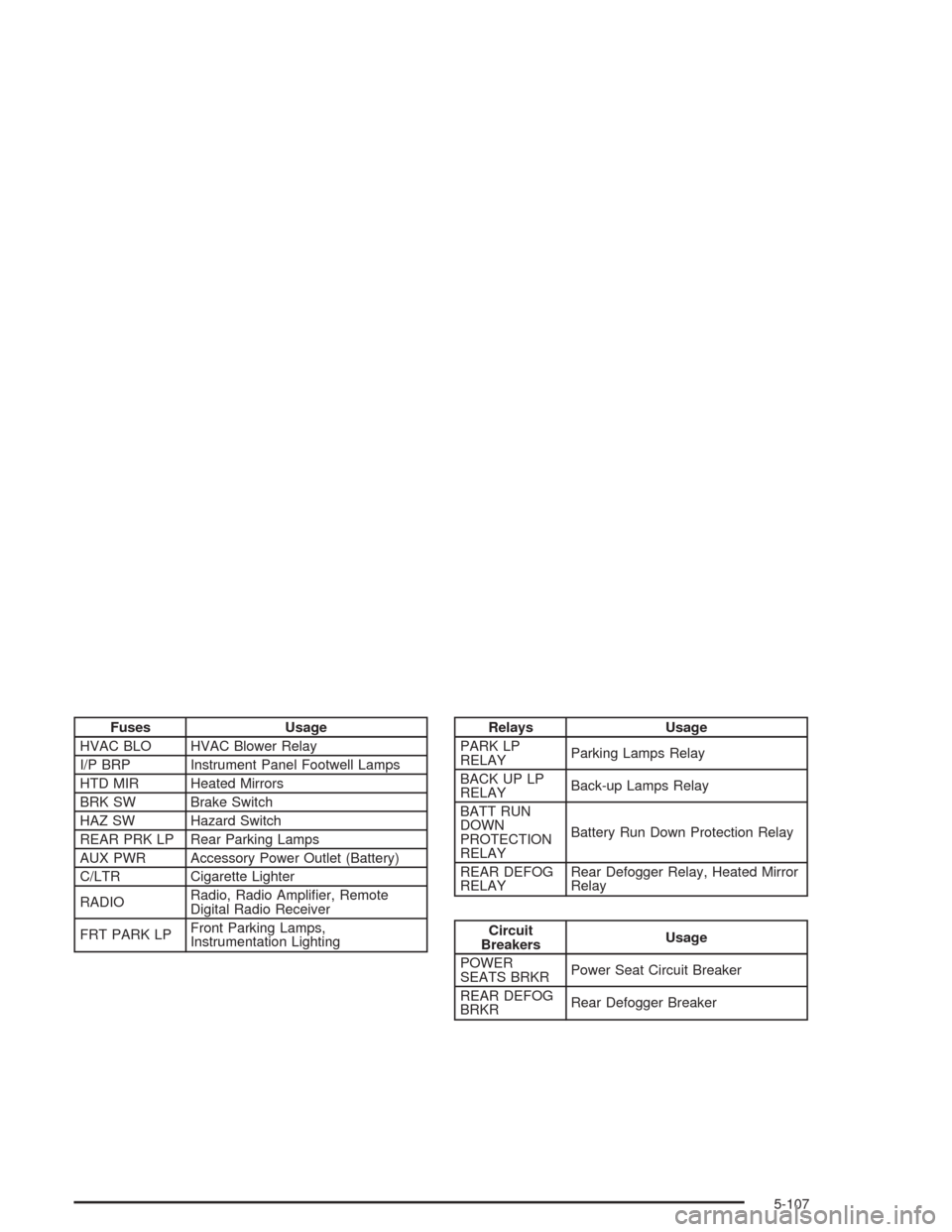
Fuses Usage
HVAC BLO HVAC Blower Relay
I/P BRP Instrument Panel Footwell Lamps
HTD MIR Heated Mirrors
BRK SW Brake Switch
HAZ SW Hazard Switch
REAR PRK LP Rear Parking Lamps
AUX PWR Accessory Power Outlet (Battery)
C/LTR Cigarette Lighter
RADIORadio, Radio Amplier, Remote
Digital Radio Receiver
FRT PARK LPFront Parking Lamps,
Instrumentation LightingRelays Usage
PARK LP
RELAYParking Lamps Relay
BACK UP LP
RELAYBack-up Lamps Relay
BATT RUN
DOWN
PROTECTION
RELAYBattery Run Down Protection Relay
REAR DEFOG
RELAYRear Defogger Relay, Heated Mirror
Relay
Circuit
BreakersUsage
POWER
SEATS BRKRPower Seat Circuit Breaker
REAR DEFOG
BRKRRear Defogger Breaker
5-107
Page 411 of 420
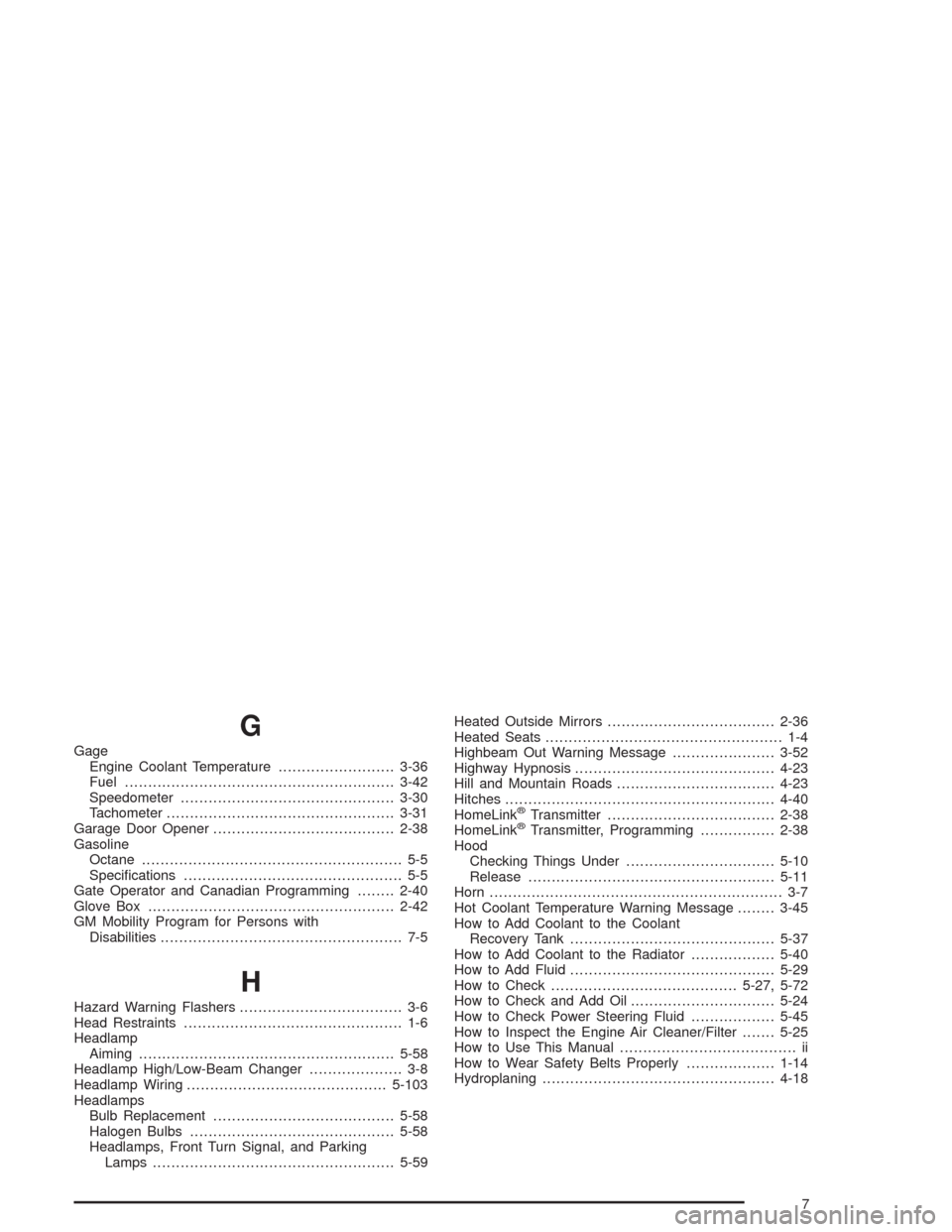
G
Gage
Engine Coolant Temperature.........................3-36
Fuel..........................................................3-42
Speedometer..............................................3-30
Tachometer.................................................3-31
Garage Door Opener.......................................2-38
Gasoline
Octane........................................................ 5-5
Specications............................................... 5-5
Gate Operator and Canadian Programming........2-40
Glove Box.....................................................2-42
GM Mobility Program for Persons with
Disabilities.................................................... 7-5
H
Hazard Warning Flashers................................... 3-6
Head Restraints............................................... 1-6
Headlamp
Aiming.......................................................5-58
Headlamp High/Low-Beam Changer.................... 3-8
Headlamp Wiring...........................................5-103
Headlamps
Bulb Replacement.......................................5-58
Halogen Bulbs............................................5-58
Headlamps, Front Turn Signal, and Parking
Lamps....................................................5-59Heated Outside Mirrors....................................2-36
Heated Seats................................................... 1-4
Highbeam Out Warning Message......................3-52
Highway Hypnosis...........................................4-23
Hill and Mountain Roads..................................4-23
Hitches..........................................................4-40
HomeLink
®Transmitter....................................2-38
HomeLink®Transmitter, Programming................2-38
Hood
Checking Things Under................................5-10
Release.....................................................5-11
Horn............................................................... 3-7
Hot Coolant Temperature Warning Message........3-45
How to Add Coolant to the Coolant
Recovery Tank............................................5-37
How to Add Coolant to the Radiator..................5-40
How to Add Fluid............................................5-29
How to Check........................................5-27, 5-72
How to Check and Add Oil...............................5-24
How to Check Power Steering Fluid..................5-45
How to Inspect the Engine Air Cleaner/Filter.......5-25
How to Use This Manual...................................... ii
How to Wear Safety Belts Properly...................1-14
Hydroplaning..................................................4-18
7
Page 414 of 420
Message (cont.)
Service Traction System Warning...................3-43
Service Vehicle Soon...................................3-51
Traction Active............................................3-44
Trunk Ajar Warning......................................3-49
Mexico, Central America and Caribbean Islands/
Countries (Except Puerto Rico and U.S. Virgin
Islands) – Customer Assistance....................... 7-5
Mirrors
Automatic Dimming Rearview........................2-34
Automatic Dimming Rearview with OnStar
®.....2-34
Manual Rearview Mirror................................2-33
Manual Rearview Mirror with OnStar
®.............2-33
Outside Convex Mirror.................................2-36
Outside Power Mirrors..................................2-35
MyGMLink.com................................................ 7-3
N
New Vehicle Break-In......................................2-17
Normal Maintenance Replacement Parts............6-13
O
Odometer......................................................3-30
Off-Road Recovery..........................................4-12Oil
Engine.......................................................5-18
Pressure Message.......................................3-46
Supercharger, Engine...................................5-24
OIL LIFE (GM Oil Life System Reset)................2-45
Older Children, Restraints................................1-31
Online Owner Center........................................ 7-3
OnStar
®Personal Calling.................................2-37
OnStar®Services............................................2-37
OnStar®System.............................................2-36
OnStar®Virtual Advisor....................................2-37
Operation Tips................................................3-24
ORIG. SET (Return to the Original Settings).......2-51
Other Warning Devices...................................... 3-6
Outlet Adjustment............................................3-24
Outside
Convex Mirror.............................................2-36
Power Mirrors.............................................2-35
Overheated Engine Protection Operating Mode . . . 5-32
Overseas – Customer Assistance........................ 7-5
Owner Checks and Services.............................. 6-9
Owners, Canadian............................................... ii
Owner’s Information........................................7-13
10
Page 415 of 420
P
Parade Dimming.............................................3-18
Park (P)
Shifting Into................................................2-27
Shifting Out of............................................2-30
Parking
Brake........................................................2-26
Over Things That Burn.................................2-30
Parking on Hills..............................................4-42
Passenger Compartment Air Filter.....................3-25
Passenger’s Side Instrument Panel Fuse Block....5-106
Passing.................................................4-13, 4-41
Passlock
®......................................................2-16
Plan Ahead When Possible................................ 7-8
Playing a Cassette Tape..........................3-65, 3-87
Playing a CD.........................................3-76, 3-90
Playing the Radio...........................3-58, 3-69, 3-79
Power
Accessory Outlets........................................3-19
Door Locks.................................................. 2-9
Electrical System.......................................5-103
Six-Way Seats.............................................. 1-3
Steering Fluid.............................................5-45
Windows....................................................2-14
Power Steering...............................................4-10
Programmable Automatic Door Locks.................2-10
Programmable Modes..............................2-10, 2-44
Programming the HomeLink
®Transmitter...........2-38
Q
Questions and Answers About Safety Belts.........1-13
R
Radiator Pressure Cap....................................5-32
Radio Data System (RDS)...............3-57, 3-68, 3-78
Radio Messages.............................3-62, 3-73, 3-84
Radios..........................................................3-56
Care of Your Cassette Tape Player................3-94
Care of Your CD Player...............................3-96
Care of Your CDs........................................3-96
Radio with Cassette.....................................3-57
Radio with Cassette and CD.........................3-78
Radio with CD............................................3-68
Setting the Time..........................................3-56
Theft-Deterrent............................................3-92
Understanding Reception..............................3-94
RDS Messages..............................3-61, 3-72, 3-83
Reading Lamps..............................................3-18
Rear Safety Belt Comfort Guides......................1-28
Rear Seat Passenger Positions.........................1-24
Rear Seat Passengers, Safety Belts..................1-24
Rear Storage Area..........................................2-42
Rear Window Defogger....................................3-23
Rearview Mirror, Automatic Dimming..................2-34
11
Page 416 of 420
Rearview Mirror, Automatic Dimming with
OnStar®.....................................................2-34
Rearview Mirror with OnStar®...........................2-33
Rearview Mirrors.............................................2-33
Reclining Seatbacks.......................................... 1-4
Recommended Fluids and Lubricants.................6-12
Recreational Vehicle Towing.............................4-30
Remote Keyless Entry System............................ 2-3
Remote Keyless Entry System, Operation............ 2-4
Remote Trunk Release....................................2-11
Removing the Flat Tire and Installing
the Spare Tire.............................................5-85
Removing the Spare Tire and Tools...................5-83
Removing the Wheel Covers and the
Wheel Nut Caps..........................................5-84
Replacement Bulbs.........................................5-62
Replacing Brake System Parts..........................5-50
Reporting Safety Defects
Canadian Government..................................7-11
General Motors...........................................7-11
United States Government............................7-11
Reprogramming a Single HomeLink
®Button.......2-41
Resetting Defaults...........................................2-41
Resetting the Trip Computer.............................3-55
Restraint System Check
Checking Your Restraint Systems...................1-60
Replacing Restraint System Parts
After a Crash..........................................1-61Restraint Systems
Checking....................................................1-60
Replacing Parts...........................................1-61
Resynchronization............................................. 2-7
Retained Accessory Power (RAP)......................2-18
Right Front Passenger Position, Safety Belts......1-23
Roadside
Assistance Program....................................... 7-6
Rocking Your Vehicle To Get It Out...................4-30
Routing, Engine Drive Belt...............................6-14
Running Your Engine While You Are Parked.......2-32
S
Safety Belt
Reminder Light............................................3-31
Safety Belts
Care of......................................................5-97
Center Front Passenger Position....................1-23
Driver Position............................................1-14
How to Wear Safety Belts Properly................1-14
Questions and Answers About Safety Belts.....1-13
Rear Safety Belt Comfort Guides for Children
and Small Adults......................................1-28
Rear Seat Passengers.................................1-24
Right Front Passenger Position......................1-23
Safety Belt Extender....................................1-30
12