seats CHEVROLET IMPALA 2006 9.G Owner's Manual
[x] Cancel search | Manufacturer: CHEVROLET, Model Year: 2006, Model line: IMPALA, Model: CHEVROLET IMPALA 2006 9.GPages: 394, PDF Size: 2.42 MB
Page 240 of 394
If things like suitcases, tools, packages, or anything
else are put inside the vehicle, they will go as fast as the
vehicle goes. If you have to stop or turn quickly, or if
there is a crash, they will keep going.
{CAUTION:
Things you put inside your vehicle can strike
and injure people in a sudden stop or turn,
or in a crash.
Put things in the trunk of your vehicle.
In a trunk, put them as far forward as
you can. Try to spread the weight evenly.
Never stack heavier things, like suitcases,
inside the vehicle so that some of them
are above the tops of the seats.
Do not leave an unsecured child restraint
in your vehicle.
When you carry something inside the
vehicle, secure it whenever you can.
Do not leave a seat folded down unless
you need to.
Towing
Towing Your Vehicle
Consult your dealer or a professional towing service
if you need to have your disabled vehicle towed.
SeeRoadside Assistance Program on page 7-6.
If you want to tow your vehicle behind another vehicle
for recreational purposes (such as behind a motorhome),
see “Recreational Vehicle Towing” following.
Recreational Vehicle Towing
Recreational vehicle towing means towing your vehicle
behind another vehicle – such as behind a motorhome.
The two most common types of recreational vehicle
towing are known as “dinghy towing” (towing your
vehicle with all four wheels on the ground) and
“dolly towing” (towing your vehicle with two wheels
on the ground and two wheels up on a device known as
a “dolly”).
With the proper preparation and equipment, many
vehicles can be towed in these ways. See “Dinghy
Towing” and “Dolly Towing,” following.
4-34
Page 305 of 394
Tire Size
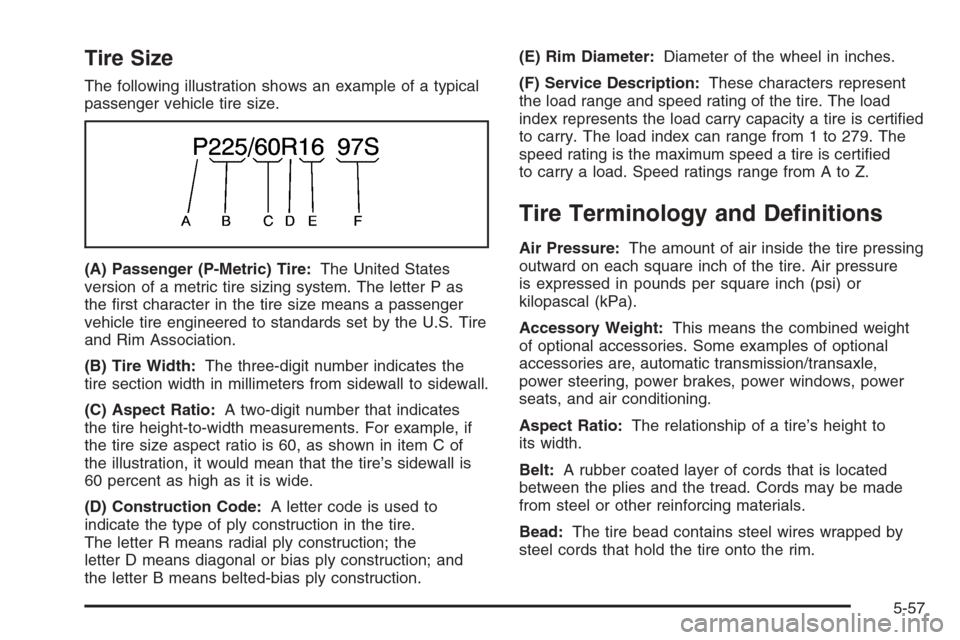
The following illustration shows an example of a typical
passenger vehicle tire size.
(A) Passenger (P-Metric) Tire:The United States
version of a metric tire sizing system. The letter P as
the rst character in the tire size means a passenger
vehicle tire engineered to standards set by the U.S. Tire
and Rim Association.
(B) Tire Width:The three-digit number indicates the
tire section width in millimeters from sidewall to sidewall.
(C) Aspect Ratio:A two-digit number that indicates
the tire height-to-width measurements. For example, if
the tire size aspect ratio is 60, as shown in item C of
the illustration, it would mean that the tire’s sidewall is
60 percent as high as it is wide.
(D) Construction Code:A letter code is used to
indicate the type of ply construction in the tire.
The letter R means radial ply construction; the
letter D means diagonal or bias ply construction; and
the letter B means belted-bias ply construction.(E) Rim Diameter:Diameter of the wheel in inches.
(F) Service Description:These characters represent
the load range and speed rating of the tire. The load
index represents the load carry capacity a tire is certied
to carry. The load index can range from 1 to 279. The
speed rating is the maximum speed a tire is certied
to carry a load. Speed ratings range from A to Z.
Tire Terminology and Denitions
Air Pressure:The amount of air inside the tire pressing
outward on each square inch of the tire. Air pressure
is expressed in pounds per square inch (psi) or
kilopascal (kPa).
Accessory Weight:This means the combined weight
of optional accessories. Some examples of optional
accessories are, automatic transmission/transaxle,
power steering, power brakes, power windows, power
seats, and air conditioning.
Aspect Ratio:The relationship of a tire’s height to
its width.
Belt:A rubber coated layer of cords that is located
between the plies and the tread. Cords may be made
from steel or other reinforcing materials.
Bead:The tire bead contains steel wires wrapped by
steel cords that hold the tire onto the rim.
5-57
Page 343 of 394
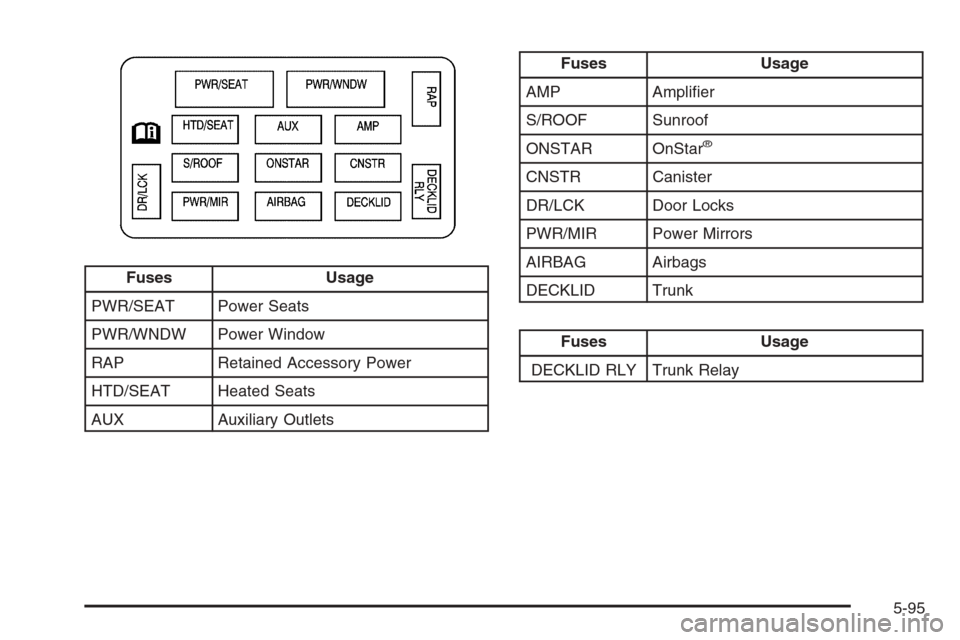
Fuses Usage
PWR/SEAT Power Seats
PWR/WNDW Power Window
RAP Retained Accessory Power
HTD/SEAT Heated Seats
AUX Auxiliary Outlets
Fuses Usage
AMP Amplier
S/ROOF Sunroof
ONSTAR OnStar
®
CNSTR Canister
DR/LCK Door Locks
PWR/MIR Power Mirrors
AIRBAG Airbags
DECKLID Trunk
Fuses Usage
DECKLID RLY Trunk Relay
5-95
Page 385 of 394
E
Eight-Way Power Seats..................................... 1-3
Electrical System
Add-On Equipment......................................5-93
Fuses and Circuit Breakers...........................5-94
Headlamp Wiring.........................................5-93
Instrument Panel Fuse Block.........................5-94
Power Windows and Other Power Options......5-94
Underhood Fuse Block.................................5-96
Windshield Wiper Fuses...............................5-93
Engine
Air Cleaner/Filter.........................................5-22
Battery.......................................................5-43
Check and Service Engine Soon Light............3-34
Coolant......................................................5-26
Coolant Heater............................................2-24
Coolant Temperature Gage...........................3-33
Coolant Temperature Warning Light................3-32
Engine Compartment Overview......................5-12
Exhaust.....................................................2-32
Oil .............................................................5-17
Oil Life System...........................................5-20
Overheated Protection Operating Mode...........5-31
Overheating................................................5-29
Starting......................................................2-22Entry Lighting.................................................3-16
Event Data Recorders (EDR)............................. 7-9
Extender, Safety Belt.......................................1-31
Exterior Lamps...............................................3-12
F
Filter
Engine Air Cleaner......................................5-22
Finish Damage...............................................5-90
Flashers, Hazard Warning.................................. 3-6
Flash-to-Pass................................................... 3-8
Flat Tire........................................................5-72
Flat Tire, Changing.........................................5-73
Flat Tire, Storing.............................................5-81
Fluid
Automatic Transaxle.....................................5-23
Power Steering...........................................5-38
Windshield Washer......................................5-39
Fog Lamp Light..............................................3-37
Fog Lamps ....................................................3-15
Folding Rear Seat............................................ 1-9
Fuel............................................................... 5-4
Additives...................................................... 5-6
California Fuel.............................................. 5-5
5
Page 386 of 394
Fuel (cont.)
E85 (85% Ethanol)........................................ 5-6
Filling a Portable Fuel Container....................5-10
Filling Your Tank........................................... 5-8
Fuels in Foreign Countries.............................. 5-7
Gage .........................................................3-38
Gasoline Octane........................................... 5-5
Gasoline Specications.................................. 5-5
Fuses
Fuses and Circuit Breakers...........................5-94
Instrument Panel Fuse Block.........................5-94
Underhood Fuse Block.................................5-96
Windshield Wiper.........................................5-93
G
Gage
Engine Coolant Temperature.........................3-33
Fuel..........................................................3-38
Speedometer..............................................3-26
Tachometer.................................................3-26
Garage Door Opener.......................................2-38
Gasoline
Octane........................................................ 5-5
Specications............................................... 5-5
Glove Box.....................................................2-42
GM Mobility Reimbursement Program.................. 7-5
H
Hazard Warning Flashers................................... 3-6
Head Restraints............................................... 1-8
Headlamp
Aiming .......................................................5-47
Headlamp Wiring............................................5-93
Headlamps
Bulb Replacement.......................................5-48
Daytime Running Lamps/Automatic
Headlamp System....................................3-14
Delayed.....................................................3-14
Flash-to-Pass............................................... 3-8
Halogen Bulbs............................................5-48
Headlamps, Front Turn Signal, Sidemarker,
and Parking Lamps..................................5-48
High/Low Beam Changer................................ 3-8
Heated Seats................................................... 1-4
Heater...........................................................3-19
Highbeam On Light.........................................3-38
Highway Hypnosis...........................................4-21
Hill and Mountain Roads..................................4-22
Hood
Checking Things Under................................5-10
Release.....................................................5-11
Horn ............................................................... 3-6
How to Use This Manual...................................... ii
How to Wear Safety Belts Properly...................1-16
6
Page 389 of 394
O
Odometer......................................................3-26
Off-Road Recovery..........................................4-13
Oil
Engine.......................................................5-17
Pressure Light.............................................3-36
Oil, Engine Oil Life System..............................5-20
Older Children, Restraints................................1-32
Online Owner Center........................................ 7-3
OnStar
®System, see OnStar®Manual...............2-36
Other Warning Devices...................................... 3-6
Outlet Adjustment............................................3-22
Outlet(s), Accessory Power...............................3-17
Outside
Convex Mirror.............................................2-35
Power Mirrors.............................................2-35
Overheated Engine Protection
Operating Mode..........................................5-31
Owner Checks and Services.............................. 6-8
Owners, Canadian............................................... ii
P
Paint, Damage...............................................5-90
Parade Dimming.............................................3-17Park (P)
Shifting Into................................................2-29
Shifting Out of............................................2-31
Parking
Brake........................................................2-28
Over Things That Burn.................................2-32
Passenger Airbag Status Indicator.....................3-28
Passenger Compartment Air Filter.....................3-23
Passenger Sensing System..............................1-63
Passing.........................................................4-13
PASS-Key
®III+..............................................2-18
PASS-Key®III+ Operation................................2-19
Power
Accessory Outlet(s)......................................3-17
Door Locks.................................................2-11
Eight-Way Seats........................................... 1-3
Electrical System.........................................5-94
Retained Accessory (RAP)............................2-22
Six-Way Seats.............................................. 1-2
Steering Fluid.............................................5-38
Windows....................................................2-16
Pressure Cap.................................................5-28
Pretensioners, Safety Belt................................1-31
Programmable Automatic Door Unlock...............2-11
Q
Questions and Answers About Safety Belts.........1-16
9
Page 391 of 394
Safety Belts
Care of ......................................................5-87
Center Front Passenger Position....................1-25
Driver Position............................................1-17
How to Wear Safety Belts Properly................1-16
Questions and Answers About Safety Belts.....1-16
Rear Safety Belt Comfort Guides...................1-29
Rear Seat Passengers.................................1-26
Right Front Passenger Position......................1-24
Safety Belt Extender....................................1-31
Safety Belt Use During Pregnancy.................1-24
Safety Belts Are for Everyone.......................1-12
Shoulder Belt Height Adjuster........................1-23
Safety Warnings and Symbols.............................. iii
Scheduled Maintenance..................................... 6-4
Seats
Center Seat.................................................. 1-9
Eight-Way Power Seats.................................. 1-3
Head Restraints............................................ 1-8
Heated Seats............................................... 1-4
Manual Lumbar............................................. 1-4
Manual Passenger......................................... 1-2
Reclining Seatbacks...................................... 1-5
Six-Way Power Seats.................................... 1-2
Split Folding Rear Seat.................................. 1-9Securing a Child Restraint
Center Front Seat Position............................1-51
Rear Seat Position......................................1-49
Right Front Seat Position..............................1-52
Security Light.................................................3-37
Service........................................................... 5-3
Accessories and Modications......................... 5-3
Adding Equipment to the Outside of Your
Vehicle..................................................... 5-4
California Proposition 65 Warning.................... 5-3
Doing Your Own Work................................... 5-4
Engine Soon Light.......................................3-34
Publications Ordering Information...................7-15
Servicing Your Airbag-Equipped Vehicle..............1-67
Setting the Time.............................................3-60
Sheet Metal Damage.......................................5-90
Shifting Into Park (P).......................................2-29
Shifting Out of Park (P)...................................2-31
Shoulder Belt Height Adjuster...........................1-23
Signals, Turn and Lane-Change.......................... 3-7
Spare Tire
Compact....................................................5-83
Installing....................................................5-76
Removing...................................................5-74
Storing.......................................................5-81
11