overheating CHEVROLET SILVERADO 2006 1.G User Guide
[x] Cancel search | Manufacturer: CHEVROLET, Model Year: 2006, Model line: SILVERADO, Model: CHEVROLET SILVERADO 2006 1.GPages: 594, PDF Size: 3.41 MB
Page 445 of 594
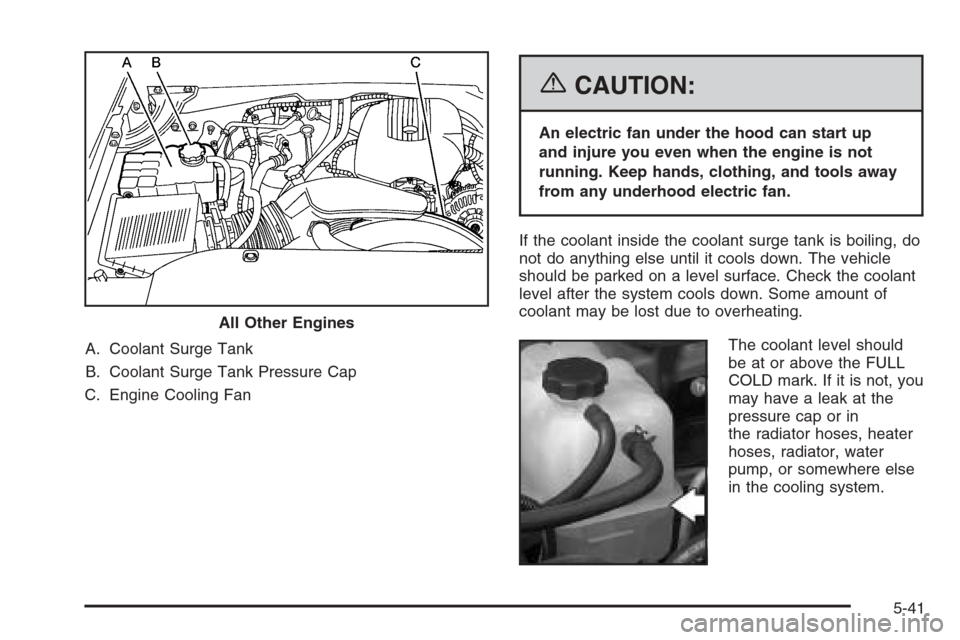
A. Coolant Surge Tank
B. Coolant Surge Tank Pressure Cap
C. Engine Cooling Fan
{CAUTION:
An electric fan under the hood can start up
and injure you even when the engine is not
running. Keep hands, clothing, and tools away
from any underhood electric fan.
If the coolant inside the coolant surge tank is boiling, do
not do anything else until it cools down. The vehicle
should be parked on a level surface. Check the coolant
level after the system cools down. Some amount of
coolant may be lost due to overheating.
The coolant level should
be at or above the FULL
COLD mark. If it is not, you
may have a leak at the
pressure cap or in
the radiator hoses, heater
hoses, radiator, water
pump, or somewhere else
in the cooling system. All Other Engines
5-41
Page 478 of 594
Tires
Your new vehicle comes with high-quality tires made by
a leading tire manufacturer. If you ever have questions
about your tire warranty and where to obtain service,
see your GM Warranty booklet for details. For additional
information refer to the tire manufacturer’s booklet
included with your vehicle.
{CAUTION:
Poorly maintained and improperly used tires
are dangerous.
Overloading your tires can cause
overheating as a result of too much
friction. You could have an air-out and a
serious accident. SeeLoading Your
Vehicle on page 4-48.
CAUTION: (Continued)
CAUTION: (Continued)
Underinated tires pose the same danger
as overloaded tires. The resulting accident
could cause serious injury. Check all tires
frequently to maintain the recommended
pressure. Tire pressure should be checked
when your tires are cold. SeeInflation - Tire
Pressure on page 5-81.
Overinated tires are more likely to be
cut, punctured, or broken by a sudden
impact — such as when you hit a pothole.
Keep tires at the recommended pressure.
Worn, old tires can cause accidents. If your
tread is badly worn, or if your tires have
been damaged, replace them.
20-Inch Tires
If your vehicle has the optional 20-inch P275/55R20
size tires, they are classied as touring tires and
are designed for on road use. The low-prole, wide
tread design is not recommended for “off-road” driving
or commercial uses such as snow plowing. See
Off-Road Driving on page 4-17andAdding a Snow
Plow or Similar Equipment on page 4-54for additional
information.
5-74
Page 583 of 594
Driving (cont.)
Recovery Hooks..........................................4-47
Rocking Your Vehicle to Get it Out.................4-46
Winter........................................................4-42
Dual Automatic Climate Control System.............3-24
Dual Climate Control System............................3-21
Dual Tire Operation.........................................5-83
DVD
Rear Seat Entertainment System..................3-114
E
Electrical System
Add-On Equipment.....................................5-125
Center Instrument Panel Fuse Block.............5-128
Fuses and Circuit Breakers.........................5-126
Instrument Panel Fuse Block.......................5-126
Power Windows and Other Power Options....5-126
Underhood Fuse Block...............................5-129
Windshield Wiper Fuses.............................5-125Engine
Air Cleaner/Filter.........................................5-25
Battery.......................................................5-51
Check and Service Engine Soon Light............3-45
Coolant......................................................5-35
Coolant Heater............................................2-23
Coolant Temperature Gage...........................3-43
Drive Belt Routing.......................................6-19
Engine Compartment Overview......................5-14
Exhaust.....................................................2-54
Fan Noise..................................................5-45
Oil .............................................................5-20
Oil Life System...........................................5-23
Overheated Protection Operating Mode...........5-40
Overheating................................................5-37
Starting......................................................2-22
Entry Lighting.................................................3-18
Event Data Recorders (EDR)............................. 7-9
Exit Lighting...................................................3-18
Extender, Safety Belt.......................................1-31
5