tire pressure CHEVROLET SILVERADO 2008 2.G Owner's Guide
[x] Cancel search | Manufacturer: CHEVROLET, Model Year: 2008, Model line: SILVERADO, Model: CHEVROLET SILVERADO 2008 2.GPages: 596, PDF Size: 3.12 MB
Page 494 of 596
Vehicles that have a tire pressure monitoring system
could give an inaccurate low-pressure warning if
non-TPC Spec rated tires are installed on your vehicle.
Non-TPC Spec rated tires may give a low-pressure
warning that is higher or lower than the proper warning
level you would get with TPC Spec rated tires. See
Tire Pressure Monitor System on page 5-78.
Your vehicle’s original equipment tires are listed on
the Tire and Loading Information label. SeeLoading
Your Vehicle on page 4-36, for more information about
the Tire and Loading Information label and its location
on your vehicle.
Different Size Tires and Wheels
If you add wheels or tires that are a different size than
your original equipment wheels and tires, this could
affect the way your vehicle performs, including its
braking, ride and handling characteristics, stability, and
resistance to rollover. Additionally, if your vehicle
has electronic systems such as anti-lock brakes, rollover
airbags, traction control, and electronic stability control,
the performance of these systems can be affected.
{CAUTION:
If you add different sized wheels, your vehicle
may not provide an acceptable level of
performance and safety if tires not
recommended for those wheels are selected.
You may increase the chance that you will
crash and suffer serious injury. Only use
GM specic wheel and tire systems developed
for your vehicle, and have them properly
installed by a GM certied technician.
SeeBuying New Tires on page 5-86andAccessories
and Modifications on page 5-4for additional information.
5-88
Page 519 of 596
3. Assemble the wheel blocks (B) and jack (G)
together with the wing nut (A) and retaining bolt (H).
4. Position the jack (G) in the mounting bracket (F).
Position the holes in the base of the jack (G) onto
the pin in the mounting bracket (F).
5. Return them to their original location in the vehicle.
For more information, refer toRemoving the Spare
Tire and Tools on page 5-95for more information.
Spare Tire
Your vehicle, when new, had a fully-inated spare tire.
A spare tire may lose air over time, so check its
ination pressure regularly. SeeInflation - Tire Pressure
on page 5-76andLoading Your Vehicle on page 4-36
for information regarding proper tire ination and loading
your vehicle. For instruction on how to remove, install
or store a spare tire, seeRemoving the Flat Tire and
Installing the Spare Tire on page 5-100andStoring a
Flat or Spare Tire and Tools on page 5-110.
Notice:If your vehicle has four-wheel drive and
the different size spare tire is installed on your
vehicle, do not drive in four-wheel drive until you
can have your at tire repaired and/or replaced.You could damage your vehicle, and the repair costs
would not be covered by your warranty. Never use
four-wheel drive when the different size spare tire is
installed on your vehicle.
Your vehicle may have a different size spare tire than the
road tires originally installed on your vehicle. This spare
tire was developed for use on your vehicle, so it is all right
to drive on it. If your vehicle has four-wheel drive and the
different size spare tire is installed, keep the vehicle in
two-wheel drive.
After installing the spare tire on your vehicle, you should
stop as soon as possible and make sure the spare tire is
correctly inated. Have the damaged or at road tire
repaired or replaced as soon as you can and installed
back onto your vehicle. This way, the spare tire will be
available in case you need it again.
Do not mix tires and wheels of different sizes, because
they will not t. Keep your spare tire and its wheel
together. If your vehicle has a spare tire that does not
match your vehicle’s original road tires and wheels in size
and type, do not include the spare in the tire rotation.
5-113
Page 547 of 596
Scheduled Maintenance
Service MaintenanceIMaintenanceII
Change engine oil and lter. SeeEngine Oil (Gasoline Engine) on page 5-15.
Reset oil life system. SeeEngine Oil Life System on page 5-18.An Emission
Control Service.••
Allison Transmission
®only: Replace external transmission lter at the rst
maintenance service performed on the vehicle.
Lubricate chassis components.See footnote #.••
Visually check for any leaks or damage.See footnote (j).••
Inspect engine air cleaner lter or change indicator (if equipped). If necessary,
replace lter. SeeEngine Air Cleaner/Filter (Gasoline Engines) on page 5-20.
See footnote (p).•
Rotate tires and check ination pressures and wear. SeeTire Inspection and
Rotation on page 5-83and “Tire Wear Inspection” inAt Least Once a Month on
page 6-11.••
Inspect brake system.See footnote (a).••
Check engine coolant and windshield washer uid levels and add uid as needed.••
Perform any needed additional services. See “Additional Required Services” in this
section.••
Inspect suspension and steering components.See footnote (b).•
Inspect engine cooling system.See footnote (c).•
Inspect wiper blades.See footnote (d).•
Inspect restraint system components.See footnote (e).•
Lubricate body components.See footnote (f).•
6-5
Page 553 of 596
Engine Oil Level Check
Notice:It is important to check the engine oil
regularly and keep it at the proper level. Failure to
keep the engine oil at the proper level can cause
damage to the engine not covered by your warranty.
Check the engine oil level and add the proper oil if
necessary. SeeEngine Oil (Gasoline Engine) on
page 5-15.
Engine Coolant Level Check
Check the engine coolant level and add DEX-COOL®
coolant mixture if necessary. SeeEngine Coolant
on page 5-29.
Windshield Washer Fluid Level Check
Check the windshield washer uid level in the windshield
washer uid reservoir and add the proper uid if
necessary.
At Least Once a Month
Tire Ination Check
Inspect your vehicle’s tires and make sure they are
inated to the correct pressures. Do not forget to check
the spare tire. SeeInflation - Tire Pressure on
page 5-76. Check to make sure the spare tire is stored
securely. SeeChanging a Flat Tire on page 5-94.
Tire Wear Inspection
Tire rotation may be required for high mileage highway
drivers prior to the Engine Oil Life System service
notication. Check the tires for wear and, if necessary,
rotate the tires. SeeTire Inspection and Rotation on
page 5-83.
6-11
Page 580 of 596
OnStar®
If your vehicle has OnStar and you subscribe to the
OnStar services, please refer to the OnStar Terms and
Conditions for information on data collection and
use. See alsoOnStar
®System on page 2-67in this
manual for more information.
Navigation System
If your vehicle has a navigation system, use of the
system may result in the storage of destinations,
addresses, telephone numbers, and other trip
information. Refer to the navigation system operating
manual for information on stored data and for deletion
instructions.
Radio Frequency
Identication (RFID)
RFID technology is used in some vehicles for functions
such as tire pressure monitoring and ignition system
security, as well as in connection with conveniences
such as key fobs for remote door locking/unlocking and
starting, and in-vehicle transmitters for garage door
openers. RFID technology in GM vehicles does not use
or record personal information or link with any other
GM system containing personal information.
7-18
Page 583 of 596
Center High-Mounted Stoplamp (CHMSL) and
Cargo Lamp...............................................5-63
Center Seat...................................................1-12
Chains, Tire...................................................5-92
Charging System Light....................................3-45
Check
Engine Light...............................................3-49
Checking Things Under the Hood......................5-12
Chemical Paint Spotting.................................5-122
Child Restraints
Child Restraint Systems...............................1-42
Infants and Young Children...........................1-39
Lower Anchors and Tethers for Children..........1-45
Older Children.............................................1-35
Securing a Child Restraint in a
Rear Seat Position...................................1-54
Securing a Child Restraint in the
Center Front Seat Position........................1-57
Securing a Child Restraint in the
Right Front Seat Position..........1-57, 1-62, 1-66
Where to Put the Restraint...........................1-44
Cigarette Lighter.............................................3-24
Cleaning
Aluminum or Chrome-Plated Wheels.............5-120
Exterior Lamps/Lenses................................5-118
Fabric/Carpet............................................5-115
Finish Care...............................................5-119Cleaning (cont.)
Instrument Panel, Vinyl, and Other Plastic
Surfaces...............................................5-117
Interior.....................................................5-114
Leather....................................................5-116
Tires........................................................5-121
Underbody Maintenance.............................5-122
Washing Your Vehicle.................................5-118
Weatherstrips............................................5-117
Windshield and Wiper Blades......................5-120
Climate Control System...........................3-25, 3-28
Dual Automatic............................................3-29
Outlet Adjustment........................................3-35
Clock, Setting.................................................3-86
Collision Damage Repair..................................7-11
Compass...............................................2-56, 2-58
Content Theft-Deterrent....................................2-18
Control of a Vehicle.......................................... 4-3
Coolant
Engine.......................................................5-29
Engine Temperature Gage............................3-48
Surge Tank Pressure Cap.............................5-32
Cooling System..............................................5-35
Cruise Control................................................3-13
Cruise Control Light........................................3-54
Cupholders....................................................2-78
3
Page 587 of 596
H
Hazard Warning Flashers................................... 3-8
Head Restraints..............................................1-11
Headlamp
Aiming .......................................................5-58
Headlamps....................................................5-62
Bulb Replacement.......................................5-61
Daytime Running Lamps...............................3-18
Exterior Lamps............................................3-17
Flash-to-Pass..............................................3-11
Halogen Bulbs............................................5-61
High/Low Beam Changer..............................3-10
On Reminder..............................................3-18
Pickup Box Identication and
Fender Marker Lamps...............................5-64
Heated Seats................................................... 1-5
Heater...................................................3-25, 3-28
Engine Coolant...........................................2-27
Heater...........................................................3-29
Highbeam On Light.........................................3-54
Highway Hypnosis...........................................4-29
Hill and Mountain Roads..................................4-30
Hood
Checking Things Under................................5-12
Release.....................................................5-13
Horn ............................................................... 3-8
How to Wear Safety Belts Properly...................1-19
I
Ignition Positions.............................................2-22
Infants and Young Children, Restraints...............1-39
Ination - Tire Pressure...................................5-76
Instrument Panel
Brightness..................................................3-21
Cluster.......................................................3-37
Overview...............................................3-4, 3-6
Storage Area..............................................2-78
J
Jump Starting.................................................5-47
K
Keyless Entry System....................................... 2-4
Keys............................................................... 2-3
7
Page 588 of 596
L
Labeling, Tire Sidewall.....................................5-69
Lamps
Auxiliary Roof Mounted Lamp........................3-20
Cargo........................................................3-22
Dome ........................................................3-21
Dome Lamp Override...................................3-21
Puddle.......................................................3-20
Reading.....................................................3-22
Lap Belt ........................................................1-34
Lap-Shoulder Belt...........................................1-28
LATCH System
Child Restraints...........................................1-45
Latches, Seatback..........................................1-12
License Plate Lamps.......................................5-66
Light
Airbag Off..................................................3-41
Airbag Readiness........................................3-40
Anti-lock Brake System (ABS) Warning...........3-47
Brake System Warning.................................3-46
Charging System.........................................3-45
Cruise Control.............................................3-54
Fog Lamp ..................................................3-53
Four-Wheel-Drive.........................................3-54
Highbeam On.............................................3-54
Low Fuel Warning.......................................3-56
Malfunction Indicator....................................3-49
Oil Pressure...............................................3-53
Passenger Airbag Status Indicator..................3-43Light (cont.)
Safety Belt Reminders..................................3-39
Security.....................................................3-53
StabiliTrak®Indicator....................................3-48
Tire Pressure..............................................3-49
Tow/Haul Mode ...........................................3-54
Lighting
Entry.........................................................3-21
Exit...........................................................3-21
Lights
Exterior Lamps............................................3-17
Flash-to-Pass..............................................3-11
High/Low Beam Changer..............................3-10
On Reminder..............................................3-18
Loading Your Vehicle.......................................4-36
Locking Rear Axle............................................ 4-5
Lockout Protection..........................................2-12
Locks
Delayed Locking..........................................2-11
Door ..........................................................2-10
Lockout Protection.......................................2-12
Power Door................................................2-10
Programmable Automatic Door Locks.............2-11
Rear Door Security Locks.............................2-11
Loss of Control...............................................4-11
Low Fuel Warning Light...................................3-56
Luggage Carrier..............................................2-79
Lumbar
Manual Controls............................................ 1-4
Power Controls............................................. 1-4
8
Page 593 of 596
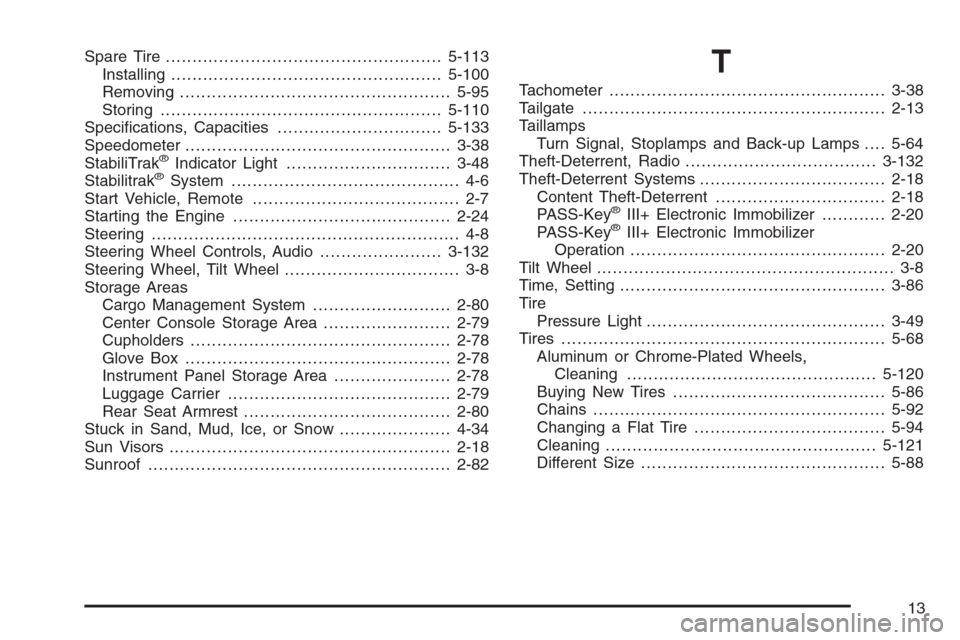
Spare Tire....................................................5-113
Installing...................................................5-100
Removing...................................................5-95
Storing.....................................................5-110
Specications, Capacities...............................5-133
Speedometer..................................................3-38
StabiliTrak
®Indicator Light...............................3-48
Stabilitrak®System........................................... 4-6
Start Vehicle, Remote....................................... 2-7
Starting the Engine.........................................2-24
Steering.......................................................... 4-8
Steering Wheel Controls, Audio.......................3-132
Steering Wheel, Tilt Wheel................................. 3-8
Storage Areas
Cargo Management System..........................2-80
Center Console Storage Area........................2-79
Cupholders.................................................2-78
Glove Box..................................................2-78
Instrument Panel Storage Area......................2-78
Luggage Carrier..........................................2-79
Rear Seat Armrest.......................................2-80
Stuck in Sand, Mud, Ice, or Snow.....................4-34
Sun Visors.....................................................2-18
Sunroof.........................................................2-82
T
Tachometer....................................................3-38
Tailgate.........................................................2-13
Taillamps
Turn Signal, Stoplamps and Back-up Lamps....5-64
Theft-Deterrent, Radio....................................3-132
Theft-Deterrent Systems...................................2-18
Content Theft-Deterrent................................2-18
PASS-Key
®III+ Electronic Immobilizer............2-20
PASS-Key®III+ Electronic Immobilizer
Operation................................................2-20
Tilt Wheel........................................................ 3-8
Time, Setting..................................................3-86
Tire
Pressure Light.............................................3-49
Tires.............................................................5-68
Aluminum or Chrome-Plated Wheels,
Cleaning...............................................5-120
Buying New Tires........................................5-86
Chains.......................................................5-92
Changing a Flat Tire....................................5-94
Cleaning...................................................5-121
Different Size..............................................5-88
13
Page 594 of 596
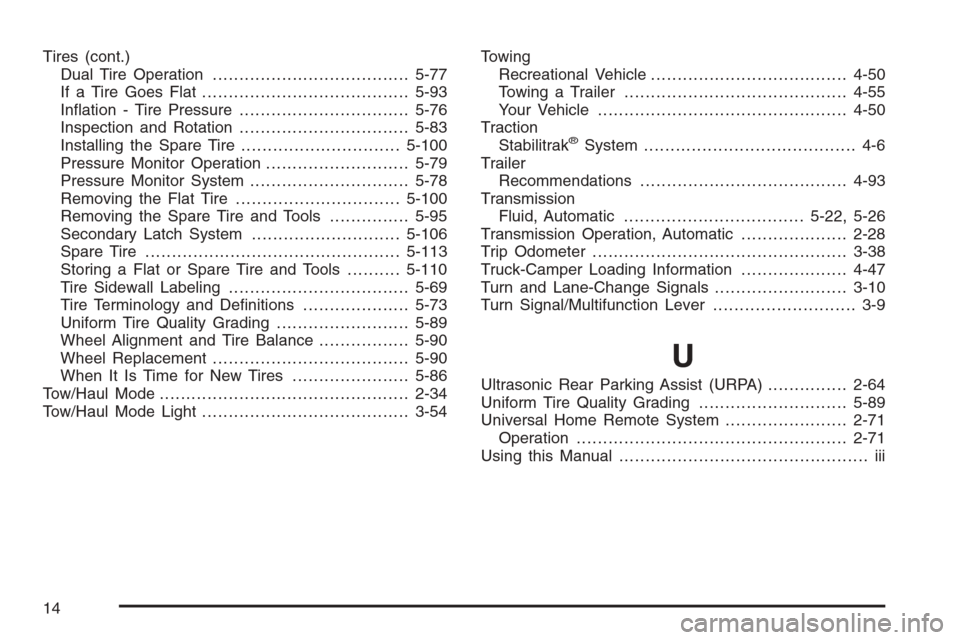
Tires (cont.)
Dual Tire Operation.....................................5-77
If a Tire Goes Flat.......................................5-93
Ination - Tire Pressure................................5-76
Inspection and Rotation................................5-83
Installing the Spare Tire..............................5-100
Pressure Monitor Operation...........................5-79
Pressure Monitor System..............................5-78
Removing the Flat Tire...............................5-100
Removing the Spare Tire and Tools...............5-95
Secondary Latch System............................5-106
Spare Tire................................................5-113
Storing a Flat or Spare Tire and Tools..........5-110
Tire Sidewall Labeling..................................5-69
Tire Terminology and Denitions....................5-73
Uniform Tire Quality Grading.........................5-89
Wheel Alignment and Tire Balance.................5-90
Wheel Replacement.....................................5-90
When It Is Time for New Tires......................5-86
Tow/Haul Mode ...............................................2-34
Tow/Haul Mode Light.......................................3-54Towing
Recreational Vehicle.....................................4-50
Towing a Trailer..........................................4-55
Your Vehicle...............................................4-50
Traction
Stabilitrak
®System........................................ 4-6
Trailer
Recommendations.......................................4-93
Transmission
Fluid, Automatic..................................5-22, 5-26
Transmission Operation, Automatic....................2-28
Trip Odometer................................................3-38
Truck-Camper Loading Information....................4-47
Turn and Lane-Change Signals.........................3-10
Turn Signal/Multifunction Lever........................... 3-9
U
Ultrasonic Rear Parking Assist (URPA)...............2-64
Uniform Tire Quality Grading............................5-89
Universal Home Remote System.......................2-71
Operation...................................................2-71
Using this Manual............................................... iii
14