ECU CHEVROLET UPLANDER 2005 1.G Workshop Manual
[x] Cancel search | Manufacturer: CHEVROLET, Model Year: 2005, Model line: UPLANDER, Model: CHEVROLET UPLANDER 2005 1.GPages: 460, PDF Size: 2.75 MB
Page 393 of 460
{CAUTION:
Incorrect wheel nuts or improperly tightened
wheel nuts can cause the wheel to come loose
and even come off. This could lead to an
accident. Be sure to use the correct wheel
nuts. If you have to replace them, be sure to
get new GM original equipment wheel nuts.
Stop somewhere as soon as you can and have
the nuts tightened with a torque wrench to the
proper torque specication. SeeCapacities
and Specifications on page 5-101for wheel nut
torque specication.
Notice:Improperly tightened wheel nuts can lead
to brake pulsation and rotor damage. To avoid
expensive brake repairs, evenly tighten the wheel
nuts in the proper sequence and to the proper
torque specication. SeeCapacities and
Specifications on page 5-101for the wheel nut
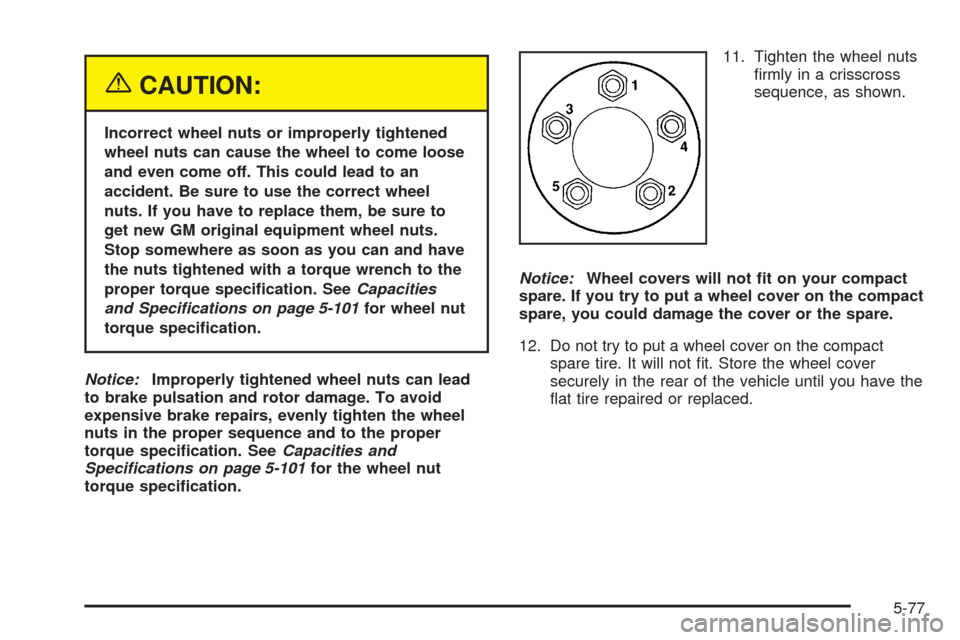
torque specication.11. Tighten the wheel nuts
rmly in a crisscross
sequence, as shown.
Notice:Wheel covers will not t on your compact
spare. If you try to put a wheel cover on the compact
spare, you could damage the cover or the spare.
12. Do not try to put a wheel cover on the compact
spare tire. It will not t. Store the wheel cover
securely in the rear of the vehicle until you have the
at tire repaired or replaced.
5-77
Page 397 of 460
To store the spare tire, do the following:
1. Lay the tire near the rear of the vehicle with the
valve stem down.
2. Remove the small center cap by tapping the back
of the cap with the extension of the shaft, if the
vehicle has aluminum wheels.
3. Slide the cable retainer through the center of the
wheel and start to raise the tire.
Make sure the retainer is fully seated across the
underside of the wheel.
4. When the tire is almost in the stored position, turn
the tire so the valve is towards the rear of the
vehicle.
This will help when you check and maintain tire
pressure in the spare.
5. Raise the tire fully against the underside of the
vehicle. Continue turning the folding wrench until
you feel more than two clicks. This indicates that the
compact spare tire is secure and the cable is
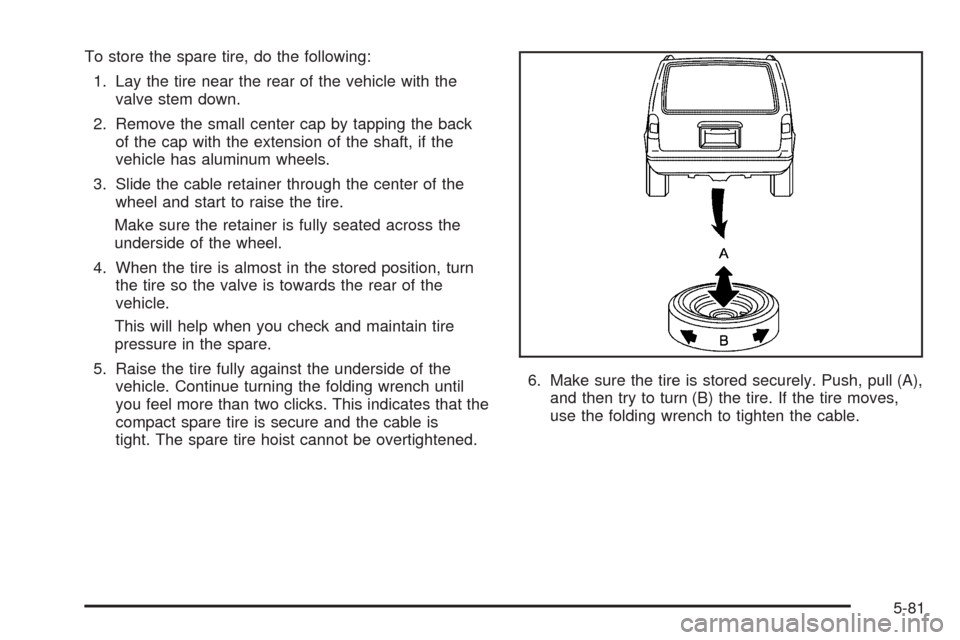
tight. The spare tire hoist cannot be overtightened.6. Make sure the tire is stored securely. Push, pull (A),
and then try to turn (B) the tire. If the tire moves,
use the folding wrench to tighten the cable.
5-81
Page 399 of 460
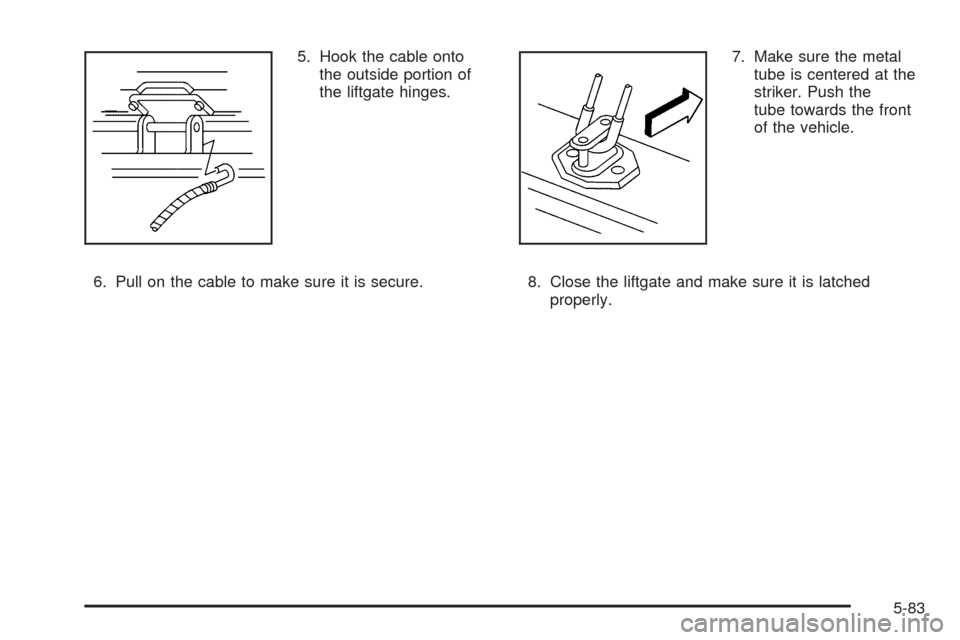
5. Hook the cable onto
the outside portion of
the liftgate hinges.
6. Pull on the cable to make sure it is secure.7. Make sure the metal
tube is centered at the
striker. Push the
tube towards the front
of the vehicle.
8. Close the liftgate and make sure it is latched
properly.
5-83
Page 400 of 460
Storing the Tools
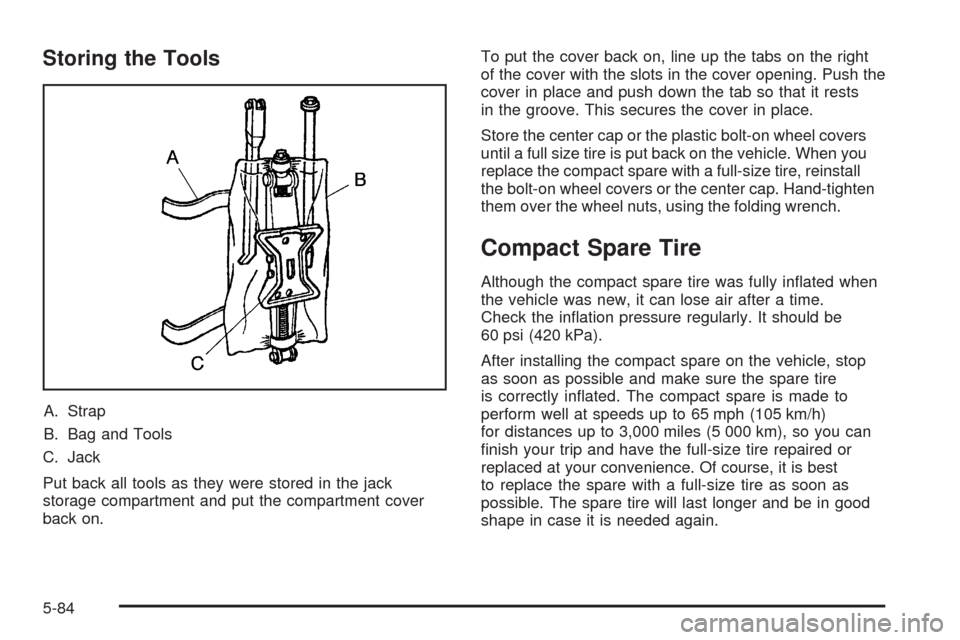
A. Strap
B. Bag and Tools
C. Jack
Put back all tools as they were stored in the jack
storage compartment and put the compartment cover
back on.To put the cover back on, line up the tabs on the right
of the cover with the slots in the cover opening. Push the
cover in place and push down the tab so that it rests
in the groove. This secures the cover in place.
Store the center cap or the plastic bolt-on wheel covers
until a full size tire is put back on the vehicle. When you
replace the compact spare with a full-size tire, reinstall
the bolt-on wheel covers or the center cap. Hand-tighten
them over the wheel nuts, using the folding wrench.
Compact Spare Tire
Although the compact spare tire was fully inated when
the vehicle was new, it can lose air after a time.
Check the ination pressure regularly. It should be
60 psi (420 kPa).
After installing the compact spare on the vehicle, stop
as soon as possible and make sure the spare tire
is correctly inated. The compact spare is made to
perform well at speeds up to 65 mph (105 km/h)
for distances up to 3,000 miles (5 000 km), so you can
nish your trip and have the full-size tire repaired or
replaced at your convenience. Of course, it is best
to replace the spare with a full-size tire as soon as
possible. The spare tire will last longer and be in good
shape in case it is needed again.
5-84
Page 427 of 460
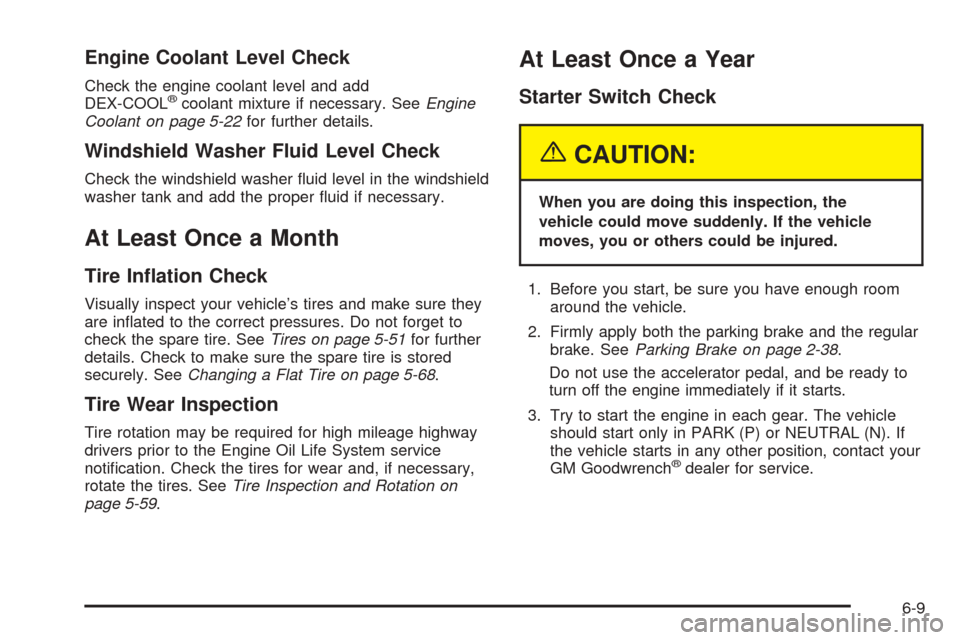
Engine Coolant Level Check
Check the engine coolant level and add
DEX-COOL®coolant mixture if necessary. SeeEngine
Coolant on page 5-22for further details.
Windshield Washer Fluid Level Check
Check the windshield washer uid level in the windshield
washer tank and add the proper uid if necessary.
At Least Once a Month
Tire Ination Check
Visually inspect your vehicle’s tires and make sure they
are inated to the correct pressures. Do not forget to
check the spare tire. SeeTires on page 5-51for further
details. Check to make sure the spare tire is stored
securely. SeeChanging a Flat Tire on page 5-68.
Tire Wear Inspection
Tire rotation may be required for high mileage highway
drivers prior to the Engine Oil Life System service
notication. Check the tires for wear and, if necessary,
rotate the tires. SeeTire Inspection and Rotation on
page 5-59.
At Least Once a Year
Starter Switch Check
{CAUTION:
When you are doing this inspection, the
vehicle could move suddenly. If the vehicle
moves, you or others could be injured.
1. Before you start, be sure you have enough room
around the vehicle.
2. Firmly apply both the parking brake and the regular
brake. SeeParking Brake on page 2-38.
Do not use the accelerator pedal, and be ready to
turn off the engine immediately if it starts.
3. Try to start the engine in each gear. The vehicle
should start only in PARK (P) or NEUTRAL (N). If
the vehicle starts in any other position, contact your
GM Goodwrench
®dealer for service.
6-9
Page 441 of 460
While we hope you never have the occasion to use our
service, it is added security while traveling for you
and your family. Remember, we are only a phone call
away. Chevrolet Roadside Assistance:
1-800-CHEV-USA (1-800-243-8872), text telephone
(TTY) users, call 1-888-889-2438.
Chevrolet reserves the right to limit services or
reimbursement to an owner or driver when, in
Chevrolet’s judgement, the claims become excessive in
frequency or type of occurrence.
Roadside Assistance is not part of or included in the
coverage provided by the New Vehicle Limited Warranty.
Chevrolet reserves the right to make any changes or
discontinue the Roadside Assistance program at
any time without notication.
Canadian Roadside Assistance
Vehicles purchased in Canada have an extensive
roadside assistance program accessible from anywhere
in Canada or the United States. Please refer to the
Warranty and Owner Assistance Information book.
Courtesy Transportation
To enhance your ownership experience, we and our
participating dealers are proud to offer Courtesy
Transportation, a customer support program for new
vehicles.
The Courtesy Transportation program is offered to retail
purchase/lease customers in conjunction with the
Bumper-to-Bumper coverage provided by the New
Vehicle Limited Warranty. Several transportation options
are available when warranty repairs are required. This will
reduce your inconvenience during warranty repairs.
Scheduling Service Appointments
When your vehicle requires warranty service, you should
contact your dealer and request an appointment. By
scheduling a service appointment and advising
your service consultant of your transportation needs,
your dealer can help minimize your inconvenience.
If your vehicle cannot be scheduled into the service
department immediately, keep driving it until it can be
scheduled for service, unless, of course, the problem is
safety-related. If it is, please call your dealership, let
them know this, and ask for instructions.
If the dealer requests that you simply drop the vehicle off
for service, you are urged to do so as early in the work
day as possible to allow for the same day repair.
7-7
Page 449 of 460
Check
Engine Light...............................................3-40
Checking Things Under the Hood......................5-10
Chemical Paint Spotting...................................5-92
Child Restraints
Built-In Child Restraint..................................1-62
Child Restraint Systems...............................1-48
Infants and Young Children...........................1-45
Lower Anchorages and Top Tethers for
Children (LATCH System)..........................1-54
Older Children.............................................1-42
Securing a Child Restraint Designed for
the LATCH System...................................1-56
Securing a Child Restraint in a Rear
Seat Position...........................................1-56
Securing a Child Restraint in the Right
Front Seat Position...................................1-58
Top Strap...................................................1-52
Top Strap Anchor Location............................1-53
Where to Put the Restraint...........................1-51
Cleaning
Aluminum Wheels........................................5-91
Exterior Lamps/Lenses.................................5-90
Fabric/Carpet..............................................5-87
Finish Care.................................................5-90
Glass Surfaces............................................5-89
Inside of Your Vehicle..................................5-86Cleaning (cont.)
Instrument Panel, Vinyl, and Other Plastic
Surfaces.................................................5-88
Leather......................................................5-88
Tires..........................................................5-91
Underbody Maintenance...............................5-92
Washing Your Vehicle...................................5-89
Weatherstrips..............................................5-89
Windshield, Backglass, and Wiper Blades.......5-90
Climate Control System...................................3-25
Outlet Adjustment........................................3-28
Rear..........................................................3-28
Comfort Guides, Rear Safety Belt.....................1-39
Compact Spare Tire........................................5-84
Content Theft-Deterrent....................................2-27
Control of a Vehicle.......................................... 4-6
Convenience Center........................................2-56
Convenience Net....................................2-55, 2-56
Coolant
Engine Temperature Gage............................3-39
Heater, Engine............................................2-34
Cooling System..............................................5-27
Cruise Control................................................3-10
Cruise Control Light........................................3-43
Cupholder(s)..................................................2-51
3
Page 453 of 460
I
Ignition Positions.............................................2-32
Infants and Young Children, Restraints...............1-45
Ination -- Tire Pressure..................................5-57
Instrument Panel
Overview..................................................... 3-4
Instrument Panel (I/P)
Brightness..................................................3-17
Cluster.......................................................3-32
Interior Lamps Control.....................................3-17
J
Jump Starting.................................................5-39
K
Keyless Entry System....................................... 2-4
Keys............................................................... 2-3
L
Labelling, Tire Sidewall....................................5-52
Lamps
Battery Run-Down Protection.........................3-20
Cargo........................................................3-19
Dome........................................................3-18
Exterior......................................................3-14
Front Reading.............................................3-19
Interior Control............................................3-17
Rear Reading.............................................3-19
LATCH System
Child Restraints...........................................1-54
Securing a Child Restraint Designed for
the LATCH System...................................1-56
Level Control..................................................4-40
Liftgate..........................................................2-23
Light
Airbag Readiness........................................3-34
Anti-Lock Brake System Warning...................3-38
Brake System Warning.................................3-37
Charging System.........................................3-37
7
Page 454 of 460
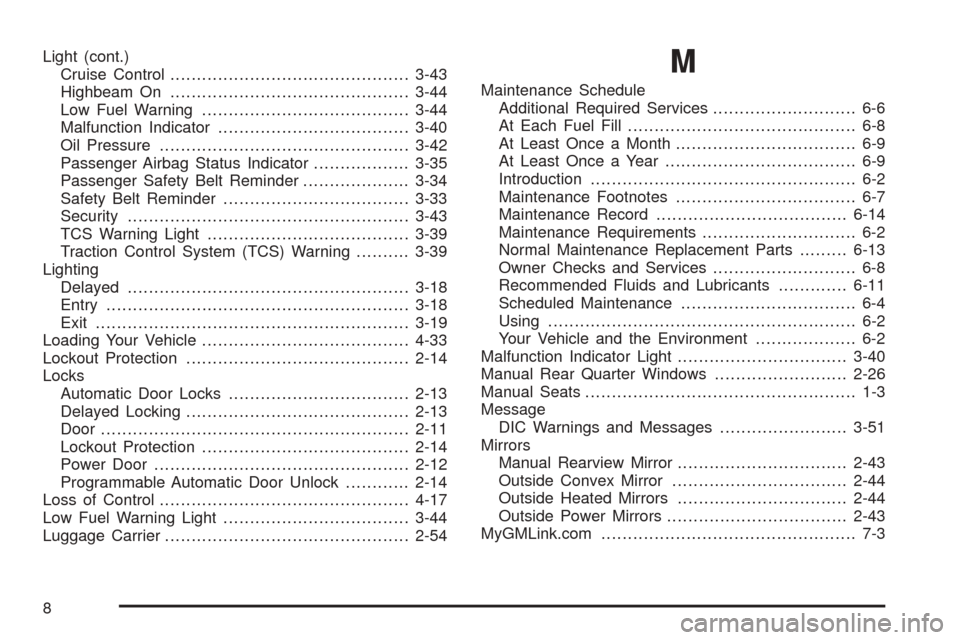
Light (cont.)
Cruise Control.............................................3-43
Highbeam On.............................................3-44
Low Fuel Warning.......................................3-44
Malfunction Indicator....................................3-40
Oil Pressure...............................................3-42
Passenger Airbag Status Indicator..................3-35
Passenger Safety Belt Reminder....................3-34
Safety Belt Reminder...................................3-33
Security.....................................................3-43
TCS Warning Light......................................3-39
Traction Control System (TCS) Warning..........3-39
Lighting
Delayed.....................................................3-18
Entry.........................................................3-18
Exit...........................................................3-19
Loading Your Vehicle.......................................4-33
Lockout Protection..........................................2-14
Locks
Automatic Door Locks..................................2-13
Delayed Locking..........................................2-13
Door..........................................................2-11
Lockout Protection.......................................2-14
Power Door................................................2-12
Programmable Automatic Door Unlock............2-14
Loss of Control...............................................4-17
Low Fuel Warning Light...................................3-44
Luggage Carrier..............................................2-54M
Maintenance Schedule
Additional Required Services........................... 6-6
At Each Fuel Fill........................................... 6-8
At Least Once a Month.................................. 6-9
At Least Once a Year.................................... 6-9
Introduction.................................................. 6-2
Maintenance Footnotes.................................. 6-7
Maintenance Record....................................6-14
Maintenance Requirements............................. 6-2
Normal Maintenance Replacement Parts.........6-13
Owner Checks and Services........................... 6-8
Recommended Fluids and Lubricants.............6-11
Scheduled Maintenance................................. 6-4
Using.......................................................... 6-2
Your Vehicle and the Environment................... 6-2
Malfunction Indicator Light................................3-40
Manual Rear Quarter Windows.........................2-26
Manual Seats................................................... 1-3
Message
DIC Warnings and Messages........................3-51
Mirrors
Manual Rearview Mirror................................2-43
Outside Convex Mirror.................................2-44
Outside Heated Mirrors................................2-44
Outside Power Mirrors..................................2-43
MyGMLink.com................................................ 7-3
8
Page 457 of 460
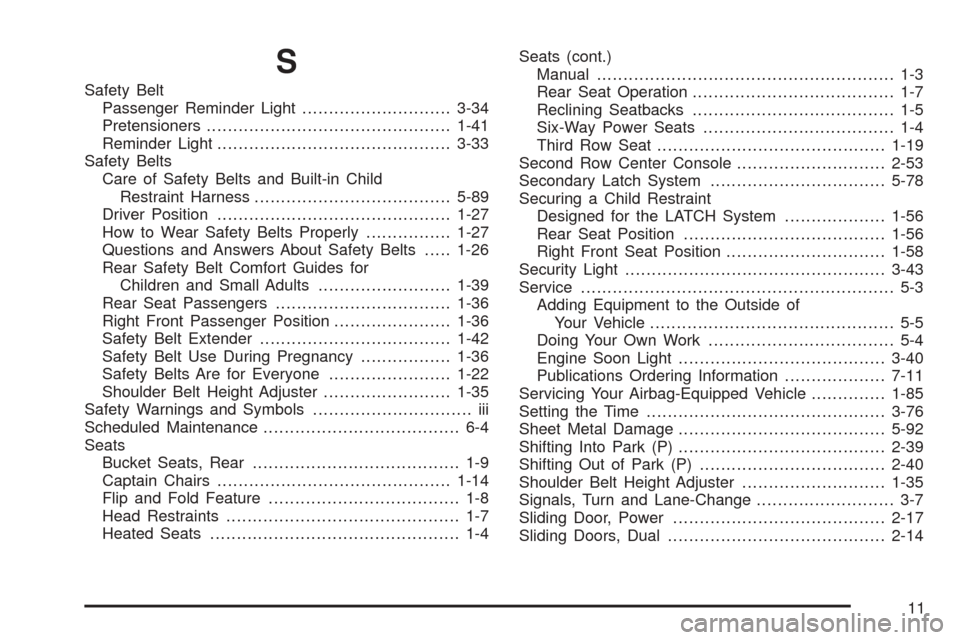
S
Safety Belt
Passenger Reminder Light............................3-34
Pretensioners..............................................1-41
Reminder Light............................................3-33
Safety Belts
Care of Safety Belts and Built-in Child
Restraint Harness.....................................5-89
Driver Position............................................1-27
How to Wear Safety Belts Properly................1-27
Questions and Answers About Safety Belts.....1-26
Rear Safety Belt Comfort Guides for
Children and Small Adults.........................1-39
Rear Seat Passengers.................................1-36
Right Front Passenger Position......................1-36
Safety Belt Extender....................................1-42
Safety Belt Use During Pregnancy.................1-36
Safety Belts Are for Everyone.......................1-22
Shoulder Belt Height Adjuster........................1-35
Safety Warnings and Symbols.............................. iii
Scheduled Maintenance..................................... 6-4
Seats
Bucket Seats, Rear....................................... 1-9
Captain Chairs............................................1-14
Flip and Fold Feature.................................... 1-8
Head Restraints............................................ 1-7
Heated Seats............................................... 1-4Seats (cont.)
Manual........................................................ 1-3
Rear Seat Operation...................................... 1-7
Reclining Seatbacks...................................... 1-5
Six-Way Power Seats.................................... 1-4
Third Row Seat...........................................1-19
Second Row Center Console............................2-53
Secondary Latch System.................................5-78
Securing a Child Restraint
Designed for the LATCH System...................1-56
Rear Seat Position......................................1-56
Right Front Seat Position..............................1-58
Security Light.................................................3-43
Service........................................................... 5-3
Adding Equipment to the Outside of
Your Vehicle.............................................. 5-5
Doing Your Own Work................................... 5-4
Engine Soon Light.......................................3-40
Publications Ordering Information...................7-11
Servicing Your Airbag-Equipped Vehicle..............1-85
Setting the Time.............................................3-76
Sheet Metal Damage.......................................5-92
Shifting Into Park (P).......................................2-39
Shifting Out of Park (P)...................................2-40
Shoulder Belt Height Adjuster...........................1-35
Signals, Turn and Lane-Change.......................... 3-7
Sliding Door, Power........................................2-17
Sliding Doors, Dual.........................................2-14
11