radio CHEVROLET UPLANDER 2006 Service Manual
[x] Cancel search | Manufacturer: CHEVROLET, Model Year: 2006, Model line: UPLANDER, Model: CHEVROLET UPLANDER 2006Pages: 458, PDF Size: 3.19 MB
Page 265 of 458
Radio Reception
You may experience frequency interference and static
during normal radio reception if items such as cellphone
chargers, vehicle convenience accessories, and
external electronic devices are plugged into the
accessory power outlet. If there is interference or static,
unplug the item from the accessory power outlet.
AM
The range for most AM stations is greater than for FM,
especially at night. The longer range can cause
station frequencies to interfere with each other. For
better radio reception, most AM radio stations will boost
the power levels during the day, and then reduce
these levels during the night. Static can also occur when
things like storms and power lines interfere with radio
reception. When this happens, try reducing the treble on
your radio.
FM Stereo
FM stereo will give the best sound, but FM signals will
reach only about 10 to 40 miles (16 to 65 km). Tall
buildings or hills can interfere with FM signals, causing
the sound to fade in and out.
XM™ Satellite Radio Service
XM™ Satellite Radio Service gives digital radio
reception from coast-to-coast in the 48 contiguous
United States, and in Canada (if available). Just as with
FM, tall buildings or hills can interfere with satellite
radio signals, causing the sound to fade in and out. In
addition, traveling or standing under heavy foliage,
bridges, garages, or tunnels may cause loss of the XM™
signal for a period of time. The radio may display NO
SIGNAL to indicate interference.
Care of Your CDs and DVDs
Handle CDs carefully. Store them in their original cases
or other protective cases and away from direct
sunlight and dust. The CD player scans the bottom
surface of the disc. If the surface of a CD is damaged,
such as cracked, broken, or scratched, the CD will
not play properly or not at all. If the surface of a CD is
soiled, take a soft, lint free cloth or dampen a clean, soft
cloth in a mild, neutral detergent solution mixed with
water, and clean it. Make sure the wiping process starts
from the center to the edge.
Do not touch the bottom side of a CD while handling it;
this could damage the surface. Pick up CDs by
grasping the outer edges or the edge of the hole and
the outer edge.
3-115
ProCarManuals.com
Page 266 of 458
Care of the CD and DVD Player
The use of CD lens cleaners for CDs is not advised,
due to the risk of contaminating the lens of the CD optics
with lubricants internal to the CD mechanism.
Fixed Mast Antenna
The xed mast antenna can withstand most car washes
without being damaged. If the mast should ever
become slightly bent, straighten it out by hand. If the
mast is badly bent, replace it.
Check occasionally to make sure the mast is still
tightened to the antenna base located on the hood of
the vehicle. If tightening is required, tighten by hand.
XM™ Satellite Radio Antenna
System
The XM™ Satellite Radio antenna is located on the roof
of your vehicle. Keep this antenna clear of snow and
ice build up for clear radio reception.
Loading items onto the roof of your vehicle can interfere
with the performance of the XM™ system. Make sure
that the XM™ satellite antenna is not obstructed.
Chime Level Adjustment
The radio is used to adjust the vehicle’s chime level.
To change the volume level of the chime, press and hold
pushbutton 6 with the ignition on and the radio power
off. The volume level will change from the normal
level to loud, and LOUD will appear on the radio display.
To change back to the default or normal setting,
press and hold pushbutton 6 again. The volume level
will change from the loud level to normal, and NORMAL
will appear on the radio display. Removing the radio
and not replacing it with a factory radio or chime module
will disable vehicle chimes.
3-116
ProCarManuals.com
Page 351 of 458
{CAUTION:
Batteries can hurt you. They can be dangerous
because:
They contain acid that can burn you.
They contain gas that can explode or ignite.
They contain enough electricity to
burn you.
If you do not follow these steps exactly, some or
all of these things can hurt you.
Notice:Ignoring these steps could result in costly
damage to your vehicle that would not be covered
by your warranty.
Trying to start your vehicle by pushing or pulling it
will not work, and it could damage your vehicle.
1. Check the other vehicle. It must have a 12-volt
battery with a negative ground system.Notice:If the other vehicle’s system is not a 12-volt
system with a negative ground, both vehicles can
be damaged. Only use vehicles with 12-volt systems
with negative grounds to jump start your vehicle.
2. Get the vehicles close enough so the jumper cables
can reach, but be sure the vehicles are not touching
each other. If they are, it could cause a ground
connection you do not want. You would not be able
to start your vehicle, and the bad grounding
could damage the electrical systems.
To avoid the possibility of the vehicles rolling, set
the parking brake rmly on both vehicles involved in
the jump start procedure. Put an automatic
transaxle in PARK (P) or a manual transaxle in
NEUTRAL before setting the parking brake.
Notice:If you leave your radio or other accessories
on during the jump starting procedure, they could
be damaged. The repairs would not be covered
by your warranty. Always turn off your radio and
other accessories when jump starting your vehicle.
3. Turn off the ignition on both vehicles. Unplug
unnecessary accessories plugged into the cigarette
lighter or the accessory power outlet. Turn off
the radio and all lamps that are not needed. This
will avoid sparks and help save both batteries. And
it could save the radio!
5-39
ProCarManuals.com
Page 406 of 458
Fuses and Circuit Breakers
The wiring circuits in your vehicle are protected from
short circuits by a combination of fuses, circuit breakers,
and fusible thermal links.
Look at the silver-colored band inside the fuse. If the
band is broken or melted, replace the fuse. Be sure you
replace a bad fuse with a new one of the identical
size and rating.
If you ever have a problem on the road and do not have
a spare fuse, you can borrow one that has the same
amperage or use one of the spare fuses in the
underhood fuse block. Just pick some feature of your
vehicle that you can get along without – like the radio or
cigarette lighter – and use its fuse, if it is the right
amperage. Replace it as soon as you can.
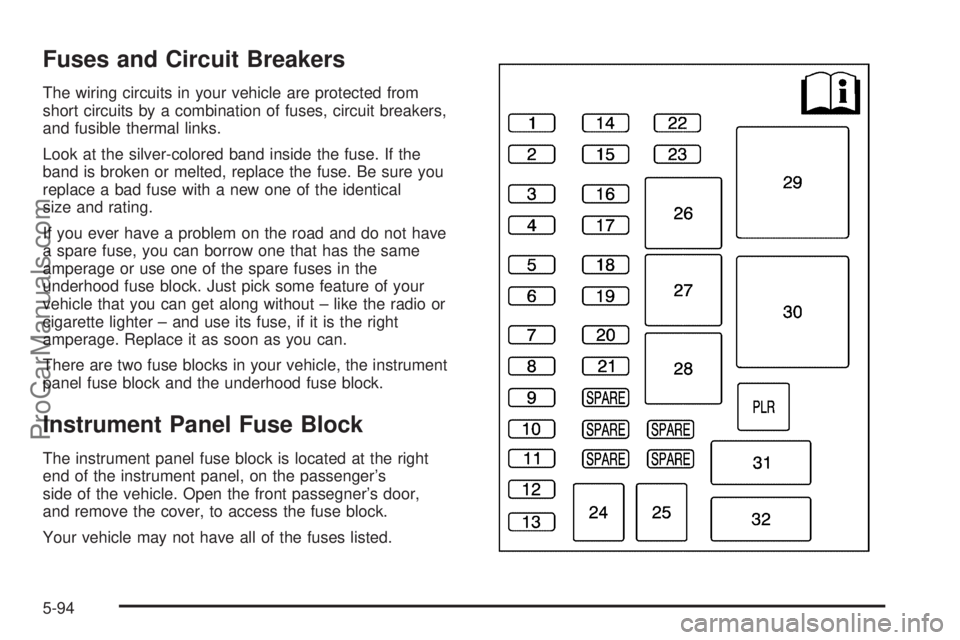
There are two fuse blocks in your vehicle, the instrument
panel fuse block and the underhood fuse block.
Instrument Panel Fuse Block
The instrument panel fuse block is located at the right
end of the instrument panel, on the passenger’s
side of the vehicle. Open the front passegner’s door,
and remove the cover, to access the fuse block.
Your vehicle may not have all of the fuses listed.
5-94
ProCarManuals.com
Page 407 of 458
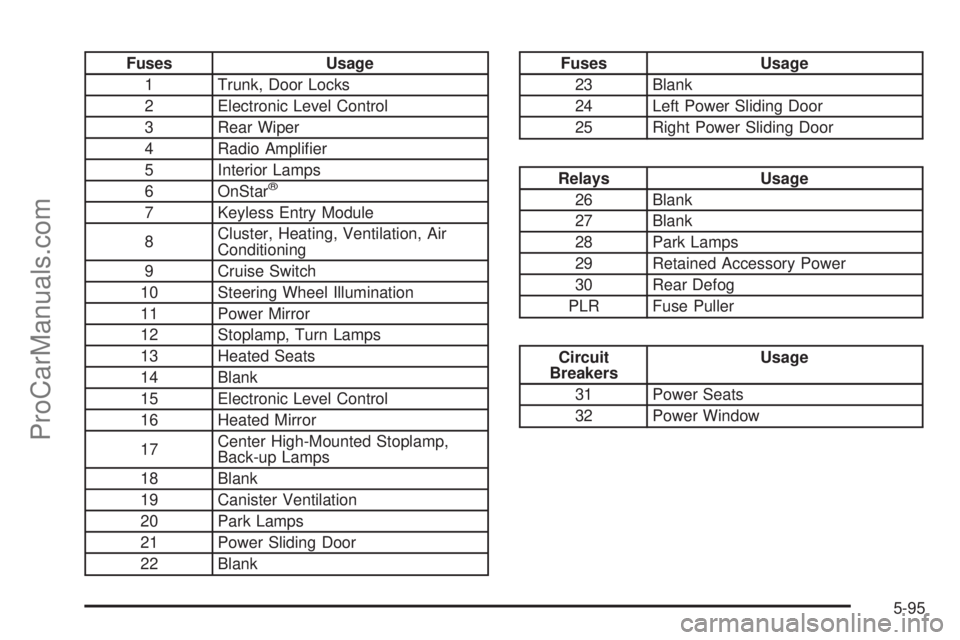
Fuses Usage
1 Trunk, Door Locks
2 Electronic Level Control
3 Rear Wiper
4 Radio Amplier
5 Interior Lamps
6 OnStar
®
7 Keyless Entry Module
8Cluster, Heating, Ventilation, Air
Conditioning
9 Cruise Switch
10 Steering Wheel Illumination
11 Power Mirror
12 Stoplamp, Turn Lamps
13 Heated Seats
14 Blank
15 Electronic Level Control
16 Heated Mirror
17Center High-Mounted Stoplamp,
Back-up Lamps
18 Blank
19 Canister Ventilation
20 Park Lamps
21 Power Sliding Door
22 Blank
Fuses Usage
23 Blank
24 Left Power Sliding Door
25 Right Power Sliding Door
Relays Usage
26 Blank
27 Blank
28 Park Lamps
29 Retained Accessory Power
30 Rear Defog
PLR Fuse Puller
Circuit
BreakersUsage
31 Power Seats
32 Power Window
5-95
ProCarManuals.com
Page 445 of 458
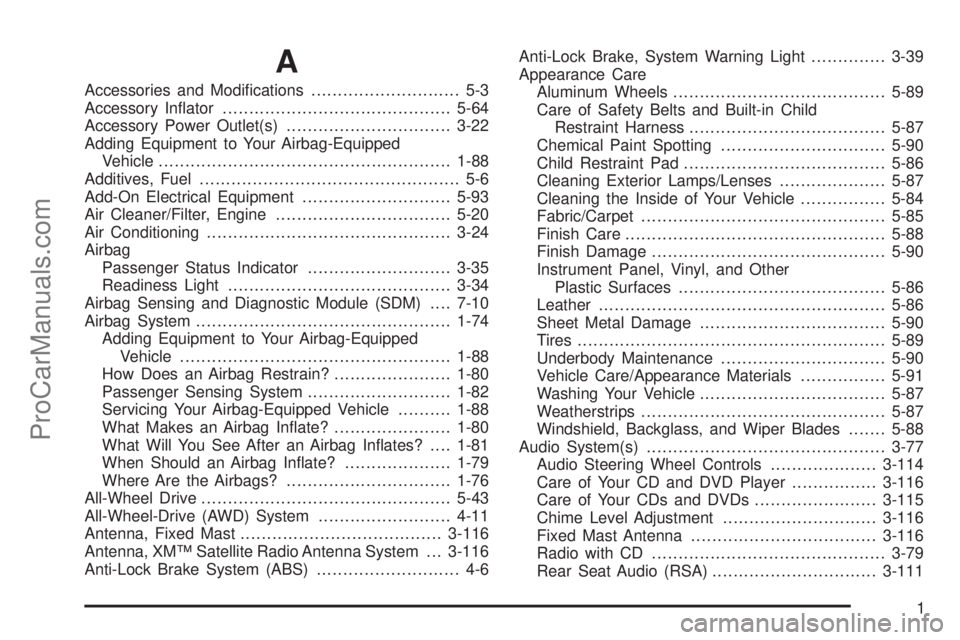
A
Accessories and Modications............................ 5-3
Accessory Inator...........................................5-64
Accessory Power Outlet(s)...............................3-22
Adding Equipment to Your Airbag-Equipped
Vehicle.......................................................1-88
Additives, Fuel................................................. 5-6
Add-On Electrical Equipment............................5-93
Air Cleaner/Filter, Engine.................................5-20
Air Conditioning..............................................3-24
Airbag
Passenger Status Indicator...........................3-35
Readiness Light..........................................3-34
Airbag Sensing and Diagnostic Module (SDM)....7-10
Airbag System................................................1-74
Adding Equipment to Your Airbag-Equipped
Vehicle...................................................1-88
How Does an Airbag Restrain?......................1-80
Passenger Sensing System...........................1-82
Servicing Your Airbag-Equipped Vehicle..........1-88
What Makes an Airbag Inate?......................1-80
What Will You See After an Airbag Inates?....1-81
When Should an Airbag Inate?....................1-79
Where Are the Airbags?...............................1-76
All-Wheel Drive...............................................5-43
All-Wheel-Drive (AWD) System.........................4-11
Antenna, Fixed Mast......................................3-116
Antenna, XM™ Satellite Radio Antenna System . . . 3-116
Anti-Lock Brake System (ABS)........................... 4-6Anti-Lock Brake, System Warning Light..............3-39
Appearance Care
Aluminum Wheels........................................5-89
Care of Safety Belts and Built-in Child
Restraint Harness.....................................5-87
Chemical Paint Spotting...............................5-90
Child Restraint Pad......................................5-86
Cleaning Exterior Lamps/Lenses....................5-87
Cleaning the Inside of Your Vehicle................5-84
Fabric/Carpet..............................................5-85
Finish Care.................................................5-88
Finish Damage............................................5-90
Instrument Panel, Vinyl, and Other
Plastic Surfaces.......................................5-86
Leather......................................................5-86
Sheet Metal Damage...................................5-90
Tires..........................................................5-89
Underbody Maintenance...............................5-90
Vehicle Care/Appearance Materials................5-91
Washing Your Vehicle...................................5-87
Weatherstrips..............................................5-87
Windshield, Backglass, and Wiper Blades.......5-88
Audio System(s).............................................3-77
Audio Steering Wheel Controls....................3-114
Care of Your CD and DVD Player................3-116
Care of Your CDs and DVDs.......................3-115
Chime Level Adjustment.............................3-116
Fixed Mast Antenna...................................3-116
Radio with CD............................................3-79
Rear Seat Audio (RSA)...............................3-111
1
ProCarManuals.com
Page 446 of 458
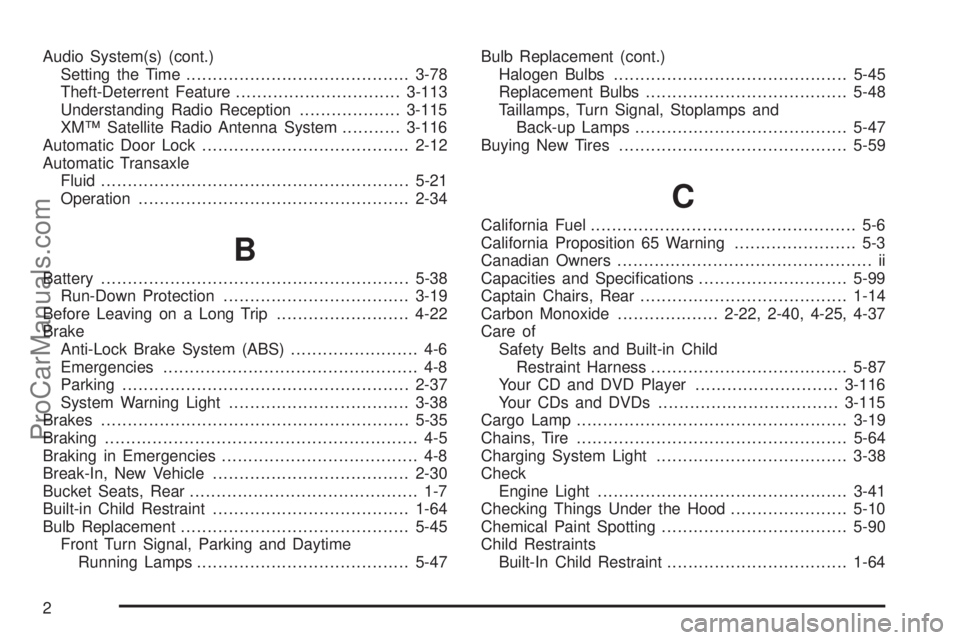
Audio System(s) (cont.)
Setting the Time..........................................3-78
Theft-Deterrent Feature...............................3-113
Understanding Radio Reception...................3-115
XM™ Satellite Radio Antenna System...........3-116
Automatic Door Lock.......................................2-12
Automatic Transaxle
Fluid..........................................................5-21
Operation...................................................2-34
B
Battery..........................................................5-38
Run-Down Protection...................................3-19
Before Leaving on a Long Trip.........................4-22
Brake
Anti-Lock Brake System (ABS)........................ 4-6
Emergencies................................................ 4-8
Parking......................................................2-37
System Warning Light..................................3-38
Brakes..........................................................5-35
Braking........................................................... 4-5
Braking in Emergencies..................................... 4-8
Break-In, New Vehicle.....................................2-30
Bucket Seats, Rear........................................... 1-7
Built-in Child Restraint.....................................1-64
Bulb Replacement...........................................5-45
Front Turn Signal, Parking and Daytime
Running Lamps........................................5-47Bulb Replacement (cont.)
Halogen Bulbs............................................5-45
Replacement Bulbs......................................5-48
Taillamps, Turn Signal, Stoplamps and
Back-up Lamps........................................5-47
Buying New Tires...........................................5-59
C
California Fuel.................................................. 5-6
California Proposition 65 Warning....................... 5-3
Canadian Owners................................................ ii
Capacities and Specications............................5-99
Captain Chairs, Rear.......................................1-14
Carbon Monoxide...................2-22, 2-40, 4-25, 4-37
Care of
Safety Belts and Built-in Child
Restraint Harness.....................................5-87
Your CD and DVD Player...........................3-116
Your CDs and DVDs..................................3-115
Cargo Lamp...................................................3-19
Chains, Tire...................................................5-64
Charging System Light....................................3-38
Check
Engine Light...............................................3-41
Checking Things Under the Hood......................5-10
Chemical Paint Spotting...................................5-90
Child Restraints
Built-In Child Restraint..................................1-64
2
ProCarManuals.com
Page 454 of 458
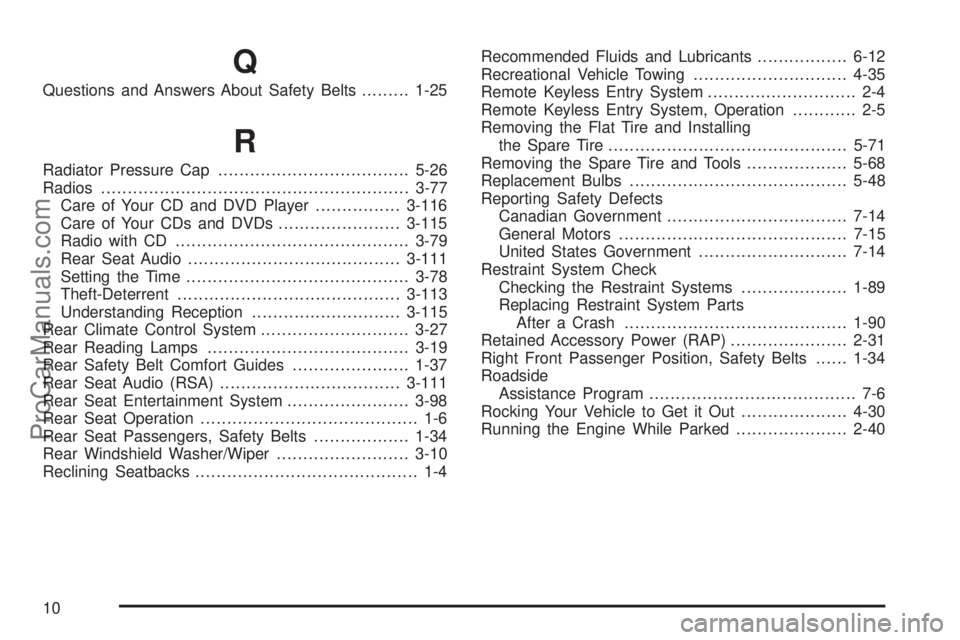
Q
Questions and Answers About Safety Belts.........1-25
R
Radiator Pressure Cap....................................5-26
Radios..........................................................3-77
Care of Your CD and DVD Player................3-116
Care of Your CDs and DVDs.......................3-115
Radio with CD............................................3-79
Rear Seat Audio........................................3-111
Setting the Time..........................................3-78
Theft-Deterrent..........................................3-113
Understanding Reception............................3-115
Rear Climate Control System............................3-27
Rear Reading Lamps......................................3-19
Rear Safety Belt Comfort Guides......................1-37
Rear Seat Audio (RSA)..................................3-111
Rear Seat Entertainment System.......................3-98
Rear Seat Operation......................................... 1-6
Rear Seat Passengers, Safety Belts..................1-34
Rear Windshield Washer/Wiper.........................3-10
Reclining Seatbacks.......................................... 1-4Recommended Fluids and Lubricants.................6-12
Recreational Vehicle Towing.............................4-35
Remote Keyless Entry System............................ 2-4
Remote Keyless Entry System, Operation............ 2-5
Removing the Flat Tire and Installing
the Spare Tire.............................................5-71
Removing the Spare Tire and Tools...................5-68
Replacement Bulbs.........................................5-48
Reporting Safety Defects
Canadian Government..................................7-14
General Motors...........................................7-15
United States Government............................7-14
Restraint System Check
Checking the Restraint Systems....................1-89
Replacing Restraint System Parts
After a Crash..........................................1-90
Retained Accessory Power (RAP)......................2-31
Right Front Passenger Position, Safety Belts......1-34
Roadside
Assistance Program....................................... 7-6
Rocking Your Vehicle to Get it Out....................4-30
Running the Engine While Parked.....................2-40
10
ProCarManuals.com
Page 456 of 458
Spare Tire
Accessory Inator........................................5-64
Compact....................................................5-83
Installing....................................................5-71
Removing...................................................5-68
Storing.......................................................5-79
Specications, Capacities.................................5-99
Speedometer..................................................3-33
StabiliTrak
®System.......................................... 4-9
Starting Your Engine.......................................2-32
Steering........................................................4-11
Steering Wheel Controls, Audio.......................3-114
Steering Wheel, Tilt Wheel................................. 3-6
Storage Areas................................................2-48
Convenience Center.....................................2-53
Convenience Net.................................2-52, 2-53
Cupholder(s)...............................................2-48
Floor Console Storage Area..........................2-50
Folding Tray...............................................2-50
Glove Box..................................................2-48
Luggage Carrier..........................................2-52
Overhead Console...............................2-49, 2-50
Second Row Center Console........................2-51
Stuck in Sand, Mud, Ice or Snow......................4-29
Sun Visors.....................................................2-26
Switchbanks
Overhead Console.......................................3-20
T
Tachometer....................................................3-33
Taillamps
Turn Signal, Stoplamps and Back-up Lamps....5-47
TCS Warning Light..........................................3-40
Theft-Deterrent, Radio....................................3-113
Theft-Deterrent Systems...................................2-26
Content Theft-Deterrent................................2-27
PASS-Key
®III .............................................2-28
PASS-Key®III Operation..............................2-29
Third Row Seat..............................................1-18
Tilt Wheel........................................................ 3-6
Tires.............................................................5-50
Aluminum Wheels, Cleaning..........................5-89
Buying New Tires........................................5-59
Chains.......................................................5-64
Changing a Flat Tire....................................5-66
Cleaning....................................................5-89
Compact Spare Tire.....................................5-83
Different Size..............................................5-60
If a Tire Goes Flat.......................................5-66
Ination -- Tire Pressure...............................5-56
Inator, Accessory.......................................5-64
Inspection and Rotation................................5-57
Installing the Spare Tire................................5-71
Removing the Flat Tire.................................5-71
Removing the Spare Tire and Tools...............5-68
Secondary Latch System..............................5-77
Storing a Flat or Spare Tire and Tools............5-79
12
ProCarManuals.com
Page 457 of 458
Tires (cont.)
Tire Sidewall Labeling..................................5-51
Tire Terminology and Denitions....................5-53
Uniform Tire Quality Grading.........................5-61
Wheel Alignment and Tire Balance.................5-62
Wheel Replacement.....................................5-62
When It Is Time for New Tires......................5-58
Towing
Recreational Vehicle.....................................4-35
Towing a Trailer..........................................4-37
Your Vehicle...............................................4-35
Traction
Control System (TCS).................................... 4-8
Control System Warning Light.......................3-40
StabiliTrak
®System....................................... 4-9
Transaxle
Fluid, Automatic...........................................5-21
Transaxle Operation, Automatic.........................2-34
Trip Odometer................................................3-33
Turn and Lane-Change Signals.......................... 3-8
Turn Signal/Multifunction Lever........................... 3-7
U
Ultrasonic Rear Parking Assist (URPA)...............3-20
Understanding Radio Reception.......................3-115
Uniform Tire Quality Grading............................5-61
Universal Home Remote System.......................2-44
Operation...................................................2-45
V
Vehicle
Control........................................................ 4-5
Damage Warnings........................................... iv
Loading......................................................4-30
Symbols......................................................... iv
Vehicle Data Collection and Event Data
Recorders..................................................7-10
Vehicle Identication
Number (VIN).............................................5-92
Service Parts Identication Label...................5-92
Vehicle Personalization
DIC ...........................................................3-69
Ventilation Adjustment......................................3-27
Visors...........................................................2-26
13
ProCarManuals.com