light CHEVROLET UPLANDER 2008 1.G Owners Manual
[x] Cancel search | Manufacturer: CHEVROLET, Model Year: 2008, Model line: UPLANDER, Model: CHEVROLET UPLANDER 2008 1.GPages: 476, PDF Size: 5.77 MB
Page 410 of 476
Appearance Care
Interior Cleaning
Your vehicle’s interior will continue to look its best if it is
cleaned often. Although not always visible, dust and
dirt can accumulate on your upholstery. Dirt can damage
carpet, fabric, leather, and plastic surfaces. Regular
vacuuming is recommended to remove particles
from your upholstery. It is important to keep your
upholstery from becoming and remaining heavily soiled.
Soils should be removed as quickly as possible.
Your vehicle’s interior may experience extremes of heat
that could cause stains to set rapidly.
Lighter colored interiors may require more frequent
cleaning. Use care because newspapers and garments
that transfer color to your home furnishings may also
transfer color to your vehicle’s interior.
When cleaning your vehicle’s interior, only use cleaners
specically designed for the surfaces being cleaned.
Permanent damage may result from using cleaners on
surfaces for which they were not intended. Use glass
cleaner only on glass. Remove any accidental
over-spray from other surfaces immediately. To prevent
over-spray, apply cleaner directly to the cleaning
cloth.Notice:If you use abrasive cleaners when cleaning
glass surfaces on your vehicle, you could scratch
the glass and/or cause damage to the rear window
defogger. When cleaning the glass on your
vehicle, use only a soft cloth and glass cleaner.
Many cleaners contain solvents that may become
concentrated in your vehicle’s breathing space.
Before using cleaners, read and adhere to all safety
instructions on the label. While cleaning your vehicle’s
interior, maintain adequate ventilation by opening
your vehicle’s doors and windows.
Dust may be removed from small buttons and knobs
using a small brush with soft bristles.
Your dealer/retailer has a product for cleaning your
vehicle’s glass. Should it become necessary, you can
also obtain a product from your dealer/retailer to remove
odors from your vehicle’s upholstery.
Do not clean your vehicle using the following cleaners
or techniques:
Never use a knife or any other sharp object to
remove a soil from any interior surface.
Never use a stiff brush. It can cause damage to
your vehicle’s interior surfaces.
Never apply heavy pressure or rub aggressively
with a cleaning cloth. Use of heavy pressure
can damage your interior and does not improve the
effectiveness of soil removal.
5-90
Page 413 of 476
Care of Safety Belts and Built-in
Child Restraint Harness
Keep the safety belts and the built-in child restraint
harness clean and dry.
{CAUTION:
Do not bleach or dye safety belts or the built-in
child restraint harness. If you do, they may be
severely weakened. In a crash, they might not
be able to provide adequate protection. Clean
the safety belts and the child restraint harness
only with mild soap and lukewarm water.
Weatherstrips
Silicone grease on weatherstrips will make them last
longer, seal better, and not stick or squeak. Apply
silicone grease with a clean cloth. During very cold,
damp weather frequent application may be required.
SeeRecommended Fluids and Lubricants on page 6-11.
Washing Your Vehicle
The best way to preserve your vehicle’s nish is to keep
it clean by washing it often.
Notice:Certain cleaners contain chemicals that can
damage the emblems or nameplates on your vehicle.
Check the cleaning product label. If it states that
is should not be used on plastic parts, do not use it
on your vehicle or damage may occur and it
would not be covered by the warranty.
Do not wash the vehicle in direct sunlight. Use a car
washing soap. Do not use cleaning agents that
are petroleum based or that contain acid or abrasives,
as they can damage the paint, metal or plastic on
your vehicle. Approved cleaning products can be
obtained from your dealer/retailer. SeeVehicle
Care/Appearance Materials on page 5-97. Follow all
manufacturers’ directions regarding correct product
usage, necessary safety precautions and appropriate
disposal of any vehicle care product.
Rinse the vehicle well, before washing and after to
remove all cleaning agents completely. If they are
allowed to dry on the surface, they could stain.
Dry the nish with a soft, clean chamois or an all-cotton
towel to avoid surface scratches and water spotting.
5-93
Page 417 of 476
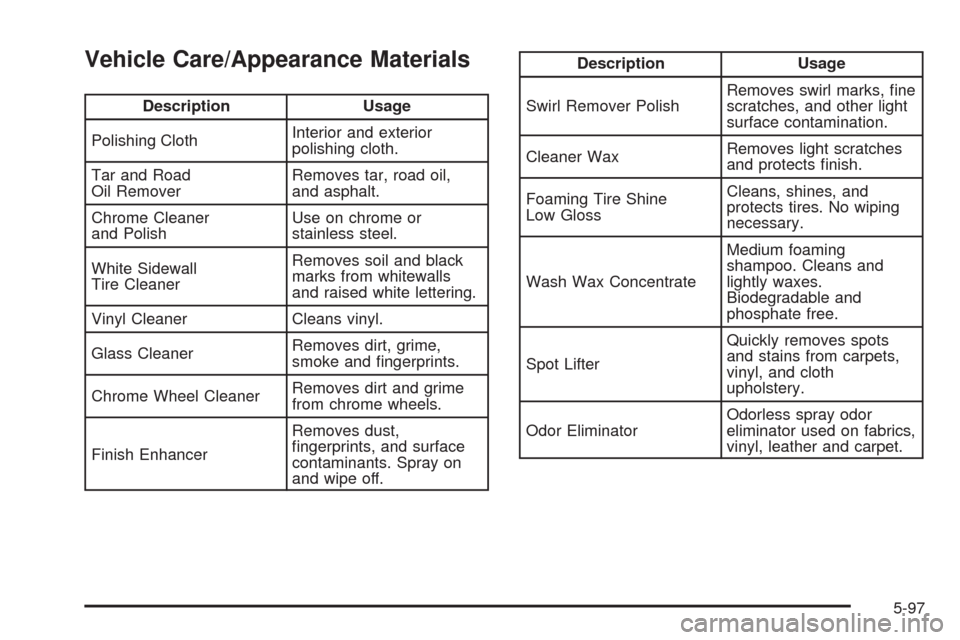
Vehicle Care/Appearance Materials
Description Usage
Polishing ClothInterior and exterior
polishing cloth.
Tar and Road
Oil RemoverRemoves tar, road oil,
and asphalt.
Chrome Cleaner
and PolishUse on chrome or
stainless steel.
White Sidewall
Tire CleanerRemoves soil and black
marks from whitewalls
and raised white lettering.
Vinyl Cleaner Cleans vinyl.
Glass CleanerRemoves dirt, grime,
smoke and ngerprints.
Chrome Wheel CleanerRemoves dirt and grime
from chrome wheels.
Finish EnhancerRemoves dust,
ngerprints, and surface
contaminants. Spray on
and wipe off.
Description Usage
Swirl Remover PolishRemoves swirl marks, ne
scratches, and other light
surface contamination.
Cleaner WaxRemoves light scratches
and protects nish.
Foaming Tire Shine
Low GlossCleans, shines, and
protects tires. No wiping
necessary.
Wash Wax ConcentrateMedium foaming
shampoo. Cleans and
lightly waxes.
Biodegradable and
phosphate free.
Spot LifterQuickly removes spots
and stains from carpets,
vinyl, and cloth
upholstery.
Odor EliminatorOdorless spray odor
eliminator used on fabrics,
vinyl, leather and carpet.
5-97
Page 420 of 476
Fuses and Circuit Breakers
The wiring circuits in your vehicle are protected from
short circuits by a combination of fuses, circuit breakers
and fusible thermal links. This greatly reduces the
chance of res caused by electrical problems.
Look at the silver-colored band inside the fuse. If the
band is broken or melted, replace the fuse. Be sure you
replace a bad fuse with a new one of the identical
size and rating.
If you ever have a problem on the road and don’t have
a spare fuse, you can borrow one that has the same
amperage. Just pick some feature of your vehicle
that you can get along without – like the radio or
cigarette lighter – and use its fuse, if it is the correct
amperage. Replace it as soon as you can.
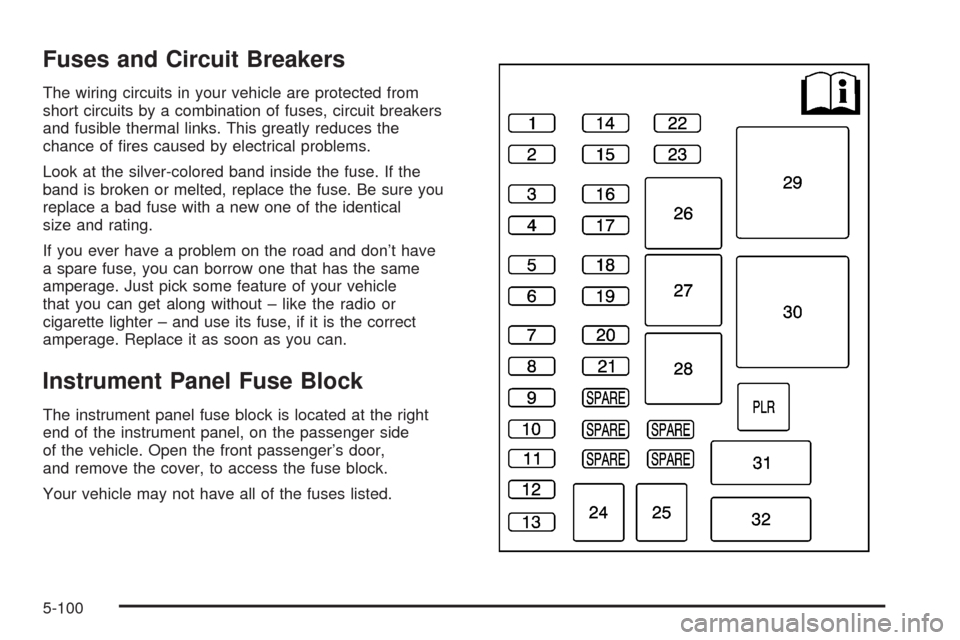
Instrument Panel Fuse Block
The instrument panel fuse block is located at the right
end of the instrument panel, on the passenger side
of the vehicle. Open the front passenger’s door,
and remove the cover, to access the fuse block.
Your vehicle may not have all of the fuses listed.
5-100
Page 433 of 476
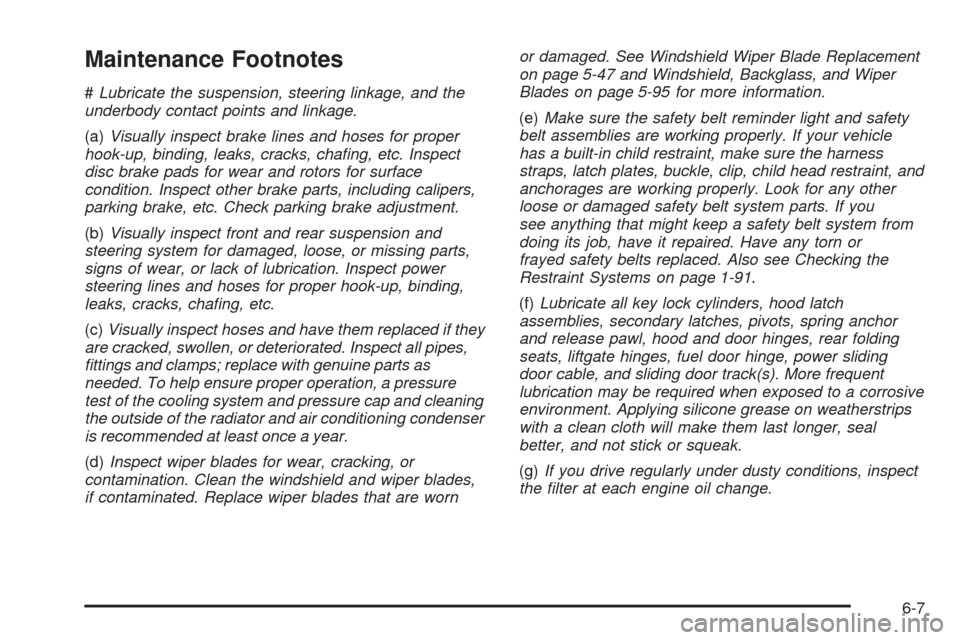
Maintenance Footnotes
#Lubricate the suspension, steering linkage, and the
underbody contact points and linkage.
(a)Visually inspect brake lines and hoses for proper
hook-up, binding, leaks, cracks, chafing, etc. Inspect
disc brake pads for wear and rotors for surface
condition. Inspect other brake parts, including calipers,
parking brake, etc. Check parking brake adjustment.
(b)Visually inspect front and rear suspension and
steering system for damaged, loose, or missing parts,
signs of wear, or lack of lubrication. Inspect power
steering lines and hoses for proper hook-up, binding,
leaks, cracks, chafing, etc.
(c)Visually inspect hoses and have them replaced if they
are cracked, swollen, or deteriorated. Inspect all pipes,
fittings and clamps; replace with genuine parts as
needed. To help ensure proper operation, a pressure
test of the cooling system and pressure cap and cleaning
the outside of the radiator and air conditioning condenser
is recommended at least once a year.
(d)Inspect wiper blades for wear, cracking, or
contamination. Clean the windshield and wiper blades,
if contaminated. Replace wiper blades that are wornor damaged. See Windshield Wiper Blade Replacement
on page 5-47 and Windshield, Backglass, and Wiper
Blades on page 5-95 for more information.
(e)Make sure the safety belt reminder light and safety
belt assemblies are working properly. If your vehicle
has a built-in child restraint, make sure the harness
straps, latch plates, buckle, clip, child head restraint, and
anchorages are working properly. Look for any other
loose or damaged safety belt system parts. If you
see anything that might keep a safety belt system from
doing its job, have it repaired. Have any torn or
frayed safety belts replaced. Also see Checking the
Restraint Systems on page 1-91.
(f)Lubricate all key lock cylinders, hood latch
assemblies, secondary latches, pivots, spring anchor
and release pawl, hood and door hinges, rear folding
seats, liftgate hinges, fuel door hinge, power sliding
door cable, and sliding door track(s). More frequent
lubrication may be required when exposed to a corrosive
environment. Applying silicone grease on weatherstrips
with a clean cloth will make them last longer, seal
better, and not stick or squeak.
(g)If you drive regularly under dusty conditions, inspect
the filter at each engine oil change.
6-7
Page 451 of 476
Services Provided
The following services are provided in the U.S. and
Canada up to 5 years/100,000 miles (160 000 km),
whichever occurs rst, and, in Canada only, up
to a maximum coverage of $100.
Fuel Delivery:Delivery of enough fuel for the
vehicle to get to the nearest service station
(approximately $5 in Canada). In Canada, service to
provide diesel may be restricted. For safety reasons,
propane and other alternative fuels will not be
provided through this service.
Lock-out Service:Lock-out service will be covered
at no charge if you are unable to gain entry into your
vehicle. A remote unlock may be available if you
have an active OnStar
®subscription. To ensure
security, the driver must present personal
identication before lock-out service is provided.
In Canada, the vehicle registration is also required.
Emergency Tow From a Public Roadway or
Highway:Tow to the nearest dealership for warranty
service or in the event of a vehicle-disabling crash.
Winch-out assistance is provided when the vehicle
is mired in sand, mud, or snow.
Flat Tire Change:Installation of a spare tire in good
condition, when equipped and properly inated, is
covered at no charge. The customer is responsible
for the repair or replacement of the tire if not covered
by a warrantable failure.
Jump Start:A battery jump start is covered at no
charge if the vehicle does not start.
Trip Routing Service (Canada only):Upon
request, Roadside Assistance will send you detailed,
computer personalized maps, highlighting your
choice of either the most direct route or the most
scenic route to your destination, anywhere in North
America, along with helpful travel information
pertaining to your trip.
Please allow three weeks before your planned
departure date. Trip routing requests will be limited
to six per calendar year.
7-7
Page 463 of 476
A
Accessories and Modications............................ 5-3
Adding Equipment to Your Airbag-Equipped
Vehicle.......................................................1-90
Additives, Fuel................................................. 5-6
Add-On Electrical Equipment............................5-99
Air Cleaner/Filter, Engine.................................5-18
Air Conditioning......................................3-24, 3-27
Airbag
Passenger Status Indicator...........................3-38
Readiness Light..........................................3-37
Airbag System................................................1-77
What Will You See After an Airbag Inates?....1-84
When Should an Airbag Inate?....................1-82
Where Are the Airbags?...............................1-80
Airbag Systems
Adding Equipment to Your Airbag-Equipped
Vehicle...................................................1-90
How Does an Airbag Restrain?......................1-83
Passenger Sensing System...........................1-85
Servicing Your Airbag-Equipped Vehicle..........1-90
What Makes an Airbag Inate?......................1-83
Antenna, Fixed Mast......................................3-121
Antenna, XM™ Satellite Radio Antenna System . . . 3-121
Antilock Brake System (ABS)............................. 4-5
Antilock Brake, System Warning Light................3-42Appearance Care
Aluminum Wheels........................................5-95
Care of Safety Belts and Built-in Child
Restraint Harness.....................................5-93
Chemical Paint Spotting...............................5-96
Child Restraint Pad......................................5-92
Cleaning Exterior Lamps/Lenses....................5-94
Fabric/Carpet..............................................5-91
Finish Care.................................................5-94
Finish Damage............................................5-96
Instrument Panel, Vinyl, and Other Plastic
Surfaces.................................................5-92
Interior Cleaning..........................................5-90
Leather......................................................5-92
Sheet Metal Damage...................................5-96
Tires
..........................................................5-96
Underbody Maintenance...............................5-96
Vehicle Care/Appearance Materials................5-97
Washing Your Vehicle...................................5-93
Weatherstrips..............................................5-93
Windshield, Backglass, and Wiper Blades.......5-95
Appointments, Scheduling Service....................... 7-9
Audio System.................................................3-84
Audio Steering Wheel Controls....................3-119
Chime Level Adjustment.............................3-121
Fixed Mast Antenna...................................3-121
1
Page 464 of 476
Audio System (cont.)
Navigation/Radio System, see Navigation
Manual.................................................3-102
Radio Reception........................................3-120
Rear Seat Audio (RSA)...............................3-117
Setting the Time..........................................3-85
Theft-Deterrent Feature...............................3-118
XM™ Satellite Radio Antenna System...........3-121
Audio System(s).............................................3-86
Automatic Door Lock.......................................2-12
Automatic Transmission
Fluid..........................................................5-20
Operation...................................................2-35
B
Battery..........................................................5-36
Electric Power Management..........................3-20
Run-Down Protection...................................3-21
Brake
Emergencies................................................ 4-6
Brakes..........................................................5-33
System Warning Light..................................3-41
Braking........................................................... 4-4
Braking in Emergencies..................................... 4-6
Break-In, New Vehicle.....................................2-31
Bucket Seats, Rear........................................... 1-6
Built-in Child Restraint.....................................1-68Bulb Replacement...........................................5-42
Front Turn Signal, Parking and Daytime
Running Lamps........................................5-44
Halogen Bulbs............................................5-42
Headlamp Aiming........................................5-41
License Plate Lamps....................................5-46
Replacement Bulbs......................................5-46
Taillamps, Turn Signal, Stoplamps and
Back-up Lamps........................................5-44
Buying New Tires...........................................5-65
C
Calibration.....................................................3-56
California Fuel.................................................. 5-5
California Perchlorate Materials Requirements....... 5-4
California Proposition 65 Warning....................... 5-3
Canadian Owners................................................ ii
Capacities and Specications..........................5-105
Captain Chairs, Rear.......................................1-14
Carbon Monoxide...........................2-41, 4-17, 4-28
Care of
Safety Belts and Built-in Child Restraint
Harness..................................................5-93
Cargo Lamp...................................................3-19
CD, MP3 .......................................................3-98
Chains, Tire...................................................5-70
Charging System Light....................................3-40
2
Page 465 of 476
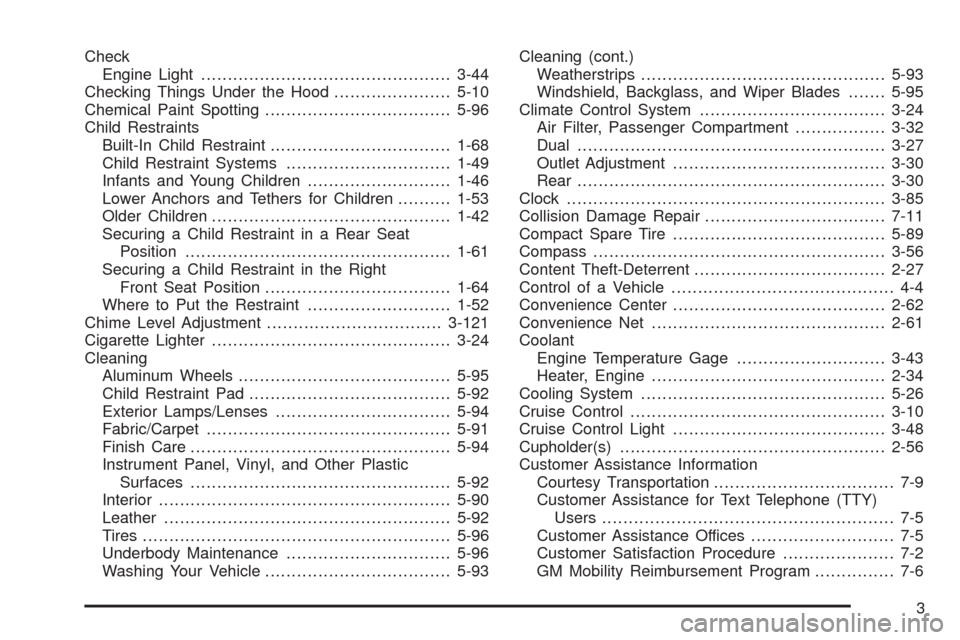
Check
Engine Light...............................................3-44
Checking Things Under the Hood......................5-10
Chemical Paint Spotting...................................5-96
Child Restraints
Built-In Child Restraint..................................1-68
Child Restraint Systems...............................1-49
Infants and Young Children...........................1-46
Lower Anchors and Tethers for Children..........1-53
Older Children.............................................1-42
Securing a Child Restraint in a Rear Seat
Position..................................................1-61
Securing a Child Restraint in the Right
Front Seat Position...................................1-64
Where to Put the Restraint...........................1-52
Chime Level Adjustment.................................3-121
Cigarette Lighter.............................................3-24
Cleaning
Aluminum Wheels........................................5-95
Child Restraint Pad......................................5-92
Exterior Lamps/Lenses.................................5-94
Fabric/Carpet..............................................5-91
Finish Care.................................................5-94
Instrument Panel, Vinyl, and Other Plastic
Surfaces.................................................5-92
Interior.......................................................5-90
Leather......................................................5-92
Tires..........................................................5-96
Underbody Maintenance...............................5-96
Washing Your Vehicle...................................5-93Cleaning (cont.)
Weatherstrips..............................................5-93
Windshield, Backglass, and Wiper Blades.......5-95
Climate Control System...................................3-24
Air Filter, Passenger Compartment.................3-32
Dual..........................................................3-27
Outlet Adjustment........................................3-30
Rear..........................................................3-30
Clock
............................................................3-85
Collision Damage Repair..................................7-11
Compact Spare Tire........................................5-89
Compass.......................................................3-56
Content Theft-Deterrent....................................2-27
Control of a Vehicle.......................................... 4-4
Convenience Center........................................2-62
Convenience Net............................................2-61
Coolant
Engine Temperature Gage............................3-43
Heater, Engine............................................2-34
Cooling System..............................................5-26
Cruise Control................................................3-10
Cruise Control Light........................................3-48
Cupholder(s)..................................................2-56
Customer Assistance Information
Courtesy Transportation.................................. 7-9
Customer Assistance for Text Telephone (TTY)
Users....................................................... 7-5
Customer Assistance Offices........................... 7-5
Customer Satisfaction Procedure..................... 7-2
GM Mobility Reimbursement Program............... 7-6
3
Page 466 of 476
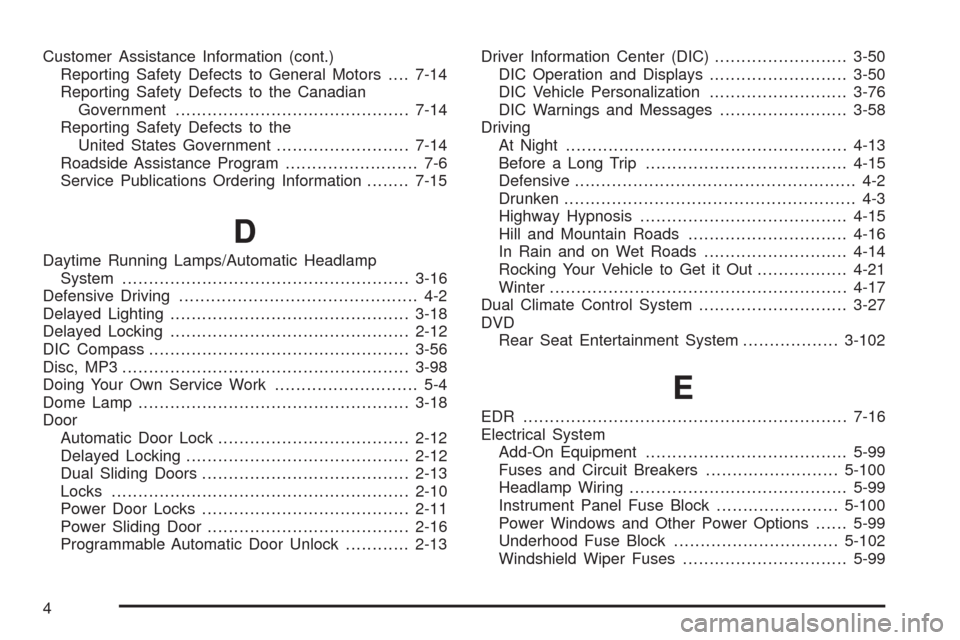
Customer Assistance Information (cont.)
Reporting Safety Defects to General Motors....7-14
Reporting Safety Defects to the Canadian
Government............................................7-14
Reporting Safety Defects to the
United States Government.........................7-14
Roadside Assistance Program......................... 7-6
Service Publications Ordering Information........7-15
D
Daytime Running Lamps/Automatic Headlamp
System......................................................3-16
Defensive Driving............................................. 4-2
Delayed Lighting.............................................3-18
Delayed Locking.............................................2-12
DIC Compass.................................................3-56
Disc, MP3......................................................3-98
Doing Your Own Service Work........................... 5-4
Dome Lamp...................................................3-18
Door
Automatic Door Lock....................................2-12
Delayed Locking..........................................2-12
Dual Sliding Doors.......................................2-13
Locks........................................................2-10
Power Door Locks.......................................2-11
Power Sliding Door......................................2-16
Programmable Automatic Door Unlock............2-13Driver Information Center (DIC).........................3-50
DIC Operation and Displays..........................3-50
DIC Vehicle Personalization..........................3-76
DIC Warnings and Messages........................3-58
Driving
At Night.....................................................4-13
Before a Long Trip......................................4-15
Defensive..................................................... 4-2
Drunken....................................................... 4-3
Highway Hypnosis.......................................4-15
Hill and Mountain Roads..............................4-16
In Rain and on Wet Roads...........................4-14
Rocking Your Vehicle to Get it Out.................4-21
Winter........................................................4-17
Dual Climate Control System............................3-27
DVD
Rear Seat Entertainment System..................3-102
E
EDR .............................................................7-16
Electrical System
Add-On Equipment......................................5-99
Fuses and Circuit Breakers.........................5-100
Headlamp Wiring.........................................5-99
Instrument Panel Fuse Block.......................5-100
Power Windows and Other Power Options......5-99
Underhood Fuse Block...............................5-102
Windshield Wiper Fuses...............................5-99
4