air conditioning CHRYSLER SEBRING 2004 2.G User Guide
[x] Cancel search | Manufacturer: CHRYSLER, Model Year: 2004, Model line: SEBRING, Model: CHRYSLER SEBRING 2004 2.GPages: 273, PDF Size: 4.88 MB
Page 205 of 273
Cooling System
Inspection
WARNING!
²When working near the radiator cooling fan, dis-
connect the fan motor lead or turn the ignition key
to the OFF position. The fan is controlled by both
the temperature of the engine cooling system and
the pressure in the air conditioning system and
can start at any time the ignition key is in the ON
position.
²You or others can be badly burned by hot coolant
or steam from your radiator. If you see or hear
steam coming from under the hood, don't open
the hood until the radiator has had time to cool.
Never try to open a cooling system pressure cap
when the radiator or cap is hot.
Coolant Checks
Check coolant protection every 12 months (before the
onset of freezing weather, where applicable). If coolant isdirty or rusty in appearance, the system should be
drained, flushed and refilled with fresh coolant.
Check the front of the radiator for any accumulation of
bugs, leaves, etc. Clean the radiator by gently spraying
water from a garden hose at the back of the core.
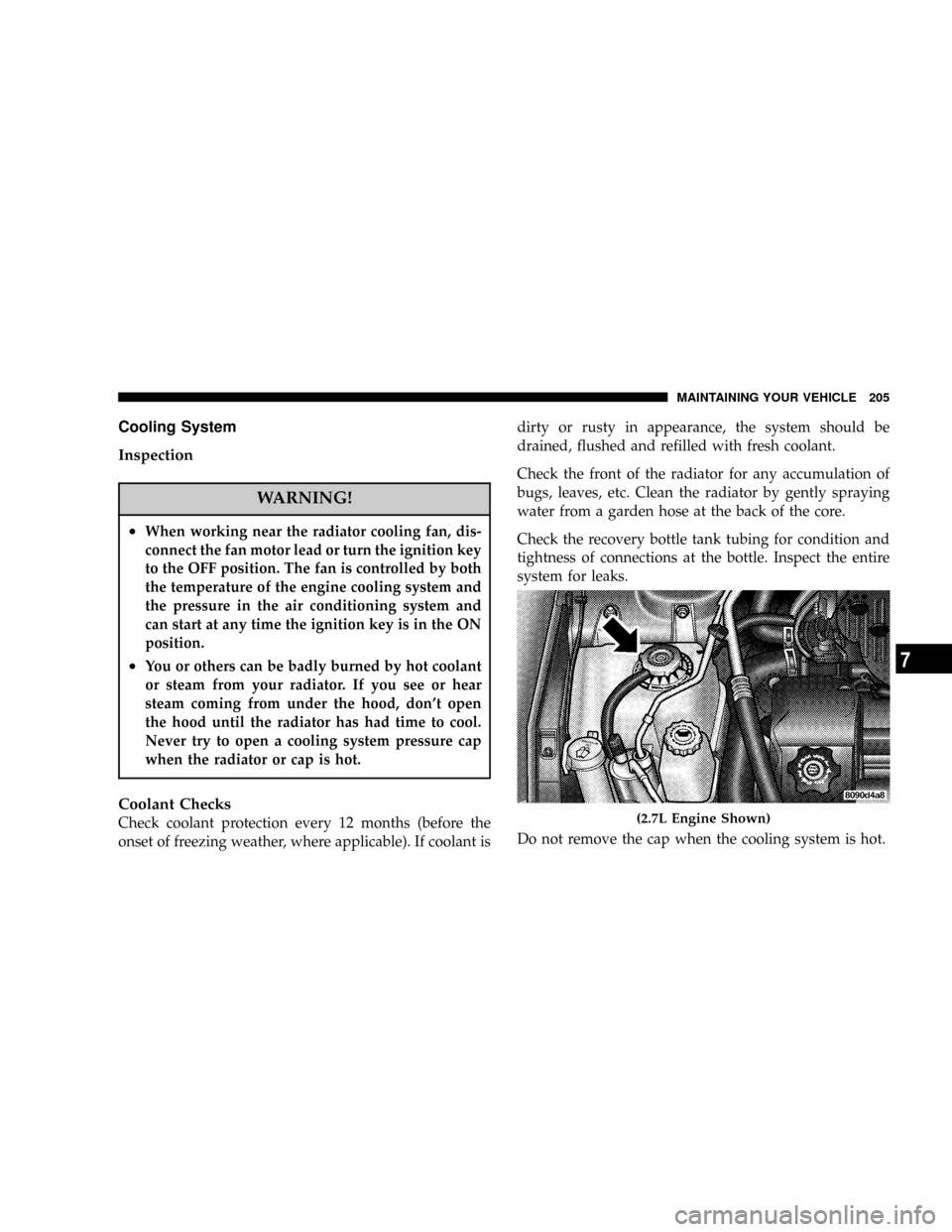
Check the recovery bottle tank tubing for condition and
tightness of connections at the bottle. Inspect the entire
system for leaks.
Do not remove the cap when the cooling system is hot.(2.7L Engine Shown)
MAINTAINING YOUR VEHICLE 205
7
Page 208 of 273

over time. This is normal. If the coolant level is hard to
see, jostling the coolant bottle will make it easier to see.
There is no need to remove the radiator cap unless
checking for coolant freeze point, adding, or replacing
coolant. Advise your service attendant of this. As long as
the engine operating temperature is satisfactory, the
coolant bottle need only be checked once a month. Heater
performance may also be adversely affected by low
coolant levels.
When additional coolant is needed to maintain the
proper level, it should be added to the coolant bottle. Do
not overfill. Special procedures are required when filling
the engine cooling system of the 2.7L Engine. See your
authorized dealer for details.
Points to Remember
NOTE:
When the vehicle is stopped after a few miles of
operation, you may observe vapor coming from the front
of the engine compartment. This is normally a result of
moisture from rain, snow, or high humidity accumulating
on the radiator and being vaporized when the thermostat
opens, allowing hot water to enter the radiator.
If an examination of your engine compartment shows no
evidence of radiator or hose leaks, the vehicle may be
safely driven. The vapor will soon dissipate.
²Do not overfill the coolant bottle.
²Check coolant freeze point in the system.
²If frequent coolant additions are required, or if the
level in the bottle does not drop when the engine cools,
the cooling system should be pressure tested for leaks.
²Maintain coolant concentration of 50% ethylene glycol
(minimum) with recommended antifreeze for proper
corrosion protection of your engine that contains alu-
minum components.
²Make sure that the radiator and coolant bottle hoses
are not kinked or obstructed.
²Keep the front of the radiator clean. If your vehicle has
air conditioning, keep the front of the condenser clean,
also.
²Do not change the thermostat for summer or winter
operation. If replacement is ever necessary, install
208 MAINTAINING YOUR VEHICLE
Page 262 of 273

About Your Brakes...................... 141
Adding Engine Coolant (Antifreeze)......... 206
Adding Fuel.......................... 164
Aiming Headlights...................... 227
Air Cleaner, Engine..................... 196
Air Conditioning....................... 121
Air Conditioning, Operating Tips........... 126
Air Conditioning Refrigerant.............. 200
Air Conditioning System..............121,199
Air Pressure, Tires...................... 152
Airbag................................ 32
Airbag Deployment....................35,36
Airbag Light.....................36,39,48,86
Airbag Maintenance...................... 38
Airbag, Side........................... 37
Airbag, Window......................32,37
Alarm Light............................ 91
Alarm, Panic........................... 20
Alarm System.......................... 22
Alignment and Balance.................. 157
Alterations/Modifications, Vehicle............ 7
Antifreeze Disposal..................... 207
Antifreeze (Engine Coolant)............... 206Capacities........................... 227
Anti-Lock Brake System.................. 141
Anti-Lock Warning Light.................. 89
Anti-Theft Security Alarm................. 22
Appearance Care....................... 214
Automatic Door Locks.................... 16
Automatic Transaxle..................135,211
Filter.............................. 213
Fluid and Filter Changes................ 213
Fluid Level Check..................... 212
Interlock System....................12,136
Reset Mode......................... 137
Selection Of Lubricant................. 212
Shifting............................ 137
Special Additives..................... 213
Autostick............................. 159
Auxiliary Power Outlet................... 77
Ball Joints............................ 201
Battery............................... 198
Emergency Starting.................... 179
Gas Caution......................181,199
Heater............................. 134
262 INDEX