fuse DODGE CHARGER 2015 7.G Owner's Manual
[x] Cancel search | Manufacturer: DODGE, Model Year: 2015, Model line: CHARGER, Model: DODGE CHARGER 2015 7.GPages: 638, PDF Size: 16.56 MB
Page 623 of 638
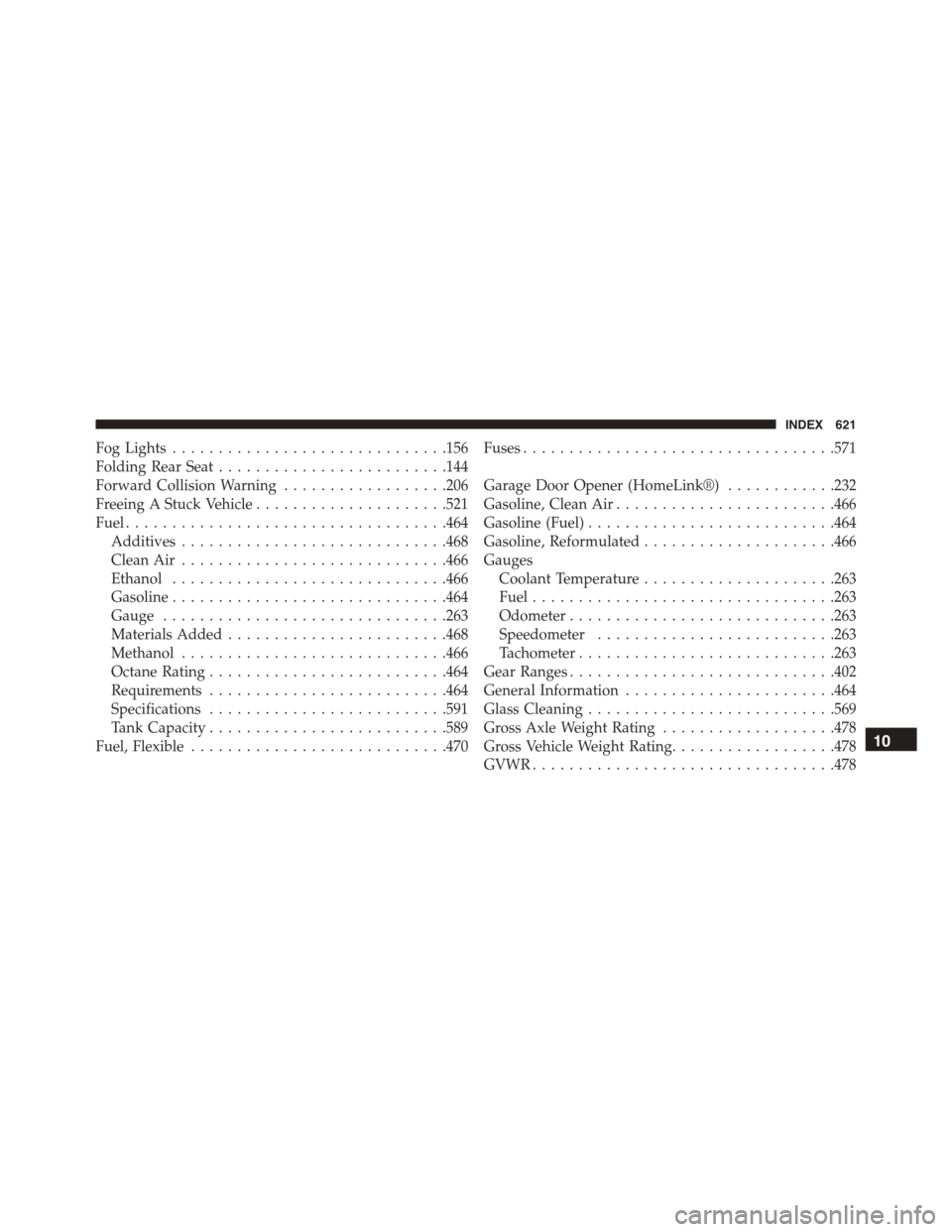
Fog Lights..............................156
Folding Rear Seat.........................144
Forward Collision Warning..................206
Freeing A Stuck Vehicle.....................521
Fuel...................................464
Additives.............................468
Clean Air.............................466
Ethanol..............................466
Gasoline..............................464
Gauge...............................263
Materials Added........................468
Methanol.............................466
Octane Rating..........................464
Requirements..........................464
Specifications..........................591
Tank Capacity..........................589
Fuel, Flexible............................470
Fuses..................................571
Garage Door Opener (HomeLink®)............232
Gasoline, Clean Air........................466
Gasoline (Fuel)...........................464
Gasoline, Reformulated.....................466
Gauges
Coolant Temperature.....................263
Fuel.................................263
Odometer.............................263
Speedometer..........................263
Tachometer............................263
Gear Ranges.............................402
General Information.......................464
Glass Cleaning...........................569
Gross Axle Weight Rating...................478
Gross Vehicle Weight Rating..................478
GVWR.................................478
10
INDEX 621
Page 629 of 638
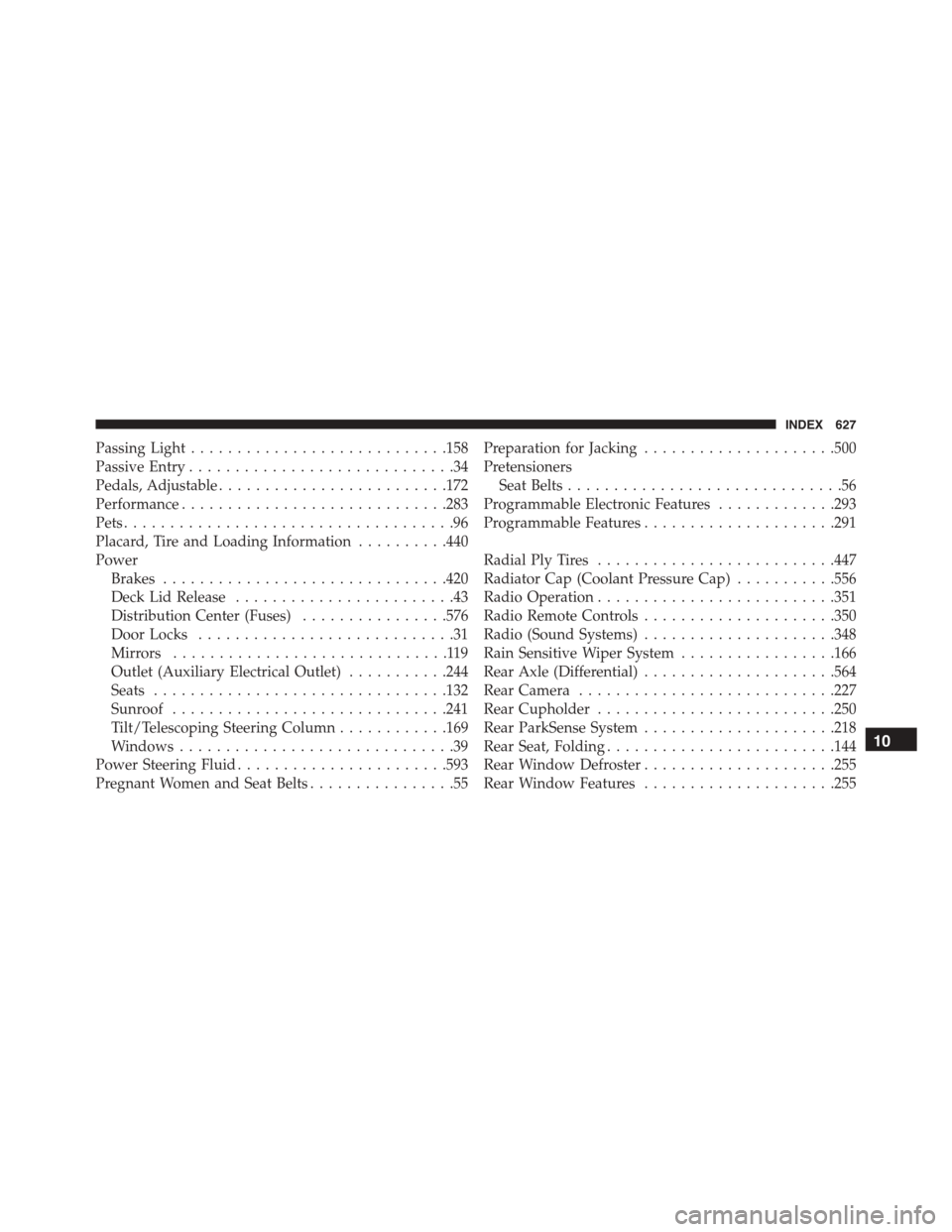
Passing Light............................158
Passive Entry.............................34
Pedals, Adjustable.........................172
Performance.............................283
Pets....................................96
Placard, Tire and Loading Information..........440
Power
Brakes...............................420
Deck Lid Release........................43
Distribution Center (Fuses)................576
Door Locks............................31
Mirrors..............................119
Outlet (Auxiliary Electrical Outlet)...........244
Seats................................132
Sunroof..............................241
Tilt/Telescoping Steering Column............169
Windows..............................39
Power Steering Fluid.......................593
Pregnant Women and Seat Belts................55
Preparation for Jacking.....................500
Pretensioners
Seat Belts..............................56
Programmable Electronic Features.............293
Programmable Features.....................291
Radial Ply Tires..........................447
Radiator Cap (Coolant Pressure Cap)...........556
Radio Operation..........................351
Radio Remote Controls.....................350
Radio (Sound Systems).....................348
Rain Sensitive Wiper System.................166
Rear Axle (Differential).....................564
Rear Camera............................227
Rear Cupholder..........................250
Rear ParkSense System.....................218
Rear Seat, Folding.........................144
Rear Window Defroster.....................255
Rear Window Features.....................255
10
INDEX 627
Page 637 of 638

INSTALLATION OF RADIO TRANSMITTING
EQUIPMENT
Special design considerations are incorporated into this
vehicle’s electronic system to provide immunity to radio
frequency signals. Mobile two-way radios and telephone
equipment must be installed properly by trained person-
nel. The following must be observed during installation.
The positive power connection should be made directly
to the battery and fused as close to the battery as possible.
The negative power connection should be made to body
sheet metal adjacent to the negative battery connection.
This connection should not be fused.
Antennas for two-way radios should be mounted on the
roof or the rear area of the vehicle. Care should be used
in mounting antennas with magnet bases. Magnets may
affect the accuracy or operation of the compass on
vehicles so equipped.
The antenna cable should be as short as practical and
routed away from the vehicle wiring when possible. Use
only fully shielded coaxial cable.
Carefully match the antenna and cable to the radio to
ensure a low Standing Wave Ratio (SWR).
Mobile radio equipment with output power greater than
normal may require special precautions.
All installations should be checked for possible interfer-
ence between the communications equipment and the
vehicle’s electronic systems.