roof DODGE JOURNEY 2015 1.G Owner's Manual
[x] Cancel search | Manufacturer: DODGE, Model Year: 2015, Model line: JOURNEY, Model: DODGE JOURNEY 2015 1.GPages: 648
Page 638 of 648
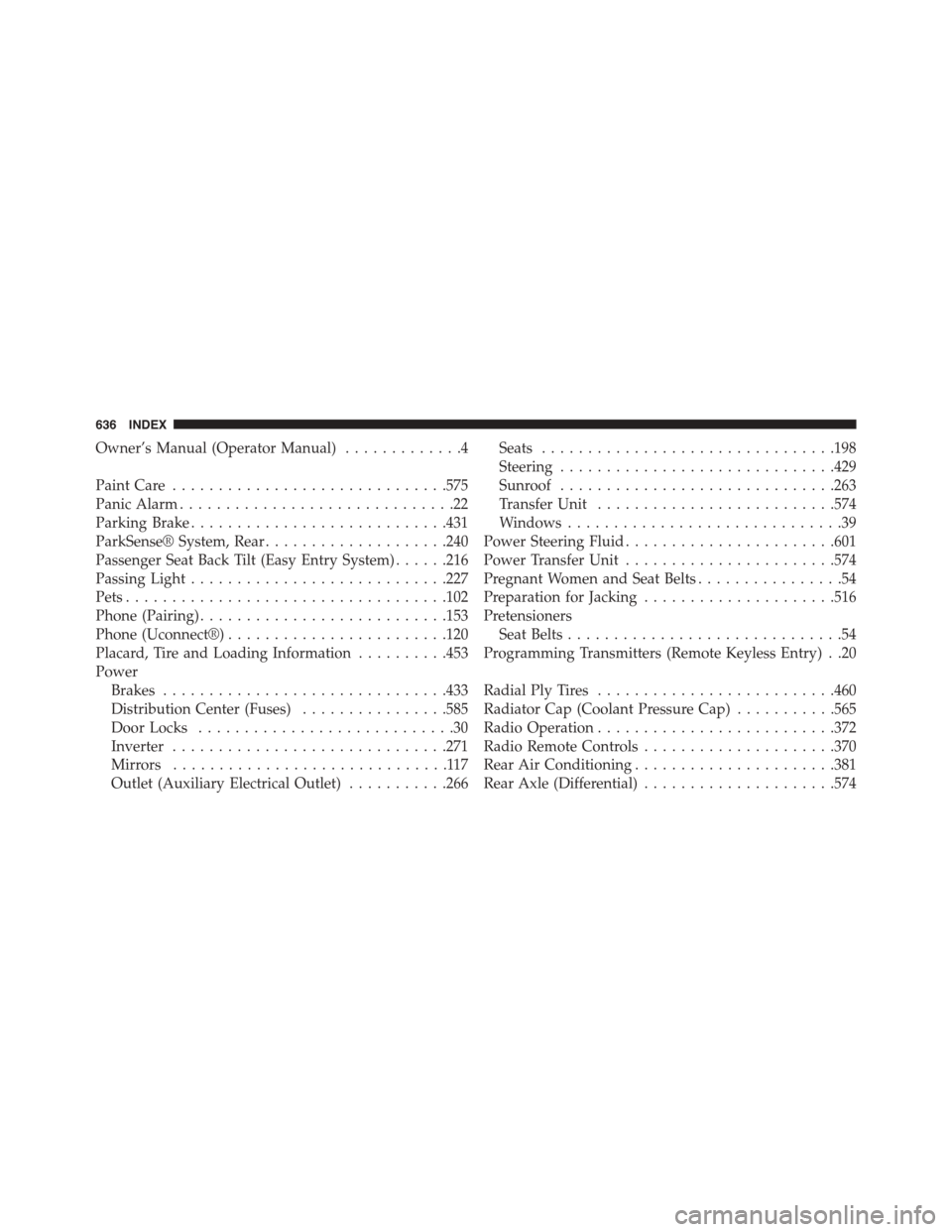
Owner’s Manual (Operator Manual).............4
Paint Care..............................575
Panic Alarm..............................22
Parking Brake............................431
ParkSense® System, Rear....................240
Passenger Seat Back Tilt (Easy Entry System)......216
Passing Light............................227
Pets...................................102
Phone (Pairing)...........................153
Phone (Uconnect®)........................120
Placard, Tire and Loading Information..........453
Power
Brakes...............................433
Distribution Center (Fuses)................585
Door Locks............................30
Inverter..............................271
Mirrors..............................117
Outlet (Auxiliary Electrical Outlet)...........266
Seats................................198
Steering..............................429
Sunroof..............................263
Transfer Unit..........................574
Windows..............................39
Power Steering Fluid.......................601
Power Transfer Unit.......................574
Pregnant Women and Seat Belts................54
Preparation for Jacking.....................516
Pretensioners
Seat Belts..............................54
Programming Transmitters (Remote Keyless Entry) . .20
Radial Ply Tires..........................460
Radiator Cap (Coolant Pressure Cap)...........565
Radio Operation..........................372
Radio Remote Controls.....................370
Rear Air Conditioning......................381
Rear Axle (Differential).....................574
636 INDEX
Page 640 of 648
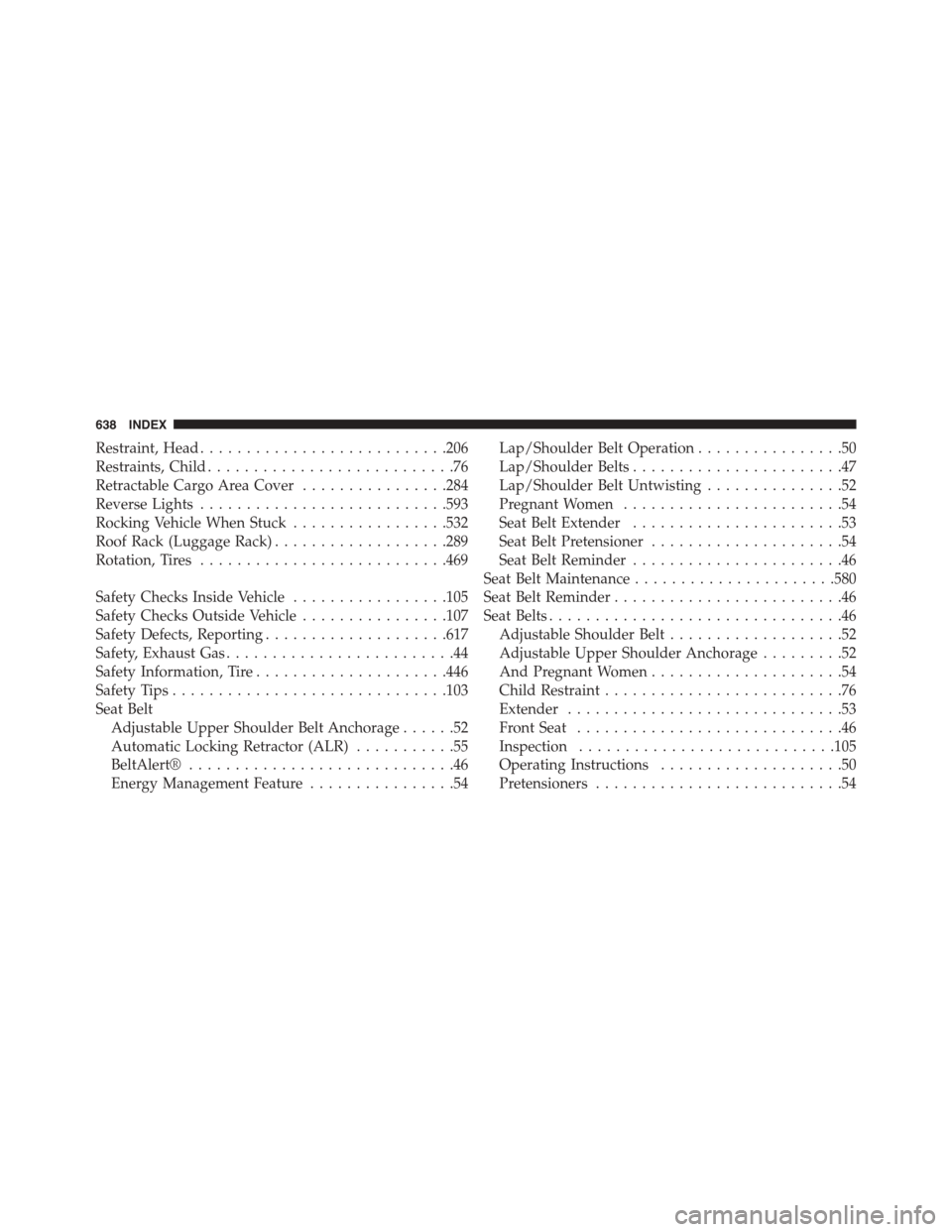
Restraint, Head...........................206
Restraints, Child...........................76
Retractable Cargo Area Cover................284
Reverse Lights...........................593
Rocking Vehicle When Stuck.................532
Roof Rack (Luggage Rack)...................289
Rotation, Tires...........................469
Safety Checks Inside Vehicle.................105
Safety Checks Outside Vehicle................107
Safety Defects, Reporting....................617
Safety, Exhaust Gas.........................44
Safety Information, Tire.....................446
Safety Tips..............................103
Seat Belt
Adjustable Upper Shoulder Belt Anchorage......52
Automatic Locking Retractor (ALR)...........55
BeltAlert®.............................46
Energy Management Feature................54
Lap/Shoulder Belt Operation................50
Lap/Shoulder Belts.......................47
Lap/Shoulder Belt Untwisting...............52
Pregnant Women........................54
Seat Belt Extender.......................53
Seat Belt Pretensioner.....................54
Seat Belt Reminder.......................46
Seat Belt Maintenance......................580
Seat Belt Reminder.........................46
Seat Belts................................46
Adjustable Shoulder Belt...................52
Adjustable Upper Shoulder Anchorage.........52
And Pregnant Women.....................54
Child Restraint..........................76
Extender..............................53
Front Seat.............................46
Inspection............................105
Operating Instructions....................50
Pretensioners...........................54
638 INDEX
Page 642 of 648
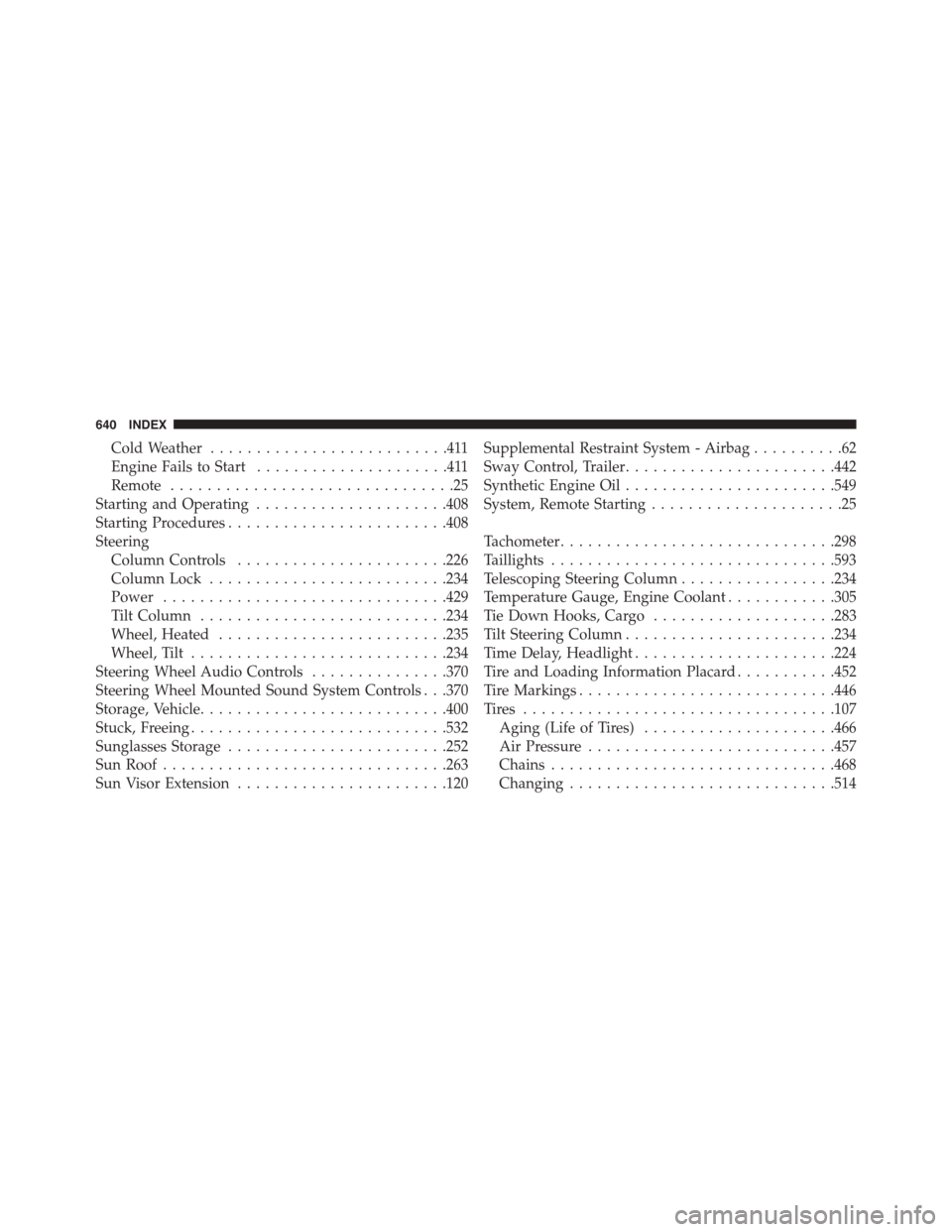
Cold Weather..........................411
Engine Fails to Start.....................411
Remote...............................25
Starting and Operating.....................408
Starting Procedures........................408
Steering
Column Controls.......................226
Column Lock..........................234
Power...............................429
Tilt Column...........................234
Wheel, Heated.........................235
Wheel, Tilt............................234
Steering Wheel Audio Controls...............370
Steering Wheel Mounted Sound System Controls . . .370
Storage, Vehicle...........................400
Stuck, Freeing............................532
Sunglasses Storage........................252
Sun Roof...............................263
Sun Visor Extension.......................120
Supplemental Restraint System - Airbag..........62
Sway Control, Trailer.......................442
Synthetic Engine Oil.......................549
System, Remote Starting.....................25
Tachometer..............................298
Taillights...............................593
Telescoping Steering Column.................234
Temperature Gauge, Engine Coolant............305
Tie Down Hooks, Cargo....................283
Tilt Steering Column.......................234
Time Delay, Headlight......................224
Tire and Loading Information Placard...........452
Tire Markings............................446
Ti re s . . . . . . . . . . . . . . . . . . . . . . . . . . . . . . . . ..107
Aging (Life of Tires).....................466
Air Pressure...........................457
Chains...............................468
Changing.............................514
640 INDEX
Page 647 of 648

INSTALLATION OF RADIO TRANSMITTING
EQUIPMENT
Special design considerations are incorporated into this
vehicle’s electronic system to provide immunity to radio
frequency signals. Mobile two-way radios and telephone
equipment must be installed properly by trained person-
nel. The following must be observed during installation.
The positive power connection should be made directly
to the battery and fused as close to the battery as possible.
The negative power connection should be made to body
sheet metal adjacent to the negative battery connection.
This connection should not be fused.
Antennas for two-way radios should be mounted on the
roof or the rear area of the vehicle. Care should be used
in mounting antennas with magnet bases. Magnets may
affect the accuracy or operation of the compass on
vehicles so equipped.
The antenna cable should be as short as practical and
routed away from the vehicle wiring when possible. Use
only fully shielded coaxial cable.
Carefully match the antenna and cable to the radio to
ensure a low Standing Wave Ratio (SWR).
Mobile radio equipment with output power greater than
normal may require special precautions.
All installations should be checked for possible interfer-
ence between the communications equipment and the
vehicle’s electronic systems.