valve timing FIAT 500 1969 1.G User Guide
[x] Cancel search | Manufacturer: FIAT, Model Year: 1969, Model line: 500, Model: FIAT 500 1969 1.GPages: 128, PDF Size: 9.01 MB
Page 23 of 128
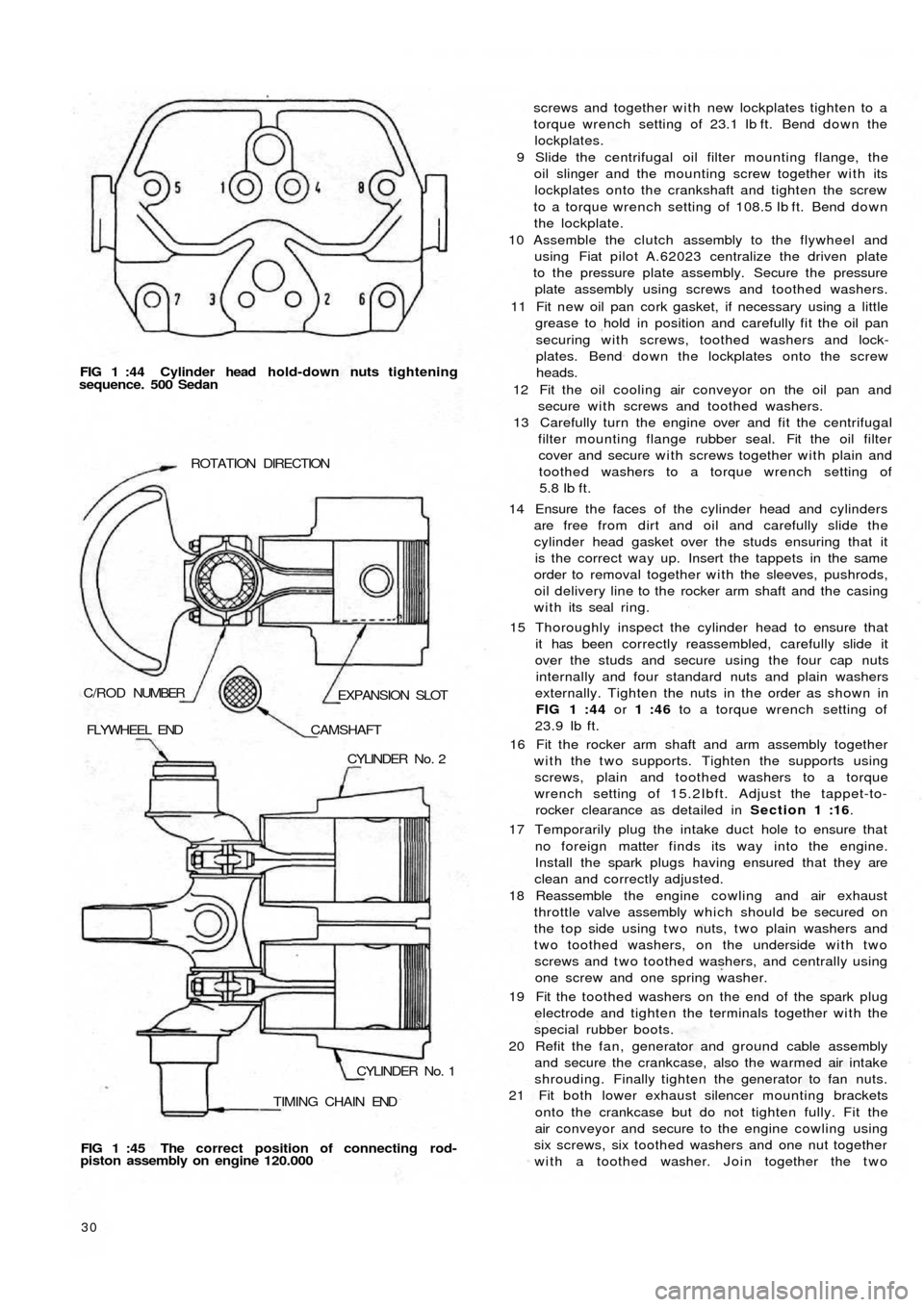
FIG 1 :44 Cylinder head h o ld-down nuts tightening
sequence. 500 Sedan
TIMING CHAIN ENDCYLINDER No. 1 CYLINDER No. 2 FLYWHEEL END
CAMSHAFT
EXPANSION SLOT C/ROD NUMBERROTATION DIRECTION
FIG 1 :45 The correct position of connecting rod-
piston assembly on engine 120.000
30
screws and together with new lockplates tighten to a
torque wrench setting of 23.1 Ib ft. Bend down the
lockplates.
9 Slide the centrifugal oil filter mounting flange, the
oil slinger and the mounting screw together with its
lockplates onto the crankshaft and tighten the screw
to a torque wrench setting of 108.5 Ib ft. Bend down
the lockplate.
10 Assemble the clutch assembly to the flywheel and
using Fiat pilot A.62023 centralize the driven plate
to the pressure plate assembly. Secure the pressure
plate assembly using screws and toothed washers.
11 Fit new oil pan cork gasket, if necessary using a little
grease to hold in position and carefully fit the oil pan
securing with screws, toothed washers and lock-
plates. Bend down the lockplates onto the screw
heads.
12 Fit the oil cooling air conveyor on the oil pan and
secure with screws and toothed washers.
13 Carefully turn the engine over and fit the centrifugal
filter mounting flange rubber seal. Fit the oil filter
cover and secure with screws together with plain and
toothed washers to a torque wrench setting of
5.8
Ib ft.
14 Ensure t h e faces of the cylinder head and cylinders
are free from dirt and oil and carefully slide the
cylinder head gasket over the studs ensuring that it
is the correct way up. Insert the tappets in the same
order to removal together with the sleeves, pushrods,
oil delivery line to the rocker arm shaft and the casing
with its seal ring.
15 Thoroughly inspect the cylinder head to ensure that
it has been correctly reassembled, carefully slide it
over the studs and secure using the four cap nuts
internally and four standard nuts and plain washers
externally. Tighten the nuts in the order as shown in
FIG 1 :44 or 1 :46 to a torque wrench setting of
23.9 Ib ft.
16 Fit the rocker arm shaft and arm assembly together
with the two supports. Tighten the supports using
screws, plain and toothed washers to a torque
wrench setting of 15.2Ibft. Adjust the tappet-to-
rocker clearance as detailed in Section 1 :16.
17 Temporarily plug the intake duct hole to ensure that
no foreign matter finds its way into the engine.
Install the spark plugs having ensured that they are
clean and correctly adjusted.
18 Reassemble the engine cowling and air
exhaust
throttle valve assembly which should be secured on
the top side using t w o nuts, t w o plain washers and
two toothed washers, on the underside with two
screws and t w o toothed washers, and centrally using
one screw and one spring washer.
19 Fit the toothed washers on the end of the spark plug
electrode and tighten the terminals together with the
special rubber boots.
20 Refit the fan, generator and ground cable assembly
and secure the crankcase, also the warmed air intake
shrouding. Finally tighten the generator to fan nuts.
21 Fit both lower exhaust silencer mounting brackets
onto the crankcase but do not tighten fully. Fit the
air conveyor and secure to the engine cowling using
six screws, six toothed washers and one nut together
with a toothed washer. Join together the t w o
Page 25 of 128
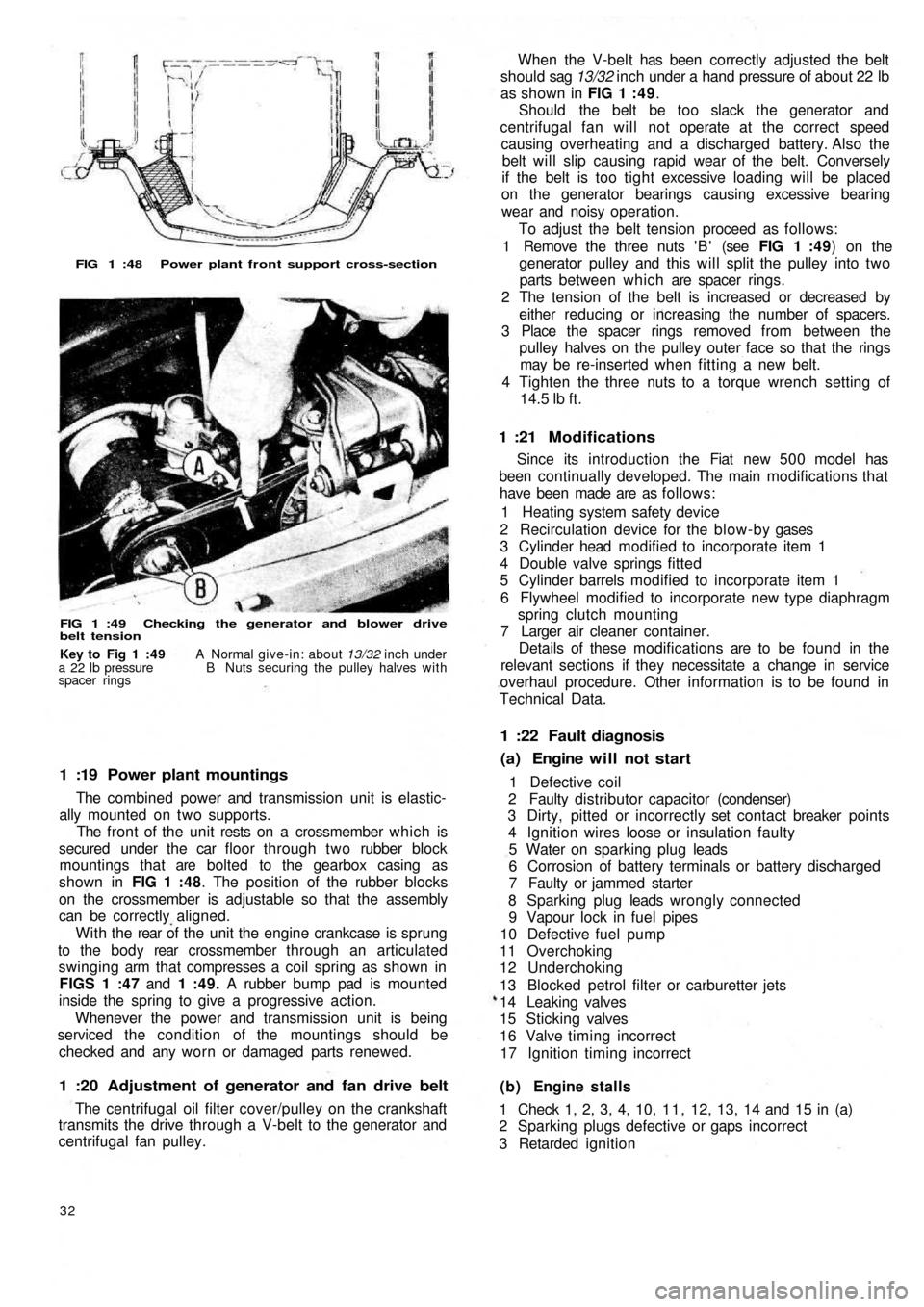
FIG 1 :48 Power plant front support cross-section
FIG 1 :49 Checking the generator and blower drive
belt tension
1 :19 Power plant mountings
The combined power and transmission unit is elastic-
ally mounted on two supports.
The front of the unit rests on a crossmember which is
secured under the car floor through two rubber block
mountings that are bolted to the gearbox casing as
shown in FIG 1 :48. The position of the rubber blocks
on the crossmember is adjustable so that the assembly
can be correctly aligned.
W i t h t h e rear of the unit the engine crankcase is sprung
to the b o d y rear crossmember through an articulated
swinging arm that compresses a coil spring as shown in
FIGS 1 :47 and 1 :49. A rubber bump pad is mounted
inside the spring to give a progressive action.
Whenever the power and transmission unit is being
serviced the condition of the mountings should be
checked and any worn or damaged parts renewed.
1 :20 Adjustment of generator and fan drive belt
The centrifugal oil filter cover/pulley on the crankshaft
transmits the drive through a V-belt to the generator and
centrifugal fan pulley.
32
(b) Engine stalls
1 Check 1, 2, 3, 4, 10, 1 1 , 12, 13, 14 and 15 in (a)
2 Sparking plugs defective or gaps incorrect
3 Retarded ignition 1 Defective coil
2 Faulty distributor capacitor (condenser)
3 Dirty, pitted or incorrectly set contact breaker points
4 Ignition wires loose or insulation faulty
5 Water on sparking plug leads
6 Corrosion of battery terminals or battery discharged
7 Faulty or jammed starter
8 Sparking plug leads wrongly connected
9 Vapour lock in fuel pipes
10 Defective fuel pump
11 Overchoking
12 Underchoking
13 Blocked petrol filter or carburetter jets
14 Leaking valves
15 Sticking valves
16 Valve timing incorrect
17 Ignition timing incorrect
(a) Engine will not start 1 :22 Fault diagnosis
Since its introduction the Fiat new 5 0 0 model has
been continually developed. The main modifications that
have been made are as follows:
1 Heating system safety device
2 Recirculation device for the blow-by gases
3 Cylinder head modified to incorporate item 1
4 Double valve springs fitted
5 Cylinder barrels modified to incorporate item 1
6 Flywheel modified to incorporate new type diaphragm
spring clutch mounting
7 Larger air cleaner container.
Details of these modifications are to be found in the
relevant sections if they necessitate a change in service
overhaul procedure. Other information is to be found in
Technical Data.
1 :21 Modifications
When the V-belt has been correctly adjusted the belt
should sag 13/32 inch under a hand pressure of about 22 lb
as shown in FIG 1 : 4 9.
Should the belt be too slack the generator and
centrifugal fan will not operate at the correct speed
causing overheating and a discharged battery. Also the
belt will slip causing rapid wear of the belt. Conversely
if the belt is too tight excessive loading will be placed
on the generator bearings causing excessive bearing
wear and noisy operation.
To adjust the belt tension proceed as follows:
1 Remove the three nuts ' B ' (see FIG 1 :49) on the
generator pulley and this will split the pulley into two
parts between which are spacer rings.
2 The tension of the belt is increased or decreased by
either reducing or increasing the number of spacers.
3 Place the spacer rings removed from between the
pulley halves on the pulley outer face so that the rings
may be re-inserted when fitting a new belt.
4 Tighten the three nuts to a torque wrench setting of
14.5
lb ft.
Key to Fig 1 :49 A Normal give-in: about 13/32 inch under
a 22 Ib pressure B Nuts securing the pulley halves with
spacer rings
Page 43 of 128
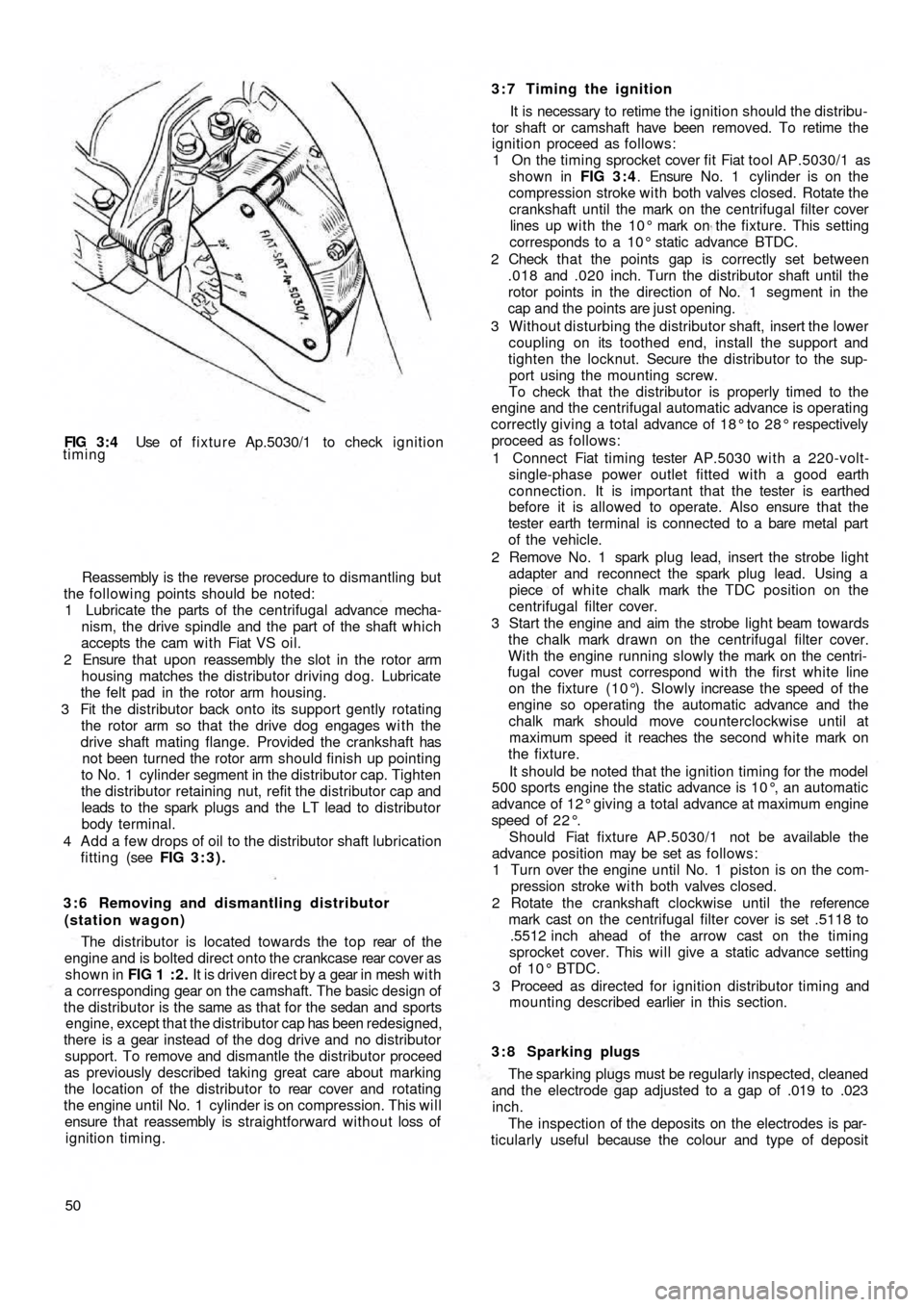
FIG 3 : 4 Use of fixture Ap.5030/1 to check ignition
timing
Reassembly is the reverse procedure to dismantling but
the following points should be noted:
1 Lubricate the parts of the centrifugal advance mecha-
nism, the drive spindle and the part of the shaft which
accepts the cam w i t h Fiat VS oil.
2 Ensure that upon reassembly the slot in the rotor arm
housing matches the distributor driving dog. Lubricate
the felt pad in the rotor arm housing.
3 Fit the distributor back onto its support gently rotating
the rotor arm so that the drive dog engages w i t h the
drive shaft mating flange. Provided the crankshaft has
not been turned the rotor arm should finish up pointing
to No. 1 cylinder segment in the distributor cap. Tighten
the distributor retaining nut, refit the distributor cap and
leads to the spark plugs and the LT lead to distributor
body terminal.
4 Add a few drops of oil to the distributor shaft lubrication
fitting (see FIG 3:3).
3 : 6 Removing and dismantling distributor
(station wagon)
The distributor is located towards the top rear of t h e
engine and is bolted direct onto the crankcase rear cover as
shown in FIG 1 : 2 . It is driven direct by a gear in mesh w i t h
a corresponding gear on the camshaft. The basic design of
the distributor is the same as that for the sedan and sports
engine, except that the distributor cap has been redesigned,
there is a gear instead of the dog
drive and no distributor
support. To remove and dismantle the distributor proceed
as previously described taking great care about marking
the location of the distributor to rear cover and rotating
the engine until No. 1 cylinder is on compression. This will
ensure that reassembly is straightforward without loss of
ignition timing.
503:7 Timing the ignition
It is necessary to retime the ignition should the distribu-
tor shaft or camshaft have been removed. To retime the
ignition proceed as follows:
1 On the timing sprocket cover fit Fiat tool AP.5030/1 as
shown in FIG 3 : 4. Ensure No. 1 cylinder is on the
compression stroke with both valves closed. Rotate the
crankshaft until the mark on the centrifugal filter cover
lines up w i t h the 10° mark on the fixture. This setting
corresponds to a 10° static advance BTDC.
2 Check t h a t the points gap is correctly set between
.018 and .020 inch. Turn the distributor shaft until the
rotor points in the direction of No. 1 segment in the
cap and the points are just opening.
3 Without disturbing the distributor shaft, insert the lower
coupling on its toothed end, install the support and
tighten the locknut. Secure the distributor to the sup-
port using the mounting screw.
To check that the distributor is properly timed to the
engine and the centrifugal automatic advance is operating
correctly giving a
total advance of 18° to 28° respectively
proceed as follows:
1 Connect Fiat timing tester AP.5030 with a 220-volt-
single-phase power outlet fitted with a good earth
connection. It is important that the tester is earthed
before it is allowed to operate. Also ensure that the
tester earth terminal is connected to a bare metal part
of the vehicle.
2 Remove No. 1 spark plug lead, insert the strobe light
adapter and reconnect the spark plug lead. Using a
piece of white chalk mark the TDC position on the
centrifugal filter cover.
3 Start the engine and aim the strobe light beam towards
the chalk mark drawn on the centrifugal filter cover.
With the engine running slowly the mark on the centri-
fugal cover must correspond wi th the first white line
on the fixture (10°). Slowly increase the speed of the
engine so operating the automatic advance and the
chalk mark should move counterclockwise until at
maximum speed it reaches the second white mark on
the fixture.
It should be noted that the ignition timing for the model
500 sports engine the static advance is 10°, an automatic
advance of 12° giving a total advance at maximum engine
speed of 2 2 ° .
Should Fiat fixture AP.5030/1 not be available the
advance position may be set as follows:
1 Turn over the
engine until No. 1 piston is on the com-
pression stroke w i t h both valves closed.
2 Rotate the crankshaft clockwise until the reference
mark cast on the centrifugal filter cover is set .5118 to
.5512 inch ahead of the arrow cast on the timing
sprocket cover. This will give a static advance setting
of 10° BTDC.
3 Proceed as directed for ignition distributor timing and
mounting described earlier in this section.
3 : 8 Sparking plugs
The sparking plugs must be regularly inspected, cleaned
and the electrode gap adjusted to a gap of .019 to .023
inch.
The inspection of the deposits on the electrodes is par-
ticularly useful because the colour and type of deposit