checking oil FIAT 500 ABARTH CABRIO 2017 2.G Owners Manual
[x] Cancel search | Manufacturer: FIAT, Model Year: 2017, Model line: 500 ABARTH CABRIO, Model: FIAT 500 ABARTH CABRIO 2017 2.GPages: 338, PDF Size: 2.78 MB
Page 63 of 338
Exhaust Gas
WARNING!
Exhaust gases can injure or kill. They contain
carbon monoxide (CO), which is colorless and odor-
less. Breathing it can make you unconscious and
can eventually poison you. To avoid breathing
(CO), follow these safety tips:
•Do not run the engine in a closed garage or in
confined areas any longer than needed to move
your vehicle in or out of the area.
• If you are required to drive with the trunk/
liftgate/rear doors open, make sure that all win-
dows are closed and the climate control BLOWER
switch is set at high speed. DO NOT use the
recirculation mode.
• If it is necessary to sit in a parked vehicle with the
engine running, adjust your heating or cooling
controls to force outside air into the vehicle. Set
the blower at high speed.
The best protection against carbon monoxide entry into
the vehicle body is a properly maintained engine ex-
haust system. Whenever a change is noticed in the sound of the
exhaust system, when exhaust fumes can be detected
inside the vehicle, or when the underside or rear of the
vehicle is damaged, have a competent mechanic inspect
the complete exhaust system and adjacent body areas
for broken, damaged, deteriorated, or mispositioned
parts. Open seams or loose connections could permit
exhaust fumes to seep into the passenger compartment.
In addition, inspect the exhaust system each time the
vehicle is raised for lubrication or oil change. Replace as
required.
Safety Checks You Should Make Inside The
Vehicle
Seat Belts
Inspect the seat belt system periodically, checking for
cuts, frays, and loose parts. Damaged parts must be
replaced immediately. Do not disassemble or modify
the system.
Front seat belt assemblies must be replaced after a
collision. Rear seat belt assemblies must be replaced
after a collision if they have been damaged (i.e., bent
retractor, torn webbing, etc.). If there is any question
regarding seat belt or retractor condition, replace the
seat belt.
2
THINGS TO KNOW BEFORE STARTING YOUR VEHICLE 61
Page 276 of 338
Engine Oil
Checking Oil Level
To assure proper engine lubrication, the engine oil must
be maintained at the correct level. Check the oil level at
regular intervals, such as every fuel stop. The best time
to check the engine oil level is approximately five
minutes after a fully warmed engine is shut off. Do not
check oil level before starting the engine after it has sat
overnight. Checking engine oil level when the engine is
cold will give you an incorrect reading.
Checking the oil while the vehicle is on level ground,
and approximately five minutes after a fully warmed
engine is shut off, will improve the accuracy of the oil
level readings. Maintain the oil level between the range
markings on the dipstick. The safe range is indicated by
a crosshatch zone. Adding 1 quart (0.9 Liters) of oil
when the reading is at the low end of the indicated
range will result in the oil level at the full end of the
indicator range.
CAUTION!
Do not overfill the engine with oil. Overfilling the
engine with oil will cause oil aeration, which can
lead to loss of oil pressure and an increase in oil
temperature. This loss of oil pressure and increased
oil temperature could damage your engine.
Change Engine Oil
The oil change indicator system will remind you that it
is time to take your vehicle in for scheduled mainte-
nance. Refer to the “Maintenance Schedule” for further
information.
NOTE:Under no circumstances should oil change
intervals exceed 10,000 miles (16,000 km), twelve
months or 350 hours of engine run time, whichever
comes first. The 350 hours of engine run or idle time is
generally only a concern for fleet customers.
Engine Oil Selection
For best performance and maximum protection for
turbocharged engines under all types of operating
conditions, the manufacturer recommends synthetic
engine oils that are API Certified and meet the require-
ments of FCA Material Standard MS-12991.
274 MAINTAINING YOUR VEHICLE
Page 300 of 338
Instrument Panel Cover
The instrument panel cover has a low glare surface
which minimizes reflections on the windshield. Do not
use protectants or other products which may cause
undesirable reflections. Use soap and warm water to
restore the low glare surface.
Instrument Panel Bezels
CAUTION!
When installing hanging air fresheners in your
vehicle, read the installation instructions carefully.
Some air fresheners will damage the finish of
painted or decorated parts if allowed to directly
contact any surface.
Cleaning Plastic Instrument Cluster Lenses
The lenses in front of the instruments in this vehicle are
molded in clear plastic. When cleaning the lenses, care
must be taken to avoid scratching the plastic.
1. Clean with a wet soft cloth. A mild soap solutionmay be used, but do not use high alcohol content or
abrasive cleaners. If soap is used, wipe clean with a
clean damp cloth. 2. Dry with a soft cloth.
Seat Belt Maintenance
Do not bleach, dye or clean the belts with chemical
solvents or abrasive cleaners. This will weaken the
fabric. Sun damage can also weaken the fabric.
If the belts need cleaning, use a mild soap solution or
lukewarm water. Do not remove the belts from the
vehicle to wash them. Dry with a soft cloth.
Replace the belts if they appear frayed or worn or if the
buckles do not work properly.
NOTE:
If the belts retract slowly, inspect the upper
turning loop for soiling. If soiling is present, clean with
a wet soft cloth until all residue is removed.
WARNING!
A frayed or torn belt could rip apart in a collision
and leave you with no protection. Inspect the belt
system periodically, checking for cuts, frays, or
loose parts. Damaged parts must be replaced imme-
diately. Do not disassemble or modify the system.
(Continued)
298 MAINTAINING YOUR VEHICLE
Page 327 of 338
Battery........................... .123, 276
Charging System Light ..................123
Jump Starting ........................ .259
Keyless Key Fob Replacement ..............15
Belts, Seat ..............................61
Body Mechanism Lubrication ................281
B-Pillar Location ........................ .215
Brake Assist System ..................... .204
Brake Fluid ........................ .308, 310
Brake, Parking ......................... .200
Brakes ............................... .290
Brake System ....................... .202, 290
Anti-Lock (ABS) ...................... .203
Master Cylinder ...................... .290
Parking ............................ .200
Warning Light ....................... .121
Brake/Transmission Interlock ................190
Bulb Replacement .....................304, 305
Bulbs, Light ......................... .64, 304
Capacities, Antifreeze (Engine Coolant) .........308
Capacities, Fluid ........................ .308
Caps, Filler Fuel ............................... .242
Oil (Engine) ......................... .275Carbon Monoxide Warning
...............61, 242
Cargo Area Features ..................... .102
Car Washes ........................... .294
Cellular Phone ......................... .167
Chains, Tire ........................... .230
Chart, Tire Sizing ........................211
Check Engine Light (Malfunction Indicator Light) .271
Checking Your Vehicle For Safety ..............60
Checks, Safety ...........................60
Child Restraint ...........................44
Child Restraints Booster Seats ..........................48
Child Restraints ........................44
Child Seat Installation ....................57
How To Stow An Unused ALR Seat Belt .......54
Infants And Child Restraints ...............46
Lower
Anchors And Tethers For Children ......50
Older Children And Child Restraints .........46
Seating Positions .......................49
Clean Air Gasoline ...................... .239
Cleaning Wheels ............................ .295
Climate Control ........................ .167
Manual ............................ .167
Clutch ............................... .29010
INDEX 325
Page 329 of 338
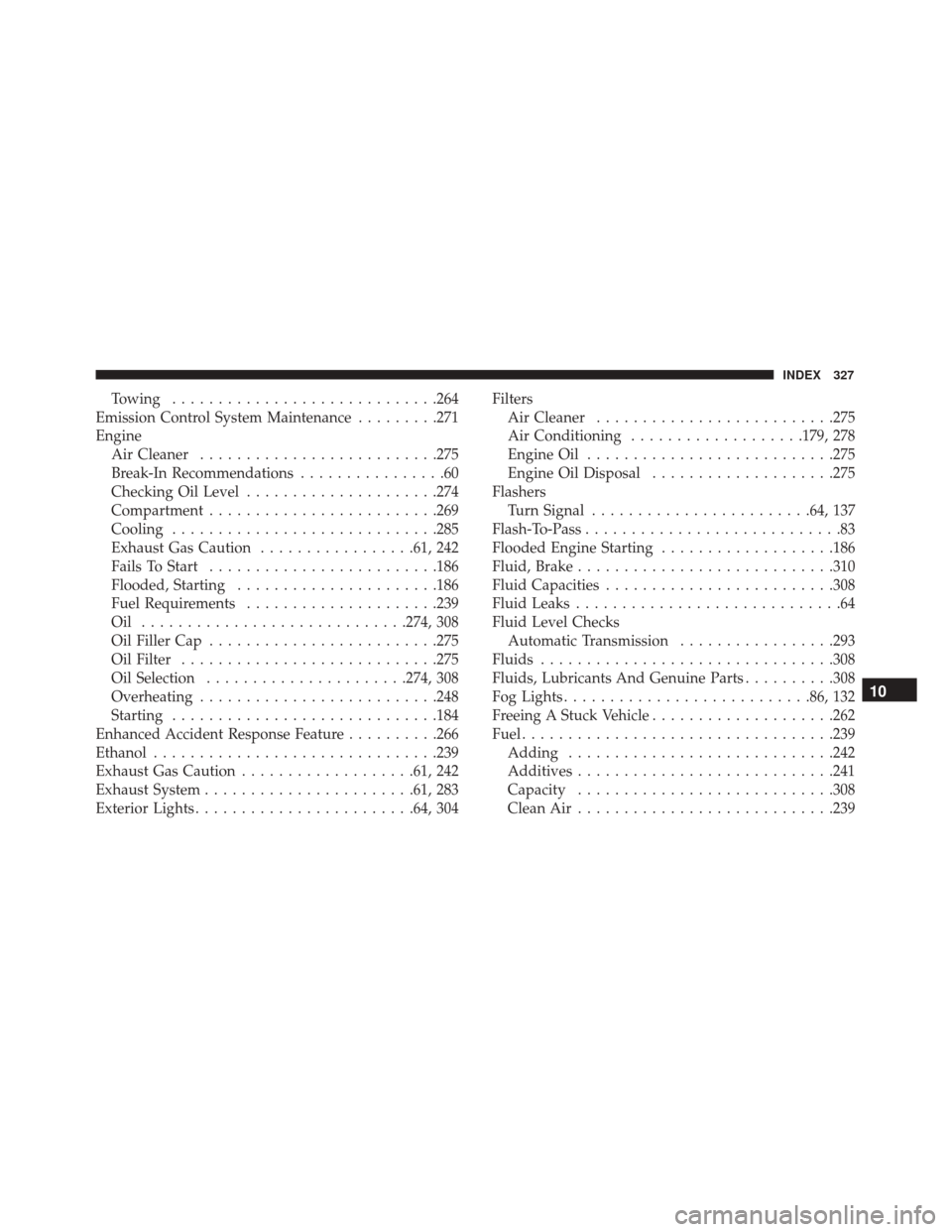
Towing............................ .264
Emission Control System Maintenance .........271
Engine Air Cleaner ......................... .275
Break-In Recommendations ................60
Checking Oil Level .....................274
Compartment ........................ .269
Cooling ............................ .285
Exhaust Gas Caution .................61, 242
Fails To Start ........................ .186
Flooded, Starting ..................... .186
Fuel Requirements .....................239
Oil ............................ .274, 308
Oil Filler Cap ........................ .275
Oil Filter ........................... .275
Oil Selection ..................... .274, 308
Overheating ......................... .248
Starting ............................ .184
Enhanced Accident Response Feature ..........266
Ethanol .............................. .239
Exhaust Gas Caution ...................61, 242
Exhaust System ...................... .61, 283
Exterior Lights ....................... .64, 304Filters
Air Cleaner ......................... .275
Air Conditioning ...................179, 278
Engine Oil .......................... .275
Engine Oil Disposal ....................275
Flashers Turn Signal ....................... .64, 137
Flash-To-Pass ............................83
Flooded Engine Starting ...................186
Fluid, Brake ........................... .310
Fluid Capacities ........................ .308
Fluid Leaks .............................64
Fluid Level Checks Automatic Transmission .................293
Fluids ............................... .308
Fluids,
Lubricants And Genuine Parts ..........308
Fog Lights .......................... .86, 132
Freeing A Stuck Vehicle ....................262
Fuel ................................. .239
Adding ............................ .242
Additives ........................... .241
Capacity ........................... .308
Clean Air ........................... .239
10
INDEX 327
Page 332 of 338
Malfunction Indicator Light (Check Engine) . .131, 271
Manual, Service........................ .321
Manual Transmission ..................186, 291
Fluid Level Check ..................... .292
Frequency Of Fluid Change ...............292
Lubricant Selection ..................291, 310
Master Cylinder (Brakes) ...................290
Methanol ............................. .239
Mirrors ................................71
Automatic Dimming .....................71
Electric Powered .......................72
Heated ..............................73
Modifications/Alterations, Vehicle ..............6
Monitor, Tire Pressure System ...............232
MTBE/ETBE .......................... .239
Multi-Function Control Lever ................82
New Vehicle Break-In Period .................60
Occupant Restraints .......................21
Octane Rating, Gasoline (Fuel) ...............239
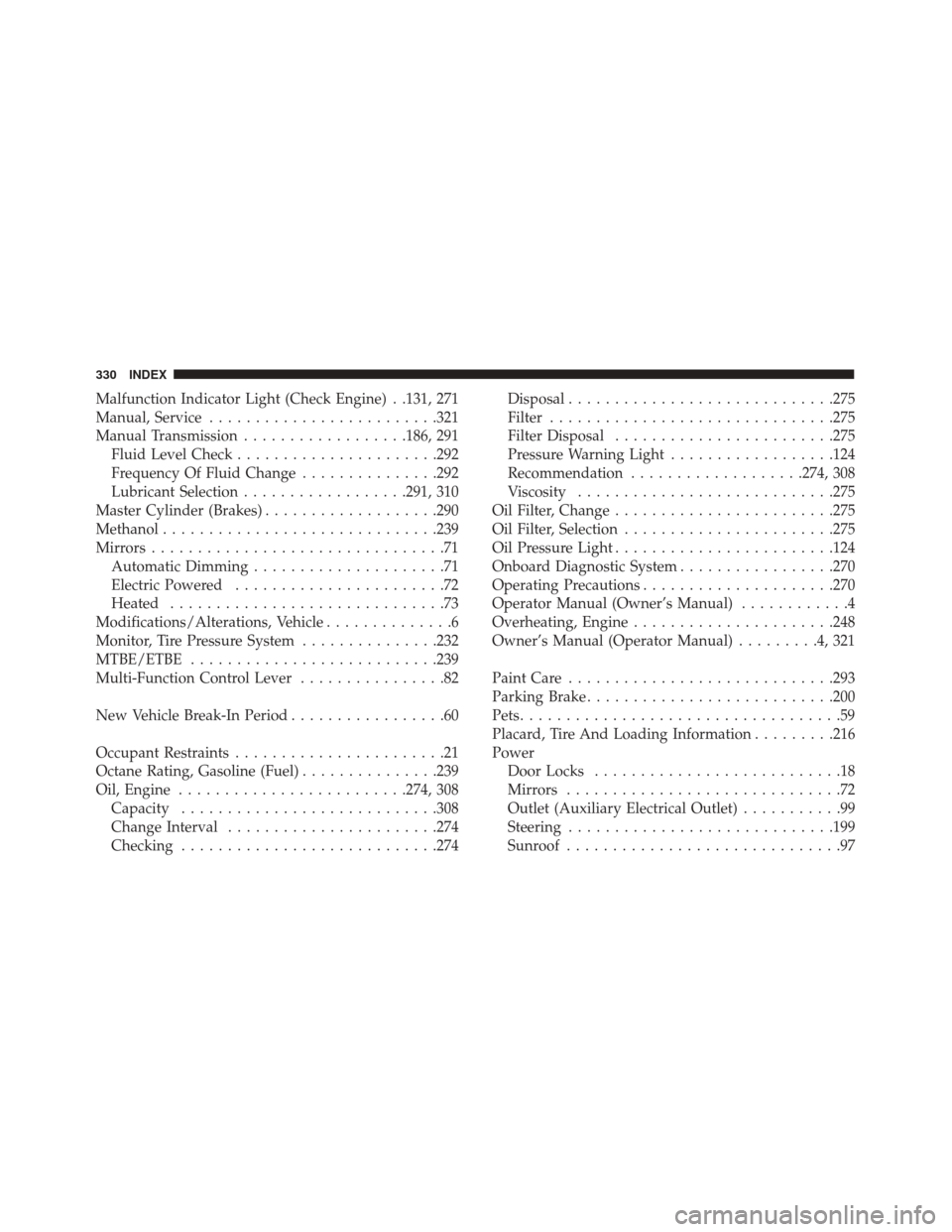
Oil, Engine ........................ .274, 308
Capacity ........................... .308
Change Interval ...................... .274
Checking ........................... .274Disposal
............................ .275
Filter .............................. .275
Filter Disposal ....................... .275
Pressure Warning Light ..................124
Recommendation ...................274, 308
Viscosity ........................... .275
Oil Filter, Change ....................... .275
Oil Filter, Selection ...................... .275
Oil Pressure Light ....................... .124
Onboard Diagnostic System .................270
Operating Precautions .....................270
Operator Manual (Owner’s Manual) ............4
Overheating, Engine ..................... .248
Owner’s Manual (Operator Manual) .........4,321
Paint Care ............................ .293
Parking
Brake .......................... .200
Pets ...................................59
Placard, Tire And Loading Information .........216
Power Door Locks ...........................18
Mirrors ..............................72
Outlet (Auxiliary Electrical Outlet) ...........99
Steering ............................ .199
Sunroof ..............................97
330 INDEX