battery FIAT 500C 2015 2.G Owner's Guide
[x] Cancel search | Manufacturer: FIAT, Model Year: 2015, Model line: 500C, Model: FIAT 500C 2015 2.GPages: 438, PDF Size: 2.96 MB
Page 393 of 438
CavityMaxi Fuse Mini Fuse Description
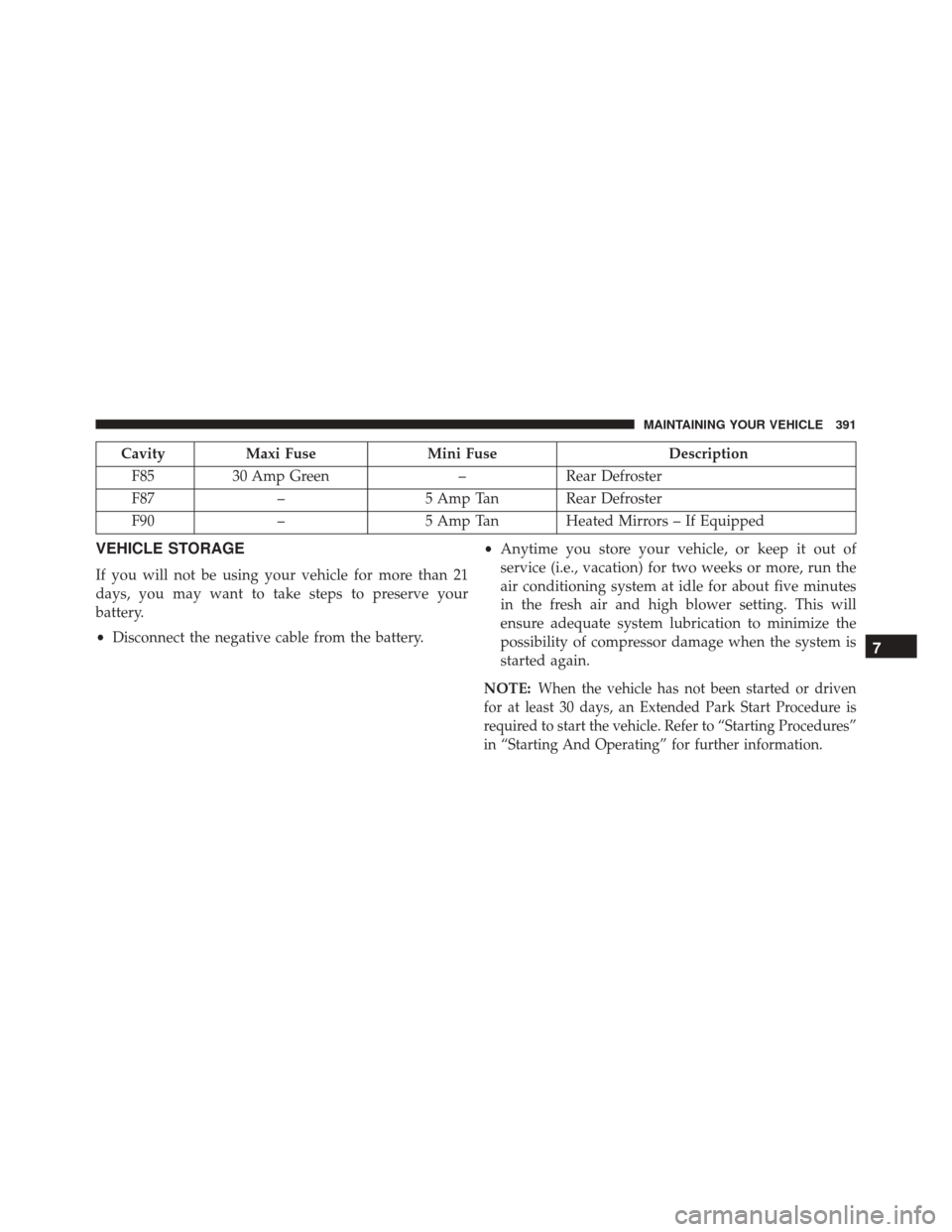
F85 30 Amp Green –Rear Defroster
F87 – 5 Amp Tan Rear Defroster
F90 – 5 Amp Tan Heated Mirrors – If Equipped
VEHICLE STORAGE
If you will not be using your vehicle for more than 21
days, you may want to take steps to preserve your
battery.
•Disconnect the negative cable from the battery. •
Anytime you store your vehicle, or keep it out of
service (i.e., vacation) for two weeks or more, run the
air conditioning system at idle for about five minutes
in the fresh air and high blower setting. This will
ensure adequate system lubrication to minimize the
possibility of compressor damage when the system is
started again.
NOTE:
When the vehicle has not been started or driven
for at least 30 days, an Extended Park Start Procedure is
required to start the vehicle. Refer to “Starting Procedures”
in “Starting And Operating” for further information.
7
MAINTAINING YOUR VEHICLE 391
Page 405 of 438
Once A Month Or Before A Long Trip:
Check engine oil level.
Check windshield washer fluid level.
Check the tire inflation pressures and look for unusual
wear or damage.
Check the fluid levels of the coolant reservoir and brake
master cylinder, and fill as needed.
Check function of all interior and exterior lights.
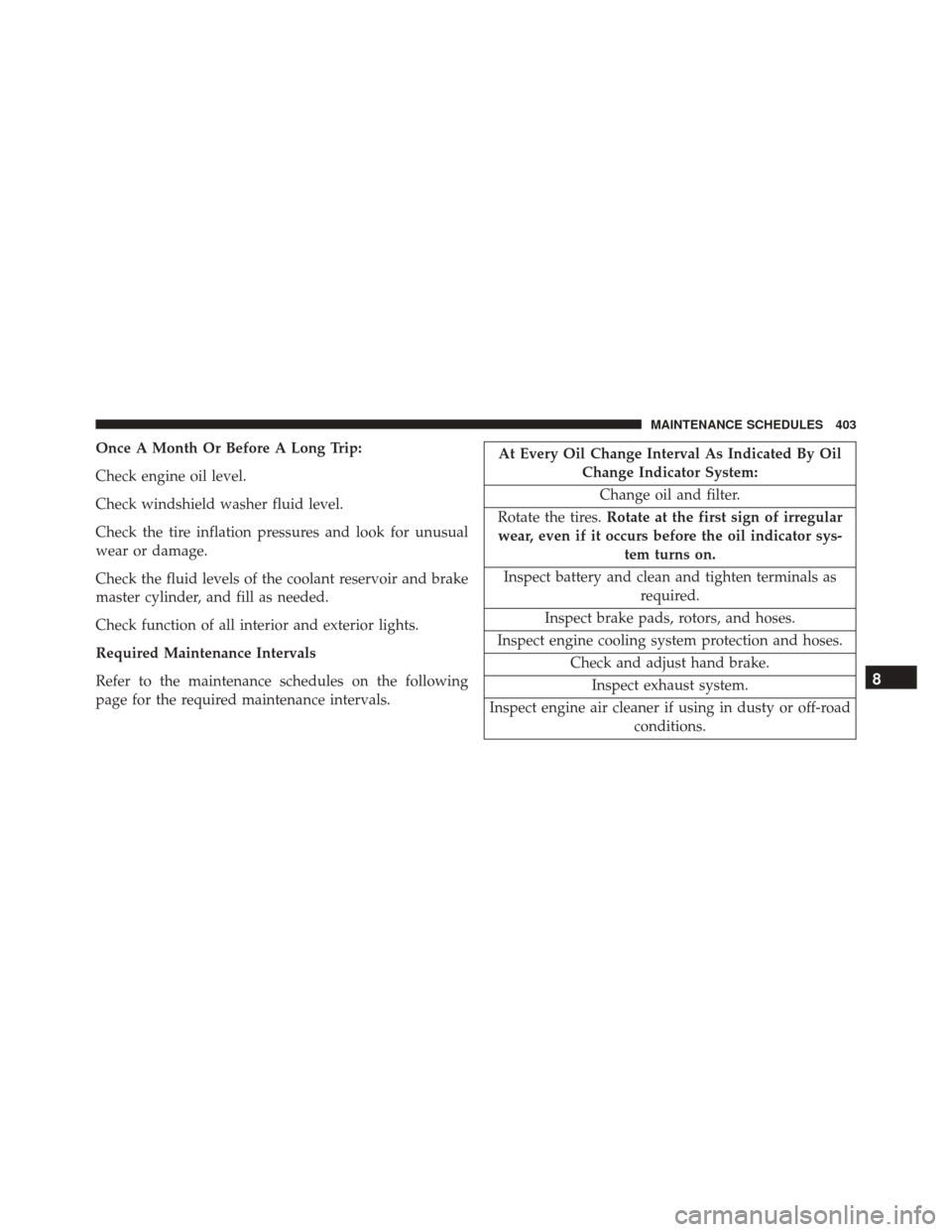
Required Maintenance Intervals
Refer to the maintenance schedules on the following
page for the required maintenance intervals.At Every Oil Change Interval As Indicated By OilChange Indicator System:
Change oil and filter.
Rotate the tires. Rotate at the first sign of irregular
wear, even if it occurs before the oil indicator sys- tem turns on.
Inspect battery and clean and tighten terminals as required.
Inspect brake pads, rotors, and hoses.
Inspect engine cooling system protection and hoses. Check and adjust hand brake.Inspect exhaust system.
Inspect engine air cleaner if using in dusty or off-road conditions.
8
MAINTENANCE SCHEDULES 403
Page 423 of 438
Adding Fluid...................... .375, 376
Fluid And Filter Changes ..................376
Fluid Change ......................... .376
Fluid Level Check ...................... .375
Fluid Type ........................... .400
Gear Ranges .......................... .233
Special Additives ...................... .375
Autostick .............................. .238
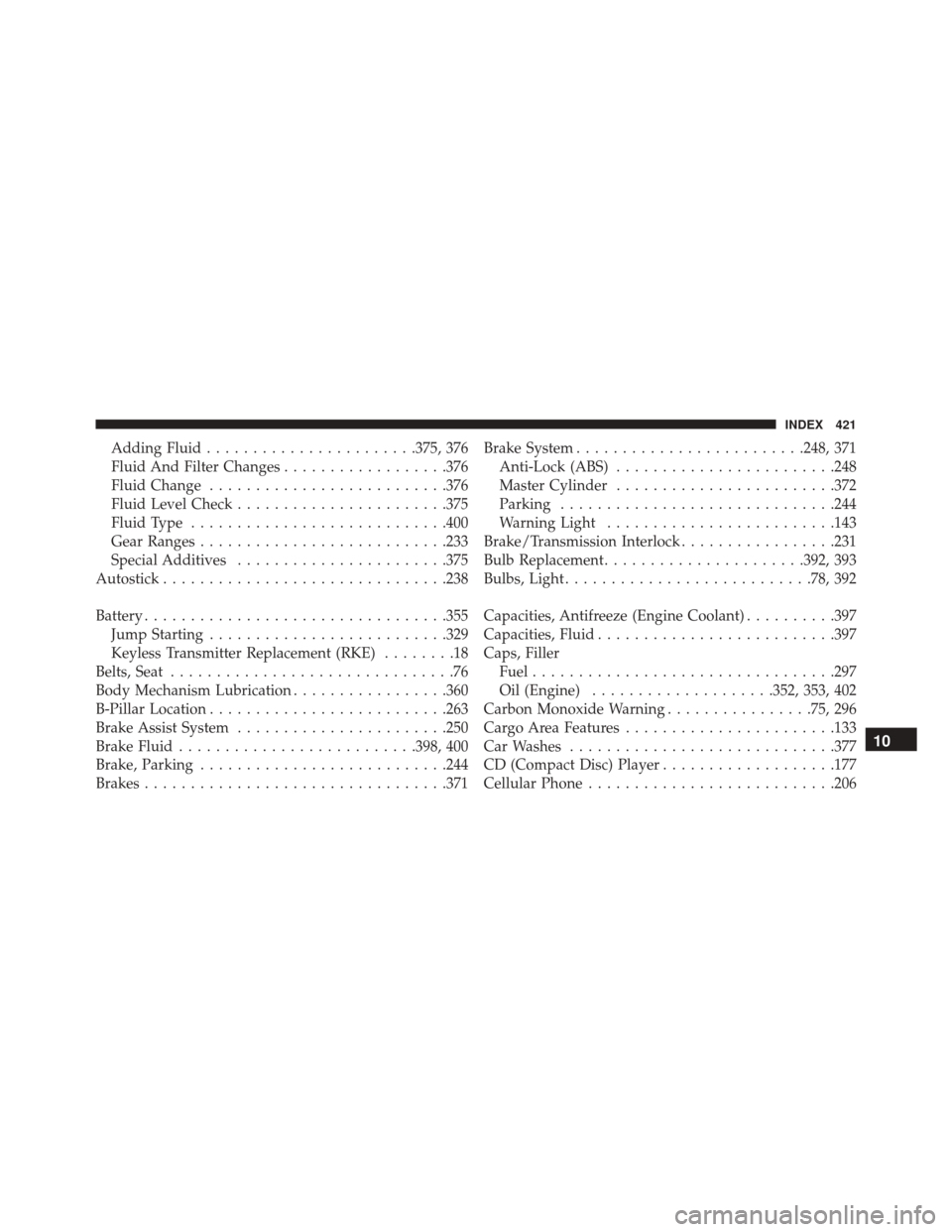
Battery ................................ .355
Jump Starting ......................... .329
Keyless Transmitter Replacement (RKE) ........18
Belts, Seat ...............................76
Body Mechanism Lubrication .................360
B-Pillar Location ......................... .263
Brake Assist System ...................... .250
Brake Fluid ......................... .398, 400
Brake, Parking .......................... .244
Brakes ................................ .371Brake System
........................ .248, 371
Anti-Lock (ABS) ....................... .248
Master Cylinder ....................... .372
Parking ............................. .244
Warning Light ........................ .143
Brake/Transmission Interlock .................231
Bulb Replacement ..................... .392, 393
Bulbs, Light .......................... .78, 392
Capacities, Antifreeze (Engine Coolant) ..........397
Capacities, Fluid ......................... .397
Caps, Filler Fuel ................................ .297
Oil (Engine) ....................352, 353, 402
Carbon Monoxide Warning ................75, 296
Cargo Area Features ...................... .133
Car Washes ............................ .377
CD (Compact Disc) Player ...................177
Cellular Phone .......................... .206
10
INDEX 421
Page 430 of 438
LocksAutomatic Door .........................23
Door .................................20
Power Door ............................22
Lubrication, Body ........................ .360
Lug Nuts .............................. .315
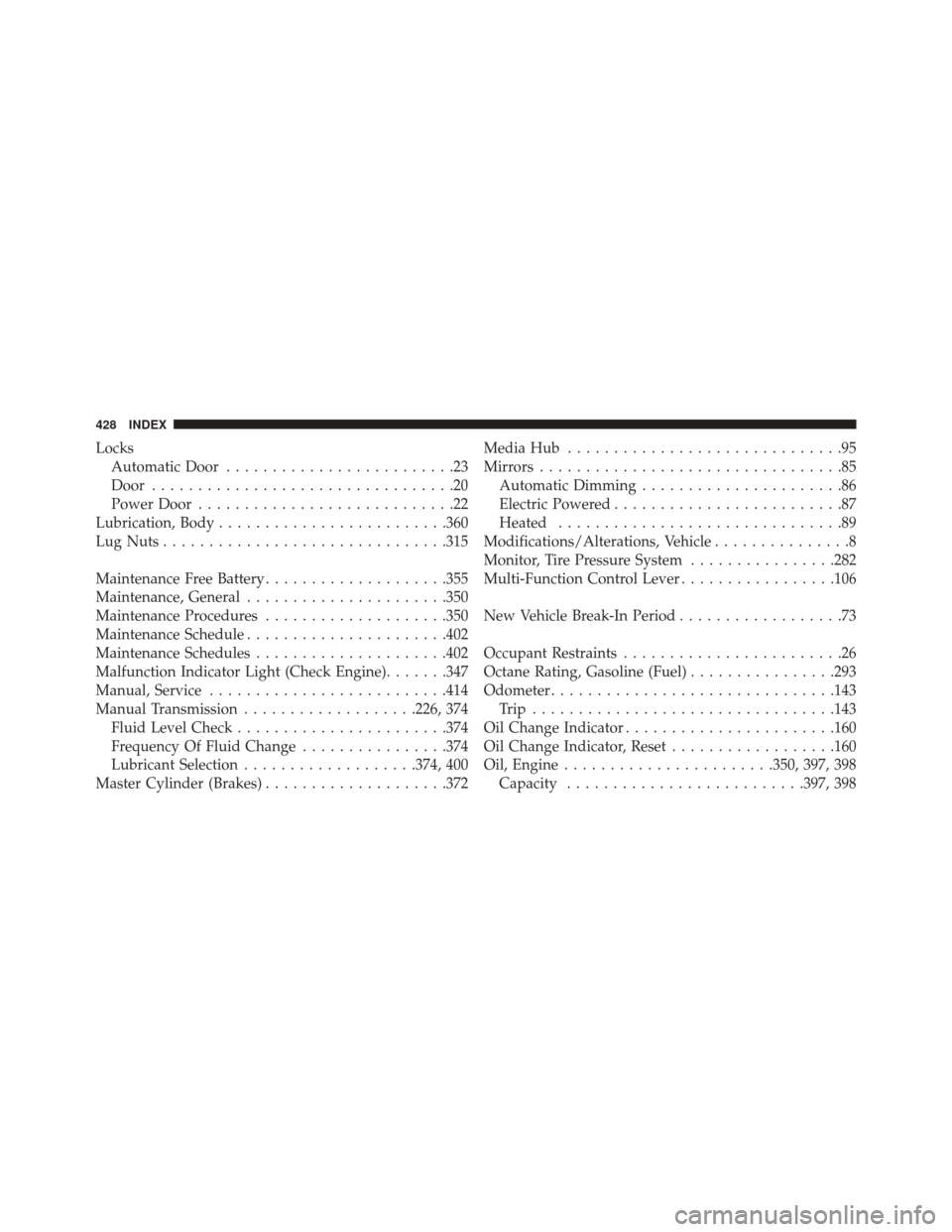
Maintenance Free Battery ....................355
Maintenance, General ..................... .350
Maintenance Procedures ....................350
Maintenance Schedule ..................... .402
Maintenance Schedules .....................402
Malfunction Indicator Light (Check Engine) .......347
Manual, Service ......................... .414
Manual Transmission ...................226, 374
Fluid Level Check ...................... .374
Frequency Of Fluid Change ................374
Lubricant Selection ...................374, 400
Master Cylinder (Brakes) ....................372 Media Hub
..............................95
Mirrors .................................85
Automatic Dimming ......................86
Electric Powered .........................87
Heated ...............................89
Modifications/Alterations, Vehicle ...............8
Monitor, Tire Pressure System ................282
Multi-Function Control Lever .................106
New Vehicle Break-In Period ..................73
Occupant Restraints ........................26
Octane Rating, Gasoline (Fuel) ................293
Odometer .............................. .143
Trip ................................ .143
Oil Change Indicator ...................... .160
Oil Change Indicator, Reset ..................160
Oil, Engine ...................... .350, 397, 398
Capacity ......................... .397, 398
428 INDEX
Page 435 of 438
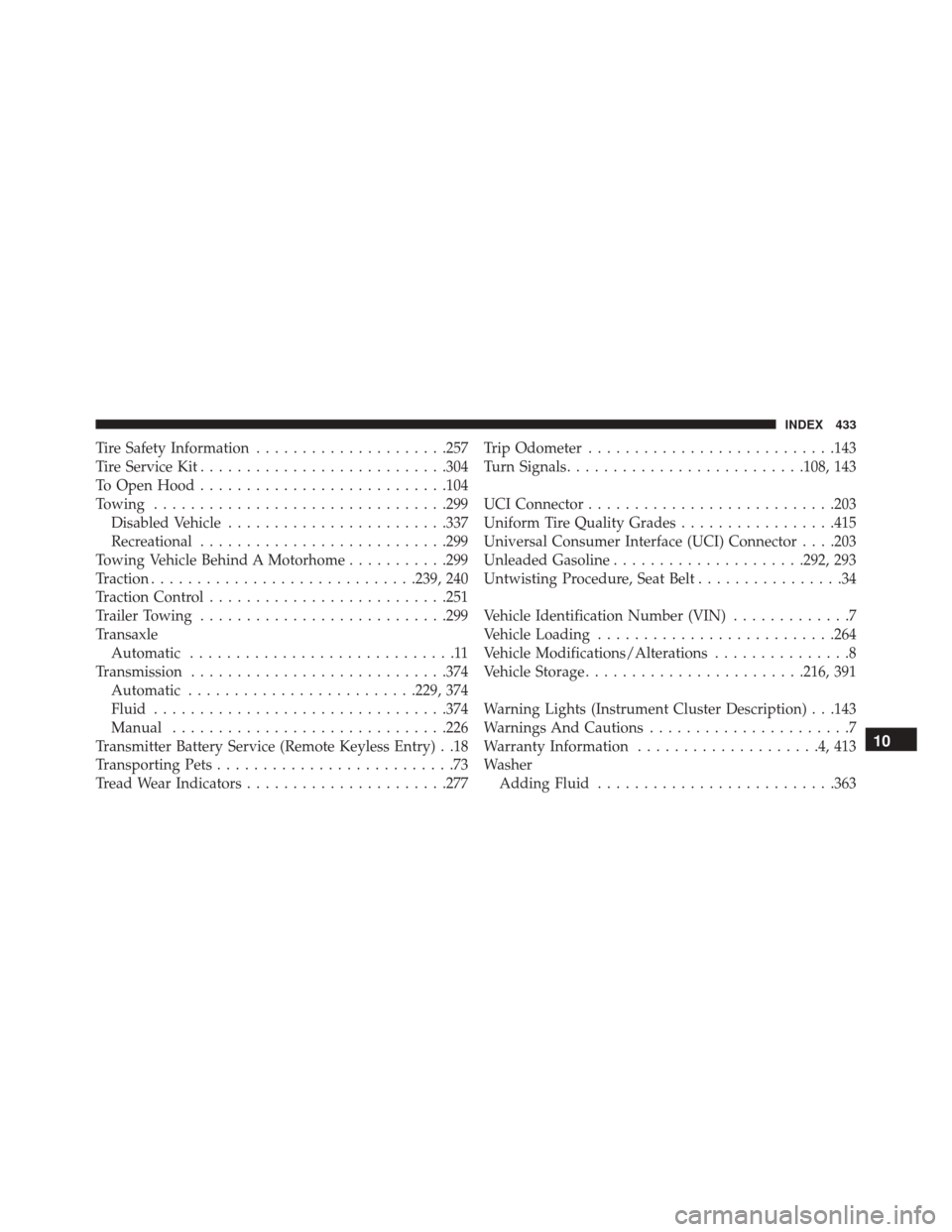
Tire Safety Information.....................257
Tire Service Kit .......................... .304
To Open Hood .......................... .104
Towing ............................... .299
Disabled Vehicle ....................... .337
Recreational .......................... .299
Towing Vehicle Behind A Motorhome ...........299
Traction ............................ .239, 240
Traction Control ......................... .251
Trailer Towing .......................... .299
Transaxle Automatic .............................11
Transmission ........................... .374
Automatic ........................ .229, 374
Fluid ............................... .374
Manual ............................. .226
Transmitter Battery Service (Remote Keyless Entry) . .18
Transporting Pets ..........................73
Tread Wear Indicators ..................... .277Trip Odometer
.......................... .143
Turn Signals ......................... .108, 143
UCI Connector .......................... .203
Uniform Tire Quality Grades .................415
Universal Consumer Interface (UCI) Connector . . . .203
Unleaded Gasoline .....................292, 293
Untwisting Procedure, Seat Belt ................34
Vehicle Identification Number (VIN) .............7
Vehicle Loading ......................... .264
Vehicle Modifications/Alterations ...............8
Vehicle Storage ....................... .216, 391
Warning Lights (Instrument Cluster Description) . . .143
Warnings And Cautions ......................7
Warranty Information ....................4,413
Washer Adding Fluid ......................... .363
10
INDEX 433
Page 437 of 438

INSTALLATION OF RADIO TRANSMITTING
EQUIPMENTSpecial design considerations are incorporated into this
vehicle’s electronic system to provide immunity to radio
frequency signals. Mobile two-way radios and telephone
equipment must be installed properly by trained person-
nel. The following must be observed during installation.
The positive power connection should be made directly
to the battery and fused as close to the battery as possible.
The negative power connection should be made to body
sheet metal adjacent to the negative battery connection.
This connection should not be fused.
Antennas for two-way radios should be mounted on the
roof or the rear area of the vehicle. Care should be used
in mounting antennas with magnet bases. Magnets may
affect the accuracy or operation of the compass on
vehicles so equipped.The antenna cable should be as short as practical and
routed away from the vehicle wiring when possible. Use
only fully shielded coaxial cable.
Carefully match the antenna and cable to the radio to
ensure a low Standing Wave Ratio (SWR).
Mobile radio equipment with output power greater than
normal may require special precautions.
All installations should be checked for possible interfer-
ence between the communications equipment and the
vehicle’s electronic systems.