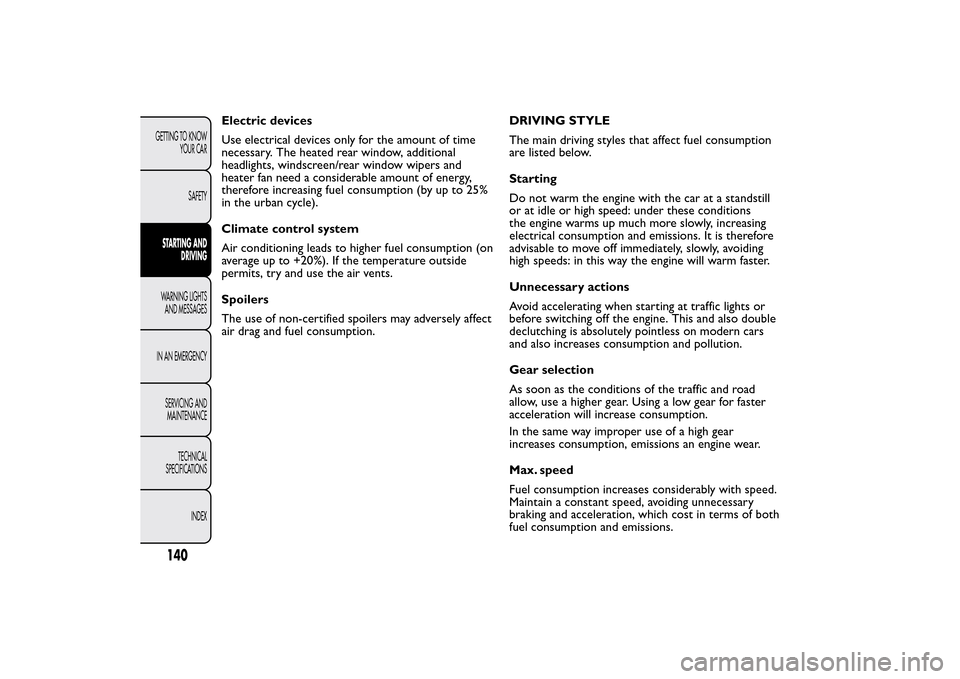
Electric devices
Use electrical devices only for the amount of time
necessary. The heated rear window, additional
headlights, windscreen/rear window wipers and
heater fan need a considerable amount of energy,
therefore increasing fuel consumption (by up to 25%
in the urban cycle).
Climate control system
Air conditioning leads to higher fuel consumption (on
average up to +20%). If the temperature outside
permits, try and use the air vents.
Spoilers
The use of non-certified spoilers may adversely affect
air drag and fuel consumption.DRIVING STYLE
The main driving styles that affect fuel consumption
are listed below.
Starting
Do not warm the engine with the car at a standstill
or at idle or high speed: under these conditions
the engine warms up much more slowly, increasing
electrical consumption and emissions. It is therefore
advisable to move off immediately, slowly, avoiding
high speeds: in this way the engine will warm faster.
Unnecessary actions
Avoid accelerating when starting at traffic lights or
before switching off the engine. This and also double
declutching is absolutely pointless on modern cars
and also increases consumption and pollution.
Gear selection
As soon as the conditions of the traffic and road
allow, use a higher gear. Using a low gear for faster
acceleration will increase consumption.
In the same way improper use of a high gear
increases consumption, emissions an engine wear.
Max. speed
Fuel consumption increases considerably with speed.
Maintain a constant speed, avoiding unnecessary
braking and acceleration, which cost in terms of both
fuel consumption and emissions.
140GETTING TO KNOW
YOUR CAR
SAFETYSTARTING AND
DRIVINGWARNING LIGHTS
AND MESSAGES
IN AN EMERGENCY
SERVICING AND
MAINTENANCE
TECHNICAL
SPECIFICATIONS
INDEX
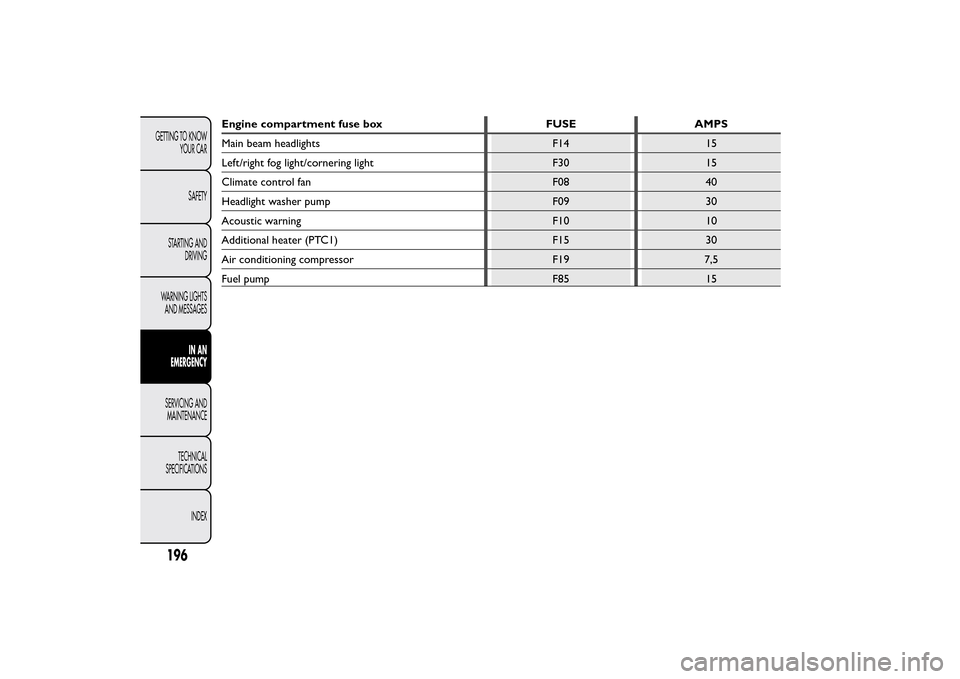
Engine compartment fuse box FUSE AMPS
Main beam headlights F14 15
Left/right fog light/cornering light F30 15
Climate control fan F08 40
Headlight washer pump F09 30
Acoustic warning F10 10
Additional heater (PTC1) F15 30
Air conditioning compressor F19 7,5
Fuel pump F85 15
196GETTING TO KNOW
YOUR CAR
SAFETY
STARTING AND
DRIVING
WARNING LIGHTS
AND MESSAGES
IN AN
EMERGENCY
SERVICING AND
MAINTENANCE
TECHNICAL
SPECIFICATIONS
INDEX