wheel FORD CONTOUR 1999 2.G User Guide
[x] Cancel search | Manufacturer: FORD, Model Year: 1999, Model line: CONTOUR, Model: FORD CONTOUR 1999 2.GPages: 244, PDF Size: 2.26 MB
Page 147 of 244
Roadside emergencies
147
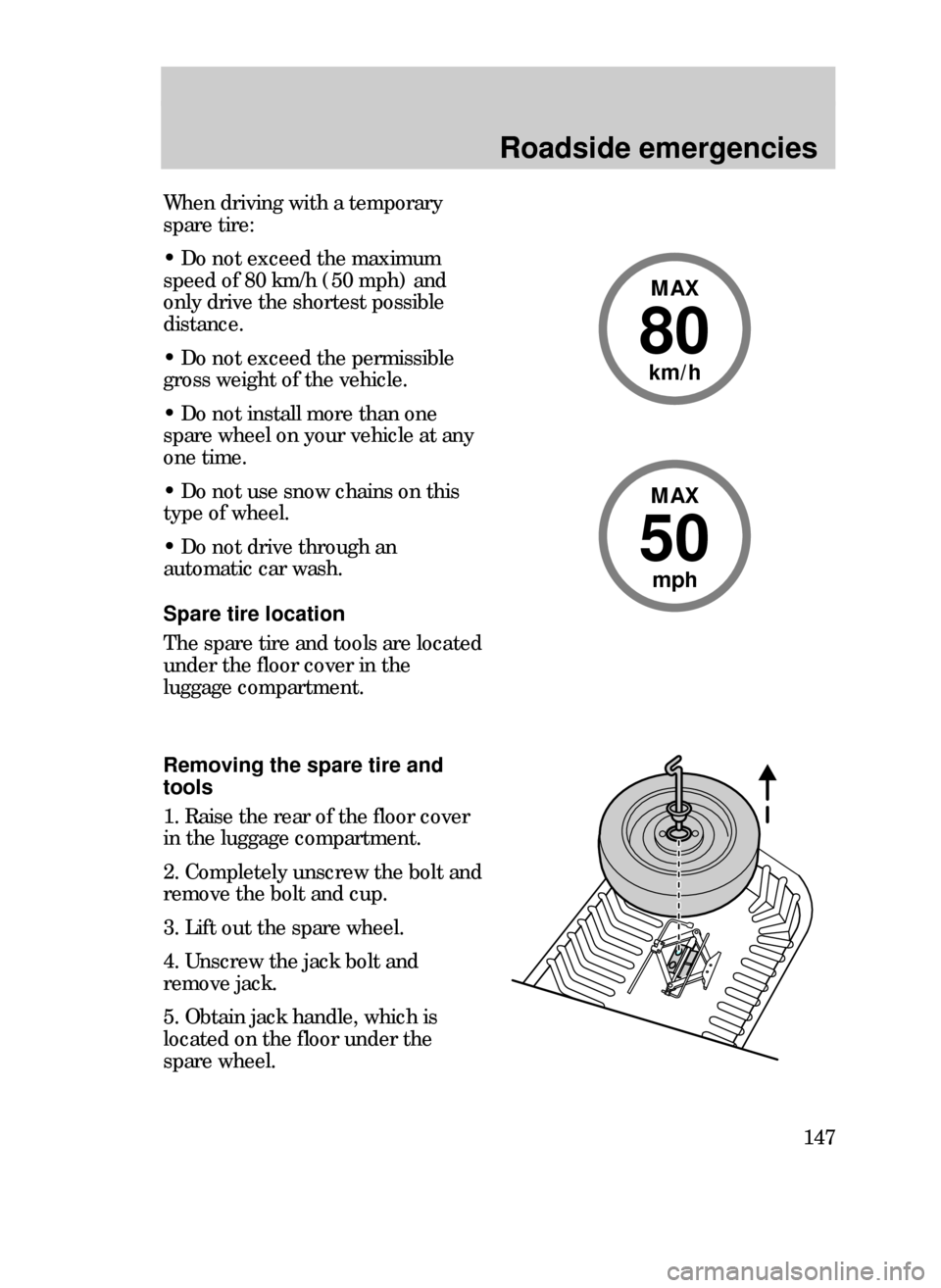
80
MAX
km/h
When driving with a temporary
spare tire:
¥ Do not exceed the maximum
speed of 80 km/h (50 mph) and
only drive the shortest possible
distance.
¥ Do not exceed the permissible
gross weight of the vehicle.
¥ Do not install more than one
spare wheel on your vehicle at any
one time.
¥ Do not use snow chains on this
type of wheel.
¥ Do not drive through an
automatic car wash.
Spare tire location
The spare tire and tools are located
under the floor cover in the
luggage compartment.
50
MAX
mph
Removing the spare tire and
tools
1. Raise the rear of the floor cover
in the luggage compartment.
2. Completely unscrew the bolt and
remove the bolt and cup.
3. Lift out the spare wheel.
4. Unscrew the jack bolt and
remove jack.
5. Obtain jack handle, which is
located on the floor under the
spare wheel.
23CREen 3/25/99 3:35 PM Page 147
Page 148 of 244
Roadside emergencies
148
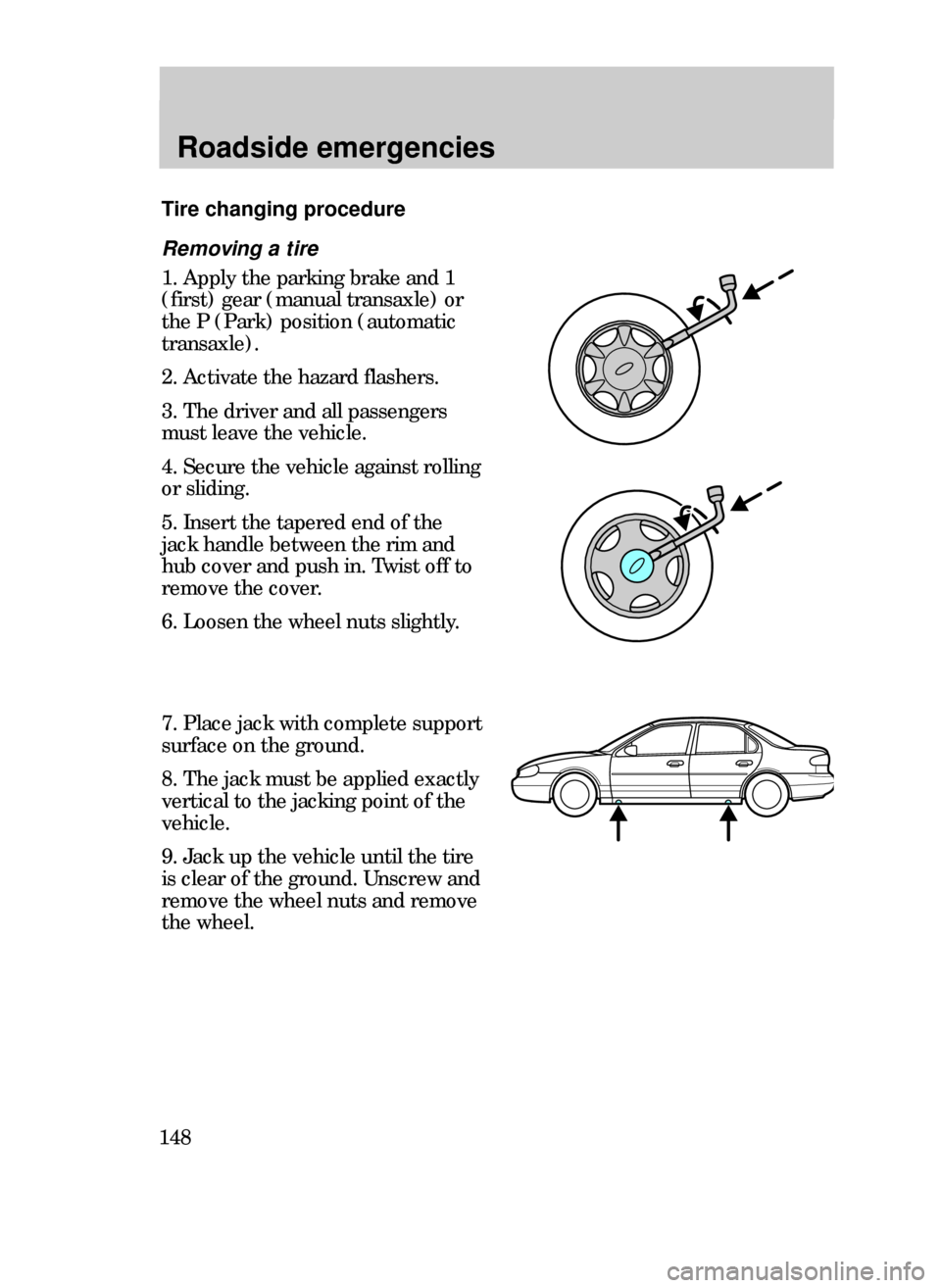
Removing a tire
1. Apply the parking brake and 1
(first) gear (manual transaxle) or
the P (Park) position (automatic
transaxle).
2. Activate the hazard flashers.
3. The driver and all passengers
must leave the vehicle.
4. Secure the vehicle against rolling
or sliding.
5. Insert the tapered end of the
jack handle between the rim and
hub cover and push in. Twist off to
remove the cover.
6. Loosen the wheel nuts slightly.
Tire changing procedure
7. Place jack with complete support
surface on the ground.
8. The jack must be applied exactly
vertical to the jacking point of the
vehicle.
9. Jack up the vehicle until the tire
is clear of the ground. Unscrew and
remove the wheel nuts and remove
the wheel.
23CREen 3/25/99 3:35 PM Page 148
Page 149 of 244
Roadside emergencies
149
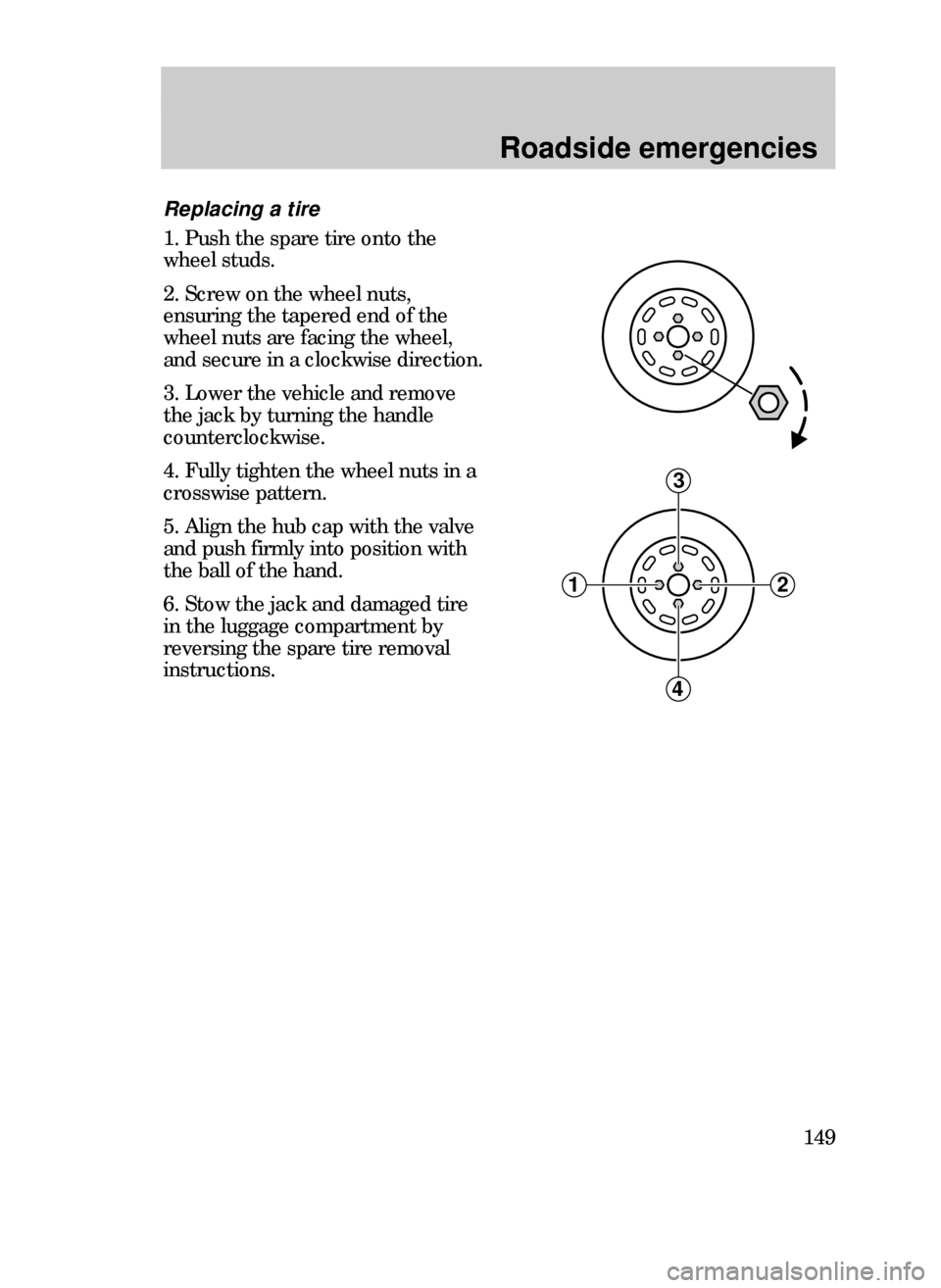
Replacing a tire
1. Push the spare tire onto the
wheel studs.
2. Screw on the wheel nuts,
ensuring the tapered end of the
wheel nuts are facing the wheel,
and secure in a clockwise direction.
3. Lower the vehicle and remove
the jack by turning the handle
counterclockwise.
4. Fully tighten the wheel nuts in a
crosswise pattern.
5. Align the hub cap with the valve
and push firmly into position with
the ball of the hand.
6. Stow the jack and damaged tire
in the luggage compartment by
reversing the spare tire removal
instructions.
3
42 1
23CREen 3/25/99 3:35 PM Page 149
Page 156 of 244
Roadside emergencies
156
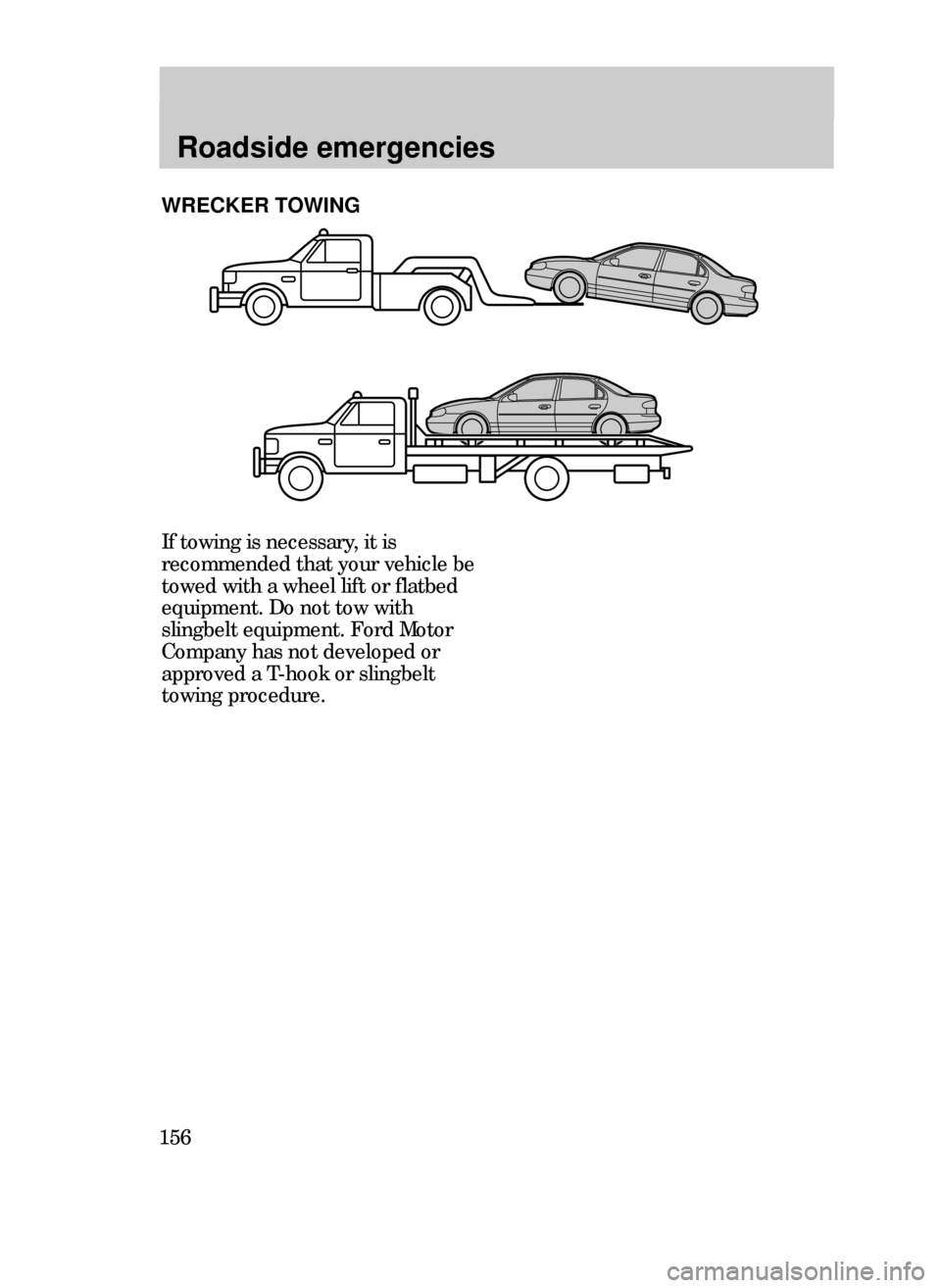
If towing is necessary, it is
recommended that your vehicle be
towed with a wheel lift or flatbed
equipment. Do not tow with
slingbelt equipment. Ford Motor
Company has not developed or
approved a T-hook or slingbelt
towing procedure.
WRECKER TOWING
23CREen 3/25/99 3:35 PM Page 156
Page 157 of 244
Roadside emergencies
157
Never use a tow bar that
attaches to the bumper
when you tow your vehicle. This
could damage the bumper and
cause an accident.
TOWING YOUR VEHICLE
BEHIND ANOTHER VEHICLE
Before you have your vehicle
towed:
¥ release the parking brake,
¥ move the gearshift to N
(Neutral),
¥ turn the ignition to the off
position and
¥ unlock the steering wheel.
Automatic transaxle
Do not tow your vehicle at a speed
faster than 55 km/h (35 mph) or
for a distance greater than 80 km
(50 miles) unless the drive wheels
are placed on dollies.
Manual transaxle
Do not tow your vehicle at a speed
faster than 90 km/h (55 mph). Your
maximum towing distance is
unlimited.
23CREen 3/25/99 3:35 PM Page 157
Page 160 of 244
Maintenance and care
160
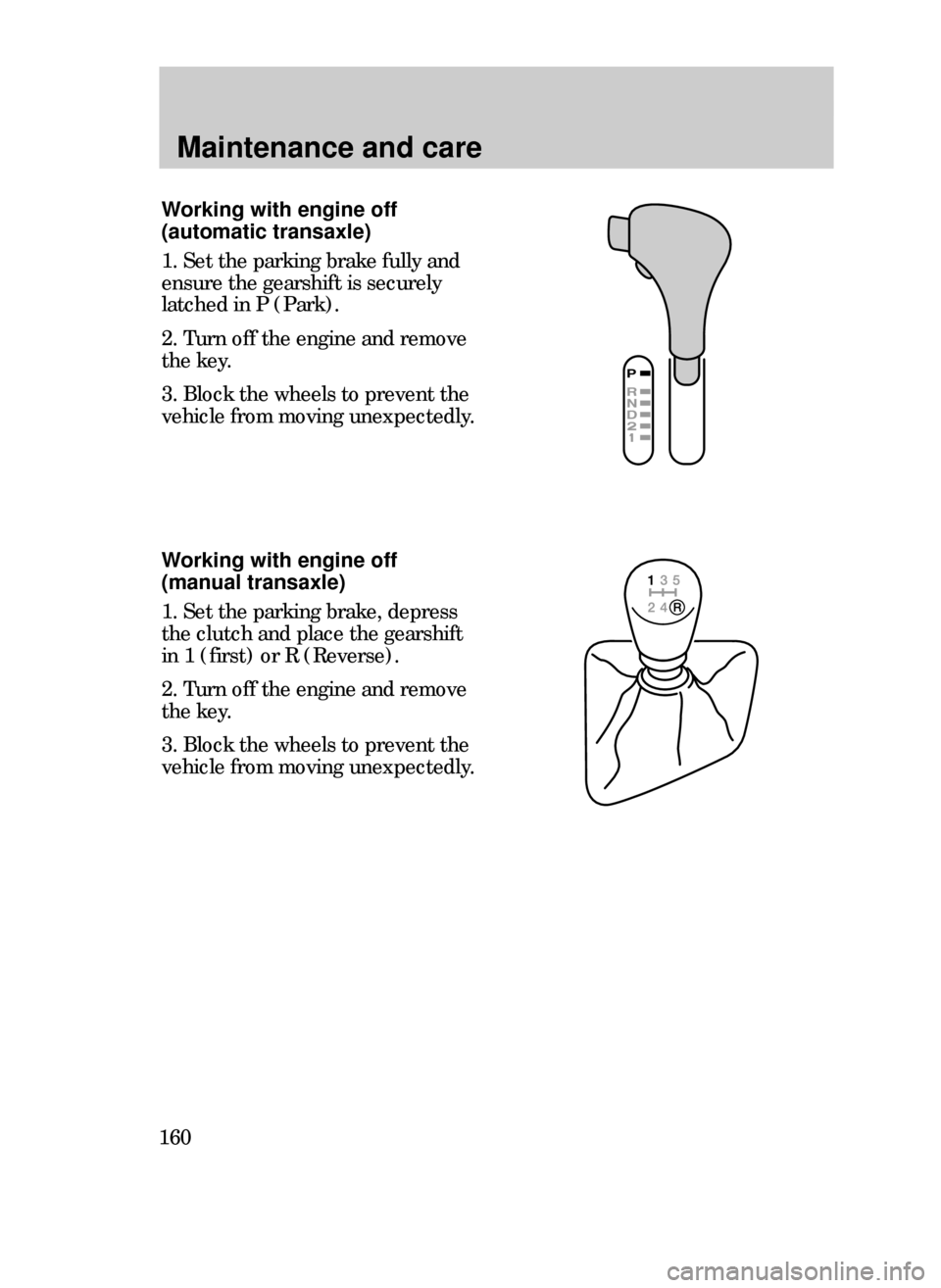
Working with engine off
(automatic transaxle)
1. Set the parking brake fully and
ensure the gearshift is securely
latched in P (Park).
2. Turn off the engine and remove
the key.
3. Block the wheels to prevent the
vehicle from moving unexpectedly.
Working with engine off
(manual transaxle)
1. Set the parking brake, depress
the clutch and place the gearshift
in 1 (first) or R (Reverse).
2. Turn off the engine and remove
the key.
3. Block the wheels to prevent the
vehicle from moving unexpectedly.
31CMCen 3/25/99 3:45 PM Page 160
Page 161 of 244
Maintenance and care
161
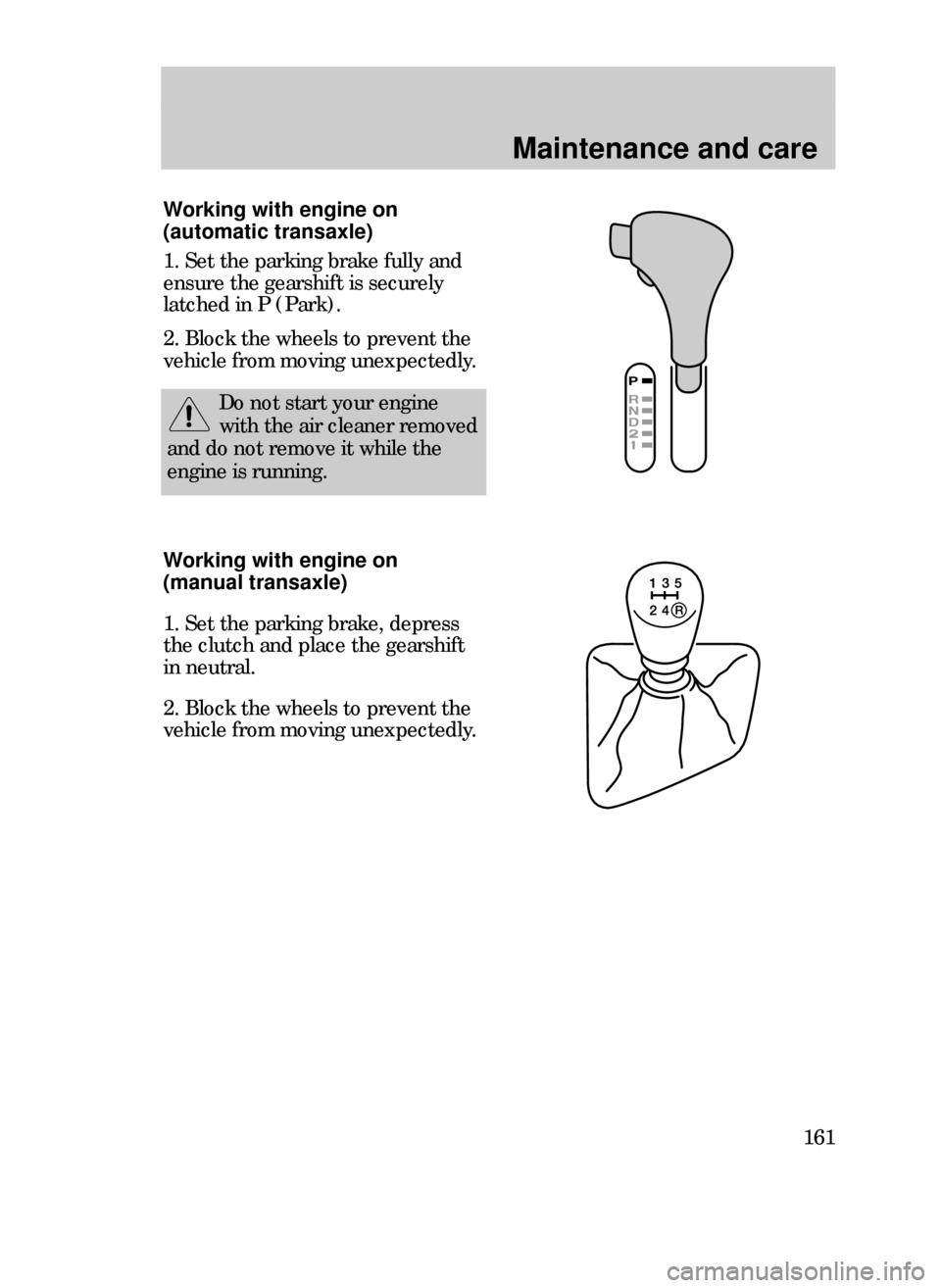
Working with engine on
(automatic transaxle)
1. Set the parking brake fully and
ensure the gearshift is securely
latched in P (Park).
2. Block the wheels to prevent the
vehicle from moving unexpectedly.
Do not start your engine
with the air cleaner removed
and do not remove it while the
engine is running.
Working with engine on
(manual transaxle)
1. Set the parking brake, depress
the clutch and place the gearshift
in neutral.
2. Block the wheels to prevent the
vehicle from moving unexpectedly.
31CMCen 3/25/99 3:45 PM Page 161
Page 184 of 244
Maintenance and care
184
Temperature A B C
The temperature grades are A (the
highest), B, and C, representing
the tireÕs resistance to the
generation of heat and its ability to
dissipate heat when tested under
controlled conditions on a specified
indoor laboratory test wheel.
Sustained high temperature can
cause the material of the tire to
degenerate and reduce tire life, and
excessive temperature can lead to
sudden tire failure. The grade C
corresponds to a level of
performance which all passenger
car tires must meet under the
Federal Motor Vehicle Safety
Standard No. 109. Grades B and A
represent higher levels of
performance on the laboratory test
wheel than the minimum required
by law.
The temperature grade for
this tire is established for a
tire that is properly inflated and
not overloaded. Excessive speed,
underinflation, or excessive
loading, either separately or in
combination, can cause heat
buildup and possible tire failure.
31CMCen 3/25/99 3:45 PM Page 184
Page 187 of 244
Maintenance and care
187 Dispose of worn tires in
accordance with local
environmental regulations.
Refer to the Safety Compliance
Certification label to determine the
specific size tire and wheel Ford
Motor Company recommends for
use on this vehicle.
When purchasing replacement tires
for your vehicle, consult your
dealer or a qualified service
technician to ensure that the
correct tire type is used.
31CMCen 3/25/99 3:45 PM Page 187
Page 212 of 244
Maintenance and care
212
Repairing paint chips
Minor scratches or paint damage
from road debris may be repaired
with touch-up paint, paint repair
foil or aerosol spray from the Ford
accessories line. Observe the
application instructions on the
products.
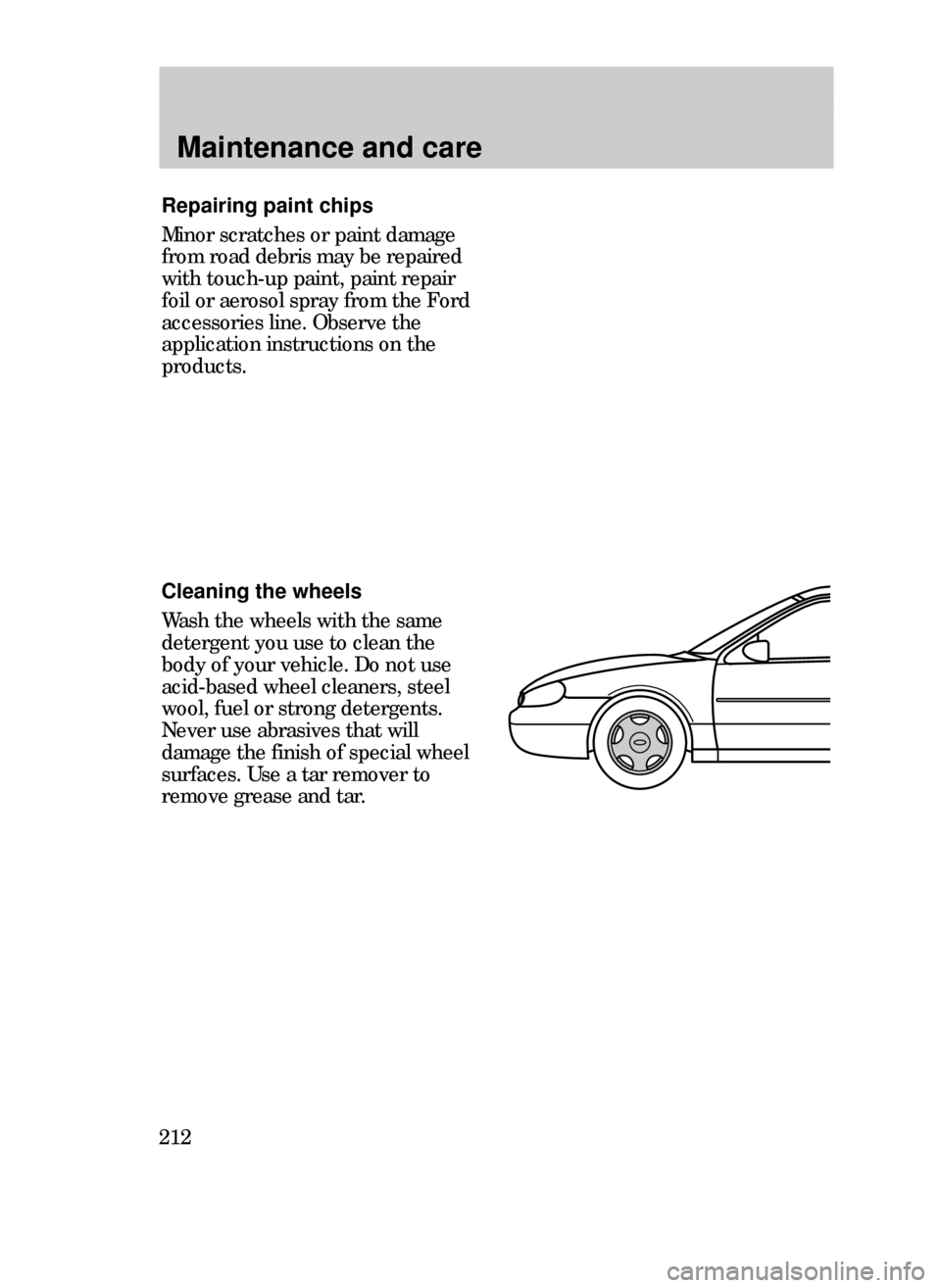
Cleaning the wheels
Wash the wheels with the same
detergent you use to clean the
body of your vehicle. Do not use
acid-based wheel cleaners, steel
wool, fuel or strong detergents.
Never use abrasives that will
damage the finish of special wheel
surfaces. Use a tar remover to
remove grease and tar.
31CMCen 3/25/99 3:45 PM Page 212