tires FORD E SERIES 1997 4.G Owners Manual
[x] Cancel search | Manufacturer: FORD, Model Year: 1997, Model line: E SERIES, Model: FORD E SERIES 1997 4.GPages: 192, PDF Size: 3.44 MB
Page 88 of 192

loaded vehicle (including
passengers and cargo) is
permitted to tow. It is
determined by subtracting the
weight of the loaded towing
vehicle from the GCWR of the
towing vehicle.
²Trailer weight range:
Specified weight range that the
trailer must fall within that
ranges from zero to the
maximum trailer weight rating.
Remember to figure in the tongue
load of your loaded trailer when
figuring the total weight of your
vehicle and rear axle loads.
Do not use replacement tires with
lower weight capacities than the
original because they may lower
the vehicle's GVWR and GAWR
limitations. Replacement tires with
a higher weight limit than the
originals do not increase the
GVWR and GAWR limitations.
eco_calculating_load
Driving
88
Page 95 of 192
it does not shift and change the
weight on the hitch.
Towing a trailer places an
additional load on your vehicle's
engine, transmission, axle, brakes,
tires and suspension. Inspect these
components carefully after any
towing operation.
Do not exceed the GVWR
or the GAWR specified on
the Safety Compliance
Certification Label.
Towing trailers beyond the
maximum recommended
gross trailer weight could result
in engine damage,
transmission/axle damage,
structural damage, loss of
control, and personal injury.
Preparing to tow
Use the proper equipment for
towing a trailer, and make sure it
is properly attached to your
vehicle. See your dealer or a
reliable trailer dealer if you require
assistance.
Hitches
Do not use or install hitches that
clamp onto the bumper or to the
axle. Underbody hitches are
acceptable if installed properly.
Step bumper (if equipped)
Step bumpers have a built-in hitch
and only require a ball with a 2.5
cm (1 in.) shank diameter. Step
eco_preparing_tow
eco_hitch
eco_step-bumper
Driving
95
Page 112 of 192
Position Circuit
J Horn
K Fuel pump or IDM
CHANGING TIRES
Spare tire location
The spare tire is stowed under the
rear of your vehicle (except
cutaway and stripped chassis
models).
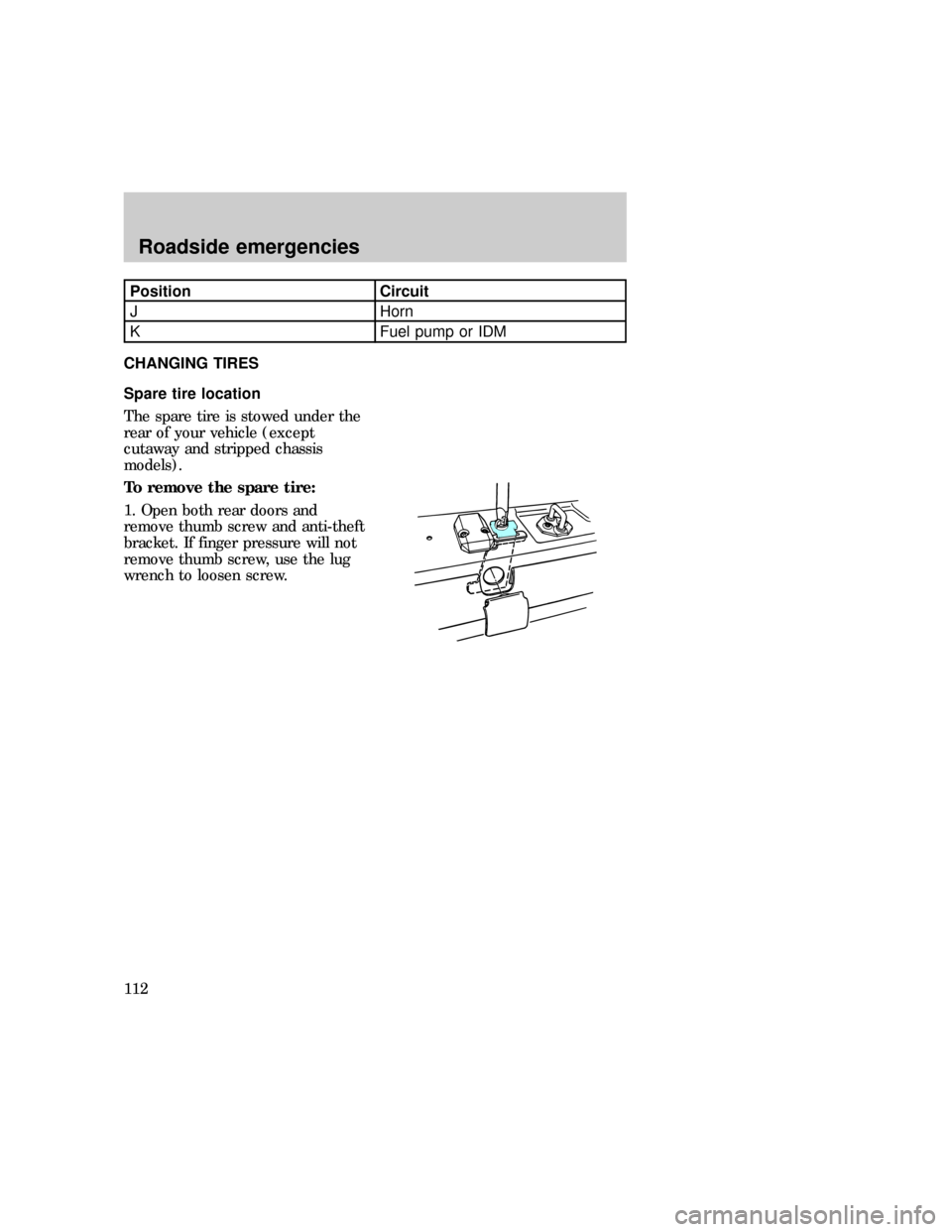
To remove the spare tire:
1. Open both rear doors and
remove thumb screw and anti-theft
bracket. If finger pressure will not
remove thumb screw, use the lug
wrench to loosen screw.
eco_tire_location
Roadside emergencies
112
Page 151 of 192

INFORMATION ABOUT TIRE
QUALITY GRADES
New vehicles are fitted with tires
that have their Tire Quality Grade
(described below) molded into the
tire's sidewall. These Tire Quality
Grades are determined by
standards that the United States
Department of Transportation has
set.
Tire Quality Grades apply to new
pneumatic tires for use on
passenger cars. They do not apply
to deep tread, winter-type snow
tires, space-saver or temporary use
spare tires, tires with nominal rim
diameters of 10 to 12 inches or
limited production tires as defined
in Title 49 Code of Federal
Regulations Part 575.104(c)(2).
U.S. Department of
Transportation-Tire quality
grades:The U.S. Department of
Transportation requires Ford to
give you the following information
about tire grades exactly as the
government has written it.
Treadwear
The treadwear grade is a
comparative rating based on the
wear rate of the tire when tested
under controlled conditions on a
specified government test course.
For example, a tire grade 150
would wear one and one-half (1
1/2) times as well on the
government course as a tire grade
100. The relative performance of
tires depends upon the actual
com_treadwear.01
Maintenance and care
151
Page 152 of 192

conditions of their use, however,
and may depart significantly from
the norm due to variations in
driving habits, service practices,
and differences in road
characteristics and climate.
Traction A B C
The traction grades, from highest
to lowest are A, B, and C, and they
represent the tire's ability to stop
on wet pavement as measured
under test surfaces of asphalt and
concrete. A tire marked C may
have poor traction performance.
Warning: The traction grade
assigned to this tire is based on
braking (straightahead) traction
tests and does not include
cornering (turning) traction.
Temperature A B C
The temperature grades are A (the
highest), B, and C, representing
the tire's resistance to the
generation of heat and its ability to
dissipate heat when tested under
controlled conditions on a
specified indoor laboratory test
wheel. Sustained high temperature
can cause the material of the tire
to degenerate and reduce tire life,
and excessive temperature can
lead to sudden tire failure. The
grade C corresponds to a level of
performance which all passenger
car tires must meet under the
Federal Motor Vehicle Safety
Standard No. 109. Grades B and A
represent higher levels of
performance on the laboratory test
com_traction_abc.01
com_temperature_abc.01
Maintenance and care
152
Page 153 of 192
wheel than the minimum required
by law.
The temperature grade for
this tire is established for a
tire that is properly inflated and
not overloaded. Excessive speed,
underinflation, or excessive
loading, either separately or in
combination, can cause heat
buildup and possible tire failure.
SERVICING YOUR TIRES
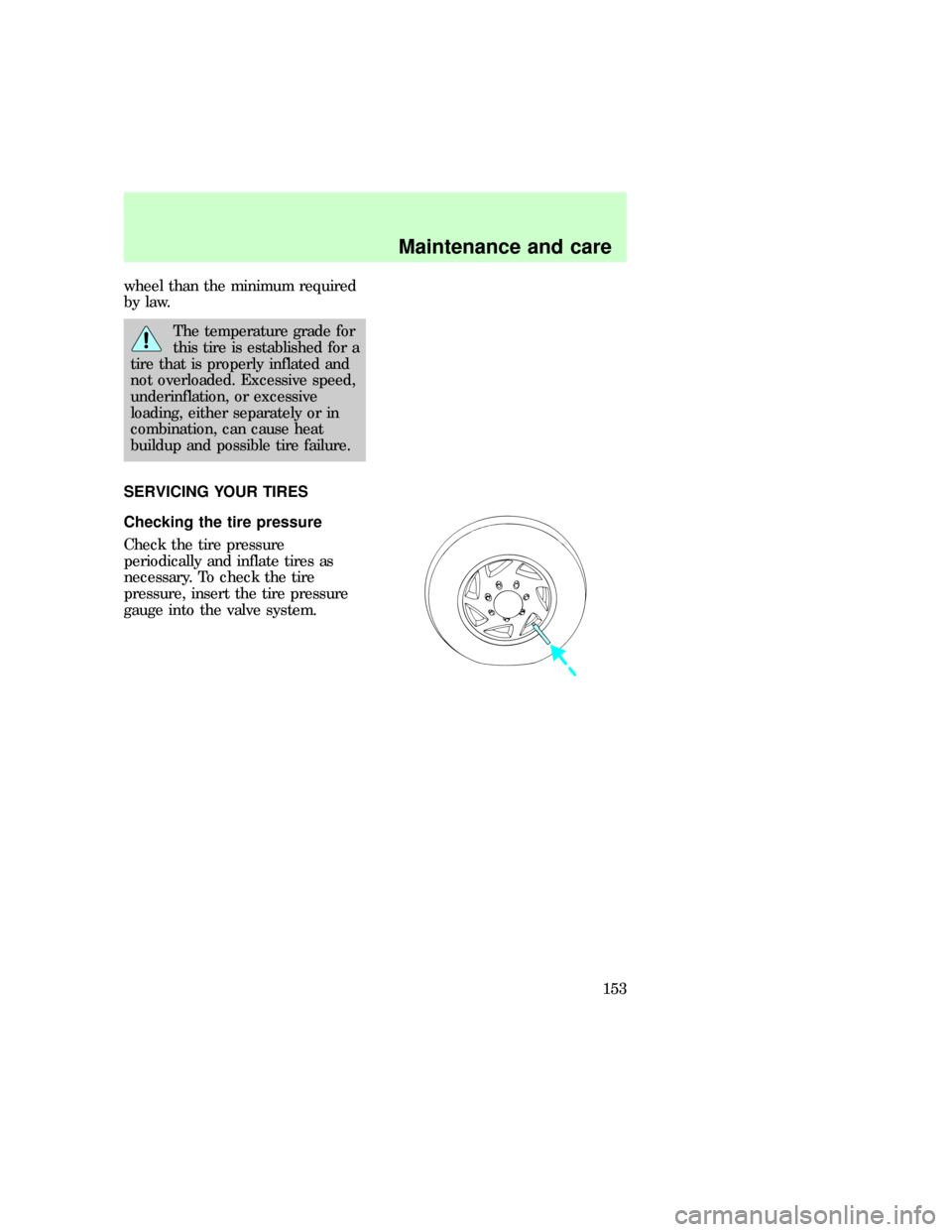
Checking the tire pressure
Check the tire pressure
periodically and inflate tires as
necessary. To check the tire
pressure, insert the tire pressure
gauge into the valve system.
eco_tire_service
eco_pressure_checking
Maintenance and care
153
Page 154 of 192
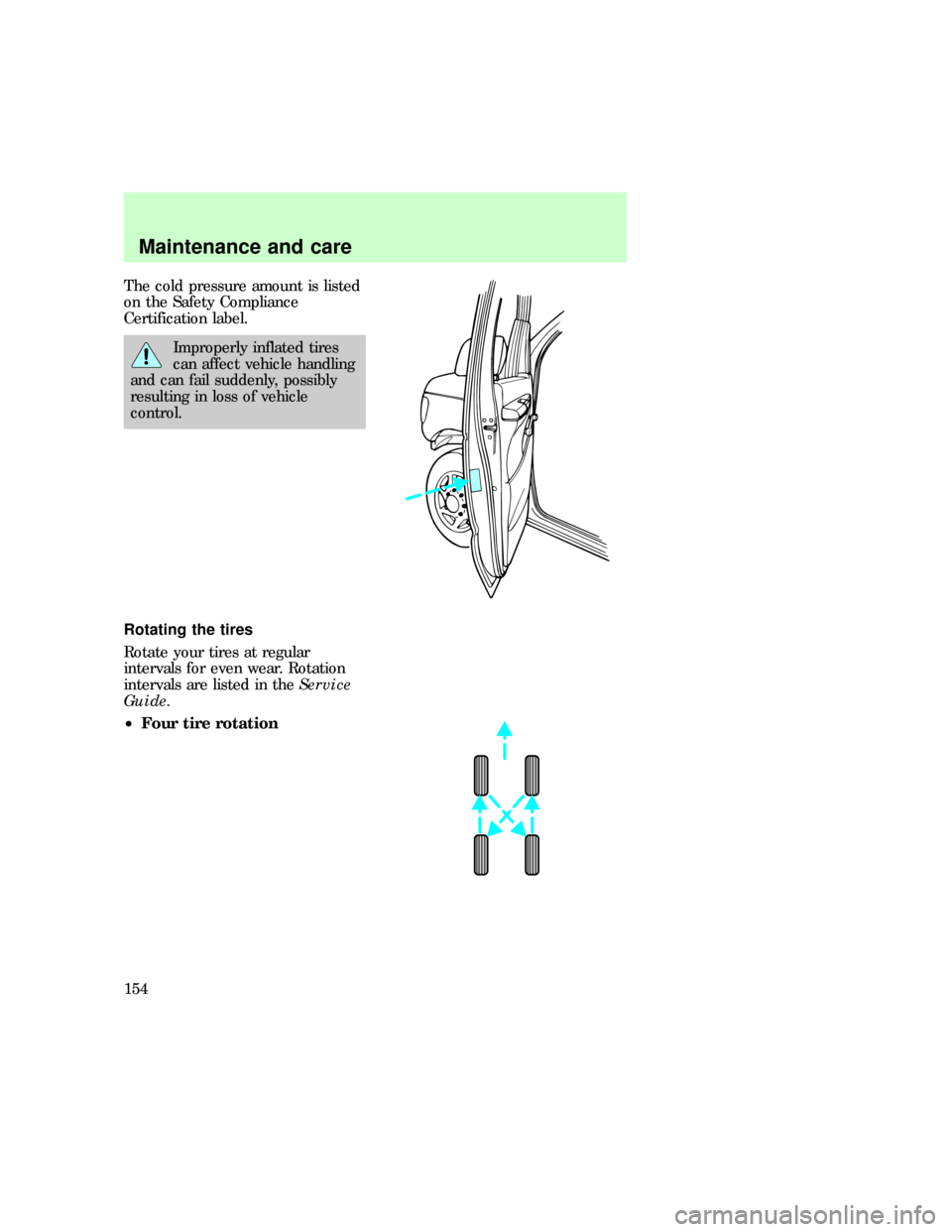
The cold pressure amount is listed
on the Safety Compliance
Certification label.
Improperly inflated tires
can affect vehicle handling
and can fail suddenly, possibly
resulting in loss of vehicle
control.
Rotating the tires
Rotate your tires at regular
intervals for even wear. Rotation
intervals are listed in theService
Guide.
²Four tire rotation
eco_rotating_tiresMaintenance and care
154
Page 155 of 192
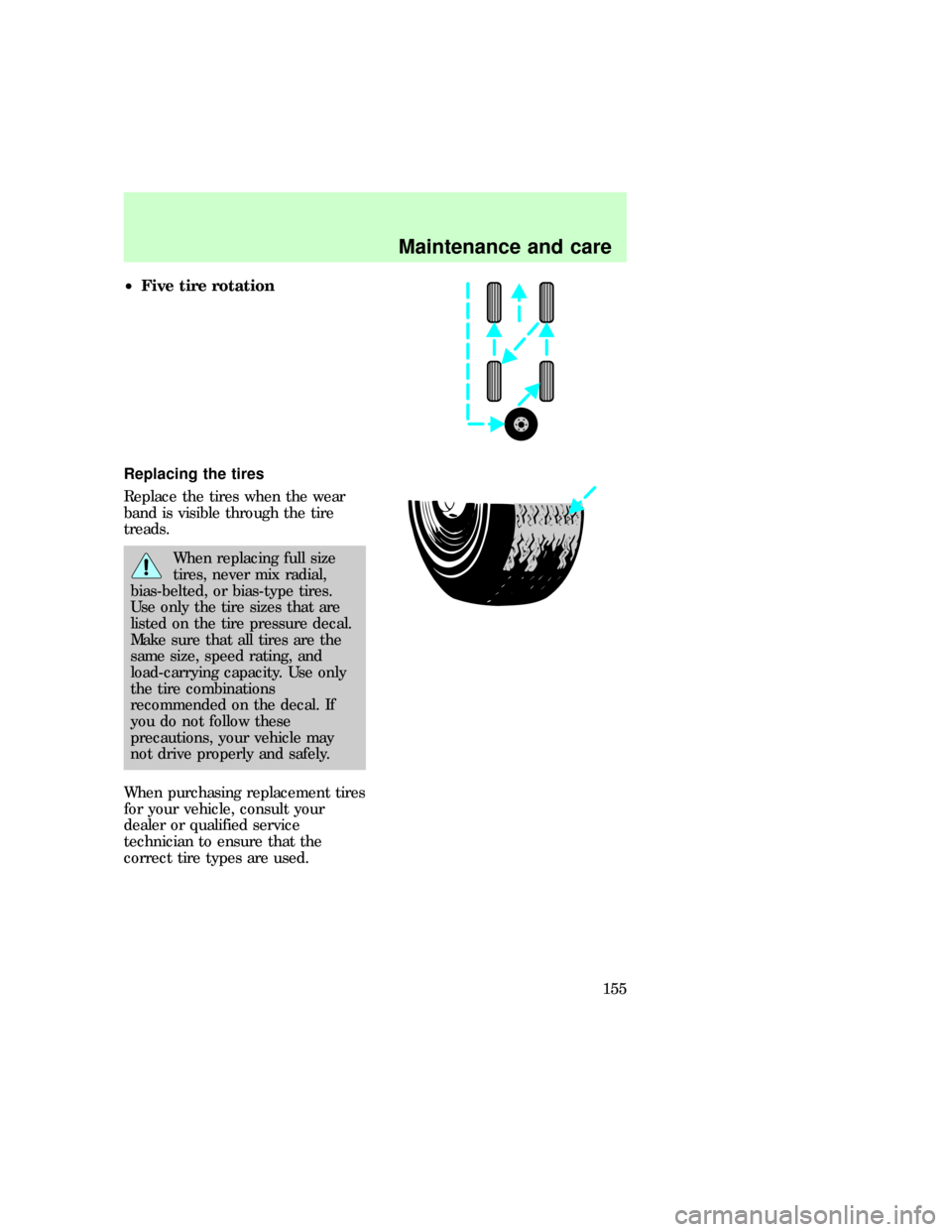
²Five tire rotation
Replacing the tires
Replace the tires when the wear
band is visible through the tire
treads.
When replacing full size
tires, never mix radial,
bias-belted, or bias-type tires.
Use only the tire sizes that are
listed on the tire pressure decal.
Make sure that all tires are the
same size, speed rating, and
load-carrying capacity. Use only
the tire combinations
recommended on the decal. If
you do not follow these
precautions, your vehicle may
not drive properly and safely.
When purchasing replacement tires
for your vehicle, consult your
dealer or qualified service
technician to ensure that the
correct tire types are used.
eco_types_tires
eco_snow_chains
Maintenance and care
155
Page 156 of 192

Using snow tires and chains
Snow tires must be the
same size and grade as the
tires you currently have on your
vehicle.
The tires on your vehicle have
allÐweather treads to provide
traction in rain and snow. However,
in some climates, using snow tires
and chains may be necessary. Ford
offers tire cables as a Ford
approved accessory and
recommends use of these or their
equivalents. See your dealer or
qualified service technician for
more information on tire cables for
your vehicle. Follow these
guidelines when using snow tires
and chains:
²Install chains securely, verifying
that the chains do not touch any
wiring, brake lines or fuel lines.
²Install the chains on the rear
tires only.
²Drive cautiously. If you hear the
chains rub or bang against the
vehicle, stop and retighten
them. If this does not work,
remove the chains to prevent
vehicle damage.
²Avoid overloading your vehicle.
²Remove the tire chains when
they are no longer needed. Do
not use chains on dry roads.
²The suspension insulation and
bumpers will help prevent
vehicle damage. Do not remove
Maintenance and care
156
Page 157 of 192
these components from the
vehicle when using snow tires
and chains.
WHAT YOU SHOULD KNOW
ABOUT AUTOMOTIVE FUEL
Important safety precautions
Do not overfill the fuel
tank. The pressure in an
overfilled tank may cause
leakage and lead to fuel spray
and fire.
If you do not use the
proper fuel cap, the
pressure in the fuel tank can
damage the fuel system or cause
it to work improperly in a
collision.
The fuel system may be
under pressure. If the fuel
cap is venting vapor or if you
hear a hissing sound, wait until it
stops before completely
removing the cap.
Automotive fuels can
cause serious injury or
death if misused or mishandled.
eco_fuel_info
com_important_precautions.06
Maintenance and care
157