air condition FORD E SERIES 1998 4.G User Guide
[x] Cancel search | Manufacturer: FORD, Model Year: 1998, Model line: E SERIES, Model: FORD E SERIES 1998 4.GPages: 144, PDF Size: 2.14 MB
Page 119 of 144
²Fuels can also be harmful if absorbed through the skin. If fuel is
splashed on the skin, promptly remove contaminated clothing and
wash skin thoroughly with soap and water.
²If fuel is splashed in the eyes, remove contact lenses, flush with water
for 15 minutes and seek medical attention.
²Be particularly careful if you are taking ªAntabuseº or other forms of
disulfiram for the treatment of alcoholism. Breathing gasoline vapors
or skin contact could cause an adverse reaction. Consult a physician
immediately.
Choosing the right fuel
Use only UNLEADED FUEL. The use of leaded fuel is prohibited by law
and could damage your vehicle.
Your vehicle was not designed to use fuel or fuel additives with metallic
compounds, including manganese-based compounds containing MMT.
Vehicles certified to California emission standards (indicated on the
underhood Vehicle Emissions Control Information label) are designed to
operate on California reformulated gasolines. If California reformulated
gasoline is not available when you refuel, your vehicle can be operated
on non-California fuels. However, even though your engine will perform
adequately on other gasolines, the performance of the emission control
devices and systems may be adversely affected.
Repair of damage caused by using a fuel that your vehicle was not
designed for may not be covered by your warranty.
Octane recommendations
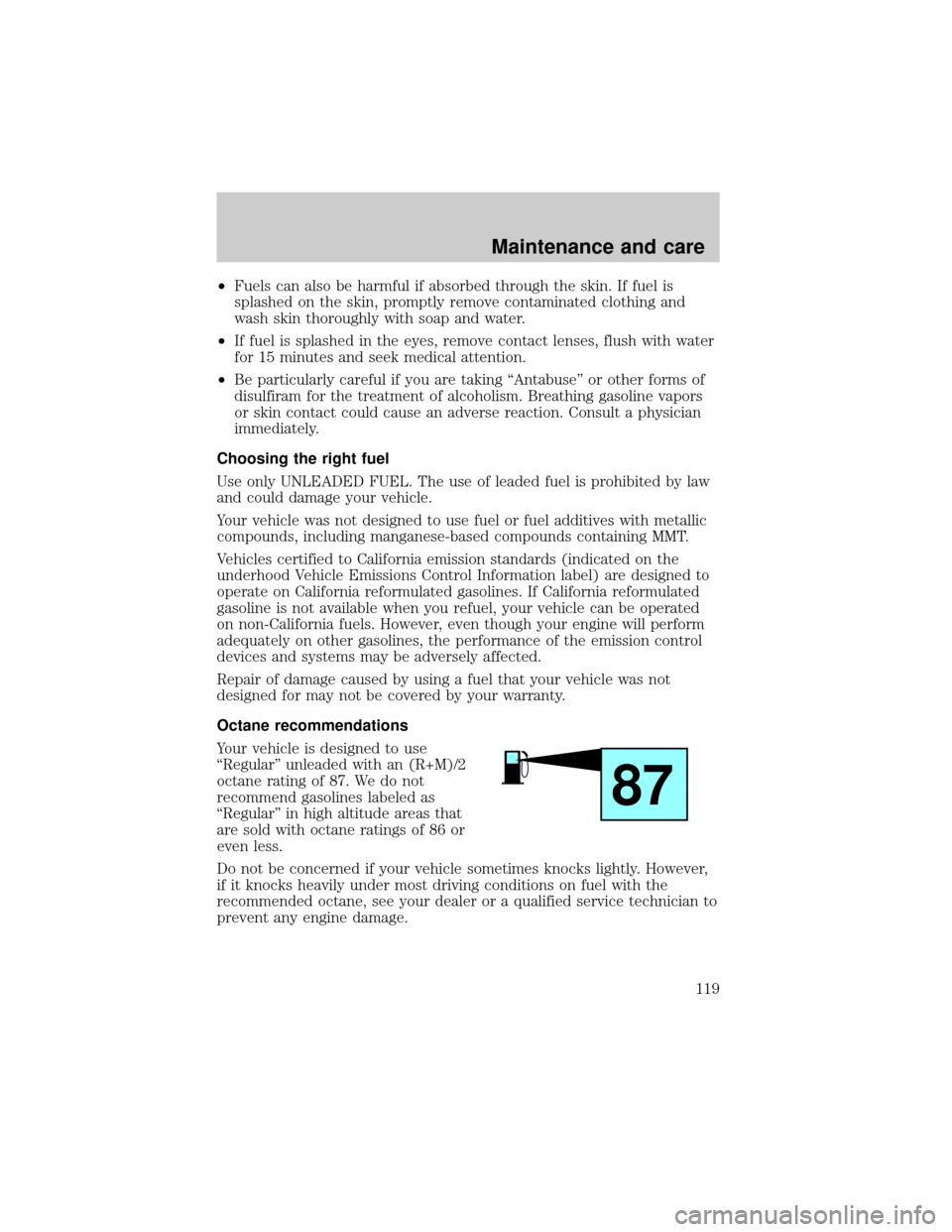
Your vehicle is designed to use
ªRegularº unleaded with an (R+M)/2
octane rating of 87. We do not
recommend gasolines labeled as
ªRegularº in high altitude areas that
are sold with octane ratings of 86 or
even less.
Do not be concerned if your vehicle sometimes knocks lightly. However,
if it knocks heavily under most driving conditions on fuel with the
recommended octane, see your dealer or a qualified service technician to
prevent any engine damage.
87
Maintenance and care
119
Page 122 of 144
Do not make any unauthorized changes to your vehicle or engine. By
law, vehicle owners and anyone who manufactures, repairs, services,
sells, leases, trades vehicles, or supervises a fleet of vehicles are not
permitted to intentionally remove an emission control device or prevent
it from working. Information about your vehicle's emission system is on
the Vehicle Emission Control Information Decal located on or near the
engine. This decal identifies engine displacement and gives some tune up
specifications.
Please consult your ªWarranty Guideº for complete emission warranty
information.
Readiness for inspection/maintenance (I/M) testing
In some localities, it may be a legal requirement to pass an I/M test of
the on-board diagnostic (OBD-II) system. If your ªcheck engine/service
engine soonº light is on, reference the applicable light description in the
Warning Lights and Chimessection of your owners guide. Your vehicle
may not pass the I/M test with the ªcheck engine/service engine soonº
light on.
If the vehicle's powertrain system or its battery has just been serviced,
the OBD-II system is reset to a ªnot ready for I/M testº condition. To
ready the OBD-II system for I/M testing, a minimum of 30 minutes of city
and highway driving is necessary as described below:
²First, at least 10 minutes of driving on an expressway or highway.
²Next, at least 20 minutes driving in stop and go, city type traffic with
at least four idle periods.
Allow the vehicle to sit for at least eight hours without starting the
engine. Then, start the engine and complete the above driving cycle. The
engine must warm up to its normal operating temperature. Once started,
do not turn off the engine until the above driving cycle is complete.
EXTERIOR BULBS
Replacing exterior bulbs
Check the operation of the following lamps frequently:
²Headlamps
²Tail lamps
²Brakelamps
²High-mount brakelamp
Maintenance and care
122
Page 126 of 144
Washing your vehicle
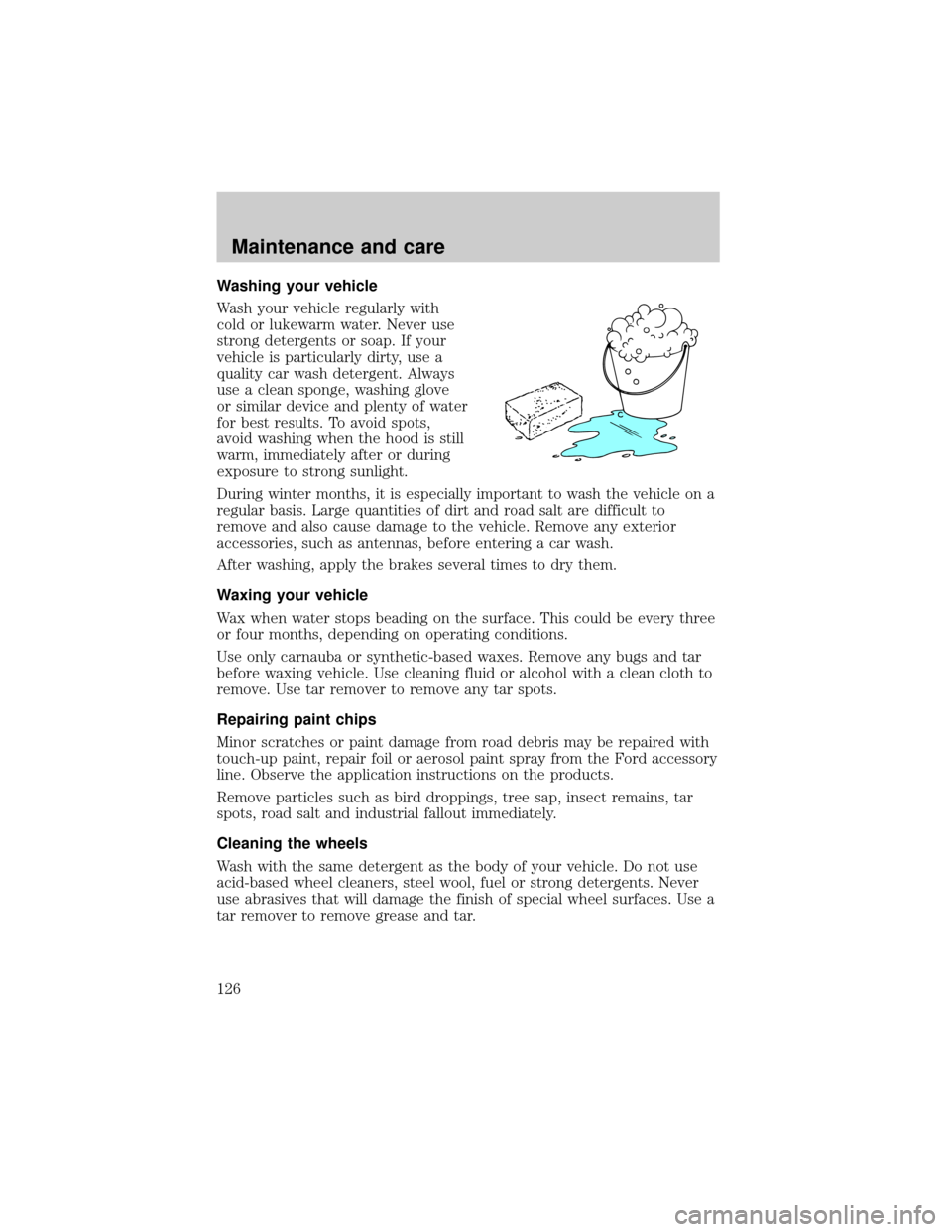
Wash your vehicle regularly with
cold or lukewarm water. Never use
strong detergents or soap. If your
vehicle is particularly dirty, use a
quality car wash detergent. Always
use a clean sponge, washing glove
or similar device and plenty of water
for best results. To avoid spots,
avoid washing when the hood is still
warm, immediately after or during
exposure to strong sunlight.
During winter months, it is especially important to wash the vehicle on a
regular basis. Large quantities of dirt and road salt are difficult to
remove and also cause damage to the vehicle. Remove any exterior
accessories, such as antennas, before entering a car wash.
After washing, apply the brakes several times to dry them.
Waxing your vehicle
Wax when water stops beading on the surface. This could be every three
or four months, depending on operating conditions.
Use only carnauba or synthetic-based waxes. Remove any bugs and tar
before waxing vehicle. Use cleaning fluid or alcohol with a clean cloth to
remove. Use tar remover to remove any tar spots.
Repairing paint chips
Minor scratches or paint damage from road debris may be repaired with
touch-up paint, repair foil or aerosol paint spray from the Ford accessory
line. Observe the application instructions on the products.
Remove particles such as bird droppings, tree sap, insect remains, tar
spots, road salt and industrial fallout immediately.
Cleaning the wheels
Wash with the same detergent as the body of your vehicle. Do not use
acid-based wheel cleaners, steel wool, fuel or strong detergents. Never
use abrasives that will damage the finish of special wheel surfaces. Use a
tar remover to remove grease and tar.
Maintenance and care
126
Page 140 of 144

Aiming headlamps ....................125
Air bag supplemental
restraint system ..........................46
and child safety seats ..............47
description ................................46
disposal ......................................49
indicator light ...........................48
passenger air bag .....................47
Air conditioning
manual heating and air
conditioning system .......16,17,18
Anti-lock brake system (ABS)
description ................................64
Battery .......................................108
voltage gauge ............................12
Brake fluid
checking and adding ..............100
Brakes ..........................................63
anti-lock .....................................63
anti-lock brake system (ABS)
warning light .............................63
fluid, checking and adding ....100
Brake-shift interlock ...................65
Break-in period .............................2
Bulbs, replacing ........................122
headlamps ...............................123
specifications ..........................125
Changing a tire ...........................85
Child safety seats ........................51
Chime
headlamps on ..............................9
Cleaning your vehicle ...............125
engine compartment ..............127
fabric ........................................128
instrument panel ....................128
plastic parts ............................127
safety belts ..............................128
tail lamps .................................128
washing ....................................126
waxing .....................................126
wheels ......................................126
windows ..................................128Controls .......................................20
Emission control system ..........121
Engine ........................................134
check engine temperature
warning, message center .........96
service points ............................96
Engine block heater ...................61
Engine coolant
checking and adding .......101,102
disposal ....................................103
refill capacities ........................103
Engine oil ...............................97,99
changing oil and oil filter .........99
checking and adding ...........97,99
Exhaust fumes ............................62
Fail safe cooling ........................103
Fuel
calculating fuel economy .......120
improving fuel economy ..........76
octane rating ...........................119
quality ......................................120
running out of fuel .................120
safety information relating
to automotive fuels ................118
Fuel gauge ...................................10
Fuel pump shut-off switch .........77
Fuse panels
instrument panel ......................79
power distribution box .............82
Fuses ............................................79
Gauges, Mechanical ....................10
engine coolant temperature
gauge .........................................11
Hazard flashers ...........................77
Headlamps ...................................13
daytime running lights .............13
flashing ......................................14
high beam .................................13
Heating ........................................14
High beams
indicator light .............................9
Index
140