belt FORD ESCORT 1997 6.G Owner's Manual
[x] Cancel search | Manufacturer: FORD, Model Year: 1997, Model line: ESCORT, Model: FORD ESCORT 1997 6.GPages: 191, PDF Size: 2.02 MB
Page 79 of 191
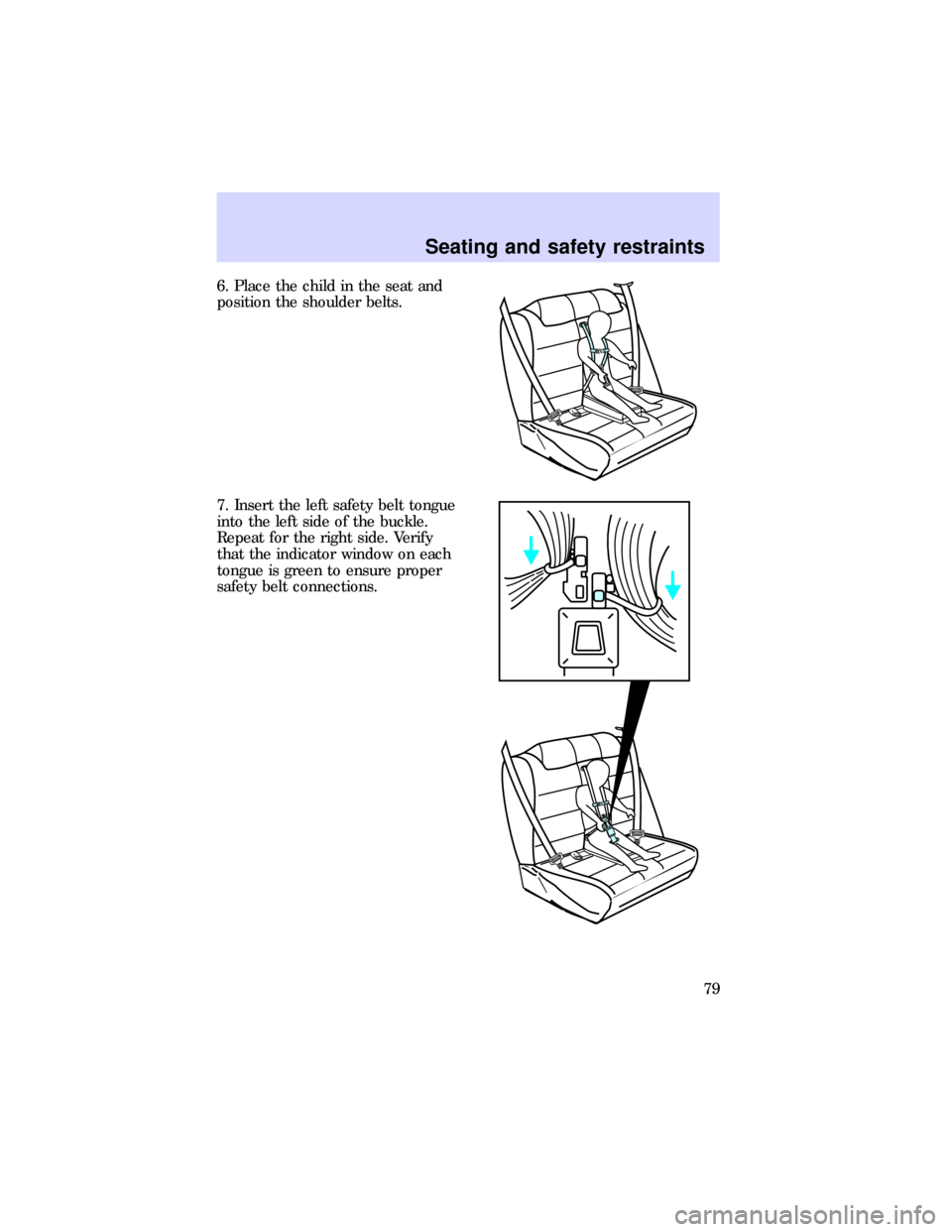
6. Place the child in the seat and
position the shoulder belts.
7. Insert the left safety belt tongue
into the left side of the buckle.
Repeat for the right side. Verify
that the indicator window on each
tongue is green to ensure proper
safety belt connections.
Seating and safety restraints
79
Page 80 of 191
If both tongues do not
latch in the buckle, do not
use the child seat. See your
dealer for repairs.
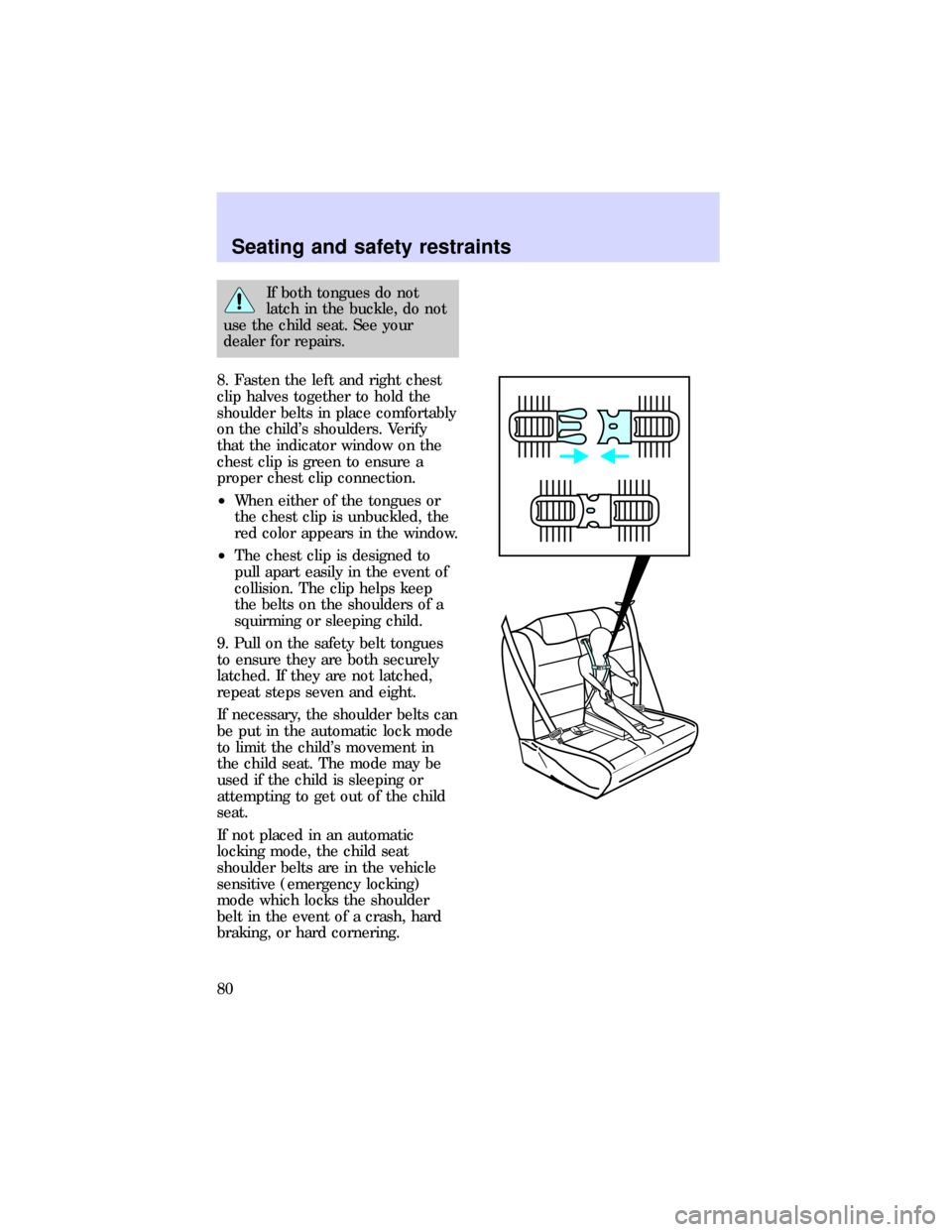
8. Fasten the left and right chest
clip halves together to hold the
shoulder belts in place comfortably
on the child's shoulders. Verify
that the indicator window on the
chest clip is green to ensure a
proper chest clip connection.
²When either of the tongues or
the chest clip is unbuckled, the
red color appears in the window.
²The chest clip is designed to
pull apart easily in the event of
collision. The clip helps keep
the belts on the shoulders of a
squirming or sleeping child.
9. Pull on the safety belt tongues
to ensure they are both securely
latched. If they are not latched,
repeat steps seven and eight.
If necessary, the shoulder belts can
be put in the automatic lock mode
to limit the child's movement in
the child seat. The mode may be
used if the child is sleeping or
attempting to get out of the child
seat.
If not placed in an automatic
locking mode, the child seat
shoulder belts are in the vehicle
sensitive (emergency locking)
mode which locks the shoulder
belt in the event of a crash, hard
braking, or hard cornering.
Seating and safety restraints
80
Page 81 of 191
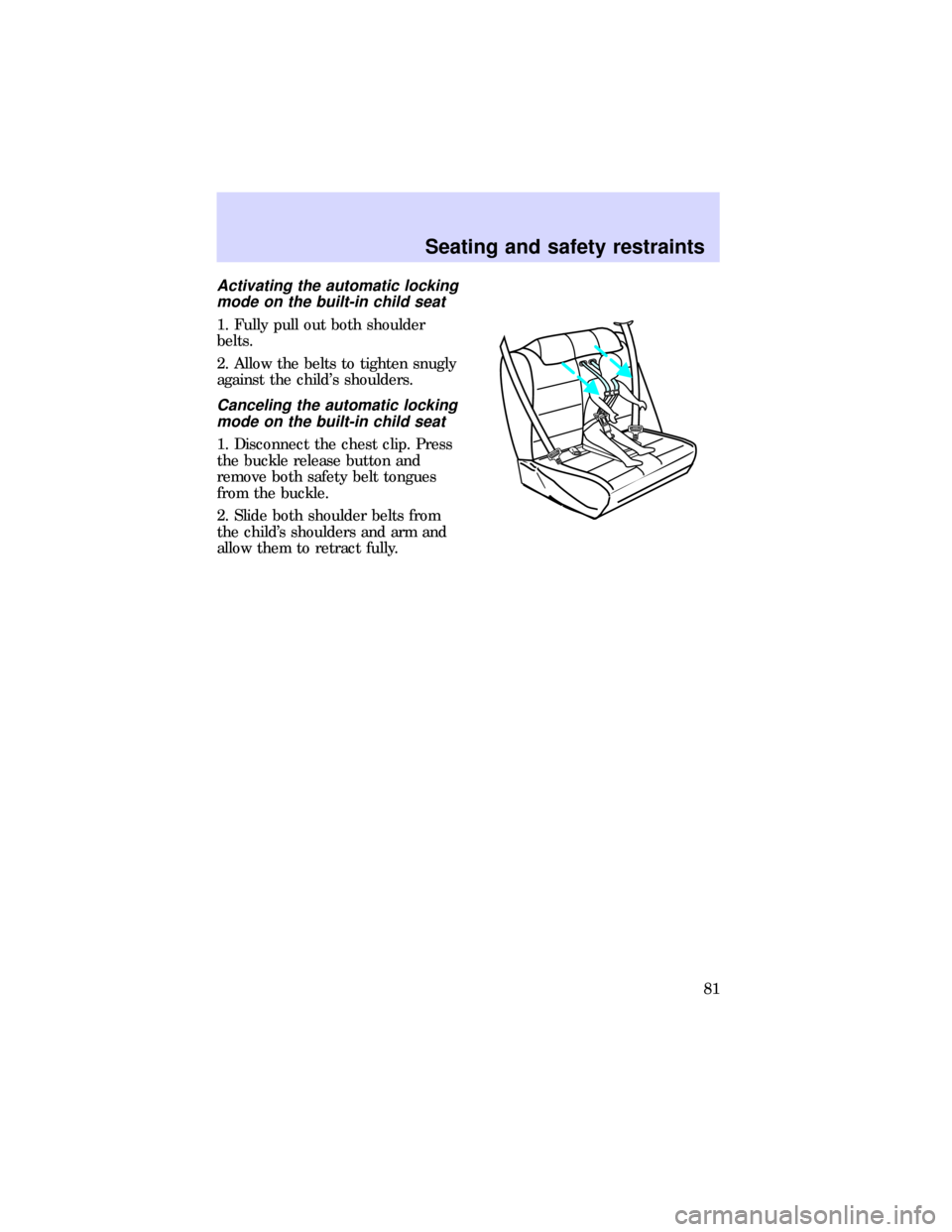
Activating the automatic locking
mode on the built-in child seat
1. Fully pull out both shoulder
belts.
2. Allow the belts to tighten snugly
against the child's shoulders.
Canceling the automatic locking
mode on the built-in child seat
1. Disconnect the chest clip. Press
the buckle release button and
remove both safety belt tongues
from the buckle.
2. Slide both shoulder belts from
the child's shoulders and arm and
allow them to retract fully.
Seating and safety restraints
81
Page 83 of 191
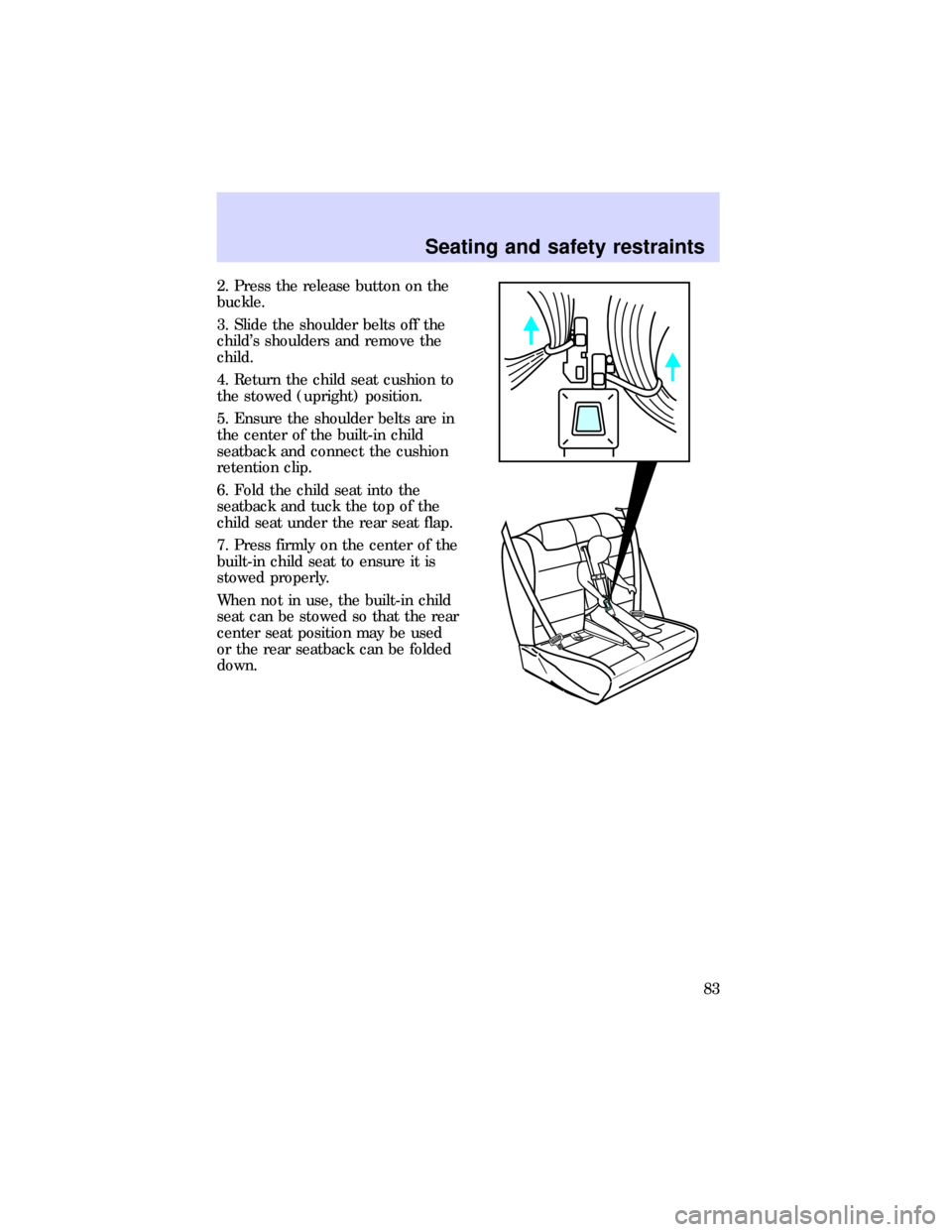
2. Press the release button on the
buckle.
3. Slide the shoulder belts off the
child's shoulders and remove the
child.
4. Return the child seat cushion to
the stowed (upright) position.
5. Ensure the shoulder belts are in
the center of the built-in child
seatback and connect the cushion
retention clip.
6. Fold the child seat into the
seatback and tuck the top of the
child seat under the rear seat flap.
7. Press firmly on the center of the
built-in child seat to ensure it is
stowed properly.
When not in use, the built-in child
seat can be stowed so that the rear
center seat position may be used
or the rear seatback can be folded
down.
Seating and safety restraints
83
Page 86 of 191
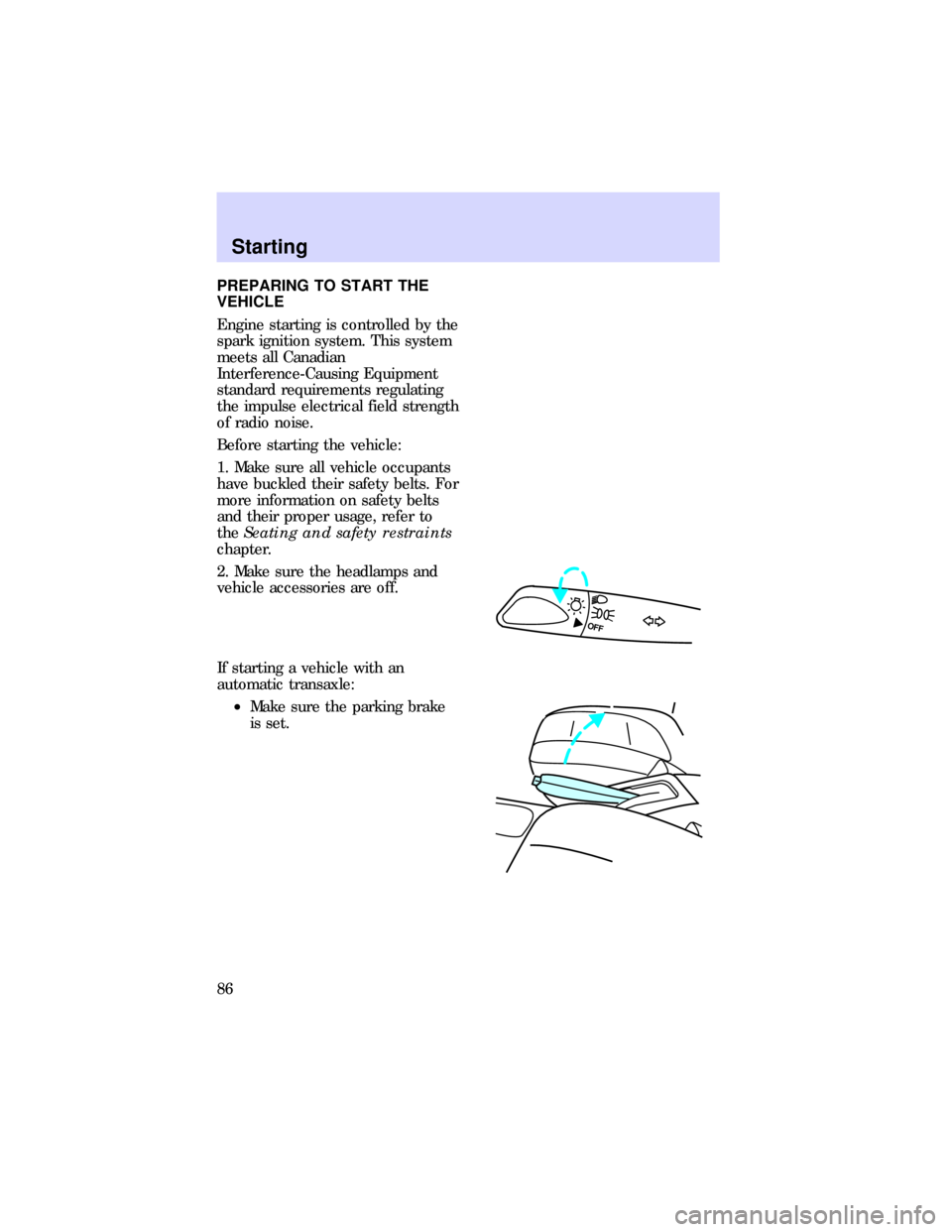
PREPARING TO START THE
VEHICLE
Engine starting is controlled by the
spark ignition system. This system
meets all Canadian
Interference-Causing Equipment
standard requirements regulating
the impulse electrical field strength
of radio noise.
Before starting the vehicle:
1. Make sure all vehicle occupants
have buckled their safety belts. For
more information on safety belts
and their proper usage, refer to
theSeating and safety restraints
chapter.
2. Make sure the headlamps and
vehicle accessories are off.
If starting a vehicle with an
automatic transaxle:
²Make sure the parking brake
is set.
OFF
Starting
86
Page 88 of 191
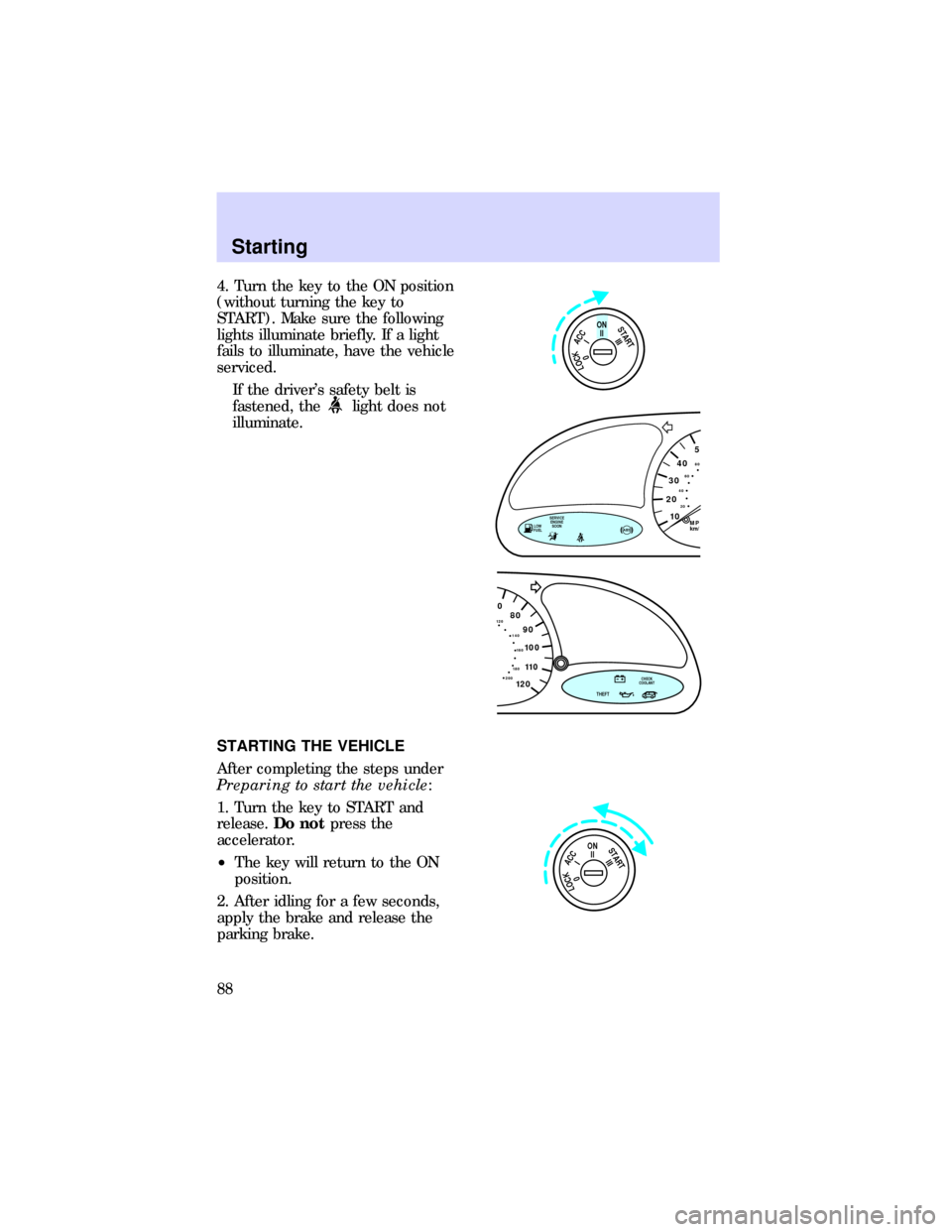
4. Turn the key to the ON position
(without turning the key to
START). Make sure the following
lights illuminate briefly. If a light
fails to illuminate, have the vehicle
serviced.
If the driver's safety belt is
fastened, the
light does not
illuminate.
STARTING THE VEHICLE
After completing the steps under
Preparing to start the vehicle:
1. Turn the key to START and
release.Do notpress the
accelerator.
²The key will return to the ON
position.
2. After idling for a few seconds,
apply the brake and release the
parking brake.
ON
II
ACC
I
LOCK
0
START
III
MP
km/10 203040520 4060
80
SERVICE
ENGINE
SOON
LOW
FUELABS
0
80
90
10 0
12 011 012 0
16 0
18 0 140
200
CHECK
COOLANTTHEFT
ON
II
ACC
I
LOCK
0
START
III
Starting
88
Page 112 of 191
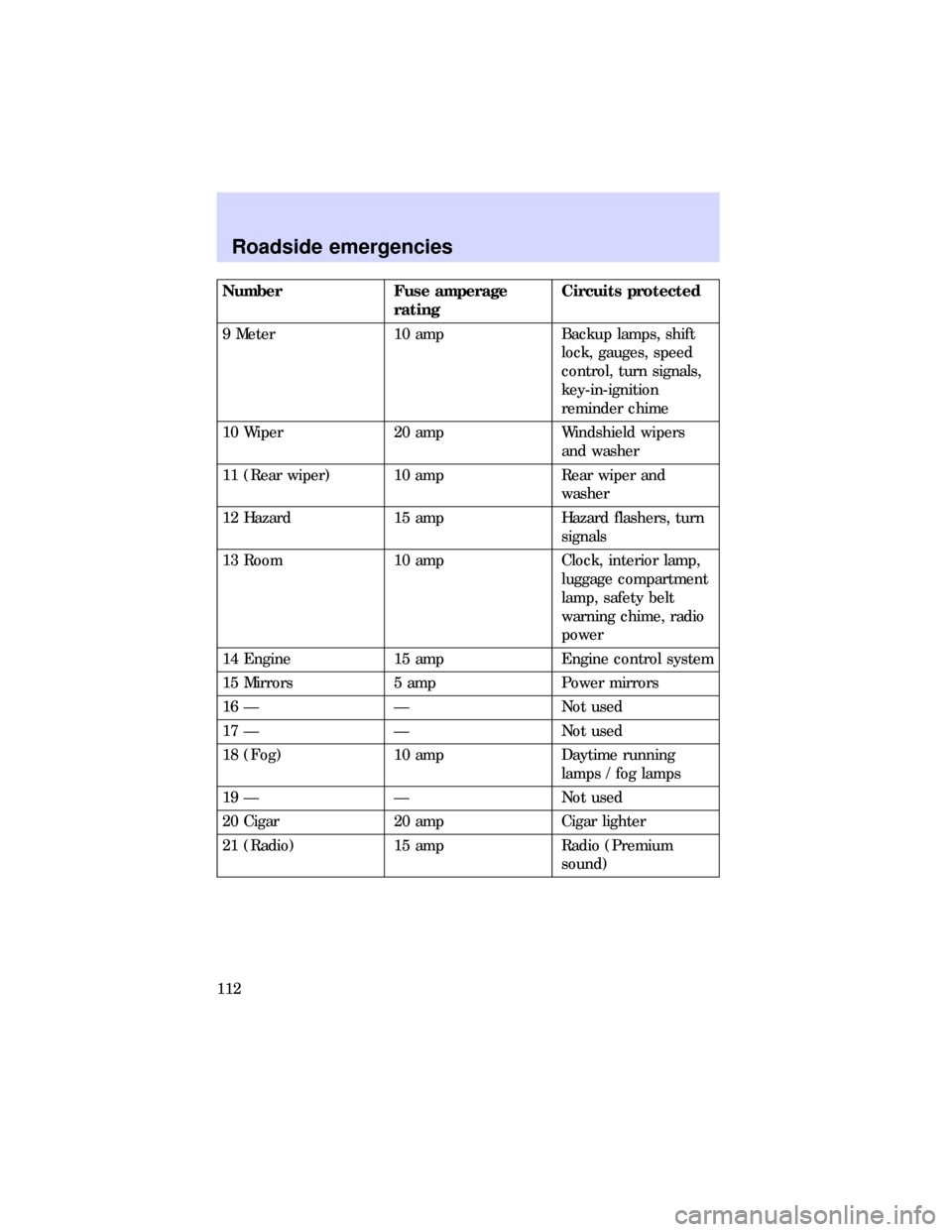
Number Fuse amperage
ratingCircuits protected
9 Meter 10 amp Backup lamps, shift
lock, gauges, speed
control, turn signals,
key-in-ignition
reminder chime
10 Wiper 20 amp Windshield wipers
and washer
11 (Rear wiper) 10 amp Rear wiper and
washer
12 Hazard 15 amp Hazard flashers, turn
signals
13 Room 10 amp Clock, interior lamp,
luggage compartment
lamp, safety belt
warning chime, radio
power
14 Engine 15 amp Engine control system
15 Mirrors 5 amp Power mirrors
16 Ð Ð Not used
17 Ð Ð Not used
18 (Fog) 10 amp Daytime running
lamps / fog lamps
19 Ð Ð Not used
20 Cigar 20 amp Cigar lighter
21 (Radio) 15 amp Radio (Premium
sound)
Roadside emergencies
112
Page 123 of 191
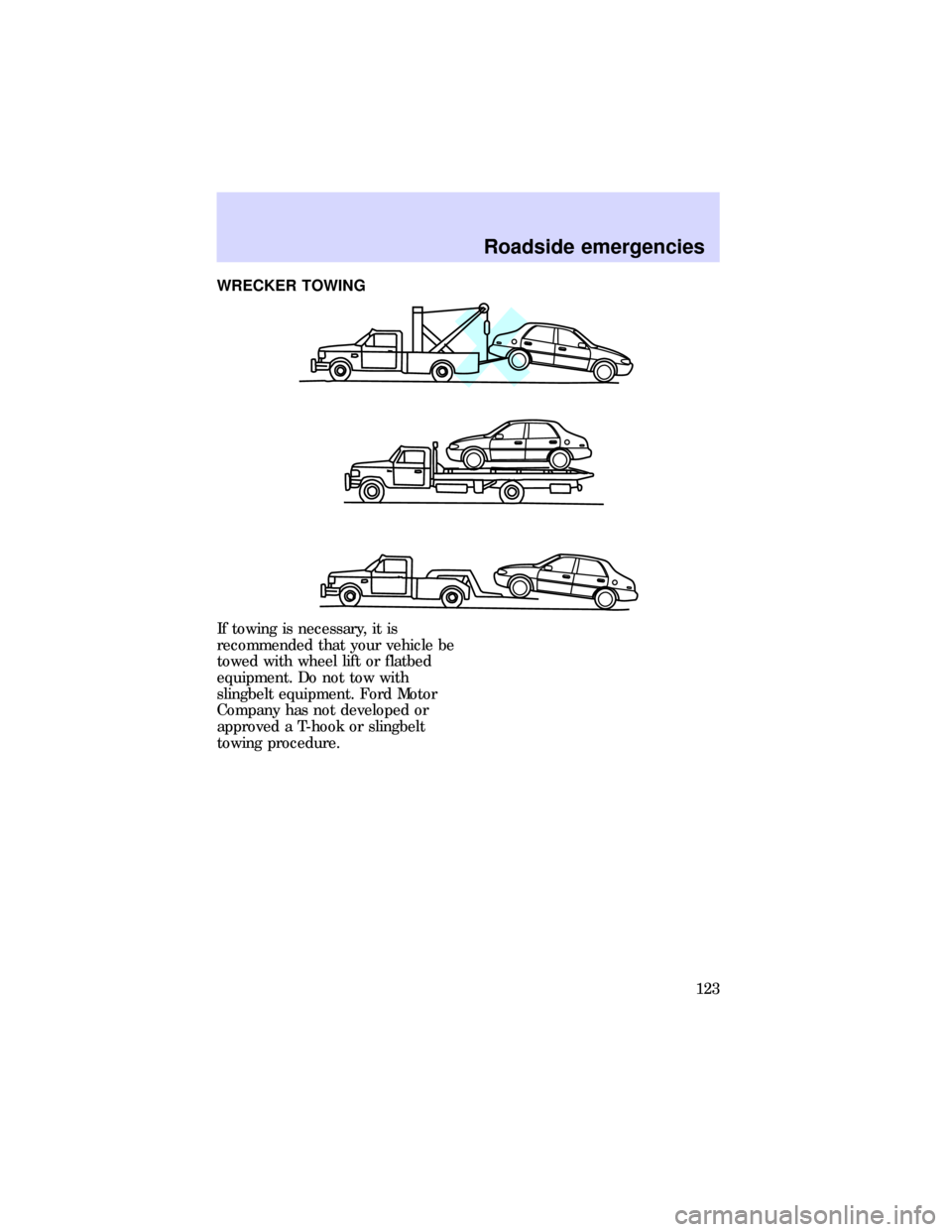
WRECKER TOWING
If towing is necessary, it is
recommended that your vehicle be
towed with wheel lift or flatbed
equipment. Do not tow with
slingbelt equipment. Ford Motor
Company has not developed or
approved a T-hook or slingbelt
towing procedure.
Roadside emergencies
123
Page 151 of 191
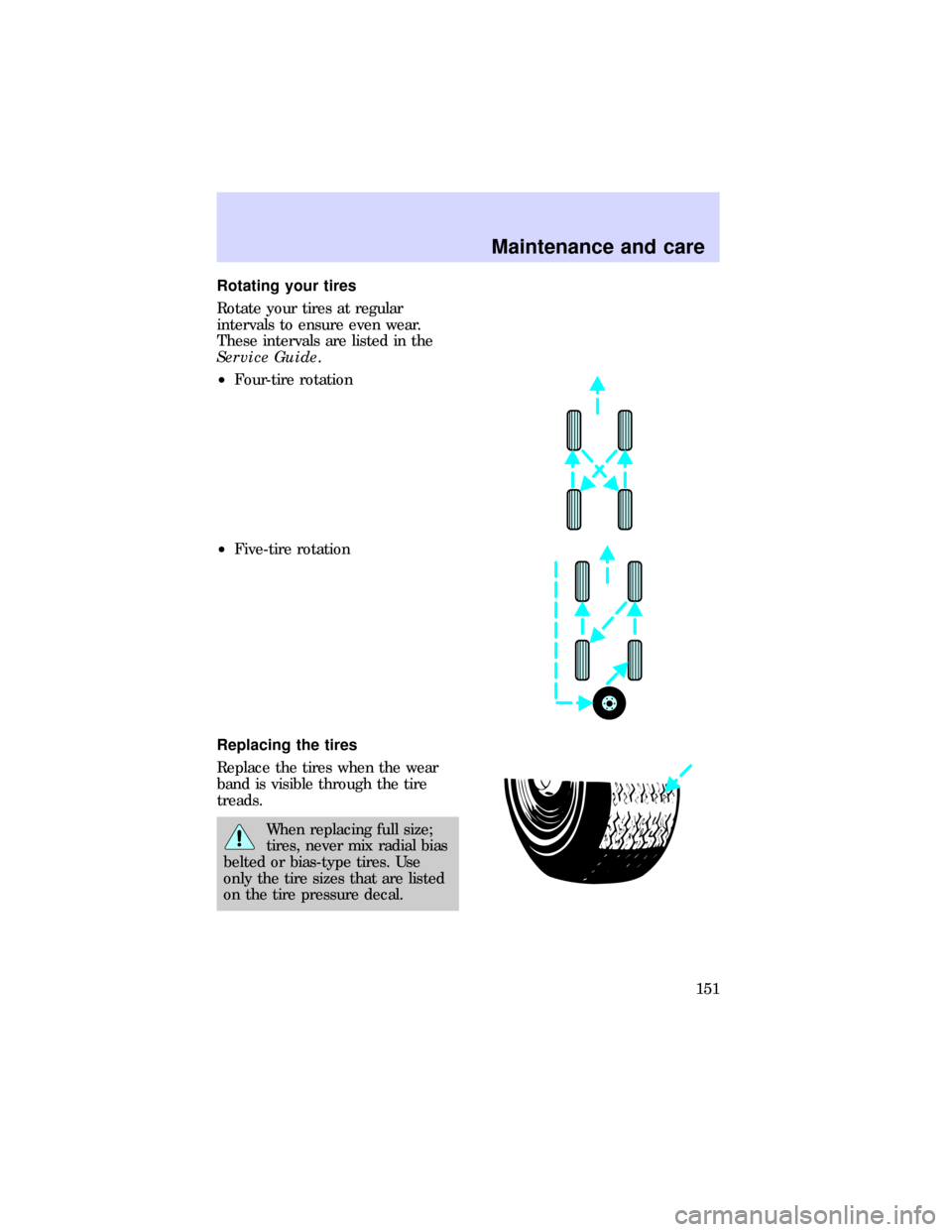
Rotating your tires
Rotate your tires at regular
intervals to ensure even wear.
These intervals are listed in the
Service Guide.
²Four-tire rotation
²Five-tire rotation
Replacing the tires
Replace the tires when the wear
band is visible through the tire
treads.
When replacing full size;
tires, never mix radial bias
belted or bias-type tires. Use
only the tire sizes that are listed
on the tire pressure decal.
Maintenance and care
151
Page 178 of 191
Cleaning the wiper blades
If the blades do not wipe properly,
clean both the windshield and the
wiper blades using undiluted
windshield washer solution or a
mild detergent. Rinse thoroughly
with clean water. Do not use fuel,
kerosene, paint thinner, or other
solvents to clean the wiper blades;
these fluids will damage the
blades.
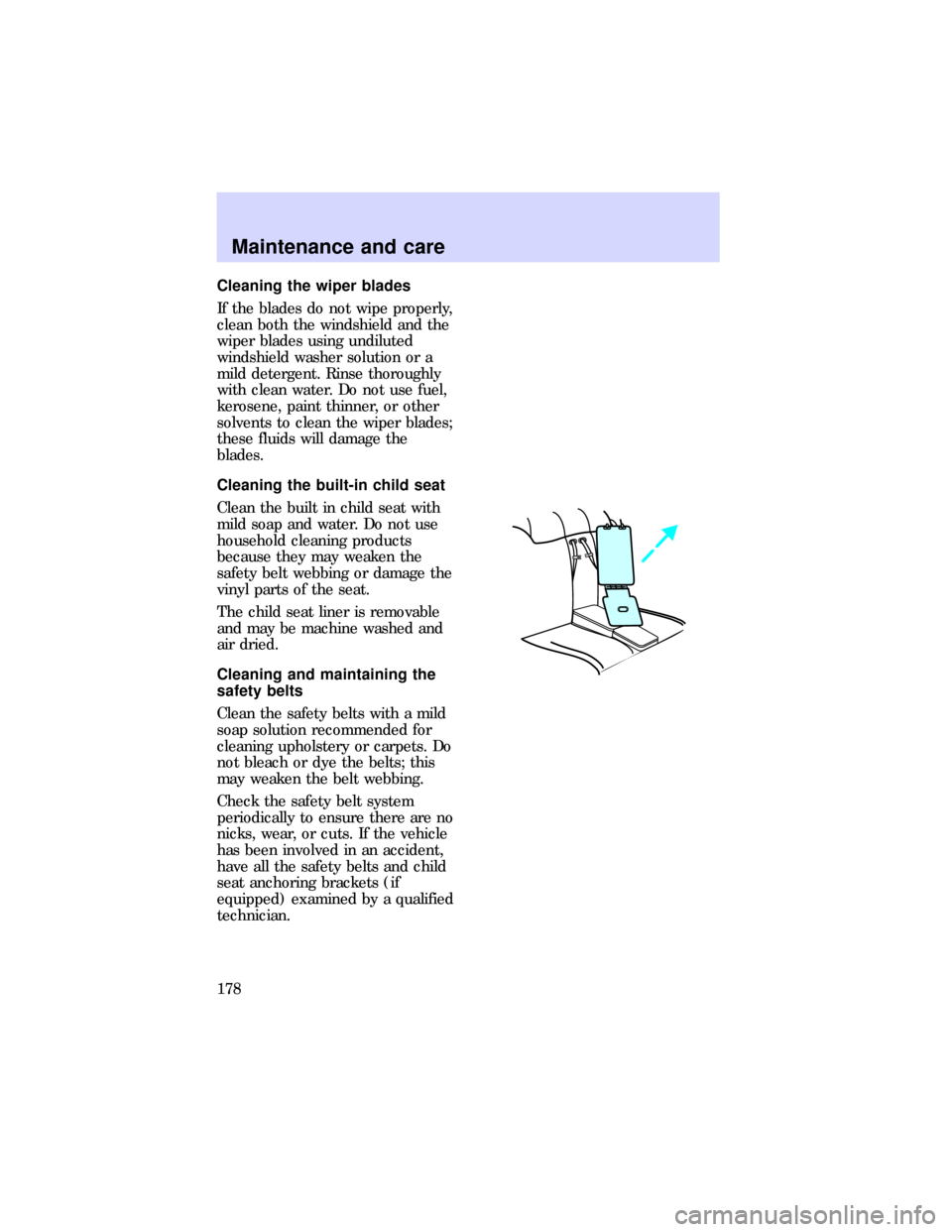
Cleaning the built-in child seat
Clean the built in child seat with
mild soap and water. Do not use
household cleaning products
because they may weaken the
safety belt webbing or damage the
vinyl parts of the seat.
The child seat liner is removable
and may be machine washed and
air dried.
Cleaning and maintaining the
safety belts
Clean the safety belts with a mild
soap solution recommended for
cleaning upholstery or carpets. Do
not bleach or dye the belts; this
may weaken the belt webbing.
Check the safety belt system
periodically to ensure there are no
nicks, wear, or cuts. If the vehicle
has been involved in an accident,
have all the safety belts and child
seat anchoring brackets (if
equipped) examined by a qualified
technician.
Maintenance and care
178