belt FORD F SERIES MOTORHOME AND COMMERCIAL CHASSIS 2000 10.G Owners Manual
[x] Cancel search | Manufacturer: FORD, Model Year: 2000, Model line: F SERIES MOTORHOME AND COMMERCIAL CHASSIS, Model: FORD F SERIES MOTORHOME AND COMMERCIAL CHASSIS 2000 10.GPages: 104, PDF Size: 0.65 MB
Page 4 of 104
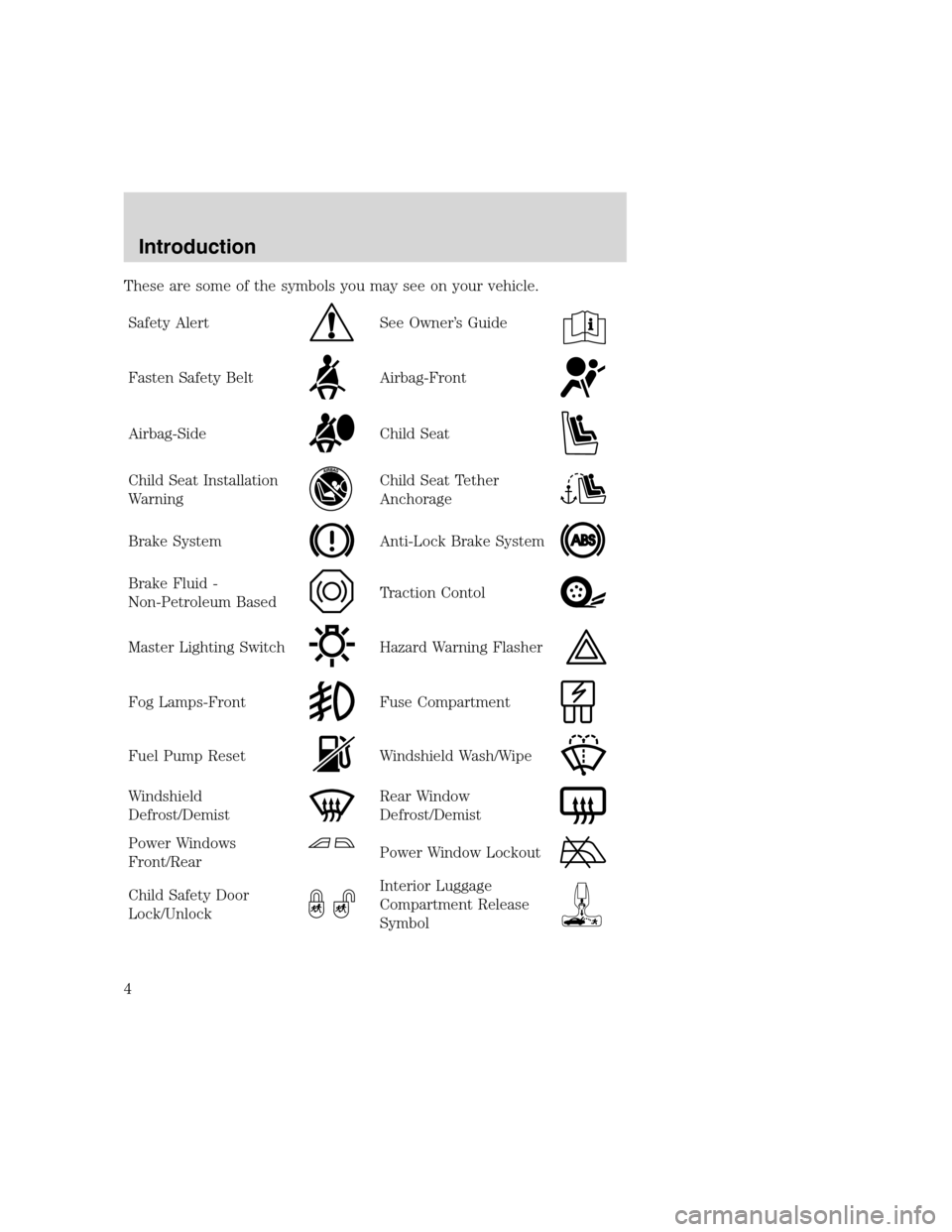
These are some of the symbols you may see on your vehicle.
Safety Alert
See Owner’s Guide
Fasten Safety BeltAirbag-Front
Airbag-SideChild Seat
Child Seat Installation
WarningChild Seat Tether
Anchorage
Brake SystemAnti-Lock Brake System
Brake Fluid -
Non-Petroleum BasedTraction Contol
Master Lighting SwitchHazard Warning Flasher
Fog Lamps-FrontFuse Compartment
Fuel Pump ResetWindshield Wash/Wipe
Windshield
Defrost/DemistRear Window
Defrost/Demist
Power Windows
Front/RearPower Window Lockout
Child Safety Door
Lock/UnlockInterior Luggage
Compartment Release
Symbol
Introduction
4
Page 7 of 104
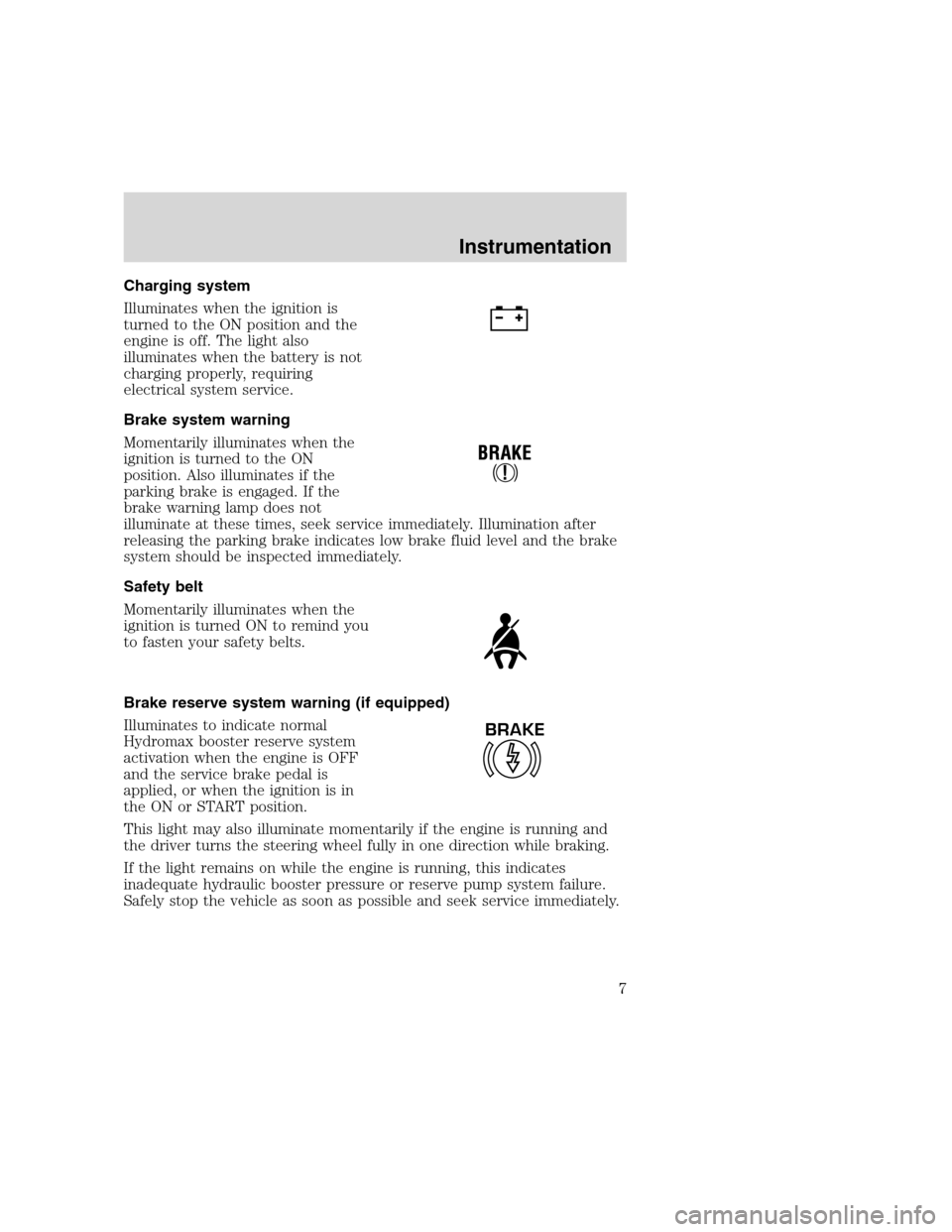
Charging system
Illuminates when the ignition is
turned to the ON position and the
engine is off. The light also
illuminates when the battery is not
charging properly, requiring
electrical system service.
Brake system warning
Momentarily illuminates when the
ignition is turned to the ON
position. Also illuminates if the
parking brake is engaged. If the
brake warning lamp does not
illuminate at these times, seek service immediately. Illumination after
releasing the parking brake indicates low brake fluid level and the brake
system should be inspected immediately.
Safety belt
Momentarily illuminates when the
ignition is turned ON to remind you
to fasten your safety belts.
Brake reserve system warning (if equipped)
Illuminates to indicate normal
Hydromax booster reserve system
activation when the engine is OFF
and the service brake pedal is
applied, or when the ignition is in
the ON or START position.
This light may also illuminate momentarily if the engine is running and
the driver turns the steering wheel fully in one direction while braking.
If the light remains on while the engine is running, this indicates
inadequate hydraulic booster pressure or reserve pump system failure.
Safely stop the vehicle as soon as possible and seek service immediately.
BRAKE
Instrumentation
7
Page 11 of 104
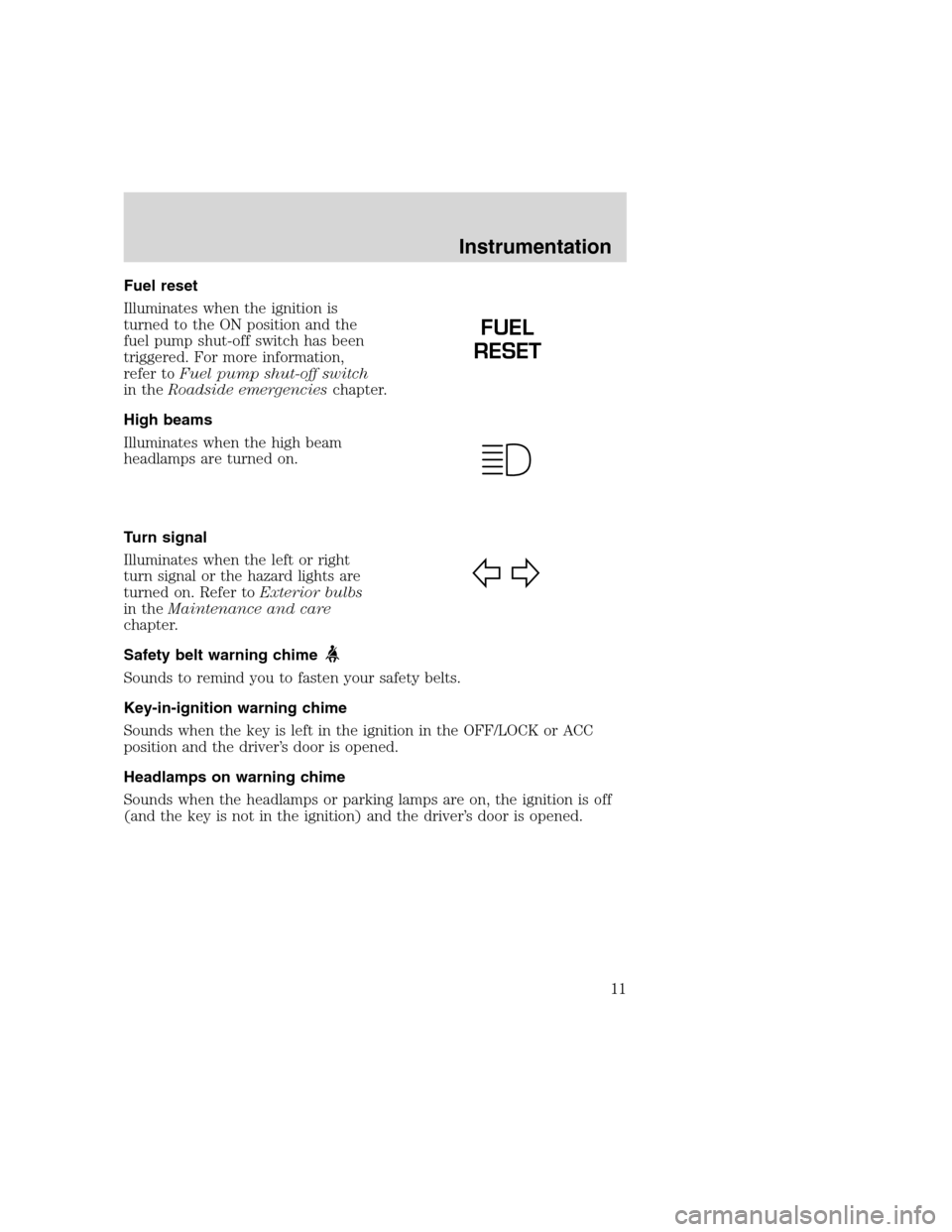
Fuel reset
Illuminates when the ignition is
turned to the ON position and the
fuel pump shut-off switch has been
triggered. For more information,
refer toFuel pump shut-off switch
in theRoadside emergencieschapter.
High beams
Illuminates when the high beam
headlamps are turned on.
Turn signal
Illuminates when the left or right
turn signal or the hazard lights are
turned on. Refer toExterior bulbs
in theMaintenance and care
chapter.
Safety belt warning chime
Sounds to remind you to fasten your safety belts.
Key-in-ignition warning chime
Sounds when the key is left in the ignition in the OFF/LOCK or ACC
position and the driver’s door is opened.
Headlamps on warning chime
Sounds when the headlamps or parking lamps are on, the ignition is off
(and the key is not in the ignition) and the driver’s door is opened.
FUEL
RESET
Instrumentation
11
Page 23 of 104
PREPARING TO START YOUR VEHICLE
Engine starting is controlled by the ignition system. This system meets
all Canadian Interference-Causing Equipment standard requirements
regulating the impulse electrical field strength of radio noise.
When starting a fuel-injected engine, avoid pressing the accelerator
before or during starting. Only use the accelerator when you have
difficulty starting the engine. For more information on starting the
vehicle, refer toStarting the enginein this chapter.
Extended idling at high engine speeds can produce very high
temperatures in the engine and exhaust system, creating the risk
of fire or other damage.
Do not park, idle, or drive your vehicle in dry grass or other dry
ground cover. The emission system heats up the engine
compartment and exhaust system, which can start a fire.
Do not start your vehicle in a closed garage or in other enclosed
areas. Exhaust fumes can be toxic. Always open the garage door
before you start the engine. SeeGuarding against exhaust fumesin
this chapter for more instructions.
If you smell exhaust fumes inside your vehicle, have your dealer
inspect your vehicle immediately. Do not drive if you smell
exhaust fumes.
Important safety precautions
A computer system controls the engine’s idle revolutions per minute
(RPM). When the engine starts, the idle RPM runs faster to warm the
engine. If the engine idle speed does not slow down automatically, have
the vehicle checked. Do not allow the vehicle to idle for more than 10
minutes.
Before starting the vehicle:
1. Make sure all vehicle occupants have buckled their safety belts.
2. Make sure the headlamps and vehicle accessories are off.
Starting
23
Page 25 of 104
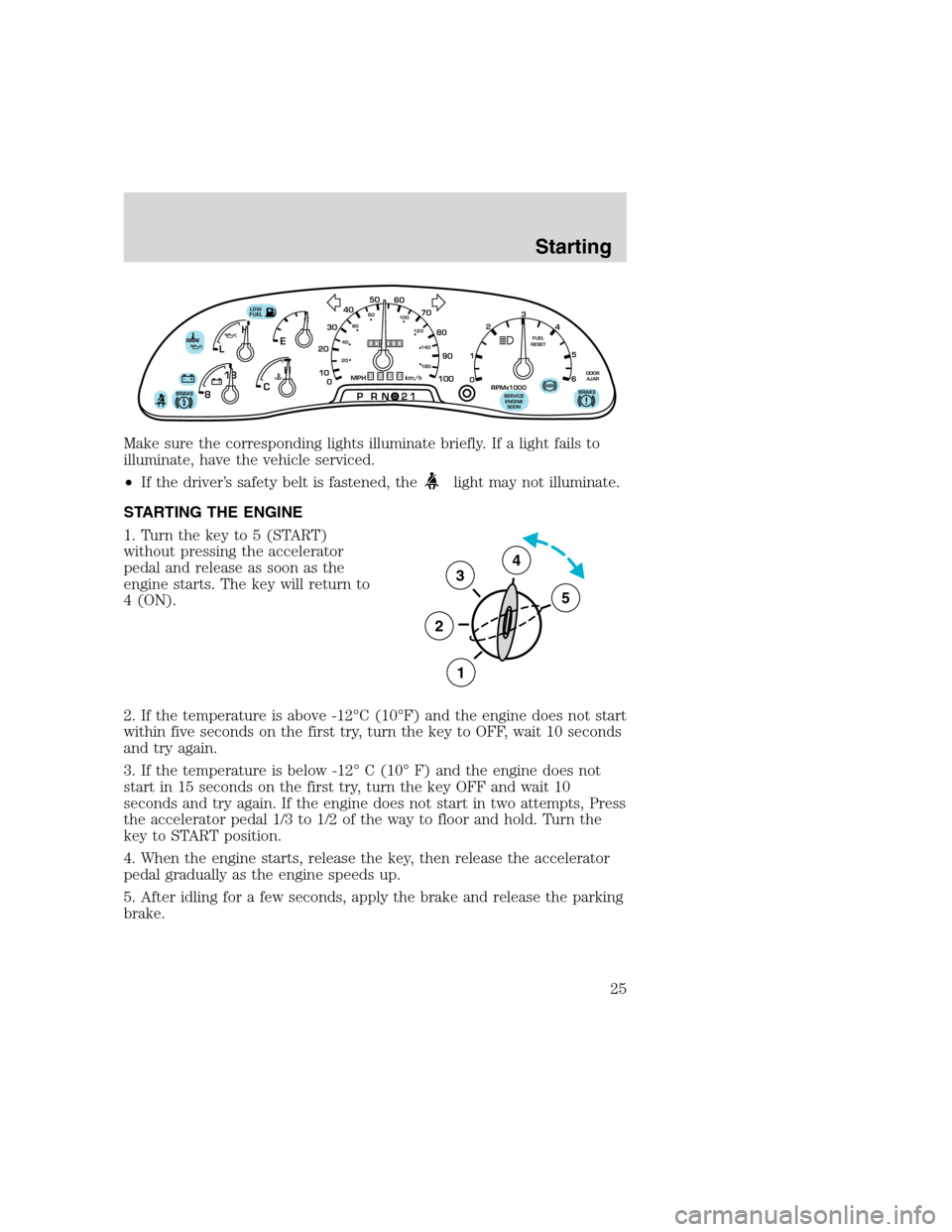
Make sure the corresponding lights illuminate briefly. If a light fails to
illuminate, have the vehicle serviced.
•If the driver’s safety belt is fastened, the
light may not illuminate.
STARTING THE ENGINE
1. Turn the key to 5 (START)
without pressing the accelerator
pedal and release as soon as the
engine starts. The key will return to
4 (ON).
2. If the temperature is above -12°C (10°F) and the engine does not start
within five seconds on the first try, turn the key to OFF, wait 10 seconds
and try again.
3. If the temperature is below -12° C (10° F) and the engine does not
start in 15 seconds on the first try, turn the key OFF and wait 10
seconds and try again. If the engine does not start in two attempts, Press
the accelerator pedal 1/3 to 1/2 of the way to floor and hold. Turn the
key to START position.
4. When the engine starts, release the key, then release the accelerator
pedal gradually as the engine speeds up.
5. After idling for a few seconds, apply the brake and release the parking
brake.
F
E
CH H
L
18
8
PRN 21LOW
FUEL
BRAKE!
+ -+ -000000000
0
50
60
70
20
10
0 3040
80
90
100
20406080
100
120
140
180
MPH km/h
1
02
RPMx1000
3
4
5
6
SERVICE
ENGINE
SOONABS
FUEL
RESET
DOOR
AJAR
BRAKE
3
2
1
5
4
Starting
25
Page 54 of 104
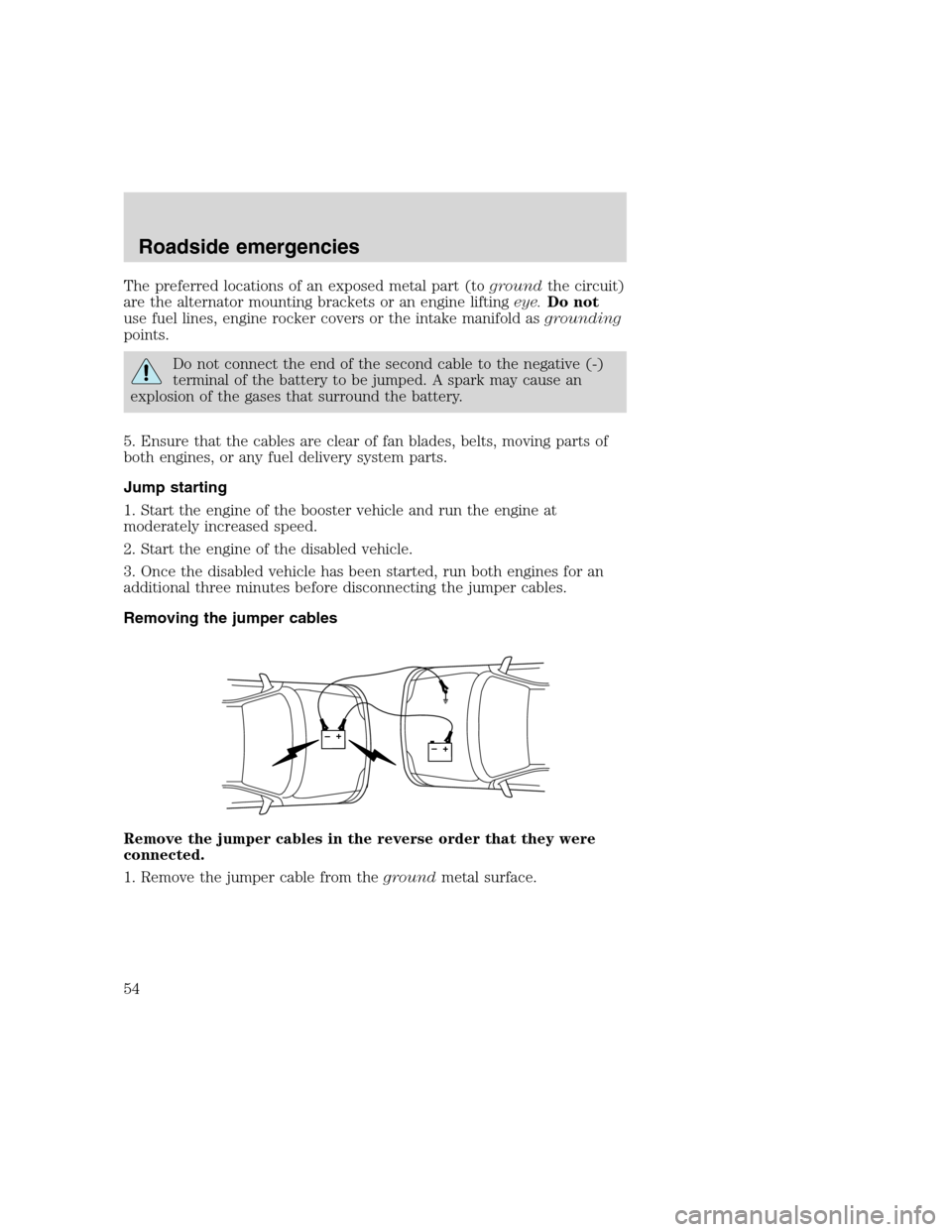
The preferred locations of an exposed metal part (togroundthe circuit)
are the alternator mounting brackets or an engine liftingeye.Do not
use fuel lines, engine rocker covers or the intake manifold asgrounding
points.
Do not connect the end of the second cable to the negative (-)
terminal of the battery to be jumped. A spark may cause an
explosion of the gases that surround the battery.
5. Ensure that the cables are clear of fan blades, belts, moving parts of
both engines, or any fuel delivery system parts.
Jump starting
1. Start the engine of the booster vehicle and run the engine at
moderately increased speed.
2. Start the engine of the disabled vehicle.
3. Once the disabled vehicle has been started, run both engines for an
additional three minutes before disconnecting the jumper cables.
Removing the jumper cables
Remove the jumper cables in the reverse order that they were
connected.
1. Remove the jumper cable from thegroundmetal surface.
+–+–
Roadside emergencies
54
Page 77 of 104
Improperly inflated tires can affect vehicle handling and can fail
suddenly, possibly resulting in loss of vehicle control.
Tire rotation
Because your vehicle’s tires perform different jobs, they often wear
differently. To make sure your tires wear evenly and last longer, rotate
them as indicated in the Scheduled Maintenance Guide. If you notice
that the tires wear unevenly, have them checked.
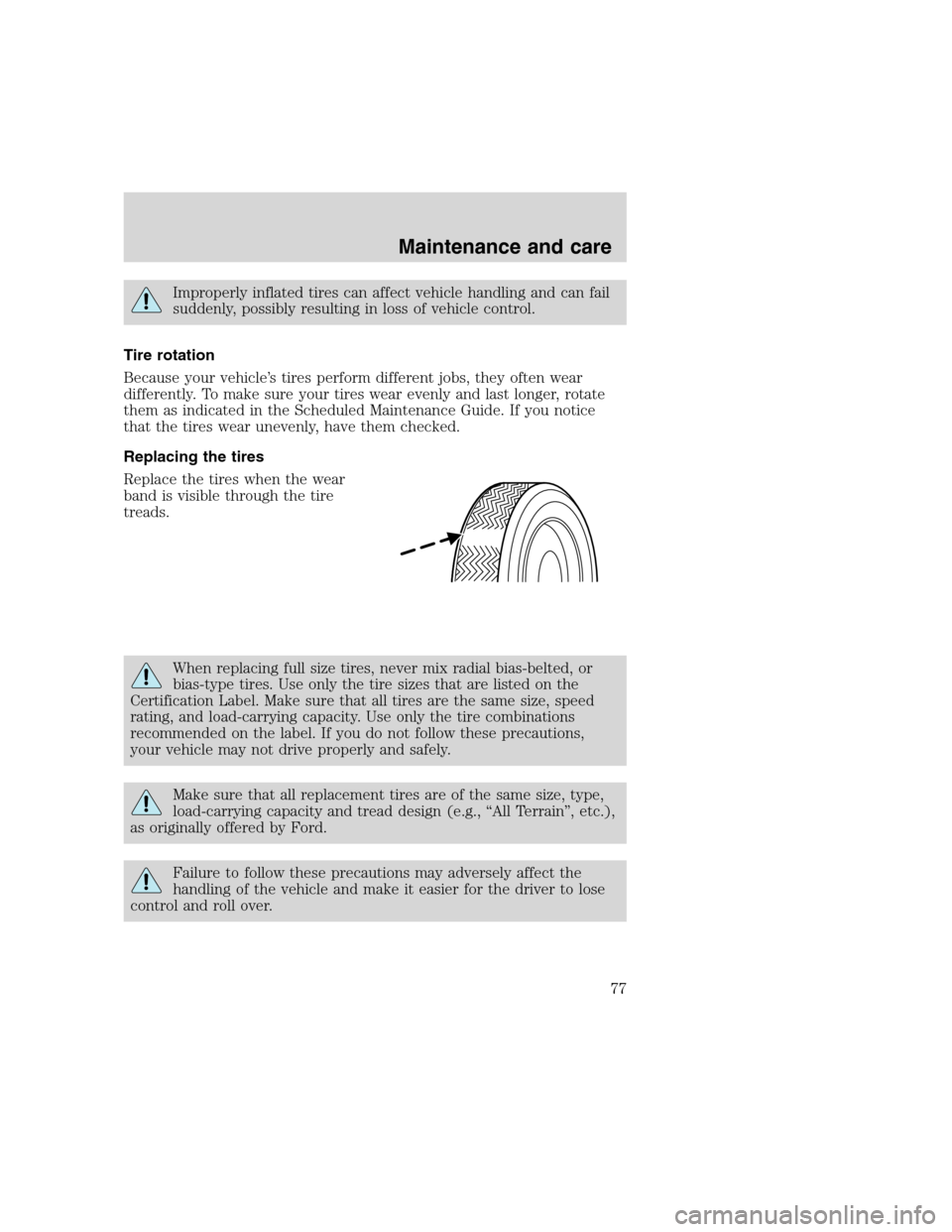
Replacing the tires
Replace the tires when the wear
band is visible through the tire
treads.
When replacing full size tires, never mix radial bias-belted, or
bias-type tires. Use only the tire sizes that are listed on the
Certification Label. Make sure that all tires are the same size, speed
rating, and load-carrying capacity. Use only the tire combinations
recommended on the label. If you do not follow these precautions,
your vehicle may not drive properly and safely.
Make sure that all replacement tires are of the same size, type,
load-carrying capacity and tread design (e.g., “All Terrain”, etc.),
as originally offered by Ford.
Failure to follow these precautions may adversely affect the
handling of the vehicle and make it easier for the driver to lose
control and roll over.
Maintenance and care
77
Page 99 of 104
filter, specifications .............85,92
gauge .........................................12
improving fuel economy ..........82
low fuel warning light ................6
octane rating ........................81,95
quality ........................................81
running out of fuel ...................82
safety information relating to
automotive fuels .......................79
Fuses .......................................41,42
Gas mileage
(see Fuel economy) ...................82
Gauges .........................................12
battery voltage gauge ...............13
engine coolant
temperature gauge ...................13
engine oil pressure gauge ........12
fuel gauge ..................................12
odometer ...................................14
speedometer .............................14
tachometer ................................15
trip odometer ............................14
GAWR
(Gross Axle Weight Rating) .......33
calculating .................................35
definition ...................................33
driving with a heavy load ........33
location ......................................33
GVWR (Gross Vehicle
Weight Rating) ............................33
calculating ............................33,35
definition ...................................33
driving with a heavy load ........33
location ......................................33
Hazard flashers ...........................39
Headlamps ...................................16
daytime running lights .............16
flash to pass ..............................17
high beam ............................11,16
turning on and off ....................16
warning chime ..........................11
Ignition .........................................95positions of the ignition ...........17
Inspection/maintenance
(I/M) testing ................................89
Instrument panel
cluster ..........................................6
lighting up
panel and interior .....................17
Jump-starting your vehicle ........52
Keys
key in ignition chime ...............11
positions of the ignition ...........17
Lamps
cargo lamps ...............................17
daytime running light ...............16
headlamps .................................16
headlamps, flash to pass ..........17
instrument panel, dimming .....17
replacing bulbs .........................90
Lights, warning and indicator ......6
anti-lock brakes (ABS) .......10,28
brake ............................................7
charging system ..........................7
check coolant ..............................6
door ajar ....................................10
engine oil pressure .....................6
fuel reset ...................................11
high beam .................................11
low fuel ........................................6
safety belt ...................................7
service engine soon .................8,9
turn signal indicator .................11
Load limits ...................................33
GAWR ........................................33
GVWR ........................................33
trailer towing ............................33
Lubricant specifications ........94,95
Motorcraft parts .....................85,92
Octane rating ..............................81
Odometer .....................................14
Overdrive .....................................22
Parking brake ..............................29
Parts (see Motorcraft parts) ......92
Index
99
Page 100 of 104
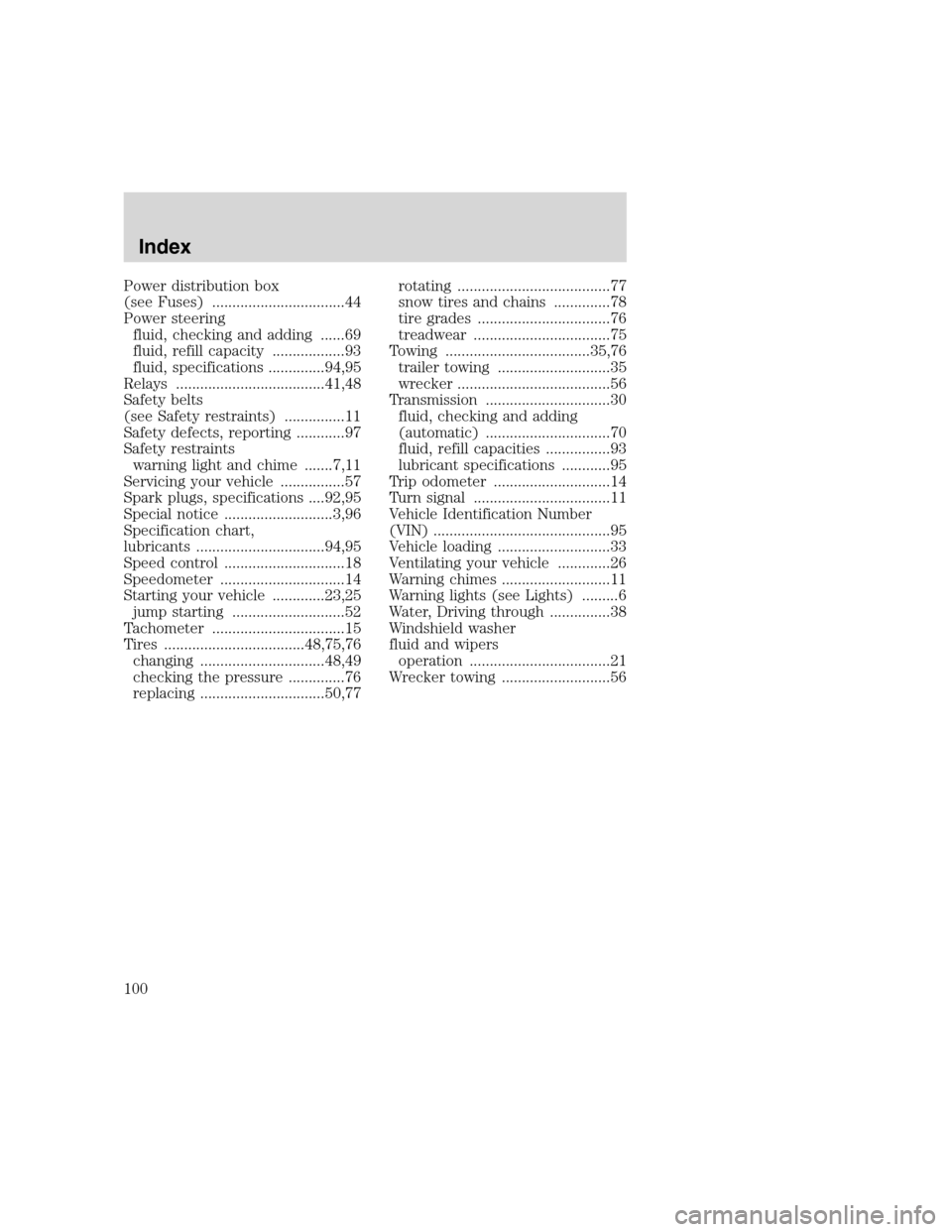
Power distribution box
(see Fuses) .................................44
Power steering
fluid, checking and adding ......69
fluid, refill capacity ..................93
fluid, specifications ..............94,95
Relays .....................................41,48
Safety belts
(see Safety restraints) ...............11
Safety defects, reporting ............97
Safety restraints
warning light and chime .......7,11
Servicing your vehicle ................57
Spark plugs, specifications ....92,95
Special notice ...........................3,96
Specification chart,
lubricants ................................94,95
Speed control ..............................18
Speedometer ...............................14
Starting your vehicle .............23,25
jump starting ............................52
Tachometer .................................15
Tires ...................................48,75,76
changing ...............................48,49
checking the pressure ..............76
replacing ...............................50,77rotating ......................................77
snow tires and chains ..............78
tire grades .................................76
treadwear ..................................75
Towing ....................................35,76
trailer towing ............................35
wrecker ......................................56
Transmission ...............................30
fluid, checking and adding
(automatic) ...............................70
fluid, refill capacities ................93
lubricant specifications ............95
Trip odometer .............................14
Turn signal ..................................11
Vehicle Identification Number
(VIN) ............................................95
Vehicle loading ............................33
Ventilating your vehicle .............26
Warning chimes ...........................11
Warning lights (see Lights) .........6
Water, Driving through ...............38
Windshield washer
fluid and wipers
operation ...................................21
Wrecker towing ...........................56
Index
100