service indicator FORD GRANADA 1985 Service Repair Manual
[x] Cancel search | Manufacturer: FORD, Model Year: 1985, Model line: GRANADA, Model: FORD GRANADA 1985Pages: 255, PDF Size: 14.98 MB
Page 2 of 255
Chapter 1
Routine maintenance and servicing
Air cleaner filter element renewal . . . . . . . . . . . . . . . . . . . . . . . . . . .38
Air conditioner condenser check . . . . . . . . . . . . . . . . . . . . . . . . . . .25
Air conditioner refrigerant charge check . . . . . . . . . . . . . . . . . . . . .26
Automatic choke check . . . . . . . . . . . . . . . . . . . . . . . . . . . . . . . . . .36
Automatic transmission brake band adjustment . . . . . . . . . . . . . . .40
Automatic transmission fluid level check . . . . . . . . . . . . . . . . . . . . .17
Automatic transmission selector lubrication . . . . . . . . . . . . . . . . . .28
Auxiliary drivebelt check . . . . . . . . . . . . . . . . . . . . . . . . . . . . . . . . . .21
Battery electrolyte level check . . . . . . . . . . . . . . . . . . . . . . . . . . . . . .6
Battery terminal check . . . . . . . . . . . . . . . . . . . . . . . . . . . . . . . . . . .22
Brake fluid renewal . . . . . . . . . . . . . . . . . . . . . . . . . . . . . . . . . . . . . .44
Brake pipe and hose check . . . . . . . . . . . . . . . . . . . . . . . . . . . . . . .32
Brake system seal and hose renewal . . . . . . . . . . . . . . . . . . . . . . . .43
Camshaft drivebelt renewal . . . . . . . . . . . . . . . . . . . . . . . . . . . . . . .45
Crankcase ventilation vent valve renewal . . . . . . . . . . . . . . . . . . . .42
Driveshaft check . . . . . . . . . . . . . . . . . . . . . . . . . . . . . . . . . . . . . . . .30
Electrical system check . . . . . . . . . . . . . . . . . . . . . . . . . . . . . . . . . . .5
Engine coolant renewal . . . . . . . . . . . . . . . . . . . . . . . . . . . . . . . . . .46
Engine inlet manifold security check . . . . . . . . . . . . . . . . . . . . . . . .24
Engine oil and filter renewal . . . . . . . . . . . . . . . . . . . . . . . . . . . . . . . .8
Engine valve clearance check . . . . . . . . . . . . . . . . . . . . . . . . . . . . .23
Exhaust system check . . . . . . . . . . . . . . . . . . . . . . . . . . . . . . . . . . .12
Final drive oil level check . . . . . . . . . . . . . . . . . . . . . . . . . . . . . . . . .27
Fluid leak check . . . . . . . . . . . . . . . . . . . . . . . . . . . . . . . . . . . . . . . .10Fluid level checks . . . . . . . . . . . . . . . . . . . . . . . . . . . . . . . . . . . . . . . .3
Front and rear brake pad check . . . . . . . . . . . . . . . . . . . . . . . . . . . . .9
Fuel filter renewal . . . . . . . . . . . . . . . . . . . . . . . . . . . . . . . . . . . . . . .41
Hinge and lock check and lubrication . . . . . . . . . . . . . . . . . . . . . . .19
Hot starting check . . . . . . . . . . . . . . . . . . . . . . . . . . . . . . . . . . . . . .37
Idle mixture check . . . . . . . . . . . . . . . . . . . . . . . . . . . . . . . . . . . . . .16
Idle speed check . . . . . . . . . . . . . . . . . . . . . . . . . . . . . . . . . . . . . . .15
Idle speed linkage clean . . . . . . . . . . . . . . . . . . . . . . . . . . . . . . . . . .33
Ignition system component check . . . . . . . . . . . . . . . . . . . . . . . . . .39
Intensive maintenance . . . . . . . . . . . . . . . . . . . . . . . . . . . . . . . . . . . .2
Introduction . . . . . . . . . . . . . . . . . . . . . . . . . . . . . . . . . . . . . . . . . . . .1
Manual gearbox oil level check . . . . . . . . . . . . . . . . . . . . . . . . . . . .18
Oil filler cap check . . . . . . . . . . . . . . . . . . . . . . . . . . . . . . . . . . . . . .14
Power steering fluid level check . . . . . . . . . . . . . . . . . . . . . . . . . . . .35
Road test . . . . . . . . . . . . . . . . . . . . . . . . . . . . . . . . . . . . . . . . . . . . .34
Roadwheel security check . . . . . . . . . . . . . . . . . . . . . . . . . . . . . . . .13
Seat belt check . . . . . . . . . . . . . . . . . . . . . . . . . . . . . . . . . . . . . . . . .11
Spark plug renewal . . . . . . . . . . . . . . . . . . . . . . . . . . . . . . . . . . . . . .20
Specifications . . . . . . . . . . . . . . . . . . . . . . . . . . . .See end of Chapter
Steering and suspension security check . . . . . . . . . . . . . . . . . . . . .29
Tyre checks . . . . . . . . . . . . . . . . . . . . . . . . . . . . . . . . . . . . . . . . . . . .4
Underbody inspection . . . . . . . . . . . . . . . . . . . . . . . . . . . . . . . . . . .31
Wiper blade check . . . . . . . . . . . . . . . . . . . . . . . . . . . . . . . . . . . . . . .7
The maintenance intervals in this manual are provided with the
assumption that you will be carrying out the work yourself. These are
the minimum maintenance intervals recommended by the manufacturer
for vehicles driven daily. If you wish to keep your vehicle in peak
condition at all times, you may wish to perform some of these
procedures more often. We encourage frequent maintenance, because
it enhances the efficiency, performance and resale value of your vehicle.
If the vehicle is driven in dusty areas, used to tow a trailer, or drivenfrequently at slow speeds (idling in traffic) or on short journeys, more
frequent maintenance intervals are recommended.
When the vehicle is new, it should be serviced by a factory-
authorised dealer service department, in order to preserve the factory
warranty.
1•1
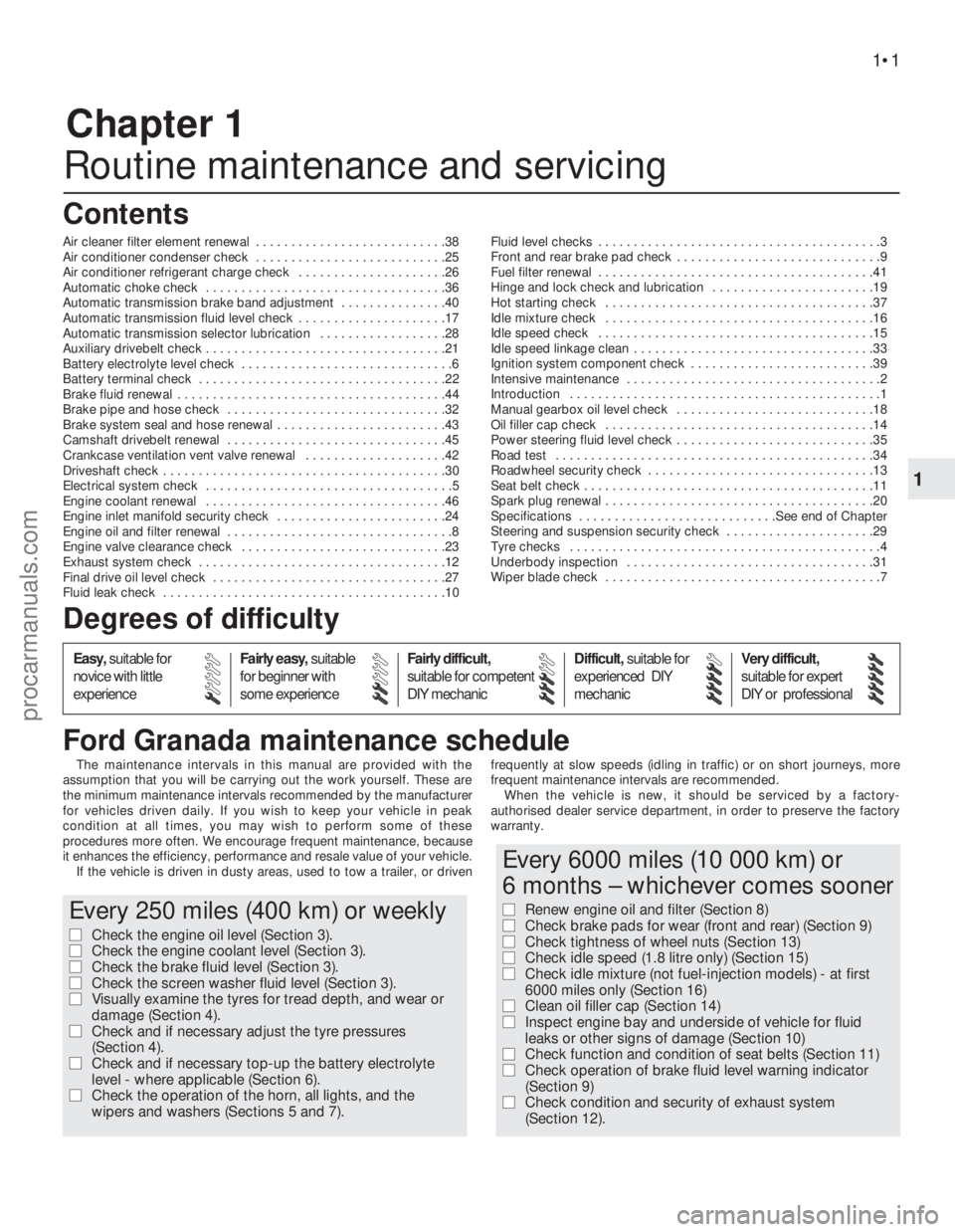
Easy,suitable for
novice with little
experienceFairly easy,suitable
for beginner with
some experienceFairly difficult,
suitable for competent
DIY mechanicDifficult,suitable for
experienced DIY
mechanicVery difficult,
suitable for expert
DIY or professional
Degrees of difficulty Contents
1
Every 250 miles (400 km) or weekly
m mCheck the engine oil level (Section 3).
m mCheck the engine coolant level (Section 3).
m mCheck the brake fluid level (Section 3).
m mCheck the screen washer fluid level (Section 3).
m mVisually examine the tyres for tread depth, and wear or
damage (Section 4).
m mCheck and if necessary adjust the tyre pressures
(Section 4).
m mCheck and if necessary top-up the battery electrolyte
level - where applicable (Section 6).
m mCheck the operation of the horn, all lights, and the
wipers and washers (Sections 5 and 7).
Every 6000 miles (10 000 km) or
6 months – whichever comes sooner
m mRenew engine oil and filter (Section 8)
m mCheck brake pads for wear (front and rear) (Section 9)
m mCheck tightness of wheel nuts (Section 13)
m mCheck idle speed (1.8 litre only) (Section 15)
m mCheck idle mixture (not fuel-injection models) - at first
6000 miles only (Section 16)
m mClean oil filler cap (Section 14)
m mInspect engine bay and underside of vehicle for fluid
leaks or other signs of damage (Section 10)
m mCheck function and condition of seat belts (Section 11)
m mCheck operation of brake fluid level warning indicator
(Section 9)
m mCheck condition and security of exhaust system
(Section 12).
Ford Granada maintenance schedule
procarmanuals.com
Page 132 of 255
Note: Hydraulic fluid is poisonous; wash off
immediately and thoroughly in the case of skin
contact and seek immediate medical advice if
any fluid is swallowed or gets into the eyes.
Certain types of hydraulic fluid are inflammable
and may ignite when allowed into contact with
hot components; when servicing any hydraulic
system it is safest to assume that the fluid is
inflammable and to take precautions against
the risk of fire as though it is petrol that is
being handled. Finally, it is hygroscopic (it
absorbs moisture from the air) old fluid may be
contaminated and unfit for further use. When
topping-up or renewing the fluid, always use
the recommended type and ensure that it
comes from a freshly-opened sealed container
1Bleeding is necessary whenever air has
entered the hydraulic system - for instance
after component renewal. Because the
hydraulic circuits are split, if only the front or
rear circuit has been disturbed it will normally
only be necessary to bleed the front or rear
calipers. If the hydraulic unit has been
disturbed or the fluid level has been allowed to
fall so low that air has entered the system,
both front and rear circuits must be bled,
starting with the front
2The services of an assistant will be required.
As far as is known, pressure bleeding or other
“one-man” equipment cannot be used. In
addition a supply of fresh brake fluid of the
correct type will be needed, together with a
length of flexible tube to fit the bleed screws
and a clean glass or plastic container.
3Do not allow the hydraulic unit pump motor
to run for more than two minutes at a time. The
motor must be allowed to cool (with the
ignition off) for at least ten minutes after each
two minute spell of running.
4Remember that brake fluid is poisonous and
that the rear brake hydraulic system may be
under considerable pressure. Take care not to
allow hydraulic fluid to spray into the face or
eyes.
5Keep the reservoir topped up to the MAX
mark during bleeding.
6Discard the fluid bled out of the system as it
is unfit for re-use.
Models before April 1992
Front brakes
7Remove the dust cap (if fitted) from the left-
hand caliper bleed screw. Slacken the bleed
screw, then nip it up again. Make sure that the
ignition is off.8Fit the bleed tube over the bleed screw.
Place the other end of the tube in the bleed jar
(glass or plastic container). Pour sufficient
brake fluid into the jar to cover the end of the
tube.
9Open the bleed screw one full turn. Have
the assistant depress the brake pedal as far as
it will go, and hold it depressed. Tighten the
bleed screw, then tell the assistant to release
the pedal.
10Repeat paragraph 9 until clean fluid, free
of air bubbles, flows from the bleed screw
during the downstrokes. Remember to keep
the fluid reservoir topped up.
11Repeat the operations on the right-hand
caliper. Refit the bleed screw dust caps (if
applicable) on completion.
Rear brakes
12Remove the dust cap (if fitted) from the
rear left-hand caliper bleed screw. Open the
bleed screw one full turn.
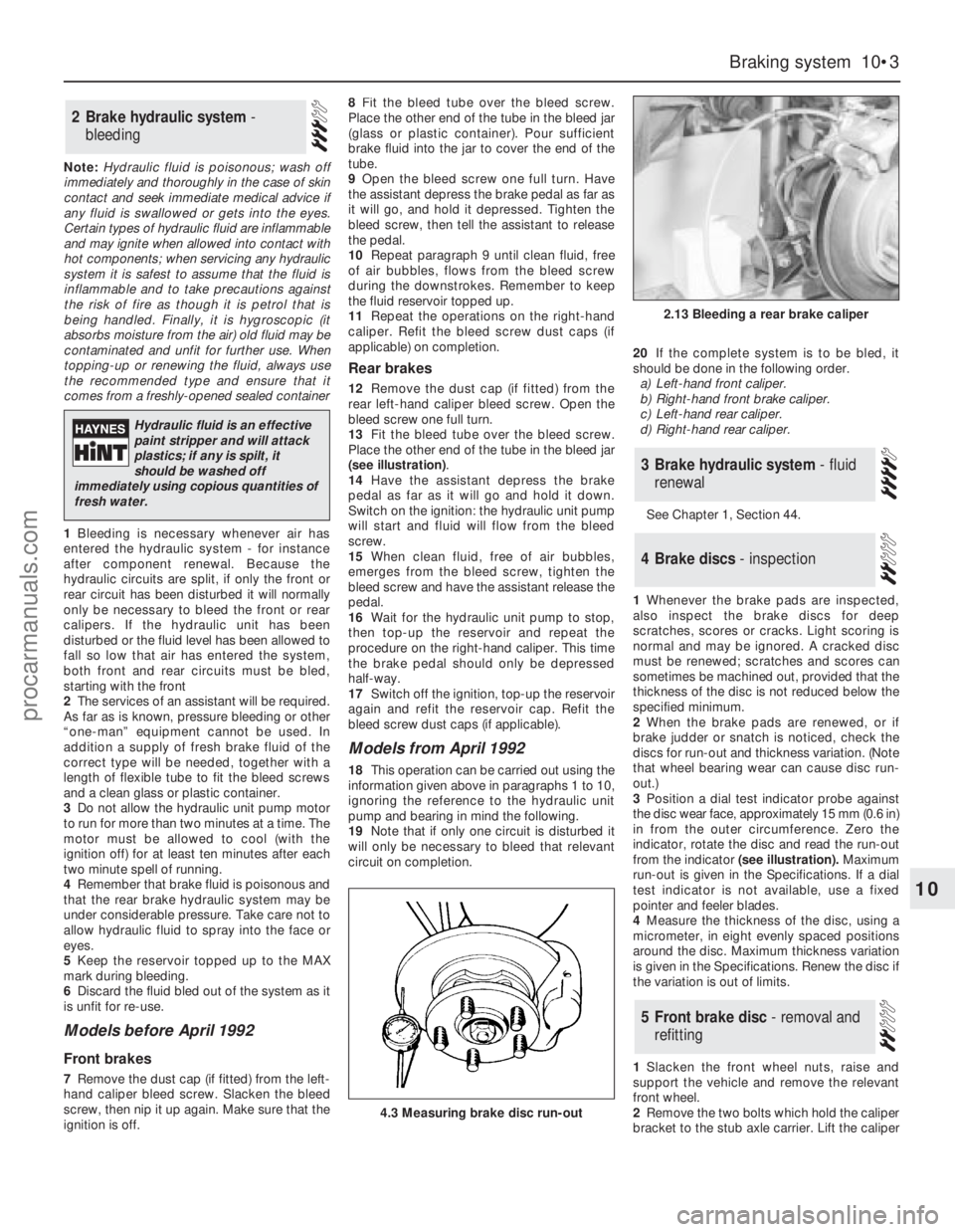
13Fit the bleed tube over the bleed screw.
Place the other end of the tube in the bleed jar
(see illustration).
14Have the assistant depress the brake
pedal as far as it will go and hold it down.
Switch on the ignition: the hydraulic unit pump
will start and fluid will flow from the bleed
screw.
15When clean fluid, free of air bubbles,
emerges from the bleed screw, tighten the
bleed screw and have the assistant release the
pedal.
16Wait for the hydraulic unit pump to stop,
then top-up the reservoir and repeat the
procedure on the right-hand caliper. This time
the brake pedal should only be depressed
half-way.
17Switch off the ignition, top-up the reservoir
again and refit the reservoir cap. Refit the
bleed screw dust caps (if applicable).
Models from April 1992
18This operation can be carried out using the
information given above inparagraphs 1 to 10,
ignoring the reference to the hydraulic unit
pump and bearing in mind the following.
19Note that if only one circuit is disturbed it
will only be necessary to bleed that relevant
circuit on completion.20If the complete system is to be bled, it
should be done in the following order.
a)Left-hand front caliper.
b)Right-hand front brake caliper.
c)Left-hand rear caliper.
d)Right-hand rear caliper.
See Chapter 1, Section 44.
1Whenever the brake pads are inspected,
also inspect the brake discs for deep
scratches, scores or cracks. Light scoring is
normal and may be ignored. A cracked disc
must be renewed; scratches and scores can
sometimes be machined out, provided that the
thickness of the disc is not reduced below the
specified minimum.
2When the brake pads are renewed, or if
brake judder or snatch is noticed, check the
discs for run-out and thickness variation. (Note
that wheel bearing wear can cause disc run-
out.)
3Position a dial test indicator probe against
the disc wear face, approximately 15 mm (0.6 in)
in from the outer circumference. Zero the
indicator, rotate the disc and read the run-out
from the indicator(see illustration).Maximum
run-out is given in the Specifications. If a dial
test indicator is not available, use a fixed
pointer and feeler blades.
4Measure the thickness of the disc, using a
micrometer, in eight evenly spaced positions
around the disc. Maximum thickness variation
is given in the Specifications. Renew the disc if
the variation is out of limits.
1Slacken the front wheel nuts, raise and
support the vehicle and remove the relevant
front wheel.
2Remove the two bolts which hold the caliper
bracket to the stub axle carrier. Lift the caliper
5Front brake disc - removal and
refitting
4Brake discs - inspection
3Brake hydraulic system - fluid
renewal
2Brake hydraulic system -
bleeding
Braking system 10•3
10
2.13 Bleeding a rear brake caliper
4.3 Measuring brake disc run-out
Hydraulic fluid is an effective
paint stripper and will attack
plastics; if any is spilt, it
should be washed off
immediately using copious quantities of
fresh water.
procarmanuals.com