engine oil FORD TAURUS 1998 3.G Owners Manual
[x] Cancel search | Manufacturer: FORD, Model Year: 1998, Model line: TAURUS, Model: FORD TAURUS 1998 3.GPages: 192, PDF Size: 1.66 MB
Page 10 of 192

Anti-lock brake system (ABS) (If equipped)
Momentarily illuminates
when the ignition is
turned on and the
engine is off. If the
light does not illuminate momentarily at start up,
remains on or continues to flash, the ABS needs to
be serviced. With the ABS light on, the anti-lock
brake system is disabled and normal braking is still
effective unless the brake warning light also remains
illuminated with parking brake released.
Speed control (if equipped)
This light comes on
when either the
SET/ACCEL or
RESUME controls are
pressed. It turns off
when the speed control OFF control is pressed, the
brake is applied or the ignition is turned to the OFF
position.
Brake system warning
Momentarily illuminates
when the ignition is
turned to the ON
position and the engine
is off. If brake warning lamp does not illuminate at
this time, seek service immediately. Also illuminates
when the parking brake is engaged. Illumination
after releasing the parking brake indicates low brake
fluid level and the brake system should be inspected
immediately.
Engine oil pressure
Illuminates when the
oil pressure falls below
the normal range. Stop
the vehicle as soon as
safely possible and switch off the engine
immediately. Check the oil level and add oil if
ABS
CRUISE
ON
P!
BRAKE
Instrumentation
10
Page 11 of 192

needed. Refer toEngine oilin theMaintenance
and Carechapter.
This lamp also illuminates when the ignition is
turned to ON and the engine is off.
Charging system
Illuminates when the
ignition is turned to
the ON position and
the engine is off. The
light also illuminates when the battery is not
charging properly, requiring electrical system
service.
Air bag readiness
Momentarily
illuminates when the
ignition is turned ON.
If the light fails to
illuminate, continues to flash or remains on, have
the system serviced immediately.
Low washer fluid
Illuminates when the
ignition is turned to ON
and when the
windshield washer fluid
is low.
Safety belt warning chime
Chimes to remind you to fasten your safety belts.
For information on the safety belt warning chime,
refer to theSeating and safety restraintschapter.
Supplemental restraint system (SRS) warning
chime
For information on the SRS warning chime, refer to
theSeating and safety restraintschapter.
Instrumentation
11
Page 130 of 192
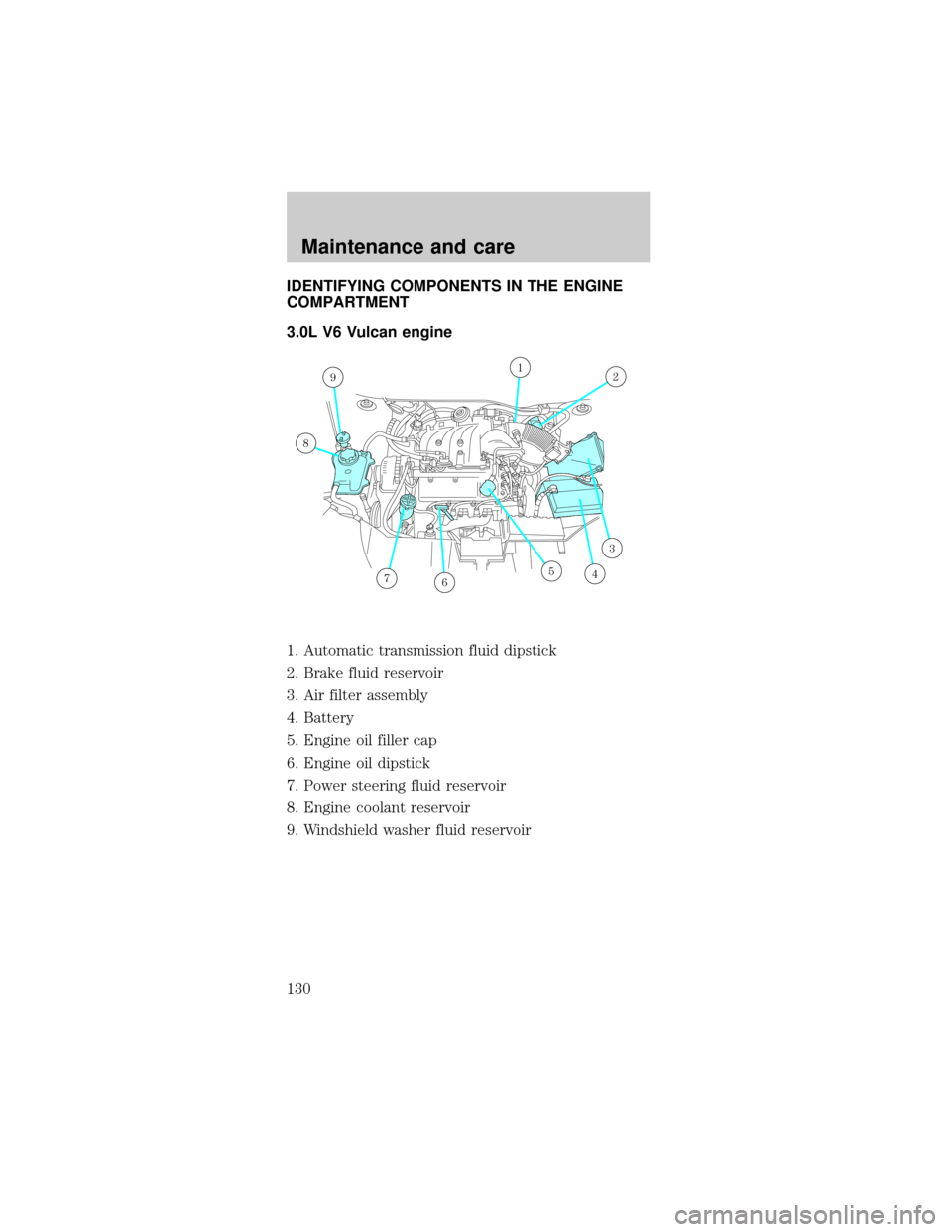
IDENTIFYING COMPONENTS IN THE ENGINE
COMPARTMENT
3.0L V6 Vulcan engine
1. Automatic transmission fluid dipstick
2. Brake fluid reservoir
3. Air filter assembly
4. Battery
5. Engine oil filler cap
6. Engine oil dipstick
7. Power steering fluid reservoir
8. Engine coolant reservoir
9. Windshield washer fluid reservoir
12
3
4567
8
9
Maintenance and care
130
Page 131 of 192
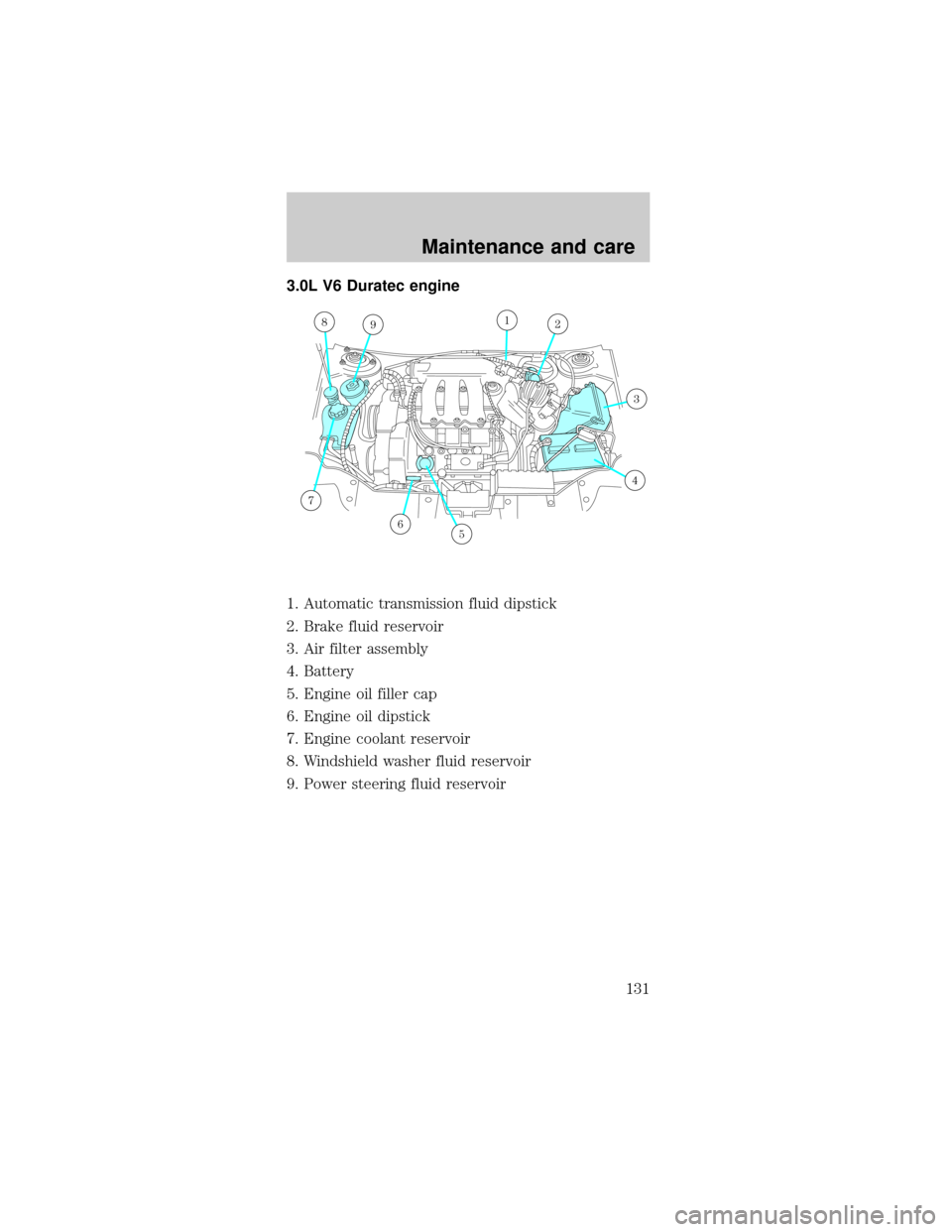
3.0L V6 Duratec engine
1. Automatic transmission fluid dipstick
2. Brake fluid reservoir
3. Air filter assembly
4. Battery
5. Engine oil filler cap
6. Engine oil dipstick
7. Engine coolant reservoir
8. Windshield washer fluid reservoir
9. Power steering fluid reservoir
8912
3
4
56
7
Maintenance and care
131
Page 132 of 192
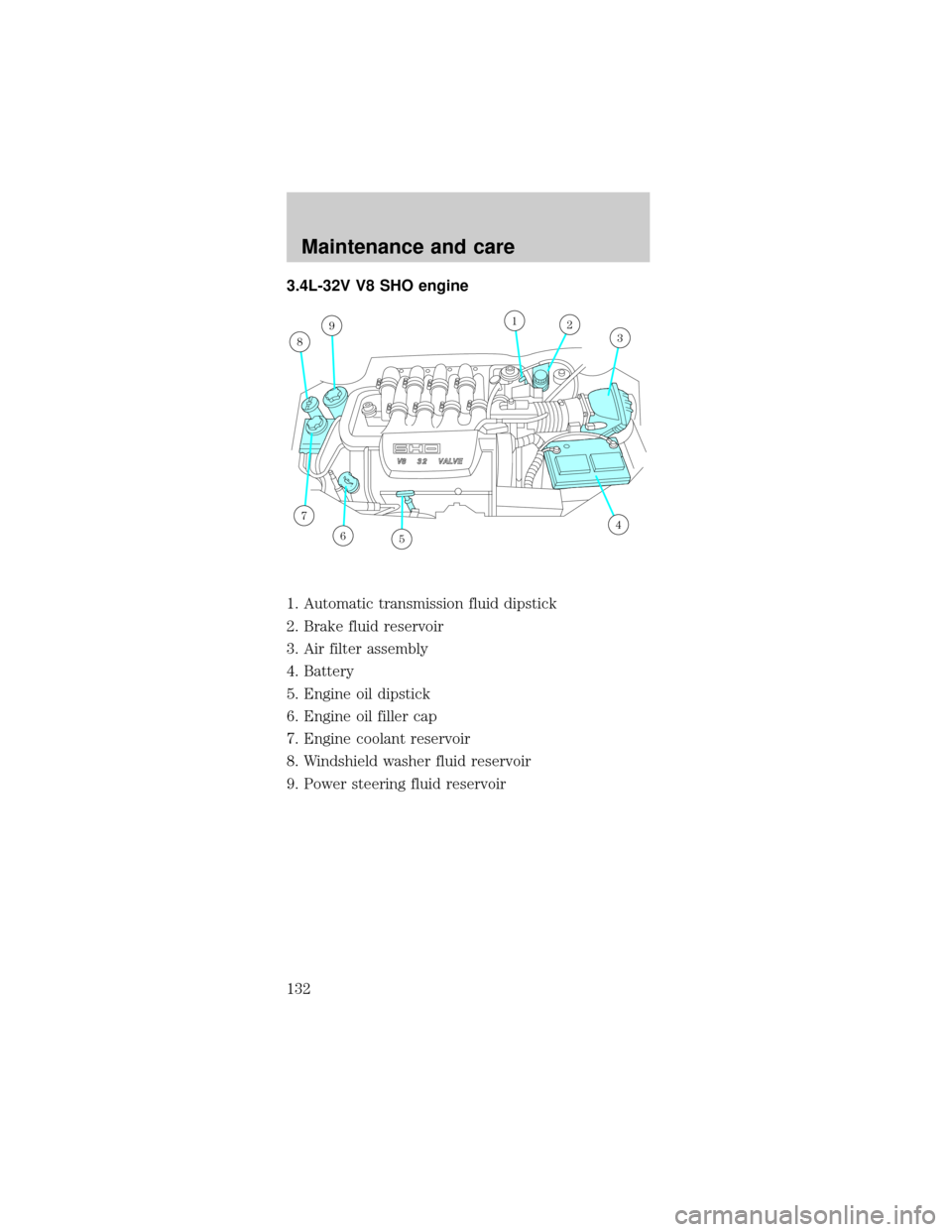
3.4L-32V V8 SHO engine
1. Automatic transmission fluid dipstick
2. Brake fluid reservoir
3. Air filter assembly
4. Battery
5. Engine oil dipstick
6. Engine oil filler cap
7. Engine coolant reservoir
8. Windshield washer fluid reservoir
9. Power steering fluid reservoir
V8 32 VALVE
8
9123
456
7
Maintenance and care
132
Page 133 of 192
ENGINE OIL
Checking the engine oil
Refer to the9Service Guide9for the appropriate
intervals for checking the engine oil .
1. Make sure the vehicle is on level ground.
2. Turn the engine off and wait a few minutes for
the oil to drain into the oil pan.
3. Set the parking brake and ensure the gearshift is
securely latched in P.
4. Open the hood. Protect yourself from engine heat.
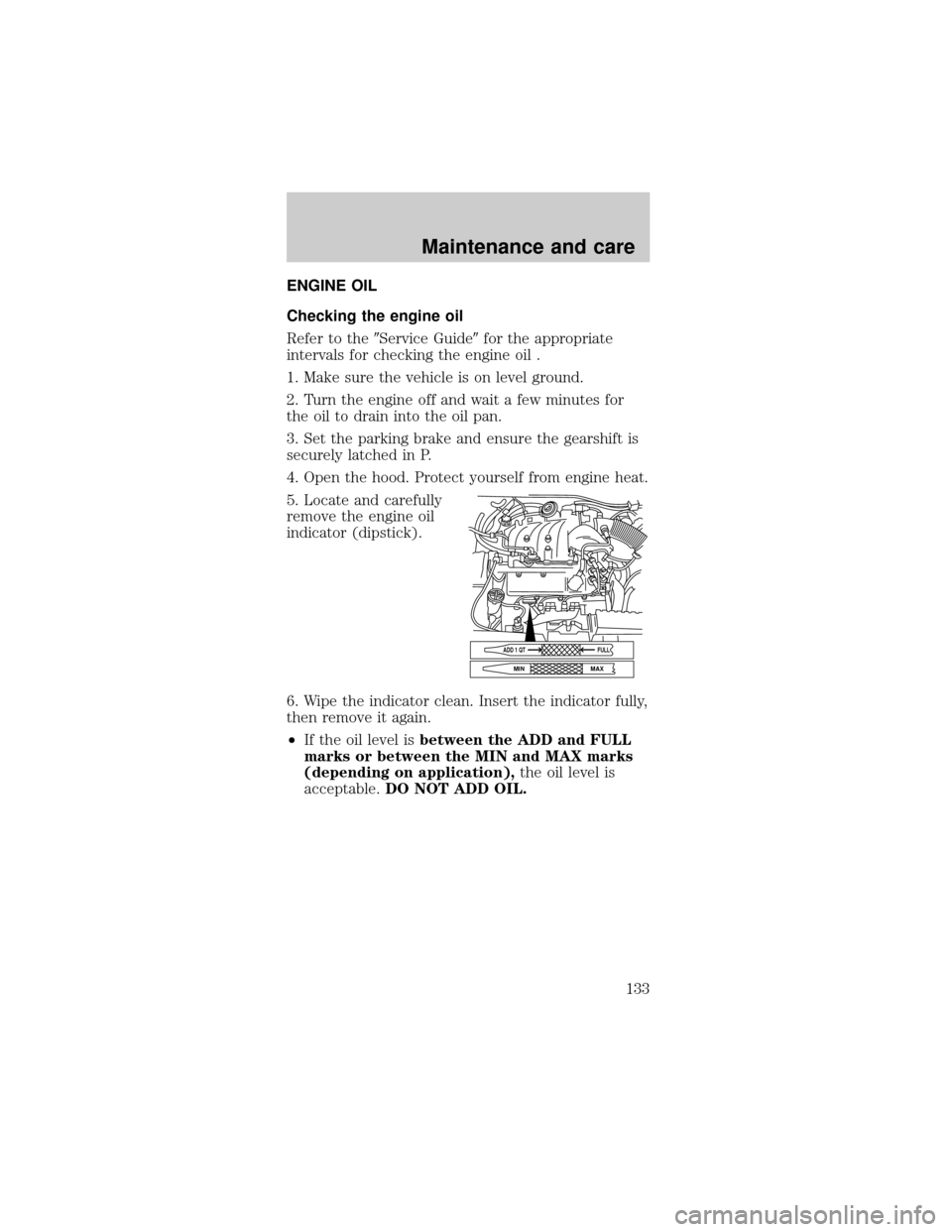
5. Locate and carefully
remove the engine oil
indicator (dipstick).
6. Wipe the indicator clean. Insert the indicator fully,
then remove it again.
²If the oil level isbetween the ADD and FULL
marks or between the MIN and MAX marks
(depending on application),the oil level is
acceptable.DO NOT ADD OIL.
ADD 1 QTFULL
MAX MIN
Maintenance and care
133
Page 134 of 192
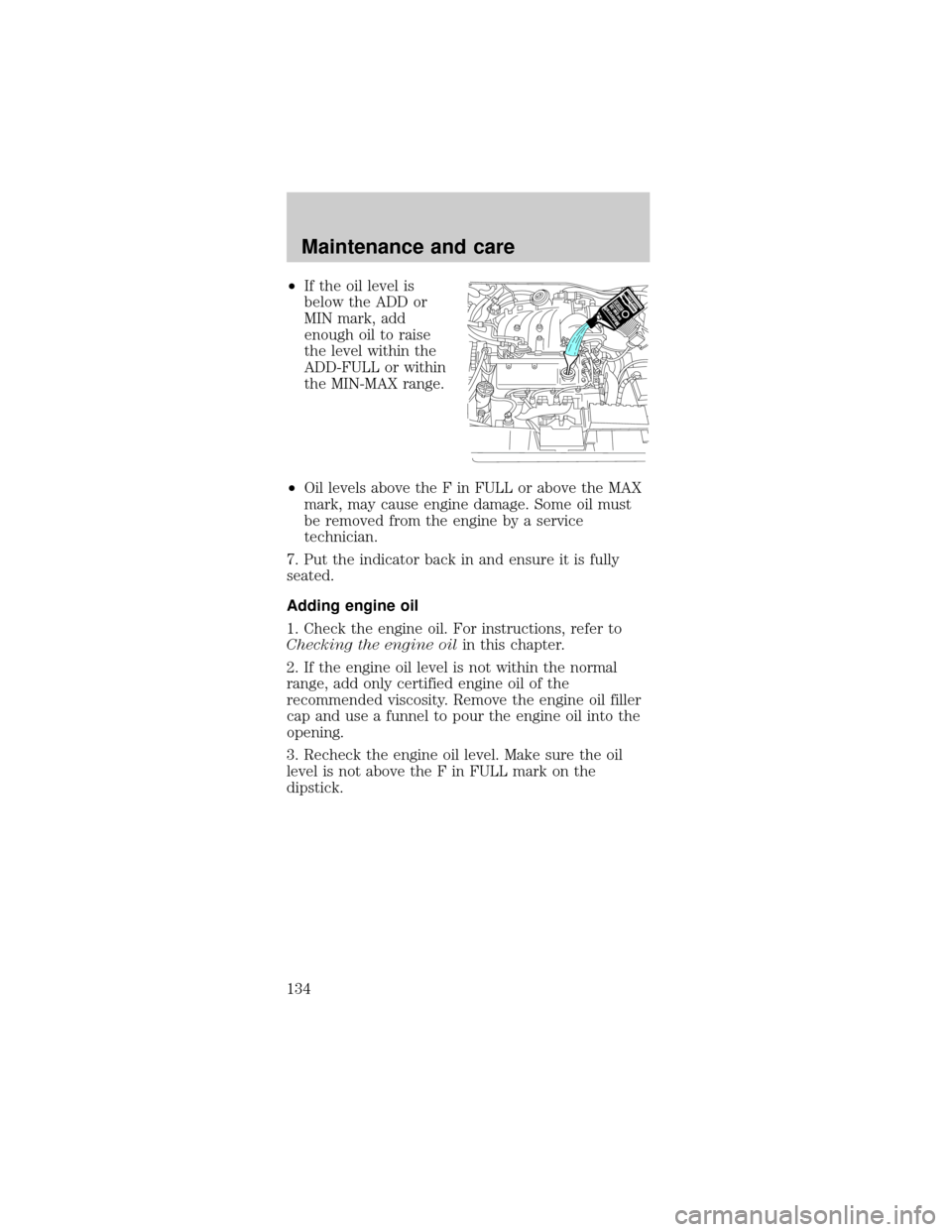
²If the oil level is
below the ADD or
MIN mark, add
enough oil to raise
the level within the
ADD-FULL or within
the MIN-MAX range.
²Oil levels above the F in FULL or above the MAX
mark, may cause engine damage. Some oil must
be removed from the engine by a service
technician.
7. Put the indicator back in and ensure it is fully
seated.
Adding engine oil
1. Check the engine oil. For instructions, refer to
Checking the engine oilin this chapter.
2. If the engine oil level is not within the normal
range, add only certified engine oil of the
recommended viscosity. Remove the engine oil filler
cap and use a funnel to pour the engine oil into the
opening.
3. Recheck the engine oil level. Make sure the oil
level is not above the F in FULL mark on the
dipstick.
Maintenance and care
134
Page 135 of 192
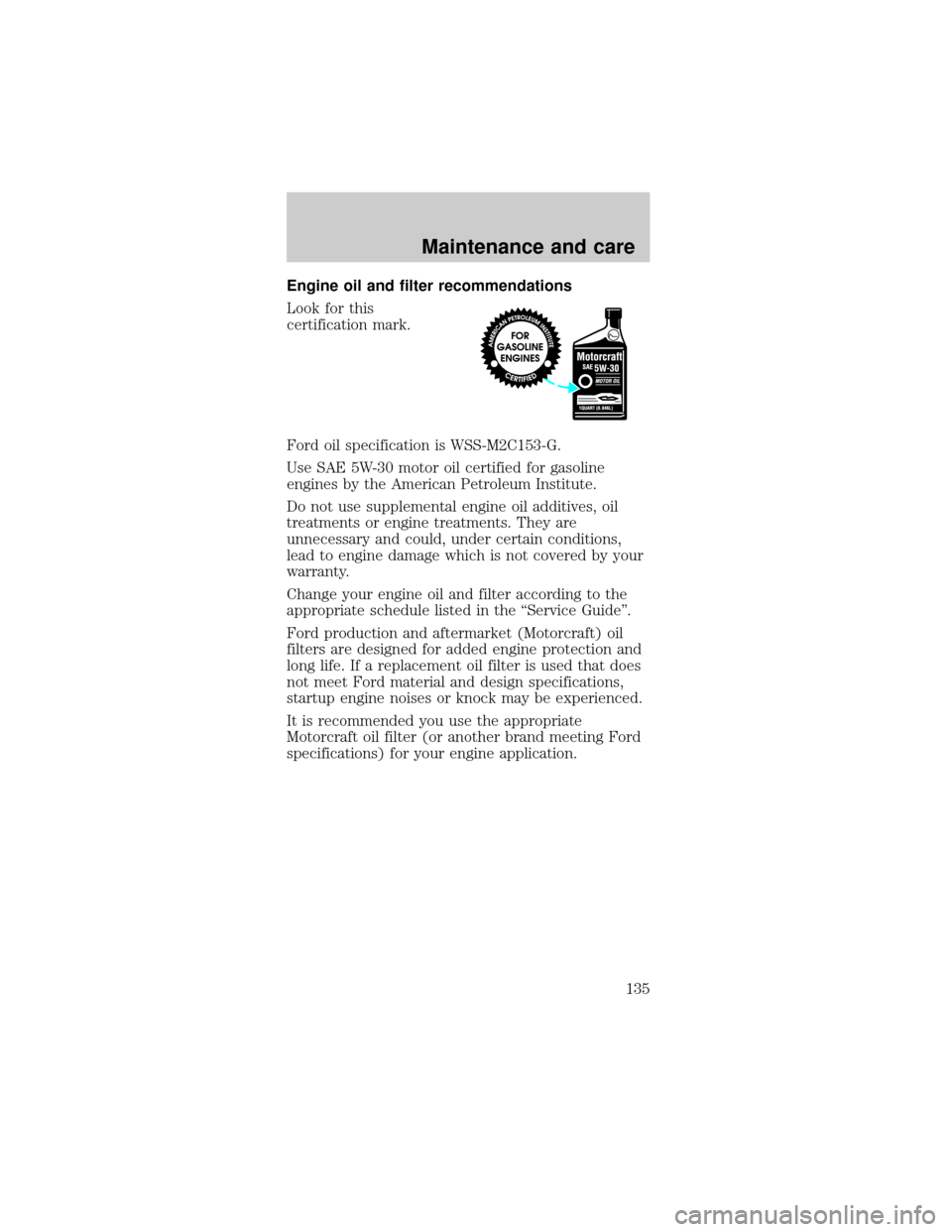
Engine oil and filter recommendations
Look for this
certification mark.
Ford oil specification is WSS-M2C153-G.
Use SAE 5W-30 motor oil certified for gasoline
engines by the American Petroleum Institute.
Do not use supplemental engine oil additives, oil
treatments or engine treatments. They are
unnecessary and could, under certain conditions,
lead to engine damage which is not covered by your
warranty.
Change your engine oil and filter according to the
appropriate schedule listed in the ªService Guideº.
Ford production and aftermarket (Motorcraft) oil
filters are designed for added engine protection and
long life. If a replacement oil filter is used that does
not meet Ford material and design specifications,
startup engine noises or knock may be experienced.
It is recommended you use the appropriate
Motorcraft oil filter (or another brand meeting Ford
specifications) for your engine application.
Maintenance and care
135
Page 161 of 192
exhaust emission standards. To make sure that the
catalytic converter and other emission control
components continue to work properly:
²Use only unleaded fuel.
²Avoid running out of fuel.
²Do not turn off the ignition while your vehicle is
moving, especially at high speeds.
²Have the items listed in your ªService Guideº
performed according to the specified schedule.
The scheduled maintenance items listed in the
ªService Guideº are essential to the life and
performance of your vehicle and to its emissions
system.
If other than Ford, Motorcraft or Ford-authorized
parts are used for maintenance replacements or for
service of components affecting emission control,
such non-Ford parts should be equivalent to genuine
Ford Motor Company parts in performance and
durability.
Do not park, idle, or drive your vehicle in
dry grass or other dry ground cover. The
emission system heats up the engine compartment
and exhaust system, which can start a fire.
Lumination of the charging system warning light,
ªService Engine Soonº light or the temperature
warning light, fluid leaks, strange odors, smoke or
loss of oil pressure, could indicate that the emission
control system is not working properly.
Exhaust leaks may result in entry of harmful
and potentially lethal fumes into the
passenger compartment.
Maintenance and care
161
Page 170 of 192

After washing, apply the brakes several times to dry
them.
Waxing your vehicle
Wax when water stops beading on the surface. This
could be every three or four months, depending on
operating conditions.
Use only carnauba or synthetic-based waxes. Use
cleaning fluid or alcohol with a clean cloth to remove
any bugs and tar before waxing vehicle. Use tar
remover to remove any tar spots.
Avoid getting wax on the windshield. If you have
wax applied at a commercial car wash, it is
recommended that you clean the wiper blades and
windshield as described inCleaning the wiper
blades and windshield.
Repairing paint chips
Minor scratches or paint damage from road debris
may be repaired with touch-up paint, repair foil or
aerosol paint spray from the Ford accessory line.
Observe the application instructions on the
products.
Remove particles such as bird droppings, tree sap,
insect remains, tar spots, road salt and industrial
fallout immediately.
Cleaning the wheels
Wash with the same detergent as the body of your
vehicle. Do not use acid-based or alcohol-based
wheel cleaners, steel wool, fuel or strong detergents.
Never use abrasives that will damage the finish of
special wheel surfaces. Use a tar remover to remove
grease and tar.
Cleaning the engine
Engines are more efficient when they are clean
because grease and dirt buildup keep the engine
warmer than normal. When washing:
Maintenance and care
170