automatic transmission GMC CANYON 2006 Owner's Guide
[x] Cancel search | Manufacturer: GMC, Model Year: 2006, Model line: CANYON, Model: GMC CANYON 2006Pages: 434, PDF Size: 2.64 MB
Page 261 of 434
{CAUTION:
Shifting a four-wheel-drive vehicle’s transfer
case into NEUTRAL can cause your vehicle to
roll even if the transmission is in PARK (P) for
an automatic transmission, or if your vehicle is
in gear, for a manual transmission. You or
others could be injured. Make sure the parking
brake is rmly set before you shift the transfer
case to NEUTRAL.
5. Shift the transfer case to NEUTRAL. See
Four-Wheel Drive on page 2-24for more
information.
6. Release the parking brake only after the vehicle
being towed is rmly attached to the tow vehicle.
7. Turn the ignition to LOCK.
If the tow vehicle will not be started or driven for
six weeks or more, remove the battery cable
from the negative terminal (post) of the battery to
prevent your battery from draining while towing.
After towing see “Shifting Out of NEUTRAL” under
Four-Wheel Drive on page 2-24.
Rear Towing (Rear Wheels Off the Ground)
Two-Wheel-Drive Vehicles
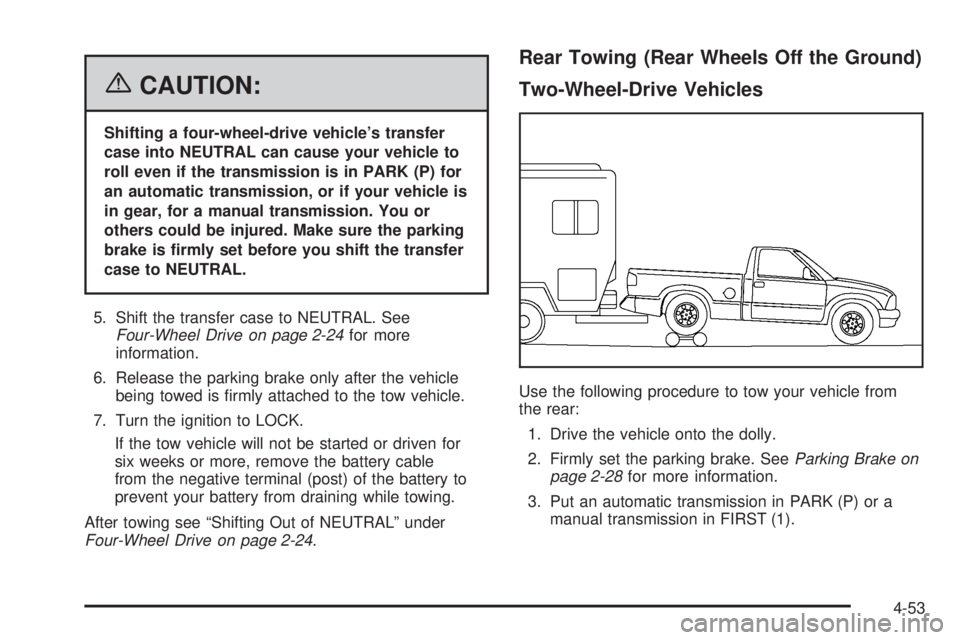
Use the following procedure to tow your vehicle from
the rear:
1. Drive the vehicle onto the dolly.
2. Firmly set the parking brake. SeeParking Brake on
page 2-28for more information.
3. Put an automatic transmission in PARK (P) or a
manual transmission in FIRST (1).
4-53
Page 262 of 434
4. Follow the dolly manufacturer’s instructions to
attach and secure the vehicle being towed to
the dolly and then the loaded dolly to the tow
vehicle. Make sure the wheels are straight before
towing.
For manual transmission vehicles, make sure the
wheels are straight before proceeding to the
next steps. On automatic transmission vehicles, use
an adequate clamping device to ensure that the
front wheels are locked into the straight position.
5. Release the parking brake only after the vehicle
being towed is rmly attached to the tow vehicle.
6. Turn the ignition to LOCK.
If the tow vehicle will not be started or driven for
six weeks or more, remove the battery cable
from the negative terminal (post) of the battery to
prevent your battery from draining while towing.Four-Wheel-Drive Vehicles
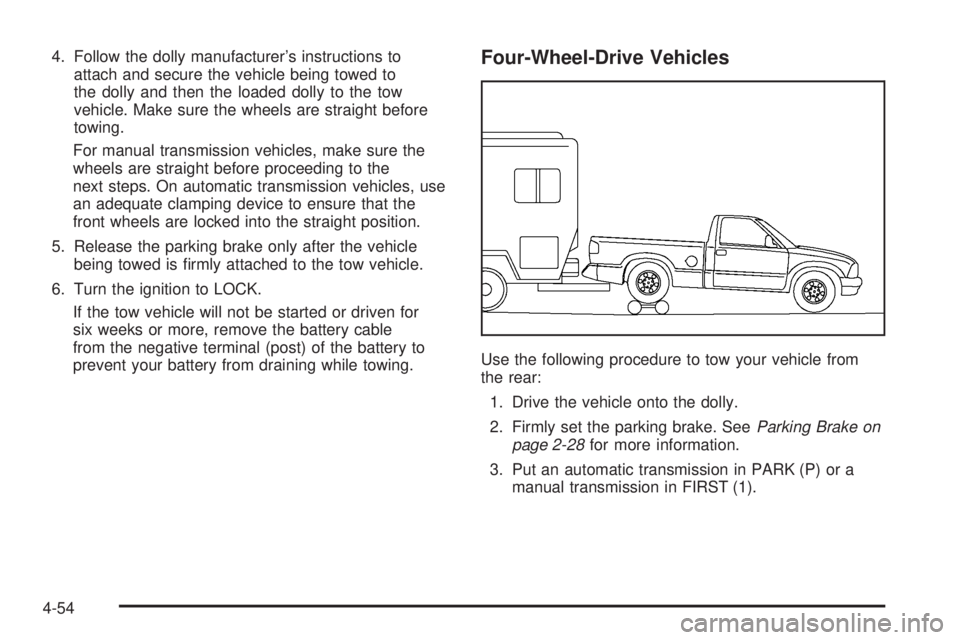
Use the following procedure to tow your vehicle from
the rear:
1. Drive the vehicle onto the dolly.
2. Firmly set the parking brake. SeeParking Brake on
page 2-28for more information.
3. Put an automatic transmission in PARK (P) or a
manual transmission in FIRST (1).
4-54
Page 263 of 434
4. Follow the dolly manufacturer’s instructions to
attach and secure the vehicle being towed to
the dolly and then the loaded dolly to the tow
vehicle.
For manual transmission vehicles, make sure the
wheels are straight before proceeding to the
next steps. On automatic transmission vehicles, use
an adequate clamping device to ensure that the
front wheels are locked into the straight position.
{CAUTION:
Shifting a four-wheel-drive vehicle’s transfer
case into NEUTRAL can cause your vehicle to
roll even if the transmission is in PARK (P) for
an automatic transmission, or if your vehicle is
in gear, for a manual transmission. You or
others could be injured. Make sure the parking
brake is rmly set before you shift the transfer
case to NEUTRAL.5. Shift the transfer case to NEUTRAL. See
Four-Wheel Drive on page 2-24for more
information.
6. Release the parking brake only after the vehicle
being towed is rmly attached to the tow vehicle.
7. Turn the ignition to LOCK.
If the tow vehicle will not be started or driven for
six weeks or more, remove the battery cable
from the negative terminal (post) of the battery to
prevent your battery from draining while towing.
After towing, see “Shifting Out of NEUTRAL” under
Four-Wheel Drive on page 2-24.
4-55
Page 266 of 434
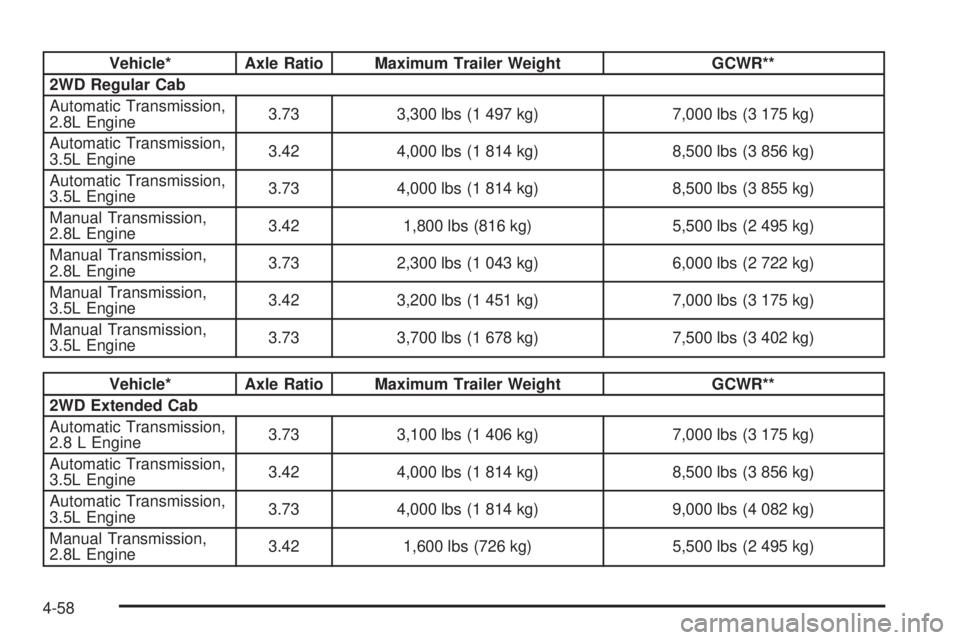
Vehicle* Axle Ratio Maximum Trailer Weight GCWR**
2WD Regular Cab
Automatic Transmission,
2.8L Engine3.73 3,300 lbs (1 497 kg) 7,000 lbs (3 175 kg)
Automatic Transmission,
3.5L Engine3.42 4,000 lbs (1 814 kg) 8,500 lbs (3 856 kg)
Automatic Transmission,
3.5L Engine3.73 4,000 lbs (1 814 kg) 8,500 lbs (3 855 kg)
Manual Transmission,
2.8L Engine3.42 1,800 lbs (816 kg) 5,500 lbs (2 495 kg)
Manual Transmission,
2.8L Engine3.73 2,300 lbs (1 043 kg) 6,000 lbs (2 722 kg)
Manual Transmission,
3.5L Engine3.42 3,200 lbs (1 451 kg) 7,000 lbs (3 175 kg)
Manual Transmission,
3.5L Engine3.73 3,700 lbs (1 678 kg) 7,500 lbs (3 402 kg)
Vehicle* Axle Ratio Maximum Trailer Weight GCWR**
2WD Extended Cab
Automatic Transmission,
2.8 L Engine3.73 3,100 lbs (1 406 kg) 7,000 lbs (3 175 kg)
Automatic Transmission,
3.5L Engine3.42 4,000 lbs (1 814 kg) 8,500 lbs (3 856 kg)
Automatic Transmission,
3.5L Engine3.73 4,000 lbs (1 814 kg) 9,000 lbs (4 082 kg)
Manual Transmission,
2.8L Engine3.42 1,600 lbs (726 kg) 5,500 lbs (2 495 kg)
4-58
Page 267 of 434
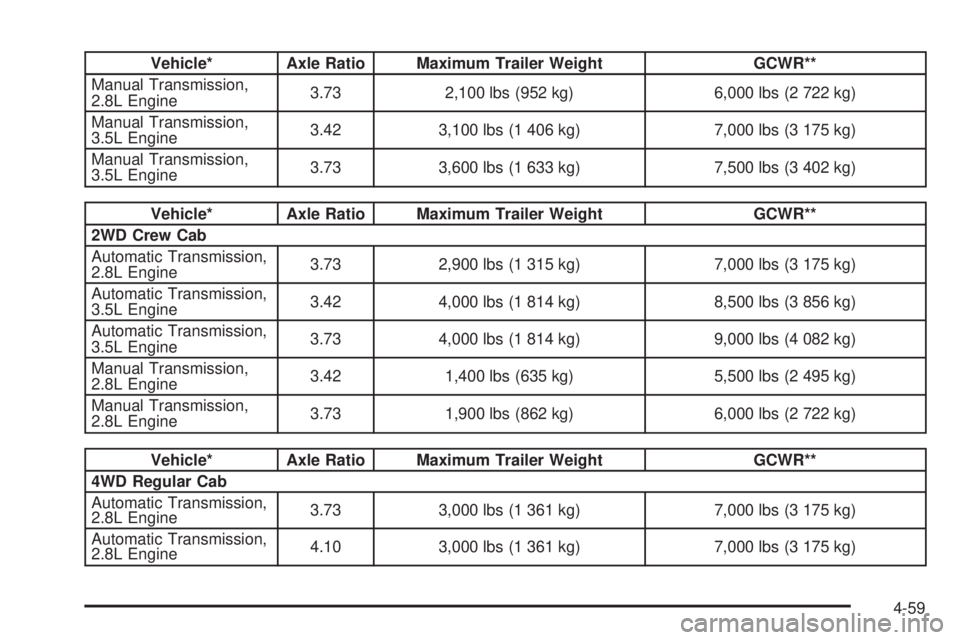
Vehicle* Axle Ratio Maximum Trailer Weight GCWR**
Manual Transmission,
2.8L Engine3.73 2,100 lbs (952 kg) 6,000 lbs (2 722 kg)
Manual Transmission,
3.5L Engine3.42 3,100 lbs (1 406 kg) 7,000 lbs (3 175 kg)
Manual Transmission,
3.5L Engine3.73 3,600 lbs (1 633 kg) 7,500 lbs (3 402 kg)
Vehicle* Axle Ratio Maximum Trailer Weight GCWR**
2WD Crew Cab
Automatic Transmission,
2.8L Engine3.73 2,900 lbs (1 315 kg) 7,000 lbs (3 175 kg)
Automatic Transmission,
3.5L Engine3.42 4,000 lbs (1 814 kg) 8,500 lbs (3 856 kg)
Automatic Transmission,
3.5L Engine3.73 4,000 lbs (1 814 kg) 9,000 lbs (4 082 kg)
Manual Transmission,
2.8L Engine3.42 1,400 lbs (635 kg) 5,500 lbs (2 495 kg)
Manual Transmission,
2.8L Engine3.73 1,900 lbs (862 kg) 6,000 lbs (2 722 kg)
Vehicle* Axle Ratio Maximum Trailer Weight GCWR**
4WD Regular Cab
Automatic Transmission,
2.8L Engine3.73 3,000 lbs (1 361 kg) 7,000 lbs (3 175 kg)
Automatic Transmission,
2.8L Engine4.10 3,000 lbs (1 361 kg) 7,000 lbs (3 175 kg)
4-59
Page 268 of 434
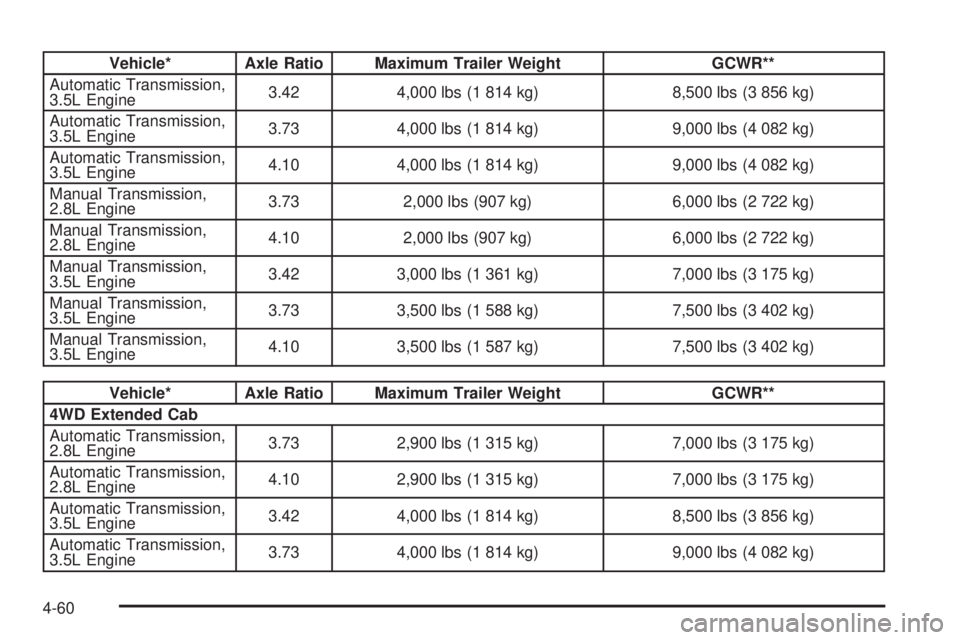
Vehicle* Axle Ratio Maximum Trailer Weight GCWR**
Automatic Transmission,
3.5L Engine3.42 4,000 lbs (1 814 kg) 8,500 lbs (3 856 kg)
Automatic Transmission,
3.5L Engine3.73 4,000 lbs (1 814 kg) 9,000 lbs (4 082 kg)
Automatic Transmission,
3.5L Engine4.10 4,000 lbs (1 814 kg) 9,000 lbs (4 082 kg)
Manual Transmission,
2.8L Engine3.73 2,000 lbs (907 kg) 6,000 lbs (2 722 kg)
Manual Transmission,
2.8L Engine4.10 2,000 lbs (907 kg) 6,000 lbs (2 722 kg)
Manual Transmission,
3.5L Engine3.42 3,000 lbs (1 361 kg) 7,000 lbs (3 175 kg)
Manual Transmission,
3.5L Engine3.73 3,500 lbs (1 588 kg) 7,500 lbs (3 402 kg)
Manual Transmission,
3.5L Engine4.10 3,500 lbs (1 587 kg) 7,500 lbs (3 402 kg)
Vehicle* Axle Ratio Maximum Trailer Weight GCWR**
4WD Extended Cab
Automatic Transmission,
2.8L Engine3.73 2,900 lbs (1 315 kg) 7,000 lbs (3 175 kg)
Automatic Transmission,
2.8L Engine4.10 2,900 lbs (1 315 kg) 7,000 lbs (3 175 kg)
Automatic Transmission,
3.5L Engine3.42 4,000 lbs (1 814 kg) 8,500 lbs (3 856 kg)
Automatic Transmission,
3.5L Engine3.73 4,000 lbs (1 814 kg) 9,000 lbs (4 082 kg)
4-60
Page 269 of 434
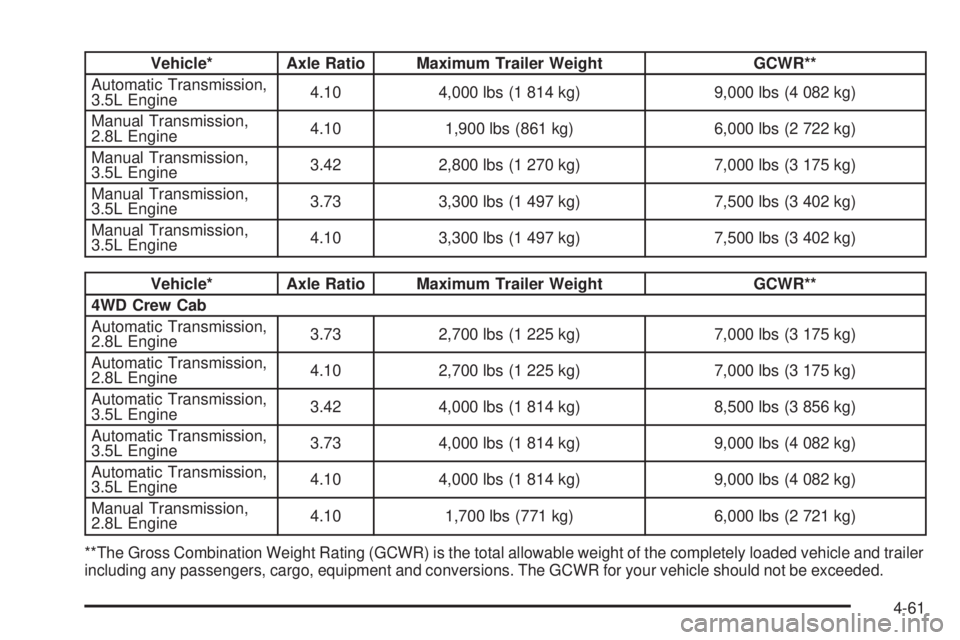
Vehicle* Axle Ratio Maximum Trailer Weight GCWR**
Automatic Transmission,
3.5L Engine4.10 4,000 lbs (1 814 kg) 9,000 lbs (4 082 kg)
Manual Transmission,
2.8L Engine4.10 1,900 lbs (861 kg) 6,000 lbs (2 722 kg)
Manual Transmission,
3.5L Engine3.42 2,800 lbs (1 270 kg) 7,000 lbs (3 175 kg)
Manual Transmission,
3.5L Engine3.73 3,300 lbs (1 497 kg) 7,500 lbs (3 402 kg)
Manual Transmission,
3.5L Engine4.10 3,300 lbs (1 497 kg) 7,500 lbs (3 402 kg)
Vehicle* Axle Ratio Maximum Trailer Weight GCWR**
4WD Crew Cab
Automatic Transmission,
2.8L Engine3.73 2,700 lbs (1 225 kg) 7,000 lbs (3 175 kg)
Automatic Transmission,
2.8L Engine4.10 2,700 lbs (1 225 kg) 7,000 lbs (3 175 kg)
Automatic Transmission,
3.5L Engine3.42 4,000 lbs (1 814 kg) 8,500 lbs (3 856 kg)
Automatic Transmission,
3.5L Engine3.73 4,000 lbs (1 814 kg) 9,000 lbs (4 082 kg)
Automatic Transmission,
3.5L Engine4.10 4,000 lbs (1 814 kg) 9,000 lbs (4 082 kg)
Manual Transmission,
2.8L Engine4.10 1,700 lbs (771 kg) 6,000 lbs (2 721 kg)
**The Gross Combination Weight Rating (GCWR) is the total allowable weight of the completely loaded vehicle and trailer
including any passengers, cargo, equipment and conversions. The GCWR for your vehicle should not be exceeded.
4-61
Page 274 of 434
Backing Up
Hold the bottom of the steering wheel with one hand.
Then, to move the trailer to the left, just move that hand
to the left. To move the trailer to the right, move your
hand to the right. Always back up slowly and, if possible,
have someone guide you.
Making Turns
Notice:Making very sharp turns while trailering
could cause the trailer to come in contact with the
vehicle. Your vehicle could be damaged. Avoid
making very sharp turns while trailering.
When you’re turning with a trailer, make wider turns
than normal. Do this so your trailer won’t strike
soft shoulders, curbs, road signs, trees or other objects.
Avoid jerky or sudden maneuvers. Signal well in
advance.
Turn Signals When Towing a Trailer
When you tow a trailer, your vehicle has to have extra
wiring and a heavy-duty turn signal asher.
The arrows on your instrument panel will ash whenever
you signal a turn or lane change. Properly hooked up,
the trailer lamps will also ash, telling other drivers
you’re about to turn, change lanes or stop.When towing a trailer, the arrows on your instrument
panel will ash for turns even if the bulbs on the trailer
are burned out. Thus, you may think drivers behind
you are seeing your signal when they are not. It’s
important to check occasionally to be sure the trailer
bulbs are still working.
Driving On Grades
Reduce speed and shift to a lower gear before you start
down a long or steep downgrade. If you don’t shift
down, you might have to use your brakes so much that
they would get hot and no longer work well.
When towing at high altitude on steep uphill grades,
consider the following: Engine coolant will boil at a lower
temperature than at normal altitudes. If you turn your
engine off immediately after towing at high altitude
on steep uphill grades, your vehicle may show signs
similar to engine overheating. To avoid this, let the
engine run while parked (preferably on level ground)
with the automatic transmission in PARK (P) (or
the manual transmission out of gear and the parking
brake applied) for a few minutes before turning the
engine off. If you do get the overheat warning,
seeEngine Overheating on page 5-28.
4-66
Page 276 of 434
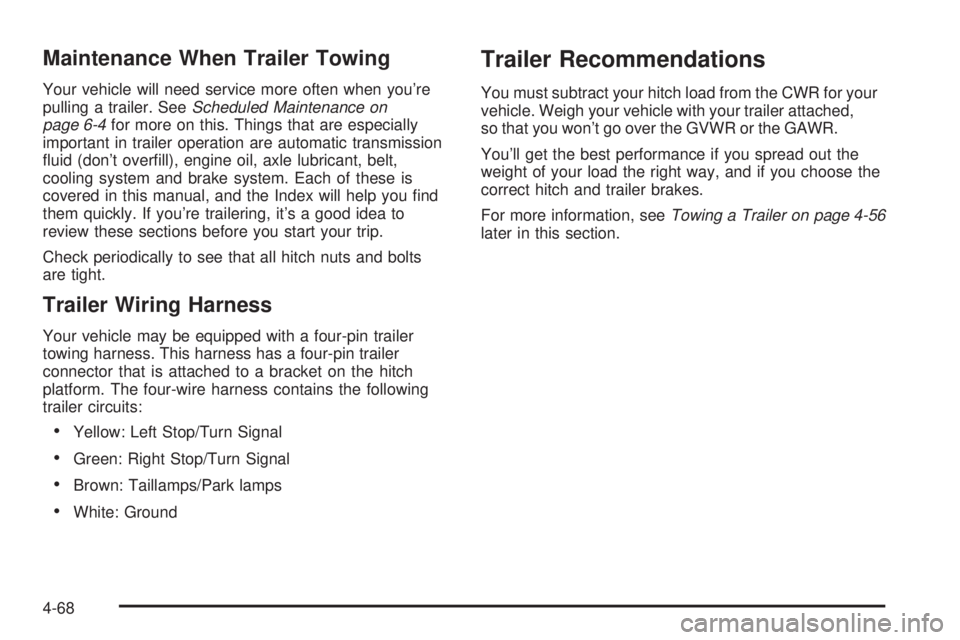
Maintenance When Trailer Towing
Your vehicle will need service more often when you’re
pulling a trailer. SeeScheduled Maintenance on
page 6-4for more on this. Things that are especially
important in trailer operation are automatic transmission
uid (don’t overll), engine oil, axle lubricant, belt,
cooling system and brake system. Each of these is
covered in this manual, and the Index will help you nd
them quickly. If you’re trailering, it’s a good idea to
review these sections before you start your trip.
Check periodically to see that all hitch nuts and bolts
are tight.
Trailer Wiring Harness
Your vehicle may be equipped with a four-pin trailer
towing harness. This harness has a four-pin trailer
connector that is attached to a bracket on the hitch
platform. The four-wire harness contains the following
trailer circuits:
Yellow: Left Stop/Turn Signal
Green: Right Stop/Turn Signal
Brown: Taillamps/Park lamps
White: Ground
Trailer Recommendations
You must subtract your hitch load from the CWR for your
vehicle. Weigh your vehicle with your trailer attached,
so that you won’t go over the GVWR or the GAWR.
You’ll get the best performance if you spread out the
weight of your load the right way, and if you choose the
correct hitch and trailer brakes.
For more information, seeTowing a Trailer on page 4-56
later in this section.
4-68
Page 277 of 434
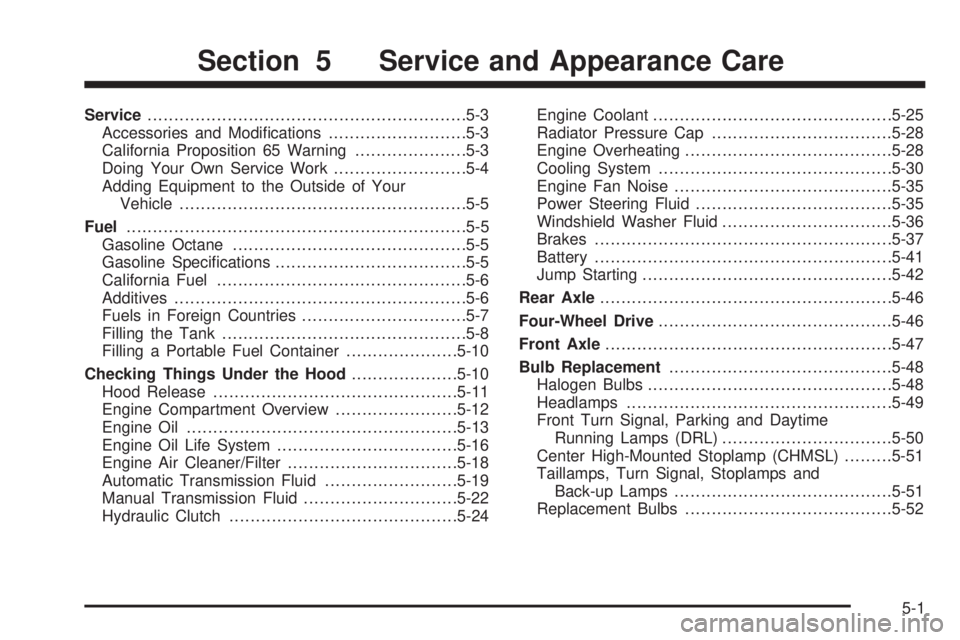
Service............................................................5-3
Accessories and Modications..........................5-3
California Proposition 65 Warning.....................5-3
Doing Your Own Service Work.........................5-4
Adding Equipment to the Outside of Your
Vehicle......................................................5-5
Fuel................................................................5-5
Gasoline Octane............................................5-5
Gasoline Specications....................................5-5
California Fuel...............................................5-6
Additives.......................................................5-6
Fuels in Foreign Countries...............................5-7
Filling the Tank..............................................5-8
Filling a Portable Fuel Container.....................5-10
Checking Things Under the Hood....................5-10
Hood Release..............................................5-11
Engine Compartment Overview.......................5-12
Engine Oil...................................................5-13
Engine Oil Life System..................................5-16
Engine Air Cleaner/Filter................................5-18
Automatic Transmission Fluid.........................5-19
Manual Transmission Fluid.............................5-22
Hydraulic Clutch...........................................5-24Engine Coolant.............................................5-25
Radiator Pressure Cap..................................5-28
Engine Overheating.......................................5-28
Cooling System............................................5-30
Engine Fan Noise.........................................5-35
Power Steering Fluid.....................................5-35
Windshield Washer Fluid................................5-36
Brakes........................................................5-37
Battery........................................................5-41
Jump Starting...............................................5-42
Rear Axle.......................................................5-46
Four-Wheel Drive............................................5-46
Front Axle......................................................5-47
Bulb Replacement..........................................5-48
Halogen Bulbs..............................................5-48
Headlamps..................................................5-49
Front Turn Signal, Parking and Daytime
Running Lamps (DRL)................................5-50
Center High-Mounted Stoplamp (CHMSL).........5-51
Taillamps, Turn Signal, Stoplamps and
Back-up Lamps.........................................5-51
Replacement Bulbs.......................................5-52
Section 5 Service and Appearance Care
5-1