key GMC CANYON 2010 Service Manual
[x] Cancel search | Manufacturer: GMC, Model Year: 2010, Model line: CANYON, Model: GMC CANYON 2010Pages: 448, PDF Size: 2.62 MB
Page 345 of 448
•One or more TPMS sensors are missing or
damaged. The DIC message and the TPMS
malfunction light should go off when the TPMS
sensors are installed and the sensor matching
process is performed successfully. See your
dealer/retailer for service.
•Replacement tires or wheels do not match your
vehicle’s original equipment tires or wheels. Tires
and wheels other than those recommended for your
vehicle could prevent the TPMS from functioning
properly. SeeBuying New Tires on page 6-73.
•Operating electronic devices or being near facilities
using radio wave frequencies similar to the TPMS
could cause the TPMS sensors to malfunction.
If the TPMS is not functioning it cannot detect or
signal a low tire condition. See your dealer/retailer for
service if the TPMS malfunction light and DIC message
comes on and stays on.
TPMS Sensor Matching Process
Each TPMS sensor has a unique identification code.
Any time you replace one or more of the TPMS sensors
or rotate your vehicle’s tires, the identification codes need
to be matched to the new tire/wheel position. The sensors
are matched to the tire/wheel positions in the following
order: driver side front tire, passenger side front tire,
passenger side rear tire, and driver side rear tire using
a TPMS diagnostic tool. See your dealer/retailer for
service.
The TPMS sensors can also be matched to each
tire/wheel position by increasing or decreasing the tire’s
air pressure. If increasing the tire’s air pressure, do
not exceed the maximum inflation pressure indicated on
the tire’s sidewall. To let air-pressure out of a tire you
can use the pointed end of the valve cap, a pencil-style
air pressure gage, or a key.
You have one minute to match the first tire/wheel
position, and five minutes overall, to match all four
tire/wheel positions. If it takes longer than one minute,
to match the first tire and wheel, or more than five
minutes to match all four tire and wheel positions, the
matching process stops and you need to start over.
6-69
Page 400 of 448
•Fluids visual leak check (or every 12 months,
whichever occurs first). A leak in any system must
be repaired and the fluid level checked.
•Engine air cleaner filter inspection (vehicles driven
in dusty conditions only). SeeEngine Air Cleaner/
Filter on page 6-20.
•Brake system inspection (or every 12 months,
whichever occurs first).
MaintenanceII
•Perform all services described in MaintenanceI.
•Steering and suspension inspection. Visual
inspection for damaged, loose, or missing parts
or signs of wear.
•Engine cooling system inspection. Visual inspection
of hoses, pipes, fittings, and clamps and
replacement, if needed.
•Windshield wiper blade inspection for wear, cracking,
or contamination and windshield and wiper blade
cleaning, if contaminated. SeeWindshield and Wiper
Blades on page 6-107. Worn or damaged wiper
blade replacement. SeeWindshield Wiper Blade
Replacement on page 6-55.
•Body hinges and latches, key lock cylinders, and
folding seat hardware lubrication. Lubricate hood
safety lever pivot and prop rod pivot and tailgate
latch bolt, handle assembly pivot points, and hinges.
SeeRecommended Fluids and Lubricants on
page 7-10. More frequent lubrication may be required
when vehicle is exposed to a corrosive environment.
Applying silicone grease on weatherstrips with a
clean cloth makes them last longer, seal better, and
not stick or squeak.
•Restraint system component check. SeeChecking
the Restraint Systems on page 2-81.
•Automatic transmission fluid level check and adding
fluid, if needed. SeeAutomatic Transmission Fluid
on page 6-21.
•Four-wheel drive vehicles: Transfer case fluid level
check and adding fluid, if needed.
•Engine air cleaner filter inspection. SeeEngine Air
Cleaner/Filter on page 6-20.
7-4
Page 405 of 448
3. With the engine off, turn the ignition to ON/RUN,
but do not start the engine. Without applying the
regular brake, try to move the shift lever out
of P (Park) with normal effort. If the shift lever
moves out of P (Park), contact your dealer/retailer
for service.
Ignition Transmission Lock Check
While parked, and with the parking brake set, try to turn
the ignition to LOCK/OFF in each shift lever position.
•For automatic transmission vehicles, the ignition
should turn to LOCK/OFF only when the shift
lever is in P (Park). The ignition key should come
out only in LOCK/OFF.
•For manual transmission vehicles, the ignition
should turn to LOCK/OFF only when you press the
key release button.
On all vehicles, the ignition key should come out only in
LOCK/OFF.
Turn the steering wheel to the left and to the right.
It should only lock when turned to the right.
Contact your dealer/retailer if service is required.
Parking Brake and Automatic
Transmission P (Park) Mechanism
Check
{WARNING:
When you are doing this check, the vehicle could
begin to move. You or others could be injured and
property could be damaged. Make sure there is
room in front of the vehicle in case it begins to roll.
Be ready to apply the regular brake at once should
the vehicle begin to move.
Park on a fairly steep hill, with the vehicle facing
downhill. Keeping your foot on the regular brake, set the
parking brake.
•To check the parking brake’s holding ability: With the
engine running and the transmission in N (Neutral),
slowly remove foot pressure from the regular brake
pedal. Do this until the vehicle is held by the parking
brake only.
•To check the P (Park) mechanism’s holding ability:
With the engine running, shift to P (Park). Then
release the parking brake followed by the regular
brake.
Contact your dealer/retailer if service is required.
7-9
Page 406 of 448
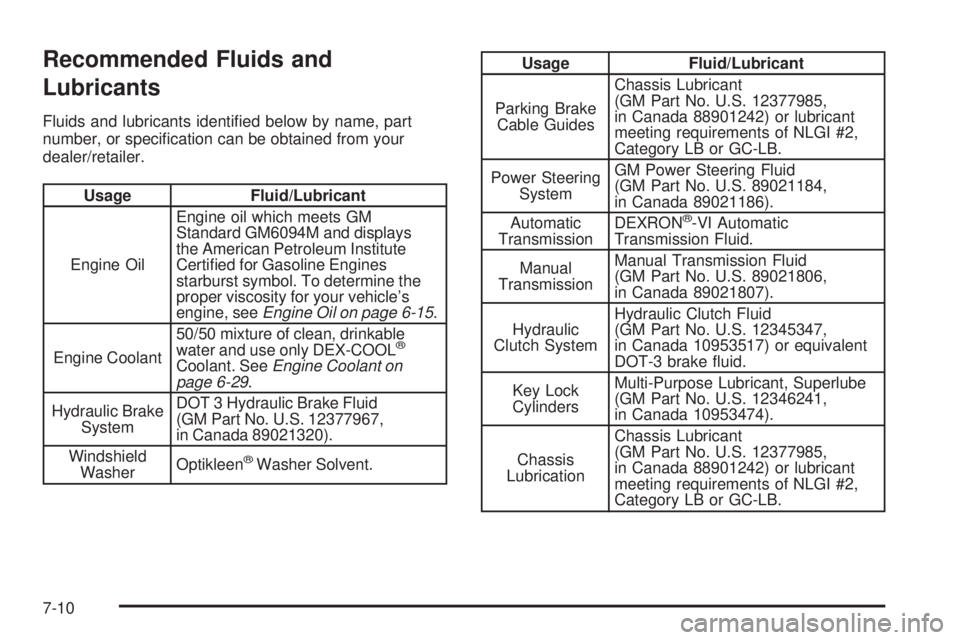
Recommended Fluids and
Lubricants
Fluids and lubricants identified below by name, part
number, or specification can be obtained from your
dealer/retailer.
Usage Fluid/Lubricant
Engine OilEngine oil which meets GM
Standard GM6094M and displays
the American Petroleum Institute
Certified for Gasoline Engines
starburst symbol. To determine the
proper viscosity for your vehicle’s
engine, seeEngine Oil on page 6-15.
Engine Coolant50/50 mixture of clean, drinkable
water and use only DEX-COOL
®
Coolant. SeeEngine Coolant on
page 6-29.
Hydraulic Brake
SystemDOT 3 Hydraulic Brake Fluid
(GM Part No. U.S. 12377967,
in Canada 89021320).
Windshield
WasherOptikleen
®Washer Solvent.
Usage Fluid/Lubricant
Parking Brake
Cable GuidesChassis Lubricant
(GM Part No. U.S. 12377985,
in Canada 88901242) or lubricant
meeting requirements of NLGI #2,
Category LB or GC-LB.
Power Steering
SystemGM Power Steering Fluid
(GM Part No. U.S. 89021184,
in Canada 89021186).
Automatic
TransmissionDEXRON
®-VI Automatic
Transmission Fluid.
Manual
TransmissionManual Transmission Fluid
(GM Part No. U.S. 89021806,
in Canada 89021807).
Hydraulic
Clutch SystemHydraulic Clutch Fluid
(GM Part No. U.S. 12345347,
in Canada 10953517) or equivalent
DOT-3 brake fluid.
Key Lock
CylindersMulti-Purpose Lubricant, Superlube
(GM Part No. U.S. 12346241,
in Canada 10953474).
Chassis
LubricationChassis Lubricant
(GM Part No. U.S. 12377985,
in Canada 88901242) or lubricant
meeting requirements of NLGI #2,
Category LB or GC-LB.
7-10
Page 430 of 448
OnStar®
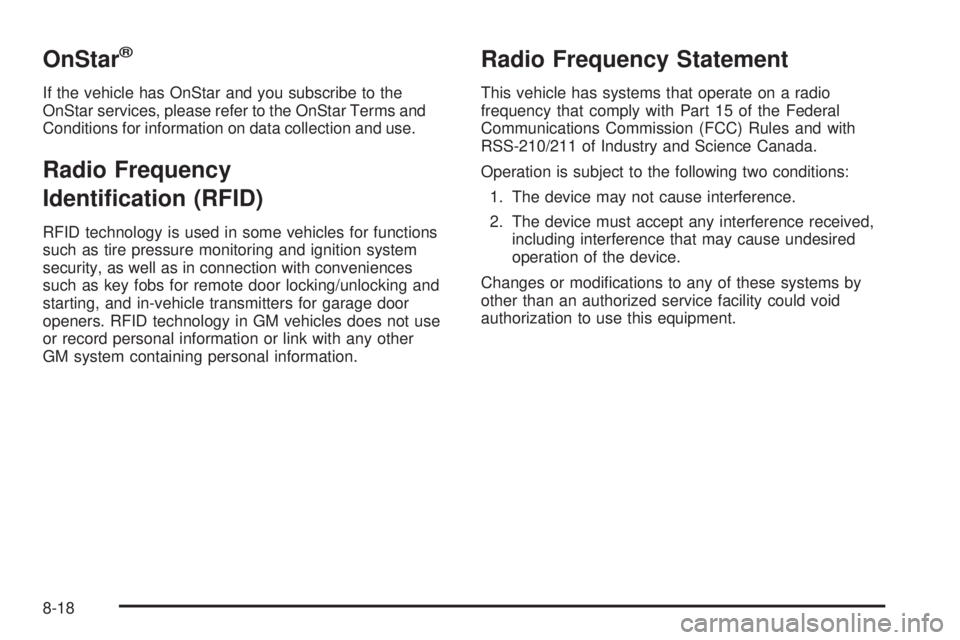
If the vehicle has OnStar and you subscribe to the
OnStar services, please refer to the OnStar Terms and
Conditions for information on data collection and use.
Radio Frequency
Identication (RFID)
RFID technology is used in some vehicles for functions
such as tire pressure monitoring and ignition system
security, as well as in connection with conveniences
such as key fobs for remote door locking/unlocking and
starting, and in-vehicle transmitters for garage door
openers. RFID technology in GM vehicles does not use
or record personal information or link with any other
GM system containing personal information.
Radio Frequency Statement
This vehicle has systems that operate on a radio
frequency that comply with Part 15 of the Federal
Communications Commission (FCC) Rules and with
RSS-210/211 of Industry and Science Canada.
Operation is subject to the following two conditions:
1. The device may not cause interference.
2. The device must accept any interference received,
including interference that may cause undesired
operation of the device.
Changes or modifications to any of these systems by
other than an authorized service facility could void
authorization to use this equipment.
8-18
Page 435 of 448
Door
Locks.......................................................... 3-5
Power Locks................................................ 3-6
Programmable Automatic Door Locks............... 3-6
Rear Door Security Locks............................... 3-7
Rear Doors.................................................. 3-7
DOORS.........................................................4-38
Driver Information Center (DIC).........................4-33
DIC Operation and Displays..........................4-33
DIC Warnings and Messages........................4-37
Driving
At Night.....................................................5-25
Before a Long Trip......................................5-27
Defensive..................................................... 5-2
Drunk.......................................................... 5-2
Highway Hypnosis.......................................5-27
Hill and Mountain Roads..............................5-28
In Rain and on Wet Roads...........................5-26
Loss of Control...........................................5-12
Off-Road ....................................................5-13
Off-Road Recovery......................................5-11
Recovery Hooks..........................................5-32
Rocking Your Vehicle to Get it Out.................5-32
Winter........................................................5-29
Driving Across an Incline..................................5-22
Driving Downhill..............................................5-21Driving for Better Fuel Economy.......................1-19
Driving in Mud, Sand, Snow, or Ice...................5-23
Driving in Water..............................................5-24
Driving On Grades..........................................5-58
Driving on Hills...............................................5-17
Driving on Snow or Ice....................................5-29
Driving Uphill..................................................5-18
Driving with a Trailer.......................................5-56
E
EDR .............................................................8-16
Electrical Equipment, Add-On..........................6-111
Electrical System
Engine Compartment Fuse Block.................6-112
Fuses and Circuit Breakers.........................6-111
Windshield Wiper Fuses.............................6-111
Electronic Immobilizer
PASS-Key
®III+...........................................3-15
Electronic Immobilizer Operation
PASS-Key
®III+...........................................3-15
Emissions Inspection and
Maintenance Programs.................................4-31
ENG (Engine) HOT.........................................4-38
5
Page 439 of 448
J
Jump Starting.................................................6-43
K
Keyless Entry
Remote (RKE) System................................... 3-3
Keyless Entry System....................................... 3-3
Keys............................................................... 3-2
L
Labeling, Tire Sidewall.....................................6-58
Lamps
Daytime Running (DRL)................................4-11
Dome ........................................................4-13
Dome Lamp Override...................................4-14
Exterior Cargo.............................................4-13
License Plate..............................................6-54
Malfunction Indicator....................................4-28
Lap Belt........................................................2-33
Lap-Shoulder Belt...........................................2-27
LATCH System for Child Restraints...................2-46
Latches, Seatback............................................ 2-9
Leaving After Parking on a Hill.........................5-59Leaving the Vehicle With the Engine Running
(Automatic Transmission)..............................3-32
Lighting
Exit...........................................................4-14
Lights
Airbag Readiness........................................4-22
Antilock Brake System (ABS) Warning............4-26
Brake System Warning.................................4-25
Charging System.........................................4-24
Cruise Control.............................................4-32
Exterior Lamps............................................4-10
Flash-to-Pass............................................... 4-5
Highbeam On.............................................4-32
High/Low Beam Changer................................ 4-5
Oil Pressure...............................................4-31
On Reminder..............................................4-11
Passenger Airbag Status Indicator..................4-23
Safety Belt Reminders..................................4-21
Security.....................................................4-32
StabiliTrak
®/Traction Control System (TCS)
Warning Light..........................................4-26
Tire Pressure..............................................4-28
Up-Shift.....................................................4-24
Limited-Slip Rear Axle....................................... 5-9
Loading Your Vehicle.......................................5-33
Loading Your Vehicle for Off-Road Driving..........5-14
9
Page 441 of 448
O
Odometer......................................................4-20
Trip ...........................................................4-20
Off-Road .......................................................5-13
Driving.......................................................5-13
Recovery....................................................5-11
OIL ...............................................................4-39
Oil
Engine.......................................................6-15
Engine Oil Life System.................................6-18
Pressure Light.............................................4-31
Older Children, Restraints................................2-35
Online Owner Center........................................ 8-5
Online Owner Center
(U.S.) — www.gmownercenter.com/gmc............ 8-5
OnStar, Privacy..............................................8-18
Other Rainy Weather Tips................................5-26
Outlet Adjustment............................................4-18
Outlets
Accessory Power.........................................4-15
Outside
Convex Mirror.............................................3-39
Manual Mirrors............................................3-38
Power Mirrors.............................................3-38
Owner Checks and Services.............................. 7-8
Owner Information...........................................8-15
Owners, Canadian.............................................. iii
P
Paint, Damage..............................................6-109
Park
Shifting Into................................................3-31
Shifting Out of............................................3-32
PARK BRK (Brake).........................................4-39
Parking
Brake........................................................3-30
Over Things That Burn.................................3-33
Parking Brake and Automatic Transmission
P (Park) Mechanism Check............................. 7-9
Parking on Hills..............................................5-58
Parking Your Vehicle.......................................3-33
Passenger Airbag Status Indicator.....................4-23
Passenger Safety Belt Reminder Light...............4-21
Passenger Sensing System..............................2-73
Passing.................................................5-11, 5-57
PASS-Key
®III+ Electronic Immobilizer...............3-15
PASS-Key®III+ Electronic Immobilizer
Operation...................................................3-15
Passlock
®......................................................3-14
Perchlorate Materials Requirements, California...... 6-4
Personalization Features..................................4-34
Pickup Conversion to Chassis Cab....................5-40
Playing a CD (Radio with Single CD Player).......4-52
Playing an MP3/WMA CD-R Disc......................4-55
Playing the Radio...........................................4-45
11
Page 443 of 448
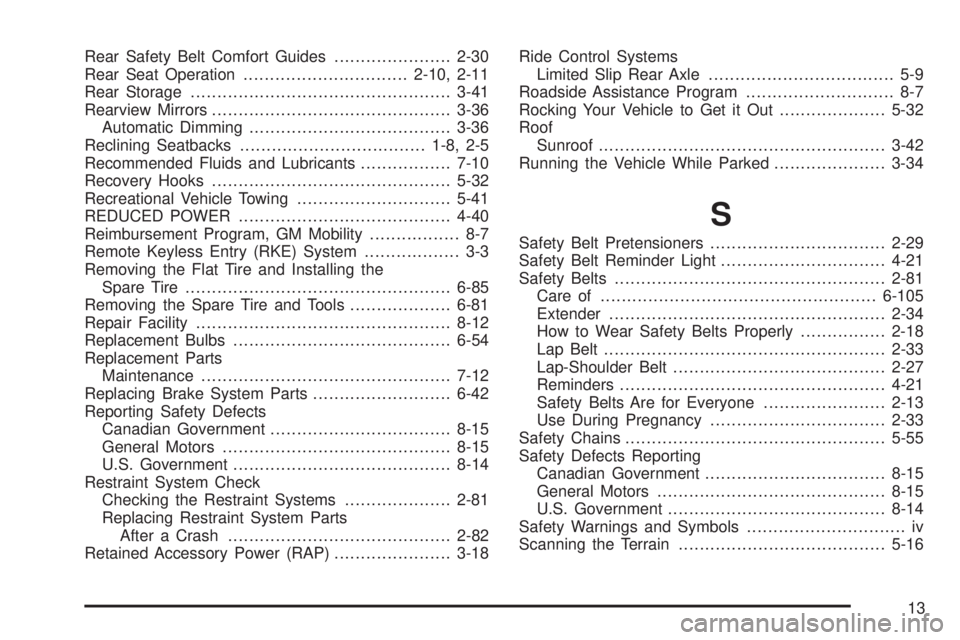
Rear Safety Belt Comfort Guides......................2-30
Rear Seat Operation...............................2-10, 2-11
Rear Storage.................................................3-41
Rearview Mirrors.............................................3-36
Automatic Dimming......................................3-36
Reclining Seatbacks...................................1-8, 2-5
Recommended Fluids and Lubricants.................7-10
Recovery Hooks.............................................5-32
Recreational Vehicle Towing.............................5-41
REDUCED POWER........................................4-40
Reimbursement Program, GM Mobility................. 8-7
Remote Keyless Entry (RKE) System.................. 3-3
Removing the Flat Tire and Installing the
Spare Tire..................................................6-85
Removing the Spare Tire and Tools...................6-81
Repair Facility................................................8-12
Replacement Bulbs.........................................6-54
Replacement Parts
Maintenance...............................................7-12
Replacing Brake System Parts..........................6-42
Reporting Safety Defects
Canadian Government..................................8-15
General Motors...........................................8-15
U.S. Government.........................................8-14
Restraint System Check
Checking the Restraint Systems....................2-81
Replacing Restraint System Parts
After a Crash..........................................2-82
Retained Accessory Power (RAP)......................3-18Ride Control Systems
Limited Slip Rear Axle................................... 5-9
Roadside Assistance Program............................ 8-7
Rocking Your Vehicle to Get it Out....................5-32
Roof
Sunroof......................................................3-42
Running the Vehicle While Parked.....................3-34
S
Safety Belt Pretensioners.................................2-29
Safety Belt Reminder Light...............................4-21
Safety Belts...................................................2-81
Care of ....................................................6-105
Extender....................................................2-34
How to Wear Safety Belts Properly................2-18
Lap Belt.....................................................2-33
Lap-Shoulder Belt........................................2-27
Reminders..................................................4-21
Safety Belts Are for Everyone.......................2-13
Use During Pregnancy.................................2-33
Safety Chains.................................................5-55
Safety Defects Reporting
Canadian Government..................................8-15
General Motors...........................................8-15
U.S. Government.........................................8-14
Safety Warnings and Symbols.............................. iv
Scanning the Terrain.......................................5-16
13
Page 445 of 448
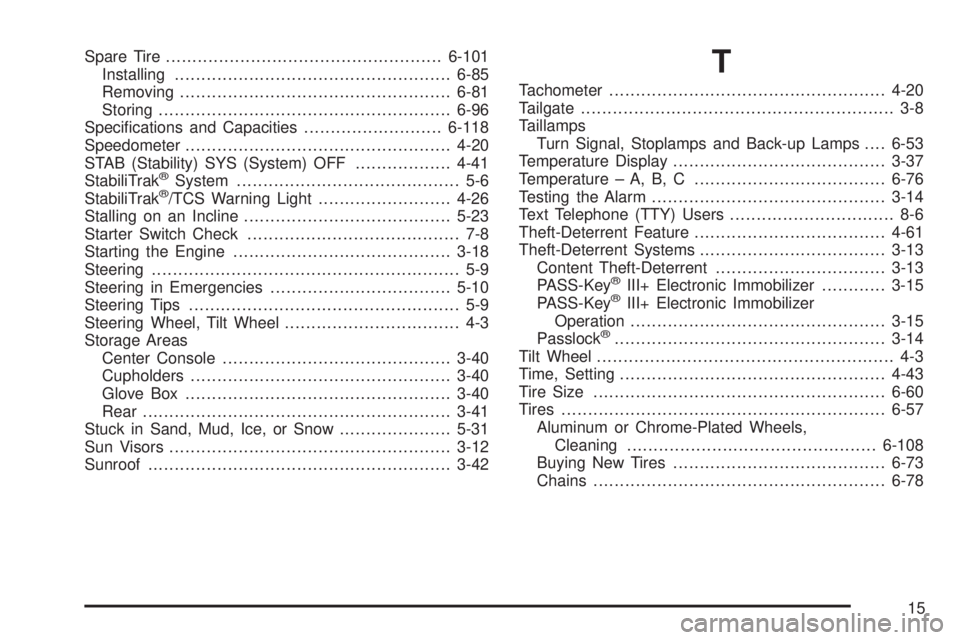
Spare Tire....................................................6-101
Installing....................................................6-85
Removing...................................................6-81
Storing.......................................................6-96
Specifications and Capacities..........................6-118
Speedometer..................................................4-20
STAB (Stability) SYS (System) OFF..................4-41
StabiliTrak
®System.......................................... 5-6
StabiliTrak®/TCS Warning Light.........................4-26
Stalling on an Incline.......................................5-23
Starter Switch Check........................................ 7-8
Starting the Engine.........................................3-18
Steering.......................................................... 5-9
Steering in Emergencies..................................5-10
Steering Tips................................................... 5-9
Steering Wheel, Tilt Wheel................................. 4-3
Storage Areas
Center Console...........................................3-40
Cupholders.................................................3-40
Glove Box..................................................3-40
Rear ..........................................................3-41
Stuck in Sand, Mud, Ice, or Snow.....................5-31
Sun Visors.....................................................3-12
Sunroof.........................................................3-42
T
Tachometer....................................................4-20
Tailgate........................................................... 3-8
Taillamps
Turn Signal, Stoplamps and Back-up Lamps....6-53
Temperature Display........................................3-37
Temperature – A, B, C....................................6-76
Testing the Alarm............................................3-14
Text Telephone (TTY) Users............................... 8-6
Theft-Deterrent Feature....................................4-61
Theft-Deterrent Systems...................................3-13
Content Theft-Deterrent................................3-13
PASS-Key
®III+ Electronic Immobilizer............3-15
PASS-Key®III+ Electronic Immobilizer
Operation................................................3-15
Passlock
®...................................................3-14
Tilt Wheel........................................................ 4-3
Time, Setting..................................................4-43
Tire Size.......................................................6-60
Tires.............................................................6-57
Aluminum or Chrome-Plated Wheels,
Cleaning...............................................6-108
Buying New Tires........................................6-73
Chains.......................................................6-78
15