warning light GMC ENVOY XL 2004 Owner's Manual
[x] Cancel search | Manufacturer: GMC, Model Year: 2004, Model line: ENVOY XL, Model: GMC ENVOY XL 2004Pages: 466, PDF Size: 3 MB
Page 349 of 466

Brake Wear
Your vehicle has four-wheel disc brakes.
Disc brake pads have built-in wear indicators that make a
high-pitched warning sound when the brake pads are
worn and new pads are needed. The sound may come
and go or be heard all the time your vehicle is moving
(except when you are pushing on the brake pedal rmly).
{CAUTION:
The brake wear warning sound means that soon
your brakes will not work well. That could lead
to an accident. When you hear the brake wear
warning sound, have your vehicle serviced.
Notice:Continuing to drive with worn-out brake
pads could result in costly brake repair.
Some driving conditions or climates may cause a brake
squeal when the brakes are rst applied or lightly
applied. This does not mean something is wrong with
your brakes.Properly torqued wheel nuts are necessary to help
prevent brake pulsation. When tires are rotated, inspect
brake pads for wear and evenly tighten wheel nuts in
the proper sequence to GM torque specications.
Brake linings should always be replaced as complete
axle sets.
Brake Pedal Travel
See your dealer if the brake pedal does not return
to normal height, or if there is a rapid increase in pedal
travel. This could be a sign of brake trouble.
Brake Adjustment
Every time you make a brake stop, your disc brakes
adjust for wear.
5-41
Page 376 of 466
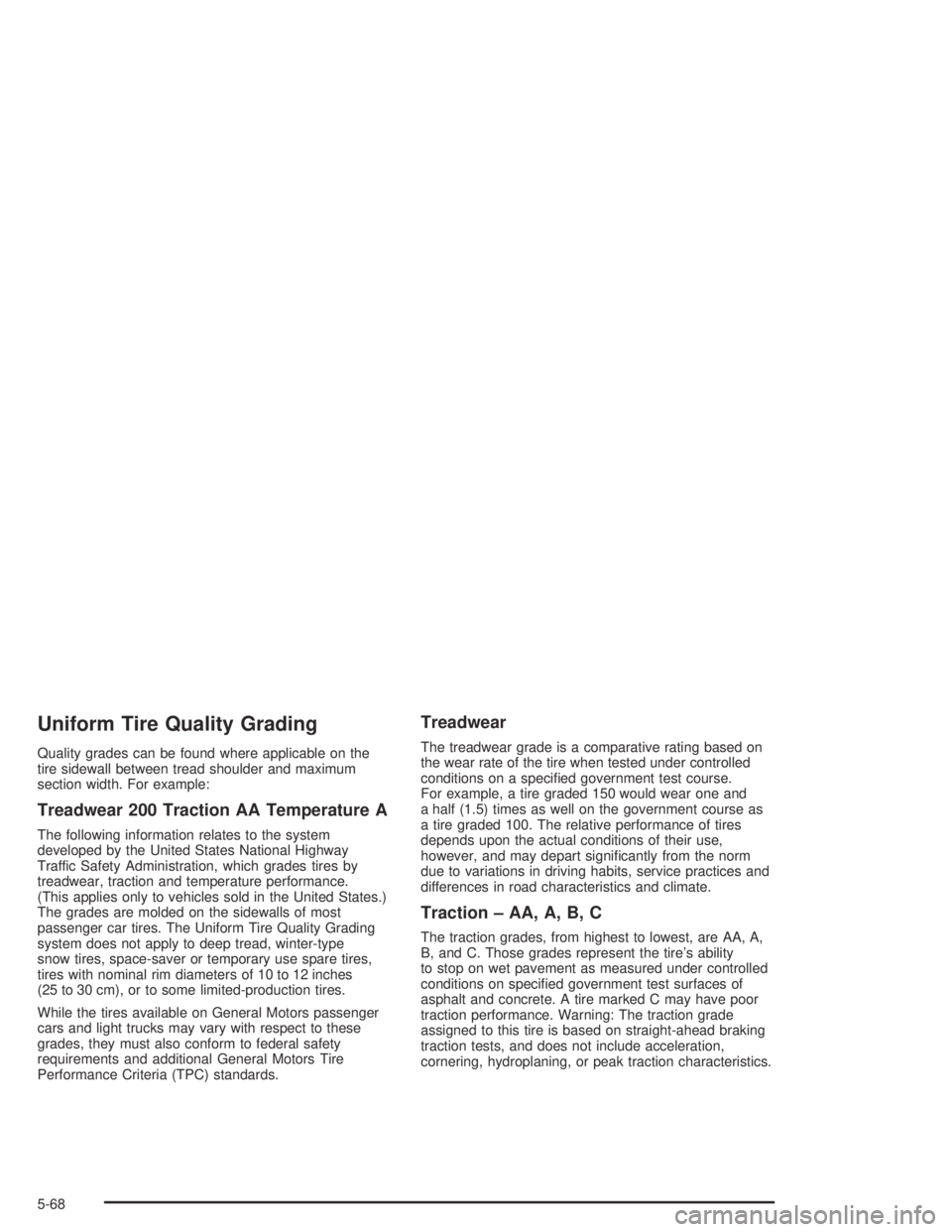
Uniform Tire Quality Grading
Quality grades can be found where applicable on the
tire sidewall between tread shoulder and maximum
section width. For example:
Treadwear 200 Traction AA Temperature A
The following information relates to the system
developed by the United States National Highway
Traffic Safety Administration, which grades tires by
treadwear, traction and temperature performance.
(This applies only to vehicles sold in the United States.)
The grades are molded on the sidewalls of most
passenger car tires. The Uniform Tire Quality Grading
system does not apply to deep tread, winter-type
snow tires, space-saver or temporary use spare tires,
tires with nominal rim diameters of 10 to 12 inches
(25 to 30 cm), or to some limited-production tires.
While the tires available on General Motors passenger
cars and light trucks may vary with respect to these
grades, they must also conform to federal safety
requirements and additional General Motors Tire
Performance Criteria (TPC) standards.
Treadwear
The treadwear grade is a comparative rating based on
the wear rate of the tire when tested under controlled
conditions on a specied government test course.
For example, a tire graded 150 would wear one and
a half (1.5) times as well on the government course as
a tire graded 100. The relative performance of tires
depends upon the actual conditions of their use,
however, and may depart signicantly from the norm
due to variations in driving habits, service practices and
differences in road characteristics and climate.
Traction – AA, A, B, C
The traction grades, from highest to lowest, are AA, A,
B, and C. Those grades represent the tire’s ability
to stop on wet pavement as measured under controlled
conditions on specied government test surfaces of
asphalt and concrete. A tire marked C may have poor
traction performance. Warning: The traction grade
assigned to this tire is based on straight-ahead braking
traction tests, and does not include acceleration,
cornering, hydroplaning, or peak traction characteristics.
5-68
Page 451 of 466
A
Accessory Inator...........................................5-71
Accessory Power Outlets.................................3-21
Adding a Snow Plow or Similar Equipment.........4-55
Adding Washer Fluid.......................................5-38
Additional Program Information.........................7-10
Additives, Fuel................................................. 5-6
Add-On Electrical Equipment............................5-96
Adjustable Throttle and Brake Pedal..................2-22
Adjusting the Speakers
(Balance/Fade)............................3-68, 3-80, 3-95
After Off-Road Driving.....................................4-29
Air Bag
Readiness Light..........................................3-38
Air Bag Systems.............................................1-49
How Does an Air Bag Restrain?....................1-56
Servicing Your Air Bag-Equipped Vehicle.........1-59
What Makes an Air Bag Inate?....................1-56
What Will You See After an Air Bag Inates?......1-57
When Should an Air Bag Inate?...................1-55
Where Are the Air Bags?..............................1-52
Air Cleaner/Filter, Engine.................................5-21
Airbag Sensing and Diagnostic Module (SDM)....7-10
All Overseas Locations...................................... 7-5
AM .............................................................3-120
Antenna, Fixed Mast......................................3-122
Antenna, XM™ Satellite Radio Antenna
System.....................................................3-122
Anti-lock Brake System..................................... 4-7Anti-Lock Brake, System Warning Light..............3-42
Appearance Care............................................5-88
Care of Safety Belts....................................5-91
Chemical Paint Spotting...............................5-94
Cleaning the Inside of Your Vehicle................5-88
Cleaning the Outside of Your Vehicle..............5-91
Finish Damage............................................5-93
Sheet Metal Damage...................................5-93
Underbody Maintenance...............................5-94
Vehicle Care/Appearance Materials................5-94
Weatherstrips..............................................5-91
Approaching a Hill..........................................4-21
Ashtrays........................................................3-21
Audio Output................................................3-109
Audio System(s).............................................3-64
Audio Steering Wheel Controls....................3-119
Care of Your Cassette Tape Player...............3-121
Care of Your CD and DVD Player................3-122
Care of Your CDs and DVDs.......................3-122
Chime Level Adjustment.............................3-122
Fixed Mast Antenna...................................3-122
Navigation/Radio System.............................3-106
Audio Systems
Radio Personalization.................................3-119
Audio System(s)
Radio with Cassette and CD.........................3-76
Radio with CD............................................3-65
Radio with Six-Disc CD................................3-92
Rear Seat Audio (RSA)...............................3-117
Setting the Time..........................................3-64
1
Page 452 of 466

Audio System(s) (cont.)
Theft-Deterrent Feature...............................3-119
Understanding Radio Reception...................3-120
XM™ Satellite Radio Antenna System...........3-122
Automatic Headlamp System............................3-16
Automatic Transfer Case..................................2-26
Automatic Transmission
Fluid..........................................................5-22
Operation...................................................2-24
B
Backglass Wiper Blade Replacement.................5-55
Backing Up....................................................4-62
Battery..........................................................5-42
BATTERY NOT CHARGING.............................3-61
Battery Replacement......................................... 2-7
Battery Run-Down Protection............................3-20
Before Leaving on a Long Trip.........................4-36
Before You Drive...........................................3-107
Before You Go Off-Roading..............................4-16
Brake
Parking......................................................2-29
System Warning Light..................................3-40
Brake Adjustment............................................5-41
Brake Fluid....................................................5-39
Brake Pedal, Throttle.......................................2-22
Brake Pedal Travel.........................................5-41Brake Wear...................................................5-41
Brakes..........................................................5-39
Braking........................................................... 4-6
Braking in Emergencies..................................... 4-9
Break-In, New Vehicle.....................................2-19
Bulb Replacement...........................................5-51
Front Turn Signal and Sidemarker Lamps.......5-51
Halogen Bulbs............................................5-51
Headlamps.................................................5-51
Replacement Bulbs......................................5-53
Taillamps and Turn Signal Lamps..................5-52
Buying New Tires...........................................5-67
C
California Fuel.................................................. 5-5
Canada........................................................... 7-5
Canadian Owners................................................ ii
Canadian Roadside Assistance........................... 7-8
Capacities and Specications..........................5-109
Carbon Monoxide...................2-14, 2-34, 4-40, 4-55
Care of
Safety Belts................................................5-91
Your Cassette Tape Player..........................3-121
Your CD and DVD Player...........................3-122
Your CDs and DVDs..................................3-122
Cargo Cover..................................................2-52
Cargo Tie Downs............................................2-52
2
Page 453 of 466
Cassette Tape Messages.................................3-88
CD Adapter Kits.............................................3-88
CD Messages...............................3-76, 3-91, 3-105
Chains, Tires..................................................5-71
Charging System Light....................................3-39
Check
Engine Light...............................................3-43
Gages Warning Light...................................3-49
CHECK WASHER FLUID.................................3-62
Checking Brake Fluid......................................5-40
Checking Coolant............................................5-26
Checking Engine Oil........................................5-16
Checking Things Under the Hood......................5-10
Chemical Paint Spotting...................................5-94
Child Restraints
Child Restraint Systems...............................1-33
Infants and Young Children...........................1-29
Lower Anchorages and Top Tethers for
Children (LATCH System)..........................1-40
Older Children.............................................1-27
Securing a Child Restraint Designed for
the LATCH System...................................1-42
Securing a Child Restraint in a Rear
Outside Seat Position...............................1-43
Securing a Child Restraint in the Center
Seat Position...........................................1-45
Securing a Child Restraint in the Right
Front Seat Position...................................1-46Child Restraints (cont.)
Top Strap...................................................1-37
Top Strap Anchor Location............................1-39
Where to Put the Restraint...........................1-36
Chime Level Adjustment.................................3-122
Cigarette Lighter.............................................3-21
Cleaning
Inside of Your Vehicle..................................5-88
Outside of Your Vehicle................................5-91
Underbody Maintenance...............................5-94
Weatherstrips..............................................5-91
Cleaning Aluminum Wheels..............................5-93
Cleaning Exterior Lamps/Lenses.......................5-91
Cleaning Fabric/Carpet....................................5-88
Cleaning Glass Surfaces..................................5-90
Cleaning Interior Plastic Components.................5-90
Cleaning Leather............................................5-90
Cleaning the Top of the Instrument Panel...........5-90
Cleaning the Video Screen.............................3-117
Cleaning the Windshield, Backglass and
Wiper Blades..............................................5-92
Cleaning Tires................................................5-93
Cleaning Vinyl................................................5-90
Climate Control System
Climate Controls Personalization....................3-34
Dual..........................................................3-22
Dual Automatic............................................3-25
Rear..........................................................3-31
3
Page 454 of 466
Compass Calibration.......................................2-36
Compass Operation.........................................2-36
Compass Variance..........................................2-37
Content Theft-Deterrent....................................2-17
Control of a Vehicle.......................................... 4-6
Convenience Net............................................2-51
Coolant
Engine Temperature Gage............................3-42
Heater, Engine............................................2-23
Cooling System..............................................5-30
Cruise Control................................................3-12
Cruise Control Light........................................3-48
CURB VIEW ACTIVATED.................................3-63
Current and Past Model Order Forms................7-13
Customer Assistance Information
Courtesy Transportation.................................. 7-8
Customer Assistance for Text
Telephone (TTY) Users............................... 7-4
Customer Assistance Offices........................... 7-4
Customer Satisfaction Procedure..................... 7-2
GM Mobility Program for Persons with
Disabilities................................................ 7-6
Reporting Safety Defects to General Motors.......7-12
Reporting Safety Defects to the Canadian
Government............................................7-12
Reporting Safety Defects to the United States
Government............................................7-11
Roadside Assistance Program......................... 7-7
Service Publications Ordering Information........7-12D
Daytime Running Lamps (DRL).........................3-17
Defensive Driving............................................. 4-2
Defogging and Defrosting.........................3-23, 3-29
Delayed Locking.............................................2-10
Dinghy Towing................................................4-46
Doing Your Own Service Work........................... 5-3
Dolly Towing..................................................4-48
Dome Lamp Override......................................3-19
Dome Lamps.................................................3-20
Door
Delayed Locking..........................................2-10
Locks.......................................................... 2-8
Power Door Locks......................................... 2-9
Programmable Automatic Door Locks.............2-10
Rear Door Security Locks.............................2-13
Driver
Position, Safety Belt.....................................1-14
DRIVER DOOR AJAR.....................................3-62
Driver Information Center (DIC).........................3-51
DIC Operation and Displays..........................3-51
DIC Warnings and Messages........................3-60
Driving
At Night.....................................................4-30
City...........................................................4-34
Defensive..................................................... 4-2
Drunken....................................................... 4-2
Freeway.....................................................4-35
4
Page 456 of 466
Erasing HomeLink®Buttons..............................2-45
Event Data Recorders (EDR)............................7-10
Exit Lighting...................................................3-19
Express Down Window....................................2-16
Extender, Safety Belt.......................................1-26
Exterior Lamps...............................................3-16
F
Filter
Engine Air Cleaner......................................5-21
Finding a Program Type (PTY)
Station (RDS and XM™)..............3-69, 3-80, 3-95
Finding a Station............................3-67, 3-78, 3-93
Finish Care....................................................5-92
Finish Damage...............................................5-93
Fixed Mast Antenna.......................................3-122
Flash-to-Pass................................................... 3-9
Flat Tire........................................................5-73
Flat Tire, Changing.........................................5-74
Fluid
Automatic Transmission................................5-22
Power Steering...........................................5-37
Windshield Washer......................................5-38
FM Stereo....................................................3-120
Fog Lamps....................................................3-18
Following Distance..........................................4-62
Four-Wheel Drive....................................2-26, 5-49
Front Axle......................................................5-50Front Storage Area.........................................2-47
Fuel............................................................... 5-4
Additives...................................................... 5-6
California Fuel.............................................. 5-5
Filling a Portable Fuel Container..................... 5-9
Filling Your Tank........................................... 5-7
Fuels in Foreign Countries.............................. 5-6
Gage.........................................................3-50
Gasoline Octane........................................... 5-4
Gasoline Specications.................................. 5-5
Low Warning Light.......................................3-50
Fuel Information..............................................3-52
FUEL LEVEL LOW.........................................3-62
Fuses
Fuses and Circuit Breakers...........................5-97
Windshield Wiper.........................................5-96
G
Gage
Check Gages Warning Light..........................3-49
Engine Coolant Temperature.........................3-42
Fuel..........................................................3-50
Oil Pressure...............................................3-46
Speedometer..............................................3-37
Tachometer.................................................3-37
Voltmeter Gage...........................................3-40
Garage Door Opener.......................................2-42
6
Page 457 of 466
Gasoline
Octane........................................................ 5-4
Specications............................................... 5-5
Gate Ajar Light...............................................3-49
Gate Operator and Canadian Programming........2-45
Getting Familiar with Off-Road Driving................4-19
Glove Box.....................................................2-46
GM Mobility Program for Persons
with Disabilities............................................. 7-6
H
Hazard Warning Flashers................................... 3-6
Head Restraints............................................... 1-5
Headlamp High/Low-Beam Changer.................... 3-9
Headlamp Washer..........................................3-12
Headlamps....................................................5-51
Bulb Replacement.......................................5-51
Electrical System.........................................5-96
Front Turn Signal and Sidemarker Lamps.......5-51
Halogen Bulbs............................................5-51
Headphones.................................................3-107
Heated Seats................................................... 1-3
Highway Hypnosis...........................................4-37
Hill and Mountain Roads..................................4-38
Hitches..........................................................4-59
HomeLink
®Transmitter....................................2-42HomeLink
®Transmitter, Programming................2-43
Hood
Checking Things Under................................5-10
Release.....................................................5-10
Horn............................................................... 3-7
How to Add Coolant to the Coolant
Recovery Tank............................................5-32
How to Add Coolant to the Radiator..................5-34
How to Add Fluid............................................5-24
How to Check Lubricant...................................5-48
How to Check Power Steering Fluid..................5-37
How to Use This Manual...................................... ii
How to Wear Safety Belts Properly...................1-14
Hydroplaning..................................................4-32
I
ICE POSSIBLE..............................................3-62
If No Steam Is Coming From Your Engine..........5-29
If Steam Is Coming From Your Engine...............5-28
If the Light Is Flashing.....................................3-44
If the Light Is On Steady.................................3-44
If You Are Caught in a Blizzard.........................4-42
If You Are Stuck in Sand, Mud, Ice or Snow.......4-44
If You Do Decide To Pull A Trailer.....................4-56
Ignition Positions.............................................2-20
Infants and Young Children, Restraints...............1-29
7
Page 458 of 466
Ination - Tire Pressure...................................5-64
Instrument Panel
Cluster.......................................................3-36
Overview..................................................... 3-4
Instrument Panel Brightness.............................3-18
Interior Lamps................................................3-18
J
Jump Starting.................................................5-43
K
Keyless Entry System....................................... 2-5
Keys............................................................... 2-3
L
Lamps
Exterior......................................................3-16
Interior.......................................................3-18
Lamps On Reminder.......................................3-17
Lap-Shoulder Belt...................................1-14, 1-22
LATCH System
Child Restraints...........................................1-40
Securing a Child Restraint Designed
or the LATCH System...............................1-42Leaving Your Vehicle.......................................2-13
Leaving Your Vehicle With the Engine
Running.....................................................2-32
LEFT REAR DOOR AJAR................................3-63
Liftgate Release..............................................2-14
Liftgate/Liftglass..............................................2-14
Liftglass/Liftgate..............................................2-14
Light
Air Bag Readiness.......................................3-38
Anti-Lock Brake System Warning...................3-42
Brake System Warning.................................3-40
Change Engine Oil......................................3-47
Charging System.........................................3-39
Check Gages Warning.................................3-49
Cruise Control.............................................3-48
Gate Ajar...................................................3-49
Low Fuel Warning.......................................3-50
Malfunction Indicator....................................3-43
Reduced Engine Power................................3-48
Safety Belt Reminder...................................3-38
Security.....................................................3-47
Service Four-Wheel-Drive Warning Light.........3-48
Lighted Visor Vanity Mirror...............................2-17
Listening to a DVD................................3-91, 3-105
Loading Your Vehicle.......................................4-49
Loading Your Vehicle for Off-Road Driving..........4-17
Locking Rear Axle...........................................4-11
Lockout Protection..........................................2-13
8
Page 459 of 466
Locks
Delayed Locking..........................................2-10
Door........................................................... 2-8
Leaving Your Vehicle....................................2-13
Lockout Protection.......................................2-13
Power Door.................................................. 2-9
Programmable Automatic Door Locks.............2-10
Rear Door Security Locks.............................2-13
Loss of Control...............................................4-14
Low Fuel Warning Light...................................3-50
Luggage Carrier..............................................2-48
Lumbar
Power Controls............................................. 1-2
M
Maintenance Schedule
Additional Required Services........................... 6-6
At Each Fuel Fill.........................................6-10
At Least Once a Month................................6-10
At Least Once a Year..................................6-11
Introduction.................................................. 6-2
Maintenance Footnotes.................................. 6-8
Maintenance Record....................................6-16
Maintenance Requirements............................. 6-2
Normal Maintenance Replacement Parts.........6-15
Owner Checks and Services........................... 6-9
Recommended Fluids and Lubricants.............6-13
Scheduled Maintenance................................. 6-4Maintenance Schedule (cont.)
Using Your................................................... 6-3
Your Vehicle and the Environment................... 6-2
Maintenance When Trailer Towing.....................4-65
Making Turns.................................................4-62
Malfunction Indicator Light................................3-43
Matching Transmitter(s) to Your Vehicle............... 2-6
Memory Seat.................................................2-53
Message
DIC Warnings and Messages........................3-60
Mexico, Central America and Caribbean
Islands/Countries (Except Puerto Rico
and U.S. Virgin Islands)................................. 7-5
Mirror Operation.............................................2-36
Mirrors
Automatic Dimming Rearview with
OnStar®and Compass..............................2-36
Outside Convex Mirror.................................2-39
Outside Curb View Assist Mirrors...................2-39
Outside Heated Mirrors................................2-39
Outside Manual Mirrors................................2-38
Outside Power Mirrors..................................2-38
MyGMLink.com................................................ 7-4
N
Navigation/Radio System................................3-106
New Vehicle Break-In......................................2-19
Normal Maintenance Replacement Parts............6-15
9