tire size GMC SAVANA 2004 User Guide
[x] Cancel search | Manufacturer: GMC, Model Year: 2004, Model line: SAVANA, Model: GMC SAVANA 2004Pages: 398, PDF Size: 4.4 MB
Page 319 of 398
{CAUTION:
Using the wrong replacement wheels, wheel
bolts or wheel nuts on your vehicle can be
dangerous. It could affect the braking and
handling of your vehicle, make your tires lose
air and make you lose control. You could have
a collision in which you or others could be
injured. Always use the correct wheel, wheel
bolts and wheel nuts for replacement.
Notice:The wrong wheel can also cause problems
with bearing life, brake cooling, speedometer or
odometer calibration, headlamp aim, bumper height,
vehicle ground clearance and tire or tire chain
clearance to the body and chassis.
Whenever a wheel, wheel bolt or wheel nut is replaced
on a dual wheel setup, check the wheel nut torque
after 100, 1,000 and 6,000 miles (160, 1 600 and
10 000 km) of driving. For proper torque, see “Wheel Nut
Torque” underCapacities and Specications on
page 5-106.
SeeChanging a Flat Tire on page 5-75for more
information.
Used Replacement Wheels
{CAUTION:
Putting a used wheel on your vehicle is
dangerous. You can’t know how it’s been used
or how far it’s been driven. It could fail
suddenly and cause a crash. If you have to
replace a wheel, use a new GM original
equipment wheel.
Tire Chains
{CAUTION:
If your vehicle has dual wheels or P235/75R16
or LT245/75R16 size tires, do not use tire
chains. They can damage your vehicle because
there’s not enough clearance. Tire chains used
on a vehicle without the proper amount of
clearance can cause damage to the brakes,
suspension or other vehicle parts. The area
CAUTION: (Continued)
5-73
Page 320 of 398
CAUTION: (Continued)
damaged by the tire chains could cause you to
lose control of your vehicle and you or others
may be injured in a crash.
Use another type of traction device only if its
manufacturer recommends it for use on your
vehicle and tire size combination and road
conditions. Follow that manufacturer’s
instructions. To help avoid damage to your
vehicle, drive slowly, readjust or remove the
device if it’s contacting your vehicle, and don’t
spin your wheels.
If you do nd traction devices that will t,
install them on the rear tires.
Notice:If your vehicle does not have dual wheels
and is equipped with a tire size other than
P235/75R16 or LT245/75R16 use tire chains only
where legal and only when you must. Use chains
that are the proper size for your tires. Install them on
the tires of the rear axle. Do not use chains on the
tires of the front axle. Tighten them as tightly as
possible with the ends securely fastened. Drive
slowly and follow the chain manufacturer’sinstructions. If you can hear the chains contacting
your vehicle, stop and retighten them. If the contact
continues, slow down until it stops. Driving too
fast or spinning the wheels with chains on will
damage your vehicle.
If a Tire Goes Flat
It’s unusual for a tire to “blowout” while you’re driving,
especially if you maintain your tires properly. If air goes
out of a tire, it’s much more likely to leak out slowly.
But if you should ever have a “blowout,” here are a few
tips about what to expect and what to do:
If a front tire fails, the at tire will create a drag that
pulls the vehicle toward that side. Take your foot off the
accelerator pedal and grip the steering wheel rmly.
Steer to maintain lane position, and then gently brake to
a stop well out of the traffic lane.
A rear blowout, particularly on a curve, acts much like a
skid and may require the same correction you’d use
in a skid. In any rear blowout, remove your foot from the
accelerator pedal. Get the vehicle under control by
steering the way you want the vehicle to go. It may be
very bumpy and noisy, but you can still steer. Gently
brake to a stop, well off the road if possible.
5-74
Page 325 of 398
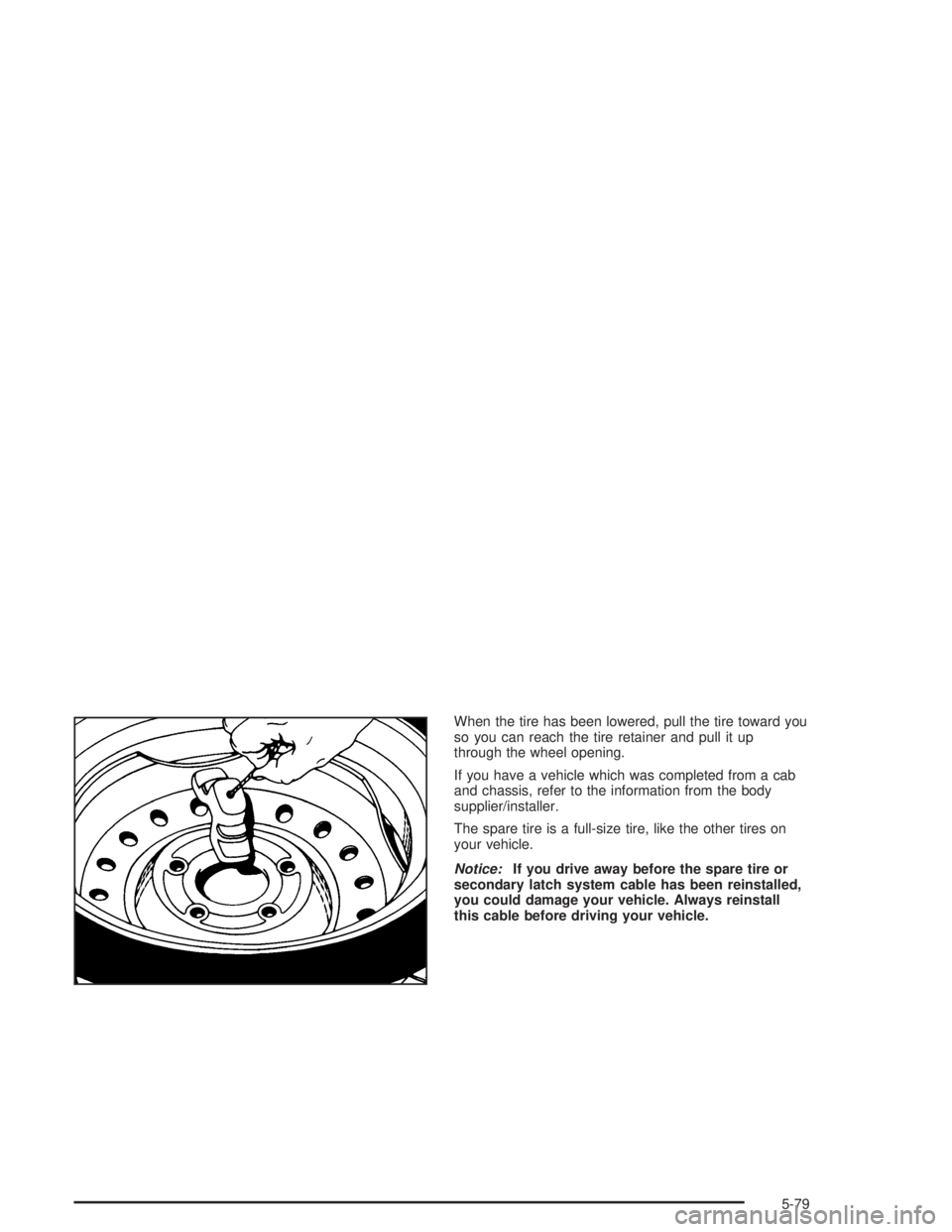
When the tire has been lowered, pull the tire toward you
so you can reach the tire retainer and pull it up
through the wheel opening.
If you have a vehicle which was completed from a cab
and chassis, refer to the information from the body
supplier/installer.
The spare tire is a full-size tire, like the other tires on
your vehicle.
Notice:If you drive away before the spare tire or
secondary latch system cable has been reinstalled,
you could damage your vehicle. Always reinstall
this cable before driving your vehicle.
5-79
Page 396 of 398
Securing a Child Restraint (cont.)
Rear Outside Seat Position...........................1-57
Right Front Seat Position..............................1-62
Security Light.................................................3-39
Security While You Travel.................................. 7-6
Service........................................................... 5-3
Adding Equipment to the Outside of
Your Vehicle.............................................. 5-4
Doing Your Own Work................................... 5-3
Engine Soon Light.......................................3-35
Publications Ordering Information...................7-11
Service Bulletins.............................................7-12
Service Manuals.............................................7-11
Servicing Your Air Bag-Equipped Vehicle..............1-78
Setting Preset PTYs................................3-54, 3-65
Setting Preset Stations............3-44, 3-47, 3-52, 3-62
Setting the Time
Radios with Radio Data Systems (RDS)............3-43
Radios without Radio Data Systems (RDS)........3-43
Setting the Tone
(Bass/Treble)......................3-44, 3-47, 3-52, 3-62
Sheet Metal Damage.......................................5-97
Shifting Into Park (P).......................................2-27
Shifting Out of Park (P)...................................2-29
Shoulder Belt Height Adjuster...........................1-17
Single Stage Air Bags.....................................1-72
Skidding........................................................4-15
Sliding Side Door............................................2-11
Some Other Rainy Weather Tips.......................4-20Special Fabric Cleaning Problems.....................5-93
Specications, Capacities...............................5-106
Speedometer..................................................3-26
Stabilitrak
®System........................................... 4-9
Stabilitrak®Indicator Light.................................3-33
Stabilitrak®Not Ready Light..............................3-33
Starting Your Engine.......................................2-22
Steering........................................................4-11
Steering in Emergencies..................................4-12
Steering Tips..................................................4-11
Storage Areas................................................2-36
Storing a Flat or Spare Tire and Tools...............5-90
Stuck in Sand, Mud, Ice or Snow......................4-30
Sun Visors.....................................................2-19
Swing-Out Side Door, 60/40.............................2-13
Swing-Out Windows........................................2-18
T
Taillamps.......................................................5-53
Theft-Deterrent, Radio.....................................3-72
Theft-Deterrent Systems...................................2-19
Passlock
®...................................................2-20
Tilt Wheel........................................................ 3-7
Tire Sidewall Labeling......................................5-57
Tire Size.......................................................5-61
Tire Terminology and Denitions........................5-62
12