window GMC SAVANA 2004 Owner's Guide
[x] Cancel search | Manufacturer: GMC, Model Year: 2004, Model line: SAVANA, Model: GMC SAVANA 2004Pages: 398, PDF Size: 4.4 MB
Page 243 of 398
Driving with a Trailer
{CAUTION:
If you have a rear-most window open and you
pull a trailer with your vehicle, carbon
monoxide (CO) could come into your vehicle.
You can not see or smell CO. It can cause
unconsciousness or death. SeeEngine
Exhaust on page 2-30. To maximize your safety
when towing a trailer:
Have your exhaust system inspected for
leaks, and make necessary repairs before
starting on your trip.
Keep the rear-most windows closed.
If exhaust does come into your vehicle
through a window in the rear or another
opening, drive with your front, main
heating or cooling system on and with the
fan on any speed. This will bring fresh,
outside air into your vehicle. Do not use
the climate control setting for maximum air
because it only recirculates the air inside
your vehicle. SeeClimate Control System
on page 3-19.Towing a trailer requires a certain amount of experience.
Before setting out for the open road, you’ll want to get
to know your rig. Acquaint yourself with the feel of
handling and braking with the added weight of the trailer.
And always keep in mind that the vehicle you are
driving is now a good deal longer and not nearly as
responsive as your vehicle is by itself.
Before you start, check all trailer hitch parts and
attachments, safety chains, electrical connector, lamps,
tires and mirror adjustment. If the trailer has electric
brakes, start your vehicle and trailer moving and then
apply the trailer brake controller by hand to be sure
the brakes are working. This lets you check your
electrical connection at the same time.
During your trip, check occasionally to be sure that the
load is secure, and that the lamps and any trailer
brakes are still working.Following Distance
Stay at least twice as far behind the vehicle ahead as
you would when driving your vehicle without a trailer.
This can help you avoid situations that require
heavy braking and sudden turns.
4-47
Page 273 of 398
If No Steam Is Coming From Your
Engine
If you get an engine overheat warning but see or hear
no steam, the problem may not be too serious.
Sometimes the engine can get a little too hot when you:
Climb a long hill on a hot day.
Stop after high-speed driving.
Idle for long periods in traffic.
Tow a trailer. See “Driving on Grades” inTowing a
Trailer on page 4-37.
If you get the overheat warning with no sign of steam,
try this for a minute or so:
1. In heavy traffic, let the engine idle in NEUTRAL(N)
while stopped. If it is safe to do so, pull off the road,
shift to PARK (P) or NEUTRAL(N) and let the
engine idle.
2. Turn on your heater to full hot at the highest fan
speed and open the window as necessary.If you no longer have the overheat warning, you can
drive. Just to be safe, drive slower for about 10 minutes.
If the warning doesn’t come back on, you can drive
normally.
If the warning continues, and you have not stopped, pull
over, stop, and park your vehicle right away.
If there’s still no sign of steam, push down the
accelerator until the engine speed is about twice as fast
as normal idle speed for at least three minutes while
you’re parked. If you still have the warning,turn off the
engine and get everyone out of the vehicleuntil it
cools down.
You may decide not to lift the hood but to get service
help right away.
5-27
Page 308 of 398
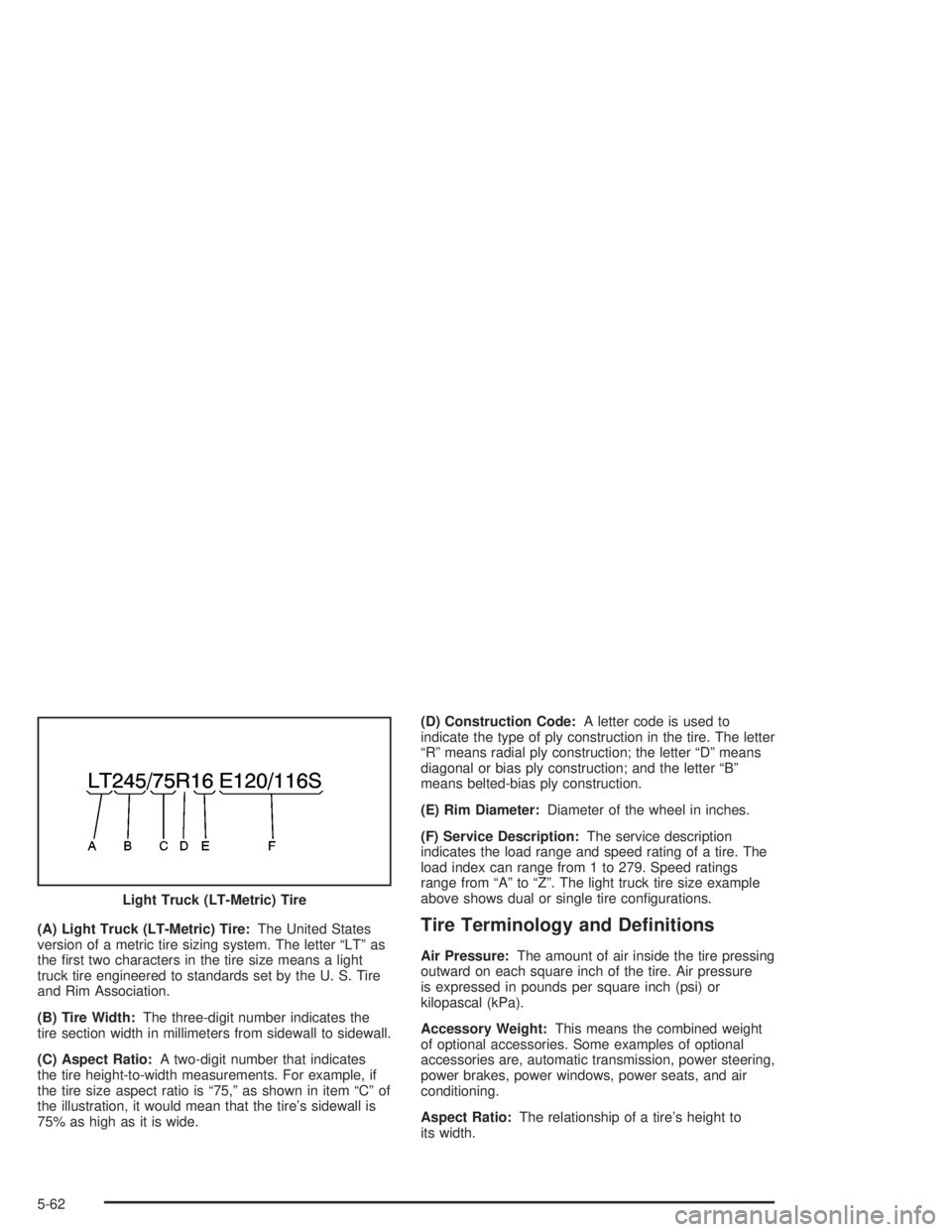
(A) Light Truck (LT-Metric) Tire:The United States
version of a metric tire sizing system. The letter “LT” as
the rst two characters in the tire size means a light
truck tire engineered to standards set by the U. S. Tire
and Rim Association.
(B) Tire Width:The three-digit number indicates the
tire section width in millimeters from sidewall to sidewall.
(C) Aspect Ratio:A two-digit number that indicates
the tire height-to-width measurements. For example, if
the tire size aspect ratio is “75,” as shown in item “C” of
the illustration, it would mean that the tire’s sidewall is
75% as high as it is wide.(D) Construction Code:A letter code is used to
indicate the type of ply construction in the tire. The letter
“R” means radial ply construction; the letter “D” means
diagonal or bias ply construction; and the letter “B”
means belted-bias ply construction.
(E) Rim Diameter:Diameter of the wheel in inches.
(F) Service Description:The service description
indicates the load range and speed rating of a tire. The
load index can range from 1 to 279. Speed ratings
range from “A” to “Z”. The light truck tire size example
above shows dual or single tire congurations.Tire Terminology and Denitions
Air Pressure:The amount of air inside the tire pressing
outward on each square inch of the tire. Air pressure
is expressed in pounds per square inch (psi) or
kilopascal (kPa).
Accessory Weight:This means the combined weight
of optional accessories. Some examples of optional
accessories are, automatic transmission, power steering,
power brakes, power windows, power seats, and air
conditioning.
Aspect Ratio:The relationship of a tire’s height to
its width. Light Truck (LT-Metric) Tire
5-62
Page 338 of 398
Appearance Care
Remember, cleaning products can be hazardous. Some
are toxic. Others can burst into ames if you strike a
match or get them on a hot part of the vehicle. Some are
dangerous if you breathe their fumes in a closed
space. When you use anything from a container to clean
your vehicle, be sure to follow the manufacturer’s
warnings and instructions. And always open your doors
or windows when you are cleaning the inside.
Never use these to clean your vehicle:
Gasoline
Benzene
Naphtha
Carbon Tetrachloride
Acetone
Paint Thinner
Turpentine
Lacquer Thinner
Nail Polish Remover
They can all be hazardous — some more than
others — and they can all damage your vehicle, too.Do not use any of these unless this manual says you
can. In many uses, these will damage your vehicle:
Alcohol
Laundry Soap
Bleach
Reducing Agents
Cleaning the Inside of Your Vehicle
Use a vacuum cleaner often to get rid of dust and
loose dirt. Wipe vinyl, leather, plastic and painted
surfaces with a clean, damp cloth.
Cleaning Fabric/Carpet
Your dealer has cleaners for the cleaning of fabric
and carpet. They will clean normal spots and stains
very well.
You can get GM-approved cleaning products from your
dealer. SeeVehicle Care/Appearance Materials on
page 5-99.
5-92
Page 340 of 398
Cleaning Vinyl
Use warm water and a clean cloth.
Rub with a clean, damp cloth to remove dirt. You
may have to do this more than once.
Things like tar, asphalt and shoe polish will stain if
you do not get them off quickly. Use a clean cloth
and vinyl cleaner. See your dealer for this product.
Cleaning Leather
Use a soft cloth with lukewarm water and a mild soap or
saddle soap and wipe dry with a soft cloth. Then, let
the leather dry naturally. Do not use heat to dry.
For stubborn stains, use a leather cleaner.
Neveruse oils, varnishes, solvent-based or abrasive
cleaners, furniture polish or shoe polish on leather.
Soiled or stained leather should be cleaned
immediately. If dirt is allowed to work into the nish,
it can harm the leather.
Cleaning the Top of the Instrument
Panel
Use only mild soap and water to clean the top surfaces
of the instrument panel. Sprays containing silicones
or waxes may cause annoying reections in the
windshield and even make it difficult to see through the
windshield under certain conditions.
Cleaning Interior Plastic Components
Use only a mild soap and water solution on a soft cloth
or sponge. Commercial cleaners may affect the
surface nish.
Cleaning Glass Surfaces
Glass should be cleaned often. GM Glass Cleaner or a
liquid household glass cleaner will remove normal
tobacco smoke and dust lms on interior glass. See
Vehicle Care/Appearance Materials on page 5-99.
Notice:If you use abrasive cleaners when cleaning
glass surfaces on your vehicle, you could scratch
the glass and/or cause damage to the rear window
defogger and the integrated radio antenna. When
cleaning the glass on your vehicle, use only a soft
cloth and glass cleaner.
5-94
Page 349 of 398
Fuse Usage
22 Front Park Lamp
32 Auxilary1
33 Auxilary2
Relays Usage
23 Window Residual Accessory Power
24 Auxiliary
25 Right Rear Defogger
26 Courtesy Lamp
27 Cargo Unlock
28 Driver Unlock
29 Park Lamp
30 Door Locks
31 Pass Unlock
Circuit Breaker Usage
34 Power WindowEngine Compartment Fuse Block
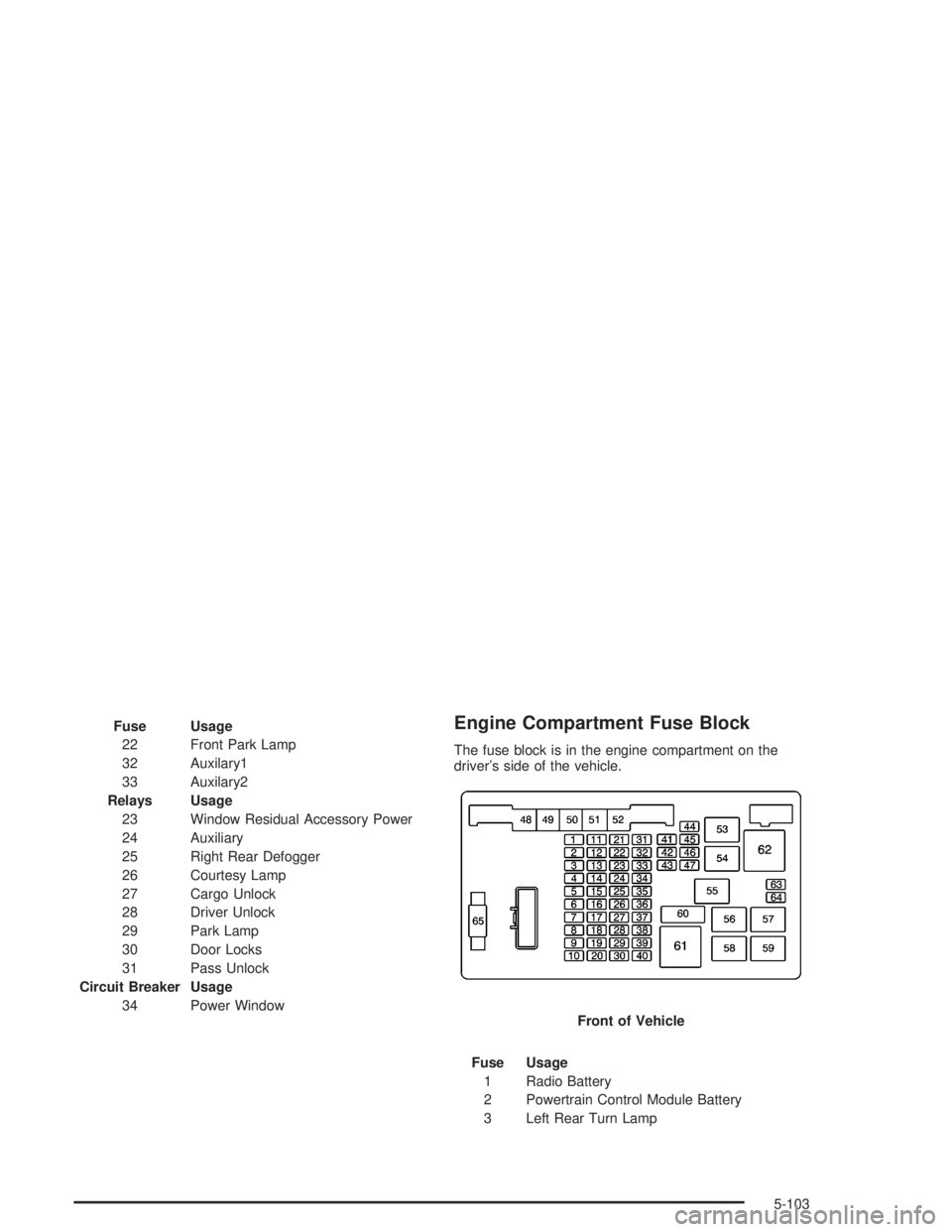
The fuse block is in the engine compartment on the
driver’s side of the vehicle.
Fuse Usage
1 Radio Battery
2 Powertrain Control Module Battery
3 Left Rear Turn LampFront of Vehicle
5-103
Page 392 of 398
Light (cont.)
Brake System Warning.................................3-32
Change Engine Oil......................................3-38
Charging System.........................................3-30
Check Gages Warning.................................3-41
Cruise Control.............................................3-39
Daytime Running Lamps Indicator..................3-40
Low Coolant Warning...................................3-34
Malfunction Indicator....................................3-35
Reduced Engine Power................................3-40
Safety Belt Reminder...................................3-27
Security.....................................................3-39
Stabilitrak
®Indicator.....................................3-33
Stabilitrak®Not Ready..................................3-33
Tow/Haul Mode...........................................3-40
Loading Your Vehicle.......................................4-31
Locking Rear Axle............................................ 4-9
Lockout Protection..........................................2-11
Locks
Cargo Door Relocking.................................... 2-9
Door........................................................... 2-8
Leaving Your Vehicle....................................2-11
Lockout Protection.......................................2-11
Power Door.................................................. 2-9
Rear Door Security Locks.............................2-10
Loss of Control...............................................4-15
Low Coolant Warning Light..............................3-34
M
Maintenance Schedule
Additional Required Services........................... 6-6
At Each Fuel Fill........................................... 6-9
At Least Once a Month.................................. 6-9
At Least Once a Year..................................6-10
At the First 100, 1,000 and 6,000 Miles
(160, 1 600 and 10 000km)......................... 6-9
Introduction.................................................. 6-2
Maintenance Footnotes.................................. 6-7
Maintenance Record....................................6-16
Maintenance Requirements............................. 6-2
Normal Maintenance Replacement Parts.........6-14
Owner Checks and Services........................... 6-9
Recommended Fluids and Lubricants.............6-12
Scheduled Maintenance................................. 6-4
Using Your................................................... 6-3
Your Vehicle and the Environment................... 6-2
Maintenance When Trailer Towing.....................4-50
Making Turns.................................................4-48
Malfunction Indicator Light................................3-35
Manual Seats................................................... 1-3
Manual Windows............................................2-17
Matching Transmitter(s) to Your Vehicle............... 2-6
Mexico, Central America and Caribbean
Islands/Countries (Except Puerto Rico and
U.S. Virgin Islands)....................................... 7-5
8
Page 394 of 398
Payload.........................................................4-37
Plan Ahead When Possible................................ 7-7
Playing a Cassette Tape..................................3-56
Playing a CD.................................3-48, 3-58, 3-66
Playing a Specic Loaded CD..........................3-67
Playing the Radio...................3-43, 3-46, 3-50, 3-61
Power
Accessory Outlets........................................3-18
Door Locks.................................................. 2-9
Reduced Engine Light..................................3-40
Seat............................................................ 1-4
Steering Fluid.............................................5-35
Windows....................................................2-17
Power Steering...............................................4-11
Q
Questions and Answers About Safety Belts.........1-14
R
Radiator Pressure Cap....................................5-25
Radio Data System (RDS).......................3-53, 3-63
Radio Messages.............................3-45, 3-48, 3-56
Radios..........................................................3-42
AM-FM Radio.............................................3-43
Care of Your Cassette Tape Player................3-72
Care of Your CD Player...............................3-74
Care of Your CDs........................................3-74Radios (cont.)
Radio with Cassette and CD.........................3-50
Radio with CD............................................3-46
Radio with Six-Disc CD................................3-61
Setting the Time for Radios with Radio
Data Systems (RDS)................................3-43
Setting the Time for Radios without
Radio Data Systems (RDS).......................3-43
Theft-Deterrent............................................3-72
Understanding Reception..............................3-72
RDS Messages......................................3-55, 3-65
Reading Lamps..............................................3-17
Rear Air Conditioning and Heating System.........3-22
Rear Axle......................................................5-48
Locking........................................................ 4-9
Rear Door Security Locks................................2-10
Rear Doors....................................................2-15
Rear Heating System......................................3-22
Rear Safety Belt Comfort Guides......................1-29
Rear Seat Operation......................................... 1-6
Rear Seat Outside Passenger Positions.............1-26
Rear Seat Passengers, Safety Belts..................1-26
Rear Window Defogger....................................3-21
Rearview Mirrors.............................................2-32
Reclining Seatbacks.......................................... 1-4
Recommended Fluids and Lubricants.................6-12
Recreational Vehicle Towing.............................4-31
Reduced Engine Power Light............................3-40
Remote Keyless Entry System............................ 2-4
Remote Keyless Entry System, Operation............ 2-5
10
Page 396 of 398
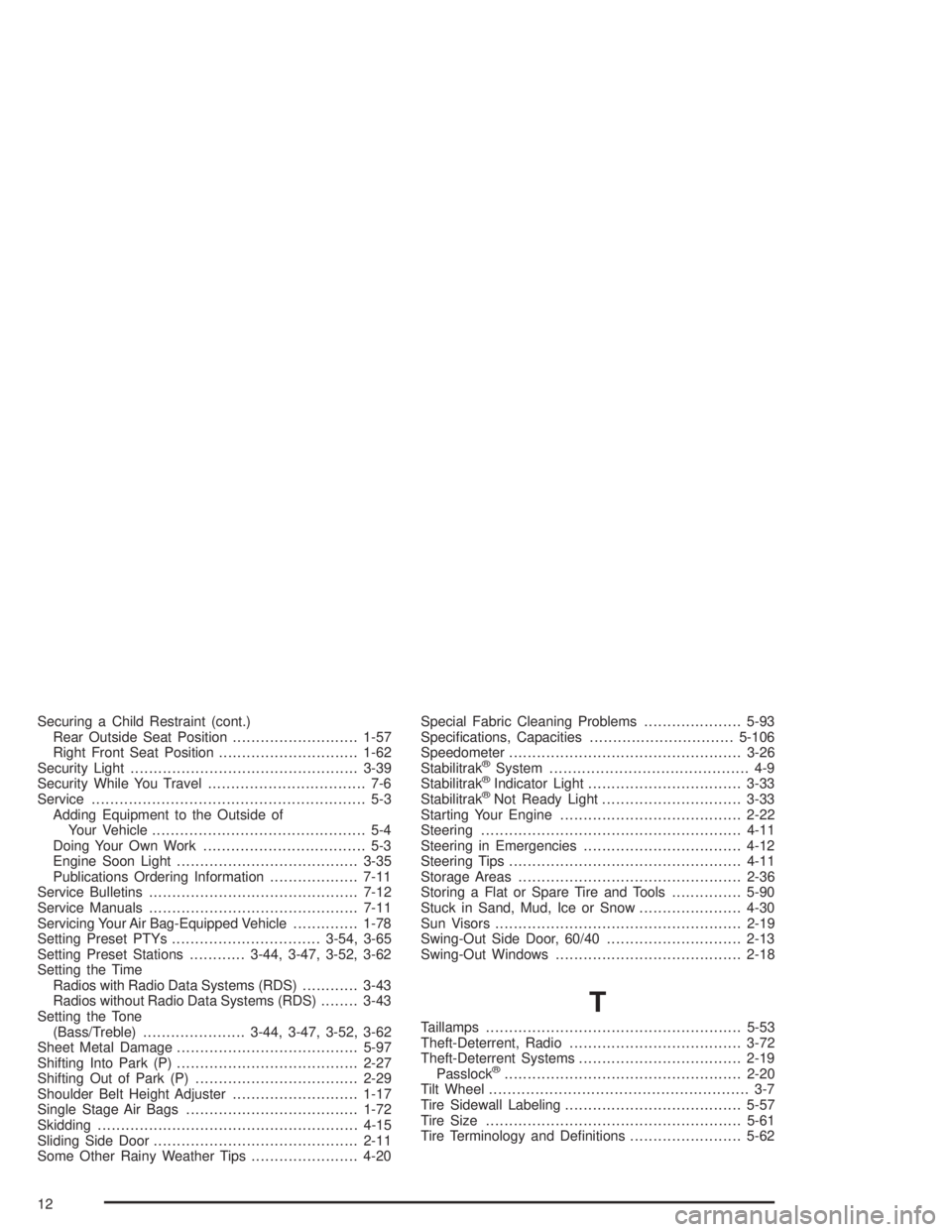
Securing a Child Restraint (cont.)
Rear Outside Seat Position...........................1-57
Right Front Seat Position..............................1-62
Security Light.................................................3-39
Security While You Travel.................................. 7-6
Service........................................................... 5-3
Adding Equipment to the Outside of
Your Vehicle.............................................. 5-4
Doing Your Own Work................................... 5-3
Engine Soon Light.......................................3-35
Publications Ordering Information...................7-11
Service Bulletins.............................................7-12
Service Manuals.............................................7-11
Servicing Your Air Bag-Equipped Vehicle..............1-78
Setting Preset PTYs................................3-54, 3-65
Setting Preset Stations............3-44, 3-47, 3-52, 3-62
Setting the Time
Radios with Radio Data Systems (RDS)............3-43
Radios without Radio Data Systems (RDS)........3-43
Setting the Tone
(Bass/Treble)......................3-44, 3-47, 3-52, 3-62
Sheet Metal Damage.......................................5-97
Shifting Into Park (P).......................................2-27
Shifting Out of Park (P)...................................2-29
Shoulder Belt Height Adjuster...........................1-17
Single Stage Air Bags.....................................1-72
Skidding........................................................4-15
Sliding Side Door............................................2-11
Some Other Rainy Weather Tips.......................4-20Special Fabric Cleaning Problems.....................5-93
Specications, Capacities...............................5-106
Speedometer..................................................3-26
Stabilitrak
®System........................................... 4-9
Stabilitrak®Indicator Light.................................3-33
Stabilitrak®Not Ready Light..............................3-33
Starting Your Engine.......................................2-22
Steering........................................................4-11
Steering in Emergencies..................................4-12
Steering Tips..................................................4-11
Storage Areas................................................2-36
Storing a Flat or Spare Tire and Tools...............5-90
Stuck in Sand, Mud, Ice or Snow......................4-30
Sun Visors.....................................................2-19
Swing-Out Side Door, 60/40.............................2-13
Swing-Out Windows........................................2-18
T
Taillamps.......................................................5-53
Theft-Deterrent, Radio.....................................3-72
Theft-Deterrent Systems...................................2-19
Passlock
®...................................................2-20
Tilt Wheel........................................................ 3-7
Tire Sidewall Labeling......................................5-57
Tire Size.......................................................5-61
Tire Terminology and Denitions........................5-62
12
Page 398 of 398
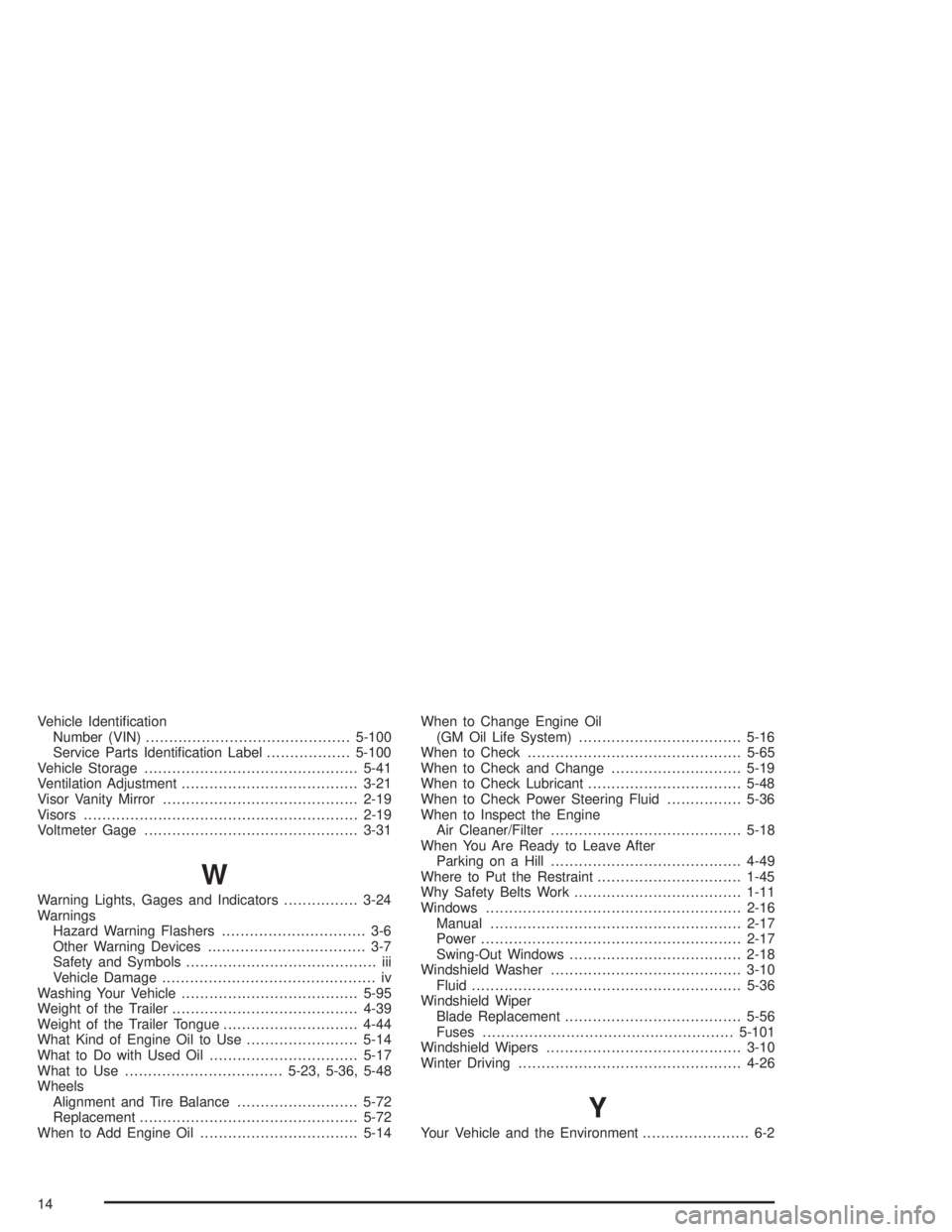
Vehicle Identication
Number (VIN)............................................5-100
Service Parts Identication Label..................5-100
Vehicle Storage..............................................5-41
Ventilation Adjustment......................................3-21
Visor Vanity Mirror..........................................2-19
Visors...........................................................2-19
Voltmeter Gage..............................................3-31
W
Warning Lights, Gages and Indicators................3-24
Warnings
Hazard Warning Flashers............................... 3-6
Other Warning Devices.................................. 3-7
Safety and Symbols......................................... iii
Vehicle Damage.............................................. iv
Washing Your Vehicle......................................5-95
Weight of the Trailer........................................4-39
Weight of the Trailer Tongue.............................4-44
What Kind of Engine Oil to Use........................5-14
What to Do with Used Oil................................5-17
What to Use..................................5-23, 5-36, 5-48
Wheels
Alignment and Tire Balance..........................5-72
Replacement...............................................5-72
When to Add Engine Oil..................................5-14When to Change Engine Oil
(GM Oil Life System)...................................5-16
When to Check..............................................5-65
When to Check and Change............................5-19
When to Check Lubricant.................................5-48
When to Check Power Steering Fluid................5-36
When to Inspect the Engine
Air Cleaner/Filter.........................................5-18
When You Are Ready to Leave After
Parking on a Hill.........................................4-49
Where to Put the Restraint...............................1-45
Why Safety Belts Work....................................1-11
Windows.......................................................2-16
Manual......................................................2-17
Power........................................................2-17
Swing-Out Windows.....................................2-18
Windshield Washer.........................................3-10
Fluid..........................................................5-36
Windshield Wiper
Blade Replacement......................................5-56
Fuses......................................................5-101
Windshield Wipers..........................................3-10
Winter Driving................................................4-26
Y
Your Vehicle and the Environment....................... 6-2
14