coolant GMC SIERRA 1995 Owner's Manual
[x] Cancel search | Manufacturer: GMC, Model Year: 1995, Model line: SIERRA, Model: GMC SIERRA 1995Pages: 488, PDF Size: 26.01 MB
Page 244 of 488
I A CAUTION:
Heater and radiator hoses, and other engine parts, can be very
hot. Don’t touch them.
If you do, you can be burned.
Don’t run the engine
if there is a leak. If you run the engine, it
could lose all coolant. That could cause an engine
fire, and you
could be burned. Get any leak fixed before you drive the vehicle.
I NOTICE:
Engine damage from running your engine without coolant isn’t
covered by your warranty.
If there seems to be no leak, start the engine again. See if the fan speed
increases when idle speed
is doubled by pushing the accelerator pedal down.
If
it doesn’t, your vehicle needs service. Turn off the engine.
How to Add Coolant to the Coolant Surge Tank
I NOTICE:
The diesel engine has a specific coolant fill procedure. Failure to
follow this procedure could cause your engine to overheat and be
severely damaged.
If you haven’t found a problem yet, but the coolant level isn’t at the COLD
mark, add a
50/50 mixture of cleun water (preferably distilled) and a proper
antifreeze at the coolant surge tank, but be sure the cooling system,
including the
coolant surge tank pressure cap, is cool before you do it. (See
“Engine Coolant”
in the Index for more information about the proper
coolant mix.)
5-20
ProCarManuals.com
Page 245 of 488
A CAUTION:
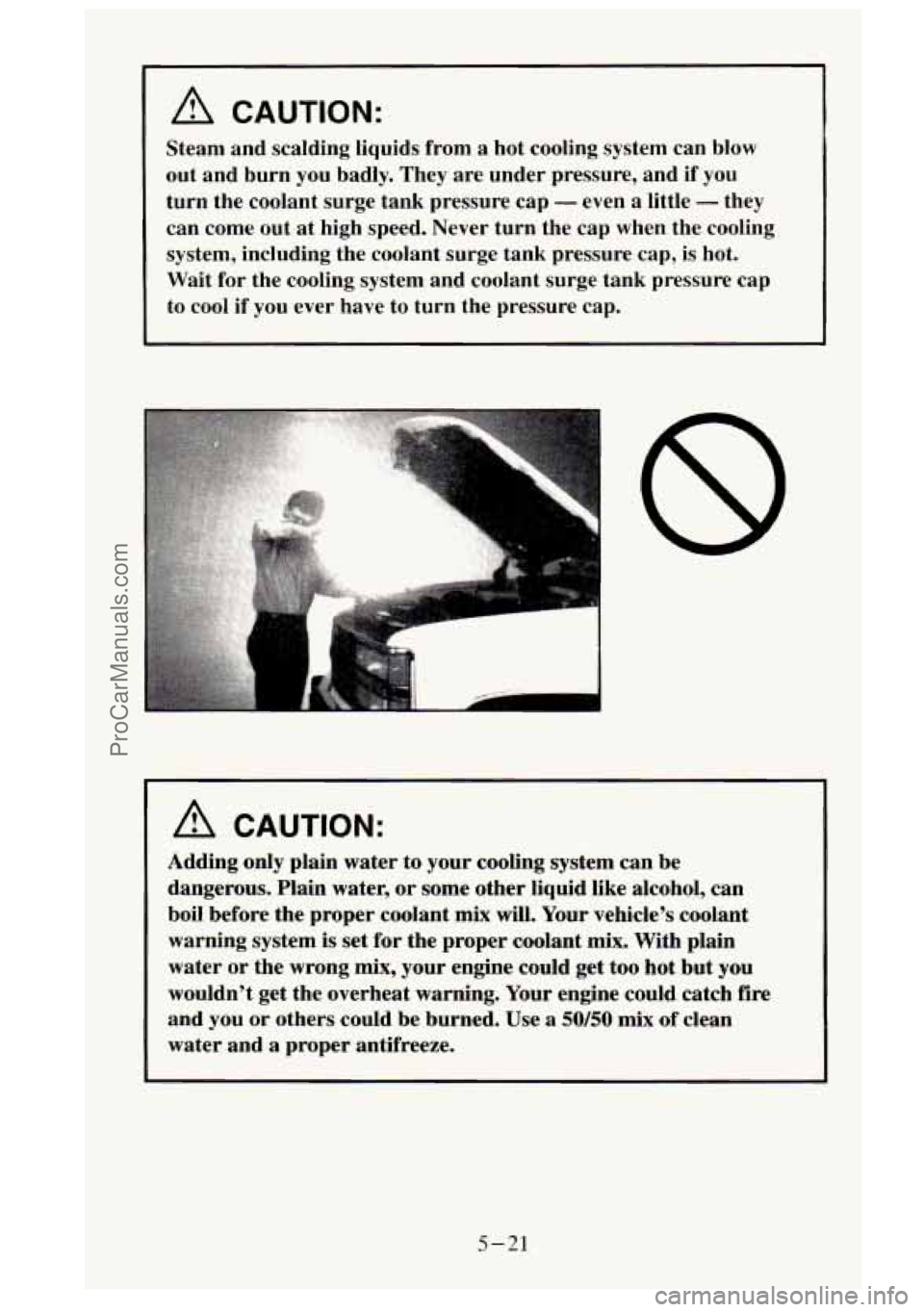
Steam and scalding liquids from a hot cooling system can blow
out and burn you badly. They are under pressure, and
if you
turn the coolant surge tank pressure cap
- even a little - they
can come out at high speed. Never turn the cap when the cooling
system, including the coolant surge tank pressure cap,
is hot.
’ Wait for the cooling system and coolant surge tank pressure cap
to cool
if you ever have to turn the pressure cap.
A CAUTION:
Adding only plain water to your cooling system can be
dangerous. Plain water, or some other liquid like alcohol, can
boil before the proper coolant mix
will. Your vehicle’s coolant
warning system is set for the proper coolant mix. With plain
water
or the wrong mix, your engine could get too hot but you
wouldn’t get the overheat warning. Your engine could catch fire
and you or others could be burned. Use
a 50/50 mix of clean
water and a proper antifreeze.
5-21
ProCarManuals.com
Page 246 of 488
NOTICE:
In cold weather, water can freeze and crack the engine, radiator,
heater core and other parts.
So use the recommended coolant.
A CAUTION:
You can be burned if you spill coolant on hot engine parts.
Coolant contains ethylene glycol and it will burn if the engine
parts are hot enough. Don't spill coolant on
a hot engine.
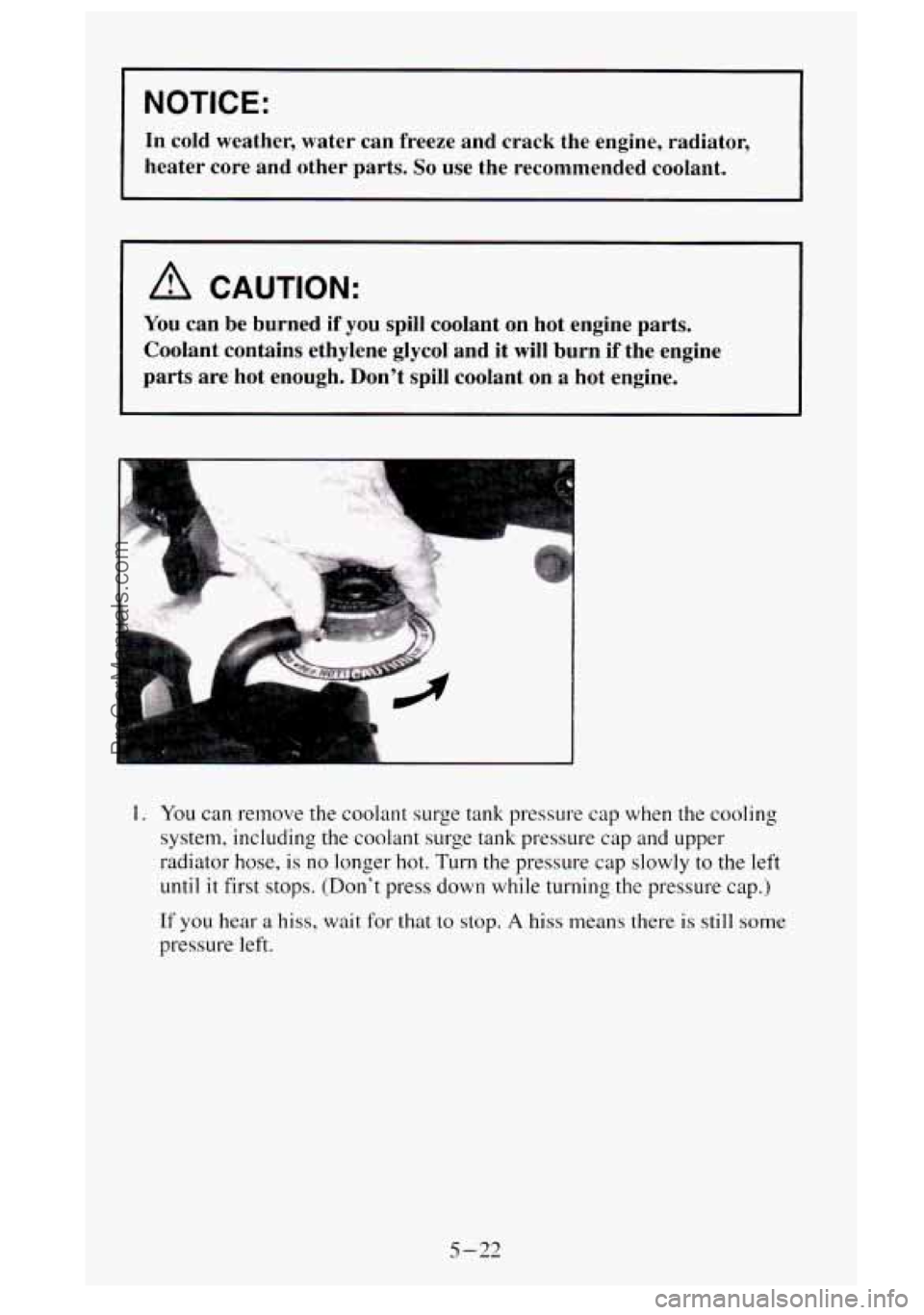
1. You can remove the coolant surge tank pressure cap when the cooling
system, including the coolant surge tank pressure cap and upper
radiator hose,
is no longer hot. Turn the pressure cap slowly to the left
until it first stops. (Don't press down while turning the pressure cap.)
If you hear a hiss, wait for that to stop. A hiss means there is still some
pressure left.
5-22
ProCarManuals.com
Page 247 of 488
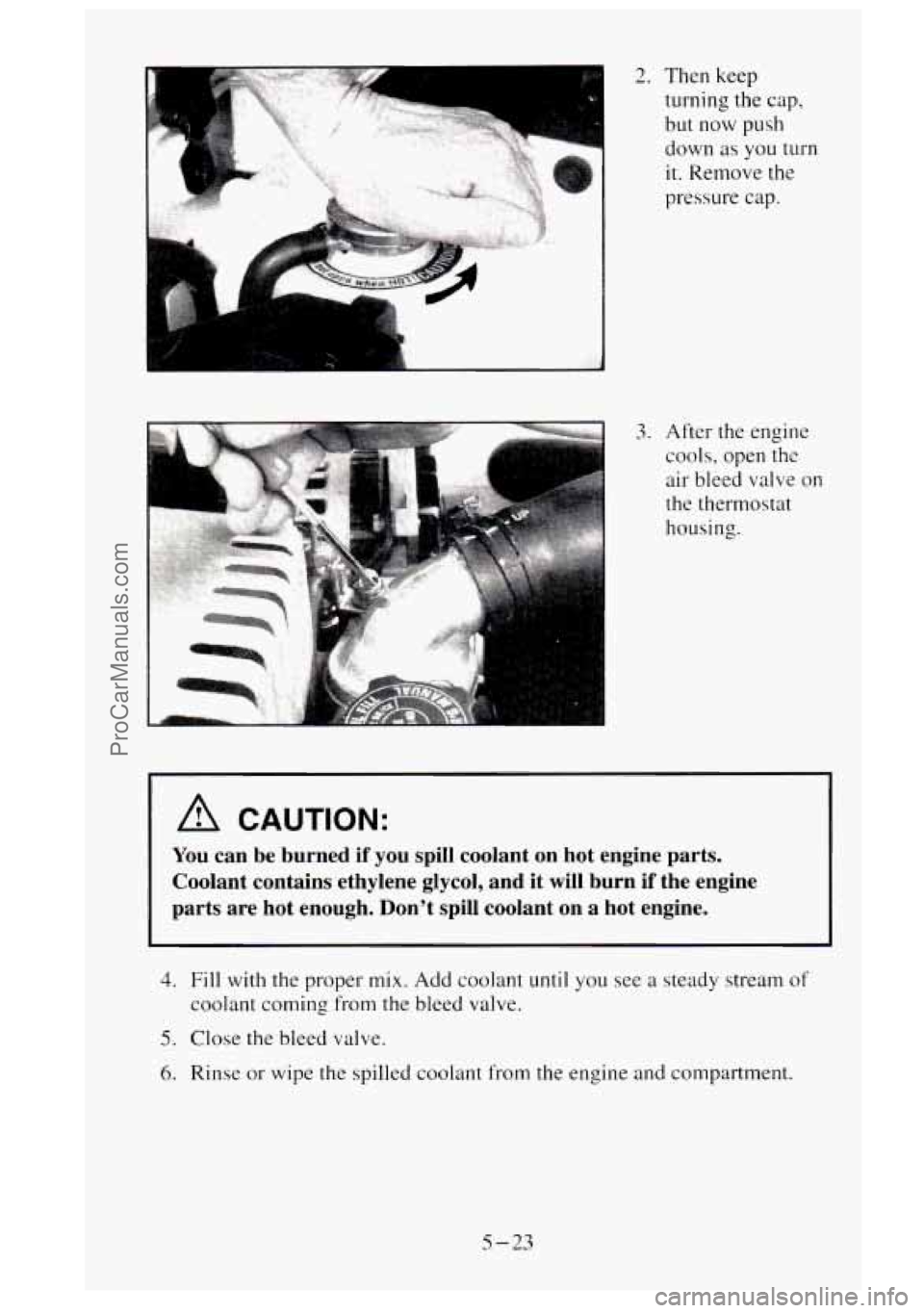
2. Then keep
turning the cap,
but now push
down as
you turn
it. Remove the
pressure cap.
3. After the engine
cools, open the
air bleed valve on
the thermostat
housing.
A CAUTION:
You can be burned if you spill coolant on hot engine parts.
Coolant contains ethylene glycol, and
it will burn if the engine
parts are hot enough. Don't spill coolant on a hot engine.
4. Fill with the proper mix. Add coolant until you see a steady stream of
coolant coming from the bleed valve.
5. Close the bleed valve.
6. Rinse or wipe the spilled coolant from the engine and compartment.
5-23
ProCarManuals.com
Page 248 of 488
-
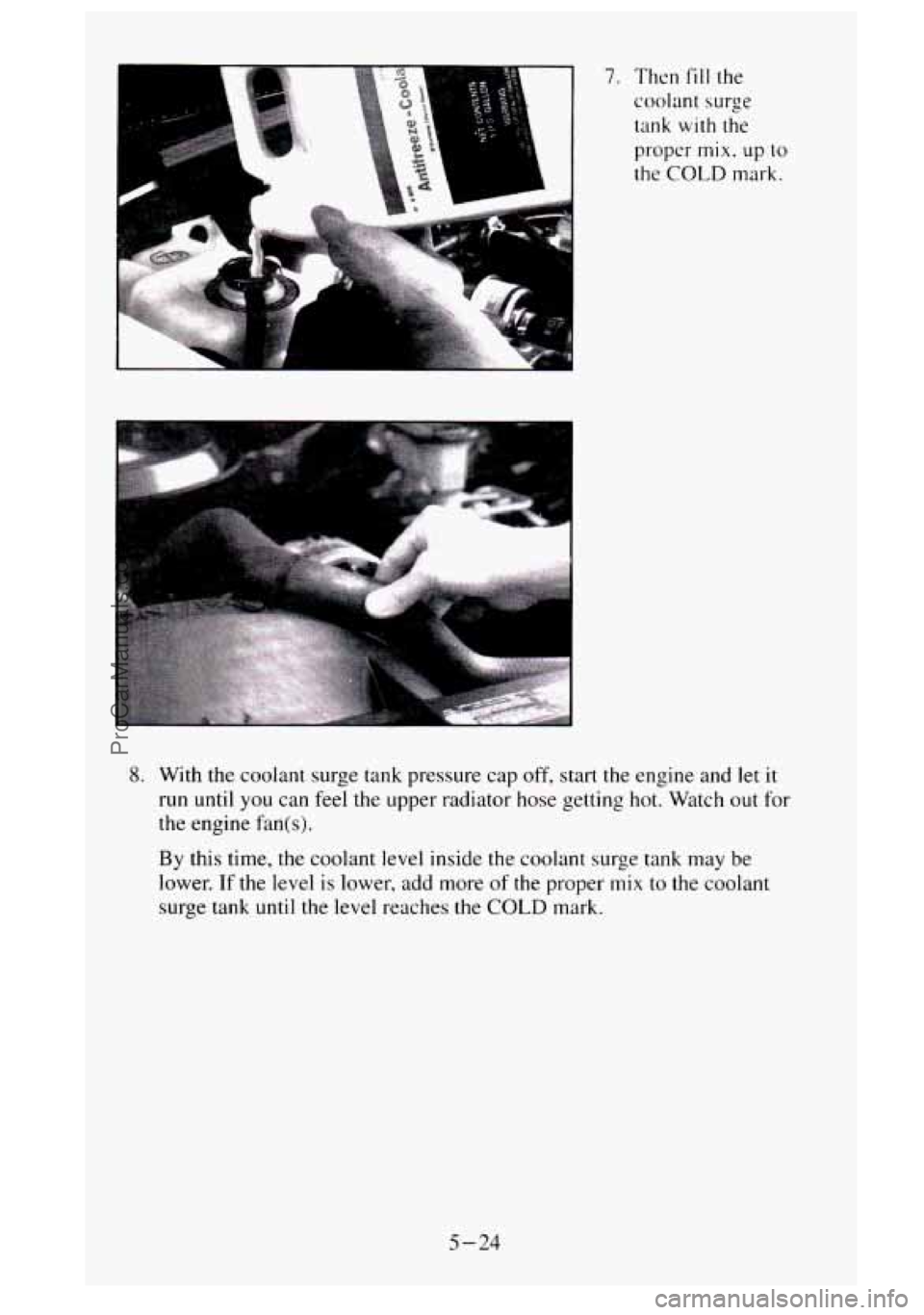
7. Then fill the
coolant surg,e
tank with the
proper
mix. up to
the COLD mark.
8. With the coolant surge tank pressure cap off, start the engine and let it
run until you can feel the upper radiator hose getting hot. Watch out for
the engine fan(s).
By this time, the coolant level inside the coolant surge tank may be
lower. If the level is lower, add more of the proper mix to the coolant
surge tank until the level reaches
the COLD mark.
5-24
ProCarManuals.com
Page 280 of 488
A CAUTION:
If your vehicle has air conditioning, the auxiliary engine fan
under the hood can start up and injure you even when the
engine is not running. Keep hands, clothing and tools
away from
any underhood electric fan.
A CAUTION:
Things that burn can get on hot engine parts and start a fire.
These include liquids like gasoline or diesel fuel, oil, coolant,
brake fluid, windshield washer and other fluids, and plastic
or
rubber. You or others could be burned. Be careful not to drop or
spill things that
will burn onto a hot engine.
Before closing the hood, be sure
all filler caps are on properly. Pull down
the
hood and close it firmly.
Cleaning Your Diesel Engine
I NOTICE:
If you spray or pour water or any other liquid on your engine
when it is warm or hot, or when it
is running, you could cause
serious damage to it.
If you ever clean the engine, clean it only
when it is cold.
Noise Control System
The following information relates to compliance with Federal noise
emission standards for vehicles with a Gross Vehicle Weight Rating
(GVWR)
of more than 10,000 pounds (4 536 kilograms). The Maintenance
Schedule booklet provides information on maintaining
the noise control
system to minimize degradation of the noise emission control system during
the life of your vehicle. The noise control system warranty is given in your
Warranty booklet.
These standards apply only
to vehicles sold in the United States.
6-14
ProCarManuals.com
Page 287 of 488
Engine Coolant Heater
An engine coolant heater can be a big help if you have to park outside in
very cold weather, 0°F (-1 8OC) or colder. If your vehicle has this option,
see “Engine Coolant Heater’’ in the Index.
What to Do with Used Oil
Did you know that used engine oil contains certain elements that may be
unhealthy for your skin and could even cause cancer? Don’t let used oil stay
on your skin for very long. Clean your skin and nails with soap and water,
or a good hand cleaner. Wash or properly throw away clothing or rags
containing used engine oil. (See the manufacturer‘s warnings about the use
and disposal of
oil products.)
Used oil can be a real threat to
the environment. If you change your own oil,
be sure to drain all free-flowing oil from the filter before disposal. Don’t
ever dispose
of oil by putting it in the trash, pouring it on the ground, into
sewers, or into streams or bodies
of water. Instead. recycle it by taking it to
a place that collects used oil. If you have a problem properly disposing of
your used oil, ask your dealer, a service station or a local recycling center
for help.
Engine Oil (Diesel Engines)
It’s a good idea to check your engine oil level every time you get fuel. In
order to get an accurate reading, the oil must be warm and
the vehicle must
be on level ground.
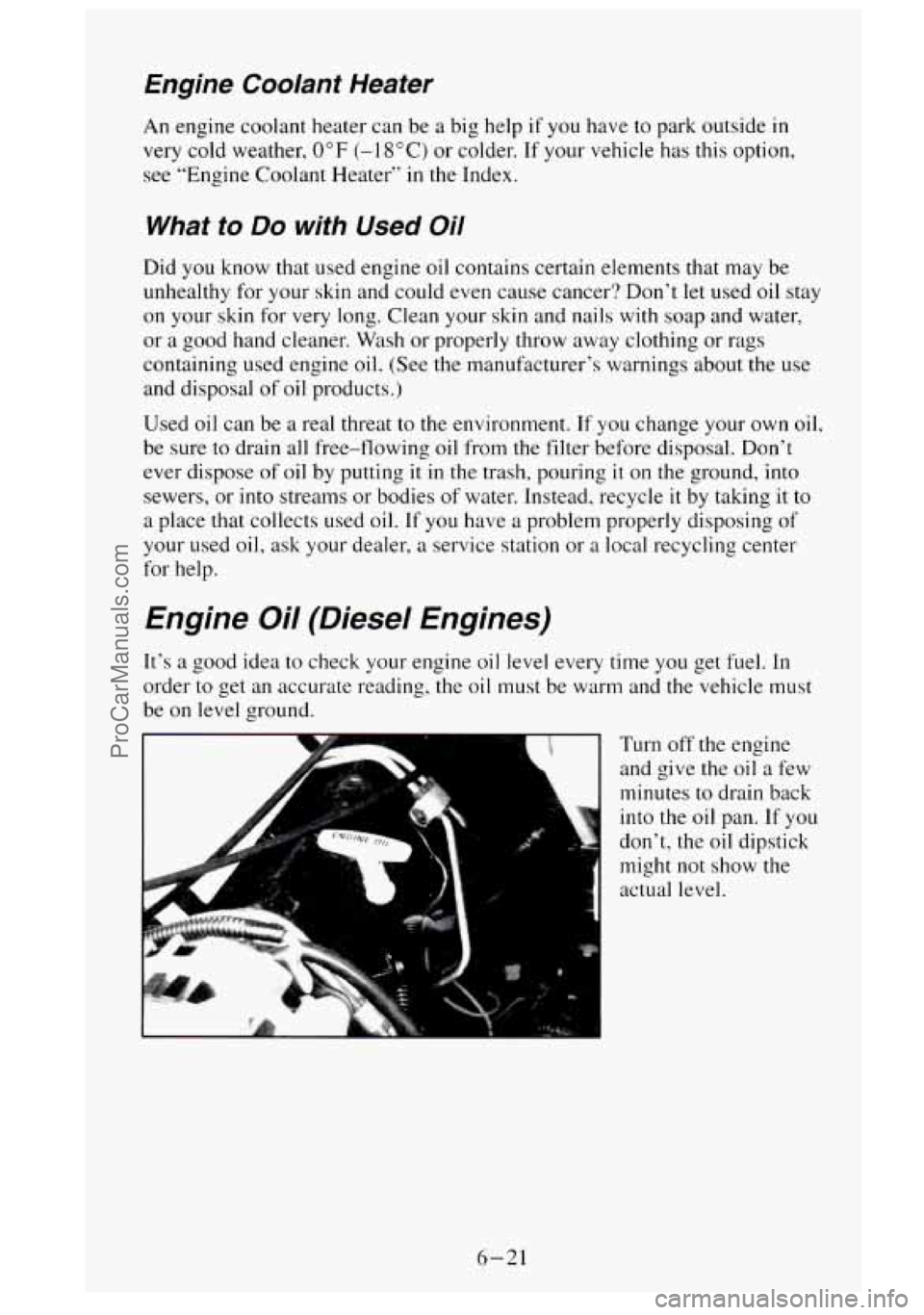
Turn off the engine
and give the oil
a few
minutes
to drain back
into the
oil pan. If you
don’t, the oil dipstick
might not show the
actual level.
6-21
ProCarManuals.com
Page 301 of 488
If the differential is at operating temperature (warm), add enough lubricant
to raise the level to the bottom
of the filler plug hole.
If the differential is cold, add enough lubricant to raise the level to
1/2 inch
( 12 mm) below the filler plug hole.
What to Use
Refer to the Maintenance Schedule to determine what kind of lubricant to
use. See “Recommended Fluids and Lubricants” in the Index.
Engine Coolant
The following explains your cooling system and how to add coolant when it
is low. If you have a problem with engine overheating, see “Engine
Overheating”
in the Index.
The proper coolant for your vehicle will:
Give freezing protection down to -34°F (-37°C).
0 Give boiling protection up to 262°F (128°C).
Protect against rust and corrosion.
Help keep the proper engine temperature.
Let the warning gages work as they should.
What to Use
Use a mixture of one-half cleun water (preferably distilled) and one-half
antifreeze that meets “GM Specification 6038-M,” which won’t damage
aluminum parts.
You can also use a recycled coolant conforming to “GM
Specification 6038-M.” Use GM Coolant Supplement (Sealer) with a
complete coolant flush and refill. If you use this mixture. you don’t need to
add anything else.
A CAUTION:
Adding only plain water to your cooling system can be
dangerous. Plain water, or some other liquid like alcohol, can
boil before the proper coolant mix will. Your vehicle’s coolant
warning system
is set for the proper coolant mix. With plain
water or the wrong mix, your engine could get too hot but
you
wouldn’t get the overheat warning. Your engine could catch fire
and you or others could be burned. Use
a 50/50 mix of clean
water and
a proper antifreeze.
6-35
ProCarManuals.com
Page 302 of 488
NOTICE:
If you use an improper coolant mix, your engine could overheat
and be badly damaged. The repair cost wouldn’t be covered by
your warranty.
Too much water in the mix can freeze and crack
the engine, radiator, heater core and other parts.
Some conditions. such as air trapped
in the cooling system. can affect the
coolant level
in thc radiator. Check the coolant level when the engine is cold
and
follow the steps under “Adding Coolant“ for the proper way to add
coolant.
If you have to add coolant more than lour timcs a ycar, have your dealer
check your cooling system.
NOTICE:
If you use the proper coolant, you don’t have to add extra
inhibitors or additives which claim to improve the system. These
can be harmful.
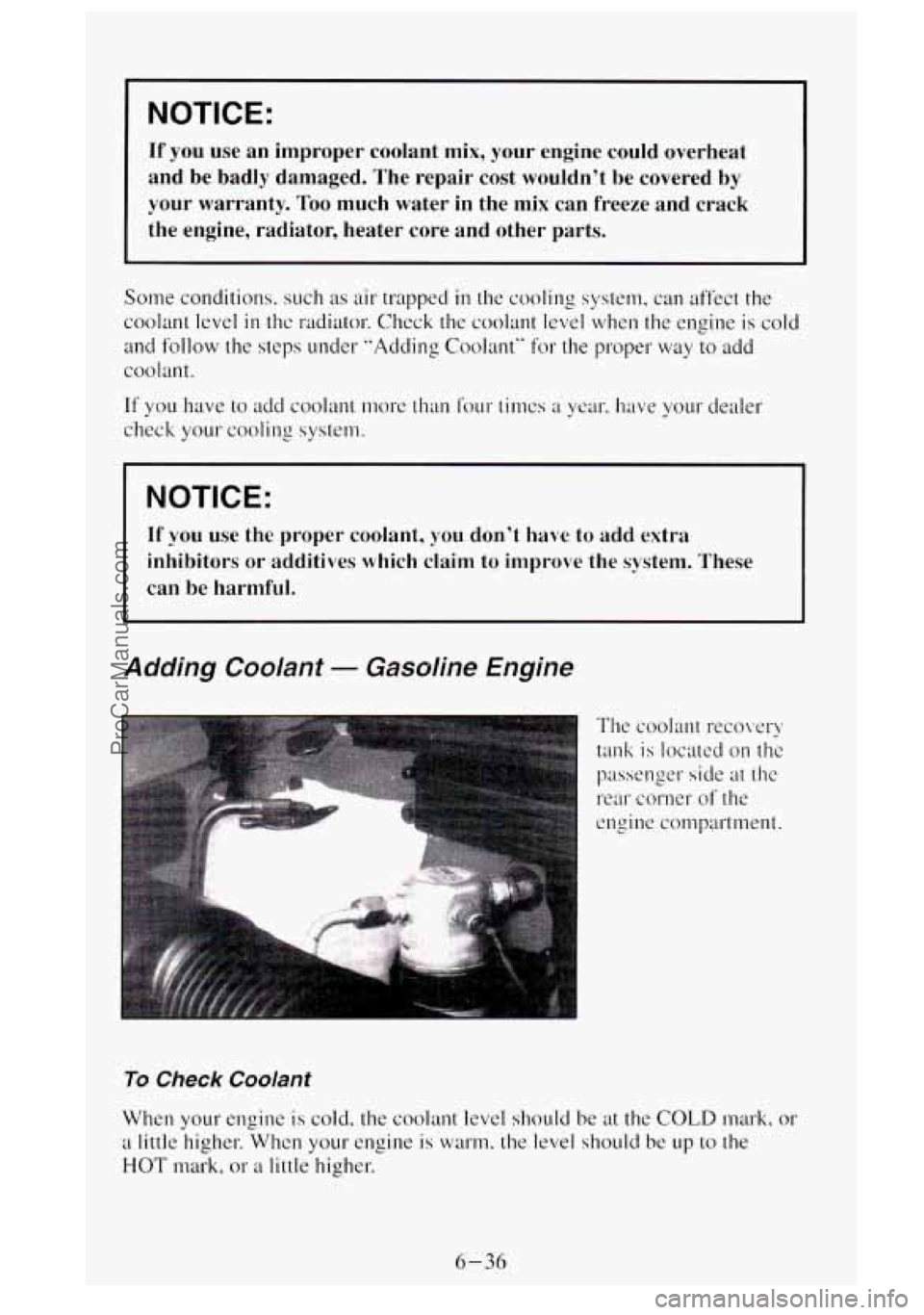
Adding Coolant - Gasoline Engine
The coolant reco\wy
tank is located on the
passenger side
at the
rear comer
of the
engine compartment.
To Check Coolant
When your engine is cold, the coolant level should be at the COLD mark, or
a little higher. When your engine is warm, the level should be up to the
HOT mark, or a little higher.
6-36
ProCarManuals.com
Page 303 of 488
To Add Coolant
If you need more coolant, add the proper mix at the coolant recovery tank.
A CAUTION:
arning the radiator pressure cap when the engine and radiator
are hot can allow steam and scalding liquids to blow out and
burn you badly. With the coolant recovery tank, you will almost
never have to add coolant at the radiator. Never turn the
radiator pressure cap
- even a little - when the engine and
radiator are hot.
Add coolant mix at the recovery tank, but be careful not to spill it.
A CAUTION:
You can be burned if you spill coolant on hot engine parts.
Coolant contains ethylene glycol, and it will burn
if the engine
parts are hot enough. Don’t spill coolant on a hot engine.
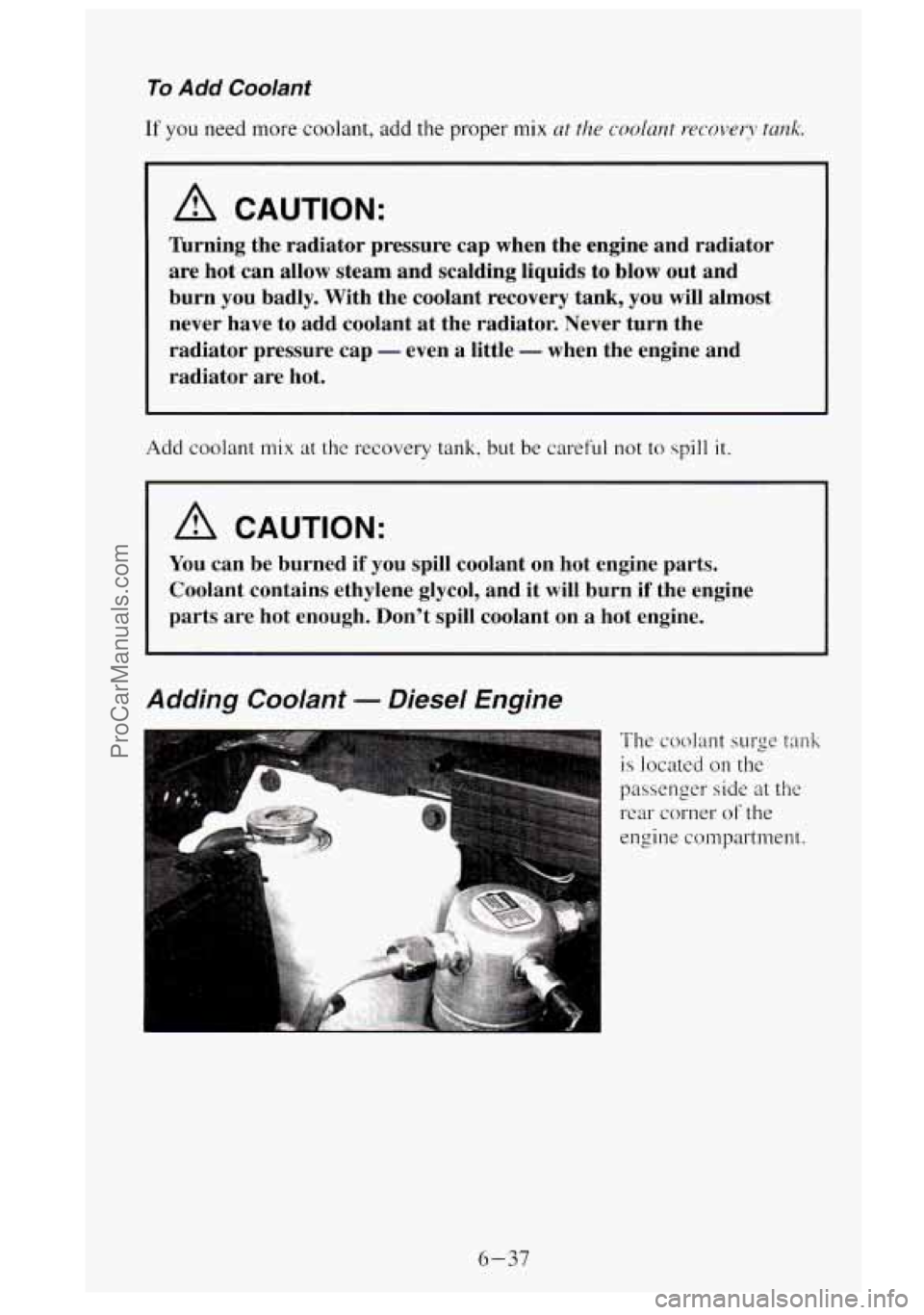
Adding Coolani - Diesel Engine
The coolant surge tank
is located on the
passenger side at the
rear corner of the
engine compartment.
6-37
ProCarManuals.com