belt GMC SIERRA 2006 Manual PDF
[x] Cancel search | Manufacturer: GMC, Model Year: 2006, Model line: SIERRA, Model: GMC SIERRA 2006Pages: 600, PDF Size: 3.49 MB
Page 528 of 600
Care of Safety Belts
Keep belts clean and dry.
{CAUTION:
Do not bleach or dye safety belts. If you do,
it may severely weaken them. In a crash,
they might not be able to provide adequate
protection. Clean safety belts only with mild
soap and lukewarm water.
Weatherstrips
Silicone grease on weatherstrips will make them last
longer, seal better, and not stick or squeak. Apply
silicone grease with a clean cloth. During very cold,
damp weather frequent application may be required.
SeeRecommended Fluids and Lubricants (Gasoline
Engine) on page 6-14.
Washing Your Vehicle
The paint nish on the vehicle provides beauty, depth of
color, gloss retention, and durability.
The best way to preserve the vehicle’s nish is to keep it
clean by washing it often with lukewarm or cold water.
Do not wash the vehicle in the direct rays of the sun.
Use a car washing soap. Do not use strong soaps
or chemical detergents. Be sure to rinse the vehicle well,
removing all soap residue completely. GM-approved
cleaning products can be obtained from your dealer.
SeeVehicle Care/Appearance Materials on page 5-121.
Do not use cleaning agents that are petroleum based,
or that contain acid or abrasives. All cleaning agents
should be ushed promptly and not allowed to dry on the
surface, or they could stain. Dry the nish with a soft,
clean chamois or an all-cotton towel to avoid surface
scratches and water spotting.
High pressure car washes may cause water to enter
the vehicle.
5-116
Page 549 of 600
Maintenance Schedule......................................6-2
Introduction...................................................6-2
Maintenance Requirements..............................6-2
Your Vehicle and the Environment....................6-2
Using the Maintenance Schedule......................6-3
Scheduled Maintenance
(Gasoline Engine).......................................6-4
Additional Required Services
(Gasoline Engine).......................................6-7
Maintenance Footnotes
(Gasoline Engine).......................................6-9
Owner Checks and Services..........................6-11At the First 100, 1,000 and 6,000 Miles
(160, 1 600 and 10 000 km).......................6-11
At Each Fuel Fill..........................................6-11
At Least Once a Month.................................6-12
At Least Once a Year...................................6-12
Recommended Fluids and Lubricants
(Gasoline Engine)......................................6-14
Normal Maintenance Replacement Parts
(Gasoline Engines)....................................6-18
Engine Drive Belt Routing..............................6-19
Maintenance Record.....................................6-20
Section 6 Maintenance Schedule
6-1
Page 556 of 600
Additional Required Services (cont’d)
Service and Miles (Kilometers)25,000
(41 500)50,000
(83 000)75,000
(125 000)100,000
(166 000)125,000
(207 500)150,000
(240 000)
Except Allison Transmission
®: Change
automatic transmission uid and lter
(severe service).See footnote (h).•••
Except Allison Transmission
®: Change
automatic transmission uid and lter
(normal service).•
Four-wheel drive with automatic transfer
case only: Change transfer case uid.
See footnote (g).•••
Inspect evaporative control system.
An Emission Control Service. See
footnotes † and (k).•••
Replace spark plugs and inspect
spark plug wires.An Emission
Control Service.•
5-speed manual transmission only:
Change manual transmission uid.•
Engine cooling system service
(or every ve years, whichever occurs
rst).An Emission Control Service. See
footnote (i).•
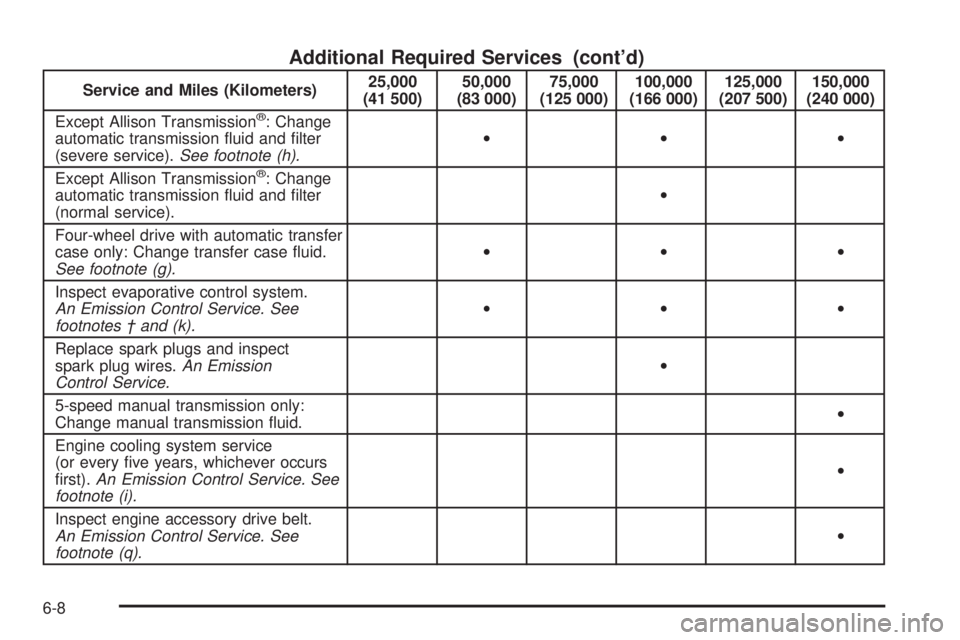
Inspect engine accessory drive belt.
An Emission Control Service. See
footnote (q).•
6-8
Page 557 of 600
Maintenance Footnotes
(Gasoline Engine)
This maintenance section applies to vehicles with a
gasoline engine. If your vehicle has a diesel engine,
see the maintenance schedule section in the
DURAMAX
®Diesel Engine Supplement.
†The U.S. Environmental Protection Agency or the
California Air Resources Board has determined that the
failure to perform this maintenance item will not nullify
the emission warranty or limit recall liability prior to the
completion of the vehicle’s useful life. We, however,
urge that all recommended maintenance services be
performed at the indicated intervals and the maintenance
be recorded.
#Lubricate the front suspension, ball joints, steering
linkage, transmission shift linkage, and parking brake
cable guides. Ball joints should not be lubricated unless
their temperature is 10°F (−12°C) or higher, or they could
be damaged. Vehicles used under severe commercial
operating conditions require lubrication on a regular basis
every 3,000 miles (5 000 km).
(a)Visually inspect brake lines and hoses for proper
hook-up, binding, leaks, cracks, chang, etc. Inspect
disc brake pads for wear and rotors for surface condition.
Inspect drum brake linings/shoes for wear or cracks.
Inspect other brake parts, including drums, wheel
cylinders, calipers, parking brake, etc.(b)Visually inspect front and rear suspension and
steering system for damaged, loose or missing parts,
signs of wear or lack of lubrication. Inspect power
steering lines and hoses for proper hook-up, binding,
leaks, cracks, chang, etc. Visually check constant
velocity joints, rubber boots, and axle seals for leaks.
(c)Visually inspect hoses and have them replaced if they
are cracked, swollen, or deteriorated. Inspect all pipes,
ttings and clamps; replace with genuine GM parts as
needed. To help ensure proper operation, a pressure test
of the cooling system and pressure cap and cleaning the
outside of the radiator and air conditioning condenser is
recommended at least once a year.
(d)Visually inspect wiper blades for wear or cracking.
Replace wiper blades that appear worn or damaged
or that streak or miss areas of the windshield.
(e)Make sure the safety belt reminder light and all your
belts, buckles, latch plates, retractors, and anchorages
are working properly. Look for any other loose or
damaged safety belt system parts. If you see anything
that might keep a safety belt system from doing its job,
have it repaired. Have any torn or frayed safety belts
replaced. Also look for any opened or broken airbag
coverings, and have them repaired or replaced. The
airbag system does not need regular maintenance.
6-9
Page 559 of 600
(p)If you drive regularly under dusty conditions, inspect
the lter or change indicator (if equipped) at each engine
oil change.
(q)Visually inspect belt for fraying, excessive cracks, or
obvious damage. Replace belt if necessary.
Owner Checks and Services
These owner checks and services should be performed
at the intervals specied to help ensure the safety,
dependability, and emission control performance of your
vehicle. Your GM Goodwrench
®dealer can assist you
with these checks and services.
Be sure any necessary repairs are completed at once.
Whenever any uids or lubricants are added to your
vehicle, make sure they are the proper ones, as shown
inRecommended Fluids and Lubricants (Gasoline
Engine) on page 6-14.
At the First 100, 1,000 and 6,000
Miles (160, 1 600 and 10 000 km)
Check dual wheel nut torque. For proper torque,
seeCapacities and Specications on page 5-133.
At Each Fuel Fill
It is important to perform these underhood checks at
each fuel ll.
Engine Oil Level Check
Check the engine oil level and add the proper oil if
necessary. SeeEngine Oil (Gasoline Engine) on
page 5-20for further details.
Notice:It is important to check your oil regularly
and keep it at the proper level. Failure to keep your
engine oil at the proper level can cause damage
to your engine not covered by your warranty.
Engine Coolant Level Check
Check the engine coolant level and add
DEX-COOL®coolant mixture if necessary.
SeeEngine Coolant on page 5-35for further details.
Windshield Washer Fluid Level Check
Check the windshield washer uid level in the windshield
washer uid reservoir and add the proper uid if
necessary.
6-11
Page 567 of 600
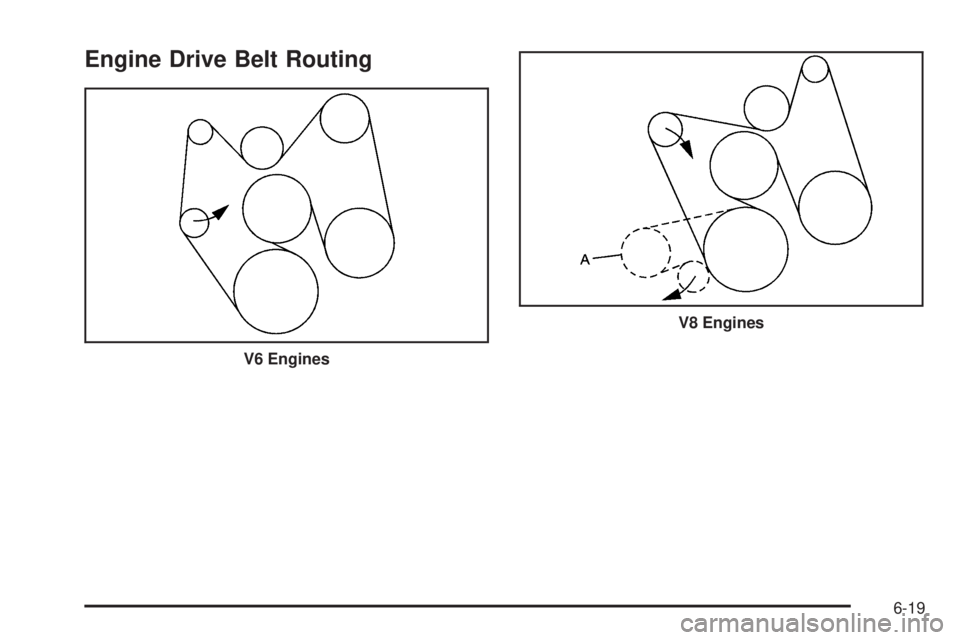
Engine Drive Belt Routing
V6 Engines
V8 Engines
6-19
Page 579 of 600
Additional Program Information
Courtesy Transportation is available during the
Bumper-to-Bumper warranty coverage period, but it
is not part of the New Vehicle Limited Warranty.
A separate booklet entitledWarranty and Owner
Assistance Informationfurnished with each new vehicle
provides detailed warranty coverage information.
Courtesy Transportation is available only at participating
dealers and all program options, such as shuttle
service, may not be available at every dealer. Please
contact your dealer for specic information about
availability. All Courtesy Transportation arrangements
will be administered by appropriate dealer personnel.
Canadian Vehicles:For warranty repairs during
the Complete Vehicle Coverage period of the General
Motors of Canada New Vehicle Limited Warranty,
alternative transportation may be available under the
Courtesy Transportation Program. Please consult
your dealer for details.
General Motors reserves the right to unilaterally modify,
change or discontinue Courtesy Transportation at any
time and to resolve all questions of claim eligibility
pursuant to the terms and conditions described herein
at its sole discretion.
Vehicle Data Collection and Event
Data Recorders
Your vehicle, like other modern motor vehicles, has a
number of sophisticated computer systems that monitor
and control several aspects of the vehicle’s performance.
Your vehicle uses on-board vehicle computers to monitor
emission control components to optimize fuel economy,
to monitor conditions for airbag deployment and, if so
equipped, to provide anti-lock braking and to help the
driver control the vehicle in difficult driving situations.
Some information may be stored during regular
operations to facilitate repair of detected malfunctions;
other information is stored only in a crash event by
computer systems, such as those commonly called
event data recorders (EDR).
In a crash event, computer systems, such as the Airbag
Sensing and Diagnostic Module (SDM) in your vehicle
may record information about the condition of the vehicle
and how it was operated, such as data related to engine
speed, brake application, throttle position, vehicle speed,
safety belt usage, airbag readiness, airbag performance,
and the severity of a collision. This information has been
used to improve vehicle crash performance and may be
used to improve crash performance of future vehicles
and driving safety. Unlike the data recorders on many
airplanes, these on-board systems do not record sounds,
such as conversation of vehicle occupants.
7-9
Page 587 of 600
A
Accessories and Modications............................ 5-4
Accessory Power Outlet(s)...............................3-20
Adding a Snow Plow or Similar Equipment.........4-54
Adding Equipment to Your Airbag-Equipped
Vehicle.......................................................1-86
Additives, Fuel................................................. 5-7
Add-On Electrical Equipment...........................5-123
Air Cleaner/Filter, Engine.................................5-25
Air Conditioning..............................3-21, 3-22, 3-25
Airbag
Off Light.....................................................3-35
Passenger Status Indicator...........................3-37
Readiness Light..........................................3-35
Airbag Sensing and Diagnostic Module (SDM)...... 7-9
Airbag System................................................1-70
Adding Equipment to Your Airbag-Equipped
Vehicle...................................................1-86
Airbag Off Switch........................................1-78
How Does an Airbag Restrain?......................1-76
Passenger Sensing System...........................1-81
Servicing Your Airbag-Equipped Vehicle..........1-86
What Makes an Airbag Inate?......................1-76
What Will You See After an Airbag Inates?....1-76
When Should an Airbag Inate?....................1-74
Where Are the Airbags?...............................1-72
AM-FM Radio.................................................3-72
Antenna, Fixed Mast......................................3-132
Antenna, XM™ Satellite Radio Antenna System . . . 3-133Anti-Lock Brake System (ABS)........................... 4-6
Anti-Lock Brake, System Warning Light..............3-42
Appearance Care
Aluminum or Chrome-Plated Wheels.............5-118
Care of Safety Belts...................................5-116
Chemical Paint Spotting..............................5-120
Cleaning Exterior Lamps/Lenses..................5-117
Cleaning the Inside of Your Vehicle..............5-113
Fabric/Carpet............................................5-114
Finish Care...............................................5-117
Finish Damage..........................................5-120
Instrument Panel, Vinyl, and Other
Plastic Surfaces.....................................5-115
Leather....................................................5-115
Sheet Metal Damage..................................5-119
Tires........................................................5-119
Underbody Maintenance.............................5-120
Vehicle Care/Appearance Materials...............5-121
Washing Your Vehicle.................................5-116
Weatherstrips............................................5-116
Windshield and Wiper Blades......................5-118
Ashtray(s)......................................................3-20
Audio System(s).............................................3-70
AM-FM Radio.............................................3-72
Audio Steering Wheel Controls....................3-129
Care of Your Cassette Tape Player...............3-131
Care of Your CD and DVD Player................3-132
Care of Your CDs and DVDs.......................3-132
Chime Level Adjustment.............................3-133
Fixed Mast Antenna...................................3-132
1
Page 588 of 600
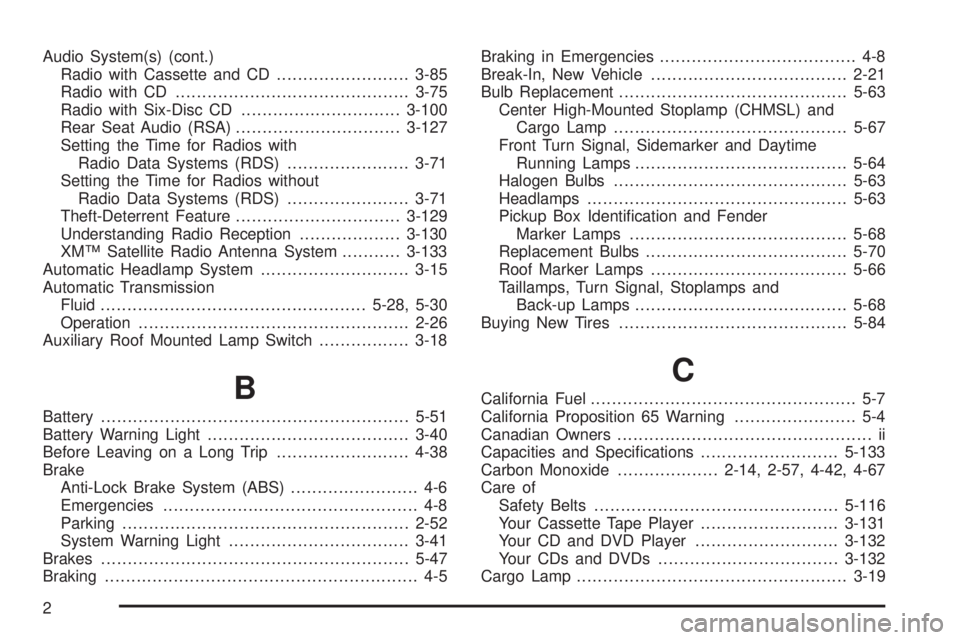
Audio System(s) (cont.)
Radio with Cassette and CD.........................3-85
Radio with CD............................................3-75
Radio with Six-Disc CD..............................3-100
Rear Seat Audio (RSA)...............................3-127
Setting the Time for Radios with
Radio Data Systems (RDS).......................3-71
Setting the Time for Radios without
Radio Data Systems (RDS).......................3-71
Theft-Deterrent Feature...............................3-129
Understanding Radio Reception...................3-130
XM™ Satellite Radio Antenna System...........3-133
Automatic Headlamp System............................3-15
Automatic Transmission
Fluid..................................................5-28, 5-30
Operation...................................................2-26
Auxiliary Roof Mounted Lamp Switch.................3-18
B
Battery..........................................................5-51
Battery Warning Light......................................3-40
Before Leaving on a Long Trip.........................4-38
Brake
Anti-Lock Brake System (ABS)........................ 4-6
Emergencies................................................ 4-8
Parking......................................................2-52
System Warning Light..................................3-41
Brakes..........................................................5-47
Braking........................................................... 4-5Braking in Emergencies..................................... 4-8
Break-In, New Vehicle.....................................2-21
Bulb Replacement...........................................5-63
Center High-Mounted Stoplamp (CHMSL) and
Cargo Lamp............................................5-67
Front Turn Signal, Sidemarker and Daytime
Running Lamps........................................5-64
Halogen Bulbs............................................5-63
Headlamps.................................................5-63
Pickup Box Identication and Fender
Marker Lamps.........................................5-68
Replacement Bulbs......................................5-70
Roof Marker Lamps.....................................5-66
Taillamps, Turn Signal, Stoplamps and
Back-up Lamps........................................5-68
Buying New Tires...........................................5-84
C
California Fuel.................................................. 5-7
California Proposition 65 Warning....................... 5-4
Canadian Owners................................................ ii
Capacities and Specications..........................5-133
Carbon Monoxide...................2-14, 2-57, 4-42, 4-67
Care of
Safety Belts..............................................5-116
Your Cassette Tape Player..........................3-131
Your CD and DVD Player...........................3-132
Your CDs and DVDs..................................3-132
Cargo Lamp...................................................3-19
2
Page 589 of 600
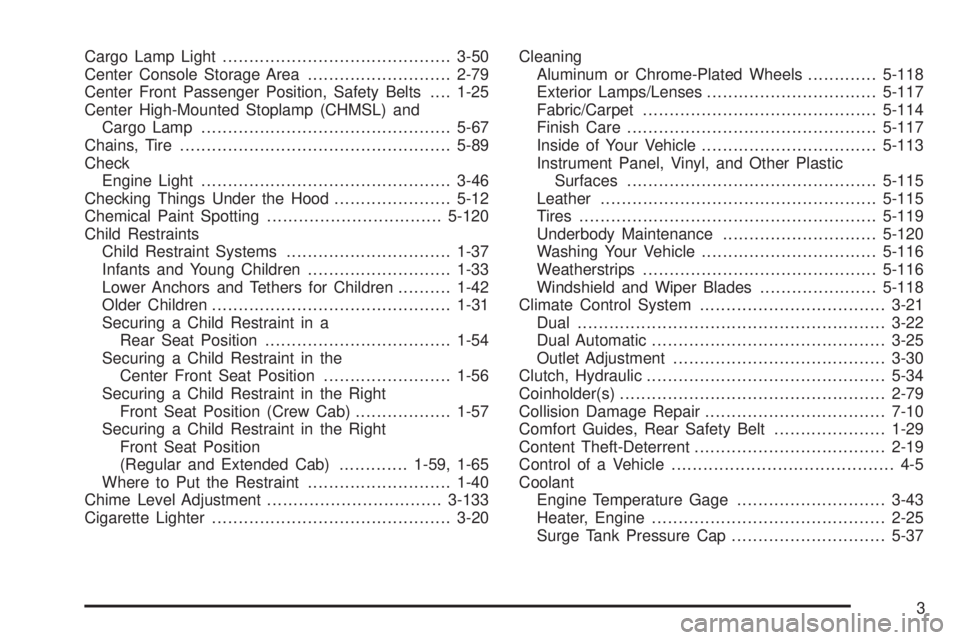
Cargo Lamp Light...........................................3-50
Center Console Storage Area...........................2-79
Center Front Passenger Position, Safety Belts....1-25
Center High-Mounted Stoplamp (CHMSL) and
Cargo Lamp...............................................5-67
Chains, Tire...................................................5-89
Check
Engine Light...............................................3-46
Checking Things Under the Hood......................5-12
Chemical Paint Spotting.................................5-120
Child Restraints
Child Restraint Systems...............................1-37
Infants and Young Children...........................1-33
Lower Anchors and Tethers for Children..........1-42
Older Children.............................................1-31
Securing a Child Restraint in a
Rear Seat Position...................................1-54
Securing a Child Restraint in the
Center Front Seat Position........................1-56
Securing a Child Restraint in the Right
Front Seat Position (Crew Cab)..................1-57
Securing a Child Restraint in the Right
Front Seat Position
(Regular and Extended Cab).............1-59, 1-65
Where to Put the Restraint...........................1-40
Chime Level Adjustment.................................3-133
Cigarette Lighter.............................................3-20Cleaning
Aluminum or Chrome-Plated Wheels.............5-118
Exterior Lamps/Lenses................................5-117
Fabric/Carpet............................................5-114
Finish Care...............................................5-117
Inside of Your Vehicle.................................5-113
Instrument Panel, Vinyl, and Other Plastic
Surfaces...............................................5-115
Leather....................................................5-115
Tires........................................................5-119
Underbody Maintenance.............................5-120
Washing Your Vehicle.................................5-116
Weatherstrips............................................5-116
Windshield and Wiper Blades......................5-118
Climate Control System...................................3-21
Dual..........................................................3-22
Dual Automatic............................................3-25
Outlet Adjustment........................................3-30
Clutch, Hydraulic.............................................5-34
Coinholder(s)..................................................2-79
Collision Damage Repair..................................7-10
Comfort Guides, Rear Safety Belt.....................1-29
Content Theft-Deterrent....................................2-19
Control of a Vehicle.......................................... 4-5
Coolant
Engine Temperature Gage............................3-43
Heater, Engine............................................2-25
Surge Tank Pressure Cap.............................5-37
3