belt GMC SIERRA 2009 Manual Online
[x] Cancel search | Manufacturer: GMC, Model Year: 2009, Model line: SIERRA, Model: GMC SIERRA 2009Pages: 596, PDF Size: 3.25 MB
Page 551 of 596
Maintenance Footnotes
This maintenance section applies to vehicles with a
gasoline engine. For diesel engine vehicles, see
the maintenance schedule section in the DURAMAX
®
Diesel manual.
†The U.S. Environmental Protection Agency or the
California Air Resources Board has determined that the
failure to perform this maintenance item will not nullify
the emission warranty or limit recall liability prior to
the completion of the vehicle’s useful life. We, however,
urge that all recommended maintenance services be
performed at the indicated intervals and the
maintenance be recorded.
#Lubricate the front suspension, steering linkage,
and parking brake cable guides. Control arm ball joints
on 2500/3500 series vehicles require lubrication but
should not be lubricated unless their temperature is
10°F (−12°C) or higher, or they could be damaged.
Control arm ball joints on 1500 series vehicles are
maintenance-free. Vehicles used under severe
commercial operating conditions require lubrication
on a regular basis every 3,000 miles (5 000 km).
(a)Visually inspect brake lines and hoses for proper
hook-up, binding, leaks, cracks, chafing, etc. Inspect disc
brake pads for wear and rotors for surface condition.
Inspect drum brake linings/shoes for wear or cracks.
Inspect other brake parts, including drums, wheel
cylinders, calipers, parking brake, etc.(b)Visually inspect front and rear suspension and
steering system for damaged, loose or missing parts,
signs of wear or lack of lubrication. Inspect power
steering lines and hoses for proper hook-up, binding,
leaks, cracks, chafing, etc. Visually check constant
velocity joints, rubber boots, and axle seals for leaks.
(c)Visually inspect hoses and have them replaced if
they are cracked, swollen, or deteriorated. Inspect all
pipes, fittings and clamps; replace with genuine parts as
needed. To help ensure proper operation, a pressure test
of the cooling system and pressure cap and cleaning the
outside of the radiator and air conditioning condenser is
recommended at least once a year.
(d)Inspect wiper blades for wear, cracking, or
contamination. Clean the windshield and wiper blades,
if contaminated. Replace wiper blades that are worn or
damaged. See Windshield Wiper Blade Replacement
on page 5-64 and Windshield and Wiper Blades on
page 5-118 for more information.
(e)Make sure the safety belt reminder light and safety
belt assemblies are working properly. Look for any other
loose or damaged safety belt system parts. If you see
anything that might keep a safety belt system from doing
its job, have it repaired. Have any torn or frayed safety
belts replaced. Also see Checking the Restraint Systems
on page 1-90.
6-9
Page 553 of 596
(n)Vehicles with diesel engine or with GVWR above
10,000 lbs (4 536 kg) only: Inspect shields for damage or
looseness. Adjust or replace as required. This is a Noise
Emission Control Service. Applicable to vehicles sold in
the United States and recommended for vehicles sold in
Canada.
(p)If driving regularly under dusty conditions, inspect
the filter or change indicator (if equipped) at each engine
oil change.
(q)Visually inspect belt for fraying, excessive cracks, or
obvious damage. Replace belt if necessary.
Owner Checks and Services
These owner checks and services should be performed
at the intervals specied to help ensure vehicle safety,
dependability, and emission control performance. Your
dealer/retailer can assist with these checks and services.
Be sure any necessary repairs are completed at once.
Whenever any uids or lubricants are added to the
vehicle, make sure they are the proper ones, as shown
inRecommended Fluids and Lubricants on page 6-15.
At the First 100, 1,000 and
6,000 Miles (160, 1 600 and
10 000 km)
For vehicles with dual wheels, check dual wheel nut
torque. For proper torque, seeCapacities and
Specifications on page 5-129.
At Each Fuel Fill
It is important to perform these underhood checks at
each fuel fill.
Engine Oil Level Check
Notice:It is important to check the engine oil
regularly and keep it at the proper level. Failure to
keep the engine oil at the proper level can cause
damage to the engine not covered by the vehicle
warranty.
Check the engine oil level and add the proper oil if
necessary. SeeEngine Oil on page 5-15.
6-11
Page 560 of 596
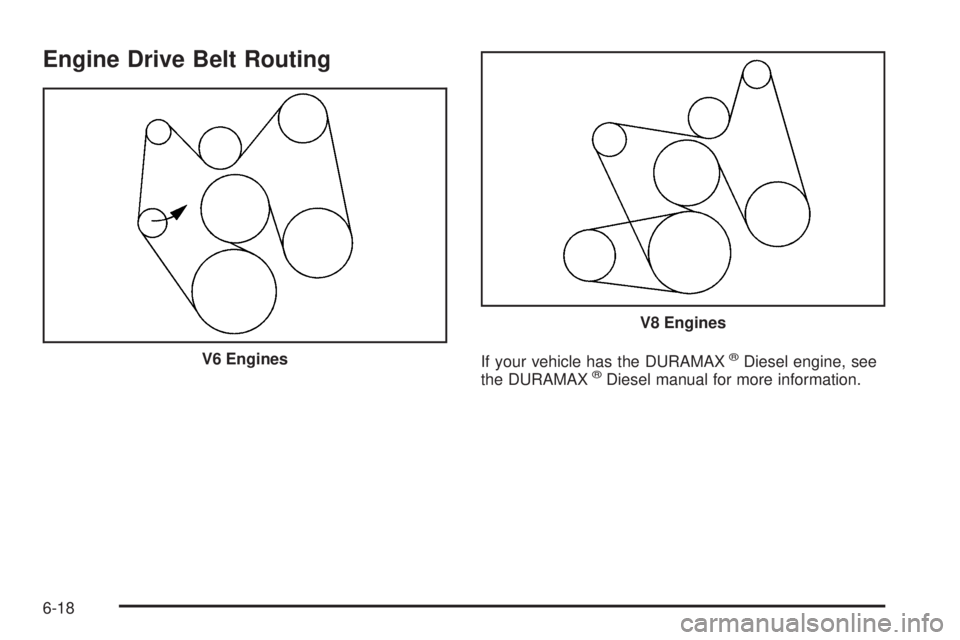
Engine Drive Belt Routing
If your vehicle has the DURAMAX®Diesel engine, see
the DURAMAX®Diesel manual for more information. V6 Engines
V8 Engines
6-18
Page 581 of 596
Event Data Recorders
This vehicle has an Event Data Recorder (EDR).
The main purpose of an EDR is to record, in certain
crash or near crash-like situations, such as an airbag
deployment or hitting a road obstacle, data that will assist
in understanding how a vehicle’s systems performed.
The EDR is designed to record data related to vehicle
dynamics and safety systems for a short period of time,
typically 30 seconds or less. The EDR in this vehicle is
designed to record such data as:
How various systems in your vehicle were operating
Whether or not the driver and passenger safety belts
were buckled/fastened
How far, if at all, the driver was pressing the
accelerator and/or brake pedal
How fast the vehicle was traveling
This data can help provide a better understanding of the
circumstances in which crashes and injuries occur.Important:EDR data is recorded by your vehicle only
if a non-trivial crash situation occurs; no data is recorded
by the EDR under normal driving conditions and no
personal data (e.g., name, gender, age, and crash
location) is recorded. However, other parties, such as law
enforcement, could combine the EDR data with the type
of personally identifying data routinely acquired during a
crash investigation.
To read data recorded by an EDR, special equipment
is required, and access to the vehicle or the EDR is
needed. In addition to the vehicle manufacturer, other
parties, such as law enforcement, that have the special
equipment, can read the information if they have access
to the vehicle or the EDR.
GM will not access this data or share it with others
except: with the consent of the vehicle owner or, if the
vehicle is leased, with the consent of the lessee; in
response to an official request of police or similar
government office; as part of GM’s defense of litigation
through the discovery process; or, as required by law.
Data that GM collects or receives may also be used for
GM research needs or may be made available to others
for research purposes, where a need is shown and the
data is not tied to a specic vehicle or vehicle owner.
7-17
Page 583 of 596
A
Accessories and Modications............................ 5-4
Accessory Power Outlets.................................3-22
Adding a Snow Plow or Similar Equipment.........4-38
Adding Equipment to Your Airbag-Equipped
Vehicle.......................................................1-89
Additives, Fuel................................................. 5-7
Add-On Electrical Equipment...........................5-122
Adjustable Throttle and Brake Pedal..................2-26
Air Cleaner/Filter, Engine.................................5-19
Air Conditioning..............................3-24, 3-25, 3-27
Airbag
Off Light.....................................................3-38
Passenger Status Indicator...........................3-40
Readiness Light..........................................3-37
Airbag System................................................1-73
Adding Equipment to Your Airbag-Equipped
Vehicle...................................................1-89
Airbag Off Switch........................................1-81
How Does an Airbag Restrain?......................1-79
Passenger Sensing System...........................1-84
Servicing Your Airbag-Equipped Vehicle..........1-88
What Makes an Airbag Inate?......................1-79
What Will You See After an Airbag Inates?....1-79
When Should an Airbag Inate?....................1-77
Where Are the Airbags?...............................1-75
Antenna, Fixed Mast......................................3-142
Antenna, XM™ Satellite Radio
Antenna System........................................3-142Antilock Brake System (ABS)............................. 4-5
Antilock Brake, System Warning Light................3-43
Appearance Care
Aluminum or Chrome-Plated Wheels.............5-119
Care of Safety Belts...................................5-116
Chemical Paint Spotting..............................5-120
Cleaning Exterior Lamps/Lenses..................5-117
Fabric/Carpet............................................5-115
Finish Care...............................................5-118
Finish Damage..........................................5-120
Instrument Panel, Vinyl, and Other
Plastic Surfaces.....................................5-116
Interior Cleaning........................................5-113
Leather....................................................5-115
Sheet Metal Damage..................................5-120
Tires........................................................5-120
Underbody Maintenance.............................5-120
Washing Your Vehicle.................................5-117
Weatherstrips............................................5-116
Windshield and Wiper Blades......................5-118
Appointments, Scheduling Service.....................7-10
Ashtray.........................................................3-23
Audio System.................................................3-85
Audio Steering Wheel Controls....................3-141
Fixed Mast Antenna...................................3-142
Navigation/Radio System, see
Navigation Manual..................................3-119
Radio Reception........................................3-141
Rear Seat Audio (RSA)...............................3-139
1
Page 584 of 596
Audio System (cont.)
Setting the Clock.........................................3-86
Theft-Deterrent Feature...............................3-140
XM™ Satellite Radio Antenna System...........3-142
Audio System(s).............................................3-88
Automatic Headlamp System............................3-18
Automatic Transmission
Fluid..................................................5-21, 5-24
Operation...................................................2-28
Auxiliary Roof Mounted Lamp Switch.................3-19
B
Battery..........................................................5-43
Electric Power Management..........................3-21
Run-Down Protection...................................3-22
Bluetooth
®....................................................3-119
Brake
Emergencies................................................ 4-6
Brake Fluid....................................................5-40
Brakes..........................................................5-40
System Warning Light..................................3-42
Braking........................................................... 4-4
Braking in Emergencies..................................... 4-6
Break-In, New Vehicle.....................................2-22
Bulb Replacement...........................................5-58
Center High-Mounted Stoplamp (CHMSL)
and Cargo Lamp......................................5-59
Halogen Bulbs............................................5-58Bulb Replacement (cont.)
Headlamp Aiming........................................5-55
Headlamps.................................................5-58
License Plate Lamps....................................5-63
Pickup Box Identication and Fender
Marker Lamps.........................................5-60
Replacement Bulbs......................................5-63
Taillamps, Turn Signal, Stoplamps and
Back-up Lamps........................................5-61
Buying New Tires...........................................5-84
C
Calibration.....................................................3-63
California Fuel.................................................. 5-7
California Perchlorate Materials
Requirements............................................... 5-5
California Proposition 65 Warning....................... 5-5
Canadian Owners................................................ ii
Capacities and Specications..........................5-129
Carbon Monoxide...........................2-13, 2-55, 4-28
Care of
Safety Belts..............................................5-116
Cargo Lamp...................................................3-21
Cargo Management System.............................2-84
CD, MP3 ............................................3-108, 3-113
Center Console Storage Area...........................2-82
Center High-Mounted Stoplamp (CHMSL)
and Cargo Lamp.........................................5-59
2
Page 587 of 596
Electrical System (cont.)
Underhood Fuse Block...............................5-126
Windshield Wiper Fuses.............................5-122
Electronic Immobilizer
PASS-Key
®III+...........................................2-20
Electronic Immobilizer Operation
PASS-Key
®III+...........................................2-20
Engine
Air Cleaner/Filter.........................................5-19
Check and Service Engine Soon Lamp...........3-45
Coolant......................................................5-29
Coolant Heater............................................2-27
Coolant Temperature Gage...........................3-44
Drive Belt Routing.......................................6-18
Engine Compartment Overview......................5-14
Exhaust.....................................................2-55
Fan Noise..................................................5-37
Fast Idle System.........................................2-25
Oil .............................................................5-15
Oil Life System...........................................5-18
Overheated Protection Operating Mode...........5-37
Overheating................................................5-34
Starting......................................................2-24
Entry Lighting.................................................3-20
Event Data Recorders.....................................7-17
Exit Lighting...................................................3-20
Extender, Safety Belt.......................................1-37
Exterior Lamps...............................................3-16
F
Fast Idle System............................................2-25
Filter
Engine Air Cleaner......................................5-19
Finish Damage.............................................5-120
Fixed Mast Antenna.......................................3-142
Flashers, Hazard Warning.................................. 3-8
Flash-to-Pass.................................................3-10
Flat Tire........................................................5-91
Flat Tire, Changing.........................................5-92
Flat Tire, Storing...........................................5-109
Fluid
Automatic Transmission........................5-21, 5-24
Power Steering...........................................5-38
Windshield Washer......................................5-39
Fog Lamp
Fog ...........................................................3-19
Fog Lamp Light..............................................3-50
Four-Wheel Drive....................................2-37, 5-51
Four-Wheel-Drive Light....................................3-51
Front Axle......................................................5-53
Fuel............................................................... 5-6
Additives...................................................... 5-7
California Fuel.............................................. 5-7
Driving for Better Economy............................. 4-2
E85 (85% Ethanol)........................................ 5-8
Filling a Portable Fuel Container....................5-12
Filling the Tank...........................................5-10
5
Page 588 of 596
Fuel (cont.)
Fuels in Foreign Countries.............................. 5-9
Gage .........................................................3-51
Gasoline Octane........................................... 5-6
Gasoline Specications.................................. 5-7
Low Warning Light.......................................3-52
Fuses
Center Instrument Panel Fuse Block.............5-125
Fuses and Circuit Breakers.........................5-122
Instrument Panel Fuse Block.......................5-123
Underhood Fuse Block...............................5-126
Windshield Wiper.......................................5-122
G
Gage
Engine Coolant Temperature.........................3-44
Fuel..........................................................3-51
Oil Pressure...............................................3-48
Speedometer..............................................3-35
Tachometer.................................................3-35
Voltmeter Gage...........................................3-41
Garage Door Opener.......................................2-74
Gasoline
Octane........................................................ 5-6
Specications............................................... 5-7
Glove Box.....................................................2-81
GM Mobility Reimbursement Program.................. 7-7
H
Hazard Warning Flashers................................... 3-8
Head Restraints............................................... 1-3
Headlamp
Aiming .......................................................5-55
Headlamps....................................................5-58
Bulb Replacement.......................................5-58
Daytime Running Lamp................................3-17
Exterior Lamps............................................3-16
Flash-to-Pass..............................................3-10
Halogen Bulbs............................................5-58
High/Low Beam Changer..............................3-10
On Reminder..............................................3-17
Pickup Box Identication and Fender
Marker Lamps.........................................5-60
Heated Seats................................................... 1-8
Heater...................................................3-24, 3-25
Engine Coolant...........................................2-27
Heater...........................................................3-27
Highbeam On Light.........................................3-50
High-Speed Operation, Tires.............................5-74
Highway Hypnosis...........................................4-26
Hill and Mountain Roads..................................4-27
Hood
Checking Things Under................................5-12
Release.....................................................5-13
Horn ............................................................... 3-8
How to Wear Safety Belts Properly...................1-21
6
Page 589 of 596
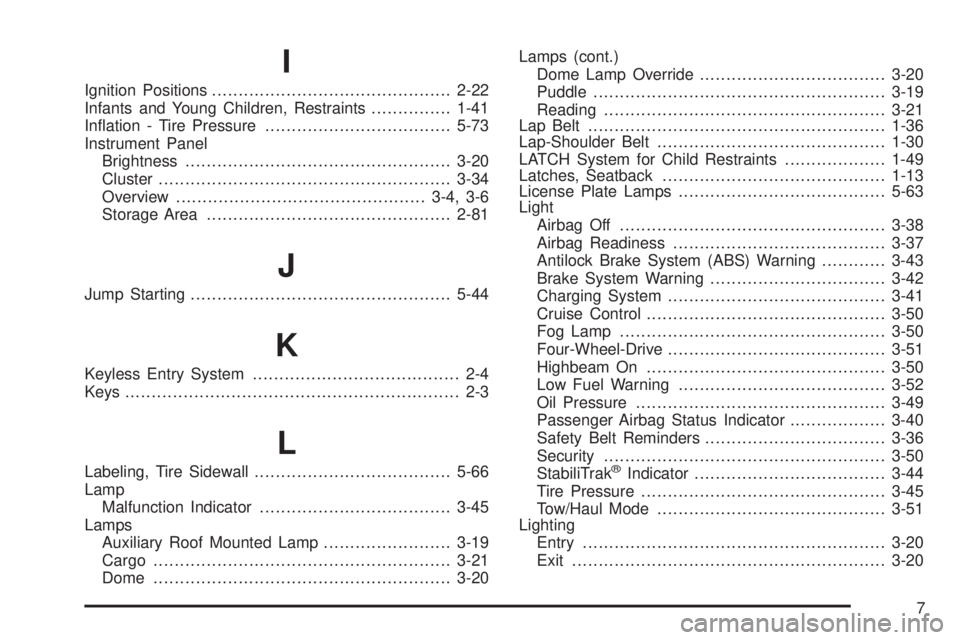
I
Ignition Positions.............................................2-22
Infants and Young Children, Restraints...............1-41
Ination - Tire Pressure...................................5-73
Instrument Panel
Brightness..................................................3-20
Cluster.......................................................3-34
Overview...............................................3-4, 3-6
Storage Area..............................................2-81
J
Jump Starting.................................................5-44
K
Keyless Entry System....................................... 2-4
Keys............................................................... 2-3
L
Labeling, Tire Sidewall.....................................5-66
Lamp
Malfunction Indicator....................................3-45
Lamps
Auxiliary Roof Mounted Lamp........................3-19
Cargo........................................................3-21
Dome ........................................................3-20Lamps (cont.)
Dome Lamp Override...................................3-20
Puddle.......................................................3-19
Reading.....................................................3-21
Lap Belt........................................................1-36
Lap-Shoulder Belt...........................................1-30
LATCH System for Child Restraints...................1-49
Latches, Seatback..........................................1-13
License Plate Lamps.......................................5-63
Light
Airbag Off..................................................3-38
Airbag Readiness........................................3-37
Antilock Brake System (ABS) Warning............3-43
Brake System Warning.................................3-42
Charging System.........................................3-41
Cruise Control.............................................3-50
Fog Lamp ..................................................3-50
Four-Wheel-Drive.........................................3-51
Highbeam On.............................................3-50
Low Fuel Warning.......................................3-52
Oil Pressure...............................................3-49
Passenger Airbag Status Indicator..................3-40
Safety Belt Reminders..................................3-36
Security.....................................................3-50
StabiliTrak®Indicator....................................3-44
Tire Pressure..............................................3-45
Tow/Haul Mode...........................................3-51
Lighting
Entry.........................................................3-20
Exit...........................................................3-20
7
Page 593 of 596
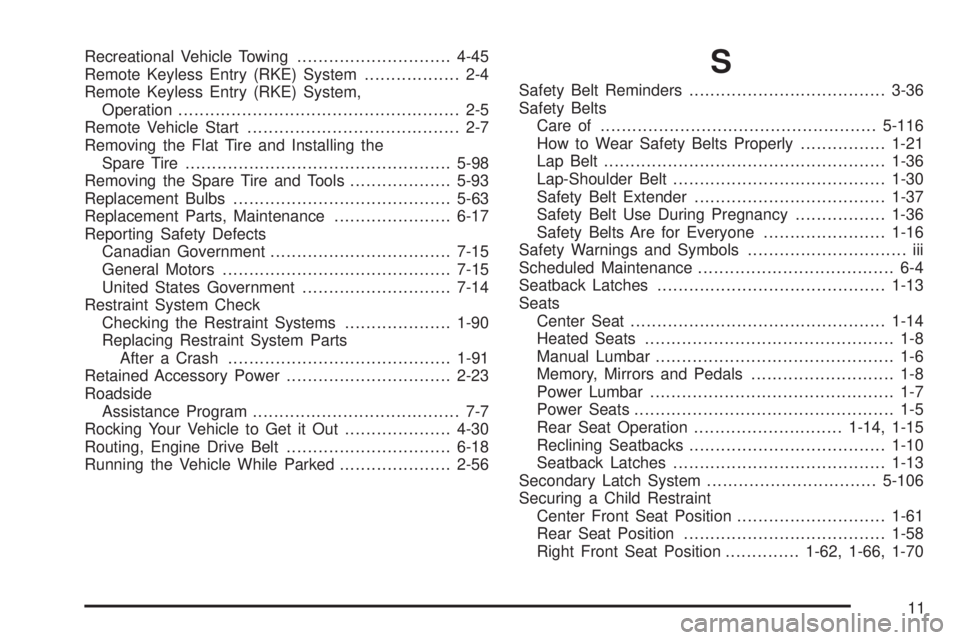
Recreational Vehicle Towing.............................4-45
Remote Keyless Entry (RKE) System.................. 2-4
Remote Keyless Entry (RKE) System,
Operation..................................................... 2-5
Remote Vehicle Start........................................ 2-7
Removing the Flat Tire and Installing the
Spare Tire..................................................5-98
Removing the Spare Tire and Tools...................5-93
Replacement Bulbs.........................................5-63
Replacement Parts, Maintenance......................6-17
Reporting Safety Defects
Canadian Government..................................7-15
General Motors...........................................7-15
United States Government............................7-14
Restraint System Check
Checking the Restraint Systems....................1-90
Replacing Restraint System Parts
After a Crash..........................................1-91
Retained Accessory Power...............................2-23
Roadside
Assistance Program....................................... 7-7
Rocking Your Vehicle to Get it Out....................4-30
Routing, Engine Drive Belt...............................6-18
Running the Vehicle While Parked.....................2-56S
Safety Belt Reminders.....................................3-36
Safety Belts
Care of ....................................................5-116
How to Wear Safety Belts Properly................1-21
Lap Belt.....................................................1-36
Lap-Shoulder Belt........................................1-30
Safety Belt Extender....................................1-37
Safety Belt Use During Pregnancy.................1-36
Safety Belts Are for Everyone.......................1-16
Safety Warnings and Symbols.............................. iii
Scheduled Maintenance..................................... 6-4
Seatback Latches...........................................1-13
Seats
Center Seat................................................1-14
Heated Seats............................................... 1-8
Manual Lumbar............................................. 1-6
Memory, Mirrors and Pedals........................... 1-8
Power Lumbar .............................................. 1-7
Power Seats................................................. 1-5
Rear Seat Operation............................1-14, 1-15
Reclining Seatbacks.....................................1-10
Seatback Latches........................................1-13
Secondary Latch System................................5-106
Securing a Child Restraint
Center Front Seat Position............................1-61
Rear Seat Position......................................1-58
Right Front Seat Position..............1-62, 1-66, 1-70
11