4-63 GMC YUKON 2004 User Guide
[x] Cancel search | Manufacturer: GMC, Model Year: 2004, Model line: YUKON, Model: GMC YUKON 2004Pages: 554, PDF Size: 5.21 MB
Page 362 of 554
Autoride™
If equipped, the Autoride™ feature will provide a
superior vehicle ride and handling under a variety of
passenger and loading conditions.
The system is fully automatic and uses a computer
controller to continuously monitor vehicle speed, wheel
to body position, lift/dive and steering position of the
vehicle. The controller then sends signals to each shock
absorber to independently adjust the damping level to
provide the optimum vehicle ride.
Autoride™ also interacts with the tow/haul switch that,
when engaged, will provide additional control of the
shock absorbers. This additional control results in better
ride and handling characteristics when the vehicle is
loaded or towing a trailer. SeeTow/Haul Mode Light on
page 3-56for more information.
Trailer Recommendations
You must subtract your hitch loads from the Cargo
Weight Rating (CWR) for your vehicle. CWR is the
maximum weight of the load your vehicle can carry. It
doesn’t include the weight of the people inside. But you
can gure about 150 lbs. (68 kg) for each seat. The total
cargo load must not be more than your vehicle’s CWR.
Weigh your vehicle with the trailer attached, so that you
won’t go over the GVWR or GAWR. If you are using
a weight-distributing hitch, weigh the vehicle without the
spring bars in place.
You’ll get the best performance if you spread out the
weight of your load the right way, and if you choose the
correct hitch and trailer brakes.
For more information, seeTowing a Trailer on page 4-63
Towing a Trailer.
4-62
Page 363 of 554
Towing a Trailer
{CAUTION:
If you do not use the correct equipment and
drive properly, you can lose control when you
pull a trailer. For example, if the trailer is too
heavy, the brakes may not work well — or even
at all. You and your passengers could be
seriously injured. Pull a trailer only if you have
followed all the steps in this section. Ask your
dealer for advice and information about towing
a trailer with your vehicle.
Notice:Pulling a trailer improperly can damage
your vehicle and result in costly repairs not covered
by your warranty. To pull a trailer correctly, follow
the advice in this part, and see your dealer for
important information about towing a trailer with
your vehicle.
To identify the vehicle trailering capacity of your vehicle,
you should read the information in “Weight of the
Trailer” that appears later in this section.If yours was built with trailering options, as many are,
it’s ready for heavier trailers. But trailering is different
than just driving your vehicle by itself. Trailering means
changes in acceleration, braking, handling, durability
and fuel economy. Successful, safe trailering takes
correct equipment, and it has to be used properly.
That’s the reason for this part. In it are many time-tested,
important trailering tips and safety rules. Many of
these are important for your safety and that of your
passengers. So please read this section carefully before
you pull a trailer.
If You Do Decide To Pull A Trailer
If you do, here are some important points:
There are many different laws, including speed limit
restrictions, having to do with trailering. Make sure
your rig will be legal, not only where you live
but also where you’ll be driving. A good source for
this information can be state or provincial police.
Consider using a sway control. See “Hitches” later
in this section.
Don’t tow a trailer at all during the rst 500 miles
(800 km) your new vehicle is driven. Your engine,
axle or other parts could be damaged.
4-63
Page 411 of 554
Notice:If your engine catches re because you
keep driving with no coolant, your vehicle can
be badly damaged. The costly repairs would not be
covered by your warranty. See “Overheated
Engine Protection Operating Mode” underEngine
Overheating on page 5-29for information on driving
to a safe place in an emergency.
If No Steam Is Coming From Your
Engine
An overheat warning, along with a low coolant condition,
can indicate a serious problem. SeeLow Coolant
underDIC Warnings and Messages on page 3-70.
If you get an engine overheat warning with and do not
have a low coolant condition, but see or hear no steam,
the problem may not be too serious. Sometimes the
engine can get a little too hot when you:
Climb a long hill on a hot day.
Stop after high-speed driving.
Idle for long periods in traffic.
Tow a trailer. SeeTowing a Trailer on page 4-63.If you get the overheat warning with no sign of steam,
try this for a minute or so:
1. In heavy traffic, let the engine idle in neutral while
stopped. If it is safe to do so, pull off the road. Shift
to park or neutral and let the engine idle.
2. Turn on your heater to full hot at the highest fan
speed and open the window as necessary.
If you no longer have the overheat warning, you can
drive. Just to be safe, drive slower for about 10 minutes.
If the warning doesn’t come back on, you can drive
normally.
If the warning continues, pull over, stop, and park your
vehicle right away.
If there’s still no sign of steam, you can push down the
accelerator until the engine speed is about twice as
fast as normal idle speed for at least three minutes while
you’re parked. If you still have the warning,turn off
the engine and get everyone out of the vehicleuntil it
cools down. Also, seeOverheated Engine Protection
Operating Modelisted previously in this section.
You may decide not to lift the hood but to get service
help right away.
5-31
Page 539 of 554
Bulb Replacement (cont.)
Replacement Bulbs......................................5-61
Roof Marker Lamps.....................................5-58
Side Identication Marker Lamps...................5-57
Taillamps....................................................5-60
Buying New Tires...........................................5-78
C
California Fuel.................................................. 5-5
Canada........................................................... 7-4
Canadian Owners................................................ ii
Canadian Roadside Assistance........................... 7-7
Capacities and Specications..........................5-122
Car Washes for QUADRASTEER™ Equipped
Vehicles.....................................................4-18
Carbon Monoxide...................4-46, 4-63, 2-13, 2-42
Care of
Safety Belts..............................................5-106
Your Cassette Tape Player..........................3-137
Your CD and DVD Player...........................3-139
Your CDs and DVDs..................................3-138
Cargo Cover..................................................2-62
Cargo Tie Downs............................................2-62
Cassette Tape Messages...............................3-104
CD Adapter Kits............................................3-104
CD Messages.............................3-92, 3-107, 3-122
Center Console Storage Area...........................2-60
Center Instrument Panel Fuse Block................5-116Center Passenger Position, Safety Belts.............1-37
Chains, Tires..................................................5-82
CHANGE ENGINE OIL....................................3-71
Check
Engine Light...............................................3-51
Check Engine Light.........................................3-51
CHECK OIL LEVEL.........................................3-71
CHECK TIRE PRESSURE...............................3-71
CHECK WASHER FLUID.................................3-71
Checking Brake Fluid......................................5-42
Checking Coolant............................................5-27
Checking Engine Oil........................................5-16
Checking Things Under the Hood......................5-10
Checking Your Restraint Systems......................1-87
Chemical Paint Spotting.................................5-110
Child Restraints
Child Restraint Systems...............................1-51
Infants and Young Children...........................1-48
Lower Anchorages and Top Tethers for
Children (LATCH System)..........................1-60
Older Children.............................................1-45
Securing a Child Restraint Designed for the
LATCH System........................................1-62
Securing a Child Restraint in a Center Rear
Seat Position...........................................1-65
Securing a Child Restraint in a Rear Outside
Seat Position...........................................1-62
Securing a Child Restraint in the Center Front
Seat Position...........................................1-67
3
Page 544 of 554
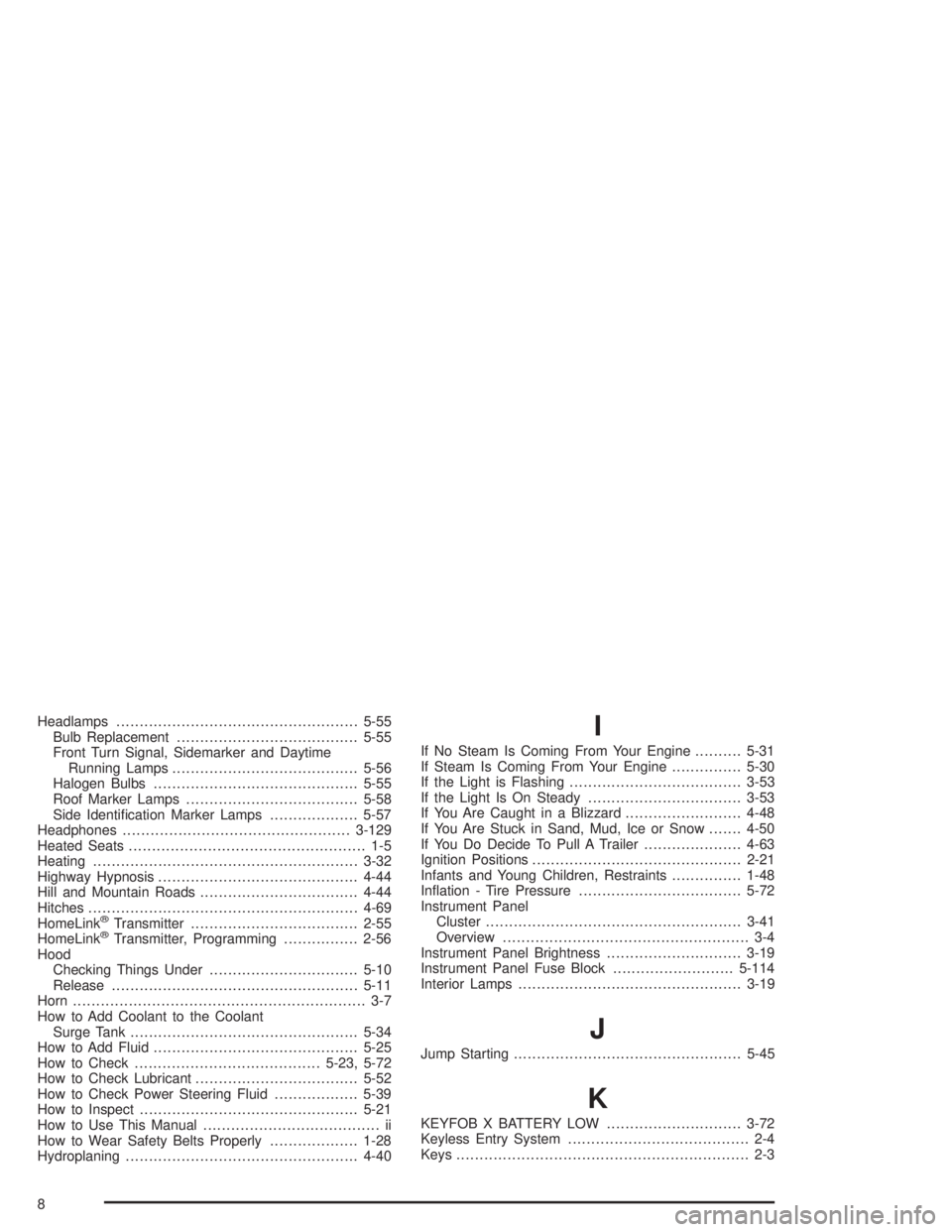
Headlamps....................................................5-55
Bulb Replacement.......................................5-55
Front Turn Signal, Sidemarker and Daytime
Running Lamps........................................5-56
Halogen Bulbs............................................5-55
Roof Marker Lamps.....................................5-58
Side Identication Marker Lamps...................5-57
Headphones.................................................3-129
Heated Seats................................................... 1-5
Heating.........................................................3-32
Highway Hypnosis...........................................4-44
Hill and Mountain Roads..................................4-44
Hitches..........................................................4-69
HomeLink
®Transmitter....................................2-55
HomeLink®Transmitter, Programming................2-56
Hood
Checking Things Under................................5-10
Release.....................................................5-11
Horn............................................................... 3-7
How to Add Coolant to the Coolant
Surge Tank.................................................5-34
How to Add Fluid............................................5-25
How to Check........................................5-23, 5-72
How to Check Lubricant...................................5-52
How to Check Power Steering Fluid..................5-39
How to Inspect...............................................5-21
How to Use This Manual...................................... ii
How to Wear Safety Belts Properly...................1-28
Hydroplaning..................................................4-40
I
If No Steam Is Coming From Your Engine..........5-31
If Steam Is Coming From Your Engine...............5-30
If the Light is Flashing.....................................3-53
If the Light Is On Steady.................................3-53
If You Are Caught in a Blizzard.........................4-48
If You Are Stuck in Sand, Mud, Ice or Snow.......4-50
If You Do Decide To Pull A Trailer.....................4-63
Ignition Positions.............................................2-21
Infants and Young Children, Restraints...............1-48
Ination - Tire Pressure...................................5-72
Instrument Panel
Cluster.......................................................3-41
Overview..................................................... 3-4
Instrument Panel Brightness.............................3-19
Instrument Panel Fuse Block..........................5-114
Interior Lamps................................................3-19
J
Jump Starting.................................................5-45
K
KEYFOB X BATTERY LOW.............................3-72
Keyless Entry System....................................... 2-4
Keys............................................................... 2-3
8
Page 552 of 554
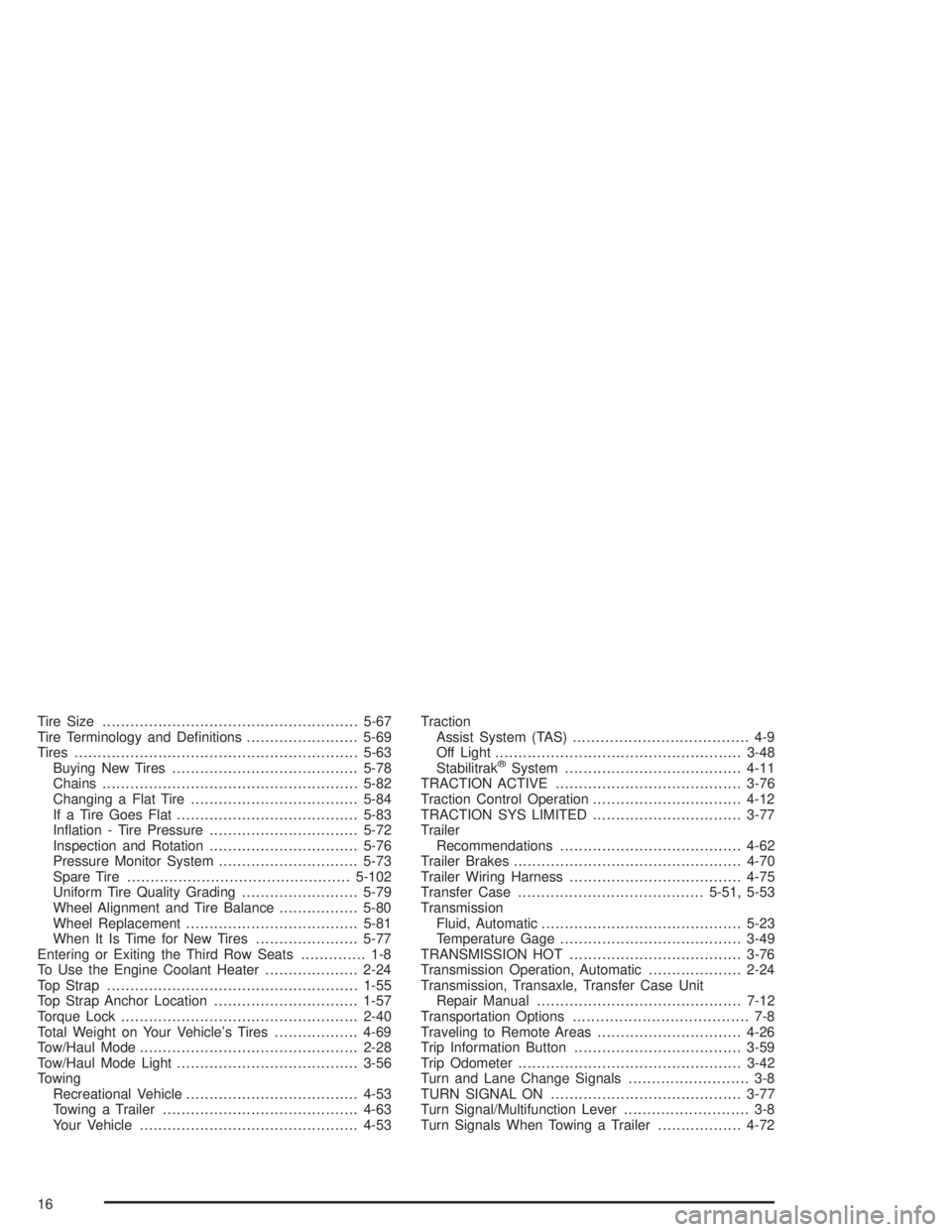
Tire Size.......................................................5-67
Tire Terminology and Denitions........................5-69
Tires.............................................................5-63
Buying New Tires........................................5-78
Chains.......................................................5-82
Changing a Flat Tire....................................5-84
If a Tire Goes Flat.......................................5-83
Ination - Tire Pressure................................5-72
Inspection and Rotation................................5-76
Pressure Monitor System..............................5-73
Spare Tire................................................5-102
Uniform Tire Quality Grading.........................5-79
Wheel Alignment and Tire Balance.................5-80
Wheel Replacement.....................................5-81
When It Is Time for New Tires......................5-77
Entering or Exiting the Third Row Seats.............. 1-8
To Use the Engine Coolant Heater....................2-24
Top Strap......................................................1-55
Top Strap Anchor Location...............................1-57
Torque Lock...................................................2-40
Total Weight on Your Vehicle’s Tires..................4-69
Tow/Haul Mode...............................................2-28
Tow/Haul Mode Light.......................................3-56
Towing
Recreational Vehicle.....................................4-53
Towing a Trailer..........................................4-63
Your Vehicle...............................................4-53Traction
Assist System (TAS)...................................... 4-9
Off Light.....................................................3-48
Stabilitrak
®System......................................4-11
TRACTION ACTIVE........................................3-76
Traction Control Operation................................4-12
TRACTION SYS LIMITED................................3-77
Trailer
Recommendations.......................................4-62
Trailer Brakes.................................................4-70
Trailer Wiring Harness.....................................4-75
Transfer Case........................................5-51, 5-53
Transmission
Fluid, Automatic...........................................5-23
Temperature Gage.......................................3-49
TRANSMISSION HOT.....................................3-76
Transmission Operation, Automatic....................2-24
Transmission, Transaxle, Transfer Case Unit
Repair Manual............................................7-12
Transportation Options...................................... 7-8
Traveling to Remote Areas...............................4-26
Trip Information Button....................................3-59
Trip Odometer................................................3-42
Turn and Lane Change Signals.......................... 3-8
TURN SIGNAL ON.........................................3-77
Turn Signal/Multifunction Lever........................... 3-8
Turn Signals When Towing a Trailer..................4-72
16