coolant temperature GMC YUKON 2006 User Guide
[x] Cancel search | Manufacturer: GMC, Model Year: 2006, Model line: YUKON, Model: GMC YUKON 2006Pages: 540, PDF Size: 3.14 MB
Page 406 of 540
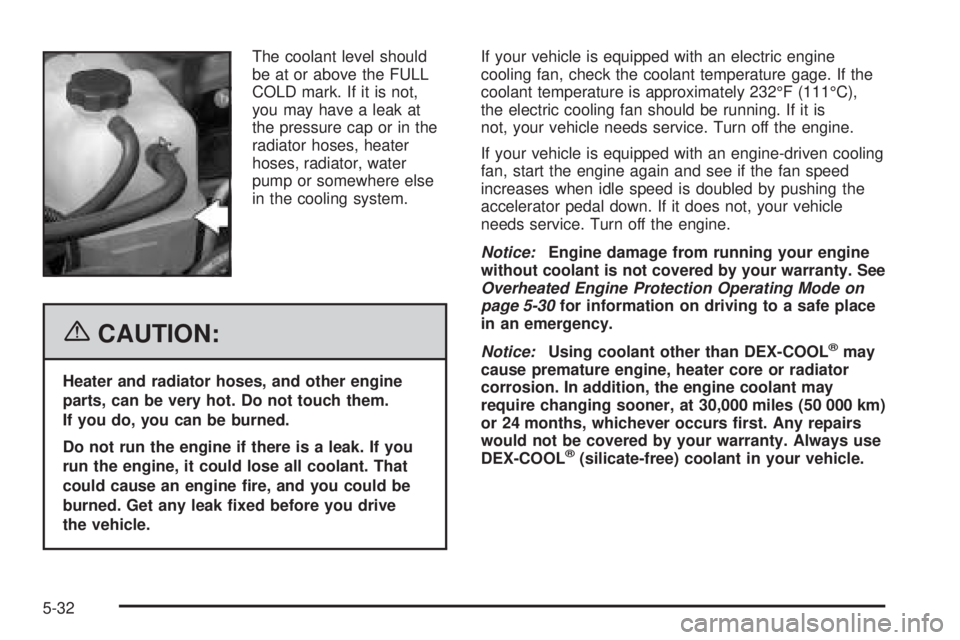
The coolant level should
be at or above the FULL
COLD mark. If it is not,
you may have a leak at
the pressure cap or in the
radiator hoses, heater
hoses, radiator, water
pump or somewhere else
in the cooling system.
{CAUTION:
Heater and radiator hoses, and other engine
parts, can be very hot. Do not touch them.
If you do, you can be burned.
Do not run the engine if there is a leak. If you
run the engine, it could lose all coolant. That
could cause an engine re, and you could be
burned. Get any leak xed before you drive
the vehicle.If your vehicle is equipped with an electric engine
cooling fan, check the coolant temperature gage. If the
coolant temperature is approximately 232°F (111°C),
the electric cooling fan should be running. If it is
not, your vehicle needs service. Turn off the engine.
If your vehicle is equipped with an engine-driven cooling
fan, start the engine again and see if the fan speed
increases when idle speed is doubled by pushing the
accelerator pedal down. If it does not, your vehicle
needs service. Turn off the engine.
Notice:Engine damage from running your engine
without coolant is not covered by your warranty. See
Overheated Engine Protection Operating Mode on
page 5-30for information on driving to a safe place
in an emergency.
Notice:Using coolant other than DEX-COOL
®may
cause premature engine, heater core or radiator
corrosion. In addition, the engine coolant may
require changing sooner, at 30,000 miles (50 000 km)
or 24 months, whichever occurs rst. Any repairs
would not be covered by your warranty. Always use
DEX-COOL
®(silicate-free) coolant in your vehicle.
5-32
Page 409 of 540
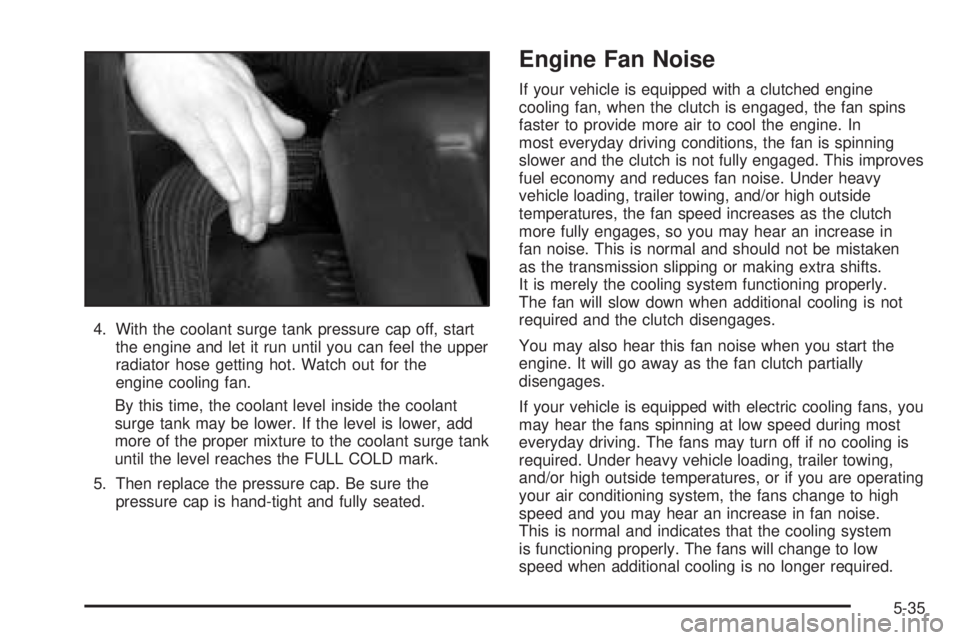
4. With the coolant surge tank pressure cap off, start
the engine and let it run until you can feel the upper
radiator hose getting hot. Watch out for the
engine cooling fan.
By this time, the coolant level inside the coolant
surge tank may be lower. If the level is lower, add
more of the proper mixture to the coolant surge tank
until the level reaches the FULL COLD mark.
5. Then replace the pressure cap. Be sure the
pressure cap is hand-tight and fully seated.
Engine Fan Noise
If your vehicle is equipped with a clutched engine
cooling fan, when the clutch is engaged, the fan spins
faster to provide more air to cool the engine. In
most everyday driving conditions, the fan is spinning
slower and the clutch is not fully engaged. This improves
fuel economy and reduces fan noise. Under heavy
vehicle loading, trailer towing, and/or high outside
temperatures, the fan speed increases as the clutch
more fully engages, so you may hear an increase in
fan noise. This is normal and should not be mistaken
as the transmission slipping or making extra shifts.
It is merely the cooling system functioning properly.
The fan will slow down when additional cooling is not
required and the clutch disengages.
You may also hear this fan noise when you start the
engine. It will go away as the fan clutch partially
disengages.
If your vehicle is equipped with electric cooling fans, you
may hear the fans spinning at low speed during most
everyday driving. The fans may turn off if no cooling is
required. Under heavy vehicle loading, trailer towing,
and/or high outside temperatures, or if you are operating
your air conditioning system, the fans change to high
speed and you may hear an increase in fan noise.
This is normal and indicates that the cooling system
is functioning properly. The fans will change to low
speed when additional cooling is no longer required.
5-35
Page 411 of 540
Windshield Washer Fluid
What to Use
When you need windshield washer uid, be sure to
read the manufacturer’s instructions before use. If you
will be operating your vehicle in an area where the
temperature may fall below freezing, use a uid that
has sufficient protection against freezing.
Adding Washer Fluid
Your vehicle has a low washer uid message that
comes on when the washer uid is low. The message
is displayed for 15 seconds at the start of each
ignition cycle. When the CHECK WASHER FLUID
message is displayed, you will need to add washer
uid to the windshield washer uid reservoir.
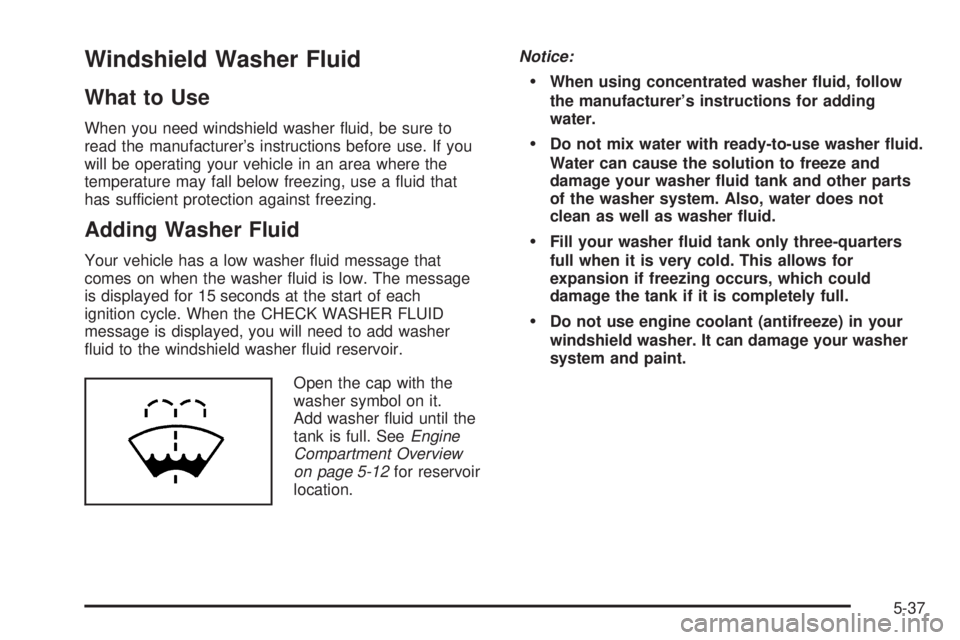
Open the cap with the
washer symbol on it.
Add washer uid until the
tank is full. SeeEngine
Compartment Overview
on page 5-12for reservoir
location.Notice:
When using concentrated washer uid, follow
the manufacturer’s instructions for adding
water.
Do not mix water with ready-to-use washer uid.
Water can cause the solution to freeze and
damage your washer uid tank and other parts
of the washer system. Also, water does not
clean as well as washer uid.
Fill your washer uid tank only three-quarters
full when it is very cold. This allows for
expansion if freezing occurs, which could
damage the tank if it is completely full.
Do not use engine coolant (antifreeze) in your
windshield washer. It can damage your washer
system and paint.
5-37
Page 499 of 540
Applying silicone grease on weatherstrips with a clean
cloth will make them last longer, seal better, and
not stick or squeak.
(g)Check vent hose at transfer case for kinks and
proper installation.
(h)Change automatic transmission uid and lter if the
vehicle is mainly driven under one or more of these
conditions:
In heavy city traffic where the outside temperature
regularly reaches 90°F (32°C) or higher.
In hilly or mountainous terrain.
When doing frequent trailer towing.
Uses such as found in taxi, police, or delivery
service.
(i)Drain, ush, and rell cooling system. This service
can be complex; you should have your dealer perform
this service. See Engine Coolant on page 5-25 for
what to use. Inspect hoses. Clean radiator, condenser,
pressure cap, and ller neck. Pressure test the
cooling system and pressure cap.
(j)A uid loss in any vehicle system could indicate a
problem. Have the system inspected and repaired
and the uid level checked. Add uid if needed.(k)Inspect system. Check all fuel and vapor lines
and hoses for proper hook-up, routing, and condition.
Check that the purge valve works properly, if equipped.
Replace as needed.
(l)If you drive regularly under dusty conditions, inspect
the lter at each engine oil change.
(m)Visually inspect belt for fraying, excessive cracks,
or obvious damage. Replace belt if necessary.
Owner Checks and Services
These owner checks and services should be performed
at the intervals specied to help ensure the safety,
dependability, and emission control performance of your
vehicle. Your GM Goodwrench
®dealer can assist you
with these checks and services.
Be sure any necessary repairs are completed at once.
Whenever any uids or lubricants are added to your
vehicle, make sure they are the proper ones, as shown
inRecommended Fluids and Lubricants on page 6-13.
6-9
Page 530 of 540

Collision Damage Repair..................................7-11
Comfort Guides, Rear Safety Belt.....................1-44
Content Theft-Deterrent....................................2-17
Control of a Vehicle.......................................... 4-5
Convenience Net............................................2-58
Coolant
Engine Temperature Gage............................3-43
Heater, Engine............................................2-22
Surge Tank Pressure Cap.............................5-27
Cooling System..............................................5-30
Cruise Control................................................3-11
Cruise Control Light........................................3-49
Cupholder(s)..................................................2-56
Customer Assistance Information
Courtesy Transportation.................................. 7-7
Customer Assistance for Text
Telephone (TTY) Users............................... 7-4
Customer Assistance Offices........................... 7-4
Customer Satisfaction Procedure..................... 7-2
GM Mobility Reimbursement Program............... 7-5
Reporting Safety Defects to
General Motors........................................7-15
Reporting Safety Defects to the
Canadian Government..............................7-14
Reporting Safety Defects to the
United States Government.........................7-14
Roadside Assistance Program......................... 7-6
Service Publications Ordering Information........7-15D
Daytime Running Lamps..................................3-16
Defensive Driving............................................. 4-2
Delayed Locking.............................................2-10
Doing Your Own Service Work........................... 5-4
Dome Lamp Override......................................3-20
Dome Lamps.................................................3-19
Door
Delayed Locking..........................................2-10
Locks.......................................................... 2-8
Power Door Locks......................................... 2-9
Programmable Automatic Door Locks.............2-10
Rear Door Security Locks.............................2-12
Driver
Position, Safety Belt.....................................1-32
Driver Information Center (DIC).........................3-52
DIC Operation and Displays..........................3-53
DIC Vehicle Customization............................3-67
DIC Warnings and Messages........................3-56
Driving
At Night.....................................................4-31
City...........................................................4-34
Defensive..................................................... 4-2
Drunken....................................................... 4-3
Freeway.....................................................4-35
Hill and Mountain Roads..............................4-38
In Rain and on Wet Roads...........................4-32
Off-Road....................................................4-16
Recovery Hooks..........................................4-45
4
Page 531 of 540

Driving (cont.)
Rocking Your Vehicle to Get it Out.................4-44
Winter........................................................4-40
Dual Automatic Climate Control System.............3-25
Dual Climate Control System............................3-23
DVD
Rear Seat Entertainment System..................3-118
E
Electrical System
Add-On Equipment.....................................5-106
Center Instrument Panel Fuse Block.............5-108
Fuses and Circuit Breakers.........................5-106
Instrument Panel Fuse Block.......................5-107
Power Windows and Other Power Options....5-106
Underhood Fuse Block...............................5-109
Windshield Wiper Fuses.............................5-106
Engine
Air Cleaner/Filter.........................................5-20
Battery.......................................................5-41
Check and Service Engine Soon Light............3-46
Coolant......................................................5-25
Coolant Heater............................................2-22
Coolant Temperature Gage...........................3-43
Drive Belt Routing.......................................6-16
Engine Compartment Overview......................5-12
Exhaust.....................................................2-35
Fan Noise..................................................5-35Engine (cont.)
Oil .............................................................5-15
Oil Life System...........................................5-18
Overheated Protection Operating Mode...........5-30
Overheating................................................5-28
Starting......................................................2-20
Entry Lighting.................................................3-20
Event Data Recorders (EDR)............................7-10
Exit Lighting...................................................3-20
Extender, Safety Belt.......................................1-46
F
Filter
Engine Air Cleaner......................................5-20
Finish Damage.............................................5-103
Fixed Mast Antenna.......................................3-136
Flash-to-Pass................................................... 3-9
Flat Tire........................................................5-75
Flat Tire, Changing.........................................5-76
Flat Tire, Storing.............................................5-92
Fluid
Automatic Transmission................................5-22
Power Steering...........................................5-36
Windshield Washer......................................5-37
Fog Lamps....................................................3-18
Four-Wheel Drive....................................2-26, 5-48
Four-Wheel-Drive Light....................................3-50
Front Axle......................................................5-49
5
Page 532 of 540
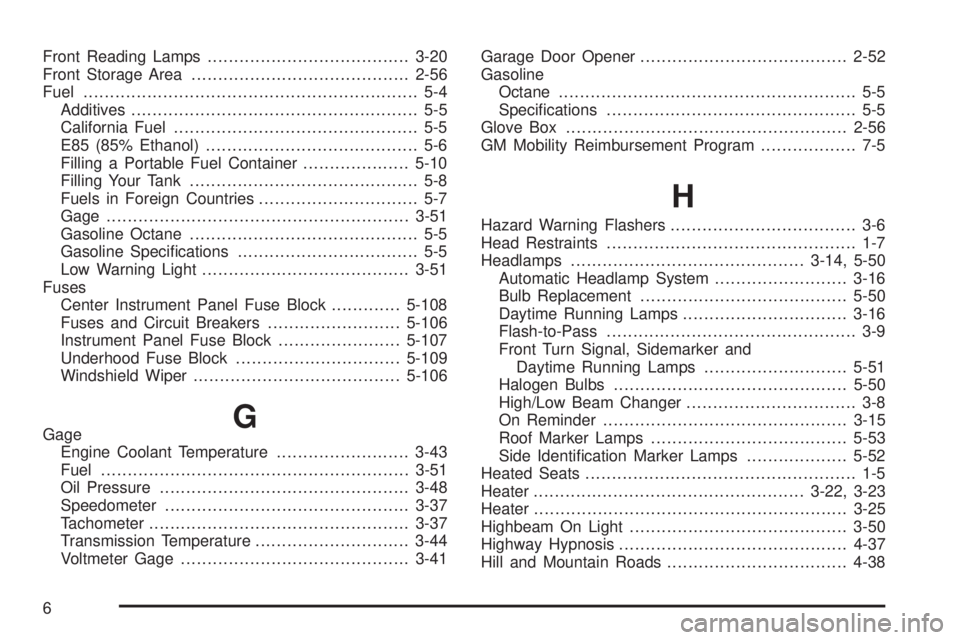
Front Reading Lamps......................................3-20
Front Storage Area.........................................2-56
Fuel............................................................... 5-4
Additives...................................................... 5-5
California Fuel.............................................. 5-5
E85 (85% Ethanol)........................................ 5-6
Filling a Portable Fuel Container....................5-10
Filling Your Tank........................................... 5-8
Fuels in Foreign Countries.............................. 5-7
Gage.........................................................3-51
Gasoline Octane........................................... 5-5
Gasoline Specications.................................. 5-5
Low Warning Light.......................................3-51
Fuses
Center Instrument Panel Fuse Block.............5-108
Fuses and Circuit Breakers.........................5-106
Instrument Panel Fuse Block.......................5-107
Underhood Fuse Block...............................5-109
Windshield Wiper.......................................5-106
GGage
Engine Coolant Temperature.........................3-43
Fuel..........................................................3-51
Oil Pressure...............................................3-48
Speedometer..............................................3-37
Tachometer.................................................3-37
Transmission Temperature.............................3-44
Voltmeter Gage...........................................3-41Garage Door Opener.......................................2-52
Gasoline
Octane........................................................ 5-5
Specications............................................... 5-5
Glove Box.....................................................2-56
GM Mobility Reimbursement Program.................. 7-5
H
Hazard Warning Flashers................................... 3-6
Head Restraints............................................... 1-7
Headlamps............................................3-14, 5-50
Automatic Headlamp System.........................3-16
Bulb Replacement.......................................5-50
Daytime Running Lamps...............................3-16
Flash-to-Pass............................................... 3-9
Front Turn Signal, Sidemarker and
Daytime Running Lamps...........................5-51
Halogen Bulbs............................................5-50
High/Low Beam Changer................................ 3-8
On Reminder..............................................3-15
Roof Marker Lamps.....................................5-53
Side Identication Marker Lamps...................5-52
Heated Seats................................................... 1-5
Heater...................................................3-22, 3-23
Heater...........................................................3-25
Highbeam On Light.........................................3-50
Highway Hypnosis...........................................4-37
Hill and Mountain Roads..................................4-38
6